Travel Guide› Hangzhou› Zhejiang Provincial Museum
Hangzhou · Museum

Zhejiang Provincial Museum 浙江省博物馆

Zhejiang Provincial Museum
Address
Zhijiang Venue: Bibo Road, Zhijiang Cultural Center, Xihu District; Gushan Venue: No.25 Gushan Road, Xihu District, Hangzhou, Zhejiang
Zhejiang Provincial Museum — Zhijiang Branch

Overview

The Zhijiang Branch of the Zhejiang Provincial Museum is located at the Zhijiang Cultural Center in the West Lake District of Hangzhou. It opened to the public in 2023 and is the largest and most comprehensive of the museum's three campuses, covering a total floor area of over 100,000 square meters. The permanent collection centers on the sweeping chronological exhibition "Zhejiang: Ten Thousand Years of History," complemented by themed galleries dedicated to celadon culture, maritime culture, Song dynasty culture, folk customs, notable historical figures, guqin art, calligraphy and painting, and an immersive digital showcase of the famous landscape scroll Dwelling in the Fuchun Mountains. Together these galleries trace Zhejiang's history and cultural achievements from prehistoric times through the modern era. The architecture of the Zhijiang Branch draws its inspiration from the landscapes of Jiangnan — broad, light-filled spaces and modern facilities make it a landmark destination for experiencing Zhejiang's deep cultural heritage and the best of contemporary Chinese museum design.

Gallery Guide

1. Main Entrance of the Zhijiang Branch

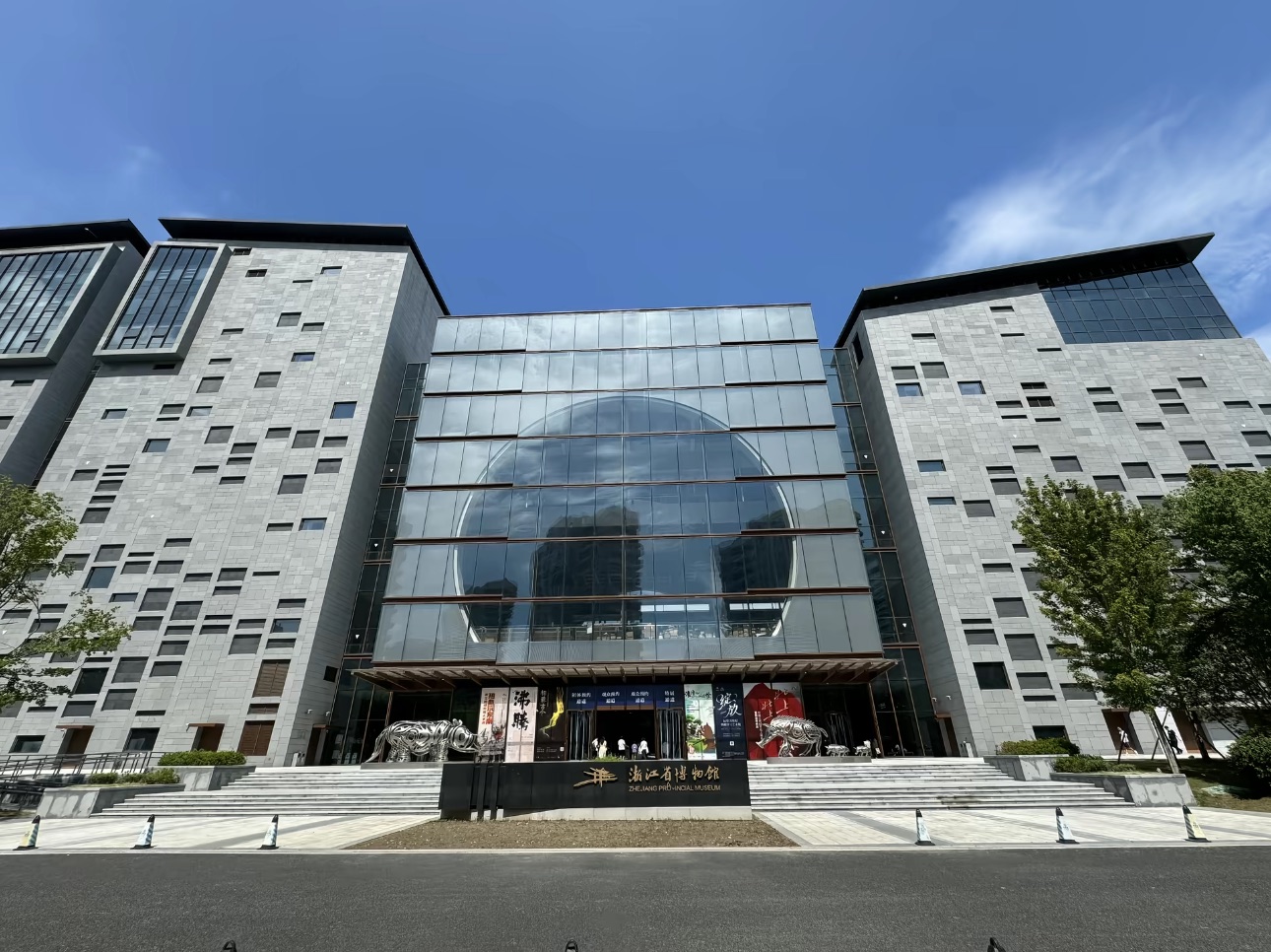
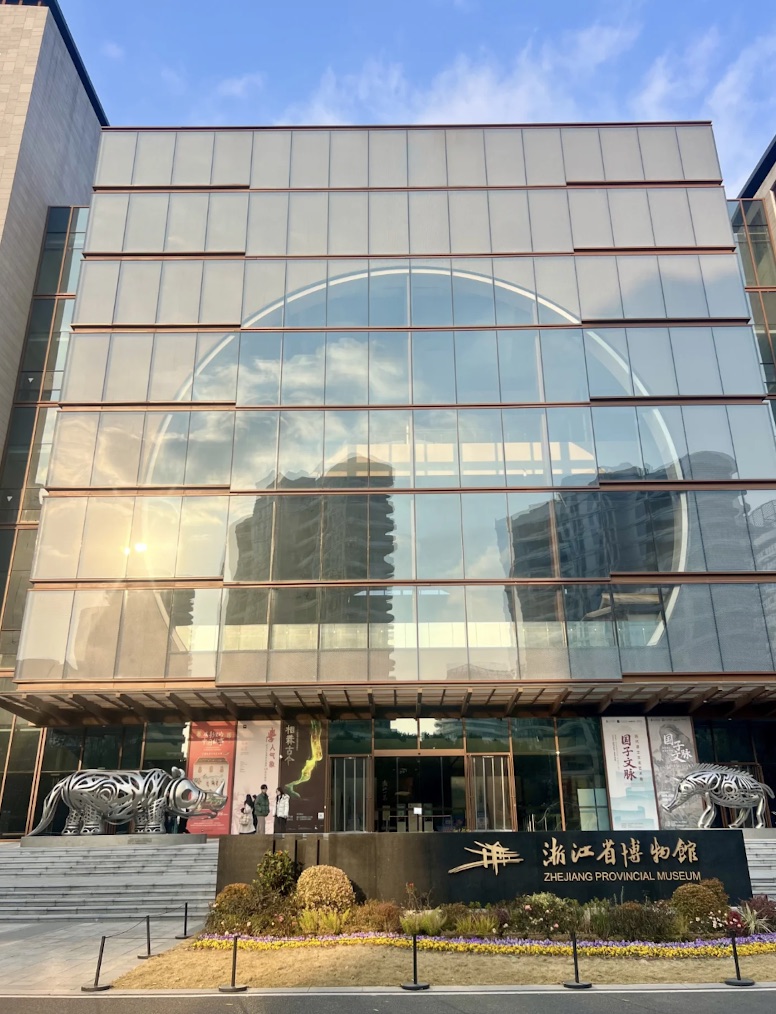
The main entrance faces Zhijiang Cultural Plaza and features a facade of expansive glass curtain walls and pale stone that gives the entrance hall a clean, dignified character. The hall itself is impressively tall, with a ceiling design inspired by the landscapes of Jiangnan. Daylight filters softly through skylights above, creating an atmosphere that is at once contemporary and serene — like stepping into the opening sweep of a long landscape scroll. The hall houses a visitor services center, a luggage storage area, and an audio guide rental desk, and it serves as the starting point for every journey through Zhejiang's history and culture.

2. Zhejiang: Ten Thousand Years — Prehistory to the Sui and Tang Dynasties

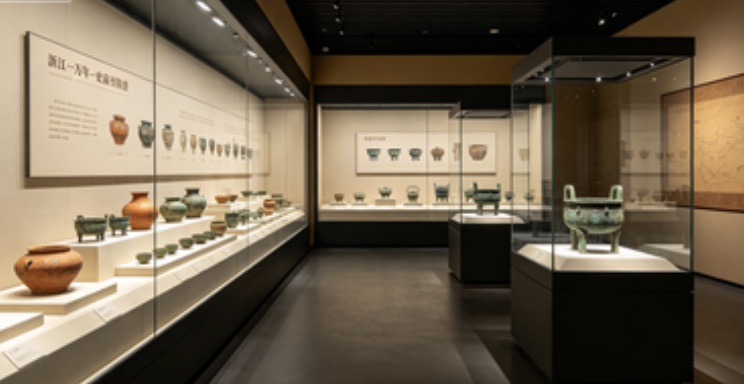
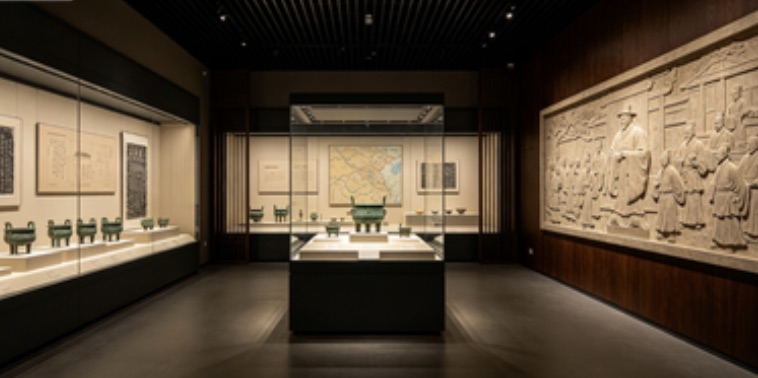
Located on the ground floor, this gallery forms the first half of the "Zhejiang: Ten Thousand Years" permanent exhibition. It centers on three foundational prehistoric cultures — Kuahuqiao, Hemudu, and Liangzhu — and displays stone tools, pottery, jade objects, and bone implements to trace Zhejiang's early history from the origins of rice farming and the formation of settled communities to the emergence of an early state. Highlights include Liangzhu jade cong ritual vessels and Hemudu bone spades, which together offer a vivid glimpse of early civilization in the Yangtze River region.

3. Secret Colors of Jiangnan — Zhejiang Celadon Culture Exhibition

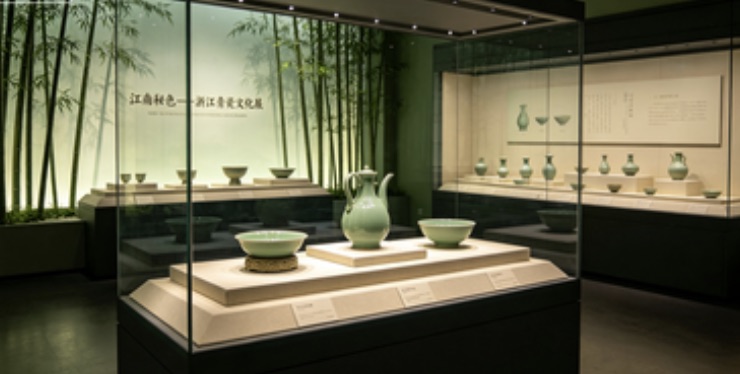
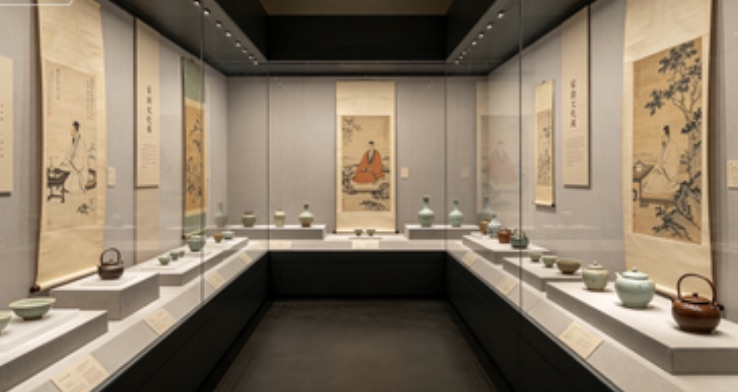
This gallery explores Zhejiang's unique position as the birthplace and historic heartland of Chinese celadon. It presents outstanding pieces from successive kiln traditions including Yue ware, Longquan ware, and the Southern Song Imperial Kilns. The display spans from primitive stoneware of the Shang and Zhou periods, through the mature celadons of the Eastern Han, to the misty pale blue-green and plum-green glazes of the Song dynasty. By tracing the evolution of glaze, form, and firing technique, the exhibition reveals Zhejiang celadon's profound and lasting influence on the history of ceramics across East Asia — a tradition captured in the saying, "To understand the history of Chinese ceramics, look first to Zhejiang."

4. Eastward to the Sea — Zhejiang Maritime Culture Exhibition

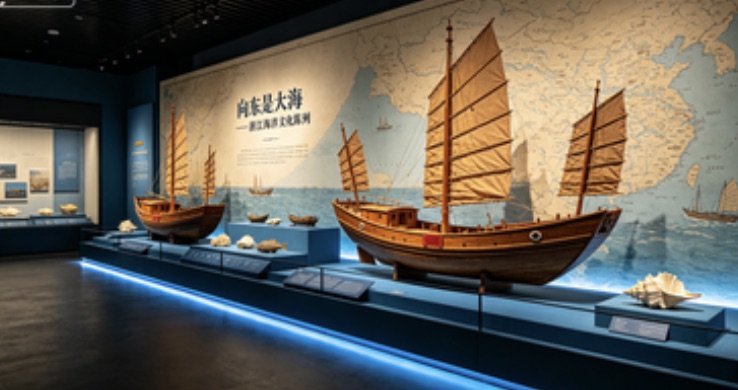
Bordered by rivers and the open ocean, Zhejiang has a long and rich maritime heritage. This exhibition focuses on the coastal regions of Ningbo, Zhoushan, and Taizhou, using harbor-site artifacts, ship models, trade ceramics, navigational instruments, and folk objects to tell the story of how Zhejiang's people looked to the sea and prospered by it. The gallery also charts Zhejiang's role as a key node on the ancient Maritime Silk Road, and traces the development of the province's maritime economy and its engagement with the wider world into the modern era.

5. Song Yun Cultural Exhibition

The culture of the Song dynasty is one of Zhejiang's most celebrated historical inheritances. This gallery follows the political life, economy, daily rhythms, and arts of the Song period, presenting calligraphy, paintings, porcelain, gold and silver ware, clothing, and scholars' studio objects to evoke the sophisticated civilization of Zhejiang under the two Song dynasties. The space itself is carefully designed to conjure a Song-era atmosphere, weaving architectural elements, garden scenery, and domestic tableaux into the arrangement of the artifacts, inviting visitors to immerse themselves in the refined aesthetic sensibility and cultural depth of Song life.

6. Zhejiang: Ten Thousand Years — Five Dynasties to the Qing Dynasty

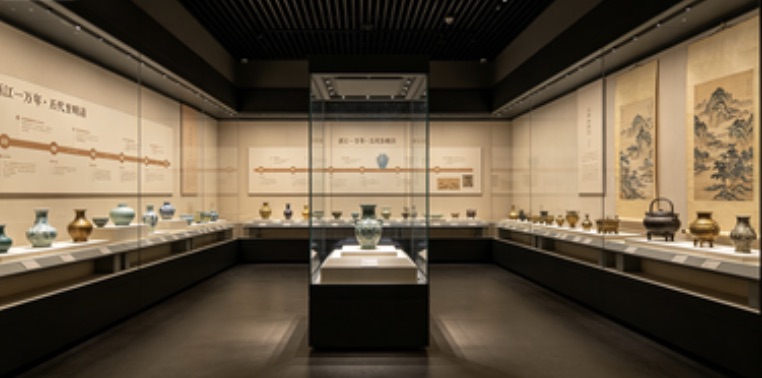
The second half of the "Zhejiang: Ten Thousand Years" permanent exhibition picks up where the first half left off, tracing the transformations that shaped Zhejiang from the Five Dynasties period through to the close of the Qing dynasty. The policy of peace and protection practiced by the Wuyue Kingdom laid the foundations for lasting prosperity. When the Southern Song court made Hangzhou its capital, Zhejiang was propelled to the heart of the nation's political, economic, and cultural life. By the Ming and Qing periods, Zhejiang was renowned for its extraordinary concentration of literary talent and thriving commerce. Paintings, porcelain, silks, and local historical documents illuminate these centuries of outstanding achievement in politics, economy, and culture.

7. Red Bridal Splendor — Traditional Wedding Customs and Trousseau of the Ning-Shao Plain

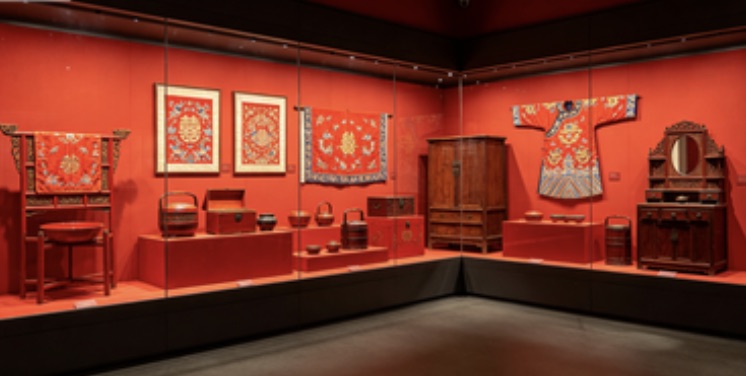
Drawing on the traditional wedding culture of the Ningbo and Shaoxing region, this gallery presents the sumptuous bridal goods associated with the "Scarlet Wedding Procession" tradition. From wedding palanquins and carved bridal beds to lacquered trunks, tin ware, ceramics, and embroidered textiles — every piece in gold-accented vermilion lacquer combines extraordinary craftsmanship with the heartfelt aspirations of ordinary Jiangnan families for happy marriages and prosperous households. Together these objects offer a vivid window into Zhejiang's folk culture and material heritage.

8. Protecting the People: Qian Liu — Zhejiang Notable Figures Cultural Series

This exhibition focuses on Qian Liu, the founding ruler of the Wuyue Kingdom, and tells the story of his enduring contributions to the land he governed: maintaining peace within his borders, building sea walls along the Qiantang River, and developing agriculture and commerce. The long stewardship of Qian Liu and his descendants kept Zhejiang relatively stable and prosperous amid the turbulence of the Five Dynasties period, and built the solid foundations on which Zhejiang would flourish during the Song dynasty. The gallery also explores the broader tradition of notable figures in Zhejiang's cultural history.

9. Ancient Sounds — Guqin Art Gallery

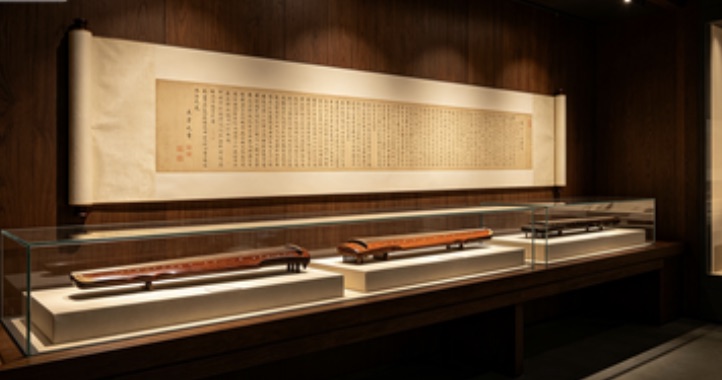
The guqin is one of the most important cultural symbols in Chinese civilization, and Zhejiang has a long tradition of guqin artistry. This gallery displays historic guqin instruments, musical scores, instrument cases, and related objects, and uses light, sound, and digital media to illuminate the instrument's forms, tonal qualities, and performance aesthetics. Visitors can trace the development of the Zhe School of guqin and encounter this UNESCO Intangible Cultural Heritage in all its depth, gaining insight into the classical Chinese literati ideal of keeping the instrument always close at hand.

10. Dwelling in the Fuchun Mountains Hall

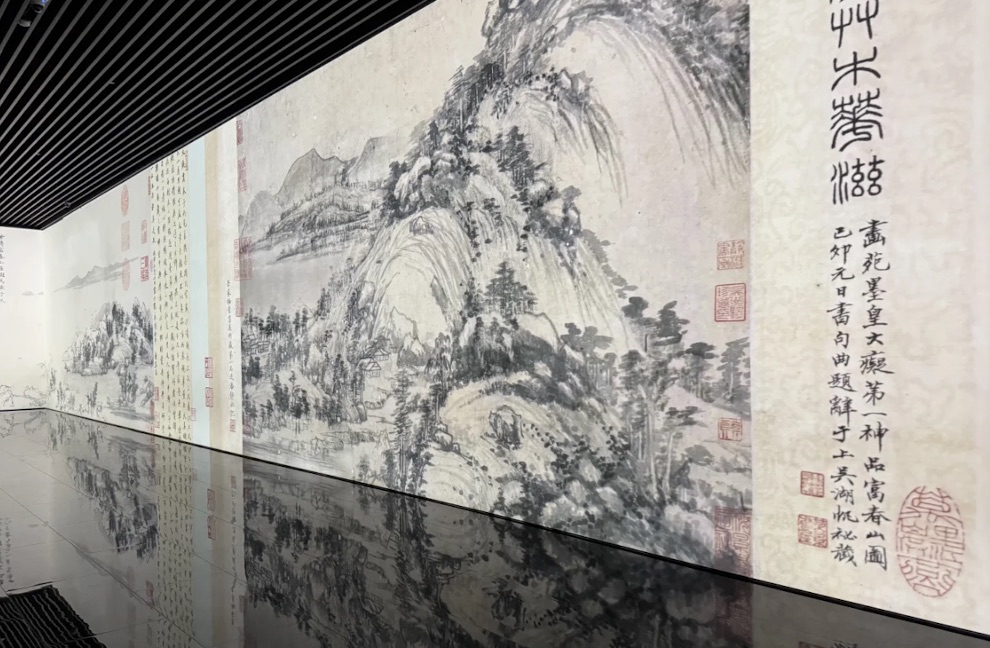
This hall is built around the Yuan dynasty painter Huang Gongwang's masterpiece Dwelling in the Fuchun Mountains, one of the greatest Chinese landscape paintings ever created. Using large-scale digital projection, an immersive theater, and selected artifacts, the gallery brings the painting to life and recounts its storied history — including the dramatic moment when the scroll was split into two. Visitors can step into the misty mountains and rivers of the Fuchun River valley, experiencing the painting's endlessly shifting light and atmosphere as though standing on the riverbank. This is one of the most distinctive digital cultural experiences the Zhijiang Branch has to offer.

Practical info Opening hours · Ticket · Getting there
Opening hours
  • Zhijiang Venue: Tue-Sun 9:00-17:00 (last entry 16:30), closed Mon (except holidays). Gushan Venue: Tue-Sun 9:00-17:00 (last entry 16:30), closed Mon (except holidays).
Ticket
  • FREE. Advance reservation required via the museum's WeChat account (up to 7 days ahead). Special temporary exhibitions may charge separately.
Getting there
  • Zhijiang: Metro Line 6 to Zhijiang Cultural Center or Fenghua West Road (~10 min walk). Bus Routes 149, 324M to Zhijiang Cultural Center. Gushan: Bus Routes WE1314 and West Lake Outer Circle to Zhejiang Provincial Museum Station. Underground parking available at both venues.

Inside Zhejiang Provincial Museum

10 stops, in walking order — read top to bottom, no clicking needed.

1 The main entrance of the Zhejiang Provincial Museum Zhijiang Branch of 10

The main entrance of the Zhejiang Provincial Museum Zhijiang Branch

之江馆区主入口

The main entrance of the Zhejiang Provincial Museum Zhijiang Branch is located at the center of the Zhijiang Cultural Center building complex and is the main access point for the public. A large plaza is set up in front of the main entrance, with an abstract sculpture in the center of the plaza inspired by the Liangzhu jade cong, implying the long history of Zhejiang civilization. After entering the main entrance, there is a three-story-high central lobby with an area of about 2,000 square meters, with a fully glazed curtain wall design on the top, sufficient natural light, and floor paved with bluestone slabs from Zhejiang. A spiral staircase in the center of the lobby connects the exhibition halls on the first to third floors. The Zhijiang Branch officially opened to the public in 2023, with a construction area of about 100,000 square meters, making it the largest and most advanced comprehensive museum in Zhejiang Province, with a collection of over 100,000 cultural relics, including over 10,000 precious cultural relics. Note: a security check channel is set up at the main entrance.

On-site narration · read it where you stand

Welcome, everyone, to the Zhijiang Branch of the Zhejiang Provincial Museum. You're standing right now in the main entrance hall.

Take a moment to look up. The space is remarkably open and generously tall. The ceiling design draws its inspiration from the landscapes of Jiangnan, and the whole hall is filled with soft natural light that pours in through skylights above. The result is a space that feels both modern and calm — almost like walking into the first sweep of a long landscape scroll. This hall is also the branch's visitor services hub: if you need to store luggage, rent an audio guide, or ask about guided tour options, this is the place to do it.

Before we head into the galleries, let me give you a quick overview of today's route. We'll start on the ground floor and work our way up. First we'll visit the opening section of the "Zhejiang: Ten Thousand Years" permanent exhibition, covering prehistory through the Sui and Tang dynasties. After that, we'll move on to the celadon, maritime, and Song dynasty culture galleries. Then we'll go upstairs for the second half of the chronological exhibition, followed by the folk customs, notable figures, guqin art, and Dwelling in the Fuchun Mountains galleries. The full tour takes roughly four to six hours. If you're pressed for time, feel free to prioritize whichever galleries interest you most.

A few housekeeping notes before we go in: please switch your phones to silent or vibrate mode, and please don't use flash photography inside the galleries. Eating and drinking are not permitted in the exhibition spaces — there are designated rest areas and a dining area in the museum where you can take a break and recharge. Alright, let's head in together and start with our first gallery.

Zhejiang: Ten Thousand Years

浙江一万年·史前至隋唐

The Zhejiang Historical and Cultural Exhibition Hall is located on the first and second floors of the Zhijiang Branch, with an exhibition area of about 5,000 square meters, making it the largest and most content-rich permanent exhibition in the Zhijiang Branch. The exhibition is organized by time and divided into six sections: "Dawn of Civilization — Prehistoric Zhejiang," "Zhejiang in the Bronze Age," "Zhejiang in Qin, Han, and Six Dynasties," "Zhejiang in Sui, Tang, and Song," "Zhejiang in Yuan, Ming, and Qing," and "Modern Zhejiang." The most famous exhibits include: Hemudu culture's artificially cultivated rice remains, Liangzhu culture's jade cong and bi, bronze swords and ding of the Yue State during the Spring and Autumn Period, Tang Dynasty Yue kiln celadon, a copy of "Along the River During the Qingming Festival" from the Northern Song Dynasty, the remaining section of Huang Gongwang's "Dwelling in the Fuchun Mountains" from the Yuan Dynasty (on display during special periods), and Ming Dynasty Zhejiang school paintings. The exhibition uses a large number of multimedia interactive facilities.

On-site narration · read it where you stand

We've now entered the first section of the "Zhejiang: Ten Thousand Years" permanent exhibition, covering prehistory through the Sui and Tang dynasties. This gallery traces the arc of human history in Zhejiang from the earliest known inhabitants all the way to the close of the Tang period.

As you walk in, you'll find yourself surrounded by some remarkably ancient objects. Zhejiang has an extraordinary prehistoric pedigree, rooted in three major cultures: Kuahuqiao, Hemudu, and Liangzhu. The Hemudu culture dates back around 7,000 years and is considered one of the most important early centers of rice cultivation in southern China. The bone spades on display here were the tools Hemudu farmers used to turn the soil for wet-rice farming. The Liangzhu culture is even more remarkable — it flourished around 5,000 years ago and stands as compelling evidence for China's long civilizational history. In 2009, the Liangzhu site was inscribed on the UNESCO World Heritage List. The jade cong and jade bi ritual objects excavated from Liangzhu sites are displayed here: exquisitely crafted, they speak to a highly organized society with sophisticated religious beliefs.

Moving further through the gallery, you'll encounter bronzes from the Yue state period, Han dynasty ceramics and lacquerware, and a range of objects from the Wei, Jin, Northern and Southern Dynasties, Sui, and Tang periods. During this long span of time, Zhejiang gradually transformed from a relatively peripheral region into a significant center of Chinese economic and cultural life. The Six Dynasties period was especially pivotal: as waves of conflict swept northern China, large numbers of people migrated south, opening up Jiangnan and laying the groundwork for Zhejiang's later flourishing.

As you explore this gallery, I especially recommend spending time with the Liangzhu jade display. Look closely at the intricate spirit-and-beast-face motifs carved into the jade cong — the lines are incredibly fine and precise. It's hard to imagine how craftspeople 5,000 years ago achieved such delicate work. These objects are far more than artworks: they are windows into the earliest chapters of Chinese civilization.

Celadon Culture Hall

江南秘色——浙江青瓷文化展

The Celadon Culture Hall is located on the second floor of the Zhijiang Branch, with an exhibition area of about 2,000 square meters, and is one of the most characteristic thematic exhibitions in the Zhijiang Branch. Zhejiang is the birthplace and main producing area of Chinese celadon. The hall exhibits over 500 celadon masterpieces, spanning from the Eastern Han Dynasty (25-220 AD) to the Ming Dynasty (1368-1644 AD), including over 50 national first-class cultural relics. The most famous exhibits include: Eastern Han Yue kiln celadon jar, Tang Dynasty Yue kiln "mi-se" (secret color) porcelain bowl, Northern Song Ru kiln sky-blue glaze dish, Southern Song Guan kiln vase with tube-shaped ears, Yuan Dynasty Longquan kiln celadon large vase, and Ming Dynasty Chuzhou kiln celadon. The exhibition uses modern display methods such as simulated kilns, dynamic displays of porcelain-making processes, and interactive screens for celadon glaze color comparison.

On-site narration · read it where you stand

Welcome to "Secret Colors of Jiangnan — Zhejiang Celadon Culture Exhibition." This gallery is dedicated to Zhejiang's singular place in the history of Chinese ceramics — as the birthplace and enduring heartland of celadon.

There is a saying: "To understand the history of Chinese ceramics, look first to Zhejiang." As early as the Shang and Zhou dynasties, potters in this region were already producing primitive stoneware. By the Eastern Han dynasty, they had developed the first true mature celadon in China. The pieces around you display the characteristic celadon glaze: a cool jade-like blue-green that is quietly beautiful and deeply refined.

The undisputed highlight of this gallery is the Tang dynasty Yue ware known as secret-color porcelain, or "mi se" ware. The term "secret color" originally referred to a closely guarded glaze developed exclusively for the imperial court — its precise formula was too precious to share. The Tang poet Lu Guimeng captured its beauty in verse: the glaze, he wrote, had captured the color of a thousand hilltops after an autumn rain. Looking at the bowls, plates, and vases on display — their fine-grained bodies and luminous blue-green surfaces — it's easy to understand why this ware was treated as something almost too beautiful for ordinary eyes.

Beyond the Yue ware, the gallery moves into the celadons of the Song dynasty, particularly the Longquan kilns and the Southern Song Imperial Kilns. The Song period was the apex of Chinese ceramic art. Longquan's signature glazes — a delicate pale blue-green and a richer plum-green — have the warm, smooth quality of fine jade. The Southern Song Imperial Kiln pieces are celebrated for their crackled glaze and the characteristic purple mouth and iron foot of the exposed clay at rim and base. These wares were not only treasured within China; enormous quantities were exported via the Maritime Silk Road to Japan, the Korean peninsula, Southeast Asia, and the Middle East, shaping the course of ceramic art history well beyond China's borders.

As you move through the gallery, pay attention to the shifts in glaze color and vessel form across different kilns and eras. They reflect centuries of Chinese potters pursuing an aesthetic ideal they described as "blue sky breaking through clouds after rain."

Marine Culture Hall

海洋文化馆

The Marine Culture Hall is located on the third floor of the Zhijiang Branch, with an exhibition area of about 1,500 square meters, and is a unique new exhibition in the Zhijiang Branch. Zhejiang is one of the provinces with the longest coastline in China, with a long-standing marine culture. The exhibition in the hall is divided into four sections: "Zhejiang Coastline and Islands," "Maritime Silk Road and Zhejiang," "Marine Resources and Ecological Protection," and "Managing the Ocean and Zhejiang's Future." The most exciting section is "Maritime Silk Road and Zhejiang," which displays the important position of port cities such as Ningbo (Mingzhou), Wenzhou, and Hangzhou in the ancient Maritime Silk Road. The hall also has a 360-degree circular screen cinema that regularly plays marine-themed documentaries. For Zhejiang as a strong maritime province, this exhibition is of great significance for understanding Zhejiang's marine strategy and marine economy.

On-site narration · read it where you stand

We've arrived now at "Eastward to the Sea — Zhejiang Maritime Culture Exhibition." Zhejiang is a province of mountains, rivers, and coastline, and the sea has always been central to its identity.

This gallery draws primarily on artifacts and reconstructed scenes from the coastal regions of Ningbo, Zhoushan, and Taizhou to tell the story of a people who built their lives facing the ocean. Zhejiang's coastline is long and deeply indented, dotted with sheltered bays and natural harbors. From very early on, it served as one of China's most important gateways to maritime trade. By the Tang and Song dynasties, the port of Ningbo was already a major international hub, dispatching cargoes of Chinese porcelain, tea, and silk to Japan, the Korean peninsula, Southeast Asia, and the ports of the Indian Ocean — a network we know today as the Maritime Silk Road.

The ship models, navigational compasses, trade ceramics, and harbor-site artifacts on display here vividly reconstruct the energy and scale of that maritime world. Some of the ceramics were recovered from ancient shipwrecks: after centuries on the ocean floor, their glazes remain brilliantly intact, offering a remarkable glimpse of the reach and ambition of historic long-distance trade.

But Zhejiang's maritime culture was never just about trade. This gallery also covers fishing, shipbuilding, and the everyday customs of coastal communities. Fishing-boat models, nets, shell objects, and scenes of coastal domestic life show how generation after generation made their living from and alongside the sea. Into the modern era, Zhejiang continued to play a leading role: Ningbo and Wenzhou were among the first Chinese cities to open to foreign trade, and they remain key figures in the story of China's modern maritime history.

This gallery is particularly rewarding for anyone with an interest in seafaring or trade history. It reveals a side of Zhejiang that balances the province's reputation for gentle waterways and cultivated refinement: a spirit of openness, ambition, and the courage to cast off toward the horizon.

Song Dynasty Culture Exhibition

宋韵文化展

The Calligraphy and Painting Hall is located on the third floor of the Zhijiang Branch, with an exhibition area of about 1,800 square meters, and is the most important art-themed exhibition in the Zhijiang Branch. Zhejiang is one of the important birthplaces of Chinese calligraphy and painting art, producing countless calligraphy and painting masters throughout history. The collections of the Calligraphy and Painting Hall cover over 1,000 years of history from the Tang Dynasty to modern times, including over 100 national first-class cultural relics. The permanent exhibition displays in chronological order, including: "Tang and Five Dynasties Calligraphy and Painting," "Song and Yuan Calligraphy and Painting," "Ming Dynasty Calligraphy and Painting," "Qing Dynasty Calligraphy and Painting," and "Modern Calligraphy and Painting." The remaining section of Huang Gongwang's "Dwelling in the Fuchun Mountains" and Zhao Mengfu's "Autumn Colors on the Qiao and Hua Mountains" (copy) are among the representative works. The exhibition lighting uses professional-grade calligraphy and painting exhibition lighting.

On-site narration · read it where you stand

Welcome to the Song Yun Cultural Exhibition. If you had to name the single most defining chapter in Zhejiang's cultural history, many people would point to the Song dynasty — and in particular the Southern Song period, when Zhejiang, and especially Hangzhou, became one of the great centers of Chinese political, economic, and cultural life.

After the fall of the Northern Song, Emperor Gaozong crossed the Yangtze River and eventually established his new capital at Lin'an — modern-day Hangzhou. From that moment, the Jiangnan region entered one of the most brilliant periods in its history. What we call "Song Yun" — literally the rhythm or spirit of the Song — refers to the distinctive cultural character that took shape during this era: refined, elegant, intellectually open, and deeply invested in the pleasures of daily life. That spirit left a lasting imprint on Zhejiang, and on Chinese aesthetic sensibility as a whole, that can still be felt today.

In this gallery you'll find Song dynasty calligraphy, paintings, porcelain, gold and silver ware, clothing, and scholars' studio objects. Song-period porcelain favored an understated purity: two of the famed Five Great Kilns — the Imperial Kiln and the Ge Kiln — had their roots in Zhejiang. Song painting and calligraphy prized atmosphere and expressive brushwork over literal description; many of the canonical works in that tradition were created in this period or bear its deep influence.

Beyond the artifacts, the gallery uses reconstructed scenes to bring Song dynasty life back to life. You can see how Song people prepared and drank tea — the bowls and pots they used — and explore how a Song scholar's studio might have looked and felt. The Four Refined Pursuits of the Song literati — burning incense, whisking tea, hanging a scroll, and arranging flowers — are all represented here, and they speak to a vision of everyday life as an art form. The commercial energy of the Song world also makes an appearance: Song-era Zhejiang was one of the most economically dynamic regions anywhere in the world at the time.

Song Yun is not only a matter of historical memory. Its influence flows through Hangzhou's contemporary character and through the way Zhejiang people still think about beauty and the good life. I hope this gallery gives you a sense of how, a thousand years ago, the people of the Song era found a way to turn ordinary days into something that felt, at its best, like poetry.

Zhejiang: Ten Thousand Years

浙江一万年·五代至明清

The Leifeng Pagoda Cultural Relics Hall is located on the second floor of the Zhijiang Branch and is a professional exhibition hall established on the basis of the 2002 excavation of the rebuilt Leifeng Pagoda. In 2002, the Zhejiang Provincial Institute of Cultural Relics and Archaeology conducted a scientific excavation of the collapsed Leifeng Pagoda's underground palace, unearthing over 100 precious cultural relics including a pure silver Ashoka stupa, a gilt dragon-lotus base silver coffin, jade artifacts, agate, crystal, and bronze mirrors, which shocked the archaeological community. The most famous and precious exhibit is the "Pure Silver Ashoka Stupa," 35 cm high and weighing about 1,000 grams, with an openwork body enclosing a gold coffin containing Buddha's hair relic. It is the only Pure Silver Ashoka Stupa of the Wuyue Kingdom with an exact dated inscription discovered so far. In addition, traditional Buddhist cultural relics such as the gilt dragon-lotus base silver coffin, jade Guanyin statue, and agate prayer beads also have great historical and artistic value. The exhibition comprehensively recreates the entire process of the Leifeng Pagoda underground palace excavation.

On-site narration · read it where you stand

We've now entered the second half of the "Zhejiang: Ten Thousand Years" permanent exhibition, which covers the Five Dynasties period through to the end of the Qing dynasty. This gallery picks up where the first section left off, tracing the transformations that shaped Zhejiang over the following thousand years.

The Five Dynasties period was a time of fragmentation across much of China, but in Zhejiang, the Wuyue Kingdom offered an island of comparative stability. Its founder, Qian Liu, governed with a pragmatic philosophy — keep the borders secure, keep the people at peace. He built sea walls along the Qiantang River, managed waterways, and encouraged agriculture and commerce. The prosperity that Zhejiang maintained through this turbulent era had everything to do with Qian Liu's long-sighted stewardship. The sections of this gallery dedicated to Wuyue and its engineering achievements — particularly the coastal defenses — are well worth your time.

With the Southern Song came Zhejiang's golden age. When the court established its capital at Lin'an — today's Hangzhou — the province moved to the very center of the Chinese world. Cities thrived, trade flourished, and an extraordinary concentration of literary, artistic, and intellectual talent gathered in the region. The Southern Song artifacts on display here — porcelain, paintings, silks, and scenes of urban life — convey the brilliance of that period with remarkable immediacy.

The Ming and Qing periods saw Zhejiang maintain its position as one of China's most culturally and economically productive regions. Hangzhou, Ningbo, Shaoxing, and Jiaxing were all centers of silk production, tea culture, ceramic trade, and scholarly life. Zhejiang produced more successful candidates in the imperial civil examinations than almost any other province, and the gallery's Ming and Qing holdings — local historical documents, genealogical records, examination papers, and trade goods — reflect that richness.

Working through this gallery in roughly chronological order, you can trace how Zhejiang moved from the careful stability of the Five Dynasties, through the peak of the Song, and on into the sustained prosperity of the Ming and Qing. Understanding this sequence is also the best way to make sense of the cultural and economic vitality that Zhejiang is known for today.

Red Bridal Splendor — Traditional Wedding Customs and Trousseau of the Ning-Shao Plain

伊人红妆——宁绍平原传统婚俗与嫁妆

The Zhijiang Branch Digital Experience Hall is located on the B1 level of the Zhijiang Branch, with an area of about 1,000 square meters, and is the most innovative and technology-rich exhibition space in the Zhijiang Branch. The experience hall is divided into five functional areas: "VR Exploration Zone," "AR Interaction Zone," "Holographic Theater," "Digital Cultural Relics Restoration Room," and "Metaverse Cultural Space." In the "VR Exploration Zone," visitors can put on VR glasses and travel back to historical scenes such as Liangzhu Ancient City, Southern Song Lin'an City, and Qing Dynasty West Lake. The "AR Interaction Zone" uses AR technology to bring static cultural relics to "life." The "Holographic Theater" uses holographic projection technology to display three-dimensional historical figures and scenes without wearing any equipment. The "Digital Cultural Relics Restoration Room" lets visitors experience the process of cultural relic restoration. The "Metaverse Cultural Space" is a digital art display platform based on blockchain technology. The Digital Experience Hall is especially suitable for teenagers.

On-site narration · read it where you stand

Our next stop is one of the most visually striking galleries in the museum: "Red Bridal Splendor — Traditional Wedding Customs and Trousseau of the Ning-Shao Plain." This exhibition focuses on the traditional wedding culture of the Ningbo and Shaoxing region and, above all, on the dazzling bridal tradition known as the "Scarlet Wedding Procession."

What exactly is a "Scarlet Wedding Procession"? In wealthy families of the Ning-Shao Plain, a daughter's wedding trousseau was an occasion for extraordinary display. Every piece — furniture, trunks and boxes, everyday household objects, even the bridal bed and the wedding palanquin — was lacquered in brilliant red and decorated with gold-leaf designs. On the wedding day, all of this was carried through the streets in a procession that could stretch for several li — sometimes as much as five kilometres. The sheer scale and splendor of the display was a public statement of the family's means, but it was also a heartfelt expression of all the wishes and hopes the family was sending with their daughter into her new life.

The objects filling this gallery are extraordinary. There are wedding palanquins with carved and gilded exteriors, intricate bridal beds, stacked lacquered trunks, tin ware, porcelain, and all manner of embroidered textiles. Every piece is finely made, and the imagery carved or painted on each object carries auspicious meaning: dragons and phoenixes, blooming flowers, symbols of abundance and good fortune. I particularly recommend looking closely at the wedding palanquins on display. Some of these weigh several hundred kilograms and required eight carriers to move. Their surfaces are covered in hundreds of carved human figures depicting historical stories and legends. The most elaborate examples are known as "ten-thousand-labor palanquins" — the name reflects the belief that a single palanquin of this kind required ten thousand hours of skilled work to complete.

Through these objects, you can both admire the extraordinary craftsmanship of Zhejiang's folk artisans and gain insight into how traditional society understood marriage, family, and the hopes placed on a new household. The form of weddings has changed enormously since these traditions flourished, but the longing for beauty and happiness that these objects embody is something that resonates across time.

One last note: this is a popular gallery for photography, and the vivid colors make for wonderful images. Please just remember to keep your flash switched off — the lacquer and textile pieces are sensitive to light.

Protecting the People: Qian Liu — Zhejiang Notable Figures Cultural Series

保境安民话钱镠——浙江名人文化系列展

The Zhijiang Branch Cultural Creative Shop is located on the right side of the museum's main lobby, with an area of about 500 square meters, and is the official cultural creative product retail space of the Zhejiang Provincial Museum Zhijiang Branch. The shop's products are designed with the concept of "bringing cultural relics to life," drawing inspiration from the museum's collection of over 100,000 cultural relics. Over 20 series and more than 1,000 cultural creative products have been developed. The best-selling products include: the "Dwelling in the Fuchun Mountains" series (folding fans, bookmarks, notebooks, phone cases, silk scarves, etc.), the "Liangzhu Jade Cong" series (USB drives, power banks, jewelry, ornaments, etc.), the "Celadon" series (tea cups, tea sets, aromatherapy, lamps, etc.), and the "Leifeng Pagoda Ashoka Stupa" series (jewelry boxes, bottle openers, keychains, etc.). The "Dwelling in the Fuchun Mountains" folding fan and "Liangzhu Jade Cong" USB drive are the two highest-selling products. All products come with exquisite packaging.

On-site narration · read it where you stand

We've now arrived at "Protecting the People: Qian Liu — Zhejiang Notable Figures Cultural Series." This gallery centers on Qian Liu, the founder of the Wuyue Kingdom, and on the remarkable mark he left on the land he ruled.

Qian Liu lived through the turbulent final years of the Tang dynasty and the Five Dynasties period that followed. In 907, he was formally recognized as the King of Wuyue. In an era defined by warlords competing for territory, Qian Liu chose a different path. Rather than seeking to expand his domain by force, he governed by what he called the principle of "protecting the borders and keeping the people at peace." He organized the construction of sea walls to tame the fearsome tidal surges of the Qiantang River, oversaw extensive irrigation works, and actively promoted agriculture and trade. Under his leadership, the Wuyue Kingdom became one of the most stable and prosperous territories in a fractured and violent age.

The Qiantang River's tidal bore is one of the most powerful natural forces in China — you may well have heard of it. Historically, these tides repeatedly caused devastating floods around Hangzhou and the surrounding farmland. Qian Liu mobilized soldiers and civilians together to build a stone sea wall that brought the flooding under control. This was not only an immediate lifesaver for the people of the time; it also helped create the conditions that would later allow Hangzhou to serve as the Southern Song capital. The gallery includes scale models and illustrated panels explaining the engineering of these defenses, which offer a fascinating look at how ancient China engaged with and reshaped the natural world.

After Qian Liu's death, his descendants continued to govern Wuyue. In the early years of the Northern Song dynasty, rather than resist absorption by force, they peacefully handed their territory over to the Song court — sparing Zhejiang the devastation of military conquest and preserving the wellbeing of the people they had always sought to protect. The Qian clan also had a deep commitment to learning and education. Their descendants made extraordinary contributions to modern China: the twentieth century alone produced Qian Xuesen, the pioneering aerospace engineer; Qian Weichang, the physicist; and Qian Zhongshu, the novelist and literary scholar — a legacy shaped by the family's celebrated guiding principles, known as the Qian Family Maxims.

Through this gallery, you can see how one leader's wise and patient governance created long-lasting prosperity for an entire region — and explore the deep traditions of intellectual and cultural achievement that Zhejiang has nurtured across many centuries.

Ancient Echoes: Guqin Art Gallery

太古之音——古琴艺术馆

The Zhijiang Branch Special Exhibition Hall is located on the north side of the first floor of the Zhijiang Branch, with an exhibition area of about 3,000 square meters, and is the core space for the Zhijiang Branch to host high-level temporary special exhibitions from China and abroad. The special exhibition hall is constructed to world-class standards, equipped with advanced facilities including adjustable professional exhibition lighting, constant temperature and humidity systems, security monitoring systems, and multimedia guide equipment. Since the opening of the Zhijiang Branch in 2023, the special exhibition hall has successfully hosted several influential special exhibitions including "Silk Road Rainbow Costumes — Dunhuang Clothing Art Exhibition," "Song Charm — Song Dynasty Cultural Relics Grand Exhibition," "Longquan in the World — Longquan Celadon Special Exhibition," and "Impressionist Masters — Monet and His Friends." Special exhibitions usually last 2-3 months. During the opening period of some special exhibitions, supporting activities such as academic seminars, expert guided tours, family workshops, and cultural creative markets are also held.

On-site narration · read it where you stand

Welcome to "Ancient Sounds — Guqin Art Gallery." The guqin is among the oldest and most culturally significant instruments in China, recognized by UNESCO as an Intangible Cultural Heritage of Humanity. Zhejiang — and especially the Zhe School of guqin — has occupied an important place in the instrument's long history.

The guqin has seven strings and a beautifully austere silhouette. Its tone is quiet, deep, and resonant in a way that carries great distance without ever being loud. More than a musical instrument, the guqin was, for China's classical literati, a tool for self-cultivation and self-expression — a means of putting inner life into sound. Classical texts held that a cultivated person should always keep a guqin and se nearby; playing and listening to the guqin was among the most valued activities at a literati gathering.

In this gallery, you'll find historic guqin instruments from various dynasties alongside musical scores, instrument cases, and associated objects. Lighting and audio technology throughout the space are used to illuminate the instrument's forms, tonal qualities, and performance aesthetics in a way that engages the senses as well as the intellect. The Zhe School of guqin emerged during the Southern Song period; its most celebrated representative was Guo Mian, whose composition Mist and Clouds over the Xiang River and Lake Dongting remains one of the best-known works in the guqin repertoire. The Zhe School is admired for playing that is fluid and natural on the surface, yet deeply contemplative and emotionally resonant beneath.

The gallery's multimedia installations play recordings and video of historic guqin performances. I encourage you to find a quiet moment here and just listen. Let the instrument's ancient, unhurried voice wash over you, and try to enter the mood the classical poets described — sitting alone in a bamboo grove, playing the qin and calling out into the dusk. If you have any love for traditional music, this is a gallery where the world slows down in the best possible way.

Beyond listening and looking, the gallery also explains the guqin's construction, its materials, and the fundamentals of how it is played. Every plank of wood and every string carries the accumulated thinking and aesthetic judgment of many generations of makers and players. I hope that by the time you leave this gallery, you'll have a new appreciation for this ancient art form — and perhaps the beginning of a lasting interest in it.

Fuchun Mountains Hall

富春山居馆

Zhijiang Cultural Center is located in the Zhijiang area of Hangzhou's Xihu District and officially opened to the public in 2023 in its entirety. With a total construction area of about 320,000 square meters, it is the largest cultural infrastructure project in Zhejiang Province's history in terms of investment, specification, and functionality. The cultural center consists of four large cultural buildings in a "four-leaf clover" layout: Zhejiang Provincial Museum Zhijiang Branch (located in the center, largest in scale), Zhejiang Library Zhijiang Branch (located on the east side, the largest public library in Zhejiang), Zhejiang Intangible Cultural Heritage Museum (located on the south side, displaying Zhejiang's intangible cultural heritage), and Zhejiang Literature Museum (located on the west side, displaying the development history of Zhejiang literature). The four buildings are connected to each other via an underground commercial street and aerial walkways. The cultural center also has supporting facilities such as Zhiduo Book House (24-hour bookstore), cultural creative markets, dining streets, and family activity areas. Recommended visiting route: visit Zhejiang Provincial Museum Zhijiang Branch in the morning, dine in the dining street at noon, visit Zhejiang Library and Intangible Cultural Heritage Museum in the afternoon.

On-site narration · read it where you stand

Our final gallery today is the Dwelling in the Fuchun Mountains Hall. This space is built around Dwelling in the Fuchun Mountains, the masterpiece landscape scroll painted by the Yuan dynasty artist Huang Gongwang, and it is one of the most visually striking and technically ambitious spaces in the entire Zhijiang Branch.

Dwelling in the Fuchun Mountains is widely regarded as the supreme achievement of Chinese landscape painting. Huang Gongwang spent many years creating this long handscroll in the later stages of his life. It depicts the mountains and rivers along the Fuchun River in Zhejiang — rolling peaks, a broad and tranquil river, stands of dense trees — all rendered in ink with a quality of stillness and clarity that feels almost meditative. Since its creation, the scroll has been treasured and celebrated without interruption. But its history is not without drama. In the late Ming dynasty, a devoted collector ordered that the painting be burned alongside him at his death, wishing to take it with him into the afterlife. Servants managed to pull the scroll from the flames in time — but not before it had been split into two sections. The longer section eventually made its way to Taiwan and is now housed in the National Palace Museum in Taipei, known as the "Wuyong Master" scroll. The shorter section remained in Zhejiang and is now held by the Zhejiang Provincial Museum, under the name "Remnant Mountain." The two halves have been displayed together only once. For many, their continued separation carries a particular poignancy.

In this hall, you may have the opportunity to view the "Remnant Mountain" section of the original scroll — please check the current schedule on site, as specific arrangements may vary. Alongside the original, the hall uses large-scale digital projection and an immersive theater to allow visitors to step inside the painting. In the digital installation, the figures, boats, mist, and trees of the scroll begin to move; the light shifts through the hours and the seasons. Standing in the space, you can feel as though you are on the bank of the Fuchun River itself, watching the landscape breathe.

This hall is also one of the museum's most popular photography spots. The digital projection creates a beautiful backdrop for group photos. As always, please keep flash switched off, and please don't touch the screens or projection equipment.

Dear visitors, that brings our tour of the Zhijiang Branch of the Zhejiang Provincial Museum to a close. In a few hours together, we have traveled across ten thousand years of Zhejiang's history — from prehistoric jade and celadon, through the elegance of the Song dynasty, and on to the boundless landscape of a great painting. I hope this visit has deepened your sense of this extraordinary place and the culture it has produced. You are very welcome to return to Hangzhou and to the Zhijiang Branch anytime to discover more. Safe travels, everyone, and enjoy the rest of your time in Zhejiang.

Prefer to be shown around?

A local guide walks these 10 stops with you and answers what the page cannot.

Browse tours ↗