Travel Guide› Hangzhou› Beijing-Hangzhou Grand Canal (Hangzhou Section)
Hangzhou

Beijing-Hangzhou Grand Canal (Hangzhou Section) 京杭大运河(杭州段)

Beijing-Hangzhou Grand Canal (Hangzhou Section)
Address
No.226 Huancheng North Road, Gongshu District, Hangzhou, Zhejiang (Wulinmen Pier)
Grand Canal (Hangzhou Section)

General Introduction

The Hangzhou section of the Grand Canal is a key component of China's Grand Canal World Cultural Heritage site. Stretching roughly 39 kilometres, it runs from the banks of the Qiantang River in the south to Tangqi in Yuhang district to the north, cutting through the heart of Hangzhou. First dug during the Spring and Autumn period, expanded under the Sui and Tang dynasties, and at its height during the Song and Yuan periods, the canal served for a thousand years as the golden waterway for north-south grain transport and as the lifeline that drove Hangzhou's rise and prosperity. Today the Hangzhou section retains its wide channel, ancient stone bridges, warehouses and markets lining the banks, and numerous museums and heritage parks that document the canal's history — together forming an open cultural corridor threading together waterfront scenery, historic architecture, and everyday urban life.

Attractions Within This Site

1. Wulinmen Wharf

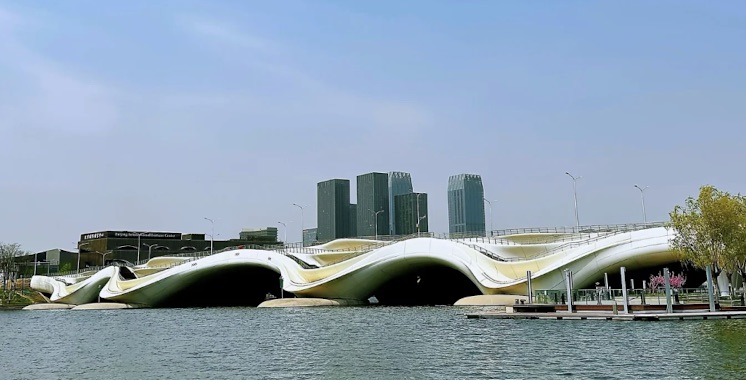
Wulinmen Wharf sits at the intersection of the canal and North Ring Road in Hangzhou's city centre, serving as a key water transport hub and the departure point for canal cruises. The modern skyline of Hangzhou rises around the wharf while the ancient waterway flows below, placing old and new in striking juxtaposition. Visitors can board a water bus or pleasure boat here and head north along the canal to begin their journey.

2. West Lake Cultural Square

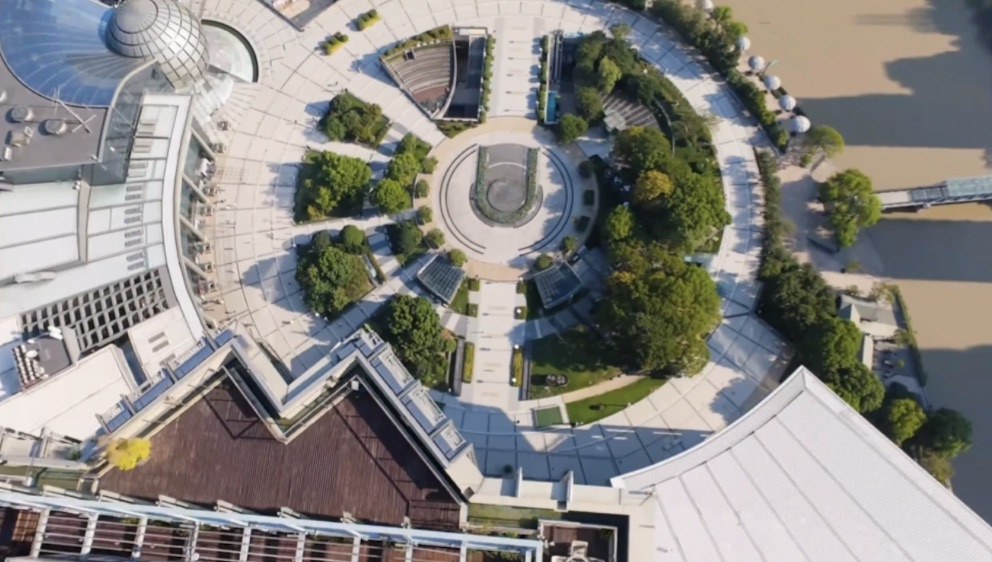
West Lake Cultural Square stands on the eastern bank of the canal and is one of Hangzhou's largest public cultural spaces. Around it cluster the Zhejiang Provincial Museum, the Zhejiang Natural History Museum, and the Zhejiang Science and Technology Museum, forming — together with the canal — the heart of Hangzhou's modern cultural waterfront.

3. Xinyifang Block

Xinyifang is a celebrated waterfront commercial district along the Hangzhou section of the canal, known for its riverside restaurants, teahouses, and long-established shops. It retains traditional architectural features such as waterfront arcaded buildings and stone landing steps, making it one of the best places to experience canal street life and the night-time economy.

4. Fuyi Granary

Fuyi Granary was first built during the Guangxu reign of the Qing dynasty and is one of the largest surviving ancient granary complexes in Hangzhou. In its day it was paired with Nanxin Granary in Beijing as one of the two great imperial granaries of China. The warehouse buildings were constructed along the canal for convenient grain transfer and have since been converted into a mixed-use space for canal heritage exhibitions and contemporary art.

5. Xiaohe Straight Street

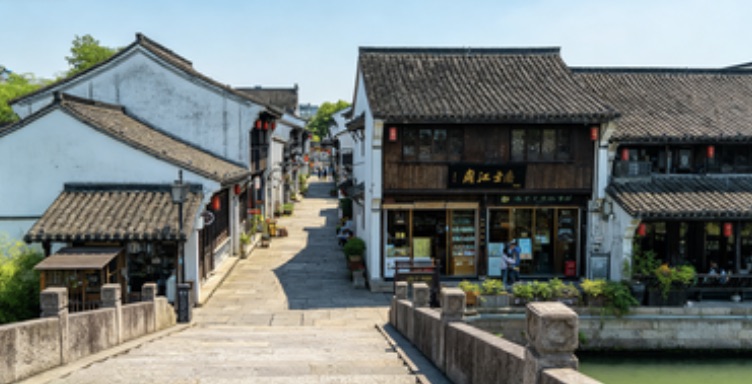
Xiaohe Straight Street is a well-preserved historic district along the banks of the Xiaohe, a tributary of the Grand Canal. Its narrow lanes and closely spaced residences retain the fabric of late Qing and early Republican-era Jiangnan water-town life. Traditional dwellings, artisan workshops, and creative shops line the street, capturing the unhurried character of old Hangzhou.

6. Xiaohe Park

Xiaohe Park sits at the northern end of Xiaohe Straight Street and was converted in recent years from a former industrial oil depot into a waterfront park. The large cylindrical oil tank structures have been preserved and woven into a modern landscape design, creating a public space where industrial heritage meets natural ecology alongside the neighbouring historic district.

7. Qiaoxi Historical and Cultural Block

Qiaoxi Historical and Cultural Block lies to the west of Gongchen Bridge and is one of the most concentrated showcases of Hangzhou canal culture. The district preserves the layout of traditional residences, shops, and lanes from the late Qing and Republican periods, and is home to the China Umbrella Museum, the China Scissors and Swords Museum, the China Fan Museum, and the Hangzhou Museum of Arts and Crafts.

8. China Grand Canal Museum

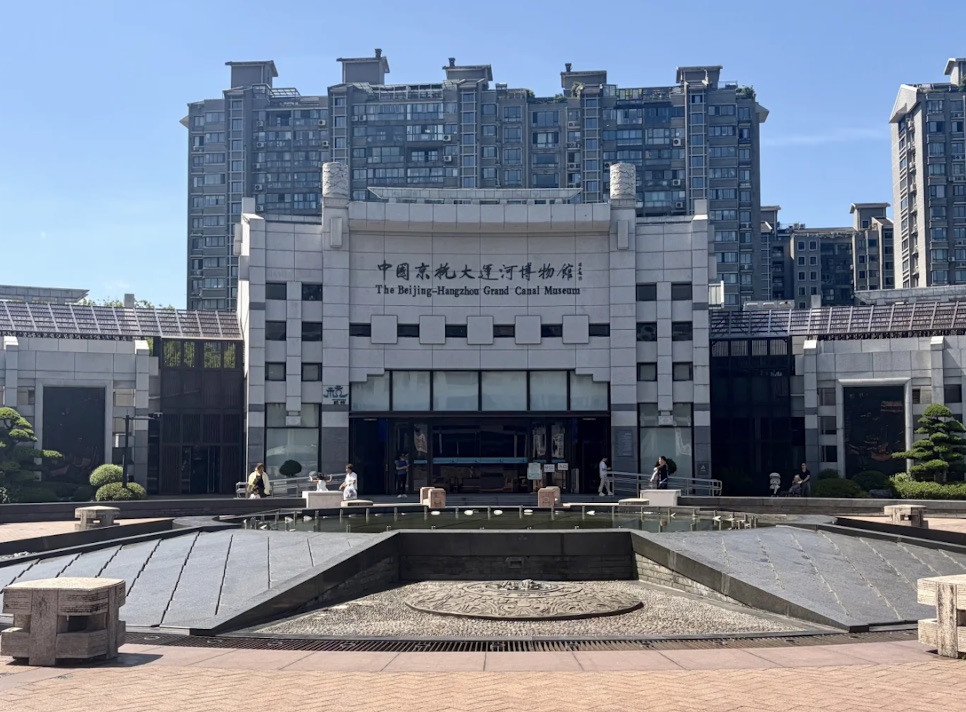
The China Grand Canal Museum stands on the eastern side of Canal Square and is China's first museum dedicated solely to the Grand Canal. Through artefacts, scale models, films, and reconstructed scenes, it presents a systematic account of the canal's excavation history, grain-transport administration, engineering technology, and lasting influence on cities along its route.

9. Gongchen Bridge

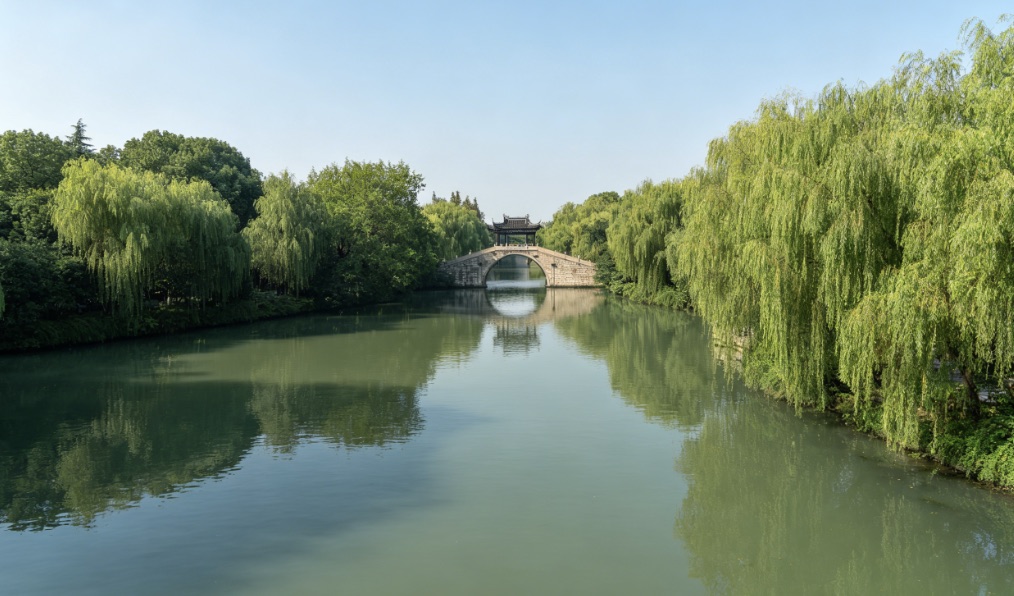
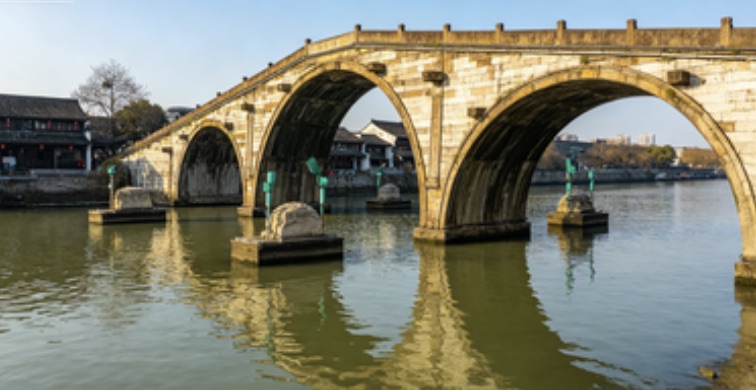
Gongchen Bridge was first built in the fourth year of the Chongzhen reign of the Ming dynasty. It is the largest and best-preserved ancient stone arch bridge remaining on the Hangzhou section of the Grand Canal. Spanning the waterway with commanding presence, it stands as one of Hangzhou's iconic landmarks and has witnessed centuries of river traffic and commercial activity.

10. Canal Square

Canal Square stands at the eastern foot of Gongchen Bridge and serves as a major city square and visitor hub at the northern end of the Hangzhou section. With an open view across the water toward Gongchen Bridge and the Qiaoxi district, it is one of the best vantage points for taking in the ancient bridge and the canal's broader landscape.

Practical info Opening hours · Ticket · Getting there
Opening hours
  • Canal banks: 24/7. Water bus: approx. 7:00-18:00 (varies by route). Museums: Tue-Sun 9:00-16:30.
Ticket
  • Canal-side blocks are free. Water bus: 3 RMB/person. Night cruise: approx. 100-150 RMB/person. All museums free.
Getting there
  • **Metro:** Lines 1/3/19 to West Lake Cultural Square Station; Line 3 to Xiangji Temple Station.
  • **Water Bus:** Line 1 from Wulinmen Pier, 30-60 min cruise along the canal, fare 3 RMB.
  • **Bus:** Multiple routes to Wulinmen or Gongchen Bridge stations.
  • **By Car:** Navigate to "Wulinmen Pier" or "Canal World." Paid parking available.

Inside Beijing-Hangzhou Grand Canal (Hangzhou Section)

10 stops, in walking order — read top to bottom, no clicking needed.

1 Wulinmen Dock (Wulinmen Matou) of 10

Wulinmen Dock (Wulinmen Matou)

武林门码头
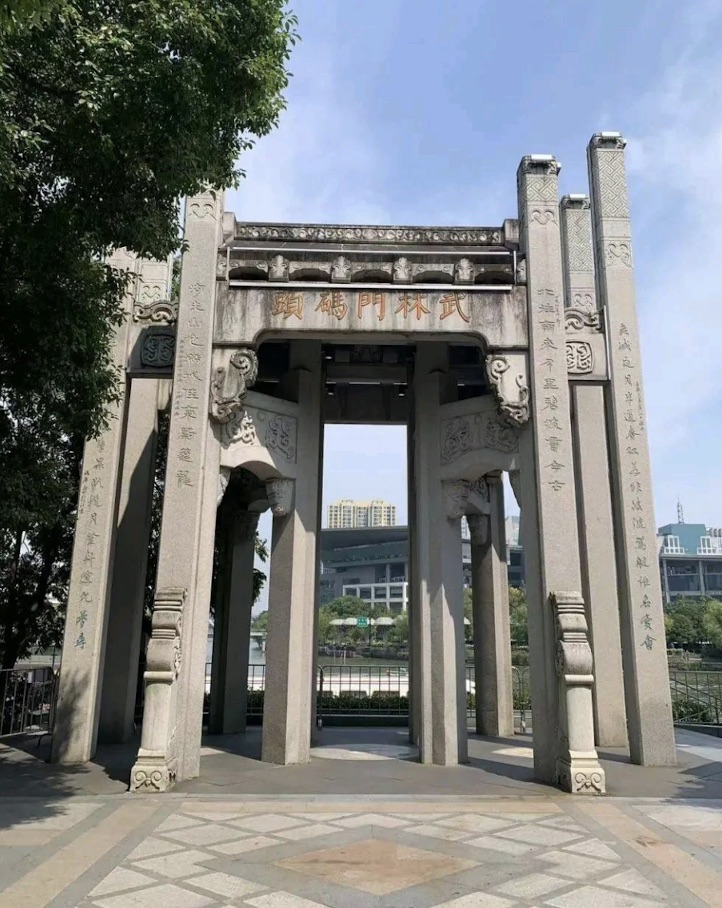
Wulinmen Dock is located on the north side of Wulin Square in Gongshu District, Hangzhou, on the bank of the Beijing-Hangzhou Grand Canal. It is the largest cruise ship dock with the most complete facilities on the Hangzhou section of the canal, and also the main departure station for Hangzhou water buses and canal sightseeing cruise ships. The dock is equipped with a modern passenger waiting hall, complete with air conditioning, seating, electronic display screens, and ticket windows, dispatching over a million passengers annually. Departing from Wulinmen Dock, visitors can take the water bus (about 3 RMB/stop) southward along the canal, passing scenic spots such as Xinyi Square, Fuyi Granary, and Gongchen Bridge, covering a total distance of about 12 kilometers——hailed as the "Oriental Venice" water bus line. During traditional festivals such as Dragon Boat Festival and Mid-Autumn Festival, the dock also hosts folk activities such as "Canal Dragon Boat Race" and "Canal Moon Appreciation," bustling with excitement.

On-site narration · read it where you stand

Welcome, everyone. Our journey along the Hangzhou section of the Grand Canal begins right here at Wulinmen Wharf. This is one of Hangzhou's key water transport hubs and the starting point for many visitors boarding a water bus or canal cruise. Look across the water — the modern skyline of Hangzhou rises on the far bank, while beneath your feet this broad channel has been flowing for more than two thousand years. Ancient waterway and steel-and-glass towers sharing the same frame: that contrast is very much the spirit of this city.

The Wulinmen area has long been Hangzhou's northern water-and-land gateway. During the Ming and Qing dynasties, merchant vessels crowded the wharf, bringing grain, silk, and tea from across the Jiangnan region to be loaded onto boats heading north. Grain transport by canal has long since passed into history, but the wharf is still part of daily city life — water buses call here every day, and locals and visitors alike can board and travel north along the canal, much as travellers did centuries ago.

If you'd like a good photo, head to the viewing platform on the northern side of the wharf. With the canal and the modern buildings in the background, you'll capture that striking contrast between past and present. Early morning and dusk offer the softest light, and on calm days the water gives you a clean, clear reflection. Next we'll be heading north — either by boat or along the riverside path — toward West Lake Cultural Square. Please stay with the group.
West Lake Cultural Square (Xihu Wenhua Guangchang)

西湖文化广场

West Lake Cultural Square is located in Gongshu District, Hangzhou, facing Wulin Square across the river at the southernmost end of the Beijing-Hangzhou Grand Canal section in Hangzhou. It is one of Hangzhou's most important urban cultural squares. The square covers an area of about 13.3 hectares and consists of four parts: the main square, musical fountain, canal landscape belt, and cultural venue cluster. Standing at the center of the square is the Global Center, about 100 meters high (one of Hangzhou's supertall buildings). To the north are arranged in order the three major provincial-level cultural venues: Zhejiang Provincial Museum, Zhejiang Museum of Natural History, and Zhejiang Science and Technology Museum, making it the area with the densest cultural facilities in Hangzhou. The main fountain of the square is one of Hangzhou's largest musical fountains, operating on a regular schedule daily with coordinated lighting and music, with water jets reaching up to 60 meters high——the night view is especially spectacular.

On-site narration · read it where you stand

We've now arrived near West Lake Cultural Square. This is one of Hangzhou's largest urban cultural spaces, and along the eastern bank you'll see the Zhejiang Provincial Museum, the Zhejiang Natural History Museum, and the Zhejiang Science and Technology Museum. They may not carry the same weight of years as an old bridge or a historic street, but together with the canal they complete the picture of Hangzhou as a modern cultural city.

Historically, the canal carried far more than goods — it carried ideas. Jiangnan's painting traditions, opera, and craftsmanship travelled north with the canal boats, while new thinking and technologies flowed south in return. The site of West Lake Cultural Square was once the meeting point between the canal and the rhythms of everyday city life. Today it serves both as a leisure space for locals and as a window onto Zhejiang's history and natural heritage for visitors.

If you have extra time, I'd recommend choosing one or two of the museums on the eastern side of the square to visit. The Zhejiang Provincial Museum in particular holds an outstanding collection of artefacts related to Zhejiang's history and canal culture. The square itself has plenty of good spots for photos — the riverside walkway and the lawns are especially popular. Around dusk, the setting sun catches the glass facades of the modern buildings and sends a warm golden light rippling across the water — a wonderful moment for city photography. Now let's continue north to our next stop, Xinyifang.

Xinyi Square (Xinyifang)

信义坊

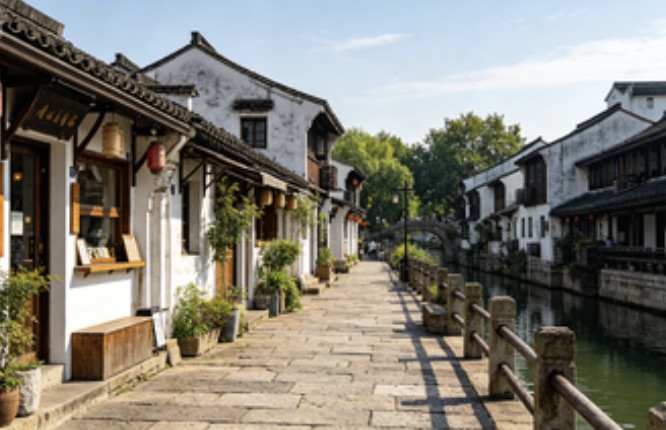
Xinyi Square is located on the west bank of the northern section of the Beijing-Hangzhou Grand Canal in Gongshu District, Hangzhou, south of Daguan Bridge. It is a waterfront cultural leisure block transformed from historical streets and lanes. The block relies on the old street and lane layout on the west bank of the canal, preserving a large number of residential buildings from the late Qing Dynasty and early Republican period, while introducing modern cultural creativity, dining, and leisure businesses, forming a unique character of "old Hangzhou negatives, new city living room." Xinyi Square Water Street is the main axis of the block, with a total length of about 500 meters, built along the canal. On one side are restored black-tiled and white-walled residential buildings, and on the other side is the open canal water surface, with occasional sculling boats gliding by——the scenery is full of Jiangnan watertown charm. The block regularly hosts cultural events such as "Canal Culture Market" and "Xinyi Square Music Festival." Compared to the bustling Qiaoxi Historical and Cultural Block, Xinyi Square appears more tranquil.

On-site narration · read it where you stand

Welcome to Xinyifang. This is one of the most celebrated waterfront commercial districts along the Hangzhou section of the canal — and one of the best places to feel the pulse of everyday canal life. The district runs along the riverbank and has kept a number of traditional features: waterfront arcaded buildings, stone landing steps, and old-style shopfronts. In the past this was a trading and unloading hub for goods moving up and down the canal, and the merchants who stopped here to unload cargo, do business, drink tea, and rest gradually built it into a lively marketplace.

Xinyifang today still has that energetic, lived-in quality. Both banks of the canal are lined with teahouses, restaurants, bars, and specialty shops. By day you can sit with a pot of Longjing tea and watch the boats go by; after dark the lights come on and the area becomes one of Hangzhou's most popular spots for a night out. The buildings are not ancient, but their scale and layout follow the traditional street pattern, and you can still catch a sense of the old canal trading town in the atmosphere.

Take a look at the stone landing steps along the water's edge. Those stairs reaching down into the canal were where boats tied up to load and unload cargo. On some of them you can still make out the holes where mooring ropes were fastened — traces left by generations of canal traffic. For photos, I'd suggest crossing to the opposite bank and shooting the Xinyifang waterfront — especially at night when the warm yellow lights are reflected in the water. It makes for a beautifully atmospheric Jiangnan shot. Next stop: Fuyi Granary.

Fuyi Granary (Fuyicang)

富义仓

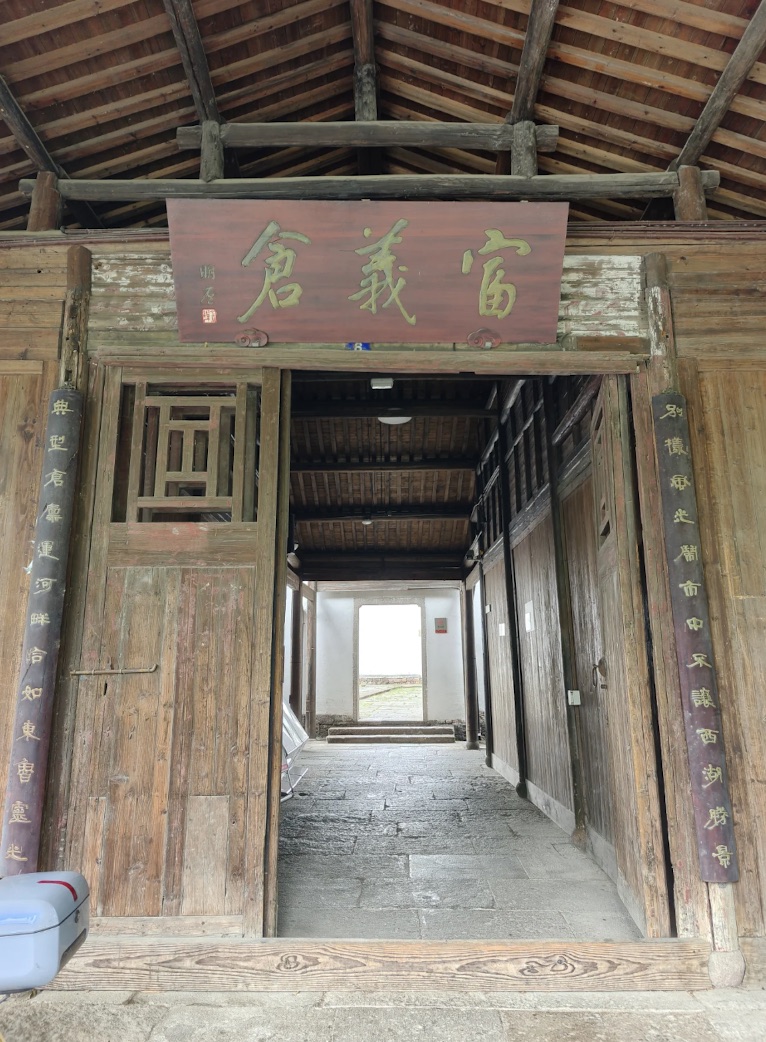
Fuyi Granary is located at the southern section of the Hangzhou segment of the Beijing-Hangzhou Grand Canal, within Xiawan Lane. It was first built in 1880 during the Qing Dynasty and served as an important granary site in the canal shipping system, hailed alongside Beijing's Nanxincang as the "Twin Gems of Granaries Under Heaven." The granary covers an area of about 8,000 square meters, originally consisting of four rows and five sections totaling sixty rooms. The existing building complex is currently the only well-preserved Qing Dynasty granary architectural cluster in Hangzhou. The entire complex adopts a traditional courtyard-style layout with black-tiled hard-mountain roofs, thick walls, and small windows, incorporating functions of thermal insulation, moisture prevention, and theft protection, reflecting the wisdom of ancient granary architecture. In 2007, Fuyi Granary completed protective renovation and was transformed into a canal culture exhibition center and cultural creative space. The interior houses a permanent exhibition themed "The Canal and Hangzhou," narrating the close relationship between the Grand Canal and Hangzhou's urban development through texts, images, artifacts, and multimedia. Fuyi Granary is one of the heritage sites for the Grand Canal's application for UNESCO World Heritage status.

On-site narration · read it where you stand

We've arrived at Fuyi Granary. Built during the Guangxu reign of the Qing dynasty, it is over a hundred years old and one of the largest and best-preserved ancient granary complexes surviving in Hangzhou. In its day it was paired with Nanxin Granary in Beijing as one of the two great imperial granaries of China. The warehouse buildings you see before you were deliberately positioned along the canal so that grain could be unloaded directly from boats into storage, then redistributed from here to the rest of the country.

The architecture of Fuyi Granary has some striking features. The walls are thick, the roof pitch is gentle, and the floors are raised — all designed to keep out moisture and insects and to ensure good ventilation, so that grain could be stored for long periods without spoiling. Without modern ventilation systems, the builders relied entirely on the intelligence built into the structure itself. Wide passageways between the storehouses made it easier to move goods and manage fire risk. Although grain is no longer kept here, the original layout of the complex has been largely preserved.

Here's a small detail worth knowing: the name "Fuyi" comes from a phrase meaning "wealth through righteousness," carrying the wish for full granaries and a prosperous people. The site has since been converted into a mixed-use cultural space for canal heritage exhibitions and contemporary art, and it regularly hosts shows and cultural events. When taking photos, try the narrow passages between the storehouses, or stand on one of the stone landing steps with the warehouse walls and the water behind you — the sense of historical depth in that composition is hard to beat. Our next stop is Xiaohe Straight Street.

Xiaohe Straight Street (Xiaohe Zhijie)

小河直街

Xiaohe Straight Street is located at the convergence of the Beijing-Hangzhou Grand Canal and Xiaohe Creek in Gongshu District, Hangzhou. It is the main axis of the Xiaohe Historical and Cultural Block and one of the best-preserved historical blocks of canal civilian life in Hangzhou. The block was built along Xiaohe Creek, with a total length of about 500 meters. Both sides retain a large number of canal residential houses from the late Qing Dynasty and early Republican period——mostly in the layout of "front shop, back residence" or "lower shop, upper residence," with black tiles, white walls, wooden doors, and stone steps, authentically presenting the living conditions of canal-side common people a century ago. Unlike other overly commercialized historical blocks, Xiaohe Straight Street still has a large number of original residents living there. The block regularly hosts canal culture events and is an important node of the Hangzhou Canal Cultural Belt. Visitors can experience sculling boat rides, taste canal-side tea, listen to old Hangzhou residents tell stories, and feel the unique charm of a "living historical block."

On-site narration · read it where you stand

We've now reached Xiaohe Straight Street. This is a well-preserved historic district along the banks of the Xiaohe, a tributary of the Grand Canal, and one of the best places to absorb the atmosphere of old Hangzhou neighbourhood life. The street is narrow, the lanes wind between closely spaced houses, and most of the buildings along both banks date from the late Qing and early Republican era — traditional Jiangnan-style architecture with white-plastered walls, dark roof tiles, and wooden doors and windows that carry many of the small, telling details of old Hangzhou.

In the past the Xiaohe was an important branch waterway, and small boats could pass through it to reach the main canal channel. Both banks became home to artisans and traders, and the district once housed soy sauce breweries, rice shops, cloth merchants, and blacksmiths' workshops. Today those old buildings have been converted into teahouses, bookshops, guesthouses, and creative stores, but the layout of the lanes and the character of the buildings have stayed much the same. Walking through here feels like stepping back into Hangzhou as it once was.

Have you noticed that most of the houses are built right up to the water, with stone steps leading down to the river from their front doors? That's a classic feature of Jiangnan watertown living — residents used those river steps to wash vegetables, do their laundry, and board or leave their boats. On some of the older houses the doorways still carry finely carved brick or wood reliefs that, though worn by time, give you a clear sense of the craftsmanship that once went into them. For photos, look for a small bridge or a waterside alley — early in the morning, before the visitors arrive, you can capture that quiet, timeless Jiangnan mood at its finest. Next we head north to Xiaohe Park.

Xiaohe Park (Xiaohe Gongyuan)

小河公园

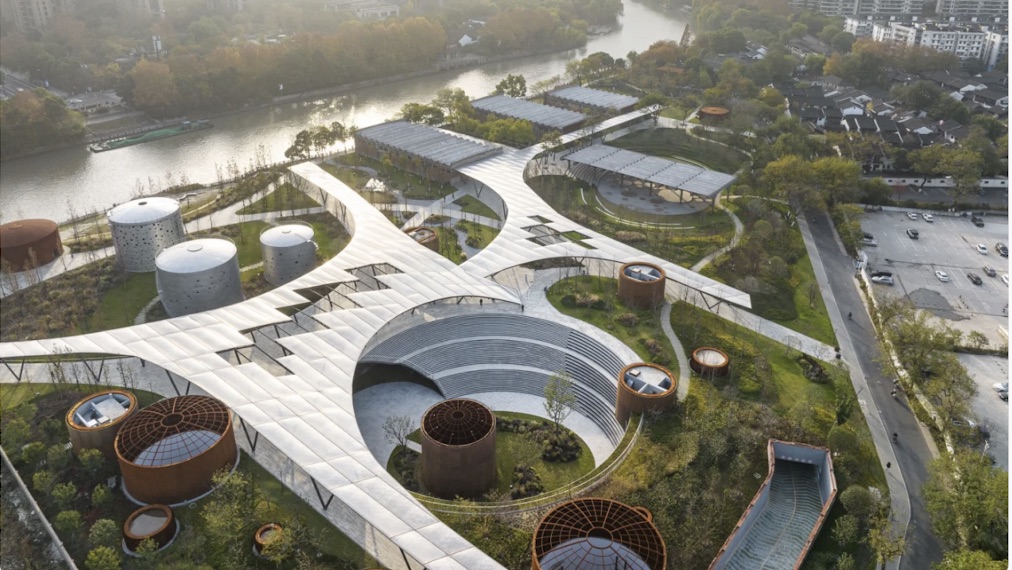
Xiaohe Park is located south of Xiaohe Straight Street in Gongshu District, along the Beijing-Hangzhou Grand Canal. It was converted from the former Hangzhou Xiaohe Oil Depot site and officially opened to the public in 2022, serving as an important node of the Hangzhou Grand Canal National Cultural Park. Covering an area of about 5.6 hectares, the park ingeniously preserves the industrial relics of the original oil depot, including four large oil tanks, a loading and unloading dock, and oil pipelines, which are connected as a whole through steel structure corridors, landscape walkways, and green vegetation. The four giant oil tanks have been transformed into immersive light and shadow art spaces, presenting brilliant visual effects under built-in lighting at night and making the park a popular new photo spot in Hangzhou. Along the canal side, the park features a waterfront walkway about 10 meters wide, flanked by weeping willows, camphor trees, and cherry blossoms, offering diverse scenery throughout the four seasons.

On-site narration · read it where you stand

Welcome to Xiaohe Park. This park sits at the northern end of Xiaohe Straight Street and was converted from a former industrial oil depot into a waterfront park. As you walk in, the first things you'll see are several large cylindrical oil tank structures. These tanks once stored fuel for the canal boats and the city's industries. Today they've been kept in place and converted into art spaces, a café, and a viewing platform — a model of how industrial heritage can be woven into contemporary urban life.

The design of Xiaohe Park is genuinely inventive. The designers kept the original industrial structures and existing vegetation, then added boardwalks, lawns, wetlands, and viewing platforms, so the park carries both the weight of an industrial heritage site and the open, easy feel of a natural landscape. A wide variety of trees and wetland plants have been established throughout, and the riverside path offers broad views across to where the Xiaohe meets the main canal.

This is a great spot for photos. The large oil tanks are the most distinctive backdrop — stand on the lawn below them or out on one of the boardwalks and you'll get shots with a strong industrial character. Come evening, when lights illuminate the outside of the tanks in warm amber tones or shifting colours, the mood shifts completely. I'd encourage everyone to linger here for a bit and take in how Hangzhou has turned industrial heritage into shared public space. Our next stop takes us to the heart of canal culture — Qiaoxi Historical and Cultural Block.

Qiaoxi Historical and Cultural Block (Qiaoxi Lishi Wenhua Jiequ)

桥西历史文化街区

The Qiaoxi Historical and Cultural Block is located on the west bank of Gongchen Bridge and is one of the best-preserved historical blocks along the Hangzhou section of the Beijing-Hangzhou Grand Canal. Covering an area of about 7.8 hectares, the block retains a large number of residential houses, workshops, shops, and dock ruins from the late Qing Dynasty and early Republican era, fully presenting the historical features of canal handicraft civilization. Strolling through the block, visitors see bluestone roads flanked by restored black-tiled and white-walled buildings. Along the street are time-honored shops such as Zhang Xiaoquan, Wang Xingji, and West Lake Silk Umbrella, as well as numerous independent cafes, cultural creative studios, and handicraft workshops. The block houses four national-level thematic museums: China Umbrella Museum, China Knife, Scissors and Sword Museum, China Fan Museum, and Hangzhou Arts and Crafts Museum. The block connects with Xiaohe Straight Street to the south and extends north to the Grand Canal Traditional Chinese Medicine Hall and Zhang Daxian Temple, with a total length of about 1.5 kilometers.

On-site narration · read it where you stand

We've arrived at Qiaoxi Historical and Cultural Block. This is one of the most concentrated areas of cultural resources along the Hangzhou section of the canal, and an important window onto traditional Hangzhou craftsmanship and canal life. The district lies to the west of Gongchen Bridge and preserves a large number of traditional residences, shops, and lane layouts from the late Qing and early Republican periods. Walking the bluestone-paved streets, you're flanked by white-walled, dark-tiled buildings — many still with their original wooden shopfronts, carved window lattices, and old-style signboards.

What makes Qiaoxi especially distinctive is the cluster of specialist museums it contains. The China Umbrella Museum, the China Scissors and Swords Museum, the China Fan Museum, and the Hangzhou Museum of Arts and Crafts are all located here, forming a remarkable concentration of cultural institutions in a single district. These museums showcase the refined skill of China's traditional crafts and also reflect how commercial prosperity along the canal drove the growth of local industries. In the past, Hangzhou's umbrellas, fans, and scissors were shipped across the country via the canal.

Feel free to take your time here — one street, and you've seen a whole panorama of Hangzhou's traditional crafts. The district is also full of intangible-heritage experience shops, long-established stores, and teahouses where you can watch artisans at work making oiled-paper umbrellas, folding fans, and other traditional objects. Best photo spot: stand at the western end of Gongchen Bridge and frame the Qiaoxi waterfront shops and red lanterns in your shot — it captures the spirit of canal life beautifully. Next we head to the China Grand Canal Museum for a fuller picture of this waterway's history.

China Beijing-Hangzhou Grand Canal Museum (Zhongguo Jinghang Da Yunhe Bowuguan)

中国京杭大运河博物馆

The China Beijing-Hangzhou Grand Canal Museum is located south of Canal Square in Gongshu District, Hangzhou, and officially opened to the public in 2006. It is the only national-level thematic museum in China dedicated to the Beijing-Hangzhou Grand Canal. With a floor area of about 12,000 square meters and the theme "The Canal Changed China," the museum systematically showcases the long history of over 2,500 years from 486 BCE when King Fuchai of Wu excavated the Han Ditch to the present, as well as the profound impact of the Grand Canal on Chinese civilization in politics, economy, culture, and water conservancy. The museum houses over ten thousand pieces of cultural relics, ancient books, charts, and models related to the Grand Canal, including precious artifacts such as a Sui Dynasty gilt bronze door knocker, a Yuan Dynasty canal ship rudder, and a Ming Dynasty complete map of the canal. The museum building is shaped like a giant canal ship about to set sail, magnificent in bearing. The museum also regularly holds canal culture lectures, temporary special exhibitions, and youth research activities.

On-site narration · read it where you stand

We've now arrived at the China Grand Canal Museum. This is China's first museum dedicated entirely to the Grand Canal, and it presents a systematic account of the canal's excavation history, engineering technology, grain-transport administration, and the profound influence it has had on China's politics, economy, and culture. After visiting, you'll understand why this waterway has been called China's ancient national artery.

The permanent galleries are divided into several sections. The first traces the canal's origins and development — from the Hanju Canal dug by King Fuchai of Wu during the Spring and Autumn period, through the large-scale north-south canal works ordered by Emperor Yang of Sui, to the dredging and refinements carried out across the Yuan, Ming, and Qing dynasties. The second section showcases the engineering technology: locks, embankments, bridges, and water reservoirs — ancient hydraulic infrastructure that still impresses today. The third section reconstructs the world of canal transport, giving you a clear picture of how grain, salt, silk, and other goods moved along the waterway, and just how important canal shipping was to state finances.

I'd especially recommend spending time with the full-scale canal panorama model and the reconstructed ancient vessel models inside the museum — they make the scale and purpose of the canal immediately vivid. The museum also holds many rare artefacts: structural components from transport vessels, tax office documents, merchant receipts, and paintings and sculptures depicting canal life. When taking photos, watch out for reflections in the glass display cases — angling your shot slightly to the side will help reduce the glare. After the museum, we head toward today's most spectacular sight — Gongchen Bridge.

Gongchen Bridge (Gongchen Qiao)

拱宸桥

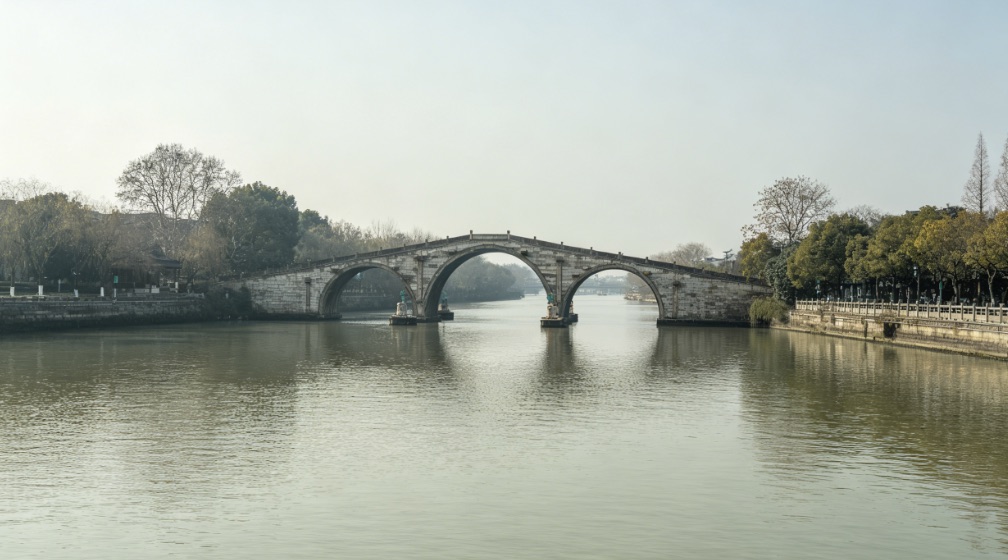
Gongchen Bridge was first built in 1631 during the Ming Dynasty and stands as the southern terminus landmark of the Beijing-Hangzhou Grand Canal. It is the longest, highest, and widest surviving stone arch bridge in Hangzhou. The bridge spans 98 meters with a height of 16 meters, featuring a three-arch thin-pier structure. The deck is paved with long bluestone slabs, flanked by stone balustrades and pillar posts carved with lotus motifs in an antique and majestic style. The name "Gongchen" derives from the phrase "gongweichenji," meaning to guard the imperial seat with reverence, symbolizing respect for the emperor. Historically, Gongchen Bridge marked the terminal point where canal shipping boats arrived in Hangzhou, and merchants from all over would dock and disembark here, gradually forming a bustling market on the west side of the bridge, creating the magnificent scene of "Ten Li of Silver Hushu." Today, Gongchen Bridge remains vibrant with traffic and pedestrians. The ancient bridge stretches across the sparkling canal waters, with the Qiaoxi Historical and Cultural Block on the west bank and the commercial district on the east bank. At dusk, the setting sun casts its glow on the ancient stone railings while canal boats glide slowly by—a truly moving scene.

On-site narration · read it where you stand

Ladies and gentlemen, we've arrived at the highlight of today's journey — Gongchen Bridge. Built in 1631, the fourth year of the Chongzhen reign of the Ming dynasty, it is the largest and best-preserved ancient stone arch bridge remaining on the Hangzhou section of the Grand Canal. For centuries it has spanned the waterway, linking the east and west banks and serving as the most important crossing point on this stretch of canal.

Gongchen Bridge is 92 metres long and about 6 metres wide, built from massive stone blocks with a series of semicircular arches that give it a sense of settled, commanding grandeur. The name "Gongchen" means bowing in reverence to the North Star, reflecting the ancient Chinese veneration of celestial order and imperial authority. In the days of active canal trade, boats travelling south from the north knew they had reached Hangzhou the moment Gongchen Bridge came into view. The bridge has long been regarded as the symbolic gateway to Hangzhou's canal.

Look up at the stone balustrades and the carved inscription panel on the bridge. Despite centuries of wind and rain, the lines of the carvings remain clear. The bridge surface still bears the grooves worn by cart wheels and the smoothing of countless footsteps — real traces left by history. Standing at the top of the arch, you can look out over the entire canal, with the Qiaoxi historic district stretching away on one side and boats passing slowly below. It's one of the finest vantage points on the whole route. I'd suggest photographing from three positions: the eastern bank, the western bank, and the top of the bridge itself. Early morning and late afternoon give the best light, and the reflection of the arch in the water makes for a classic composition. Next we move on to our final stop — Canal Square.

Yunhe Square (Yunhe Guangchang)

运河广场

Yunhe Square is located on the west bank of Gongchen Bridge in Gongshu District, at the southern terminus of the Beijing-Hangzhou Grand Canal. It is an open urban square that showcases Hangzhou's canal culture most comprehensively. The square is paved with bluestone slabs and antique-style floor tiles, with a large sailing ship sculpture standing at its center, symbolizing the millennial canal shipping culture. The east side of the square is adjacent to Gongchen Bridge, with waterfront steps and antique-style street lamps along the bank, making it a popular spot for citizens to take evening strolls, square dancing and enjoying the canal night view. During holidays, the square hosts canal culture markets, intangible cultural heritage exhibitions, and light shows, bustling with activity. The surrounding area is equipped with tea culture houses, canal-themed restaurants, and cultural creative shops, where visitors can rest and enjoy tea while experiencing Hangzhou's historical heritage of "prospering because of the canal." This is also one of the main boarding and disembarkation points for canal cruise boats on the Hangzhou section of the Grand Canal.

On-site narration · read it where you stand

Everyone, welcome to the final stop on today's Grand Canal journey — Canal Square. The square sits at the eastern foot of Gongchen Bridge and serves as a major public gathering point and visitor hub at the northern end of the Hangzhou section. Looking back from here, Gongchen Bridge arches over the water, the Qiaoxi historic district stretches along the bank, and the museum, old residences, and shops line up one after another — a complete picture of canal culture laid out before you.

Canal Square is not only a place for visitors to rest — it's also woven into the daily life of Hangzhou residents. The square regularly hosts cultural events, intangible-heritage markets, and festival performances, making it a lively window onto contemporary Hangzhou. Standing in the centre of the square, you can feel once again what the Grand Canal has meant to this city: not merely a transport corridor, but a force that shaped the city's spatial form, gave rise to a distinctive everyday culture, and left behind the buildings, streets, and living traditions we see today.

This is one of the best spots to photograph Gongchen Bridge in its full span. Stand near the waterfront viewing area and use a wide-angle lens to bring the bridge, the water, and the historic district all into one frame. Come in the evening, as the lights come on, and the glow of Gongchen Bridge and the Qiaoxi district reflects in the canal below — the sight is something special. And with that, our journey along the Hangzhou section of the Grand Canal comes to a close. Thank you all for joining us. We hope this thousand-year-old waterway has left you with a memory worth keeping. Welcome back to Hangzhou any time.

Prefer to be shown around?

A local guide walks these 10 stops with you and answers what the page cannot.

Browse tours ↗