Travel Guide› Beijing› Yonghe Temple (Lama Temple)
Beijing · Temple & shrine

Yonghe Temple (Lama Temple) 雍和宫

Yonghe Temple (Lama Temple)
Address
No. 12 Yonghe Temple Street, Dongcheng District, Beijing (Beixin Bridge area, south side of Ditan Park)

Yonghe Temple (Lama Temple)

Yonghe Temple, also known as the Yonghe Temple Museum of Tibetan Buddhist Art, is located at 12 Yonghegong Avenue, Dongcheng District, Beijing. It is an imperial monastery that blends the cultural traditions of the Han, Manchu, Mongolian, and Tibetan peoples. Its history dates to the 33rd year of the Kangxi Emperor's reign (1694), when it was established as the residence of the emperor's fourth son, Yinzhen — the future Yongzheng Emperor — and was called the Prince Yong Mansion. In the third year of Yongzheng (1725) it was elevated to an imperial palace and renamed Yonghe Palace. In the ninth year of Qianlong (1744), the Qianlong Emperor converted it into a Gelug school Tibetan Buddhist monastery in order to pacify the frontier and strengthen ties with the northwestern ethnic groups. It became the highest-ranking Buddhist monastery in the country during the mid-to-late Qing dynasty. The temple covers 66,400 square meters and encompasses more than a thousand halls and chambers. Seven successive courtyards and five tiers of halls are arranged along the central axis, combining the orderly layout of Han Chinese palace architecture with the religious character of Tibetan Buddhism. The complex served both as a place of worship and as a key institution through which the Qing government administered Tibetan Buddhist affairs and connected the imperial center with frontier ethnic communities. The official visitor route follows the central axis from south to north.

Archway Courtyard

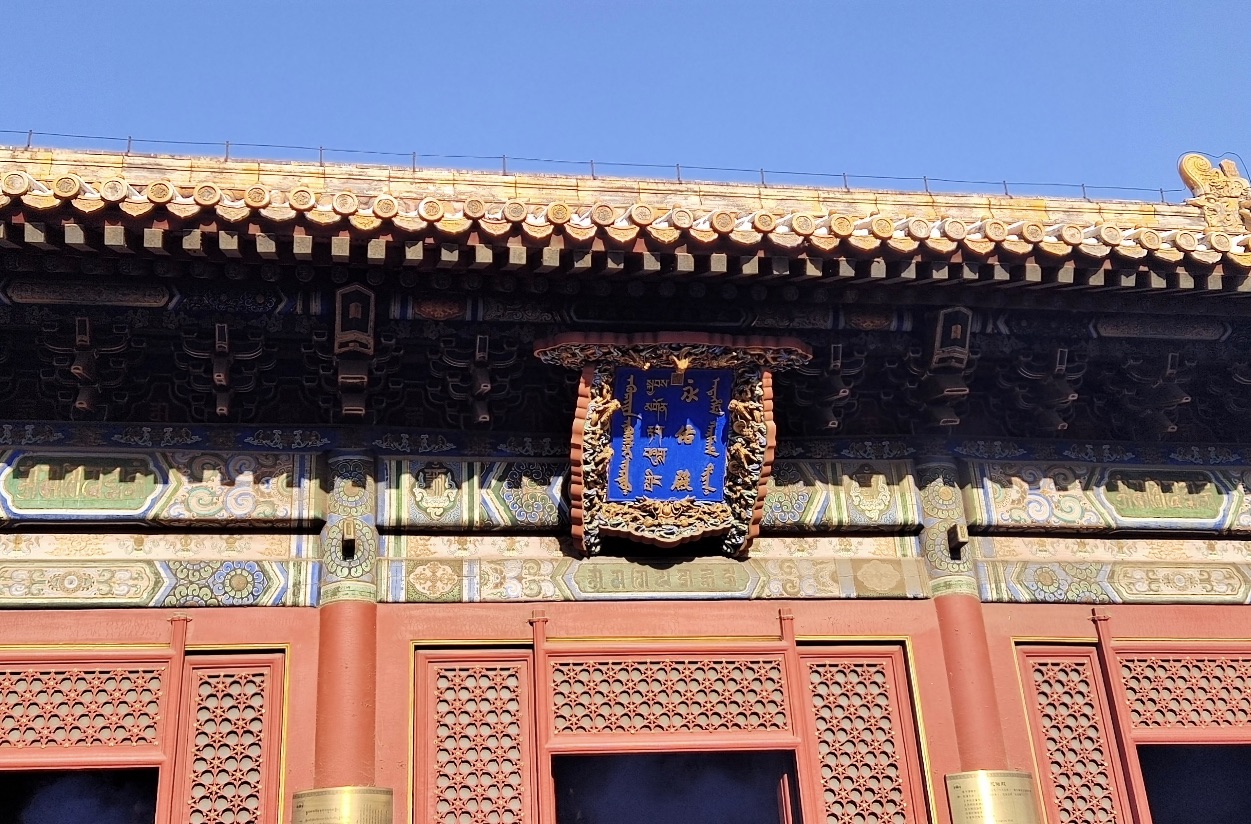
The Archway Courtyard is the southernmost section of Yonghe Temple, at the south entrance. It consists of three wooden memorial archways and a spirit wall to the south, first constructed in the ninth year of Qianlong (1744). The three archways were originally built of precious golden-thread nanmu timber, but were damaged by Japanese forces in 1939 and subsequently rebuilt in reinforced concrete. The three archways are arranged in a "pin" formation and bear the inscriptions "Huanhai Zunqin" (north archway), "Cilong Baoye" (east archway), and "Fuyan Jinsha" (west archway). The north archway is of the three-bay, four-column, nine-eave style — the highest rank — symbolizing imperial supremacy; the east and west archways are of the seven-eave style. All three archways carry plaques personally inscribed by the Qianlong Emperor in four scripts: Manchu, Chinese, Mongolian, and Tibetan, reflecting the Qing imperial court's respect for and synthesis of multi-ethnic cultures.

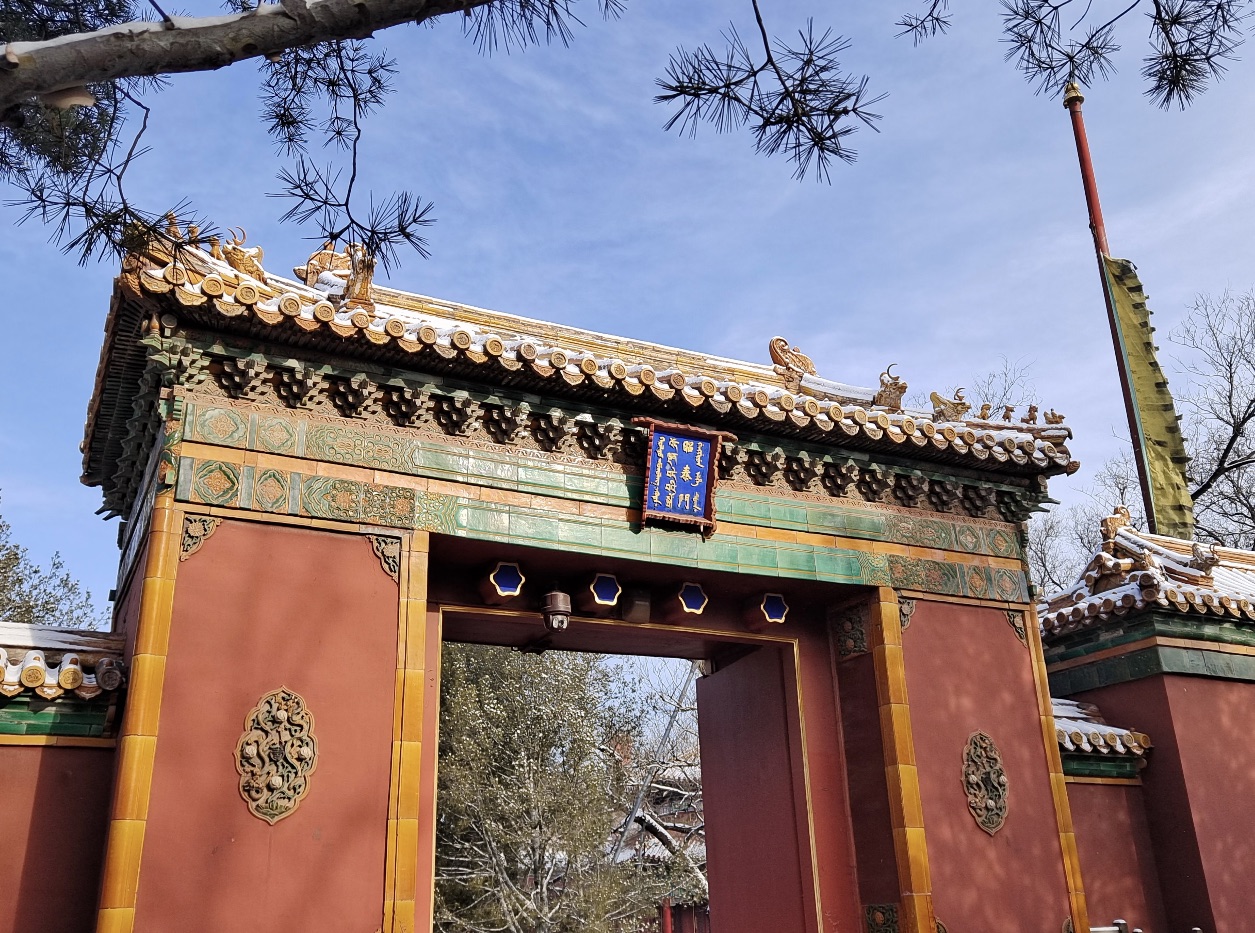
Zhaotai Gate

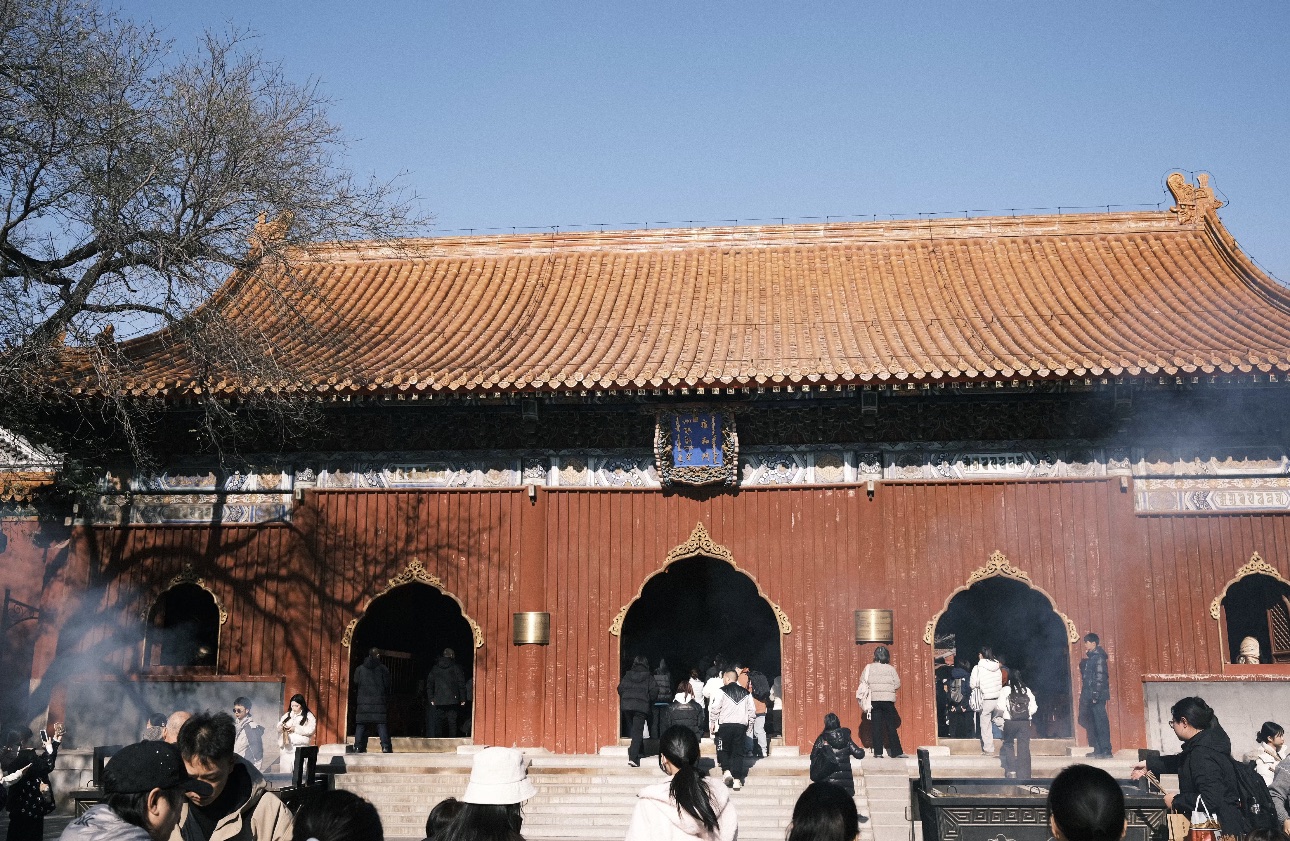
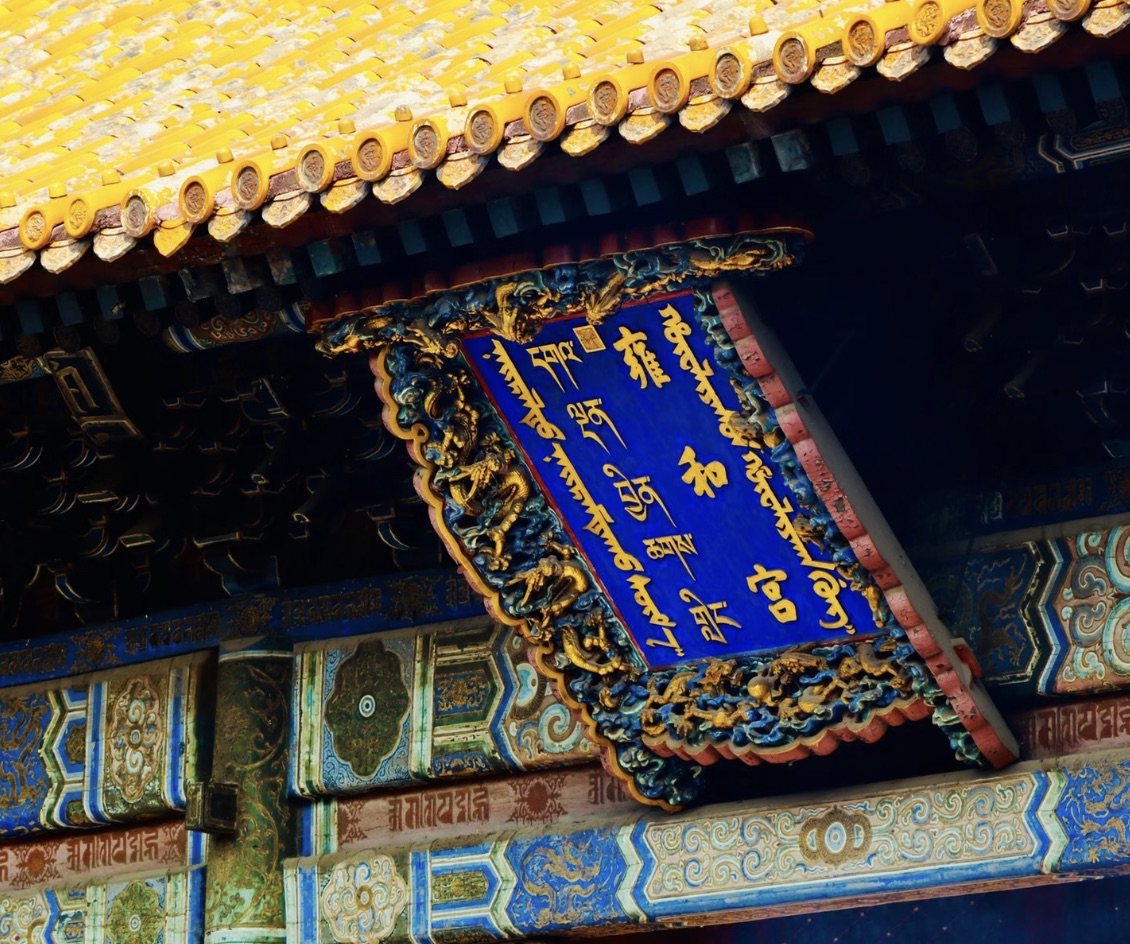
Zhaotai Gate is the main entrance to Yonghe Temple, situated on the north side of the Archway Courtyard at the first stop along the central axis. Built in the 33rd year of Kangxi (1694), it originally had a green glazed-tile roof. After the coffin of the Yongzheng Emperor rested here in the 13th year of Yongzheng (1735), the roof was changed to yellow glazed tiles to signify imperial status. The gate has a yellow glazed tubular-tile hip-and-gable roof, three bays wide, with a main entrance at the center and side doors on either flank. A plaque inscribed by the Qianlong Emperor in four scripts — Manchu, Chinese, Mongolian, and Tibetan — hangs above the gateway, bearing the name "Zhaotai Gate," meaning "to proclaim and exalt peace." An imperial palanquin path reserved for the emperor's exclusive use stands in front of the gate.

Bell Tower and Drum Tower

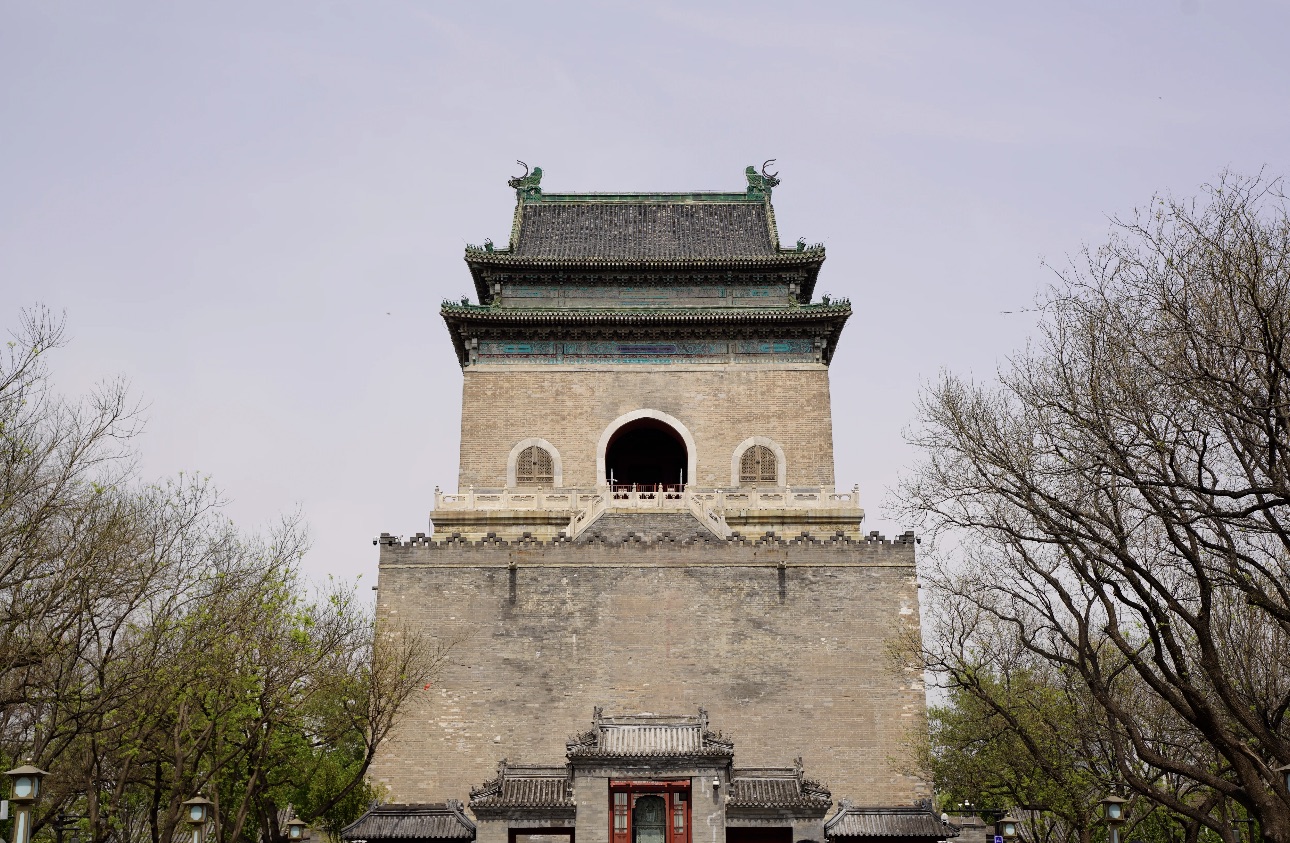
The Bell Tower and Drum Tower stand on the east and west sides respectively of the area north of Zhaotai Gate. Built in the ninth year of Qianlong (1744), they were constructed as ancillary structures when Yonghe Temple was converted into a Tibetan Buddhist monastery. Both buildings have double-eave hip-and-gable roofs covered in yellow glazed tiles, matching the architectural style of the Forbidden City and conveying imperial grandeur. The Bell Tower (east) houses a bronze bell; the Drum Tower (west) holds a large drum — both used in their day for timekeeping and to accompany religious ceremonies. The decorative painted patterns on both structures feature the motif of two dragons playing with a pearl.

Hall of the Heavenly Kings

The Hall of the Heavenly Kings is located at the second stop along the central axis, north of the Bell and Drum Towers. It was originally the main gate of the Prince Yong Mansion, known as "Yonghe Gate," and became the Hall of the Heavenly Kings — the temple's main gate — when the compound was converted into a monastery in the ninth year of Qianlong (1744). As such, it stands as a symbol of the fusion of Han and Tibetan Buddhism. The hall has a yellow glazed tubular-tile hip-and-gable roof, five bays wide, with double-sloped five-step bracket sets, and is decorated with imperial-style polychrome paintings. At the center of the hall stands a statue of the Cloth-Bag Monk, an incarnation of Maitreya, symbolizing joy and wisdom. On either side stand the Four Heavenly Kings: Dhritarashtra of the East (holding a pipa lute), Virudhaka of the South (holding a sword), Virupaksha of the West (holding a serpent), and Vaishravana of the North (holding a banner). Together, the emblems held by the four kings form a phonetic play on the phrase "favorable winds and timely rains." Behind the hall stands a guardian statue of Skanda holding a vajra scepter. On either side of Maitreya stands a nine-tiered longevity pagoda carved from zitan rosewood, each approximately three meters tall and covered with 274 statues of the Amitayus Buddha and White Tara.

Stele of "On Lamas"

The stele pavilion housing the "On Lamas" inscription is located at the third stop along the central axis, between the Hall of the Heavenly Kings and the Main Hall. Built in the 57th year of Qianlong (1792), it is an octagonal double-eave pavilion with a pointed roof covered in yellow glazed tiles, open on all four sides. Inside stands an imperial stone stele bearing the Qianlong Emperor's essay "On Lamas," engraved in four scripts — Manchu, Chinese, Mongolian, and Tibetan. This stele is a major policy document of the Qing government's management of Tibetan Buddhist affairs. Its text introduces the origins and development of Tibetan Buddhism, sets out the Qing government's policy of protecting Tibetan Buddhism, explains the origins and drawbacks of the living-Buddha reincarnation system, formally establishes the Golden Urn lottery system for identifying reincarnated living Buddhas, and asserts the central government's direct authority over Tibetan Buddhist affairs.

Bronze Mount Sumeru

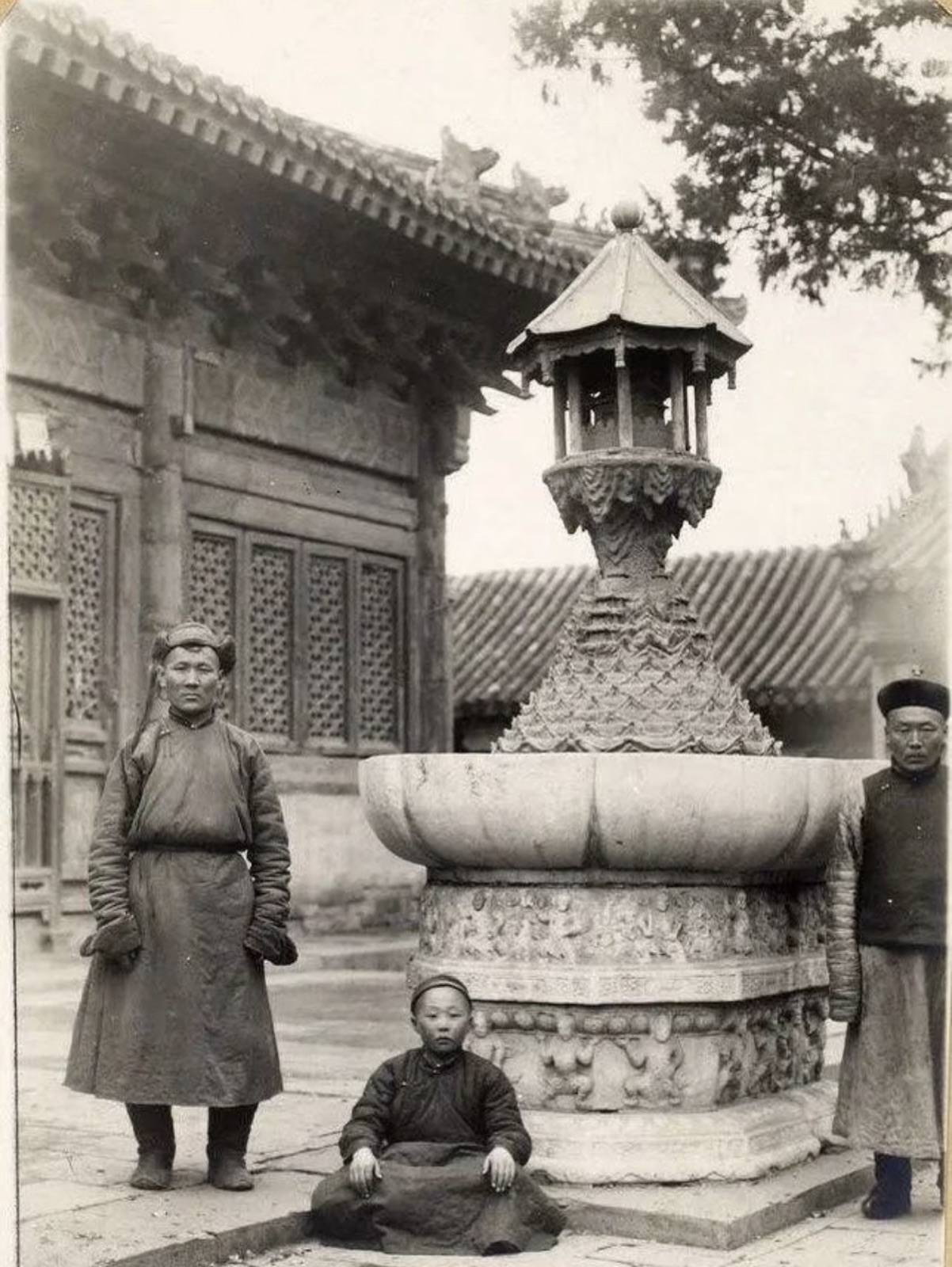
The Bronze Mount Sumeru stands at the third stop along the central axis, north of the stele pavilion. It is an artifact from the Wanli period of the Ming dynasty, later moved to Yonghe Temple. Mount Sumeru is the central symbol of the Buddhist cosmological universe, representing the center of the world. This bronze sculpture rests on a white marble base and stands approximately 1.5 meters tall. Its unusual form is divided into three parts — the Wind Wheel, the Water Wheel, and the Golden Wheel — representing the "small-thousand world" as conceived in Buddhist cosmology. Because visitors formerly mistook it for an incense burner, it is now covered by a protective case.

Main Hall

The Main Hall is situated at the fourth stop along the central axis. Originally the Silver Hall of the Prince Yong Mansion — where the prince received civil and military officials — it became the principal hall of Yonghe Temple when the monastery was established in the ninth year of Qianlong (1744), serving the equivalent role of the Main Buddha Hall in Han Buddhist temples. The hall has a single-eave hip-and-gable roof, seven bays wide, with yellow glazed tubular tiles, double-sloped five-step bracket sets under the eaves, coffered ceiling panels inside, and square brick flooring. At the center of the hall stand three bronze statues of the Buddhas of the Three Worlds: Dipankara Buddha (Buddha of the Past), Shakyamuni Buddha (Buddha of the Present), and Maitreya Buddha (Buddha of the Future), symbolizing the eternal transmission of the Dharma. Along the walls on either side stand eighteen luohan statues, 15 meters tall, in Tibetan style. In the northeast corner stands a Medicine Buddha, in the northwest corner another Maitreya Buddha, and on the west wall hangs a painting of the Thousand-Armed, Thousand-Eyed Guanyin Bodhisattva.

Hall of Eternal Blessing

The Hall of Eternal Blessing is located at the fifth stop along the central axis. It was originally the main sleeping chamber of the Prince Yong Mansion, serving as the Yongzheng Emperor's study and bedroom when he was still a prince. After the Yongzheng Emperor died in 1735, his coffin rested here for two years. When the monastery was established in the ninth year of Qianlong (1744), it was renamed the Hall of Eternal Blessing, meaning "to forever bless the spirit of the late emperor." The hall has a single-eave hip-and-gable roof, five bays wide, and employs a structural device known as "five bays visible, ten concealed" — appearing to be five bays from the outside while actually containing ten rooms inside. The hall enshrines a bronze statue of the Amitayus Buddha approximately 2.35 meters tall, symbolizing longevity and eternity, along with a bronze Medicine Buddha symbolizing health and the relief of illness. On the east and west walls hang two thangka paintings of Tara: the White Tara on the west wall is a painted image, while the Green Tara on the east wall is not painted but assembled from more than 4,000 pieces of fabric in different colors.

Kalachakra College (West Side Hall)

The Kalachakra College is one of Yonghe Temple's four great dratsangs (monastic colleges), located on the west side of the central axis at the southwest wing of the Hall of Eternal Blessing. Founded during the Qianlong reign, it was an important educational institution of the Gelug school. The hall is a single-story structure, five bays wide, with yellow glazed tiles. At its center stands a gilded bronze three-dimensional mandala model of Kalachakra, symbolizing the structure and workings of the cosmos. The hall also displays models of an armillary sphere and a celestial globe made during the Qianlong era, along with a Tibetan manuscript of a treatise on astronomical calendrical calculation.

Bhaisajyaguru College (East Side Hall)

The Bhaisajyaguru College is one of Yonghe Temple's four great dratsangs, located on the east side of the central axis at the southeast wing of the Hall of Eternal Blessing. Founded during the Qianlong reign, it served as a place for the study of medicine within the Gelug school. The hall is a single-story structure, five bays wide, with yellow glazed tiles. At the center of the hall stand three bronze statues of the Buddhas of the Three Worlds — Medicine Buddha as the principal figure, flanked by the Amitayus Buddha and a Patriarch Buddha — symbolizing health and longevity. The hall also displays classic Tibetan medical texts and specimens of medicinal materials.

Tantric College

The Tantric College is one of Yonghe Temple's four great dratsangs, located on the east side of the central axis to the east of the Hall of Eternal Blessing. Founded in the ninth year of Qianlong (1744), it was the place for studying esoteric teachings within the Gelug school. The hall is a two-story building, five bays wide, with yellow glazed tiles. At the center stands a statue of Je Tsongkhapa; to the north stands a statue of Ghaladain Maitreya, and to the south a statue of Xizhabulzengg.

Sutra-Teaching College

The Sutra-Teaching College is one of Yonghe Temple's four great dratsangs, located on the west side of the central axis to the west of the Hall of Eternal Blessing. Founded in the ninth year of Qianlong (1744), it was the place for expounding exoteric Mahayana teachings within the Gelug school. The hall is a two-story building, five bays wide, with yellow glazed tiles. At the center stands a statue of Je Tsongkhapa; to the south stands a statue of Zhalasaji, and to the north a statue of Mkhas-grub-rje. The hall also displays Qing-dynasty astronomical instruments and a terrestrial globe.

Hall of the Wheel of the Law

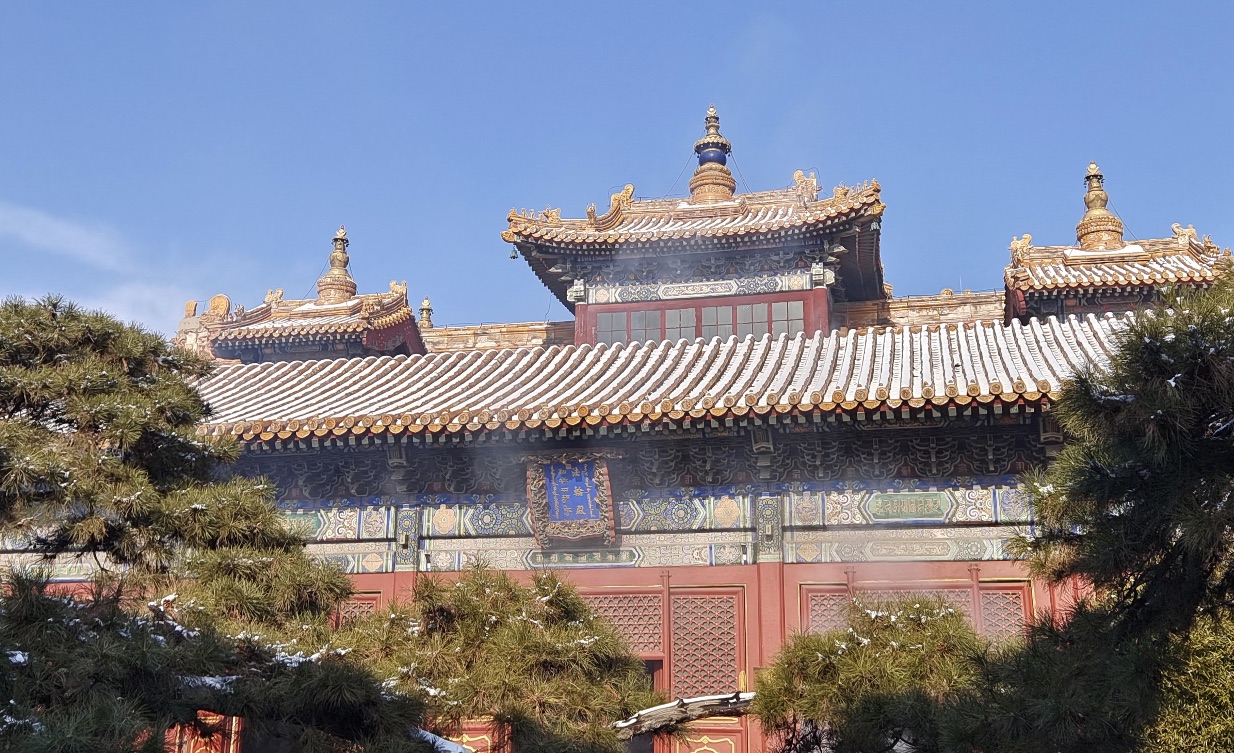
The Hall of the Wheel of the Law is located at the sixth stop along the central axis. It is one of the core buildings of Yonghe Temple, first built in the ninth year of Qianlong (1744), and served as the venue for major Buddhist ceremonies in this Gelug school monastery. The hall has a cross-shaped floor plan, a yellow glazed tile hip-and-gable roof, and is seven bays wide. The roofline is crowned with five gilded Tibetan-style stupas — one large central stupa and four smaller ones at the corners — symbolizing Mount Sumeru and the four continents of the Buddhist cosmos. At the center of the hall stands a massive gilded bronze statue of Je Tsongkhapa, founder of the Gelug school, approximately 6.1 meters tall; its casting cost 200,000 silver yuan. Behind the statue stands the Arhat Mountain wood carving — approximately 5 meters tall and 3.5 meters wide — intricately carved from zitan rosewood and depicting five hundred luohan in a variety of postures. It is one of the "three woodcarving masterpieces" of Yonghe Temple. On the east and west walls hang a large collection of the Tibetan Buddhist canon: 108 volumes of the Kangyur (scripture section) and 207 volumes of the Tengyur (commentary section).

Pavilion of Ten Thousand Happinesses

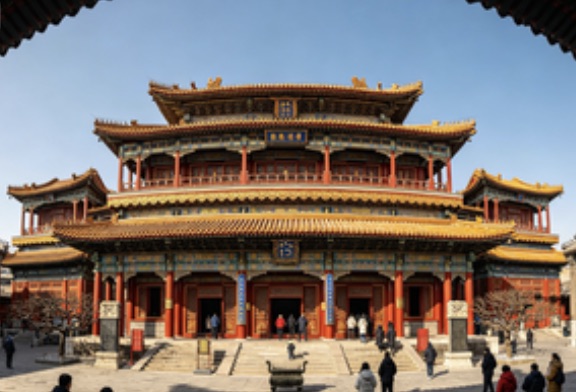
The Pavilion of Ten Thousand Happinesses is located at the seventh and final stop along the central axis. It is the most magnificent structure in Yonghe Temple, first built in the ninth year of Qianlong (1744). Originally a repository for tens of thousands of small Buddha figurines, it was renamed "Pavilion of Ten Thousand Happinesses" because the word for "Buddha" and the word for "happiness" share the same sound in Chinese. The pavilion has a yellow glazed tubular-tile hip-and-gable roof, double eaves and multiple stories, five bays wide and five bays deep, and stands 25 meters tall. In front of it is a terrace connected to the Hall of Achievement and Peace. To the east stands the Pavilion of Eternal Health and to the west the Pavilion of Lasting Peace; both are connected to the main pavilion by elevated flying corridors that retain architectural features from the Liao and Jin dynasties. Inside the pavilion stands the Maitreya Buddha — known as Maidala Buddha — whose above-ground portion reaches 18 meters in height; including the 8 meters buried underground, the total height of the statue is 26 meters. Remarkably, this colossal figure was carved from a single trunk of white sandalwood, making it the largest single-piece wood carving in China. The giant sandalwood log was purchased in Nepal by the Seventh Dalai Lama and transported to Beijing. The statue represents the "Buddha of the Coming Age," who will descend to save humanity in the future. The pavilion also displays 41 thangka paintings of the Wish-Fulfilling Tree Jataka Tales, gifted by the Seventh Dalai Lama.

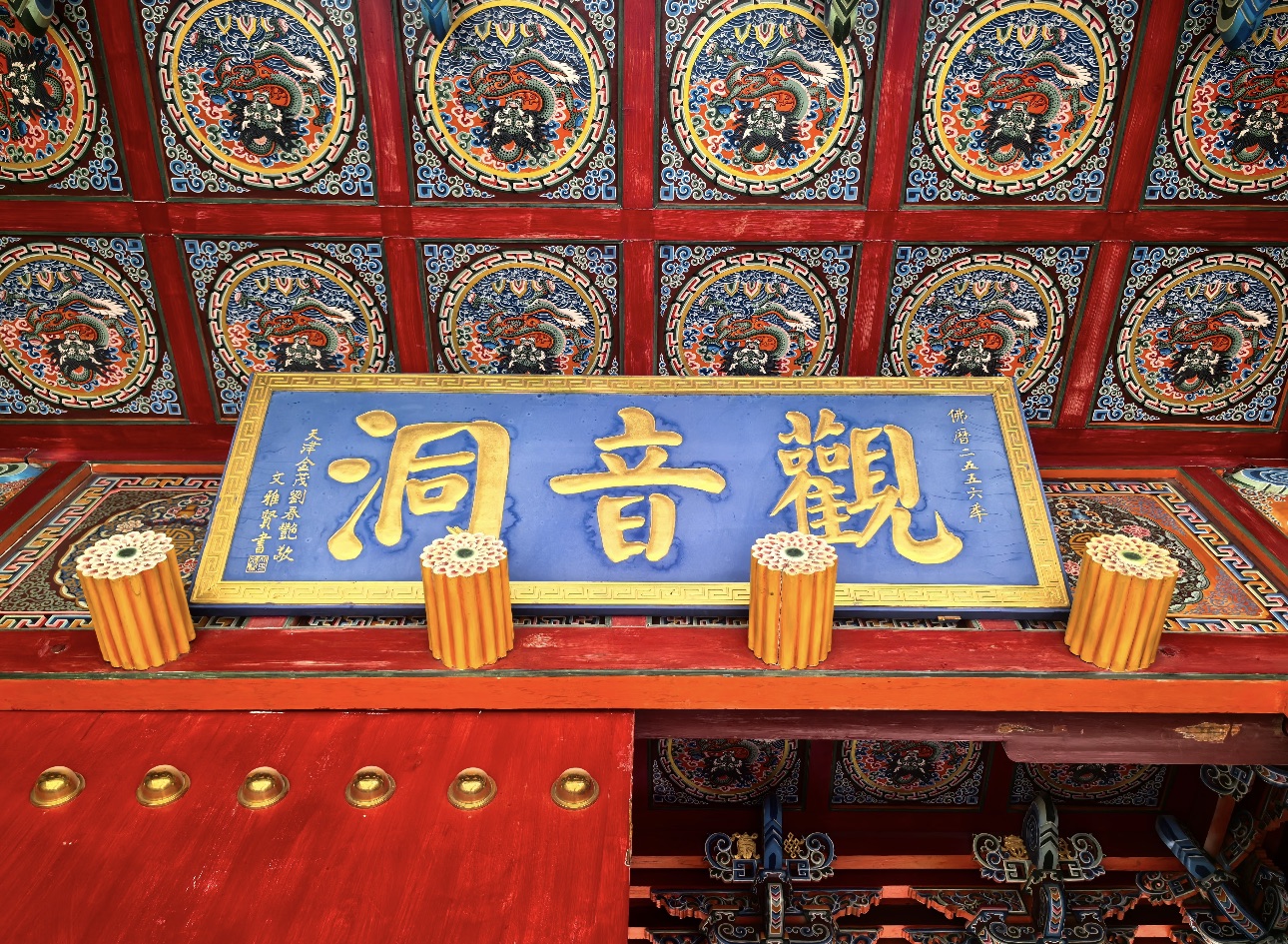
Guanyin Cave

The Guanyin Cave is located behind the Pavilion of Ten Thousand Happinesses. Originally the rear chamber of the Guanyin Hall in the Prince Yong Mansion, it is the place within Yonghe Temple dedicated to the Guanyin Bodhisattva, and dates to the Qing dynasty. The hall is a single-story structure, three bays wide, with yellow glazed tiles. The principal figure enshrined within is the Guanyin Bodhisattva, symbolizing compassion and salvation. On either side stand statues of Green Tara, symbolizing wisdom and liberation. Multiple precious thangka paintings of Green Tara hang on the walls.

Hall of Achievement and Peace

The Hall of Achievement and Peace is situated at the northernmost point of the central axis, north of the Pavilion of Ten Thousand Happinesses. Built in the ninth year of Qianlong (1744), it is the northernmost building on the central route of Yonghe Temple and the final hall in the complex. "Suicheng" conveys the meaning of "achieving peace and prosperity." The hall has a yellow glazed tubular-tile flush gable roof, double eaves with corridors on both upper and lower levels, and is seven bays wide. At the center of the hall stands a statue of the White Umbrella Goddess, symbolizing protection and peace for all living beings. To the west stands a White Tara and to the east a Green Tara. The second floor once housed five gilded wooden stupas and a clay figure of the Yongzheng Emperor; that clay figure is now held in the collection of the Palace Museum.

Practical info Opening hours · Ticket · Getting there
Opening hours
  • April 1-October 31: 09:00-16:30 (ticket sales stop at 16:00, last entry at 16:30)
  • November 1-March 31 next year: 09:00-16:00 (ticket sales stop at 15:30, last entry at 16:00)
  • Note: The best visiting time for Yonghe Temple is morning, which can avoid the tour group peak in the afternoon; on the first and fifteenth day of each lunar month, as well as traditional festivals such as the Laba Festival and Spring Festival, Yonghe Temple will hold religious assembly activities, which will be very lively but also have large crowds; winter temperatures in Beijing are low, please pay attention to keeping warm
Ticket
  • Admission: 25 RMB/person
  • Discounted Tickets: Students, seniors (over 60), military personnel, etc. can enjoy half-price or free admission with valid ID
  • Free Incense: The admission ticket includes one free stick of incense (can be collected at the entrance); it is not recommended to purchase high-priced incense in the surrounding area
  • Note: Yonghe Temple is a religious site; please respect religious beliefs and customs; photography is prohibited inside the halls, and loud noise is prohibited; it is recommended to purchase tickets in advance on the official website or WeChat account for discounts and to avoid on-site queuing; visiting time for Yonghe Temple is about 1.5-2 hours
Getting there
  • Rail Transit:
    • Subway Line 2 and 5: Get off at Yonghe Temple Station, exit from Exit C (Southeast Exit) or Exit F (Northwest Exit) to reach the main gate of Yonghe Temple directly
  • Bus:
    • Yonghe Temple Station: Take buses 13, 18, 44, 62, 75, 116, 117, 800, 813, 814, Special 2, Special 12, etc., get off and arrive directly
    • Yonghe Temple Bridge East Station: Take buses 13, 18, 44, 62, 75, 116, 117, 800, 813, 814, Special 2, Special 12, etc., get off and walk about 5 minutes
  • Taxi/Ride-hailing: Directly tell the driver "Yonghe Temple"; you will arrive directly
  • Note: Yonghe Temple is located in the center of Beijing, with extremely convenient transportation in the surrounding area; it is strongly recommended to take rail transit or bus; after visiting Yonghe Temple, you can顺便 visit attractions such as Ditan Park (south side), Nanluoguxiang (west side), and Guozijian Street (west side); there are many characteristic restaurants and snack shops around Yonghe Temple, and it is recommended to try the Tibetan restaurants and vegetarian restaurants near Yonghe Temple

Inside Yonghe Temple (Lama Temple)

9 stops, in walking order — read top to bottom, no clicking needed.

1 Archway Courtyard and Zhaotai Gate of 9

Archway Courtyard and Zhaotai Gate

牌楼院与昭泰门

The archway courtyard at the southernmost end of the Lama Temple serves as the processional forecourt of the entire complex. It comprises three grand glazed-tile archways: the central one inscribed "Revered by All within the Four Seas" and the flanking ones inscribed "Compassionate Majesty" and "Blessings Flowing to the Sands," all in the calligraphy of the Qianlong Emperor. Crowned with yellow and green glazed tiles, the archways feature intricate bracket sets, flying eaves and painted beams that proclaim the dignity of a royal monastery. Passing northward through the courtyard, visitors reach Zhaotai Gate, hung with a plaque reading "Yonghe Gate," the first threshold into the heart of the temple. The ground rises gently from south to north, creating a sequence that leads from the secular to the sacred, so that the moment one steps through Zhaotai Gate a solemn and serene religious atmosphere is felt.

On-site narration · read it where you stand

Welcome to Yonghe Temple — the Lama Temple — in Beijing. Today we'll walk the central axis from south to north, taking in the Archway Courtyard, Zhaotai Gate, the Bell and Drum Towers, the Hall of the Heavenly Kings, the stele pavilion and Bronze Mount Sumeru, the Main Hall, the Hall of Eternal Blessing, the four dratsangs, the Hall of the Wheel of the Law, the Pavilion of Ten Thousand Happinesses, and finally the Hall of Achievement and Peace.

Let's start with a quick look at where Yonghe Temple came from — its backstory is remarkable. In the 33rd year of Kangxi, 1694, this site began as a residence that the Kangxi Emperor granted to his fourth son, Yinzhen, and was known as the Prince Yong Mansion. When Yinzhen ascended the throne as the Yongzheng Emperor, the mansion was elevated to an imperial palace and renamed Yonghe Palace. Then in the ninth year of Qianlong, 1744, the Qianlong Emperor — seeking to pacify the frontier and strengthen ties with the northwestern ethnic groups — converted it into a Gelug school Tibetan Buddhist monastery. So Yonghe Temple is a monastery built from an emperor's former residence, and it held the highest official rank of any Buddhist temple in the country during the mid-to-late Qing dynasty. The complex covers more than 66,000 square meters and contains over a thousand halls and chambers, arranged along the central axis in seven successive courtyards and five tiers of halls, blending the cultures of the Han, Manchu, Mongolian, and Tibetan peoples.

We are now standing in the Archway Courtyard, the southernmost section of the complex. It holds three memorial archways arranged in a "pin" formation, each bearing an inscription: "Huanhai Zunqin," "Cilong Baoye," and "Fuyan Jinsha." Notice the archway to the north: it is of the three-bay, four-column, nine-eave style — the highest rank — symbolizing imperial supremacy. The east and west archways are of the seven-eave style. These three archways were once built of precious golden-thread nanmu timber, but were damaged by Japanese forces in 1939 and later rebuilt in reinforced concrete. The plaques that the Qianlong Emperor personally inscribed appear in four scripts — Manchu, Chinese, Mongolian, and Tibetan — a direct expression of the Qing dynasty's respect for and synthesis of its multi-ethnic cultures.

Walking north, the great yellow-roofed gate ahead is the main entrance to Yonghe Temple — Zhaotai Gate. Founded in 1694, it originally had a green glazed-tile roof. After the Yongzheng Emperor died, his coffin rested here, and the roof was subsequently upgraded to yellow glazed tiles, the color reserved for the imperial family. The plaque above the gate reads "Zhaotai Gate" — again in Manchu, Chinese, Mongolian, and Tibetan, inscribed by Qianlong — meaning "to proclaim and exalt peace." An imperial palanquin path reserved for the emperor stands in front of the gate. Through Zhaotai Gate, we'll head to the Bell Tower and Drum Tower on either side.

Bell and Drum Towers and the Hall of the Heavenly Kings

钟鼓楼与天王殿

After entering Zhaotai Gate, the Bell Tower stands to the east and the Drum Tower to the west, marking the traditional "morning bell and evening drum" timekeeping of Buddhist monasteries. A bronze bell hangs in the Bell Tower and a large drum stands in the Drum Tower, continuing the layout inherited from Han-Chinese Buddhist temples. Directly to the north between the two towers stands the Hall of the Heavenly Kings. At its centre is enshrined the Cloth-Sack Maitreya, the pot-bellied Buddha with a beaming smile, symbolising the boundless capacity to embrace what is difficult to embrace. Behind Maitreya stands Skanda, the Dharma-protecting general holding a demon-subduing staff. Along the east and west walls are the Four Heavenly Kings—Virudhaka of the East, Virulaka of the South, Virupaksa of the West and Vaisravana of the North—each grasping a ritual implement, awe-inspiring and majestic, guardians of the four directions of Mount Sumeru and the core of the temple's protective sequence.

On-site narration · read it where you stand

Inside Zhaotai Gate, two towers flank you on either side — the Bell Tower to the east and the Drum Tower to the west. Both were built in the ninth year of Qianlong, 1744, when Yonghe Temple was converted into a monastery. Take a look at these two structures: both have double-eave hip-and-gable roofs covered in yellow glazed tiles, matching the architectural style of the Forbidden City and conveying imperial grandeur. The Bell Tower houses a bronze bell; the Drum Tower holds a large drum — used in their day for timekeeping and to accompany religious ceremonies. The painted decoration on both buildings features the motif of two dragons playing with a pearl.

Further north stands the Hall of the Heavenly Kings — also called Yonghe Gate Hall — which serves as the monastery's main gate. It was originally the main gate of the Prince Yong Mansion, known as "Yonghe Gate," and became the Hall of the Heavenly Kings when the compound was converted into a monastery. The hall itself is a symbol of the fusion of Han and Tibetan Buddhism. Enter the hall and look straight ahead: at the center stands a statue of the Cloth-Bag Monk, an incarnation of Maitreya, always smiling, symbolizing joy and wisdom. On either side stand the imposing Four Heavenly Kings — Dhritarashtra of the East holds a pipa lute, Virudhaka of the South a sword, Virupaksha of the West a serpent, and Vaishravana of the North a banner. The implements they carry together form a phonetic play on the phrase "favorable winds and timely rains." Behind the hall stands a guardian statue of Skanda holding a vajra scepter. One more detail to notice before you move on: on either side of Maitreya stands a nine-tiered longevity pagoda carved from zitan rosewood, each approximately three meters tall and covered with 274 statues of the Amitayus Buddha and White Tara. After the Hall of the Heavenly Kings, we'll see the famous stele and the Bronze Mount Sumeru just behind it.

Stele Pavilion of "On Lamaism" and the Bronze Mount Sumeru

喇嘛说碑亭与铜铸须弥山

Beyond the Hall of the Heavenly Kings stands the Imperial Stele Pavilion, housing a stone stele inscribed in 1792 (the fifty-seventh year of Qianlong) with the emperor's essay "On Lamaism." Carved in Manchu, Chinese, Mongolian and Tibetan on its four faces, the text articulates Qing policy toward Tibetan Buddhism and the governing strategy that "promoting the Yellow Teaching pacifies the Mongols," making it a crucial document for the study of Qing ethnic and religious policy. North of the pavilion stands a bronze Mount Sumeru, believed to date from the Ming dynasty. Modelled on the Buddhist cosmos, it represents Mount Sumeru at the centre, encircled by the sun and moon, with the four great continents and eight minor continents arranged around it. Exquisitely crafted and rich in symbolism, it is a three-dimensional distillation of the Tibetan Buddhist worldview.

On-site narration · read it where you stand

Past the Hall of the Heavenly Kings, the octagonal stele pavilion on the central axis houses a stone stele of considerable weight — the Qianlong Emperor's imperial essay "On Lamas." The pavilion was built in the 57th year of Qianlong, 1792, with a double-eave octagonal pointed roof covered in yellow glazed tiles and open on all four sides.

This stele is far more than a religious artifact — it is an important governing document. The text is engraved in four scripts: Manchu, Chinese, Mongolian, and Tibetan. In it, the Qianlong Emperor personally sets out the Qing dynasty's policy for managing Tibetan Buddhist affairs: introducing the origins and development of Tibetan Buddhism, explaining the Qing government's stance on protecting it, analyzing the origins and drawbacks of the living-Buddha reincarnation system, and formally establishing the Golden Urn lottery system — a method of drawing lots from a golden urn to identify reincarnated living Buddhas, from that point forward requiring central government approval for all such recognitions. This stele, in effect, carved the principle of "direct central government authority over Tibetan Buddhist affairs" in stone.

North of the stele pavilion stands a bronze sculpture of Mount Sumeru. A relic from the Wanli period of the Ming dynasty, it was later moved here. In Buddhist cosmology, Mount Sumeru is the center of the entire universe. The bronze sculpture stands on a white marble base and is approximately 1.5 meters tall. Its unusual form is divided into three parts — the Wind Wheel, the Water Wheel, and the Golden Wheel — representing the "small-thousand world" as conceived in Buddhist thought. Because visitors once mistook it for an incense burner, it is now enclosed in a protective case — just view it through the case. After these two pieces, we'll enter the main hall of Yonghe Temple.

Yonghe Palace (Mahavira Hall)

雍和宫殿·大雄宝殿

Yonghe Palace is the main hall of the temple, originally the Silver An Hall of Prince Yong's mansion before its conversion into a Buddhist sanctuary. It thus combines the grand scale of princely architecture with the solemnity of a Buddhist hall. At its centre are enshrined the Three Buddhas of the Three Times: Dipankara (the past), Shakyamuni (the present) and Maitreya (the future), their golden images serene and majestic. Along the sides stand the Eighteen Arhats, each in a distinct and lifelike posture. The spacious moon terrace in front is flanked by side halls dedicated to Guan Yu and Guanyin, reflecting the fusion of Han and Tibetan culture. The roof is covered with yellow glazed tiles trimmed in green—the imperial rank of roofing—and the painted beams are ornamented throughout with dragon and phoenix motifs, proclaiming the royal splendour of this "blessed land of the dragon."

On-site narration · read it where you stand

We have arrived at the Main Hall — the principal hall of Yonghe Temple, equivalent to the Great Buddha Hall in a Han Buddhist temple. Its origin is a fascinating one: this was originally the Silver Hall of the Prince Yong Mansion, where the prince received civil and military officials and conducted official business. It only became a hall of worship when the monastery was established. The hall has a single-eave hip-and-gable roof, seven bays wide, with yellow glazed tubular tiles, double-sloped five-step bracket sets under the eaves, coffered ceiling panels inside, and square brick flooring.

Inside the hall, look at the three large Buddha statues side by side at the center — these are the Buddhas of the Three Worlds. In the middle is Shakyamuni Buddha, the Buddha of the Present; to the left is Dipankara Buddha, the Buddha of the Past; to the right is Maitreya Buddha, the Buddha of the Future. Together, the three represent the past, the present, and the future, symbolizing the eternal transmission of the Dharma from age to age. Along the walls on either side of the Three World Buddhas stand eighteen luohan statues, reaching 15 meters in height, rendered in Tibetan style. There are also a few figures inside the hall you shouldn't miss: in the northeast corner stands a Medicine Buddha, in the northwest corner another Maitreya Buddha, and on the west wall hangs a painting of the Thousand-Armed, Thousand-Eyed Guanyin Bodhisattva. This hall is one of the most active worship spaces in Yonghe Temple — please stay safe and be considerate of others as you take it in. From here, we head to the Yongzheng Emperor's former sleeping chamber — the Hall of Eternal Blessing.

Yongyou Hall

永佑殿

Yongyou Hall was originally the bedchamber of Prince Yong's mansion. After the Yongzheng Emperor's death his coffin rested here, and the name "Yongyou," meaning "eternal blessing," expresses the imperial family's remembrance and prayers for the late emperor. At the centre of the hall is Amitayus (Amitabha), flanked by the Medicine Buddha and the Lion's Roar Buddha. The images are solemn and exquisitely crafted, all fine works of Qing court sculpture. Also displayed are a "Fu" (blessing) character brushed by the Qianlong Emperor for his father and sandalwood arhat figures. As one of the temple's central halls, Yongyou preserves the layout of a princely bedchamber and bears witness to the transformation of the mansion into a monastery, while remaining a place where the faithful gather to chant and pray.

On-site narration · read it where you stand

We have arrived at the Hall of Eternal Blessing, a place with deep ties to the Yongzheng Emperor. It was originally the main sleeping chamber of the Prince Yong Mansion — the study and bedroom of Yongzheng when he was still a prince. After the Yongzheng Emperor died in 1735, his coffin rested in this hall for two years. When the monastery was established, the hall was renamed "Hall of Eternal Blessing," meaning "to forever bless the spirit of the late emperor."

The hall holds a clever architectural secret. It has a single-eave hip-and-gable roof, five bays wide, but uses a structural arrangement known as "five bays visible, ten concealed" — from the outside it appears to be five bays, but inside it actually contains ten rooms. The hall enshrines a bronze statue of the Amitayus Buddha approximately 2.35 meters tall, symbolizing longevity and eternity, along with a bronze Medicine Buddha symbolizing health and the relief of illness. On the east and west walls hang two thangka paintings of Tara — and these are well worth a close look: the White Tara on the west wall is a painted image, while the Green Tara on the east wall is not painted at all — it is assembled piece by piece from more than 4,000 fabric swatches in different colors, a feat of extraordinary craftsmanship. From the Hall of Eternal Blessing, we'll look at the four dratsangs that surround it.

Four Monastic Colleges (Dratsang)

四大扎仓

As the central Gelugpa monastery in the capital, the Lama Temple houses four dratsang (monastic colleges): the Exoteric College for the study of sutra, the Esoteric College for tantra and ritual, the Medical College for Tibetan medicine and pharmacology, and the Kalacakra College for astronomy and calendrical calculation. Set within the side halls on the east and west of the temple, each college enshrines its respective tutelary deity and displays scriptures, ritual implements and teaching materials. Historically, monks studied here for many years, and after rigorous debate examinations were awarded the Geshe degree, making the temple a key institution for training senior Tibetan Buddhist clergy. This tradition continues today, so that the temple is not merely a royal monastery but an important centre of Tibetan Buddhist scholarship and religious education.

On-site narration · read it where you stand

On either side of the Hall of Eternal Blessing are Yonghe Temple's four great dratsangs. "Dratsang" is the Tibetan word for a monastic college. Yonghe Temple was not only a place of worship but a full-fledged Buddhist university, and these four dratsangs were its four specialized colleges. Let's go through them one by one.

First, the Kalachakra College in the southwest wing — this was the college for the study of astronomy and calendrical calculation. At its center stands a gilded bronze three-dimensional mandala model of Kalachakra, symbolizing the structure and workings of the cosmos. It also displays models of an armillary sphere and a celestial globe made during the Qianlong era, along with a Tibetan manuscript of a treatise on astronomical calendrical calculation — evidence that the curriculum here covered both Buddhist teaching and astronomy.

In the southeast wing is the Bhaisajyaguru College — the college for the study of medicine. At its center stand three bronze statues of the Buddhas of the Three Worlds: Medicine Buddha as the principal figure, flanked by the Amitayus Buddha and a Patriarch Buddha, symbolizing health and longevity. The hall also displays classic Tibetan medical texts and specimens of medicinal materials — essentially a Tibetan medical school.

To the east of the Hall of Eternal Blessing is the Tantric College, for the study of esoteric teachings. It is a two-story structure. At its center stands a statue of Je Tsongkhapa; to the north stands a statue of Ghaladain Maitreya, and to the south a statue of Xizhabulzengg.

To the west of the Hall of Eternal Blessing is the Sutra-Teaching College, for expounding exoteric Mahayana teachings. Also a two-story building, it enshrines a statue of Je Tsongkhapa at its center, with a statue of Zhalasaji to the south and a statue of Mkhas-grub-rje to the north, as well as Qing-dynasty astronomical instruments and a terrestrial globe. Taken together, these four dratsangs show that Yonghe Temple in its day was a fully integrated institution of higher Buddhist learning, encompassing exoteric teachings, esoteric teachings, medicine, and astronomy. With the dratsangs seen, we head to one of Yonghe Temple's most important halls — the Hall of the Wheel of the Law.

Falun Hall (Wheel of the Law Hall)

法轮殿

Falun Hall is the ritual centre of the Lama Temple, where major religious ceremonies are held. Its architecture fuses Han and Tibetan styles, and the roof is crowned with five skylight pavilions symbolising the five major schools of Tibetan Buddhism. At the centre is a six-metre bronze statue of Tsongkhapa, founder of the Gelug school, flanked by his two chief disciples, Khedrup Je and Gyaltsab Je. To the west stands Shakyamuni, and to the east, Avalokitesvara. The hall's most celebrated treasure is the "Mountain of Five Hundred Arhats," carved from red sandalwood into a landscape of layered peaks populated by five hundred arhats—sitting or standing, meditating or debating—each with a distinct expression, a triumph of craftsmanship counted among the "Three Wonders" of the temple. In front of the hall is displayed the Golden Bumpa Vase, presented by the Qianlong Emperor and used in the golden urn lot-draw to identify reincarnated lamas, a key artefact of Qing Tibet policy.

On-site narration · read it where you stand

We have arrived at the Hall of the Wheel of the Law — one of the core buildings of Yonghe Temple and the venue where monks gather for major Buddhist ceremonies.

First, notice its distinctive form. The hall has a cross-shaped floor plan, a yellow glazed tile hip-and-gable roof, and is seven bays wide. Most striking of all are the five gilded Tibetan-style stupas on the roofline — one large central stupa and four smaller ones at the corners — symbolizing Mount Sumeru and the four surrounding continents in the Buddhist cosmos. Even from a distance, the Tibetan character of this building is unmistakable.

Inside the hall, the massive gilded bronze statue at the center is Je Tsongkhapa — the founder of the Gelug school of Tibetan Buddhism. This statue stands approximately 6.1 meters tall, and its casting cost 200,000 silver yuan. What is even more remarkable is what stands behind it — the Arhat Mountain wood carving, approximately 5 meters tall and 3.5 meters wide, carved entirely from zitan rosewood, with five hundred luohan figures in endlessly varied poses. This piece is one of Yonghe Temple's three celebrated woodcarving masterpieces. On the east and west walls hang a large collection of the Tibetan Buddhist canon: 108 volumes of the Kangyur — the scripture section — and 207 volumes of the Tengyur — the commentary section. From here, we move to the most magnificent building in the entire complex — the Pavilion of Ten Thousand Happinesses, the grand finale of our visit.

Pavilion of Ten Thousand Blessings (Wanfu Pavilion)

万福阁

Wanfu Pavilion, the principal building at the northern end of the Lama Temple, was built in 1750 (the fifteenth year of Qianlong). Rising about twenty-five metres with triple flying eaves, it is the tallest structure in the complex. At its centre stands a statue of Maitreya carved from a single piece of white sandalwood gifted by Nepal. The figure is twenty-six metres tall in total—eighteen metres above ground and eight metres below—with a girth of eight metres, making it one of the largest single-log Buddhist carvings in the world and an entry in the Guinness World Records, the foremost of the temple's "Three Wonders." Flanking the pavilion, flying galleries connect it to the Yongkang and Yanning pavilions, creating a spectacular tripartite complex. Gazing up at the colossal Maitreya from the foot of the hall, its overwhelming and awe-inspiring presence marks the climax of any visit to the Lama Temple.

On-site narration · read it where you stand

We have arrived at the most magnificent building in Yonghe Temple — the Pavilion of Ten Thousand Happinesses — the grand finale of our journey through the complex. First built in the ninth year of Qianlong, 1744, it was originally a repository for tens of thousands of small Buddha figurines. Because the word for "Buddha" and the word for "happiness" share the same sound in Chinese, it was renamed the Pavilion of Ten Thousand Happinesses. The pavilion has double eaves and multiple stories, five bays wide and five bays deep, and stands 25 meters tall — an imposing presence. To the east is the Pavilion of Eternal Health and to the west the Pavilion of Lasting Peace; both are connected to the main pavilion by elevated flying corridors. These flying corridors preserve architectural features from the Liao and Jin dynasties — an exceptionally rare sight.

Inside the pavilion, look up — this is Yonghe Temple's most treasured icon, a towering Maitreya Buddha reaching from floor to ceiling. Known as Maidala Buddha, the portion visible above ground alone stands 18 meters tall; including the 8 meters buried underground, the total height of the statue reaches 26 meters. What makes it truly extraordinary is this: a figure of that size was carved from a single trunk of white sandalwood — making it the largest single-piece wood carving in China. That enormous sandalwood log was purchased in Nepal by the Seventh Dalai Lama and transported all the way to Beijing. This statue represents the "Buddha of the Coming Age" — Maitreya, who will descend to save humanity in the age to come. The pavilion also displays 41 thangka paintings of the Wish-Fulfilling Tree Jataka Tales, a gift from the Seventh Dalai Lama. With this great Buddha seen, we head to the final two halls.

Guanyin Grotto and Suicheng Hall (Epilogue)

观音洞与绥成殿(结束语)

Beneath Wanfu Pavilion lies the Guanyin Grotto, also called the underground palace of the pavilion. Inside is enshrined a white sandalwood statue of Avalokitesvara, surrounded by Buddhist murals and reliefs in a hushed and solemn atmosphere that makes it a sacred place for the faithful to pray and make vows. The grotto gives Wanfu Pavilion a three-dimensional devotional structure—"Maitreya above, Guanyin below." At the northernmost end of the temple stands Suicheng Hall, originally named the Yamantaka Tower, the final hall of the complex, enshrining esoteric deities such as Vajrabhairava. The name "Suicheng" means "pacification and accomplishment." As the "epilogue" of the visit, the journey from the archway courtyard in the south to this hall in the north—entering through "Zhaotai" and concluding at "Suicheng"—completes not only a south-to-north passage through space but also a spiritual ascent from prayer to fulfilment, bringing the pilgrimage through this royal Tibetan Buddhist monastery to a perfect close.

On-site narration · read it where you stand

Our final two halls today are just behind the Pavilion of Ten Thousand Happinesses. We start with the Guanyin Cave. Located behind the pavilion, it was originally the rear chamber of the Guanyin Hall in the Prince Yong Mansion, and is the place within Yonghe Temple dedicated to the Guanyin Bodhisattva. The principal figure enshrined here is the Guanyin Bodhisattva, symbolizing compassion and salvation. On either side stand statues of Green Tara, symbolizing wisdom and liberation. Multiple precious thangka paintings of Green Tara hang on the walls.

Continuing north brings us to the Hall of Achievement and Peace — the northernmost hall on the central axis and the final stop in Yonghe Temple. Built in the ninth year of Qianlong, 1744, the name "Suicheng" conveys the meaning of "achieving peace and prosperity." The hall has a yellow glazed tubular-tile flush gable roof, double eaves with corridors on both upper and lower levels, and is seven bays wide. At the center stands a statue of the White Umbrella Goddess, symbolizing protection and peace for all living beings. To the west stands a White Tara and to the east a Green Tara. This hall also holds a story connected to the Yongzheng Emperor: the second floor once housed five gilded wooden stupas and a clay figure of the Yongzheng Emperor — that clay figure has since been moved to the collection of the Palace Museum.

From the Prince Yong Mansion of the Kangxi era, to the Yongzheng Emperor's imperial palace, to the royal monastery that the Qianlong Emperor built from it — today we have walked the full length of the central axis. We have seen the archway plaques inscribed in four scripts, the "On Lamas" stele that put the governance of Tibetan Buddhism into stone, the four dratsangs with their halls of Buddhist learning, and a 26-meter Maitreya Buddha carved from a single sandalwood trunk. Yonghe Temple — a monastery born from an emperor's residence — is not only the largest Tibetan Buddhist temple in Beijing, but a living testament to the multi-ethnic cultural fusion of the Qing dynasty and the close ties between the imperial center and its frontier peoples. Thank you for spending this time here together. May this solemn imperial monastery leave you with a memory that stays with you long after you leave. Safe travels, and until we meet again.

Prefer to be shown around?

A local guide walks these 9 stops with you and answers what the page cannot.

Browse tours ↗