Travel Guide› Beijing› Beihai Park
Beijing · Park

Beihai Park 北海公园

Beihai Park
Address
No. 1 Wenjin Street, Xicheng District, Beijing (northwest side of the Forbidden City, west side of Shichahai)

Beihai Park

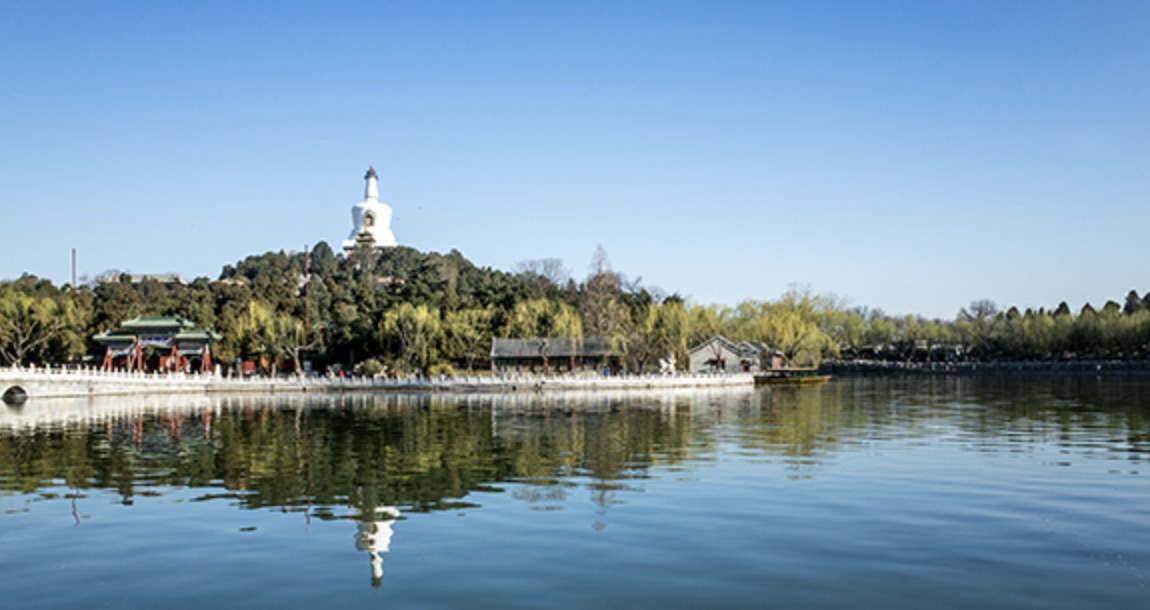
Beihai Park is China's oldest and best-preserved classical imperial garden. Its origins trace back to the Liao dynasty, when the site was known as "Golden Sea," and it was expanded and refined through the Jin, Yuan, Ming, and Qing dynasties over nearly a thousand years. The park is laid out around the mythological concept of "one lake, three sacred islands" — Taiye Pool and the three isles of Penglai, Fangzhang, and Yingzhou. More than 60% of the park's area is water, lending it a grace and fluidity rare in northern China — hence the saying: "Not Jiangnan, yet finer than Jiangnan." The park opened to the public in 1925 and is now a National 4A-rated scenic area.

Round City

Round City sits just west of Beihai Park's south gate, a miniature "world's smallest fortress" on Beijing's central axis. Circular in plan, its walls rise 4.6 meters and enclose an area of about 6,176 square meters. Founded in the Liao dynasty, it became part of the imperial gardens during the Jin dynasty, was called Yuandi in the Yuan dynasty, received its enclosing walls in the Ming dynasty, and was expanded to its current form under the Qing emperor Qianlong. Inside are three national treasures: a white jade Shakyamuni Buddha from Myanmar (weighing approximately 2.5 tons) enshrined in Chengguang Hall; the Yuan-dynasty Dushan Great Jade Vessel (weighing approximately 3,500 kg); and two ancient trees given imperial titles by Qianlong — "Shade Marquis" (an oil pine) and "White-Robed General" (a white-bark pine). Small as it is, Round City distills a thousand years of Beijing's imperial culture and is an integral part of Beihai Park.

Round City — Chengguang Hall

Chengguang Hall is the central building of Round City. It was first built in the Yuan dynasty as the Yitian Hall and rebuilt during the Kangxi reign of the Qing dynasty. The current structure has a double-eaved hip-gable roof with a single-eave pavilion-style porch projecting on all four sides — an unusual and finely crafted design. The hall enshrines a white jade Buddha, a gift brought from Myanmar by the monk Mingkuan and presented to Empress Dowager Cixi during the Guangxu reign. To the south of the hall stands the Jade Vessel Pavilion; to the north is Jingji Hall. The three buildings form Round City's central axis. The hall's interior is decorated with elaborate gold-accented roufan-style rotary painted patterns, a fine example of Qing imperial decorative artistry. Chengguang Hall served as the site of heaven-worship rituals for emperors of the Yuan, Ming, and Qing dynasties. Note: Round City is closed on Mondays except public holidays and requires a separate ticket (1 RMB); plan your visit accordingly.

Round City — Dushan Great Jade Vessel

The Dushan Great Jade Vessel is the most prized artifact in Round City and the oldest large-scale jade carving surviving in China, weighing approximately 3,500 kg. It stands 70 centimeters tall, with a diameter of 182 centimeters, a circumference of 493 centimeters, and a depth of 55 centimeters — carved from a single block of black jade, its surface animated with golden-toned patterns that evoke the world beneath the sea. It was commissioned by Kublai Khan as a wine vessel for grand imperial banquets. After the Yuan dynasty it passed through various hands before Qianlong rediscovered it and had it moved to Round City, where a pavilion was built around it for its protection. In 1900 the Eight-Nation Alliance looted Beihai's treasures, but the vessel's unusual material and sheer weight meant it survived. The vessel now sits inside the Jade Vessel Pavilion in front of Chengguang Hall and is an invaluable object for the study of Yuan dynasty jade carving and culture. Note: Round City is closed on Mondays except public holidays and requires a separate ticket (1 RMB); plan your visit accordingly.

Round City — White Jade Buddha

The White Jade Buddha enshrined in Round City was brought from Myanmar by the monk Mingkuan and presented to Empress Dowager Cixi during the Guangxu reign. Carved from a single block of white Burmese jade, it depicts Shakyamuni seated in meditation, stands approximately 1.5 meters tall, and weighs over 2,400 jin. The head and robe are set with numerous rubies and emeralds, making it an object of extraordinary craftsmanship and incalculable value. In 1900, when the Eight-Nation Alliance ransacked Beihai, a sword cut was left on the Buddha's left arm — a wound the statue still carries today, a silent witness to that chapter of history. The Buddha is enshrined in the central altar of Chengguang Hall and is among the most important artifacts in Round City, as well as a precious testament to ancient Chinese Buddhist art and cultural exchange. Note: Round City is closed on Mondays except public holidays and requires a separate ticket (1 RMB); plan your visit accordingly.

Round City — "Shade Marquis" Ancient Pine

The "Shade Marquis" is an imperial-titled oil pine inside Round City, over 800 years old. The tree stands more than 20 meters tall with a dense canopy that spreads wide, casting deep shade. Tradition holds that the Qianlong Emperor rested beneath it on a summer visit and, grateful for its generous shade, conferred the honorary title "Shade Marquis" — drawing on the precedent of China's First Emperor, who famously titled the five pines on Mount Tai. The tree's rough, deeply furrowed bark and contorted branches speak of centuries of weathering and an unyielding vitality, making it one of Round City's most historically evocative natural presences. Note: Round City is closed on Mondays except public holidays and requires a separate ticket (1 RMB); plan your visit accordingly.

Round City — "General in White Robe" Lacebark Pine

The white-bark pine inside Round City is a Jin dynasty tree that earned the imperial title "White-Robed General" from the Qianlong Emperor, who had a particular affection for it. The tree stands over 20 meters tall, is more than 800 years old, and carries the hallmark grey-white bark with its distinctive patterning that makes the species so visually striking. White-bark pines shed their bark as they age, growing progressively whiter with each cycle — a characteristic that sets them apart from all other pines. Qianlong composed poems in praise of this tree. Its surroundings are peaceful and green, making it one of Round City's cherished ecological landmarks. Note: Round City is closed on Mondays except public holidays and requires a separate ticket (1 RMB); plan your visit accordingly.

Round City — Ancient Trees

The most celebrated trees inside Round City are two ancient specimens given imperial titles by the Qianlong Emperor: "Shade Marquis", an oil pine, and "White-Robed General", a white-bark pine. The "Shade Marquis" is an 800-year-old oil pine dating to the Jin dynasty; legend holds that Qianlong once rested in its shade and, in gratitude, conferred the title on the tree — following the precedent set by China's First Emperor, who famously titled five pine trees on Mount Tai. The "White-Robed General" is a Jin dynasty white-bark pine that Qianlong particularly admired. White-bark pines shed their outer bark like a snake shedding its skin, growing whiter with each shedding — a quality that sets them apart among all pine species. Beyond these two celebrated trees, Round City is home to dozens of other ancient specimens, including cypresses, scholar trees, and catalpa trees, with 40 classified as Grade A and 544 as Grade B. These trees have weathered centuries of Beijing's history and are an essential part of Round City's ecological and cultural landscape. Note: Round City is closed on Mondays except public holidays and requires a separate ticket (1 RMB); plan your visit accordingly.

Round City — Drainage System

The drainage system of Round City is a remarkable achievement of ancient Chinese engineering. The ground is paved with inverted-trapezoid grey bricks laid dry, with deliberate gaps between them to allow rainwater to percolate directly into the soil. Deep underground, a network of infiltration and drainage culverts channels the absorbed water away from the city, keeping the ground dry. The result: even in a moderate downpour, no surface runoff forms within Round City — a performance that holds to this day after hundreds of years. Round City's outer walls stand 4.6 meters tall, with a perimeter of 276 meters enclosing 4,553 square meters of ground, complementing Qionghua Island to complete the "one lake, three sacred mountains" garden composition. The entire system embodies the ancient Chinese ideal of "harmony between heaven and humanity" — architecture and nature working as one. Note: Round City is closed on Mondays except public holidays and requires a separate ticket (1 RMB); plan your visit accordingly.

Yong'an Bridge

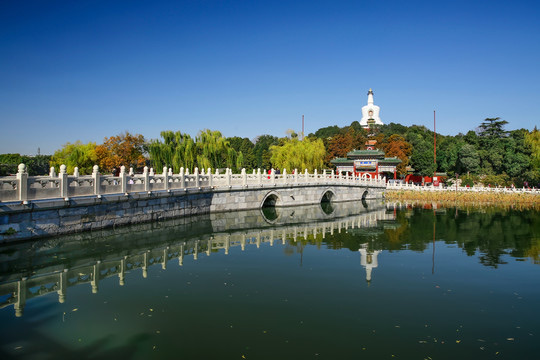
Yong'an Bridge is the largest bridge in Beihai Park — 85 meters long and 7.6 meters wide, composed of three curved stone arch spans flanked by 48 ornamental columns. Its predecessor was a wooden bridge built in the Yuan dynasty, known as Taiye Bridge during the Ming dynasty. In 1743 (the eighth year of Qianlong's reign) it was rebuilt in stone. A ceremonial gateway stands at each end: "Accumulating Jade" to the south, evoking the lush trees of Round City, and "Piling Clouds" to the north, conjuring the rockery of Qionghua Island. The bridge's most distinctive quirk is that the stone lion at the north end faces north rather than the conventional south — the origin of the old Beijing saying "the lions of Yong'an Temple face inward," a gentle dig at anyone who does things the wrong way around. The bridge's gentle curve also cleverly resolved a roughly 15-meter misalignment between the central axes of Round City and Qionghua Island. Crossing Yong'an Bridge is the first iconic moment upon entering Beihai Park.

Yong'an Temple and the White Pagoda

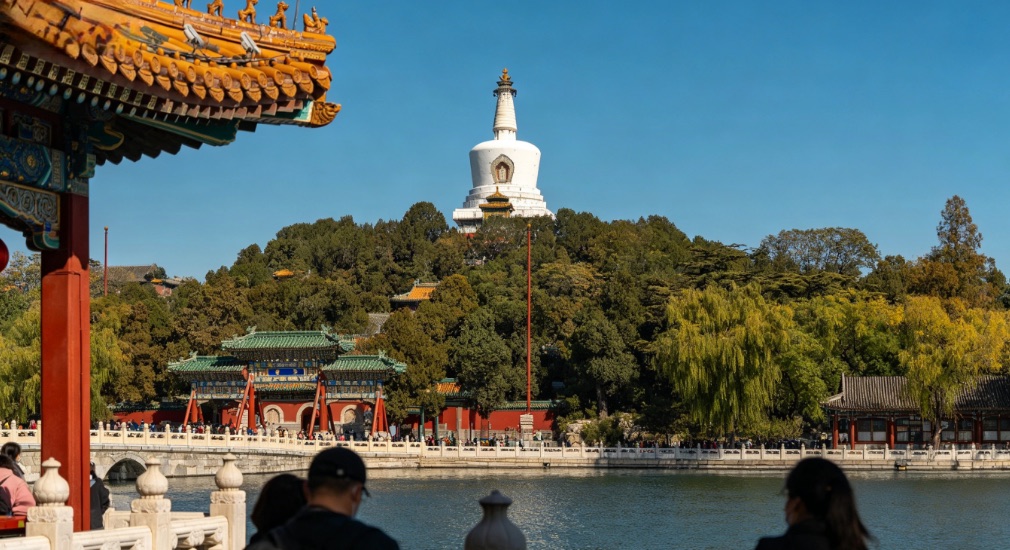
Yong'an Temple sits on the southern slope of Qionghua Island. Founded in 1651 (the eighth year of the Shunzhi reign) under the name White Pagoda Temple, it was expanded during the Qianlong era with the addition of the Falun Hall, bell tower, drum tower, and main gate, and renamed Yong'an Temple. Built into the hillside, it was one of the most important Tibetan Buddhist temples of the Qing imperial court. The temple's defining feature is the Tibetan-style White Pagoda crowning the summit — 35.9 meters tall, built of brick and timber, and gleaming white. It is both the symbol of Beihai Park and a defining landmark of Beijing's imperial cityscape. In front of the pagoda stands Shanyin Hall, which enshrines Yamantaka, regarded as the protective deity of Beijing. From the pagoda's base, views sweep across the entire park and out to Jingshan, Zhongnanhai, and beyond.

Qiongdao Chunyin Stele

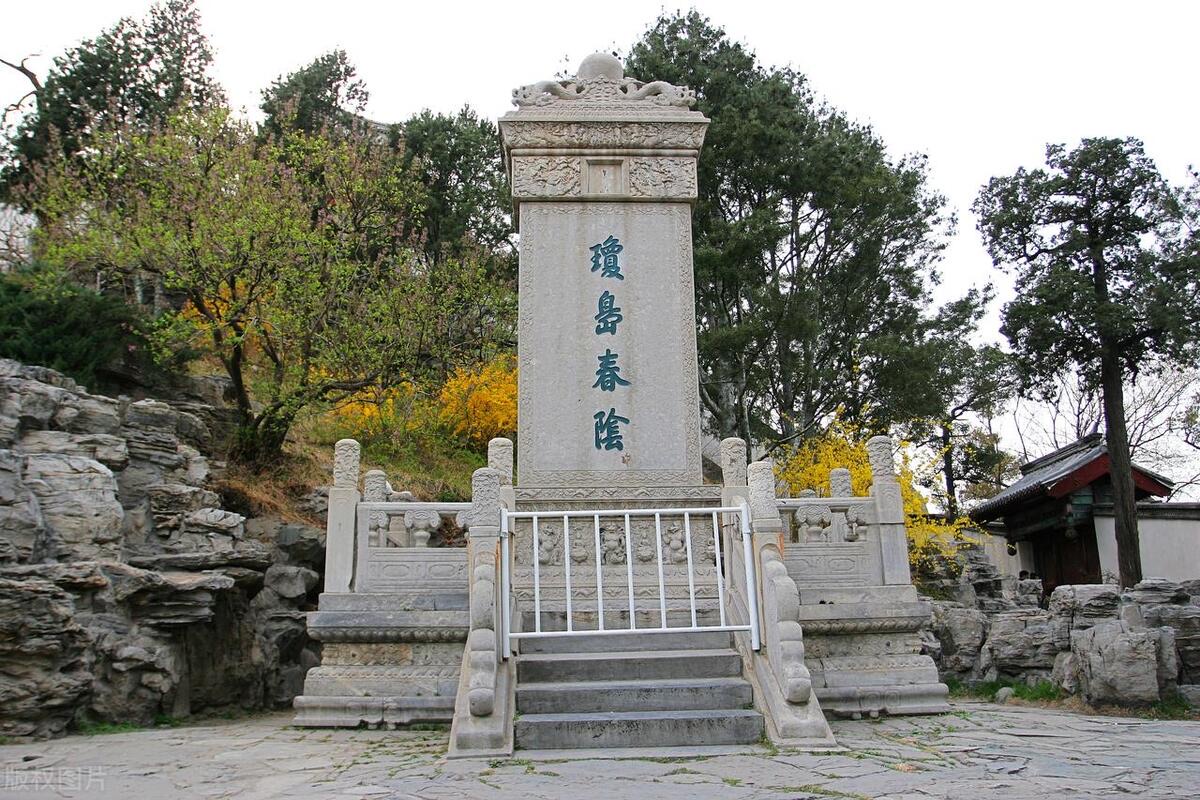
"Spring Shadow over Qionghua Isle" is one of the "Eight Scenes of Yanjing" recognized as far back as the Jin dynasty — originally called "Spring Clouds over Qionghua Isle" — and was later included in the "Eight Scenes of the Imperial Capital" during the Ming dynasty. In 1751, the Qianlong Emperor renamed it "Spring Shadow" and commissioned this stele. Standing 4.1 meters tall, the stele is crowned with carved dragons, framed on all four sides with intertwining floral relief, and bears Qianlong's calligraphy on the front face. On the reverse is an imperial poem; the base is enclosed by a stone balustrade. The stele was first erected in front of Yuexin Hall on the west slope of White Pagoda Hill, and moved to its present location in 1786. Qianlong's choice of "spring shadow" over "spring clouds" was drawn from his poem lines expressing concern for farmers during the critical spring plowing season. A winding path beside the stele leads up to Jianching Pavilion and Kanhua Gallery, making it one of the finest spots to appreciate the spring scenery of Qionghua Island. The stele now stands on the eastern slope of White Pagoda Hill and is among the most historically significant artifacts in Beihai Park.

Yilan Hall

Yilan Hall sits on the north face of Qionghua Island and was built during the Qianlong era in the style of Jinshan Temple in Zhenjiang — a design where buildings wrap the hillside rather than stand before it. Construction began in 1751 (the sixteenth year of Qianlong's reign). The complex comprises 38 heritage structures including Yilan Hall, Daoning Studio, Yuanfan Pavilion, Qinglan Huayun, Nichang Manwu Stage, and others, covering a total footprint of roughly 10,000 square meters with a combined floor area of over 3,900 square meters. The buildings step up the hillside with their backs to the hill and their fronts to the water. Yilan Hall served as a retreat where the Qianlong Emperor read, held banquets, and went fishing, and where the imperial family enjoyed views across Taiye Pool. Between 2019 and 2022 the entire complex underwent comprehensive restoration to recover its Qianlong-era layout and appearance. It now functions as a heritage exhibition zone within Beihai Park, with small-scale displays, multimedia presentations, and interactive touchscreens introducing the hall's historical uses, cultural significance, and the events it has witnessed.

Daoning Studio

Daoning Studio occupies the west side of the Yilan Hall complex on the north slope of Qionghua Island. It was Qianlong's private study and poetry writing retreat. The single-eave hard-gable hall of five bays is roofed in grey tile with a green trim, and the interior furnishings are refined and uncluttered — an expression of Qianlong's governing philosophy of "harmonizing with non-action." Covered corridors connect the hall to the surrounding complex, framing views of the lake and the spring scenery of Qionghua Island. In 1773 Qianlong wrote his "Record of the Northern Face of Pagoda Hill," describing Daoning Studio as a place where "the pagoda rises to the south, waves ripple to the north — the scene recalls the open skies of Jinshan." The studio's quiet, tree-shaded courtyard offers a vivid sense of imperial scholarly life. Following the full reopening of the Yilan Hall complex in December 2022, Daoning Studio has become a window into the history and culture of Beihai Park.

Bronze Immortal's Rainwater Vessel

The Bronze Immortal's Dew-Catching Basin stands halfway up the north slope of Qionghua Island: a bronze figure perched atop a white marble coiled-dragon column, holding aloft a bronze lotus-leaf basin. The piece revives the Han dynasty legend of Emperor Wu casting a bronze figure to collect heavenly dew on sacred mountain peaks; the Qianlong Emperor recreated the scene at Beihai. The full sculpture stands approximately 6.6 meters tall, with the bronze figure facing north and its basin held skyward to catch the dew. The imagery symbolizes the emperor's prayer for heaven's blessing — rain for the crops, peace for the realm. Together with the Qiongdao Chunyin Stele and Yilan Hall, it forms one of Beihai Park's most evocative cultural landscapes.

Yuegu Tower

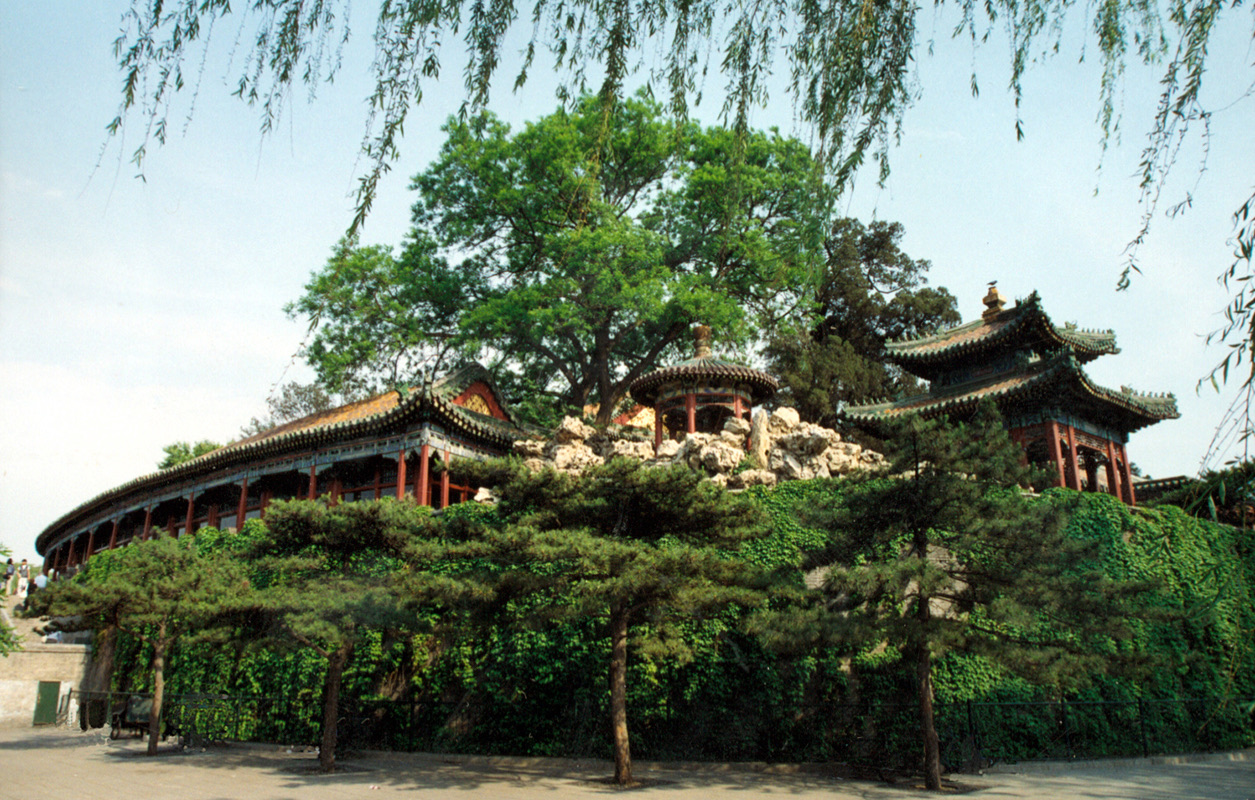
Yuegu Tower was built on the western slope of Qionghua Island during the Qianlong era specifically to house the stone engravings of the Sanxi Hall Model Calligraphy Collection. The building is a semicircular two-story structure of twenty-five bays, with the two wings curving around to form a half-moon. The interior walls are inset with 495 engraved stone panels reproducing masterworks of Chinese calligraphy from the Wei-Jin period through the Ming dynasty, including works attributed to Wang Xizhi, Yan Zhenqing, Liu Gongquan, and other great calligraphers. In 1747, Qianlong issued an edict compiling the court's collection of original calligraphy manuscripts into the Sanxi Hall Stone Canal Treasury Collection, which was then engraved and stored here. The ground floor is open to visitors daily; the upper floor opens for one hour at 10 a.m. and again at 2 p.m. on Tuesdays only. The tower is a living treasury for lovers of classical Chinese calligraphy, and also hosts cultural programs such as the "Beihai Seasonal Ceremonies — Imperial Garden Gathering" series.

Haopujian

Haopujian is a garden-within-a-garden on the east shore of Beihai Park, covering about 1,700 square meters. Built by the Qianlong Emperor as a living evocation of the famous "observing fish at Haoliang" passage in Zhuangzi's "Autumn Floods" chapter, it was the secluded retreat where the emperor and empress came to fish and watch the fish. Water dominates the design: a water pavilion, stone bridge, ornamental rockery, and ponds create an atmosphere of refined tranquility with the graceful mood of a Jiangnan garden. The name itself encapsulates Zhuangzi's philosophy — transcending worldly concerns and merging with nature. Inside the garden stands a small stone pavilion sheltering an imperial stele in Qianlong's calligraphy, recording the cultural meaning and history of the site. In 2026, Haopujian became a featured stop on Beihai Park's officially recommended "Begonia Path" walking route; the begonia trees within the garden flower spectacularly in spring, their blossoms composing a picture of classical grace.

Huafang Studio

Huafang Studio stands on the east shore of Beihai Park. Built during the Qing dynasty, it was inspired by the imagery in Song dynasty writer Ouyang Xiu's "Record of Painted Boat Studio," and is today one of the park's important cultural venues. The complex opens with the Spring Rain Grove Pond hall at the front, with the main Huafang Studio hall to the north and an elegant, intimate courtyard on each side. Between April 2025 and May 2026 the studio hosted a succession of significant exhibitions, including a "Resting Cloud — Ink Wash Invitational Exhibition Celebrating the 75th Anniversary of New China," a "Contemporary New Year's Flower Painting Invitational," and a "Spring Sentiment — Invitational Exhibition of Contemporary Chinese Painting Masters," establishing itself as a key venue where contemporary art meets traditional culture at Beihai Park. In May 2026 it also hosted the "Tang Hui Calligraphy and Painting Gathering." Huafang Studio served historically as a banquet hall and storytelling venue for the imperial family, and is the only building in the Qing imperial gardens named after a painted pleasure boat — a nod to the classical Chinese ideal of living as if perpetually afloat.

Altar of the Silkworm

The Altar of the Silkworm occupies the northeast corner of Beihai Park. It was one of Beijing's nine imperial altars — the place where Qing dynasty empresses and imperial consorts performed rites honoring the Silkworm Goddess. The altar is square in plan, faces south, and is surrounded on three sides by protective mulberry groves. In the southeast stands the Silk-Mulberry Viewing Terrace; to its north is the Qin Can Gate with its green glazed-tile hip-gable roof. The altar was built in 1742 (the seventh year of Qianlong's reign), replacing a Ming dynasty hall on the same site. Here each spring, on the si-day of the second lunar month, the empress or senior consorts conducted the ceremonial rites to pray for a good silkworm harvest. After 1949 the grounds were repurposed as a kindergarten; the altar platform and viewing terrace were demolished, the silkworm-washing pool was filled in, and traditional latticed windows were replaced with modern glass. Today mulberry trees still grow across the site, and a small stream — the Silkworm-Washing River — runs along the eastern edge. The principal hall, Qin Can Hall, retains an imperial plaque in Qianlong's calligraphy reading "The Spirit of Ge Tan", with a pair of couplets alongside. The altar is no longer open to visitors, but its architectural forms can be appreciated from outside the walls, offering a window into the ancient Chinese tradition of "men till, women weave."

Jingxin Studio

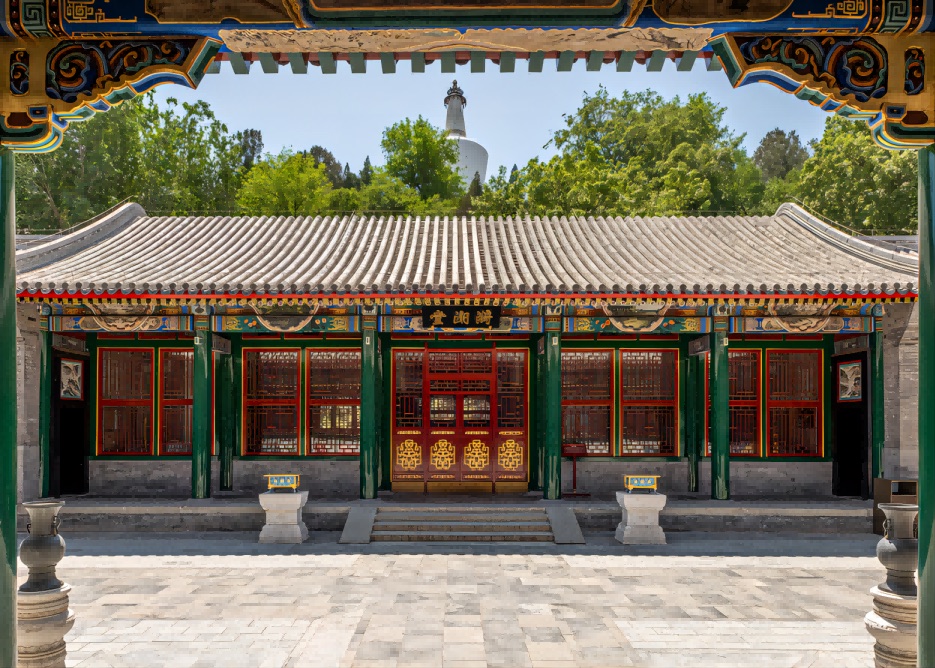
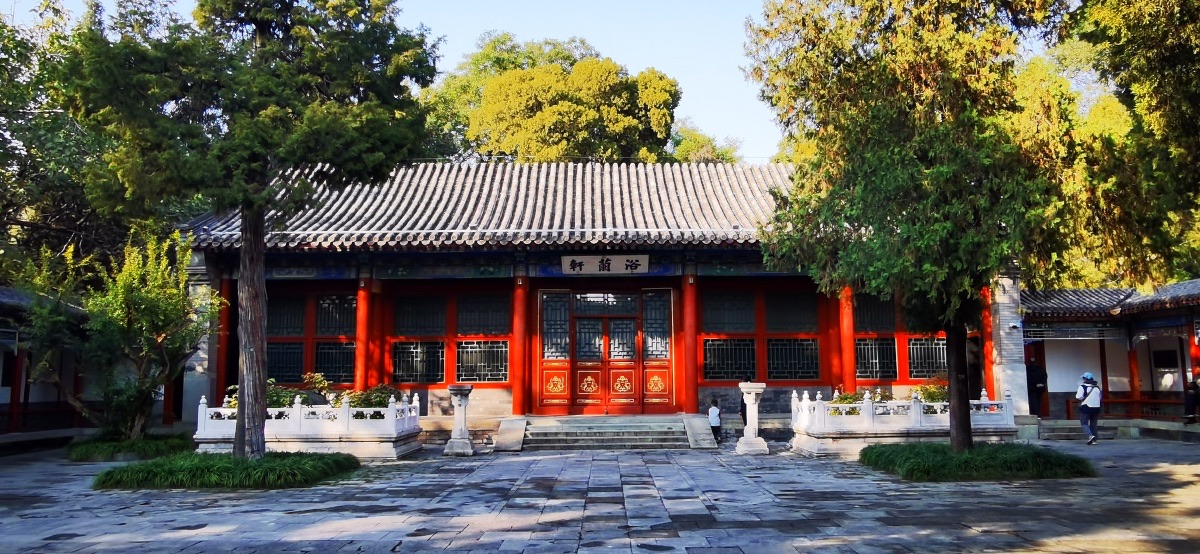
Jingxin Studio sits on the north shore of Beihai Park, a "garden within a garden" built during the Qianlong era's expansion of the imperial grounds. Originally named Jingqing Studio and informally known as "Qianlong's Little Garden," it covers about 4,700 square meters and is the most exquisitely crafted Jiangnan-style garden in the park, designed by the legendary Yangshi Lei family, the Qing dynasty's royal architectural studio. Ornamental Taihu rocks, pavilions, and covered walkways compose a landscape that shifts with every step. The studio was historically the crown prince's study; after 1949, Puyi also wrote his memoir "The Last Emperor" here. Key structures include the main hall, Baosu Bookhouse, Yanhua Pavilion, Qinquan Corridor, and Zhenluan Pavilion — together a masterclass in the Chinese garden ideal: "made by human hands, yet seemingly born of nature." Note: Jingxin Studio is closed on Mondays except public holidays; plan your visit accordingly.

Xitian Fanjing

Xitian Fanjing, also known as the Great Western Heaven, stands on the north shore of Beihai Park. It was built as a royal temple at the order of Empress Dowager Li during the Wanli reign of the Ming dynasty. In January 2026, the third courtyard of the complex — the Glazed Pavilion Courtyard — was formally returned to Beihai Park, restoring the complex to its original completeness. The heart of the site is Dacizhenru Hall, also called the Nanmu Hall, a Ming dynasty masterpiece of golden nanmu timber construction. More than twenty massive nanmu columns, each ten meters tall and half a meter in diameter, support the hall. The structure is left entirely unpainted, allowing the timber's natural golden-purple-brown color and grain to speak for themselves — austere, dignified, and deeply impressive. The wider complex includes Huayan Qingjie Hall, the Seven-Buddha Pagoda Pavilion, and the Glazed Pavilion, and stands as an outstanding example of Ming imperial Buddhist architecture. The entire site is arranged along a strict axis, creating a sequence of sacred spaces that perfectly marries Chinese imperial splendor with Buddhist devotion.

Xitian Fanjing — Huazangjie Archway

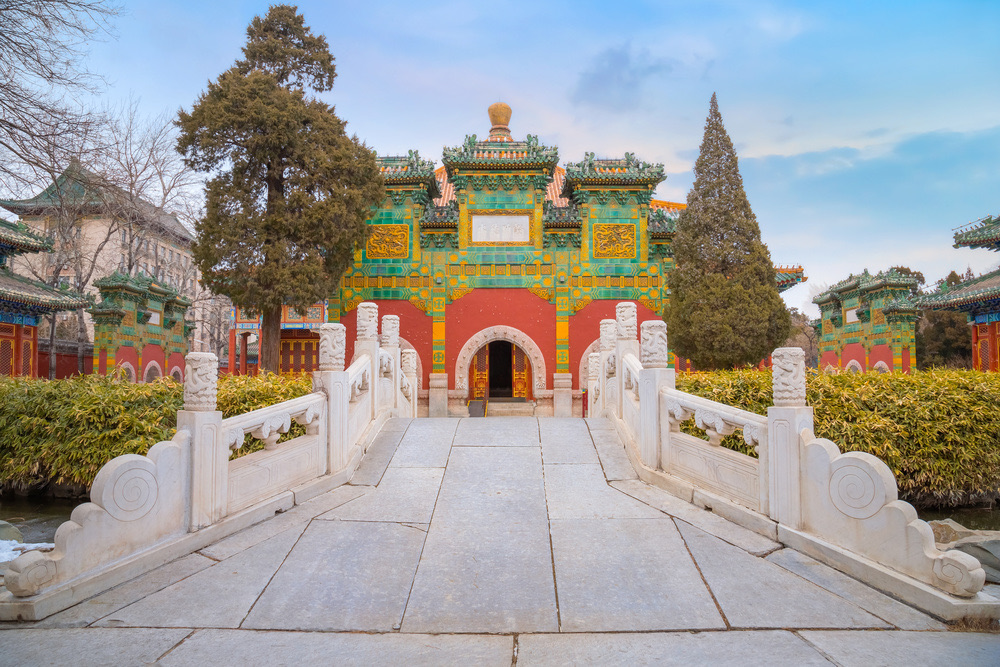
The Huazang Jie Gateway is the entrance ceremonial gateway to the Xitian Fanjing complex. A four-column, seven-roof structure with a green glazed-tile hip-gable crown, its front face bears the inscription "Realm of the Flower Treasury" and its back face reads "Spring of Mount Sumeru". The four corner eaves originally carried protective support poles with stone anchors at the base — a feature rare among surviving ceremonial gateways today. Stone sutra pillars flank the gateway on each side, the eastern one carved with the Diamond Sutra, the western one with the Medicine Master Sutra, both of exceptional quality. The gateway is one of the largest glazed-tile ceremonial arches in Beihai Park and an important artifact for the study of ancient Chinese gateway architecture.

Xitian Fanjing — Huayan Qingjie Hall

Huayan Qingjie Hall forms the third courtyard of the Xitian Fanjing complex. Built in 1759 (the twenty-fourth year of Qianlong's reign), it is a double-eaved hip-gable structure of lavish decoration and superb craftsmanship. The hall once enshrined the Seven Buddhas of Antiquity and a stone stele recording their history in Qianlong's calligraphy. Together with the Seven-Buddha Pagoda Pavilion and the Glazed Pavilion, it completes the full architectural composition of Xitian Fanjing and is an important physical resource for the study of Chinese imperial Buddhist architecture. Note: Xitian Fanjing is closed on Mondays except public holidays and requires a separate ticket (1 RMB); plan your visit accordingly.

Xitian Fanjing — Seven Buddhas Pagoda Pavilion

The Seven-Buddha Pagoda Pavilion is part of the third courtyard of the Xitian Fanjing complex, built in 1777 (the forty-second year of Qianlong's reign). The double-eaved pyramidal-roofed pavilion shelters an octagonal stone pagoda carved with the Seven Buddhas of Antiquity and inscribed with Qianlong's "Record of the Seven-Buddha Pagoda" stele text. Together with Huayan Qingjie Hall and the Glazed Pavilion, it forms the complete architectural grouping of Xitian Fanjing, and is an important physical resource for the study of how imperial Qing Buddhist architecture and garden design were integrated. Note: Xitian Fanjing is closed on Mondays except public holidays and requires a separate ticket (1 RMB); plan your visit accordingly.

Xitian Fanjing — Glazed Pavilion

The Glazed Pavilion is part of the third courtyard of the Xitian Fanjing complex. Built in 1759 (the twenty-fourth year of Qianlong's reign), it is a triple-tiered hip-gable structure whose exterior facade is set with 1,424 glazed-tile Amitayus Buddha figures — one of the rarest examples of Qing dynasty official glazed-tile construction in the country. The pavilion once housed a large collection of Buddhist sutras and sacred objects, and is an important physical resource for the study of Chinese Buddhist culture and art. In January 2026 the Glazed Pavilion courtyard was formally transferred from the Beijing Academy of Cultural Heritage back to Beihai Park, restoring the Xitian Fanjing complex to its full extent. Plans are underway to undertake conservation restoration of the pavilion, restore its historical appearance through digital technology, develop cultural merchandise and educational programs, and eventually open it to the public. Note: Xitian Fanjing is closed on Mondays except public holidays and requires a separate ticket (1 RMB); plan your visit accordingly.

Xitian Fanjing — Bronze Censer

In front of Huayan Qingjie Hall stands a Qing dynasty bronze incense burner of fine craftsmanship and rich carved ornamentation. It is an important physical artifact for the study of Chinese Buddhist culture and art. The incense burner served as a ritual vessel through which ancient emperors offered sacrifices to heaven and earth and prayed for rain and peace across the realm. Note: Xitian Fanjing is closed on Mondays except public holidays and requires a separate ticket (1 RMB); plan your visit accordingly.

Xitian Fanjing — Stone Sutra Pillars

Inside the Xitian Fanjing complex stand two Qing dynasty stone sutra pillars on the east and west sides of Huayan Qingjie Hall, both finely carved. The eastern pillar bears the Diamond Sutra; the western pillar bears the Medicine Master Sutra, with clear, precise engraving throughout. Sutra pillars are a traditional element of Buddhist temple architecture, typically placed on both sides of the central axis to enshrine sutras or Buddha images. Note: Xitian Fanjing is closed on Mondays except public holidays and requires a separate ticket (1 RMB); plan your visit accordingly.

Xitian Fanjing — Bronze Cranes

A pair of Qing dynasty bronze cranes stands in front of Dacizhenru Hall, each rendered in exquisite detail. The crane is a traditional symbol of longevity and good fortune in Chinese culture, and paired bronze cranes are a recurring decorative element in imperial gardens, embodying the emperor's wish for long life and auspiciousness. Note: Xitian Fanjing is closed on Mondays except public holidays and requires a separate ticket (1 RMB); plan your visit accordingly.

Xitian Fanjing — Bronze Ao

A Qing dynasty bronze ao stands in front of Dacizhenru Hall, its form elaborately carved and richly detailed, symbolizing auspiciousness and divine protection. In Chinese mythology, the ao is one of the dragon's nine sons, associated with cosmic support and good fortune. The placement of bronze ao in imperial gardens reflects the emperor's aspiration for divine blessing and an enduring, well-ordered realm. Note: Xitian Fanjing is closed on Mondays except public holidays and requires a separate ticket (1 RMB); plan your visit accordingly.

Nine-Dragon Wall

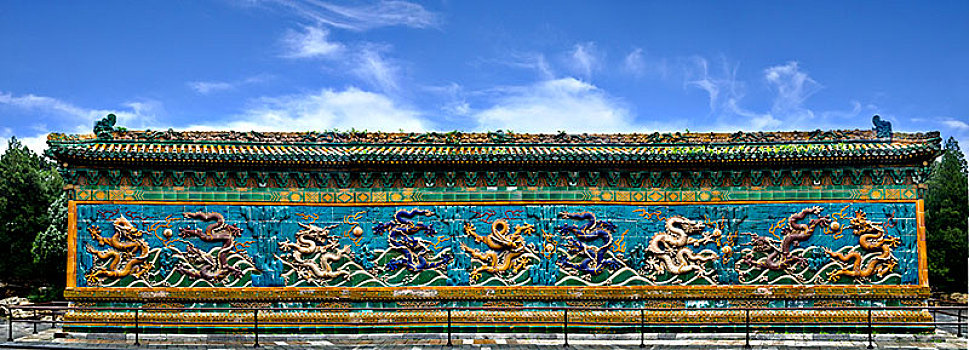
The Nine-Dragon Wall on Beihai Park's north shore is the only double-sided glazed tile screen wall among China's three surviving ancient Nine-Dragon Walls. It stretches 25.5 meters wide and rises 6.9 meters tall, with 18 vividly sculpted polychrome dragons writhing through clouds on each face, their five-color glazed tiles as brilliant today as when they were fired centuries ago — a pinnacle of ancient Chinese glazed-tile craftsmanship. Built during the Qing dynasty, the wall's two faces employ different color palettes: the front is dominated by yellows, greens, and whites; the back by blues, purples, and reds. An open plaza in front of the wall is one of the park's most popular photography spots. Beside the wall stands a small stone pavilion sheltering an imperial stele inscribed in Qianlong's hand, recording the wall's history and artistic significance.

Kuaixue Tang

Kuaixue Tang stands on the north shore of Beihai Park. Built during the Qianlong era as an imperial library to house calligraphic treasures including Wang Xizhi's "Quick Snow, Clear Sky" letter, the complex covers about 10,000 square meters and is arranged as a composed garden-within-a-garden. The innermost hall is a nanmu timber structure of quiet elegance, with a simple unadorned plaque reading "Kuaixue Tang" that harmonizes naturally with the warm tones of the timber. The ornamental stone steps leading up to the hall are formed in a graceful natural composition known as "ruyi treads"; together with the Genyue rock carved with the characters "Clouds Rising", they form what is known as the "Three Wonders of Kuaixue Tang." The complex once served as the Song Po Library, and luminaries including Lu Xun, Zhang Henshui, Shen Congwen, and Bing Xin passed through its halls. In 2026 Kuaixue Tang hosts the "Beihai Seasonal Ceremonies" cultural series, including a "Winter Stone Carving and Seal Engraving Gathering," offering visitors a hands-on encounter with traditional arts within an imperial architectural setting. Note: Kuaixue Tang is closed on Mondays except public holidays; plan your visit accordingly.

Iron Shadow Wall

The Iron Shadow Wall is a Yuan dynasty artifact carved from neutrally toned volcanic breccia; its name comes from the iron-like color and texture of the stone. It stands 1.89 meters tall and 3.56 meters long. The wall was originally erected in front of a temple inside the Yuan capital's Jiande Gate (near present-day Deshengmen); during the Ming dynasty it was moved to stand before Huguo Desheng'an Temple, and the hutong that took shape around it became known as Tieyingbi Hutong. In 1947 it was relocated to its present position in front of Chengguan Hall in Beihai Park for safekeeping, though its original base was left behind. It was not until 1986 that cultural heritage workers tracked down the original base in Tieyingbi Hutong and reunited it with the wall. Both faces carry low-relief carvings of mythical beasts amid clouds — a suanni on one side and a qilin on the other, with sea horses carved along the base. The Iron Shadow Wall is a remarkable example of Yuan dynasty stone carving and a precious witness to the intertwining of ancient Chinese architecture and religious art. It now stands east of Kuaixue Tang and is one of the rarest Yuan dynasty survivals in the park.

Miaoxiang Pavilion

Miaoxiang Pavilion sits north of Chanfu Temple and is a pavilion-style structure sheltering an elaborately carved Qing dynasty stone pagoda. Together with Chanfu Temple it forms part of Beihai Park's Buddhist cultural landscape corridor, and is a significant physical resource for the study of the fusion between ancient Chinese Buddhist architecture and imperial garden design. Note: Miaoxiang Pavilion is closed on Mondays except public holidays and requires a separate ticket (1 RMB); plan your visit accordingly.

Wanfo Tower Ruins

The Wanfo Tower Ruins lie north of Chanfu Temple. The original three-story tower once housed ten thousand golden Amitayus Buddha figures, all looted during the Eight-Nation Alliance's invasion in 1900. A small stone pavilion near the ruins shelters an imperial stele in Qianlong's calligraphy recording the tower's history and religious significance. Note: Wanfo Tower Ruins are closed on Mondays except public holidays and requires a separate ticket (1 RMB); plan your visit accordingly.

Wanfo Tower Stele

The Wanfo Tower Stele stands south of the Xiaoxitian ceremonial gateway. Erected during the Qianlong era to commemorate Wanfo Tower, the stele stands approximately two meters tall and one meter wide, with an inscription in Qianlong's hand recording the tower's history and religious significance. The stele is an important physical resource for the study of the integration of imperial Qing Buddhist architecture and garden design. Note: Wanfo Tower Stele is closed on Mondays except public holidays and requires a separate ticket (1 RMB); plan your visit accordingly.

Xiaoxitian

Xiaoxitian, also known as the Hall of the Western Paradise, stands on Beihai Park's north shore. It was built in 1768 (the thirty-third year of Qianlong's reign) as a birthday prayer temple for Qianlong's mother, the Empress Dowager Xiaosheng. Its centerpiece, the Hall of the Western Paradise, is the largest square-plan pavilion-hall in China: set on water and accessed by bridges, with a smaller square pavilion at each corner, the whole forming a composition of formidable grandeur. The complex also includes a glazed tile ceremonial gateway and Baoji Tower. The original complex included Wanfo Tower, which housed ten thousand golden Amitayus Buddhas — all looted during the Eight-Nation Alliance's sacking of Beijing in 1900. In 2026, the main buildings of Xiaoxitian are undergoing restoration and are temporarily closed; the surrounding grounds remain accessible and visitors can admire the exterior of the Hall of the Western Paradise and its detailed carving. Xiaoxitian embodies the fusion of China's deeply rooted filial culture with the Buddhist vision of the Western Pure Land.

Five Dragon Pavilions

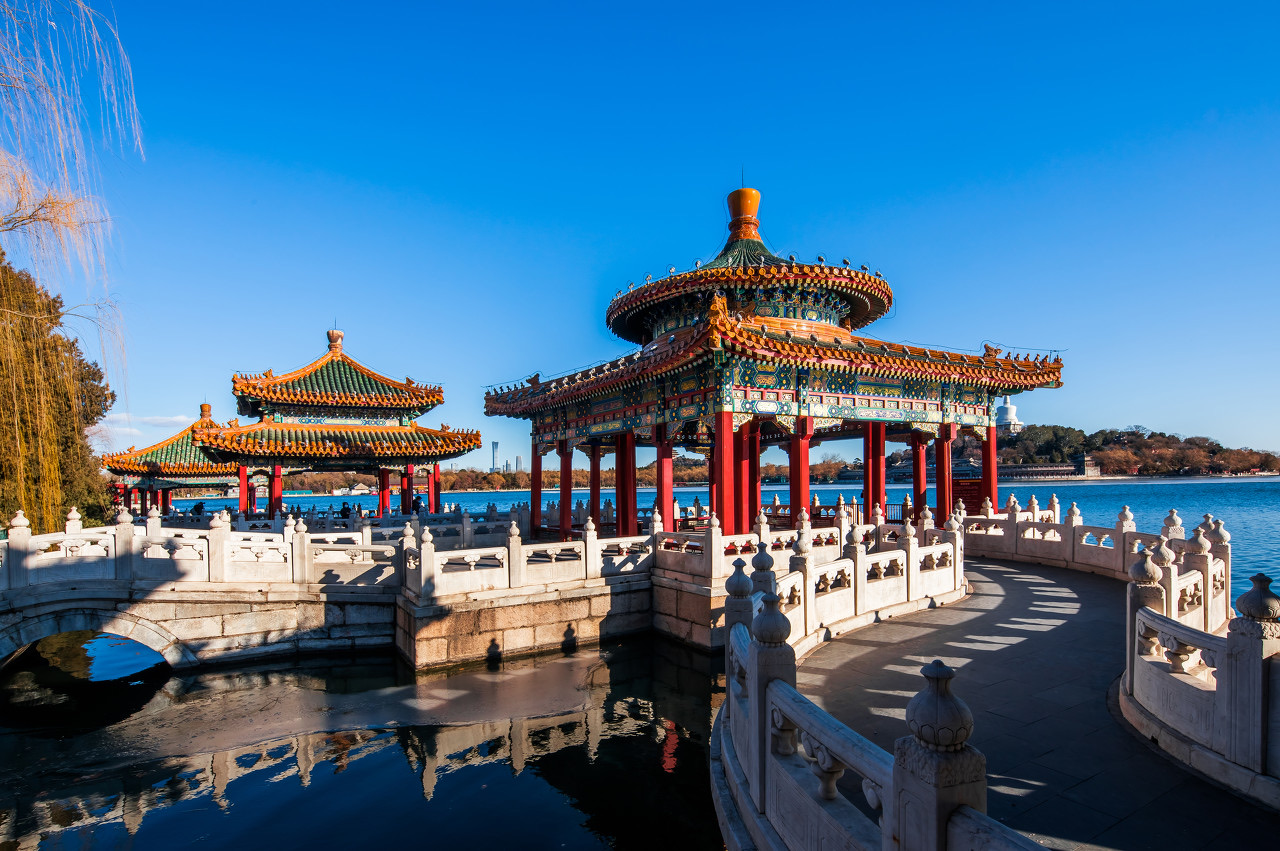
The Five Dragon Pavilions occupy the western stretch of Beihai Park's north shore. Built in 1602 (the thirtieth year of the Wanli reign) on the site of the former Taisu Hall, the five pavilions are linked by curving white marble balustrade bridges that snake through the water like a dragon at play — hence the name. The pavilions are staggered in an S-shaped formation, with the largest, Longze Pavilion, at the center. Longze has a double-eaved pyramidal roof — circular above, square below — symbolizing the cosmological principle of "heaven is round, earth is square" and the supreme authority of the imperial throne. It was reserved for the emperor and empress to fish, admire the moon, and watch fireworks. The four flanking pavilions — Chengxiang, Zixiang, Yongrui, and Fucui — are arranged in east-west symmetry and connected by curved bridges. All five pavilions are roofed in green glazed tile with yellow trim, and their eaves are decorated with brilliantly painted roofline brackets. The coffered ceiling inside Longze Pavilion features a carved golden dragon looking down from above. From the pavilions, views extend south to the White Pagoda on Qionghua Island and north to Jingshan's Wanchun Pavilion, with Beijing's modern skyline visible beyond. The Five Dragon Pavilions were once the residence of the Yongzheng Emperor's consort Qi, and a favorite leisure spot of the Qing imperial family.

Practical info Opening hours · Ticket · Getting there
Opening hours
  • Peak season (April 1-October 31): 06:30-21:00 (last entry at 20:30)
  • Off season (November 1-March 31 next year): 06:30-20:00 (last entry at 19:30)
  • Qionghua Island: 08:30-17:00 (last island access at 16:30)
  • Note: Summer evening is the most beautiful time in Beihai Park, with the sunset shining on the lake and the White Dagoba glowing in the golden afterglow; in winter, after the lake surface freezes, you can experience ice cariage (additional fee required)
Ticket
  • Peak season (April 1-October 31): 10 RMB/person
  • Off season (November 1-March 31 next year): 5 RMB/person
  • Qionghua Island (White Dagoba): Peak season 10 RMB/person; Off season 5 RMB/person
  • Shanin Hall: 2 RMB/person
  • Combo Ticket (including park ticket + Qionghua Island + Shanin Hall): Peak season 20 RMB/person; Off season 15 RMB/person
  • Discounted Tickets: Students, seniors (over 60), military personnel, etc. can enjoy half-price or free admission with valid ID
  • Note: It is recommended to purchase tickets in advance through the official WeChat account of "Beihai Park" or platforms such as Meituan and Ctrip to avoid on-site queuing; the park covers a large area, so it is recommended to allow 2-3 hours for visiting
Getting there
  • Rail Transit:
    • Subway Line 6: Get off at Beihai North Station, walk about 5 minutes from Exit B (Northeast Exit)
    • Subway Line 4: Get off at Xisi Station, walk about 10 minutes from Exit D (Southwest Exit)
  • Bus:
    • Beihai North Gate Station: Take buses 13, 42, 90, 107, 111, 118, 204, 609, 612, 623, 701, etc., get off and arrive directly
    • Beihai Station: Take buses 5, 101, 103, 109, 124, 128, 614, etc., get off and arrive directly
    • Forbidden City West Gate Station: Take buses 5, 58, get off and walk about 5 minutes
  • Taxi/Ride-hailing: Directly tell the driver "Beihai Park"; you will arrive directly; it is recommended to enter from the North Gate or South Gate
  • Note: Roads around Beihai Park are narrow and parking spaces are extremely tight; it is strongly recommended to take rail transit or bus; entering from the North Gate is closest to Qionghua Island

Inside Beihai Park

11 stops, in walking order — read top to bottom, no clicking needed.

1 South Gate & Circular City of 11

South Gate & Circular City

南门与团城

The South Gate is the principal entrance to Beihai Park, framed by a spacious plaza and towering ancient trees that immediately convey a regal atmosphere. Just inside the gate lies the Circular City (Tuancheng), a round platform first built in the Jin dynasty and expanded under the Yuan. Though barely four thousand square metres, it packs extraordinary architectural and cultural value. The Chengguang Hall on the platform houses a white jade Buddha carved from a single block of jade in the Yuan dynasty, and the Jade Urn Pavilion before it displays the Dushan Great Jade Sea, a wine vessel from Kublai Khan's reign—both national treasures. Ancient pines ring the platform, whose grey-brick walls are a rare military-architectural remnant within a garden; climbing up affords a panoramic view of the entire Beihai lake and park.

On-site narration · read it where you stand

Hello, everyone, and welcome to Beihai Park in Beijing! Today we'll follow this route: South Gate — Round City — Yong'an Bridge — Qionghua Island (Yong'an Temple and the White Pagoda, Qiongdao Chunyin Stele, Yilan Hall, Yuegu Tower) — East Shore (Haopujian, Huafang Studio) — North Shore (Jingxin Studio, Xitian Fanjing, Nine-Dragon Wall, Kuaixue Tang, Chanfu Temple, Xiaoxitian, Five Dragon Pavilions). Together, we'll explore this imperial garden with nearly a thousand years of history.

Let's start with just how old Beihai really is. It was founded during the Liao dynasty, when the site was called "Golden Sea." The Jin, Yuan, Ming, and Qing dynasties each expanded and refined it, bringing us to where we stand today — nearly a thousand years of continuous history, making it China's oldest and best-preserved classical imperial garden. More than 60% of the park is water, so the moment you step inside you'll feel an unusual sense of openness. Gardens this graceful and fluid are rare in northern China, which is why it earned the poetic nickname: "Not Jiangnan, yet finer than Jiangnan." The ancient tradition of garden design called for "one lake and three sacred mountains" — legend told of three immortal islands named Penglai, Fangzhang, and Yingzhou in the Eastern Sea, and emperors brought that myth to life within the garden walls. The great sheet of water before you, Taiye Pool, is that "one lake." Beihai officially opened to the public in 1925, making it one of Beijing's first public parks, and it is now a National 4A-rated scenic area.

We're standing outside the South Gate. Before we enter, look west — that small walled enclosure is Round City. Don't let its size fool you. It sits on Beijing's central axis and is known as "the world's smallest fortress." Seen from above, it forms a perfect circle, its walls built of layered grey bricks rising 4.6 meters, enclosing just over 6,100 square meters. Round City was founded in the Liao dynasty, became part of the imperial gardens during the Jin, was called "Yuandi" in the Yuan, received its circular walls in the Ming, and was expanded by the Qing emperor Qianlong. It faces Qionghua Island across the water and together they complete the park's "one lake, three mountains" composition. Small as Round City is, it concentrates a thousand years of Beijing's imperial culture. Step inside and you'll find three great treasures along with several other highlights.

The main building at the very center of Round City is Chengguang Hall. It was first built in the Yuan dynasty under the name Yitian Hall and rebuilt in its present form during the Kangxi reign of the Qing. Notice its unusual silhouette: a double-eaved hip-gable roof, with a single-eave porch projecting on each of the four sides, creating a layered, delightfully intricate appearance from the outside. The interior is adorned with elaborate gold-accented rotary painted patterns. To the south of the hall is the Jade Vessel Pavilion; to the north is Jingji Hall — the three together form Round City's central axis. Emperors of the Yuan, Ming, and Qing dynasties all performed heaven-worship rituals here, making it a witness to the full arc of Beijing's imperial history.

The first treasure is enshrined in the central altar of Chengguang Hall — a white jade Buddha from Myanmar. During the Guangxu reign, a monk named Mingkuan brought it back from Myanmar as a gift for Empress Dowager Cixi. The entire figure of Shakyamuni seated in meditation was carved from a single block of white Burmese jade. It stands approximately 1.5 meters tall and weighs over 2,400 jin, with rubies and emeralds set into the head and robes — a work of extraordinary skill and incalculable value. Look closely at the Buddha's left arm — you'll see a sword cut. It was left there in 1900 when the Eight-Nation Alliance ransacked Beihai. One scar, bearing witness to a painful chapter of history.

The second treasure is the Dushan Great Jade Vessel, inside the Jade Vessel Pavilion in front of Chengguang Hall. It is the oldest large-scale jade carving surviving in China — carved from a single block of black jade, weighing 3,500 kilograms. To be precise: 70 centimeters tall, 182 centimeters in diameter, 493 centimeters in circumference, and 55 centimeters deep, its surface covered in golden patterns that conjure the world beneath the sea. It is said to have been Kublai Khan's wine vessel for grand imperial banquets. When the Eight-Nation Alliance looted Beihai's treasures, this piece survived — its unusual material made it impossible to carry off. In the Qianlong era it was rediscovered, moved to Round City, and sheltered inside the Jade Vessel Pavilion, where it has remained ever since.

The third treasure consists of the imperially titled ancient trees. Round City has many old trees, but two are the most famous. One is the "Shade Marquis," an 800-year-old oil pine planted in the Jin dynasty — over 20 meters tall, with a broad canopy that blocks out the sky. Legend holds that Qianlong once rested in its shade and, following the example of China's First Emperor, who titled five pines on Mount Tai, bestowed upon this tree the honorary title "Shade Marquis." The other is the "White-Robed General," a white-bark pine also dating to the Jin dynasty. White-bark pines belong to the pine family and are remarkably hardy — what makes them special is that their bark sheds like a snake's skin, and the more it sheds the whiter the tree becomes. Qianlong loved it so much he composed poems in its honor. Beyond these two, Round City is home to dozens more ancient trees — cypresses, scholar trees, catalpa trees — with 40 classified as Grade A national ancient trees and 544 as Grade B. Every one of them is a living witness to Beijing's history.

Before we leave Round City, here's one last remarkable piece of knowledge: beneath your feet lies an ancient "sponge city" drainage system. The ground is paved with inverted-trapezoid grey bricks laid dry, with gaps between them to let water drain through. Deep underground, a network of infiltration culverts channels the absorbed water out of the city. Thanks to this design, Round City can hold an entire year's rainfall within its walls — and even today, a moderate downpour leaves virtually no puddles or surface runoff on the ground. The walls stand 4.6 meters high, run 276 meters around, and enclose over 4,500 square meters. This drainage system is a perfect expression of the ancient Chinese principle of "harmony between heaven and humanity" — understated in appearance, yet the product of extraordinary craft and ingenuity.

Yong'an Bridge

永安桥

Yong'an Bridge, first built in the Yuan dynasty and rebuilt in the Qing, is the park's most iconic bridge. Over forty metres long and nearly nine metres wide, it features three graceful arches constructed entirely of white marble; the balustrade posts are carved with lotus-petal motifs, and the deck arches gently like a rainbow. The south end connects the Circular City, while the north end leads directly into the mountain gate of Yong'an Temple on Jade Flower Island—both a practical crossing and a superb viewing platform. Standing on the bridge, one looks south to ancient pines on Tuancheng, north to the towering White Dagoba, and east and west across rippling lotus-dotted waters—the quintessential Beihai composition. After snowfall the white-marble bridge merges with the snow into a fairyland, earning the phrase "Yong'an Snow Clearing."

On-site narration · read it where you stand

After Round City, we enter the park through the South Gate. The great stone bridge stretching across the water ahead of us, connecting us to Qionghua Island, is Yong'an Bridge — the largest bridge in Beihai Park. It is 85 meters long, 7.6 meters wide, with three arched spans set in a gently curving alignment and 48 ornamental columns lining each side — an imposing sight. Its predecessor was a Yuan dynasty wooden bridge; in the eighth year of Qianlong's reign, 1743, it was rebuilt in stone as you see it today.

Please notice the ceremonial gateway at each end of the bridge. The one at the south reads "Accumulating Jade," describing the lush green of Round City we've just walked through. The one at the north reads "Piling Clouds," evoking the layered rockery of Qionghua Island ahead. One gateway for jade, one for clouds — a preview in words of what lies on either side.

There's a wonderful detail on the bridge — walk to the north end and look at those stone lions. In Chinese architecture, stone lions in front of a building traditionally face south, outward. But the stone lion at the north end of Yong'an Bridge faces north, inward. Why? When the bridge was built, its designers had to accommodate a roughly 15-meter misalignment between the central axes of Round City and Qionghua Island, so the bridge was given its gentle curve — and the stone lions turned with it. Old Beijingers made a saying out of it: "The lions of Yong'an Temple face inward" — used to tease anyone who does things the wrong way around. Every bend, every lion on this bridge has a story behind it.

Crossing Yong'an Bridge, we officially set foot on Qionghua Island.

Jade Flower Island · Yong'an Temple & White Dagoba

琼华岛·永安寺与白塔

Jade Flower Island is the lake-centred hill and the park's highest point and visual anchor. Yong'an Temple on the island was founded in 1651 (Shunzhi 8) and expanded under Qianlong, ascending the slope in layered courtyards—from the Falun Hall at the mountain gate to the Zhengjue Hall above, the halls are solemn and incense has burned here for centuries. The White Dagoba at the summit stands 35.9 metres tall in Tibetan stupa form; its gleaming white body is crowned by a bronze canopy and gilded sun-and-moon finials that flash in sunlight. It was first erected to welcome the Fifth Dalai Lama to Beijing, bearing both political and religious significance. From the top, sweeping views capture the Forbidden City's red walls and yellow roofs, the entire central axis, and the Western Hills—one of the most magnificent urban panoramas in Beijing.

On-site narration · read it where you stand

Across Yong'an Bridge, the hill rising beneath our feet is Qionghua Island — the heart of everything Beihai has to offer. Climbing the southern slope, we reach a temple built into the hillside: Yong'an Temple.

Yong'an Temple was founded in 1651, the eighth year of the Shunzhi reign, under the original name White Pagoda Temple. During the Qianlong era it was expanded with the addition of Falun Hall, a bell tower, a drum tower, and a main gate, and renamed Yong'an Temple. It was one of the most important Tibetan Buddhist temples of the Qing imperial court. As we follow the central axis upward, passing through courtyard after courtyard, the views grow wider with every step — it's a climb that's equal parts pilgrimage and sightseeing.

At the summit, the star of the show appears: the White Pagoda. This Tibetan-style pagoda was built during the Shunzhi era, in brick and timber, and stands 35.9 meters tall, its body gleaming white as jade. It is the symbol of Beihai Park and one of Beijing's most recognizable landmarks — unmistakable in old photographs of the city. In front of the pagoda stands Shanyin Hall, enshrining Yamantaka, whom the people of old Beijing called "the protective deity of the city."

From the base of the White Pagoda, take a slow turn and look in every direction. To the south are Round City and the Forbidden City; to the east, Jingshan Hill; to the west, Zhongnanhai. The whole park — all its lakes and hills — is spread below you. This is the best vantage point in the entire park and one of the finest spots for photographs. Take your time here.

When you've had your fill of the view, we'll descend the east slope of the hill toward our next stop: the Qiongdao Chunyin Stele.

Jade Flower Island · Qiong Island Spring Shade Stele & Yuegu Tower

琼华岛·琼岛春阴碑与阅古楼

The Qiong Island Spring Shade Stele stands on the mid-slope of Jade Flower Island's east side. Its tall shaft bears four characters "Qiong Island Spring Shade" in Emperor Qianlong's own hand, with his poem on the reverse. This scene originates from the "Eight Views of Yanjing" of the Jin dynasty, depicting the island's dappled tree shadows and veiling mists in spring—the oldest landscape-aesthetic tradition in Beijing. Ancient trees cast deep shade around the stele, and in spring blooming crabapples and flowering peaches echo the inscription's mood. Yuegu Tower, on the island's northwest side, is a semi-circular two-storey pavilion built under Qianlong to house the Three Rarities Hall Model Calligraphy (Sanxitang Fatie) in stone. The collection gathers works by over 340 master calligraphers from Wei-Jin to late Ming, carved on 495 stone tablets—the largest engraved calligraphy anthology in Chinese history, a true treasury of brush and ink.

On-site narration · read it where you stand

Descending from the White Pagoda along the eastern slope, at the foot of White Pagoda Hill we come to a stone stele — this is the Qiongdao Chunyin Stele.

"Spring Shadow over Qionghua Isle" is one of the "Eight Scenes of Yanjing" recognized since the Jin dynasty. It was originally called "Spring Clouds over Qionghua Isle," was later included among the "Eight Scenes of the Imperial Capital" during the Ming dynasty, and in 1751, the sixteenth year of the Qianlong reign, the emperor renamed it "Spring Shadow over Qionghua Isle" and had this stele commissioned. Look closely at the stele: it stands 4.1 meters tall, with dragons carved at the crown and interlocking floral patterns framing all four sides of the shaft, and a stone balustrade around the base. The front face bears Qianlong's calligraphy of the four characters for "Spring Shadow over Qionghua Isle"; the back is engraved with an imperial poem he composed himself. The stele has even moved house: it was originally erected in front of Yuexin Hall on the west slope of White Pagoda Hill, and was relocated to its present position on the east slope in 1786. Why did Qianlong change "spring clouds" to "spring shadow"? The name comes from a line in his poem: "In spring, the time for plowing is most pressing — I watch for cloud and clear skies and raise my voice." Through the name, he expressed his concern for the spring farming season — a rare sentiment from an emperor. A winding path beside the stele leads to Jianchun Pavilion and Kanhua Gallery, one of the finest stretches on Qionghua Island for enjoying the spring scenery. This stele is among the most historically significant artifacts in all of Beihai Park.

Leaving the stele, we round to the western slope of Qionghua Island, where a very distinctive semicircular two-story building awaits: Yuegu Tower. It was built by Qianlong specifically to house the stone-engraved Sanxi Hall Model Calligraphy Collection. The building is a semicircular two-story structure of twenty-five bays, its two wings curving around to form a half-moon enclosing a courtyard. Its greatest treasure lies on the walls inside — 495 engraved stone panels set edge to edge, covering the surface, containing masterworks of Chinese calligraphy from the Wei-Jin period all the way through to the Ming dynasty: facsimile engravings of works by Wang Xizhi, Yan Zhenqing, Liu Gongquan, and other great masters. The story behind it: in 1747, the twelfth year of Qianlong's reign, the emperor issued a decree to compile the court's collection of Wei-Jin to Ming calligraphy into the Sanxi Hall Stone Canal Treasury Collection, which was then carved into stone and stored here. This building is, in effect, a history of Chinese calligraphy written in stone.

One practical note: the ground floor of Yuegu Tower is open to visitors at any time, but the upper floor is only accessible for one hour at 10 a.m. and again at 2 p.m. on Tuesdays. Calligraphy enthusiasts will want to time their visit accordingly. The tower also hosts cultural programs such as the "Beihai Seasonal Ceremonies — Imperial Garden Gathering" series, offering a chance to experience traditional Chinese calligraphy while admiring the architecture. After Yuegu Tower, we head to Yilan Hall on the north slope of Qionghua Island.

Jade Flower Island · Yilan Hall, Daoning Studio & Bronze Immortal Holding Dew Plate

琼华岛·漪澜堂、道宁斋与铜仙承露盘

Yilan Hall and Daoning Studio sit on Jade Flower Island's north slope directly above the lake, forming the island's most important palatial complex. Yilan Hall, five bays wide with a waterfront veranda, was where Emperor Qianlong often reviewed memorials and enjoyed the scenery over tea; Daoning Studio was his study, its name meaning "the Way lies in tranquillity"—quiet and refined. Both halls imitate Jiangnan garden style, blending imperial scale with literati sensibility. Behind them, on a higher terrace, stands the Bronze Immortal Holding a Dew Plate—a copper figure with both hands raised holding a plate, mounted on a stone column, replicating the Han-dynasty Jianzhang Palace dew-receiver. Legend says Emperor Wu of Han used such a figure to gather heavenly dew for elixirs; Qianlong recast it as a symbol of communion between heaven and man, receiving divine grace. The figure is fully gilded, blazing in sunlight, and is Beihai's most mystically charged landmark.

On-site narration · read it where you stand

Rounding to the north face of Qionghua Island, the sweeping complex of buildings facing Taiye Pool is Yilan Hall.

Yilan Hall was built in 1751, the sixteenth year of Qianlong's reign. The design is fascinating: Qianlong took inspiration from the "mountain-wrapped-by-temple" style of Jinshan Temple in Zhenjiang and reversed the concept, creating a "mountain-wrapped-by-buildings" — the structures follow the slope of the hill, wrapping around it from inside. The complex is substantial: 38 heritage structures in all, including Yilan Hall itself, Daoning Studio, Yuanfan Pavilion, Qinglan Huayun, and the Nichang Manwu Stage, among others. The total footprint is about 10,000 square meters, with over 3,900 square meters of built floor area, all of it stepping up the hillside with the hill at its back and the water at its front. This was where Qianlong read, held banquets, took his leisure, and fished with the imperial family, enjoying the views across Taiye Pool. A comprehensive restoration between 2019 and 2022 brought the complex back to its Qianlong-era form and layout. It now serves as a heritage exhibition zone within Beihai Park, using small displays, multimedia presentations, and interactive touchscreens to tell the story of Yilan Hall's historical functions and the events it witnessed.

Just to the west of Yilan Hall, tucked into its own quiet courtyard, is Daoning Studio — Qianlong's personal retreat for reading and composing poetry. It is a single-eave hard-gable hall of five bays, roofed in grey tile with green trim, its interior refined and simply furnished — an expression of Qianlong's governing ideal of "harmonizing with non-action." Covered corridors connect it to the rest of the complex, framing views of Taiye Pool and the spring scenery of Qionghua Island. In 1773, Qianlong wrote his "Record of the Northern Face of Pagoda Hill," describing this spot as a place where "the pagoda rises to the south, waves ripple to the north — altogether reminiscent of the open sky above Jinshan." Facing south he could see the White Pagoda; facing north he looked out over the lake — and you can hear how much he longed for the landscapes of the south. After the full reopening of the Yilan Hall complex in December 2022, Daoning Studio became a window into Beihai's history and culture.

Now look up at that tall sculpture set halfway up the north slope — the Bronze Immortal's Dew-Catching Basin. A white marble coiled-dragon column supports a bronze figure with arms raised, holding up a lotus-shaped bronze basin. The whole sculpture stands about 6.6 meters tall, with the figure facing north. The scene is modeled on a legend about Emperor Wu of Han — who, in pursuit of immortality, had a bronze figure cast to stand on a sacred mountain and collect heavenly dew. Qianlong recreated the scene here at Beihai. In the setting of an imperial garden, it symbolizes the emperor's prayer for heaven's blessing: rain for the crops, and peace across the realm. Together with the Qiongdao Chunyin Stele and Yilan Hall, the Bronze Immortal forms one of the most culturally rich landscape sequences on Qionghua Island.

That brings our tour of Qionghua Island to a close. Next, we cross the bridge to the east shore, where two particularly refined garden-within-a-garden retreats are waiting.

East Shore · Haopu Retreat & Painted Boat Studio

东岸·濠濮间与画舫斋

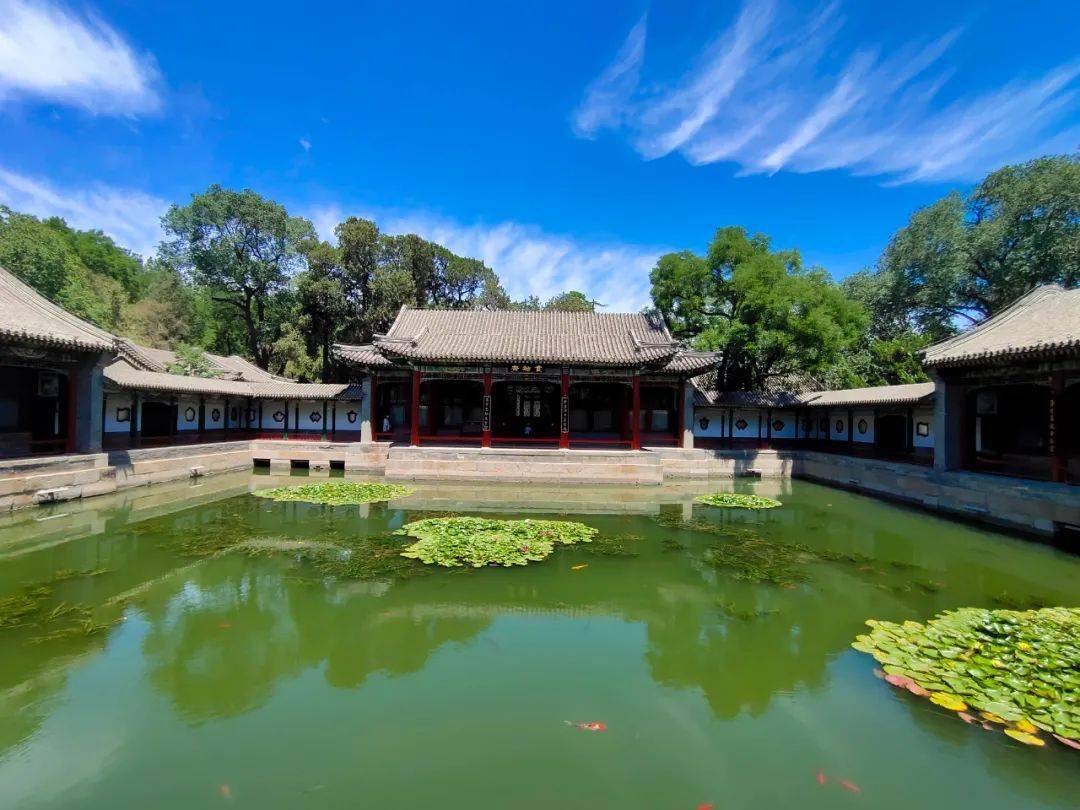
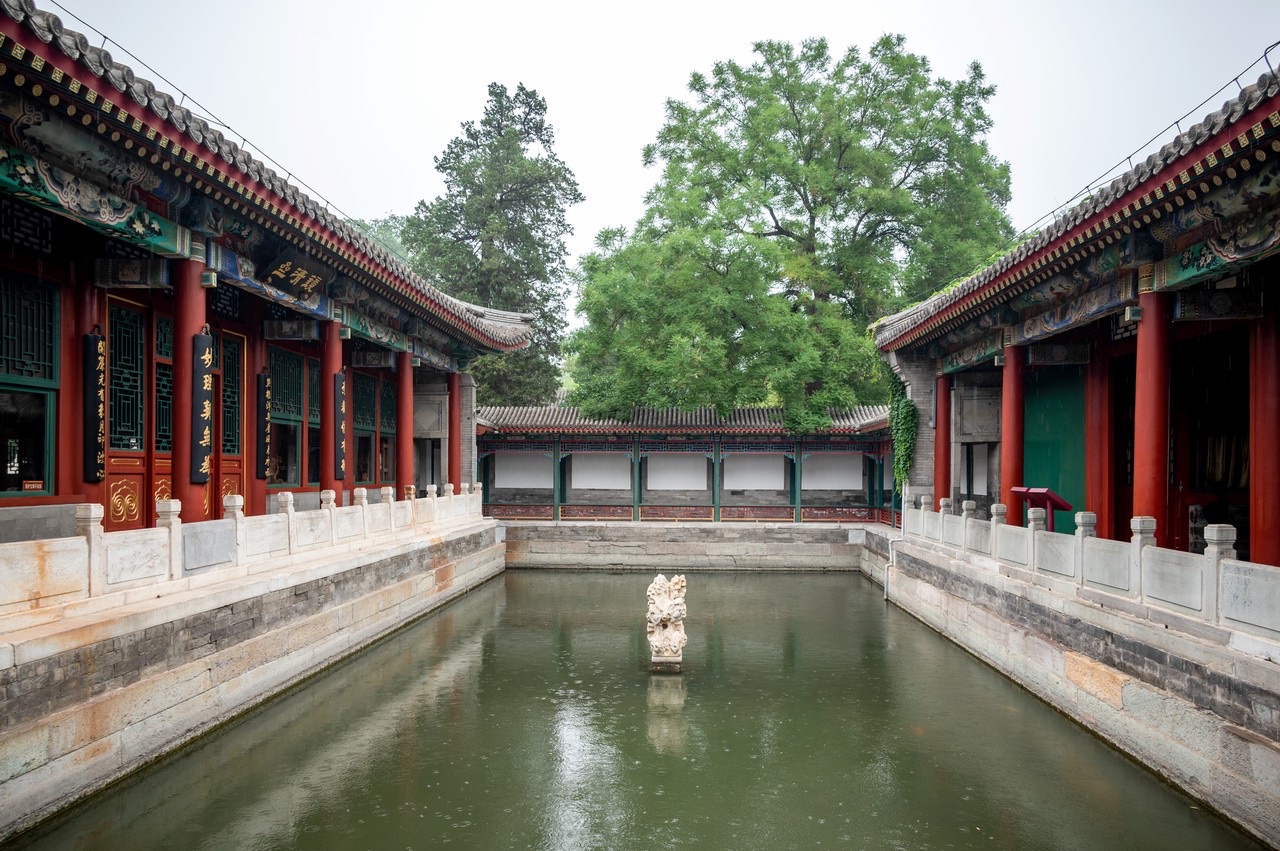
Haopu Retreat lies mid-way along Beihai's east shore—an exquisitely crafted enclosed water courtyard. A winding path leads through artificial rockwork and a festooned gate before revealing a pool ringed by corridors, a tiny stone bridge at its centre, and the Haopu plaque in Qianlong's calligraphy. "Haopu" references Zhuangzi's debate on the Hao Bridge and his fishing by the Pu River, evoking detachment and fish-happy self-sufficiency. Remote from palatial noise, this is the garden's most literati-hermitic corner. The Painted Boat Studio (Huafang Zhai) sits just north of Haopu, its main building shaped like a boat moored on water, yet its interior follows a scholar's layout—the front room named "Spring Rain on the Pond," the rear "Observing Wonder." Qianlong often read and composed poetry here. Winding corridors outside, draped in old vines, bring cool lotus-scented breezes in summer—an ideal retreat from heat.

On-site narration · read it where you stand

Crossing Zhishan Bridge from Qionghua Island to the east shore, our first stop is Haopujian.

This is a garden hidden deep within a rockery — a garden-within-a-garden covering just 1,700 square meters, once the secluded retreat where the emperor and empress came to fish and watch the fish. The name carries great meaning, drawn from the famous "fish at Haoliang" passage in Zhuangzi's "Autumn Floods" chapter — where the philosopher Zhuangzi and his friend Huizi debate on a bridge whether the fish in the water below are happy. Qianlong chose this name for the garden to express the ideal of transcending worldly concerns and merging with nature. The design centers on water: a water pavilion, stone bridge, ornamental rockery, and ponds are arranged in a composition of refined tranquility that carries the graceful spirit of a Jiangnan garden — a perfect embodiment of the Chinese garden principle of "a mountain and forest compressed into a small space." In 2026, Haopujian was added to Beihai Park's officially recommended "Begonia Path" walking route. Each spring, the begonia trees inside the garden burst into flower, their blossoms playing off the classical architecture to form a picture of great beauty.

Walking north along the east shore brings us to Huafang Studio. This was a palace retreat built by Qianlong, inspired by the imagery in Song dynasty writer Ouyang Xiu's "Record of Painted Boat Studio." The name means "a study like a painted pleasure boat" — and it is the only building in the entire Qing imperial garden system named after a painted boat, reflecting the classical Chinese delight in "living as though afloat." The front hall is called Spring Rain Grove Pond; the main Huafang Studio hall is to its north, with a finely detailed intimate courtyard on each side. In its time this was where the imperial family held banquets and listened to storytelling. Today it has become an important venue for the meeting of contemporary art and traditional culture at Beihai Park: between April 2025 and May 2026, it hosted a series of major exhibitions, including the "Resting Cloud" ink wash invitational, the "Resting Cloud" contemporary New Year's flower painting invitational, and the "Spring Sentiment" invitational of contemporary Chinese painting masters. In May 2026 it also hosted the "Tang Hui Calligraphy and Painting Gathering," showcasing the achievements of leading contemporary calligraphers and painters.

Continuing north, we reach the northeast corner of the park, where the Altar of the Silkworm stands. This was the place where Qing dynasty empresses and imperial consorts performed rites honoring the Silkworm Goddess and praying for a good silk harvest — one of Beijing's nine imperial altars, embodying the "women weave" half of the ancient Chinese ideal of "men till, women weave." The altar has its own precise order: it is square in plan, faces south, with mulberry groves protecting it on three sides. In the southeast stands the Silk-Mulberry Viewing Terrace; to its north is the Qin Can Gate with its green glazed-tile hip-gable roof. Built in 1742, the seventh year of Qianlong's reign, replacing a Ming dynasty hall that stood here before, the altar was the site each spring — on the si-day of the second lunar month — of the empress or senior consorts' ritual ceremony for the silk harvest. After 1949 the site was used as a kindergarten; the altar platform and viewing terrace were demolished, the silkworm-washing pool was filled in, and the traditional latticed windows were replaced with modern glass. Today mulberry trees still grow throughout the grounds, and a small stream called the "Silkworm-Washing River" runs along the eastern edge. Inside the principal hall, Qin Can Hall, hang an imperial plaque in Qianlong's calligraphy and a pair of couplets. The Altar of the Silkworm is not open to visitors, but you can observe its architecture from outside the walls — a glimpse into the ancient Chinese world where the imperial household itself modeled the rhythms of agricultural life.

Next, we cross to the north shore, the section of the park with the highest concentration of sights.

Jingxin Studio (Quiet Heart Studio)

静心斋

Jingxin Studio occupies the northwest corner of Beihai's north shore. Founded in 1757 (Qianlong 22) as "Jingqing Studio" and later renamed, it was the emperor's personal reading-and-resting retreat, modelled on Jiangnan private gardens. Though only about eight thousand square metres, it contains rockwork hills, winding pools, cloistered corridors, pavilions, tiny bridges and flowing water—every garden element packed into a "small yet vast" masterclass. The Qinquan Corridor spans the water; Diedie Tower crowns the artificial hill; the Bake-Tea Hut and String-Music Studio scatter among rich spatial layers. Taihu limestone crags are jagged and varied, their caves deep, shifting vistas with every step. Empress Dowager Cixi summered and governed here; Yuan Shikai used it for diplomatic talks—proof that this garden's magic has enchanted every era.

On-site narration · read it where you stand

On the north shore, we begin with Jingxin Studio — originally called Jingqing Studio, and affectionately known to old Beijingers as "Qianlong's Little Garden." It is a garden-within-a-garden built when Qianlong expanded the imperial grounds.

This is the most exquisitely crafted Jiangnan-style garden in all of Beihai Park. It covers about 4,700 square meters and was designed by the Yangshi Lei family — the Qing dynasty's royally appointed architectural design studio. The Yangshi Lei were no ordinary firm: the Forbidden City, the Summer Palace, and the Temple of Heaven all bear their creative imprint. They were, in effect, the imperial chief architects of their era. Step inside Jingxin Studio and you'll find it filled with Taihu rockery mountains interwoven with pavilions, covered walkways, and trickling streams — a scene that genuinely changes with every step, embodying the Chinese garden ideal to its fullest: "made by human hands, yet seemingly born of nature."

The garden's history is remarkable as well. It served as the crown prince's private study in earlier times; after the founding of the People's Republic, the last emperor, Puyi, used it as the place where he wrote his celebrated memoir "The Last Emperor." Key structures inside include the main Jingqing Studio hall, Baosu Bookhouse, Yanhua Pavilion, Qinquan Corridor, and Zhenluan Pavilion — each with a name more elegantly crafted than the last. Take your time wandering through the rockery and water pavilions, and let yourself feel the imperial art of finding stillness within the bustle.

One practical note: Jingxin Studio is closed on Mondays, public holidays excepted — keep that in mind when planning your visit. After the studio, we continue west to a complex of Ming dynasty imperial temples: Xitian Fanjing.

Western Heavenly Paradise & Nine-Dragon Wall

西天梵境与九龙壁

Western Heavenly Paradise (also called Great Western Heaven) sits mid-section of Beihai's north shore. Founded in the Ming and rebuilt in the Qing, it served as the imperial family's private Buddhist temple. The Mahavira Hall inside enshrines the Three Buddhas; the stone pillars and incense burners before it are Qing masterworks. The hall's yellow-glazed tiles with green trim denote a rank just below the palace itself. Behind the temple once stood a grand stupa courtyard, now partially lost yet still hinting at its former majesty. The Nine-Dragon Wall stands immediately east of the temple, built in 1756 (Qianlong 21). It measures 25.86 m long, 6.65 m high, and 1.42 m thick, with nine glazed dragons on each face—18 in total—in yellow, green, blue, purple and white. Each dragon poses differently, leaping through cloud-seas and wave-crests. This is the best-preserved and most skillfully crafted of China's three surviving double-sided Nine-Dragon Walls; every scale is delineated, every whisker flies—a supreme achievement of Qing glazed-tile art.

On-site narration · read it where you stand

Heading west along the north shore, we arrive at Xitian Fanjing — also known as the "Great Western Heaven." It was built as an imperial temple at the command of Empress Dowager Li during the Wanli reign of the Ming dynasty. The complex is arranged along a strict central axis, with courtyard following courtyard in an ordered, sacred sequence — a perfect place to experience the fusion of ancient Chinese Buddhist architecture and imperial garden design.

Entering through the Huazang Jie Gateway. This is a four-column, seven-roof ceremonial arch with a green glazed-tile hip-gable crown — one of the largest glazed-tile ceremonial arches in Beihai Park. The front face bears the inscription "Realm of the Flower Treasury"; the back reads "Spring of Mount Sumeru." Look closely at the four corners of the arch: the eaves originally carried protective support poles anchored with stone bases at the ground — a feature now rarely seen in surviving ceremonial gateways. Flanking the archway on each side stands a stone sutra pillar, the eastern one engraved with the Diamond Sutra, the western one with the Medicine Master Sutra — both of exceptional craftsmanship.

The heart of the entire temple complex is Dacizhenru Hall, also called the Nanmu Hall — the single most rewarding thing to see in Xitian Fanjing. It is a Ming dynasty masterpiece of golden nanmu timber construction, supported by more than twenty massive nanmu columns each ten meters tall and half a meter in diameter. What makes it unlike anything else is that the entire hall is left completely unpainted. While other imperial buildings pile on gold leaf and bright colors, this hall speaks only through the natural wood color and grain of the golden nanmu — a deep, warm reddish-purple-brown that grows more arresting the longer you look at it, austere and deeply dignified. In front of the hall stand a pair of Qing dynasty bronze cranes and a bronze ao: the cranes symbolize longevity and good fortune, a traditional paired ornament in imperial gardens; the ao, said in legend to be one of the dragon's sons, symbolizes auspicious power and the emperor's desire for divine blessing.

The final courtyard at the rear of the temple complex consists of Huayan Qingjie Hall, the Seven-Buddha Pagoda Pavilion, the Glazed Pavilion, and a bronze incense burner — let's take each in turn. Huayan Qingjie Hall was built in 1759, the twenty-fourth year of Qianlong's reign, with a double-eaved hip-gable roof richly decorated and finely crafted. It once enshrined the Seven Buddhas of Antiquity and a stone stele in Qianlong's calligraphy recording their history. The bronze incense burner standing before the hall is a finely wrought Qing dynasty piece — the very type of ritual vessel ancient emperors used to offer sacrifices to heaven and earth and pray for rain and peace. The Seven-Buddha Pagoda Pavilion was built in 1777, the forty-second year of Qianlong's reign, with a double-eaved pyramidal roof; inside stands an octagonal stone pagoda carved with the Seven Buddhas and inscribed with Qianlong's "Record of the Seven-Buddha Pagoda." The Glazed Pavilion is the piece you must not miss: built in 1759, it has a triple-tiered hip-gable roof and its entire exterior surface is set with 1,424 glazed-tile images of Amitayus Buddha — one of the rarest examples of Qing dynasty official glazed-tile construction anywhere in the country. This courtyard was formally returned to Beihai Park by the Beijing Academy of Cultural Heritage in January 2026, restoring the complete Xitian Fanjing complex. Plans are underway for conservation restoration, historical recreation through digital technology, and eventual public opening.

Just north of Xitian Fanjing, a short walk away, is the famous Nine-Dragon Wall — do not miss it. Of China's three surviving ancient Nine-Dragon Walls — one in the Forbidden City, one in Datong, Shanxi — the Beihai wall is the only one decorated on both sides: a double-faced glazed tile screen wall. It stretches 25.5 meters long and rises 6.9 meters tall, with 18 polychrome coiling dragons set into each face, each one surging through clouds, each one unique. The front face uses yellows, greens, and whites; the back uses blues, purples, and reds — five-color glazed tiles that have lost none of their brilliance in hundreds of years, a pinnacle of ancient Chinese glazed-tile artistry. The open plaza in front of the wall is one of the most popular photography spots in the entire park — this is the place to get your shot.

After the Nine-Dragon Wall, walk a short distance east to Kuaixue Tang and the rare Yuan dynasty artifact beside it.

Kuai Xue Tang (Quick Snow Hall) & Iron Shadow Wall

快雪堂与铁影壁

Kuai Xue Tang sits on Beihai's north shore between Western Heavenly Paradise and Chanfu Temple, founded in 1779 (Qianlong 44). Obsessed with Wang Xizhi's brushwork, the emperor ordered this hall built in pine-wood Jiangnan style to house engraved reproductions of the "Quick Snow Clearing" letter and other master calligraphy rubbings in stone. Fine nanmu woodwork graces the interior; the courtyard is open and airy—an imperial building that radiates literati refinement, another bastion of calligraphy culture in the park. The Iron Shadow Wall, a Yuan-dynasty relic originally at Desheng Gate, was later moved here. Carved from volcanic rock (locally called "iron stone"), it is so hard it earned the name "Iron Shadow Wall." Relief carvings of lions and rhinoceroses on its faces are bold and archaic, preserving the rugged vigour of Yuan sculpture—one of Beijing's few surviving Yuan stone-carving artefacts. Its stark power contrasts vividly with Kuai Xue Tang's delicate grace—one martial, one literary, mirroring each other across time.

On-site narration · read it where you stand

East of the Nine-Dragon Wall, this orderly garden-within-a-garden is Kuaixue Tang.

It was built by Qianlong as an imperial library to house calligraphic treasures, including Wang Xizhi's celebrated "Quick Snow, Clear Sky" letter. The complex covers about 10,000 square meters across three courtyards, each stepping deeper in turn. The innermost nanmu timber hall is entirely unadorned — it wins purely through the natural warmth and quiet refinement of the timber itself. Inside hangs a plain, simple plaque reading "Kuaixue Tang," perfectly in tune with the understated atmosphere of a scholar's study.

Kuaixue Tang has its "Three Wonders" — worth a careful look. The first is the stone staircase leading up to the hall: it rises in a naturally graceful, relaxed shape known as "ruyi treads." The second is a rock from the Northern Song dynasty's Genyue imperial garden, inscribed with the characters "Clouds Rising." The third is the Kuaixue Tang calligraphy stone engravings inside the hall. The complex has a remarkable chapter in modern history as well: it once served as the Song Po Library at Beihai Park, and prominent cultural figures including Lu Xun, Zhang Henshui, Shen Congwen, and Bing Xin all spent time here — making it at once an imperial study and a gathering place for twentieth-century intellectuals. Kuaixue Tang continues to host cultural events; in 2026 it is home to the "Beihai Seasonal Ceremonies" series, including a "Winter Stone Carving and Seal Engraving Gathering," inviting visitors to enjoy the ancient architecture and experience traditional craft at the same time.

Before leaving Kuaixue Tang, look to the east of the hall — that dark-colored screen wall is the Iron Shadow Wall, the rarest Yuan dynasty artifact in Beihai Park. It is not made of iron; it is carved from a volcanic breccia whose color and texture resemble iron — hence the name. It stands 1.89 meters tall and 3.56 meters long, with low-relief carvings on both faces: a suanni on one side, a qilin on the other, and sea horses carved along the base. This wall has had a hard journey: it was originally erected in front of a temple inside the Yuan capital's Jiande Gate; during the Ming dynasty it was moved to the Deshengmen area, and the hutong that grew around it came to be called Tieyingbi Hutong. In 1947, to protect it, the wall was moved inside Beihai Park — but the original base was left behind. It was not until 1986 that cultural heritage workers finally tracked down the base in Tieyingbi Hutong and reunited it with the wall, making this Yuan dynasty stone carving whole again at last.

After the Iron Shadow Wall, we continue west to the area of Chanfu Temple and Xiaoxitian.

Chanfu Temple & Little Western Heaven

阐福寺与小西天

Chanfu Temple stands on the west segment of Beihai's north shore, founded in 1760 (Qianlong 25) as Emperor Qianlong's votive offering for his mother's longevity. The main hall spans seven bays under yellow glazed tiles—a lofty rank—and once housed a bronze Thousand-Armed Thousand-Eyed Avalokiteshvara, now lost. The bell tower, drum tower and mountain gate remain intact, still conveying the solemnity of an imperial Buddhist sanctuary. Little Western Heaven (Xiao Xitian) lies just north of Chanfu Temple, built in 1770 (Qianlong 35) for the empress dowager's eightieth birthday, mimicking the South Sea Bodhisattva realm. Its central "Pure Land" square pavilion measures 52.23 m wide and 42.32 m deep—the largest square-pavilion structure in China. Inside, the four walls carry suspended sculptures of Avalokiteshvara rescuing sentient beings; five hundred arhats crossing the sea are vividly alive. Outside, multicoloured glazed tiles blaze against the lake light—a vision of staggering grandeur.

On-site narration · read it where you stand

Continuing west along the north shore, we arrive at Xiaoxitian — which also goes by a more evocative name: "The World of Ultimate Bliss."

Behind Xiaoxitian lies a story of filial devotion. It was built in 1768, the thirty-third year of Qianlong's reign, as a temple of birthday prayers for Qianlong's mother, the Empress Dowager Xiaosheng. Its centerpiece, the Hall of the Western Paradise, is the largest square-plan pavilion-hall in China: surrounded by water on all four sides and reached by bridges, with a smaller square pavilion standing at each corner, the whole composition is one of sweeping grandeur. The complex also includes a glazed tile ceremonial gateway and Baoji Tower. Fusing the Buddhist vision of the Western Pure Land with the Confucian virtue of filial piety — that is what makes Xiaoxitian most moving, and it remains one of the most spiritually charged sites in all of Beihai Park.

To the north of Xiaoxitian lies the area of Chanfu Temple, where a famous building once stood: Wanfo Tower — a three-story pavilion housing ten thousand golden Amitayus Buddha figures. In 1900, the Eight-Nation Alliance invaded Beijing and looted every last one of those golden Buddhas. Today only the ruins remain, along with the stele Qianlong erected outside the ceremonial gateway of Xiaoxitian to commemorate the tower — a silent record of what was lost. North of Chanfu Temple also stands Miaoxiang Pavilion, sheltering inside it a finely carved Qing dynasty stone pagoda.

One practical note: the main buildings of Xiaoxitian are undergoing restoration in 2026 and are temporarily closed. The surrounding grounds remain open, and you can still admire the exterior of the Hall of the Western Paradise and its detailed carvings from outside.

After this solemn corner of the park's Buddhist heritage, our day's tour is nearly at its end. Please follow me to the Five Dragon Pavilions at the water's edge — where the park's most open and expansive view awaits.

Five Dragon Pavilions

五龙亭

The Five Dragon Pavilions jut into the lake from the mid-section of Beihai's north shore, built under Ming Emperor Jiajing and rebuilt in the Qing. Five pavilions line up in a row extending into the water: the central one, Dragon-Blessing Pavilion (Longze), is largest; flanking it are Clear-Blessing (Chengxiang) and Nourishing-Fragrance (Zixiang), with two smaller outer pavilions beyond. Stone bridges link them, and the ensemble resembles five dragons floating on water—hence the name. The central pavilion is a double-eaved square structure under yellow glazed tiles (highest rank); the others step down in size under green tiles, creating a tiered, hierarchically clear waterside cluster. Dragons and phoenixes adorn the eaves; limitless blue waves spread below. Spring and autumn for lotus, winter for snow, mid-autumn for moonlight—every season offers a scene. Qing emperors and empresses often fished and moon-watched here; Empress Dowager Cixi especially loved mid-autumn banquets with lanterns—the most romantically evocative complex in Beihai.

On-site narration · read it where you stand

Our last stop today is the Five Dragon Pavilions, on the western stretch of the north shore, looking out over Taiye Pool.

Built in 1602, the thirtieth year of the Wanli reign, on the site of the former Taisu Hall, these five pavilions are linked by curving white marble balustrade bridges — from a distance the whole composition looks like five dragons playing in the water, which is how they got their name. The five pavilions are staggered front to back in an S-shaped arrangement. The largest, at the center, is Longze Pavilion, with a double-eaved pyramidal roof — circular on top, square below — embodying the cosmological principle of "heaven is round, earth is square" and the supreme authority of the imperial throne. It was reserved exclusively for the emperor and empress to fish, admire the moon, and watch fireworks. The four flanking pavilions — Chengxiang, Zixiang, Yongrui, and Fucui — are symmetrically placed east and west and connected by curved bridges. All five are roofed in green glazed tile with yellow trim and decorated with gilded rotary painted patterns beneath the eaves. The coffered ceiling inside Longze Pavilion features a carved golden dragon gazing down — remarkable craftsmanship worth a look straight up.

Standing at the water's edge of the Five Dragon Pavilions, this is the perfect place to close out the day. Look south: there is the White Pagoda on Qionghua Island, the one we stood at the top of at the start of our tour, its white form reflected in Taiye Pool. Look further and you can see Jingshan's Wanchun Pavilion, and even Beijing's modern skyline beyond — nearly a thousand years of imperial garden on one side, the city's twenty-first-century horizon on the other, ancient and modern sharing the same frame. That is what makes Beihai so endlessly compelling.

From the Liao dynasty's "Golden Sea" to the public park it is today, Beihai has walked alongside this city for nearly a thousand years. Thank you all for joining us today. May this park — "not Jiangnan, yet finer than Jiangnan" — leave you with a memory worth keeping. Safe travels, everyone, and we hope to see you again.

Prefer to be shown around?

A local guide walks these 11 stops with you and answers what the page cannot.

Browse tours ↗