Xiaohe Straight Street Historic and Cultural District
Overview
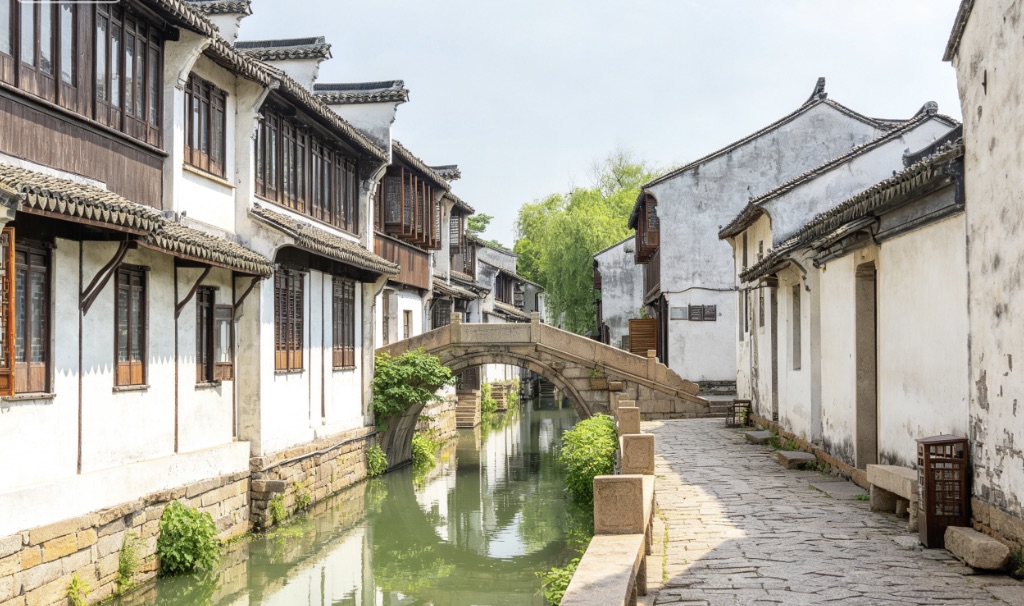
Xiaohe Straight Street Historic and Cultural District is located in Gongshu District, Hangzhou, Zhejiang Province. It sits at the confluence of three waterways: the Grand Canal, the Xiaohe River, and the Yuhang Tang River, making it one of the most intact historic neighborhoods along the Hangzhou stretch of the Grand Canal. The street takes its name from the Xiaohe River that runs alongside it. Buildings line the water's edge, and residents have long made their homes beside the river. The neighborhood preserves the look and feel of a Jiangnan waterfront settlement from the late Qing Dynasty and early Republic era — whitewashed walls, dark roof tiles, carved wooden doorways, stone stairways leading down to the water, ancient bridges, and stone-lined riverbanks all weave together to create the distinctive spatial character and everyday atmosphere of a canal trading community. In 2011, Xiaohe Straight Street Historic and Cultural District was designated a Provincial Historic and Cultural District of Zhejiang.
Attractions
1. Main Entrance of Xiaohe Straight Street
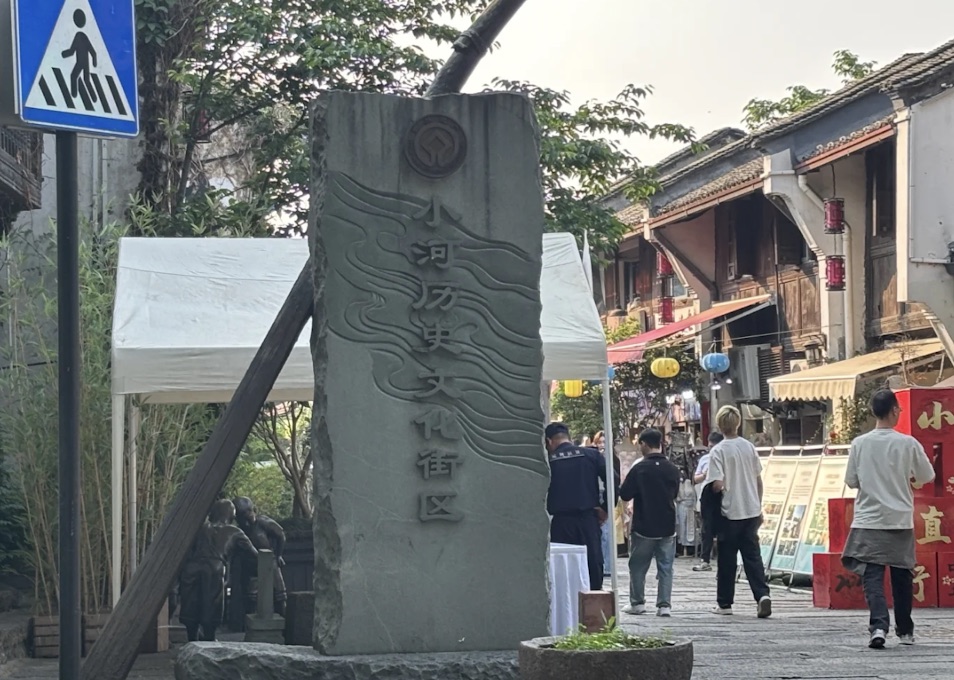
The main entrance to the district is located near the intersection of Hemu Road and Xiaohe Road, and serves as the primary gateway for visitors entering this historic neighborhood. A traditional gatehouse of grey brick and dark roof tiles marks the entrance, alongside a neighborhood map and visitor services. From here, head north along the main street and into the heart of the district to begin your journey through old canal-side Hangzhou.
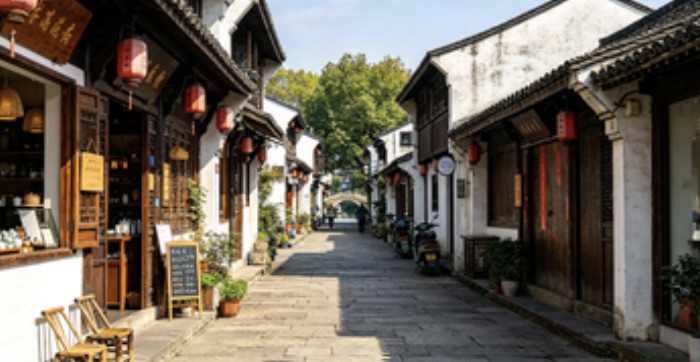
2. Main Street of Xiaohe Straight Street
The main street runs for several hundred metres and forms the central spine of the entire district. Paved with stone slabs, it is lined on both sides with two-storey timber-framed residences built in the late Qing and early Republic era. Ground floors typically served as shops, teahouses, and craft workshops, while upper floors remained living quarters. Walking along the street, you'll notice old-style sliding shop-front boards, intricately carved lattice windows, and hanging lanterns — all preserving the everyday vitality of the old canal wharf.
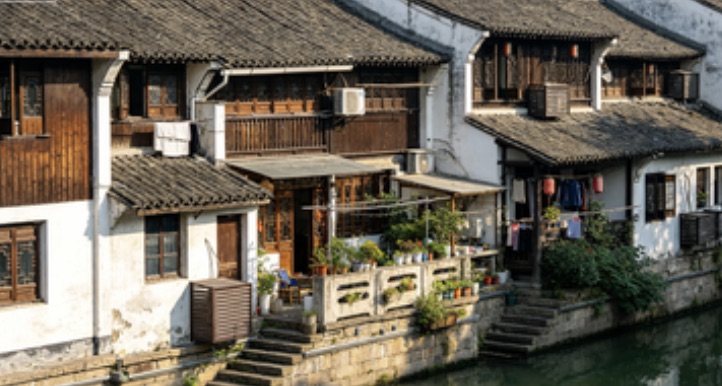
3. Xiaohe Folk House Complex
The Xiaohe Folk House Complex is the most representative traditional residential cluster in the district. Most homes follow the classic Jiangnan layout of "shop in front, home behind" or "shop below, home above." Timber frames are the dominant construction method, with whitewashed walls, dark tile roofs, and stepped horse-head gable walls arranged in a pleasing variety. Inner courtyards, covered walkways, and riverside landing steps are all intact, offering a vivid picture of how merchants and craftsmen along the Hangzhou canal lived in the late Qing and early Republic era.
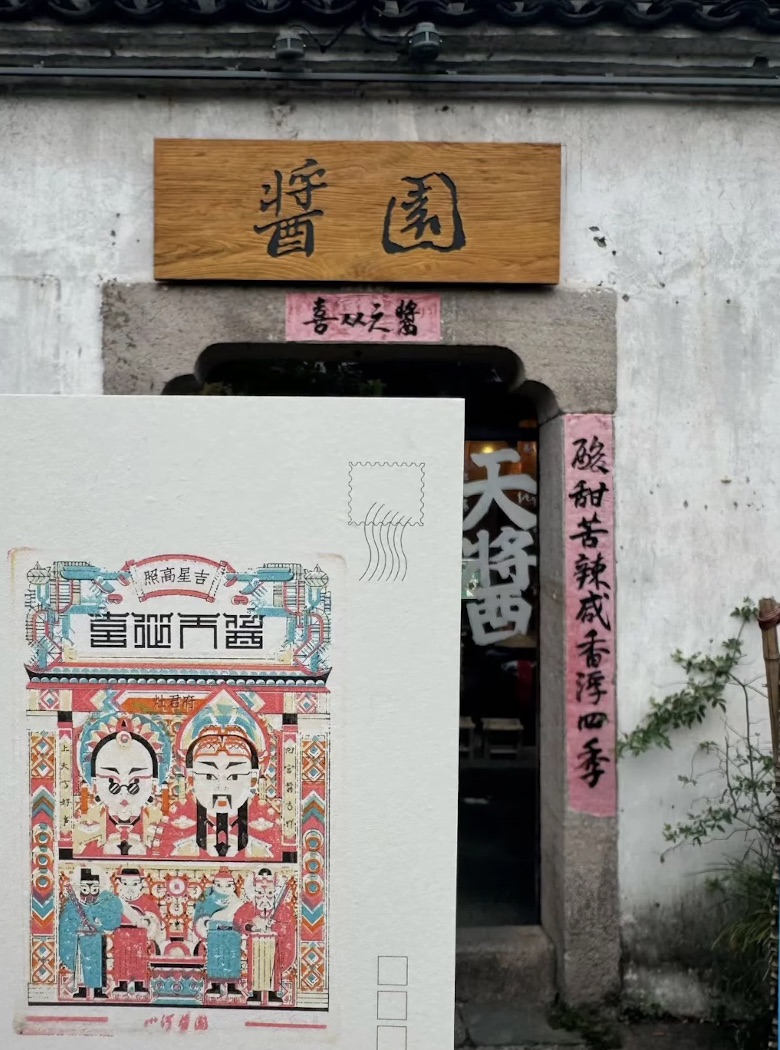
4. Xiaohe Sauce Garden
Xiaohe Sauce Garden was once a celebrated condiment workshop in the district, bearing witness to the prosperity of traditional handicraft industries along the canal. The garden preserves old fermentation jars, sun-drying yards, and wooden shelving, with part of the space now converted into an exhibition and experience venue for Jiangnan condiment culture. The sauce garden showcases traditional fermentation techniques and is a key stop for understanding Jiangnan food culture and the trading activity that once flowed along the canal.
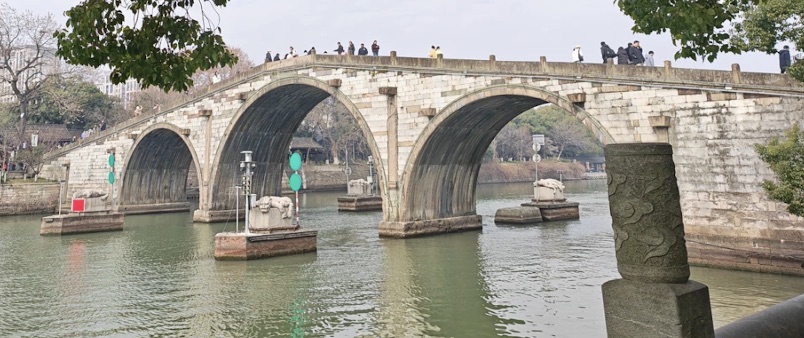
5. Old Bridge Head
Old Bridge Head is a landmark node at the midpoint of Xiaohe Straight Street, named for the ancient bridge that crosses the Xiaohe River here. The riverbank opens up at this spot, and the bridge connects the two shores. Old-established shops and relaxed teahouses cluster around the bridge approaches. Standing at the bridgehead, you look out over the Xiaohe River and its flanking residences — a scene that perfectly captures the classic Jiangnan image of homes built right at the water's edge.
6. Waterside Corridor
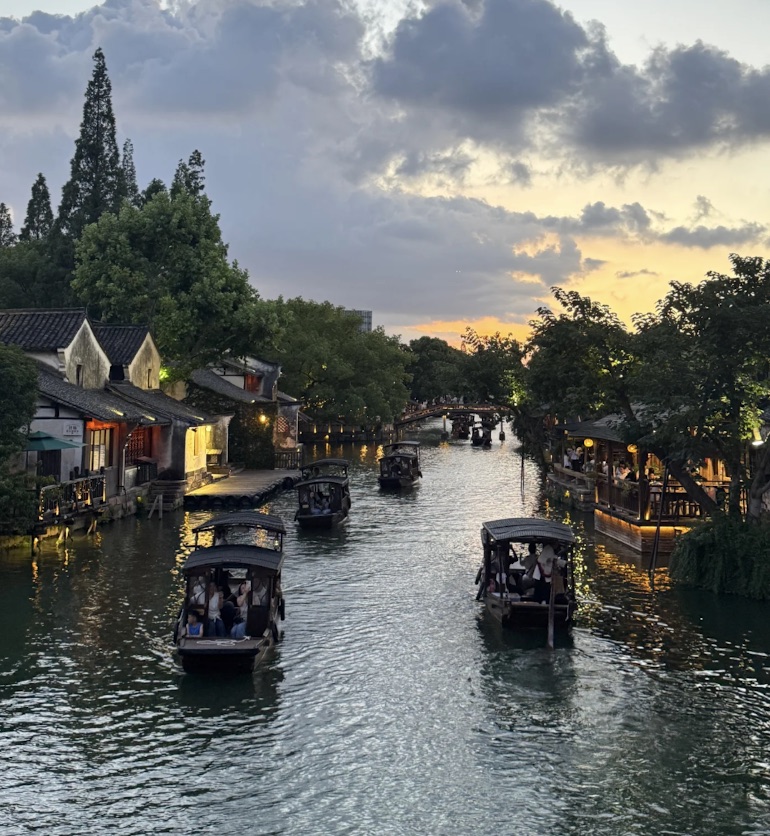
The Waterside Corridor runs along the bank of the Xiaohe River and is the most characteristically water-town walkway in the entire district. The corridor links riverside residences through a combination of timber-framed covered passages and brick-and-stone railings, with benches and viewing platforms where visitors can pause and rest. The river flows quietly below, the banks aged and unhurried, and traditional black-canopied boats and tour boats drift past, composing a canal scene of gentle movement and stillness.
7. Xiaohe Park
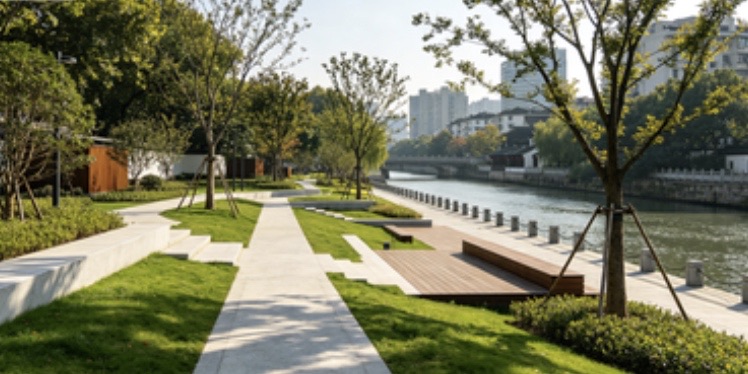
Xiaohe Park sits at the northern end of Xiaohe Straight Street, a riverside green space between the historic district and the Grand Canal. The park retains fragments of its industrial past — old warehouse structures and wharf facilities — now reimagined through landscape design as an open, shared public space along the canal. Shaded by mature trees and equipped with viewing platforms and walking paths, the park offers long views of freight boats on the Grand Canal and close-up perspectives of the historic streetscape.
8. Canal Shipping Exhibition Hall
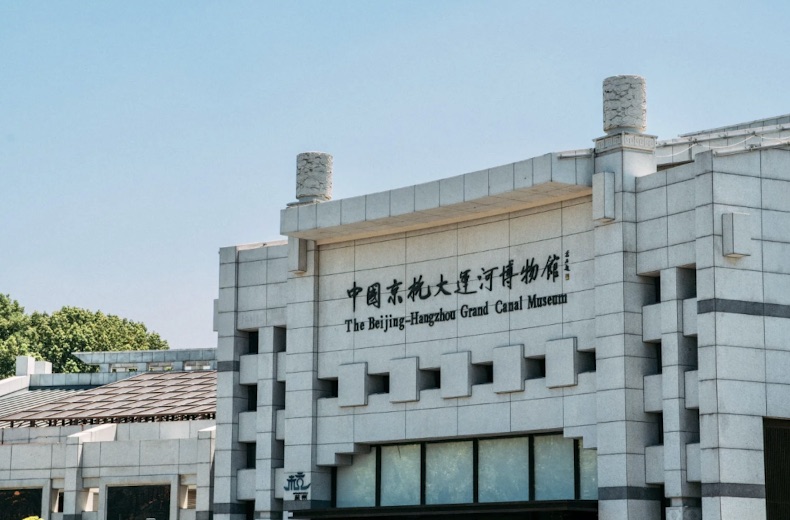
The Canal Shipping Exhibition Hall occupies a repurposed old factory building or warehouse in the district, providing a systematic account of the Grand Canal's shipping history through the Hangzhou section, the evolution of boats, and the culture of the wharves. The collection includes scale models of historical vessels, navigation tools, old photographs, and archival documents, helping visitors understand the canal's historic role as the main artery of ancient China's transportation network.
9. Handicraft Workshop Street
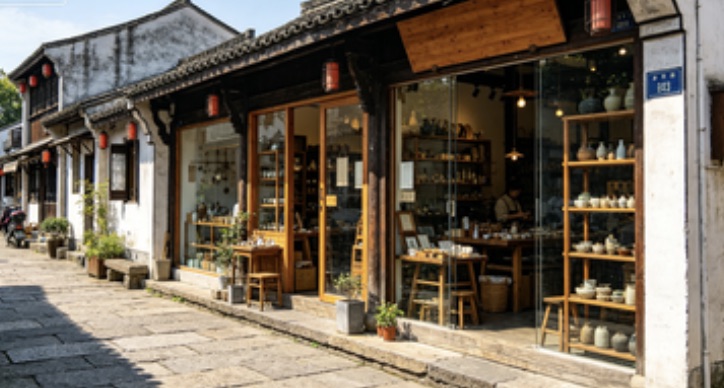
Handicraft Workshop Street brings together the traditional craft workshops that have been preserved and revived within the district, covering bamboo weaving, ceramics, indigo dyeing, embroidery, woodwork, and more. Visitors can watch artisans at work, try their hand at traditional skills, and shop for cultural and creative products rooted in canal culture — a living experience of craft heritage passed down through the generations.
10. Canal Viewing Platform
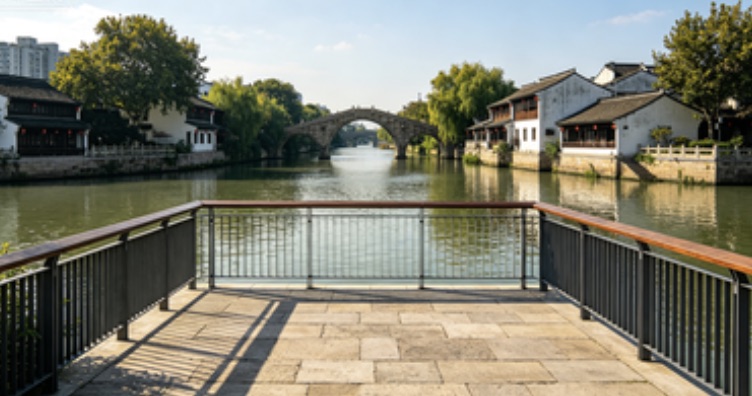
The Canal Viewing Platform stands at the district's open-air node facing the Grand Canal, the recommended spot to take in a panoramic view of the canal and catch the sunset. The platform is paved with timber or stone, and the unobstructed views sweep across passing boats, ancient bridges, stone-lined banks, and the city skyline on the far shore — the ideal place to pause and look back before finishing your visit.
10 stops, in walking order — read top to bottom, no clicking needed.

 2
 3
 4
 5
 6
 7
 8
 9
 10