No.73-1 Yuhuangshan Road, Xihu District, Hangzhou, Zhejiang Province
Practical infoOpening hours · Ticket · Getting there
Opening hours
Tuesday-Sunday 9:00-17:00 (last entry 16:30). Closed Mondays (except public holidays).
Ticket
Free admission. Individual visitors do not need reservations. Group visits require advance reservation via the official website or WeChat account.
Getting there
Bus Routes 12, 31, 42, 87, 133 to Silk Museum Station. Metro Line 7 to Wushan Square Station, then transfer to bus (~15 min). By car: navigate to 'China National Silk Museum' (parking available on-site).
Inside China National Silk Museum
10 stops, in walking order — read top to bottom, no clicking needed.
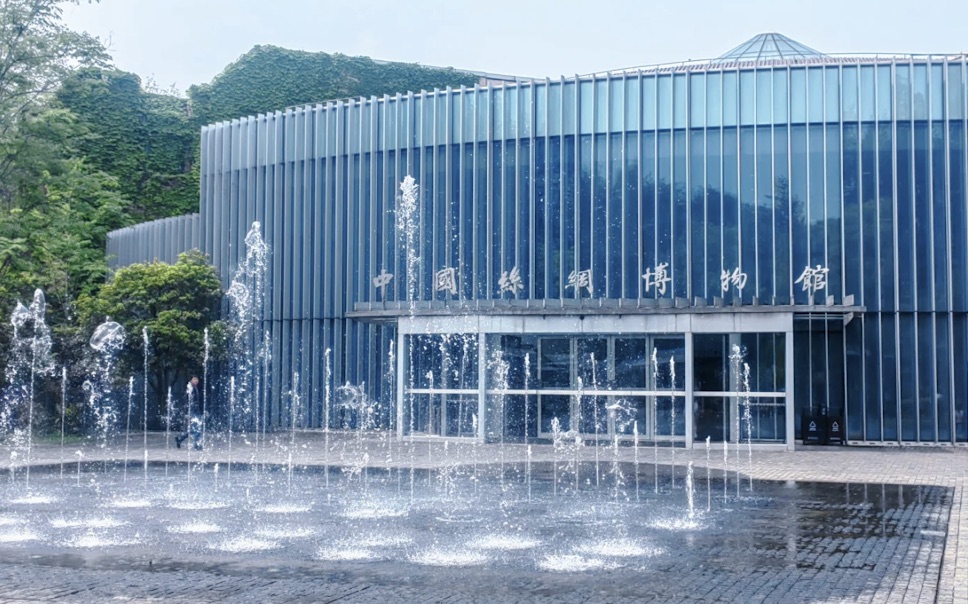
1China National Silk Museum Entrance (Zhongguo Sichou Bowuguan Rukou)of 10
China National Silk Museum Entrance (Zhongguo Sichou Bowuguan Rukou)
中国丝绸博物馆入口
The China National Silk Museum Entrance is located at 73-1 Yuhuangshan Road, Xihu District, Hangzhou, and is the formal starting point for entering this national-level thematic museum. The entrance is paved with neat bluestone slab steps, with a gate house featuring a five-bay, double-eave xieshan roof antique-style building, complete with black tiles, vermilion pillars, and upturned eaves. A horizontal plaque inscribed with the nine large gilded characters "China National Silk Museum" hangs at the entrance, presenting a dignified bearing. Inside the entrance are comprehensive service hall, museum shop, rest area, and multimedia guide hall, providing Chinese-English guide maps, audio guide rental (approx. 30 RMB/unit), and barrier-free services.
On-site narration · read it where you stand
The China National Silk Museum Entrance is located at 73-1 Yuhuangshan Road, Xihu District, Hangzhou, and is the formal starting point for entering this national-level thematic museum. The entrance is paved with neat bluestone slab steps, with a gate house featuring a five-bay, double-eave xieshan roof antique-style building, complete with black tiles, vermilion pillars, and upturned eaves. A horizontal plaque inscribed with the nine large gilded characters "China National Silk Museum" hangs at the entrance, presenting a dignified bearing. Inside the entrance are comprehensive service hall, museum shop, rest area, and multimedia guide hall, providing Chinese-English guide maps, audio guide rental (approx. 30 RMB/unit), and barrier-free services.
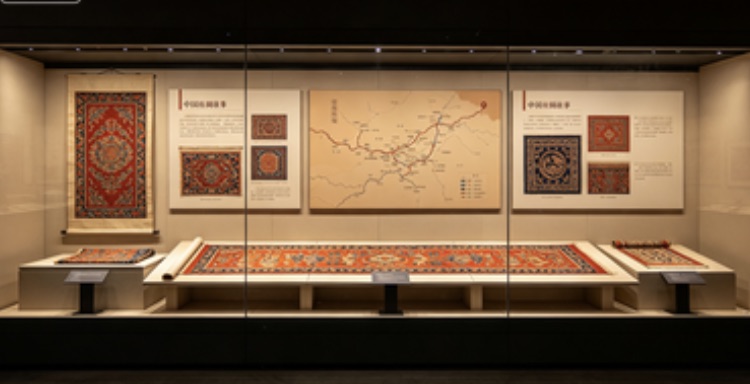
Silk Road Gallery: The Story of Chinese Silk
丝路馆:中国丝绸故事
The Silk Road Gallery is the core permanent exhibition hall of the China National Silk Museum, located on the second floor of the main building, with a floor area of about 2,000 square meters. The exhibition takes "The Story of Chinese Silk" as its theme, divided into five major sections according to historical chronology: "Origin of Silk," "Silk Road in Han and Tang," "Silk in Song and Yuan," "Silk in Ming and Qing," and "Modern Silk." The gallery displays over a thousand pieces of silk cultural relics from the Neolithic Period to the present, including the Warring States period silk fragment, the Han Dynasty "Five Stars Rise in the East, Benefiting China" brocade arm guard, Tang Dynasty pearl-roundel paired-duck patterned brocade, Song Dynasty kesi (silk tapestry) flower-bird painting, Yuan Dynasty gold-threaded brocade, and Ming Dynasty doumiu robe—all crown jewels of the collection. The exhibition hall employs immersive multimedia display methods.
On-site narration · read it where you stand
The Silk Road Gallery is the core permanent exhibition hall of the China National Silk Museum, located on the second floor of the main building, with a floor area of about 2,000 square meters. The exhibition takes "The Story of Chinese Silk" as its theme, divided into five major sections according to historical chronology: "Origin of Silk," "Silk Road in Han and Tang," "Silk in Song and Yuan," "Silk in Ming and Qing," and "Modern Silk." The gallery displays over a thousand pieces of silk cultural relics from the Neolithic Period to the present, including the Warring States period silk fragment, the Han Dynasty "Five Stars Rise in the East, Benefiting China" brocade arm guard, Tang Dynasty pearl-roundel paired-duck patterned brocade, Song Dynasty kesi (silk tapestry) flower-bird painting, Yuan Dynasty gold-threaded brocade, and Ming Dynasty doumiu robe—all crown jewels of the collection. The exhibition hall employs immersive multimedia display methods.
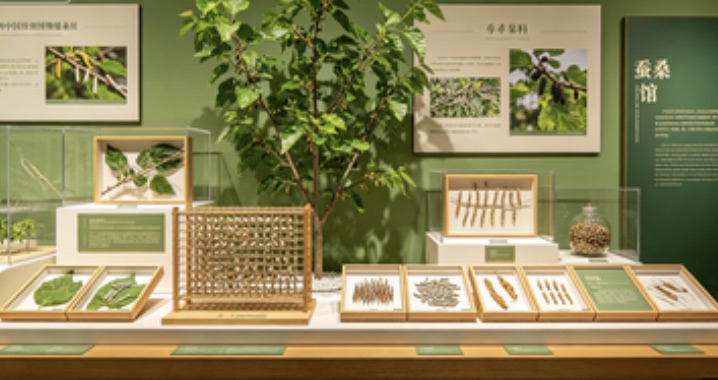
Silkworm and Mulberry Gallery (Cansang Guan)
蚕桑馆
The Silkworm and Mulberry Gallery is located on the east side of the first floor of the main building of the China National Silk Museum, with a floor area of about 800 square meters. It is the only thematic exhibition hall in China and abroad with "silkworm and mulberry" as its theme. The exhibition is divided into three major sections: "The Life Cycle of Silkworms," "Mulberry and Sericulture," and "Silk Reeling and the Silk Road." Inside the gallery, the complete life process from silkworm egg hatching, larval molting, cocoon-spinning, to emerging from the cocoon as a moth is fully recreated through large-scale three-dimensional models and immersive multimedia methods. The sericulture section displays the sericulture tradition in Hangzhou and surrounding areas since the Song Dynasty.
On-site narration · read it where you stand
The Silkworm and Mulberry Gallery is located on the east side of the first floor of the main building of the China National Silk Museum, with a floor area of about 800 square meters. It is the only thematic exhibition hall in China and abroad with "silkworm and mulberry" as its theme. The exhibition is divided into three major sections: "The Life Cycle of Silkworms," "Mulberry and Sericulture," and "Silk Reeling and the Silk Road." Inside the gallery, the complete life process from silkworm egg hatching, larval molting, cocoon-spinning, to emerging from the cocoon as a moth is fully recreated through large-scale three-dimensional models and immersive multimedia methods. The sericulture section displays the sericulture tradition in Hangzhou and surrounding areas since the Song Dynasty.
Weaving and Dyeing Gallery (Zhizao Guan)
织造馆
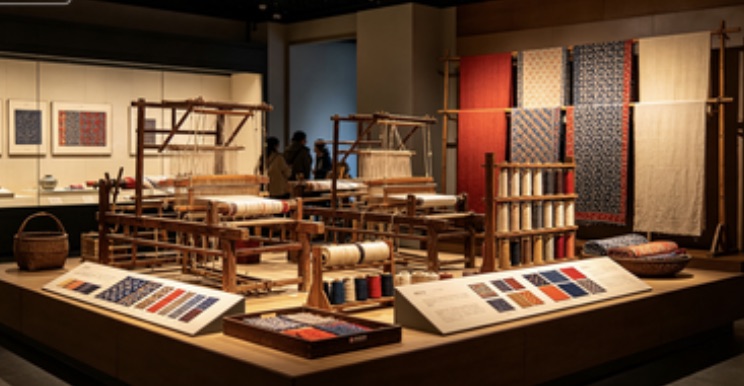
The Weaving and Dyeing Gallery is located on the west side of the first floor of the main building of the China National Silk Museum, with a floor area of about 1,000 square meters. It is the core window showcasing China's core technical prowess as the "Kingdom of Silk." The exhibition is divided into three major sections: "Weaving Techniques," "Dyeing and Printing," and "The Four Famous Brocades." The weaving section displays over a hundred pieces of actual weaving machines and models from the Warring States Period to the Ming and Qing Dynasties. The most impressive is the "Live Weaving Demonstration Area"—sessions at 9:30, 11:00, 14:00, and 15:30 daily—where professional weavers operate reconstructed weaving machines on-site to demonstrate the weaving of kesi, Shu brocade, Yunjin brocade, and Zhuang brocade.
On-site narration · read it where you stand
The Weaving and Dyeing Gallery is located on the west side of the first floor of the main building of the China National Silk Museum, with a floor area of about 1,000 square meters. It is the core window showcasing China's core technical prowess as the "Kingdom of Silk." The exhibition is divided into three major sections: "Weaving Techniques," "Dyeing and Printing," and "The Four Famous Brocades." The weaving section displays over a hundred pieces of actual weaving machines and models from the Warring States Period to the Ming and Qing Dynasties. The most impressive is the "Live Weaving Demonstration Area"—sessions at 9:30, 11:00, 14:00, and 15:30 daily—where professional weavers operate reconstructed weaving machines on-site to demonstrate the weaving of kesi, Shu brocade, Yunjin brocade, and Zhuang brocade.
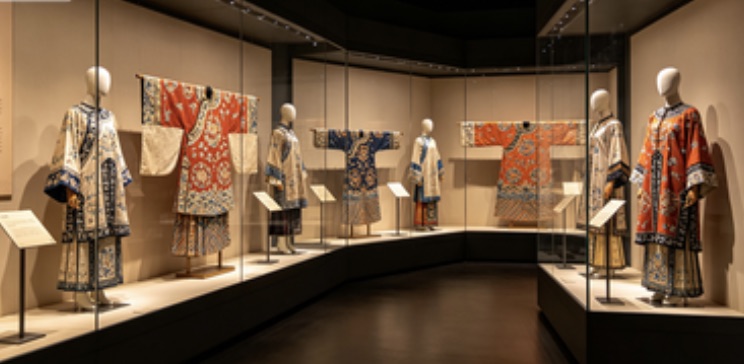
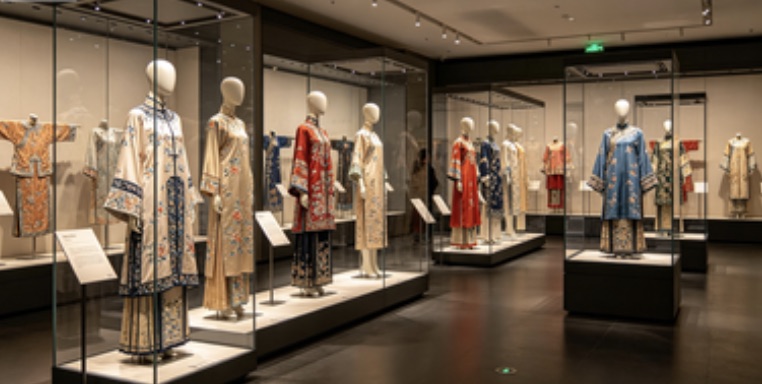
The Costume Gallery is located on the south side of the second floor of the main building of the China National Silk Museum, with a floor area of about 1,500 square meters. It is the largest thematic exhibition hall for textile costuming in China, with the richest collection. The exhibition follows historical chronology, divided into six sections: "Pre-Qin and Two Hans," "Wei, Jin, Southern and Northern Dynasties," "Sui and Tang," "Song and Yuan," "Ming and Qing," and "Modern Times." The collection exceeds 3,000 pieces and sets, including a replica of a Western Han plain-gauze robe, a Tang-dynasty kesi bead-patterned robe, a Southern Song velvet quilted robe, a Yuan-dynasty gold-threaded cape, a Ming flying-fish robe, a Qing court robe, and Republican-era qipao. The exhibition hall employs a combination of scenario reconstruction and mannequin display.
On-site narration · read it where you stand
The Costume Gallery is located on the south side of the second floor of the main building of the China National Silk Museum, with a floor area of about 1,500 square meters. It is the largest thematic exhibition hall for textile costuming in China, with the richest collection. The exhibition follows historical chronology, divided into six sections: "Pre-Qin and Two Hans," "Wei, Jin, Southern and Northern Dynasties," "Sui and Tang," "Song and Yuan," "Ming and Qing," and "Modern Times." The collection exceeds 3,000 pieces and sets, including a replica of a Western Han plain-gauze robe, a Tang-dynasty kesi bead-patterned robe, a Southern Song velvet quilted robe, a Yuan-dynasty gold-threaded cape, a Ming flying-fish robe, a Qing court robe, and Republican-era qipao. The exhibition hall employs a combination of scenario reconstruction and mannequin display.
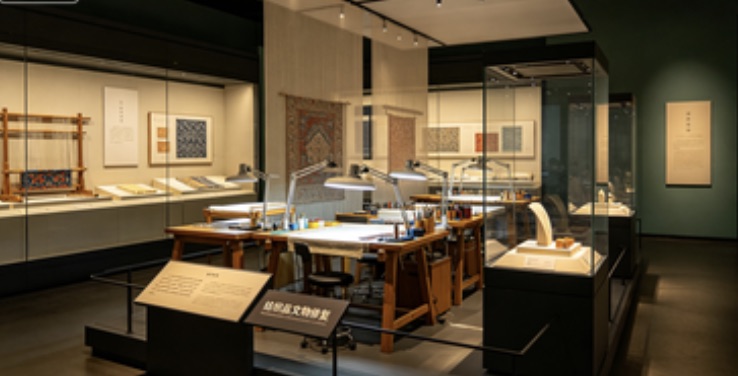
The Conservation Gallery is located on the north side of the first floor of the main building of the China National Silk Museum, with a floor area of about 600 square meters. It is the only thematic display space for textile cultural relic restoration in China. The gallery opens the restoration workspace to the public—through large glass partition walls, visitors can observe the entire process of conservators cleaning, matching, replenishing, color-fixing, and mounting damaged silk cultural relics, truthfully presenting the "turning decay into wonder" cultural relic regeneration process. The gallery also has a mini exhibition area for "Restoration Achievement Exhibition," periodically updating before-and-after restoration comparison photos and restoration notes. The Conservation Gallery holds a "Face-to-Face with Conservators" activity every Wednesday and Saturday afternoon 14:00-16:00.
On-site narration · read it where you stand
The Conservation Gallery is located on the north side of the first floor of the main building of the China National Silk Museum, with a floor area of about 600 square meters. It is the only thematic display space for textile cultural relic restoration in China. The gallery opens the restoration workspace to the public—through large glass partition walls, visitors can observe the entire process of conservators cleaning, matching, replenishing, color-fixing, and mounting damaged silk cultural relics, truthfully presenting the "turning decay into wonder" cultural relic regeneration process. The gallery also has a mini exhibition area for "Restoration Achievement Exhibition," periodically updating before-and-after restoration comparison photos and restoration notes. The Conservation Gallery holds a "Face-to-Face with Conservators" activity every Wednesday and Saturday afternoon 14:00-16:00.
Brocade and Embroidery Gallery (Jinxiu Lang)
锦绣廊
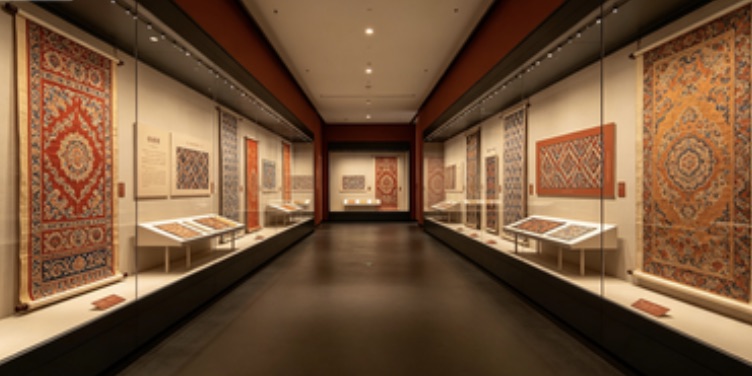
The Brocade and Embroidery Gallery is located in the corridor on the third floor of the main building of the China National Silk Museum. It is a thematic display corridor about 120 meters long and the most visually splendid exhibition space in the entire museum. The corridor takes "Splendid Brocade and Embroidery of China" as its theme, with four major exhibition sections: "Four Famous Brocades," "Renowned Regional Embroideries," "Ethnic Weaving," and "Modern Innovations." The Four Famous Brocades section centrally displays classic works of Nanjing Yunjin, Sichuan Shu Brocade, Suzhou Song Brocade, and Guangxi Zhuang Brocade.
On-site narration · read it where you stand
The Brocade and Embroidery Gallery is located in the corridor on the third floor of the main building of the China National Silk Museum. It is a thematic display corridor about 120 meters long and the most visually splendid exhibition space in the entire museum. The corridor takes "Splendid Brocade and Embroidery of China" as its theme, with four major exhibition sections: "Four Famous Brocades," "Renowned Regional Embroideries," "Ethnic Weaving," and "Modern Innovations." The Four Famous Brocades section centrally displays classic works of Nanjing Yunjin, Sichuan Shu Brocade, Suzhou Song Brocade, and Guangxi Zhuang Brocade.
Fashion Gallery (Shizhuang Guan)
时装馆
The Fashion Gallery is located in a separate building on the east side of the China National Silk Museum, with a floor area of about 1,800 square meters. It was rebuilt and expanded in 2016 and reopened to the public, and is currently the largest textile and fashion thematic exhibition hall in China. The exhibition takes "From Tradition to Modernity" as its main thread, divided into four major sections. The gallery houses over 500 pieces of various fashion items from the late Qing Dynasty and early Republican period to the early 21st century. The Contemporary Designer Works section centrally displays silk-themed works by renowned Chinese and international designers.
On-site narration · read it where you stand
The Fashion Gallery is located in a separate building on the east side of the China National Silk Museum, with a floor area of about 1,800 square meters. It was rebuilt and expanded in 2016 and reopened to the public, and is currently the largest textile and fashion thematic exhibition hall in China. The exhibition takes "From Tradition to Modernity" as its main thread, divided into four major sections. The gallery houses over 500 pieces of various fashion items from the late Qing Dynasty and early Republican period to the early 21st century. The Contemporary Designer Works section centrally displays silk-themed works by renowned Chinese and international designers.
Xiaofeng Book House and Cultural Creative Space (Xiaofeng Shuwu yu Wenchiuang Kongjian)
晓风书屋与文创空间
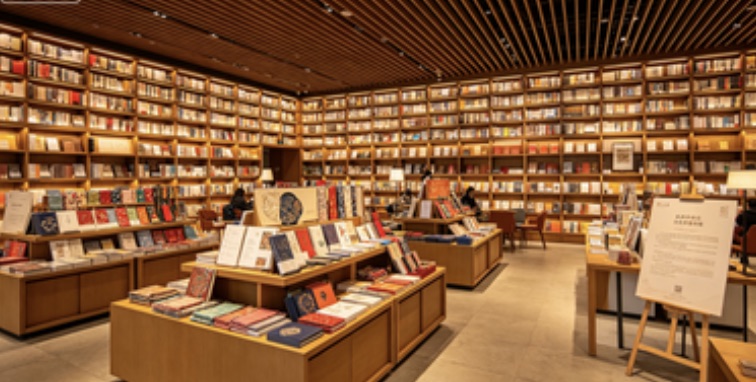
Xiaofeng Book House and Cultural Creative Space is located on the south side of the first floor of the main building of the China National Silk Museum. It was established in 2018 in cooperation with the Zhejiang Xinhua Bookstore Group, and is currently one of the best-regarded bookish cultural creative complexes in domestic museum cultural creative spaces. The book house covers an area of about 400 square meters, with four major functional spaces. The cultural creative space has jointly developed a series of silk-themed cultural creative products in cooperation with institutions such as the Suzhou Museum and Nanjing Yunjin Museum.
On-site narration · read it where you stand
Xiaofeng Book House and Cultural Creative Space is located on the south side of the first floor of the main building of the China National Silk Museum. It was established in 2018 in cooperation with the Zhejiang Xinhua Bookstore Group, and is currently one of the best-regarded bookish cultural creative complexes in domestic museum cultural creative spaces. The book house covers an area of about 400 square meters, with four major functional spaces. The cultural creative space has jointly developed a series of silk-themed cultural creative products in cooperation with institutions such as the Suzhou Museum and Nanjing Yunjin Museum.
Outdoor Garden and Tea Plantation (Huwai Yuanlin yu Chayuan)
户外园林与茶园
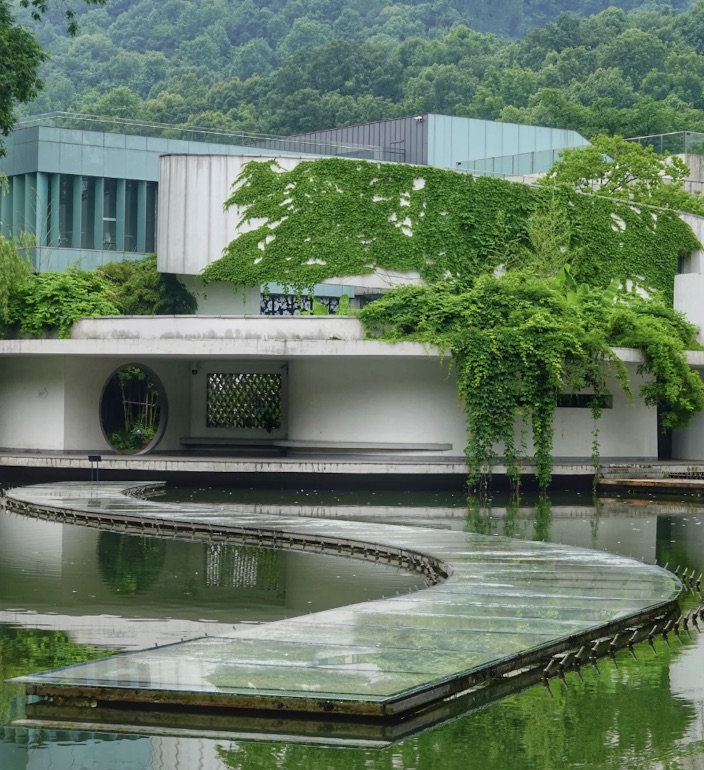
The Outdoor Garden and Tea Plantation is located on the sloping land south of the China National Silk Museum building complex, covering an area of about 8,000 square meters. It was completed in 2015 synchronously with the museum's renovation and expansion project, and is currently one of the most exquisitely designed outdoor exhibition spaces among domestic museums. The entire garden is designed according to the layout of classical Jiangnan gardens, with five major functional sections. The mulberry orchard plants over 15 varieties of mulberry trees. The tea plantation plants the Xihu Longjing Quntizhong variety. The garden also scatters multiple groups of bronze sculptures themed "Silk Stories."
On-site narration · read it where you stand
The Outdoor Garden and Tea Plantation is located on the sloping land south of the China National Silk Museum building complex, covering an area of about 8,000 square meters. It was completed in 2015 synchronously with the museum's renovation and expansion project, and is currently one of the most exquisitely designed outdoor exhibition spaces among domestic museums. The entire garden is designed according to the layout of classical Jiangnan gardens, with five major functional sections. The mulberry orchard plants over 15 varieties of mulberry trees. The tea plantation plants the Xihu Longjing Quntizhong variety. The garden also scatters multiple groups of bronze sculptures themed "Silk Stories."

 2
 3
 4
 5
 6
 7
 8
 9
 10