Travel Guide› Suzhou› Tongli Ancient Town
Suzhou

Tongli Ancient Town 同里古镇

Tongli Ancient Town
Address
No. 1 Zhongchuan South Road, Wujiang District, Suzhou, Jiangsu Province, China (Tongli Ancient Town Scenic Area)
Tongli Ancient Town

General Overview

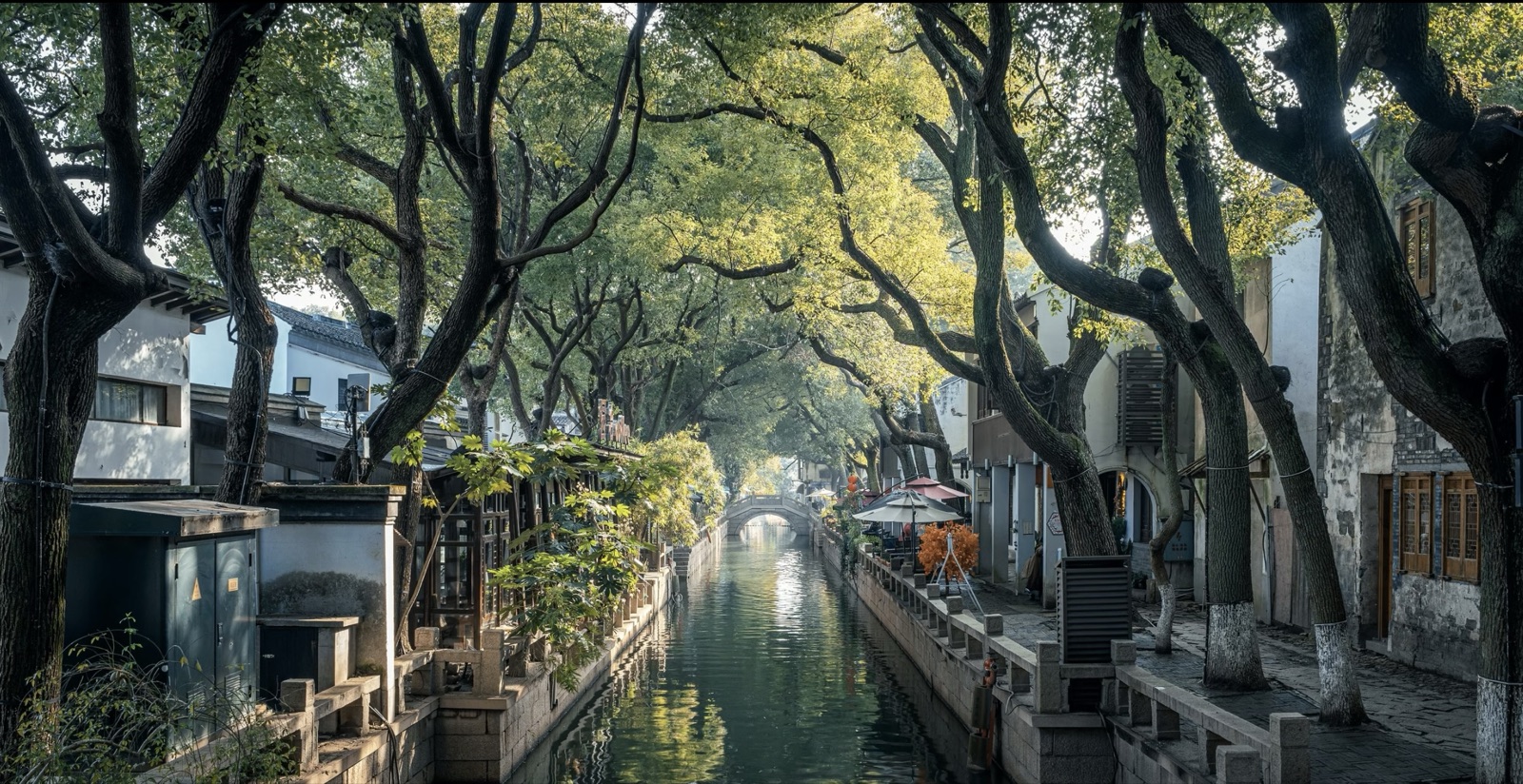
Tongli Ancient Town is located in Wujiang District, Suzhou, Jiangsu Province. Founded during the Song dynasty, it is a national AAAAA-rated scenic area and one of the six famous ancient towns of the Jiangnan region. The town is bordered by Tongli Lake to the east, Yeze Lake and Nanxing Lake to the south, Pangshan Lake to the west, and Jiuli Lake to the north — water on all four sides, earning it the nickname "the Venice of the East." The town center is divided into seven small islands by 15 waterways arranged in a character-shaped pattern, linked together by 49 ancient bridges. Buildings rise directly from the water's edge, and the town is celebrated worldwide for its classic Jiangnan water town character of small bridges, flowing streams, and riverside homes.

Tongli Ancient Town covers a total area of 972.18 hectares, of which 830.33 hectares are wetlands — a wetland coverage rate of 85.41%. The town retains a wealth of Ming and Qing dynasty architecture, including the UNESCO World Heritage Tuisi Garden, Chongben Hall, Jiayin Hall, and Gengle Hall, as well as the famous Three Bridges: Taiping Bridge, Jili Bridge, and Changqing Bridge. Most of the residential buildings feature the classic Jiangnan style of whitewashed walls, dark roof tiles, and upswept eaves, with waterways crisscrossing the town, bridges at every turn, and boats gliding past — a vivid portrait of a thousand-year-old water town.

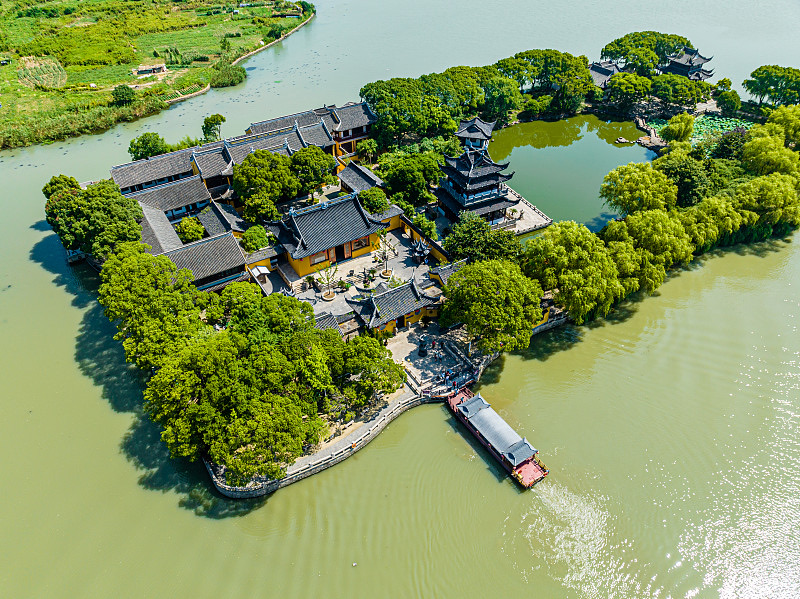
Tongli is not only a treasure house of architectural art but also a place of deep cultural heritage. The modern poet and co-founder of the Nanshe literary society, Chen Qubing, and democratic revolutionary Wang Shao'ao both lived here. The town's "Walking the Three Bridges" tradition has been practiced for hundreds of years as a folk ritual for warding off misfortune and seeking blessings for children and family — a reflection of the unique folk culture of the Jiangnan water towns. Nanyuan Teahouse, founded in the late Qing dynasty, is the finest spot in Tongli for tea and scenery. Luoxing Islet, a small island in Tongli Lake, brings together Buddhist, Taoist, and Confucian traditions, adding a layer of mystery to the ancient town.

Tongli Ancient Town, with its authentic water-town character, rich cultural heritage, and tranquil pace of life, has been called "a living Jiangnan." It is an ideal destination for experiencing the culture and slow rhythms of the Jiangnan water country.

Attractions

1. Tuisi Garden (Retreat and Reflection Garden)

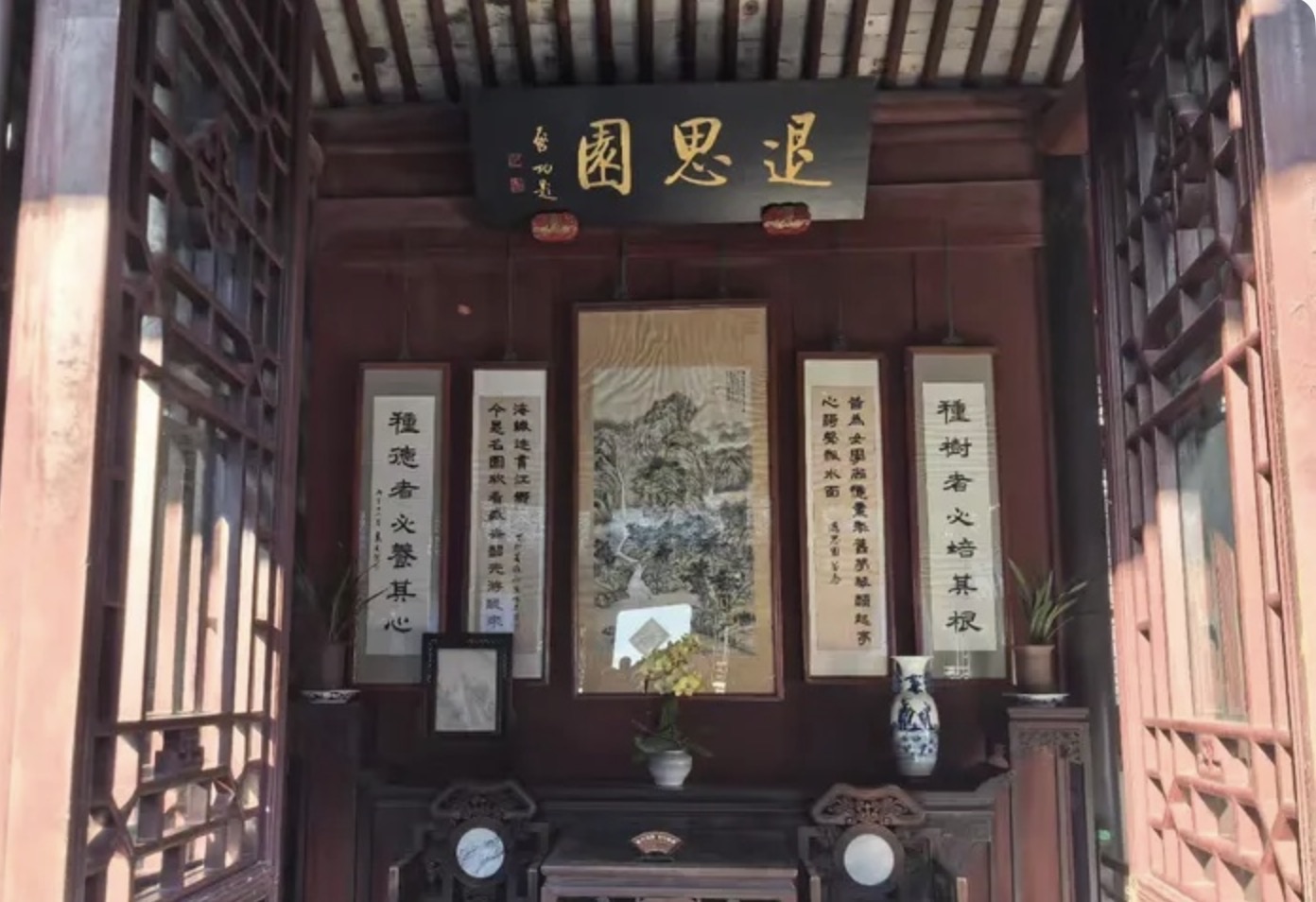
Tuisi Garden was built between 1885 and 1887, during the Guangxu reign of the late Qing dynasty. It was the private garden of Ren Lansheng, a Qing official who returned to his hometown of Tongli after being dismissed from office. The garden's name comes from a line in the classical text Zuo Zhuan: "in office, think of serving loyally; in retirement, think of making amends" — expressing the owner's reflective spirit in retreat. Tuisi Garden is laid out around a central pond, with pavilions, terraces, towers, corridors, bridges, and waterside halls arranged so that the buildings seem to float on the water. In 2000, it was inscribed on the UNESCO World Heritage List as an extension of the Classical Gardens of Suzhou. The garden's design creates a symbiosis between water and architecture that is considered an outstanding example of the small-scale Jiangnan garden tradition.

2. Pearl Tower (Zhenzhu Ta)

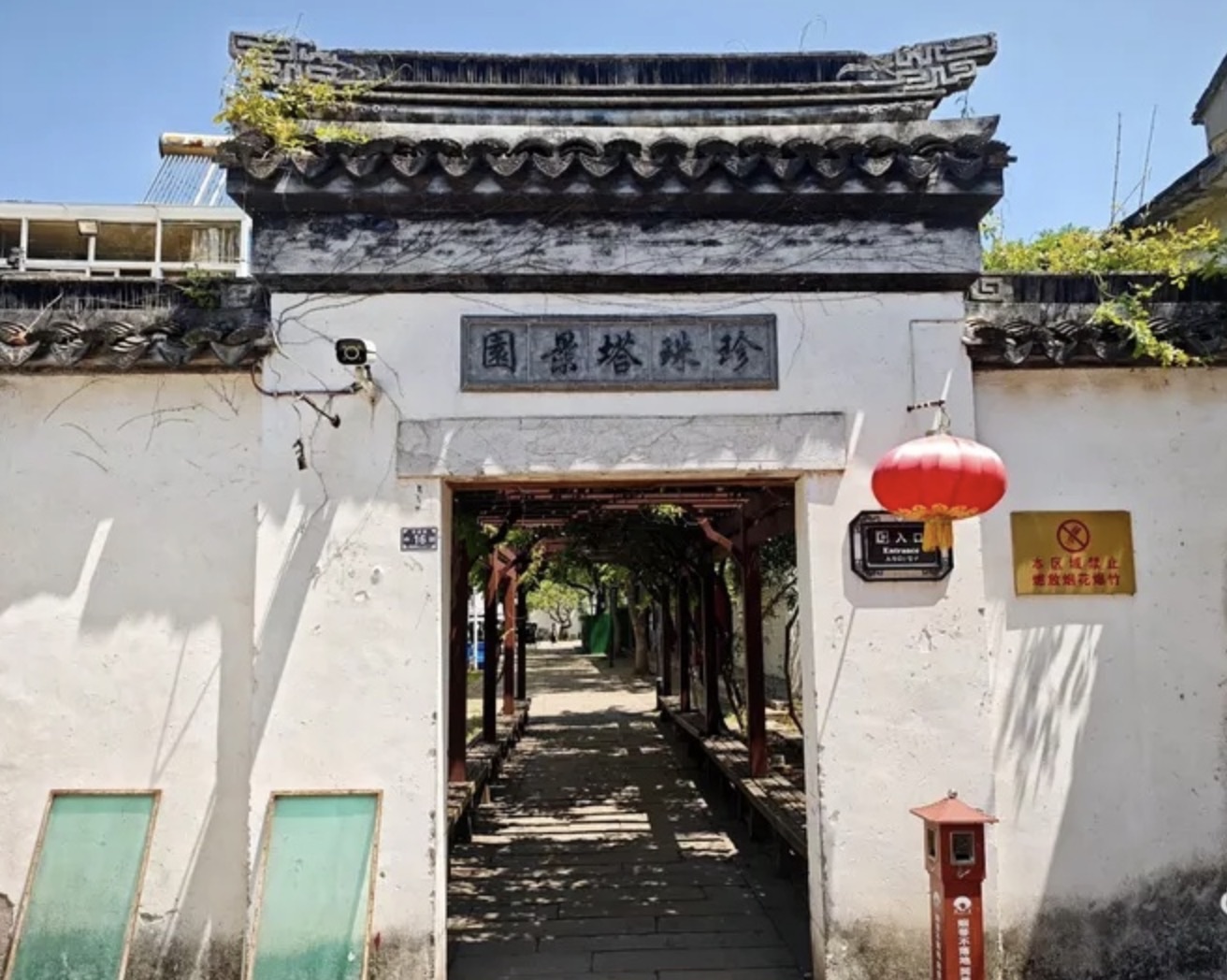
Pearl Tower is located within Shipi Alley in Tongli Ancient Town. It was the former residence of Chen Wangdao, a Ming dynasty inspector of Nanjing's Henan Circuit. The compound is famous as the setting for the Xiqu opera Pearl Tower — the story of how Chen Wangdao's daughter, Chen Cui'e, hid a precious family heirloom pagoda inside a box of pastries to give to her betrothed, Fang Qing, helping him fund his studies for the imperial examinations and ultimately succeed. The architectural complex is extensive, with reception halls, towers, gardens, and rockeries that evoke the life of a high-ranking Ming dynasty official household. The eponymous Pearl Tower is the landmark structure of the compound: though called a "tower," it is in fact a multi-storey pavilion with upswept eaves and richly carved beams — one of the finest examples of ancient architecture in Tongli.

3. Three Bridges (Taiping Bridge, Jili Bridge, Changqing Bridge)

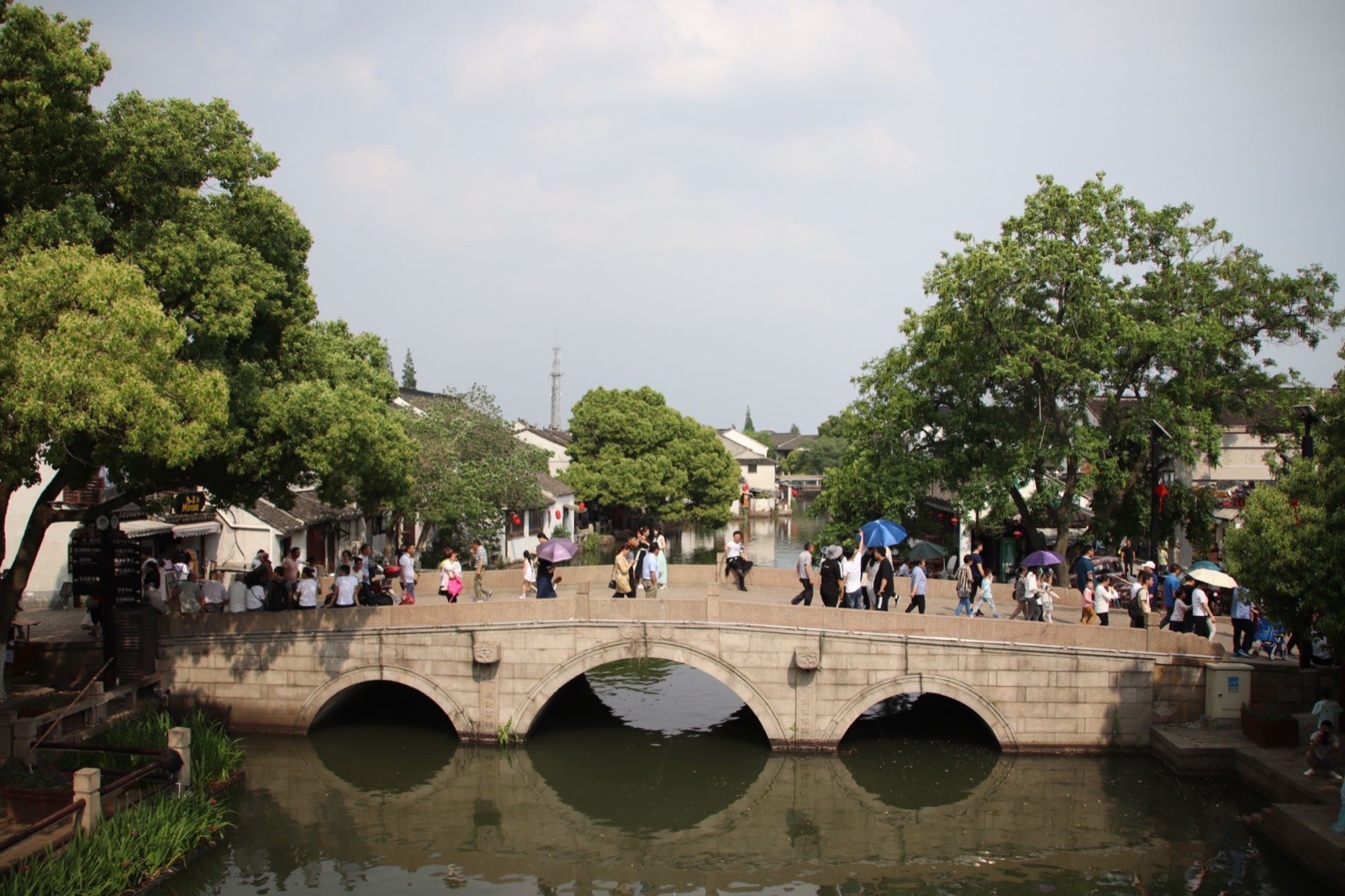
The Three Bridges are among Tongli's most iconic sights: Taiping Bridge, Jili Bridge, and Changqing Bridge stand within roughly 50 meters of one another, forming a distinctive triangular arrangement. Taiping Bridge is a flat beam bridge spanning the Dongliu and Qizi waterways. Jili Bridge is an arch bridge with couplets carved on both the north and south faces. Changqing Bridge, popularly known as Xie Family Bridge, spans the Dongliu and Zijia waterways. The Three Bridges are the heart of Tongli's "Walking the Three Bridges" folk tradition — legend holds that crossing all three brings protection from misfortune and blessings for children and good fortune — making them one of the most distinctive cultural experiences the town offers.

4. Chongben Hall (Hall of Honoring Fundamentals)

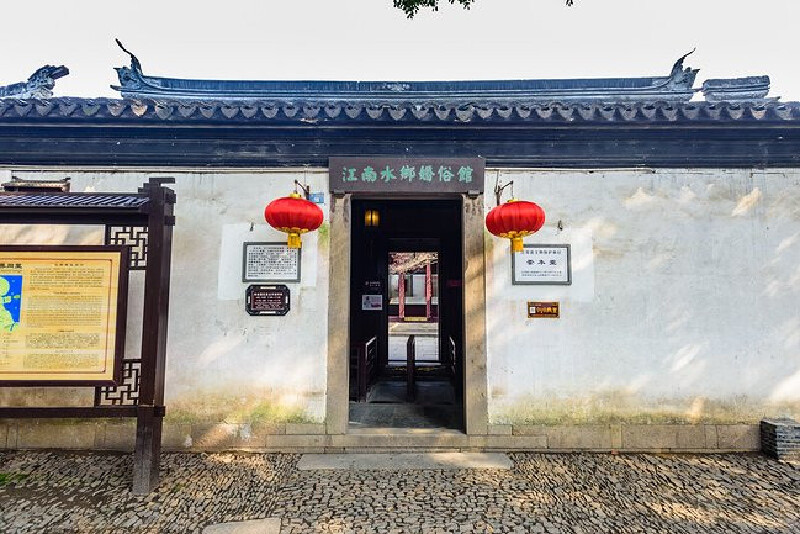
Chongben Hall stands at the north end of Changqing Bridge on Fuguan Street, facing south toward the water. It was rebuilt in 1912 by Tongli native Qian Youqin, who purchased part of the Gu family's "West Residence" and renovated it. The building has five sections — gatehouse, main hall, front building, rear building, and kitchen — occupying less than one mu of land (roughly 667 square meters), yet the layout is compact and complete. Chongben Hall is a quintessential example of a prosperous Jiangnan merchant family's residence. The woodcarving, brick carving, and stone carving throughout the building are of exceptional quality, reflecting the architectural style and decorative character of Jiangnan domestic architecture in the Republican era. The hall preserves a large collection of Republican-era furniture, vessels, and everyday objects, making it an important site for understanding the traditional residential and merchant culture of Jiangnan.

5. Jiayin Hall (Hall of Auspicious Shade)

Jiayin Hall is located at the entrance of You Family Lane off Zhuhang Street. Built in 1922, it was owned by Liu Bingnan, a clansman of the renowned poet Liu Yazi; construction cost twenty thousand taels of silver. The building has four sections, with exquisitely carved doors, windows, and beams throughout. The main hall follows a Ming dynasty structural style and is popularly known as the "Official's Cap Hall" because the projecting beam-end brackets resemble the wings of a Ming dynasty magistrate's cap. The beams are carved with scenes including "Eight Steeds," "Phoenix Among Peonies," "Heart's Desire," and "Sure to Pass the Examinations." The "cap wings" carry eight carved panels depicting scenes from Romance of the Three Kingdoms — including the "Meeting at the Old City" and "Three Heroes Battle Lu Bu" — and have been recorded in the Suzhou volume of the Chinese Opera Gazetteer. Jiayin Hall is a landmark example of a Jiangnan literati-gentry family home and is of outstanding architectural and artistic value.

6. Gengle Hall (Hall of Farming Delight)

Gengle Hall stands along Lujia Embankment in the Xiliu district of Tongli Ancient Town, facing east toward the river. It was built by Ming dynasty scholar-recluse Zhu Xiang, whose courtesy name was Tingrui and whose studio name was Gengle ("delight in farming"). The hall takes its name from that studio name. Gengle Hall is a masterwork combining a Ming dynasty Jiangnan literati garden with a private residence. Its layout is orderly, with reception halls, towers, a garden, and rockeries all present. The building retains much of its original Ming dynasty fabric — the carved woodwork of the beams, brackets, doors, and windows represents the highest level of Ming dynasty architectural craftsmanship in Suzhou. The garden is intimate and refined, with rockeries, a pond, and plants arranged in natural harmony — a representative example of Ming dynasty residential garden design.

7. Ming-Qing Street

Ming-Qing Street was built in 1996. Stretching over 160 meters, it adopts Ming and Qing dynasty architectural styles and preserves intact the characteristic Jiangnan "upper street and lower street" parallel-lane layout. Both sides of the street are lined with traditional-style shopfronts selling Tongli specialties including handicrafts, silk, tea, and local snacks. The four characters meaning "the enduring grace of a cultured age" above the entrance were calligraphed by the eminent sociologist Fei Xiaotong. Ming-Qing Street is the commercial and cultural heart of Tongli Ancient Town, where visitors can sample local food, buy souvenirs, and soak up the mercantile atmosphere of a Jiangnan water town. Though the street has been renovated, it retains the traditional character of the Jiangnan water country.

8. Nanyuan Teahouse

Nanyuan Teahouse sits at the southern end of the old town area, in the spot once celebrated as "Morning Mist over the South Market" — one of the former eight scenic views of Tongli — directly across the river from Chen Qubing's Former Residence. Originally called "Fu'an Teahouse," it was founded in the late Qing dynasty. The building is a traditional four-bay brick-and-timber structure with Qing dynasty woodcarving, spread across two floors with a total area of about 400 square meters. Nanyuan Teahouse is one of Tongli's most iconic traditional teahouses. Visitors can sip authentic Biluochun tea from Suzhou, enjoy Pingtan storytelling performances, and settle into the unhurried pace of Jiangnan life. The teahouse is built right on the water's edge; from a window seat on the second floor, you can look out over the canal and the houses lining the opposite bank — the finest spot in Tongli for tea and scenery combined.

9. Chen Qubing's Former Residence

Chen Qubing's Former Residence is a Qing dynasty domestic building covering 1,364 square meters. Chen Qubing (1874–1933) was a celebrated modern poet and scholar, and one of the co-founders of the Nanshe literary society. Above the entrance gate there was originally a plaque reading "Heritage of Filial Piety and Fraternity." Inside are a half-pavilion, the remains of the ancestral hall, and the buildings known as Baochi Tower and Haoge Hall. Haoge Hall, built in 1920, served as the reception room; it once displayed a plaque reading "Revered by All Women," personally inscribed by Sun Yat-sen in praise of Chen Qubing's mother, Madam Ni. Baochi Tower was Chen Qubing's library and writing studio, and the collection of writings he published there takes its name from the building. The residence is an important site for understanding modern Chinese revolutionary culture and the legacy of the Nanshe literary movement.

10. Luoxing Islet

Luoxing Islet is a small island in Tongli Lake, east of Tongli town, reached by boat. The island brings together Buddhist, Taoist, and Confucian traditions in a single place, with a temple, a Taoist shrine, and a classical academy. It is one of the most distinctive sights associated with Tongli Ancient Town. The island is serene, shaded by ancient trees, and affords a panoramic view of Tongli Lake. Luoxing Islet draws many visitors for its unique blend of religious culture and natural scenery, and is an ideal place to experience the Jiangnan vision of water and sky merging into one. The Guanyin Temple on the island draws devoted worshippers who travel by boat on the first and fifteenth days of each lunar month to offer incense.

Practical info Opening hours · Ticket · Getting there
Opening hours
  • Scenic area: 08:00–17:15 year-round
  • Opening hours of individual attractions within the town vary; check on-site notices
  • Night tours and evening activities are subject to official announcements
Ticket
  • Ancient town ticket: CNY 100 per person (valid on the day of purchase; includes access to paid attractions within the town)
  • Advance booking: approximately CNY 80 per person (recommended to book online one day in advance)
  • Discount ticket: CNY 50 per person (minors aged 6–18, full-time undergraduate students and below, seniors aged 60–69 with valid ID)
  • Free admission: children under 6 or under 1.4m, seniors aged 70+, active servicemen, and people with disabilities (valid ID required)
  • Note: Prices and policies are subject to on-site announcement
Getting there
  • Metro: Take Metro Line 4 to Tongli Station, then transfer to Wujiang Smart Rail T1 or bus routes 725, 735, 720, or 759 to Tongli Ancient Town or Shipailou stops
  • Bus: Take a bus from Suzhou South Bus Station to Tongli, departing about every 15 minutes with a journey of about 30 minutes; or take city bus routes 735, 725, 720, or 759 directly to the ancient town
  • Driving: Navigate to “Tongli Ancient Town Scenic Area.” Several parking lots are available nearby; arrive early on holidays
  • Taxi/ride-hailing: Set destination to “No. 1 Zhongchuan South Road, Tongli Ancient Town” or “Tongli Ancient Town Shipailou”

Inside Tongli Ancient Town

10 stops, in walking order — read top to bottom, no clicking needed.

1 Tuisi Garden (Retreat & Reflection Garden) of 10

Tuisi Garden (Retreat & Reflection Garden)

退思园

Built in the Guangxu era of the Qing dynasty, the garden was constructed by Ren Lansheng after his dismissal from office, named after the Zuo Zhuan phrase "Advance to serve with loyalty, retreat to reflect and mend faults." Though only 9.8 mu in area, its masterly layout creates infinite poetic resonance within limited space — pavilions, towers, pools, rockeries, flowers, trees, corridors, and bridges. All buildings are constructed flush against the water, forming a "water-hugging" architectural ensemble including Spring View Tower, Cool Arrowroot Rain Pavilion, and Osmanthus Hall. The mirror-like water reflects pavilions, merging reality and illusion. As a UNESCO World Heritage site and Tongli's core attraction, its "seeing the vast in the small" design philosophy is hailed as the paradigm of Jiangnan gardens.

On-site narration · read it where you stand
Tuisi Garden

Welcome to Tongli Ancient Town, everyone. We are starting our tour at the town's most celebrated site — Tuisi Garden — a place of remarkable beauty with a story behind every stone.

Tuisi Garden was built during the Guangxu reign of the Qing dynasty, more than 130 years ago. Its owner, Ren Lansheng, served as a government official in Anhui and elsewhere, building a solid reputation. But after making enemies at court, he was impeached and dismissed from office, and he returned to his hometown of Tongli. Bitter and weary of official life, he decided to build this garden as a private retreat. The name "Tuisi" comes from a line in the ancient chronicle Zuo Zhuan: "in office, strive with all your heart to serve the state; in retirement, reflect on your own shortcomings." The name sounds humble, but underneath it lies a profound reckoning with the course of a life.

The garden is not large, yet its layout is extraordinarily clever. It breaks away from the traditional Suzhou pattern of "residence at the front, garden at the back," instead arranging all the buildings around a single central pond. Look at the water — every pavilion, terrace, corridor, and bridge seems to float on its surface. This is what people mean when they say "the water brings the garden to life, and the garden gives meaning to the water." Tuisi Garden's distinctive design stands apart from every other Suzhou garden, and scholars have called it "an outstanding example of small-scale garden design in the Jiangnan style."

In 2000, Tuisi Garden was inscribed on the UNESCO World Heritage List as an extension of the Classical Gardens of Suzhou. That recognition is Tongli's greatest honour, and it means this garden belongs not just to the town but to all of humanity.

Follow me as we walk through the garden. Entering through the main gate, we first pass through the residential section, where the owner and his family lived. Beyond that lies the garden proper, with its rockeries, pond, pavilions, and covered walkways. Look closely at the architectural details — the wood carvings on the windows and doors, the painted decorations on the beams, the relief work on the brick walls. Every surface shows the hand of a master craftsman.

The pond is especially worth lingering over. The water is clear, fish drift just below the surface, and the surrounding buildings and trees mirror themselves in perfect stillness — a world of reflections layered over reality. At the pond's edge stands a small pavilion called the Water Fragrance Pavilion. Sit there for a moment and the whole garden opens up around you. If you want one definitive photograph of Tuisi Garden, position yourself near the Water Fragrance Pavilion, face the buildings on the opposite bank, and frame the pond, the architecture, and their reflections all in a single shot. That is the image that defines this place.

Every corner of Tuisi Garden rewards careful attention. There is a couplet here that puts it well: "Sitting in silence, one finds the quiet pleasure of an orchid-scented room; wandering slowly, one feels a breeze drifting through bamboo groves." You need no grand spectacle — only a quiet corner, and the beauty of being alive is right there. That is the spirit of Tuisi Garden: not grandeur, but depth.

From here we head to another of Tongli's famous attractions — Pearl Tower.

Pearl Tower

珍珠塔

The Pearl Tower is not a physical tower, but the combined name of a long-celebrated opera story in Tongli and the associated Chen family mansion. The tale tells of Fang Qing, a Tongli noble fallen into poverty, seeking help from his aunt Chen Cuie; the Chen family pretended to gift a pearl tower but actually hid silver within it to aid Fang Qing, eventually leading to a happy ending. This "Pearl Tower" legend has been adapted into Suzhou pingtan (storytelling) and opera, becoming Tongli's most famous folk narrative. The restored Chen mansion is now open to visitors, with displays and scene reconstructions related to the story, allowing guests to relive this tale of Jiangnan loyalty and deep affection spanning centuries.

On-site narration · read it where you stand
Pearl Tower

Leaving Tuisi Garden and walking along the town's stone-paved lanes, we arrive at Pearl Tower. Pearl Tower is not an actual tower — it is the name of a grand residence, the former home of Chen Wangdao, a surveillance censor for the Henan Circuit during the Ming dynasty, and the real-world setting of the beloved folk tale "The Pearl Tower."

Let me tell you the story first. During the Jiajing reign of the Ming dynasty, Censor Chen Wangdao had a daughter named Chen Cui'e. She and her maternal cousin Fang Qing had been devoted to each other since childhood, and the two families had arranged their betrothal. But when Fang Qing's family fell into poverty and he came to the Chens seeking help, the lady of the house looked down on this struggling relative and wanted to break off the engagement. Chen Cui'e, however, was unwavering in her loyalty. She hid a precious family heirloom — a miniature pearl-encrusted tower — inside a gift box of pastries and secretly slipped it to Fang Qing so he could fund his journey to the imperial examinations in the capital. Fang Qing passed at the top of his class, returned home in glory, and finally married Chen Cui'e. It is a timeless story — the impoverished student triumphs, and love outlasts the divide between wealth and poverty — one that has been treasured across China for generations, later adapted into the Xiqu opera classic "The Pearl Tower," a beloved piece in the Jiangnan repertoire.

The compound you see before you is the actual residence of Censor Chen. It is a sweeping complex of reception halls, pavilions, a garden, and rockeries — the full grandeur of a senior Ming-dynasty official's household. Walking in through the main gate, you pass the gate hall and then the main hall, and beyond that the inner residence and garden. Notice the scale of the rooms — the ceilings soar, the columns are thick, and the carvings are elaborate in a way that sets this place apart from any ordinary house. This is what official rank looked like in architecture.

The namesake Pearl Tower is the compound's most iconic structure. Despite being called a "tower," it is in fact a multi-storeyed pavilion with upswept eaves and painted beams, tier upon tier, rising like a small pagoda. You can climb up inside, and from the top you look down over the entire compound — rooftops, the garden, rockeries, and in the distance waterways and neighbouring rooftops stretching away. If you have the energy, it is worth the climb for that sweeping view.

The garden is delightful too. Compact but beautifully arranged, it has rockeries, a pond, flowering plants, and a small pavilion. Study the rockeries carefully — they are built from Taihu Lake stones, which are prized for four qualities: slenderness, surface texture, perforated hollows, and transparency. See if you can find stones that match all four.

For photographers, there are several strong subjects here. First, the tower itself — shoot from below, angling upward so the sweeping eaves fill the frame against the sky. Second, the garden's rockery and pond — a classic Jiangnan garden composition. Third, the covered walkways and open courtyards inside the residence — the light and shadow play beautifully there, ideal for atmospheric shots. Side lighting adds depth, letting shadows define the architecture's three-dimensional form.

The story of "The Pearl Tower" was born in the Ming dynasty, but it still moves people today. Why? Because it speaks to something universal: kindness earns its reward, and love is stronger than wealth. In Tongli, Pearl Tower is not just a building — it is an enduring legend about devotion and grace.

Next, we continue to Tongli's most iconic landmark — the Three Bridges.

Three Bridges

三桥

The Three Bridges are Tongli's most iconic landscape — three ancient stone bridges spanning the town's central waterways: Taiping (Peace), Jili (Good Fortune), and Changqing (Lasting Celebration). Arranged in a "品" (pin) pattern close together, they form the visual focal point of Tongli's waterside space. In local tradition, newlyweds must walk the three bridges for blessings of peace, fortune, and lasting joy; residents also stroll the bridges during festivals to pray for good luck — a custom sustained for centuries. Below the bridges, emerald water flows gently; on both banks, white walls and black tiles; on the bridges, pedestrians stream; beneath them, boats pass — the most vivid frame of Tongli's waterside life scroll, and photographers' favorite angle.

On-site narration · read it where you stand
Three Bridges

We have arrived at Tongli's most iconic landmark — the Three Bridges. "Three Bridges" refers not to a single bridge but to a trio of ancient bridges: Taiping Bridge, Jili Bridge, and Changqing Bridge. The three stand within about 50 metres of each other, arranged in a triangular formation that frames the most quintessential water-town scene in all of Tongli.

Each bridge has its own character. Taiping Bridge is a beam bridge — flat stone slabs laid across piers, giving it a level, steady surface. Jili Bridge is an arch bridge, its body curving in an elegant arc like a rainbow spanning the canal. Changqing Bridge is also a beam bridge, though narrower than Taiping, and it goes by the folk nickname "Xie Family Bridge" after the family that once lived nearby. Three different bridge types, three different kinds of beauty — placed side by side, the contrast is striking.

But the greatest distinction of the Three Bridges is not their architecture — it is the custom of "Walking Three Bridges." Tongli people have long believed that crossing all three bridges wards off misfortune and brings peace, good fortune, and children. The tradition is centuries old and remains the most representative folk ritual in Tongli. On the Lantern Festival and Mid-Autumn Festival in particular, local residents come out to walk the bridges and wish themselves well in the year ahead. Do you know how this custom began? Legend has it that long ago Tongli suffered frequent floods, and a heavenly immortal advised the townspeople: "Walk the three bridges, and floods will spare you." From that day on the custom took root — and, the story goes, the flooding did ease. The legend may be folklore, but it reflects something real: people's longing for safety and a better life.

Now let us walk the bridges together. We start at Taiping Bridge. Its flat surface makes for easy crossing, and standing on top you have a clear view of Jili Bridge to the west and Changqing Bridge to the east — three bridges forming a triangle, each in sight of the others.

From Taiping Bridge, make your way to Jili Bridge. This arch bridge stands higher than Taiping, and from its crown you can see further in every direction. The arch itself is more than decorative — the curved form distributes weight far more efficiently than a flat span. Look at the stone railings on both sides: they are carved with flowers, auspicious clouds, and mythical animals. Some of the details have softened with weathering over the years, but the craftsmanship is still clearly visible.

Finally, cross to Changqing Bridge. It is narrower than the other two, which gives it an intimate, "small-bridge-over-flowing-water" quality. Turn back from Changqing and all three bridges come into view at once — that is Tongli's most classic image.

For photographers, the Three Bridges are one of the best spots in town. Here are a few angles worth trying:

The first is shooting from one bridge toward the other two. Standing on Taiping Bridge and framing Jili and Changqing creates a natural foreground, mid-ground, and background. A wide-angle lens captures all three bridges along with the buildings on both banks, giving the photograph that essential water-town feeling. Early morning and late afternoon light are ideal — the sun hits at a low angle, and the bridges throw long reflections across the canal.

The second is a panoramic view from the riverbank. Find an open vantage point on the bank and use a wide-angle to get all three bridges in frame. Their triangular arrangement gives the composition a strong sense of form. A smaller aperture — around f/8 to f/11 — keeps everything sharp from foreground to distance. On an overcast day, interesting cloud formations add layers to the sky; on a clear day, blue sky and bright water make the image crisp and airy.

The third is shooting through a bridge arch from the water's edge. Get down low on the bank and angle upward into the arch. An arch bridge creates a perfect circle of reflection on the water below — symmetrical top and bottom, like a mirror. This angle works especially well for portraits: place someone beneath the arch and shoot from a distance, and the contrast between the small figure and the grand arch frame creates a powerful visual.

Walking the Three Bridges is both Tongli's oldest custom and every visitor's must-do. So take your time, walk slowly, and let each bridge tell you something. They say everyone who crosses all three walks away with a little extra luck — consider this your invitation.

From here we continue to our next stop: Chongben Hall.

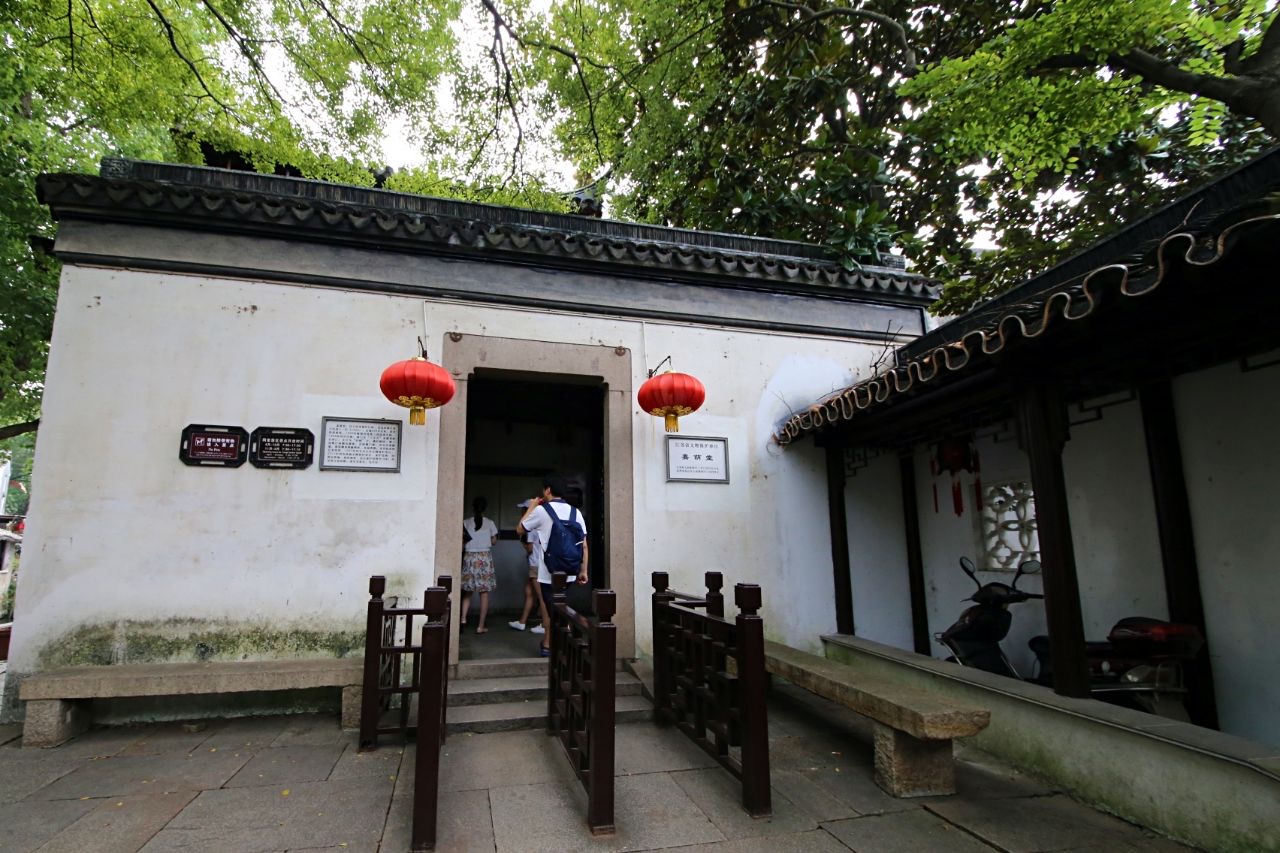
Chongben Hall

崇本堂

Built in the Xuantong era of the Qing dynasty, Chongben Hall was the residence of wealthy Tongli merchant Qian Youqin, named for the principle of "honoring roots and reflecting on origins." Though modest in scale, it stands out among Tongli's ancient architecture for its exceptionally refined brick-carved gate towers and wood-carved decorations. The gate tower's brick carvings are richly layered, depicting theatrical tales and auspicious motifs with meticulous knife work; interior wood-carved doors and windows render scenes from The Romance of the Western Chamber and other operas with lifelike figures. Built along the river in three progressive courtyards — from entrance hall to main hall to inner quarters — it embodies the typical Jiangnan residential pattern of "front hall, rear dwelling," a precious case study of Tongli merchant-class life.

On-site narration · read it where you stand
Chongben Hall

Crossing the Three Bridges and heading north along Fuguan Street, we come to Chongben Hall. Chongben Hall sits at the northern foot of Changqing Bridge, facing south toward the water — a textbook example of a prosperous Jiangnan merchant's residence.

Let us start with the name. "Chongben" means "holding fast to what is fundamental." It reflects the core values of traditional Chinese merchant culture: integrity, practicality, and staying true to one's roots. Think about it — Chinese merchants have held "honesty as the foundation" since ancient times, a principle that aligns perfectly with modern business ethics.

Chongben Hall was built in 1912, the first year of the Republic of China, after a local man named Qian Youqin purchased and rebuilt part of an older residence from the Gu family. Though not as distant in time as some of Tongli's sites, the craftsmanship is exquisite and the building is remarkably well preserved. Look at the layout: five sections arranged in sequence — gate hall, main hall, front building, rear building, and kitchen — all occupying under 700 square metres. The plan is tight but complete. This is what Jiangnan residential design is all about: working every inch of a modest footprint into something refined and fully functional.

Step through the gate hall with me. The gate hall is where guests were received. It is modest in size but properly appointed. Above the entrance beam is brick carving — not as lavish as in an official's household, but finely done. The motifs are classic auspicious symbols: bats for good fortune, deer for prosperity, and peaches for longevity. They reflect the merchant household's straightforward wish for wealth and blessings.

Beyond the gate hall is the main hall, where the owner entertained important guests and held family ceremonies. Look at the roof structure: the beams are hewn into a flattened form — round timbers planed into rectangular sections — which is both elegant and structurally sound. The wood carvings on the beams are superb: flowers, birds and animals, and scenes from famous stories. Take your time looking at the details. The carving is refined and layered; even after a century, with the paint somewhat faded, the figures still stand out in three dimensions.

Behind the main hall are the front building and rear building, the living quarters for the family. The front building was typically the master couple's chambers; the rear building housed children or elderly relatives. Between the two is an open courtyard that brings in light and air. Notice the window lattice patterns upstairs: step-pattern grilles suggest steady advancement; broken-ice patterns evoke continuity; key-fret patterns mean things that never end. Each design carries a wish for the family inside.

What makes Chongben Hall truly special is how faithfully it presents the everyday life of a Jiangnan merchant family in the Republican era. The house retains an extensive collection of period furniture and household objects — old beds, tables, chairs, wardrobes, trunks, porcelain, and brassware. Look at these old things carefully. Some show their age, but each one holds a piece of living memory. That carved wooden bed with its curtain hooks and ornamental headboard? That was a newlywed couple's marriage bed. The brass washbasin with the delicate rim pattern? That belonged to the lady of the house.

For photographers, Chongben Hall has several rewarding subjects. First, the main hall's roof structure and carvings — shoot upward with a wide-angle lens to capture the full span of the beams and the carving detail. Second, the upstairs bedrooms — the old beds and furniture carry a strong sense of period. Third, the courtyard — catch the light falling down through the open well above. Natural light is the way to go here: the interiors are softly lit, and flash will kill the atmosphere. Overcast light gives even coverage for detail shots; on sunny days, the lattice windows cast beautiful dappled patterns across the floor.

Chongben Hall is not large, but it is a living museum — one that shows us what life looked like for a Jiangnan merchant family a hundred years ago. From here we continue to our next stop: Jiayin Hall.

Jiayin Hall

嘉荫堂

Built in the early Republic of China era, Jiayin Hall was the mansion of wealthy Tongli merchant Liu Bingnan. Grand in scale, its five progressive courtyards unfold sequentially — entrance hall, sedan hall, main hall, inner hall, and rear garden — fully reproducing the spatial sequence of a great Jiangnan household. The main hall is called the纱帽 (Gauze-Hat) Hall because its roof-beam structure resembles the wings of a Ming official's gauze hat; inside, carved beams and painted pillars showcase superb craftsmanship. Jiayin Hall is laid out along the river, its main gate facing the water with a private pier on the side — a clear imprint of the merchant lifestyle of traveling by boat. The complex balances official dignity with commercial practicality, an excellent window into Tongli's modern business-social class structure.

On-site narration · read it where you stand
Jiayin Hall

Leaving Chongben Hall and walking along Zhuhang Street, we come to Jiayin Hall. Jiayin Hall was built in 1922, the eleventh year of the Republic of China. Its owner, Liu Bingnan, was of the same clan as the celebrated poet Liu Yazi — and building this residence cost him a full 20,000 taels of silver. To put that in perspective: in Suzhou at the time, that sum could have bought hundreds of acres of farmland, or several large mansion compounds. The level of investment tells you everything about what you are about to see.

The name "Jiayin" means "auspicious shelter" — the idea that this house would bring the family good fortune and protection. The name has a bookish elegance to it, the kind of choice that marks an educated household.

Jiayin Hall is famous above all for its "Gauze Cap Hall." You may be wondering what that means. A gauze cap was the formal headwear of imperial officials, distinguished by its distinctive side wings. In Jiayin Hall's main reception room, the ends of the main beams are fitted with projecting timber brackets — the shaped wooden pieces that extend beyond the beam. Here, those brackets are carved into a form that closely resembles the wings of an official's gauze cap, which is why the hall earned its nickname. Look up now — can you see the resemblance? It is a witty architectural flourish, revealing the designer's deep familiarity with cultural tradition.

But the nickname is only the beginning — the carvings inside are the real treasure. The beams are decorated with scenes of the Eight Steeds, the Phoenix through Peonies, the Weighing of Hearts, and the Guaranteed Success motif, each laden with meaning. The Eight Steeds call on the wish "may success come swiftly"; the Phoenix through Peonies speaks of wealth and good fortune; the wishful scale expresses the hope that all goes as desired; and the Guaranteed Success motif asks for top marks in the imperial examinations. All of these are what the Chinese call "talking in good omens" — using imagery and wordplay to express the family's hopes for the future.

Even more impressive are the carvings on the "gauze cap wings" themselves. Look closely at the projecting bracket ends — carved into each one is a full scene from the classic novel "Romance of the Three Kingdoms," rendered in open-work relief: the Reunion at the Old City Gate, the Battle of Three Heroes against the warrior Lu Bu, and others. The technique here is extraordinary. Every scene is complete — figures, horses, weapons, banners — all carved in crisp, layered relief. These carvings were documented in the Suzhou volume of the Records of Chinese Opera, making them an important source for scholars of both Chinese theatre history and the art of wood carving.

Follow me further inside. Jiayin Hall consists of four sections, from the gate hall through the main hall and on to the rear buildings, with carved decoration on beams and frames at every turn — from the great columns down to the door handles. Notice the glass in some of the windows: certain panes are original Republican-era imports, etched with floral patterns. These are genuinely rare.

Jiayin Hall is the ideal model of a Jiangnan family that prized both commerce and culture. Owner Liu Bingnan may have been a merchant, but the house he built breathes scholarship at every turn. From the Gauze Cap Hall to the "Guaranteed Success" motifs to the Three Kingdoms carvings, every element reflects a family's deep hope that its sons would earn their way through education. This is the heart of Chinese traditional culture — "farm to nourish the body, read to nourish the mind."

For photographers, Jiayin Hall is exceptional for architectural detail. Three strong subjects:

First, the gauze cap beam ends. Stand inside the hall, aim your camera upward, and shoot the bracket ends and their Three Kingdoms carvings. Macro mode or a telephoto lens works best — the detail is fine and requires close focus. On a sunny day, light streaming through the windows creates strong contrasts that bring the carvings to life in three dimensions.

Second, the window and door carvings. The frames throughout Jiayin Hall carry flowers, birds, figures, and landscapes. Use a close-up approach, making one window or door the subject with the background softly out of focus. A wide aperture around f/2.8 to f/4 lets the background fall away and the carving take centre stage.

Third, the courtyards and covered walkways. Sunlight in the courtyard, shadows in the corridors, moss on the walls — all strong visual elements. Try some "empty" frames, with no people — just architecture and light. Black and white mode strips away colour and lets lines and tonal contrast do all the work.

Jiayin Hall is a private residence, but it is also a work of art. Every carving, every tile, every piece of furniture is the crystallised skill and imagination of its craftsmen. From here we continue to Gengle Hall.

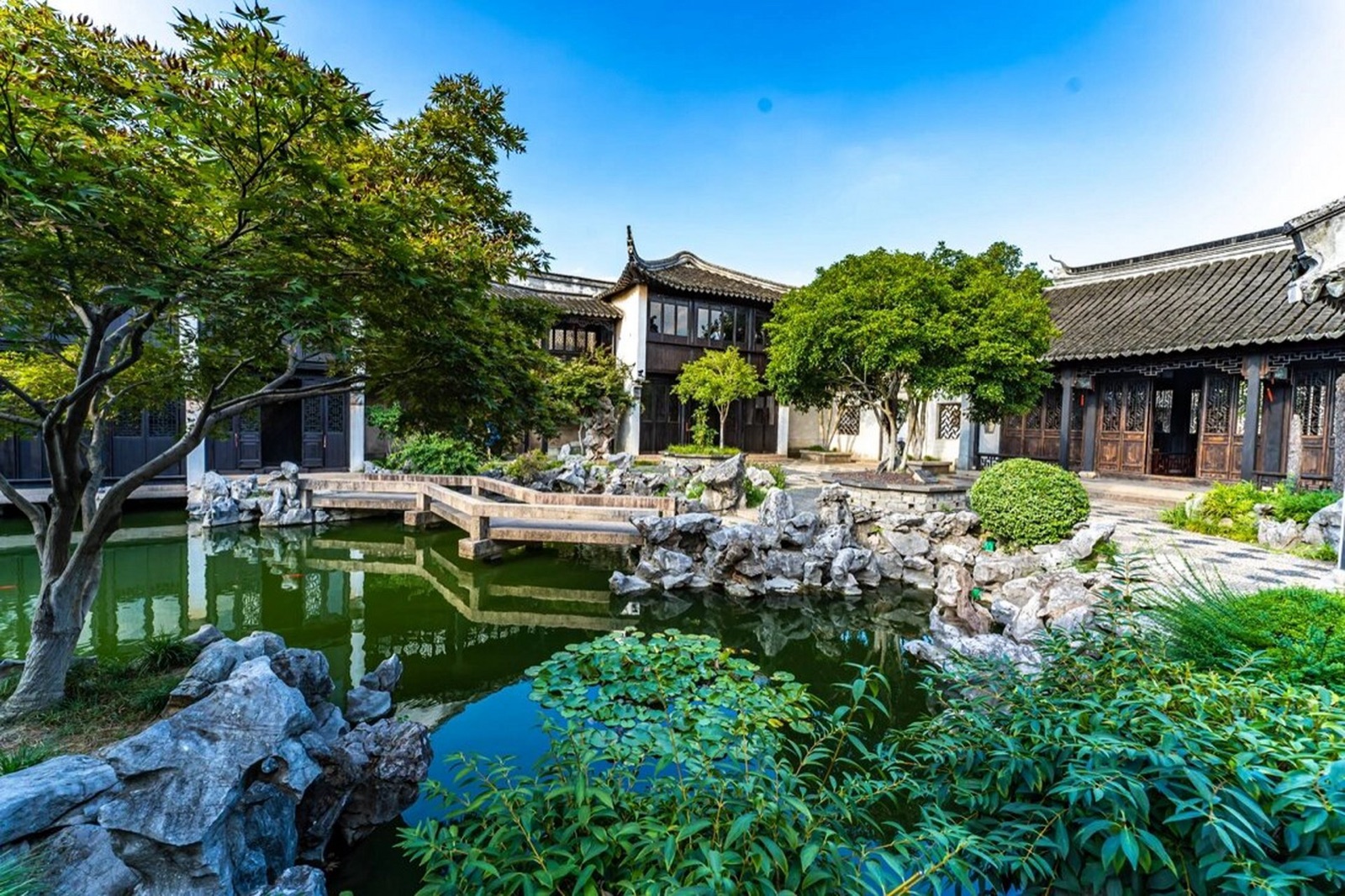
Gengle Hall

耕乐堂

Gengle Hall was built by Ming-era recluse Zhu Xiang, named for the ideal of "farming and studying as family tradition, joy within" — one of Tongli's oldest surviving dwellings. Zhu Xiang refused official career all his life, finding joy in farming and reading; his residence and garden thus carry the plain, serene character of a literati-scholar. Four progressive courtyards with an attached small garden planted with osmanthus and white-bark pine, its winding paths and corridors embody the austere aesthetics of Ming literati garden-living. Compared with Tongli's merchant mansions, Gengle Hall has few ornate carvings — instead, plain brick walls and bare wooden beams reveal their natural beauty, preserving the authentic appearance of Ming Jiangnan dwellings and providing precious physical specimens for studying Ming vernacular architecture.

On-site narration · read it where you stand
Gengle Hall

Leaving Jiayin Hall and walking west, we arrive at Gengle Hall. Gengle Hall stands in the Xiliuwei neighbourhood of Tongli, midway along Lujiadai Lane, facing east toward the river — a Ming-dynasty building, predating both Chongben Hall and Jiayin Hall by centuries.

Let us start with the name. The owner of Gengle Hall was Zhu Xiang, whose courtesy name was Tingrui and whose personal name, Gengle, meant "finding joy in farming." Zhu Xiang was what the Chinese call a chushi — a learned man who chose to stay out of government. He had the education to serve as an official but preferred to remain at home, farming and reading. The name "Gengle" captures his philosophy: no chasing after titles or wealth, just the quiet pleasure of tending fields and turning pages. This kind of "return to the fields" sensibility was the ideal that Chinese scholars of every era admired most.

Gengle Hall was built during the Ming dynasty — over 500 years ago, making it one of the oldest surviving buildings in Tongli. Five hundred years. Think about what that means: when this house was built, China was in the middle of the Ming dynasty, Europe was in the midst of the Renaissance, and the Americas had barely come onto European maps. That was when this building first stood. In the five centuries since, it has witnessed the rise and fall of dynasties, the churning of history, and the passing of countless lives — yet it is still here, giving us a window into how people lived in the Ming era.

Step inside with me. The main gate is modest, but the brick carving above the lintel is beautifully executed. Through the gate is a small courtyard, and beyond that the main hall. The timber structure here is distinctly Ming in character, clearly different from later Qing-dynasty buildings. Look at the joints where the beams meet the columns. Ming builders favoured elaborate bracket sets — those flower-like stacked wooden components that distribute load layer by layer, structural and decorative at once. Qing buildings simplified this tradition considerably; nothing matches the layered sophistication of Ming-dynasty joinery.

Behind the main hall lies the garden, which is Gengle Hall's finest section. The garden is not large, but its arrangement is wonderfully intuitive — rockeries, a pond, plantings, and a small pavilion. Study the rockery: it is built from Taihu Lake stones, but compared to the rockery at Tuisi Garden, there is a rougher, more untamed quality to it. Less polished, more elemental. That is exactly the Ming aesthetic — naturalness above artifice, the appearance of something that grew rather than something that was made.

The pond is similarly informal, not squared-off like an engineered basin but free-form, as if the water simply found its own shape. Weeping willows, bamboo, and banana palms ring the banks; in spring there are peach blossoms, in summer lotus, in autumn osmanthus, in winter wintersweet. Every season brings its own scene — that "four-season garden" principle is one of Chinese garden design's oldest ideals.

The interior of Gengle Hall preserves a great deal of Ming-dynasty original fabric. The roof structure, bracket sets, doors, and windows — the carved wooden elements here have not been altered. Run your hand along one of the carvings: centuries of handling have polished the surface to a warm, smooth sheen, but the patterns underneath are still clear. Ming carving has a different sensibility from the Qing pieces we saw earlier — simpler lines, a bigger scale, a quality that might be called "ancient and unadorned."

For photographers, Gengle Hall offers several rich subjects. First, the main hall's roof structure and bracket sets — aim upward with a wide-angle lens to show the full Ming timber frame. Natural light only; flash would flatten the tonal depth. Second, the garden's rockery and pond — for a classic Ming-garden feel, available light and a gentle exposure. Third, the covered walkways and courtyards — especially in the mid-to-late afternoon when sunlight rakes in at a low angle and the shadows in the corridors shift constantly.

One more suggestion: Gengle Hall's exterior walls are white, its roof tiles dark grey — that "white plaster and dark tile" contrast is the most characteristic colour combination in all of Jiangnan architecture. Step back and use a longer focal length to compose the building's profile against the sky in a clean, uncluttered frame. On an overcast day, when the sky is a soft grey-white, the tonal relationship between sky and wall becomes almost monochrome — exactly the quality of a traditional ink wash painting.

Gengle Hall is small, but it is a Ming-dynasty architectural museum — a place where we can see, almost intact, what a Jiangnan scholar's life looked like five centuries ago. From here we move on to Ming-Qing Street.

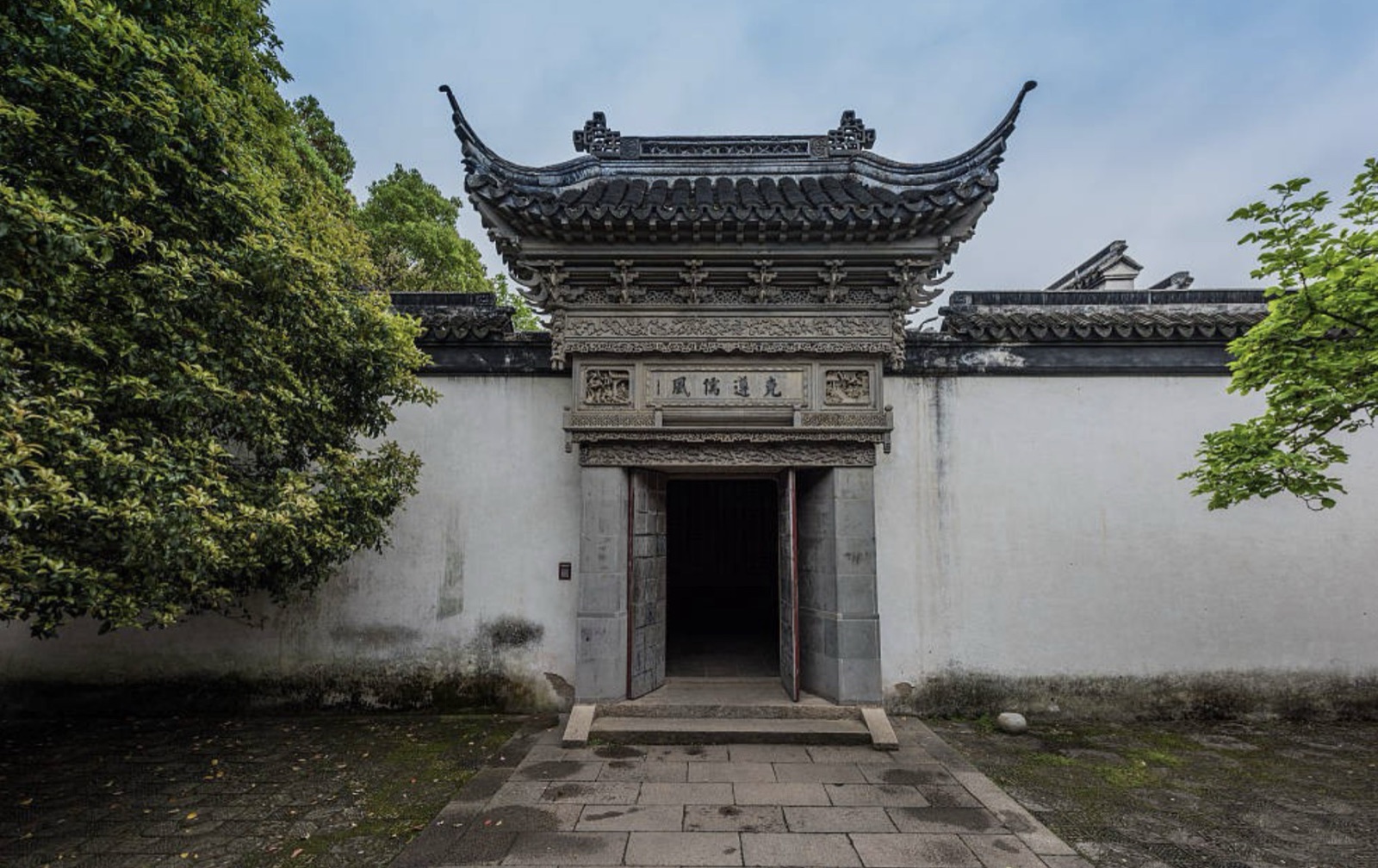
Ming-Qing Street

明清街

Ming-Qing Street is Tongli's main commercial lane, roughly 300 meters long, with Ming-Qing-era shop layouts and street-front character preserved on both sides. Gloss from centuries of foot traffic still gleams on the flagstone pavement. Shops sell Su embroidery, Lake Tai pearls, Tongli's signature pickled vegetables and "champion's trotter" braised pork — old brands and new stalls mixing into a unique marketplace atmosphere interweaving past and present. Occasional langpeng (roofed corridors) span the street overhead, sheltering pedestrians from sun and rain — a hallmark of Jiangnan waterside commercial streets. Strolling Ming-Qing Street, the eyes take in the scroll of white walls and black tiles; the nose catches the sweet scent of pickles and lotus-root sweets; the hands feel flagstones' warmth — senses converge into a complete Tongli memory.

On-site narration · read it where you stand
Ming-Qing Street

Leaving Gengle Hall and continuing along the town's main street, we arrive at Ming-Qing Street. Ming-Qing Street is the commercial and cultural heart of Tongli Ancient Town — the liveliest stretch in the whole place.

A little history first. This street was built in 1996, so it is not ancient in the strict sense, but it was designed and constructed in the architectural style of the Ming and Qing dynasties, faithfully preserving the Jiangnan characteristic of two parallel lanes — an upper lane and a lower lane — connected by steps in between. What does "upper and lower" mean here? Two streets running at different levels, joined by steps, creating a layered vertical streetscape. This kind of dual-lane arrangement was once common in Jiangnan water towns, but Tongli is one of the few places where it survives in such complete form.

Look up at the archway at the street entrance. The four characters carved there — meaning "the enduring spirit of the Ming and Qing" — were written by the renowned sociologist Fei Xiaotong. Fei Xiaotong is one of China's most celebrated social scientists, born in Suzhou, with a deep personal attachment to Jiangnan culture. His inscription is both a tribute to Tongli's architecture and an affirmation of the living traditions of the Jiangnan water towns.

Ming-Qing Street runs for just over 160 metres — not long, but lined with shops on both sides. Look around: silk dealers, tea sellers, craft shops, and traditional snack stalls, all here. Tongli's signature products include silk, Suzhou embroidery, Biluochun tea, Champion's Pork Trotter, Wadi Crisp, and Qianshi Cake, among others. If you want to bring something home, this is the place.

Let me highlight a few of Tongli's specialty foods. First, Champion's Pork Trotter — a slowly braised pork knuckle with a deep reddish-brown colour, meltingly tender, falling off the bone. Why "champion"? Tongli has produced many imperial examination scholars over the centuries, and local people believed eating this dish brought academic success, so the name stuck. Second, Wadi Crisp — a thin, flaky flatbread shaped like the sole of a traditional soft shoe, hence the name. The exterior is crisp and shatters pleasantly, the filling is sweet and fragrant; it is one of Tongli's most recognised snacks. Third, Qianshi Cake — a soft glutinous rice cake made from Gordon euryale seeds, pleasantly chewy and lightly sweet, with a distinctly Jiangnan character.

Beyond food, Ming-Qing Street has plenty to explore. Suzhou embroidery — Suzhou is the birthplace of one of China's four great embroidery traditions — is available at several shops along the street. Suzhou embroidery is known for its precise needlework, delicate colours, and lifelike imagery; a fine piece can sell for thousands or even tens of thousands of yuan and is well worth collecting. Sandalwood fans are another Suzhou specialty: the ribs are carved from sandalwood and the leaf is silk or paper, decorated by hand — both a practical object and a keepsake.

For photographers, Ming-Qing Street is a wonderful place for street photography. The flow of people, the rows of shopfronts, and the texture of daily life all make for compelling images. Three angles worth trying:

First, shoot down the length of the street from the middle of the lane. Stand in the centre, face the far end, and use a wide-angle or ultra-wide setting to pull the shops on both sides and the sky overhead into the frame. The street's strong perspective lines create real depth. Wait for an interesting figure to enter the scene — an elderly person with a walking stick, a child playing at a stall — and suddenly the photograph has a story.

Second, photograph the shop details up close. A tea shop doorway with a display of cups and canisters; a snack counter with steam rising from a hot dish. These close-up moments make the scene feel lived-in and real. A wide aperture around f/2.8 to f/4 lets the background blur away and the subject stand out.

Third, come back at dusk for the night scene. Ming-Qing Street at night is especially beautiful — red lanterns hang along the storefronts and their warm glow spills across the stone-paved lane, soft and romantic. The best time is just before full dark, when the sky still holds a trace of deep blue and the warm lantern light plays against it. With a tripod and a slower shutter speed, the movement of people through the frame becomes a gentle blur, adding motion to a still image.

Ming-Qing Street is a commercial street, but it is nothing like the generic tourist shopping strips you find elsewhere. The Jiangnan water-town character is intact here: traditional-style buildings, goods with genuine local roots. Come hungry, come curious — eat as you walk, browse as you wander, and taste what everyday Jiangnan life actually feels like.

From here we walk out onto Ming-Qing Street and continue to Nanyuan Teahouse — time to rest our feet and have some tea.

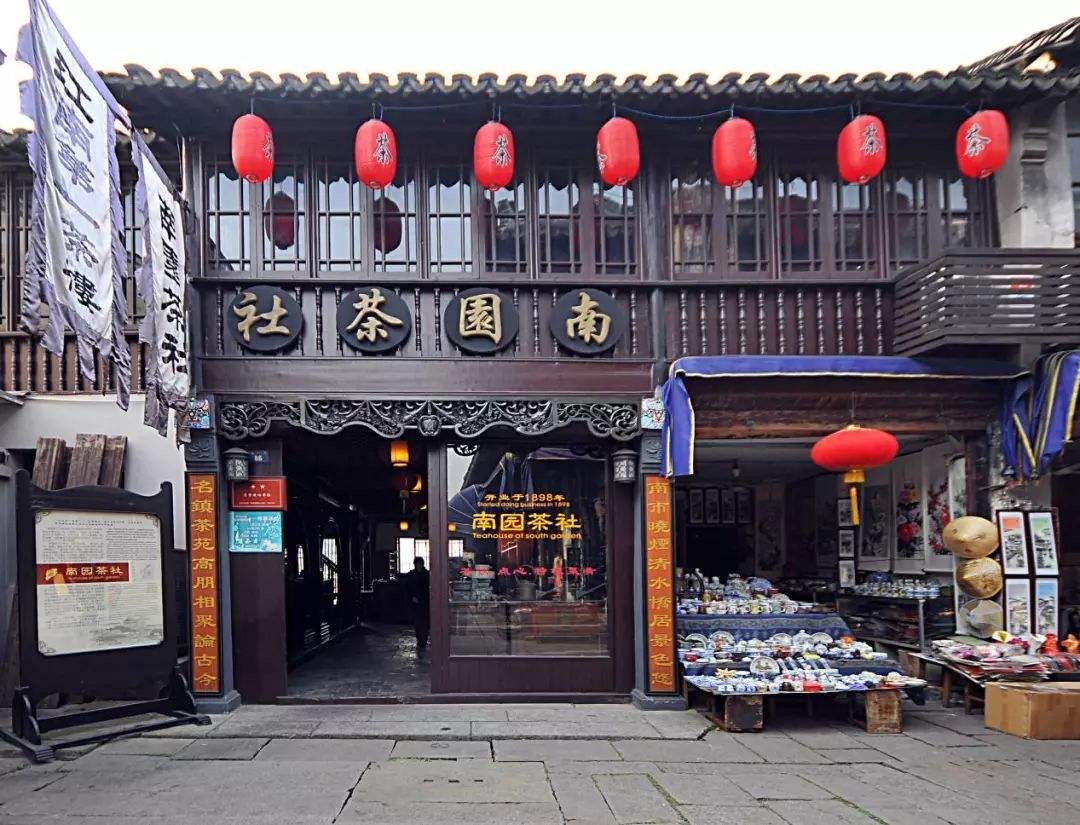
Nanyuan Tea House

南园茶社

Founded in the late Qing dynasty, Nanyuan Tea House is Tongli's most iconic traditional tea house, set along the river with two floors of wood-windowed, water-facing Suzhou-style spaces. The house features Biluochun tea and local snacks; afternoon sessions often host Suzhou pingtan performers — plucked strings ringing, melodic voices soaring, particularly moving in the waterside tea-house context. Sitting by the window with a pot of clear tea, watching boats pass on the river outside, pingtan melodies drifting into the ears, time seems to slow its pace. Nanyuan Tea House is more than a place for tea — it is a living specimen of Tongli's waterside lifestyle, allowing visitors, in a brief pause, to touch the century-long pulse of Jiangnan tea-house culture.

On-site narration · read it where you stand
Nanyuan Teahouse

We have been on our feet for a while, so it is time for a break. Just ahead is Nanyuan Teahouse — the most representative traditional teahouse in Tongli Ancient Town, and the finest place in town to sit, sip, and take in the view.

Nanyuan Teahouse stands at the southern end of the old town. Originally called Fu'an Teahouse, it was established in the late Qing dynasty and has been here for well over a hundred years. The building is a four-bay traditional timber-and-brick structure on two floors, covering about 400 square metres, in the classic Qing style with beautifully carved wooden fittings. It is built right on the canal; from a window seat, you look straight down onto the waterway and the houses lining the opposite bank. Few places in Tongli have this much atmosphere.

Step inside and let the mood settle over you. The ground floor is the main hall, filled with square eight-immortals tables and long wooden benches, calligraphy scrolls and paintings on the walls, old-fashioned hanging lamps overhead. Look at those table surfaces — the wood has been worn smooth and buffed to a gentle shine by decades, perhaps a century, of tea drinkers resting their arms and cups. That patina is the most precious decoration the place has. No paint could ever match it.

The upper floor is quieter and more intimate. The window seats are the prize positions — order your tea and watch the canal life below. Sit down and choose your brew. Tongli's most celebrated tea is Biluochun, one of China's ten classic teas, grown on the Dongshan and Xishan peninsulas of Taihu Lake. Biluochun leaves are slender and tightly spiralled, covered in fine white down, with a silvery-green colour. The steeped liquor is a clear jade-green, the fragrance is rich and floral, and the taste is clean and lively. The very best Biluochun, however, is spring tea. If you visit in spring, do not miss the chance to drink that year's first harvest — no other season compares.

Beyond Biluochun, the teahouse carries a full range of teas — Longjing, Tieguanyin, Pu'er, and others. If you prefer something less grassy, red tea and flower teas are available too. Jasmine tea is a particularly good recommendation here: a green-tea base scented with fresh jasmine blossoms, it carries the clean sharpness of green tea alongside the gentle sweetness of jasmine — popular with nearly everyone.

Tea here is not just about the tea — it is about the performance. Nanyuan Teahouse hosts Pingtan, the performing art that is entirely native to Suzhou: a singer-storyteller accompanies themselves on the pipa lute or the sanxian, narrating stories in the soft, lilting tones of the Wu dialect. Picture it: sitting in a room that looks and feels a hundred years old, a fragrant pot in front of you, a Pingtan performer on the small stage, and out the window, a water-town canal scene. That combination of experiences exists nowhere else on earth but in Suzhou.

Pingtan stories are drawn from the traditional repertoire — tales of gifted scholars and beautiful women, of loyalty and devotion, of love tested by separation. The stories themselves may be old, but a skilled performer brings them entirely to life with a glance, a gesture, a caught breath. Even if you cannot follow the Wu dialect, the melody and the mood are their own reward.

For photographers, Nanyuan Teahouse is full of character. The setting itself is the background — wooden furniture, scrolls on the walls, light from the river. Three scenes worth capturing: first, a close-up of the tea itself — the bright green liquor in a white porcelain cup, the colours vivid against each other; second, the view framed by the window — use the window opening as a frame, with the river, bridge, and houses as the background, a classic Jiangnan composition; third, the Pingtan performer in action — catch the musician's absorbed expression and the instrument in their hands.

And there is one more experience here that is hard to name, but unmissable — just sitting still. Nothing to do. Watch the water move past below. Watch a small boat slip by under your window. Watch someone on the opposite bank washing clothes or passing the time of day. This kind of deliberate idleness is one of Tongli's most valuable offerings. Modern life rarely permits it. But here, in Nanyuan Teahouse, you can spend an entire afternoon doing absolutely nothing and feel entirely justified. That is the essence of Jiangnan slow living: unhurried, unforced, at ease with the moment.

Nanyuan Teahouse is not only a place to drink tea — it is a place to absorb Jiangnan culture. Here you can experience the most traditional form of Chinese leisure: brewing tea, listening to music, watching the water, talking. It is a simple way of spending time, but a deeply satisfying one.

Rested and refreshed, we move on to our next stop: Chen Qubing's Former Residence.

Chen Qubai's Former Residence

陈去病故居

Chen Qubai's Former Residence is the old home of the renowned modern revolutionary and Nanshe (Southern Society) co-founder in Tongli. Chen Qubai (1874–1933) was a pivotal revolutionary literatus of the late Qing and early Republic, co-founding Nanshe with Liu Yazi and others, wielding literature as a weapon to advocate anti-Qing revolution and democratic ideals. The residence follows a traditional Jiangnan dwelling layout; inside, an exhibition of Chen's life uses letters, photographs, and manuscripts to trace his journey from Tongli scholar to revolutionary pioneer. The quiet, deep old alley where the house sits contrasts sharply with Chen's turbulent revolutionary career, revealing a truth: modern China's upheavals often began in an unremarkable room in a small Jiangnan town.

On-site narration · read it where you stand
Chen Qubing's Former Residence

Leaving Nanyuan Teahouse and following the canal northward, we arrive at Chen Qubing's Former Residence. This is one of the most historically significant cultural sites in Tongli Ancient Town, a place that witnessed a turbulent chapter of modern Chinese history.

Let me introduce Chen Qubing first. Chen Qubing (1874–1933) was a celebrated modern poet and scholar, and one of the co-founders of the Nanshe — the Southern Society. What was the Nanshe? It was the largest literary-revolutionary organisation in modern Chinese history, founded at Tiger Hill in Suzhou in 1909. Its members included the poet Liu Yazi, Gao Xu, and Chen Qubing himself, along with a cohort of progressive writers and intellectuals. The Society's motto was "to hold to the sounds of the south and never forget one's roots" — a call to preserve Chinese cultural tradition while championing revolutionary ideas. In an era of uncertainty and upheaval, the writers of the Nanshe wielded their pens as weapons, calling for the overthrow of the Qing dynasty and the establishment of a democratic republic. Their influence on China's modern revolutionary movement was profound.

Chen Qubing's former residence is a Qing-dynasty house covering 1,364 square metres — a substantial property. Walking in through the main gate, you would once have seen the plaque "Xiao You Jiu Ye" above the lintel — meaning "the old home of filial piety and fraternal devotion." These Confucian virtues — honouring one's parents, cherishing one's siblings — were the core of traditional Chinese family ethics. The words on that plaque, though the characters have faded with time, speak to values still worth carrying with us today.

Inside the gate, traces remain of a small pavilion and the family ancestral shrine. An ancestral shrine was where traditional families placed memorial tablets for their forebears and renewed the bonds between generations. The shrine itself is gone, but its footprint remains, and it is not hard to imagine the Chen family gathered there for a ceremony of remembrance.

The most important buildings in the residence are the Haoge Hall and the Hundred-Foot Tower. Haoge Hall was built in 1920 as a reception room for guests. The name "Haoge" — meaning "to sing out with full voice" — is taken from a poem by the Tang-dynasty poet Bai Juyi, and it captures Chen Qubing's open, passionate temperament and his revolutionary optimism. Look for the plaque that once hung in Haoge Hall reading "a model among women, admired by all." This was written by Sun Yat-sen himself, in tribute to Chen Qubing's mother, Lady Ni. Sun Yat-sen was the founding father of China's democratic revolution; a calligraphic dedication in his hand is a mark of the very highest regard, and it tells you where Chen Qubing stood among the revolutionaries of his time.

The Hundred-Foot Tower was where Chen Qubing kept his books and did his writing. The name carries a double meaning: on one level it simply says the tower is impressively tall; on another it alludes to the Chinese saying "atop a hundred-foot pole, take one step further" — meaning always strive to exceed what you have already achieved. Chen Qubing wrote a vast body of poetry and revolutionary essays in this room; his collected works, the "Hundred-Foot Tower Collected Works," were named after it. Imagine the scene: in that era of turbulence, Chen Qubing sitting in this modest study by lamplight, writing through the night, trying with words to wake the nation. There is real force in that image.

The residence as a whole is strikingly unadorned, without the elaborate decoration of Chongben Hall or Jiayin Hall, but it carries throughout the quiet presence of a man of letters. Calligraphy scrolls on the walls, old books on the shelves, the four implements of a scholar's desk — everything here speaks to its owner's learning and character. This is the Chinese literati tradition at its most characteristic: at ease with simplicity, focused entirely on the life of the mind.

For photographers, Chen Qubing's Former Residence offers several worthwhile subjects. First, the Haoge Hall interior with its plaque — if a reproduction is on display, it is worth photographing; calligraphy from Sun Yat-sen's hand carries enormous historical weight. Second, the Hundred-Foot Tower's study — shelves, writing desk, the scholar's four treasures — all deeply evocative of the literary life. Third, the courtyard and garden plantings — quiet and contemplative in the best tradition. Natural light throughout, since the interior light is soft and atmospheric; flash will only flatten what should feel intimate.

Chen Qubing's Former Residence is not merely an old house — it is a witness to history. Standing here, you can feel the patriotism and the literary passion of a modern Chinese intellectual. From here we head to our final stop of the day: Luoxing Islet.

Luoxing Island

罗星洲

Luoxing Island is a small island in Tongli Lake, reached by roughly a ten-minute boat ride from the ancient town pier. Existing structures include the Guanyin Hall, Wenchang Pavilion, and Doumu Pavilion, where Buddhist, Daoist, and Confucian faiths coexist — reflecting Jiangnan folk religion's inclusive tradition. A small garden on the island features winding paths, lush plantings, and panoramic lake-and-hill views; gazing across the water, Tongli's black-tiled rooftops appear faintly in the distance. Luoxing Island has been destroyed and rebuilt multiple times through war and disaster; current buildings are largely modern reconstructions, but ancient trees and ruins preserve memories of past turmoil. The boat journey — wind on the water, shimmering waves — makes arriving at the island feel like entering an otherworld paradise, the most ritual-laden segment of any Tongli visit.

On-site narration · read it where you stand
Luoxing Islet

Our final stop on today's tour of Tongli Ancient Town is Luoxing Islet. Luoxing Islet sits in Tongli Lake to the east of the town and is a small island, reached by boat. If Tongli is the "Venice of the East," then Luoxing Islet is its own Saint Mark's Square — modest in size, but the most distinctive spot of all.

The name first. "Luoxing" means "scattered stars." The island rises from the centre of Tongli Lake, and seen from a distance it looks like a single star set into the water — hence the name. It is a poetic image, calling to mind stars strewn across a night sky.

What makes Luoxing Islet truly unique is that it brings together Buddhism, Taoism, and Confucianism all on a single small island. A Buddhist temple, a Taoist shrine, and a classical academy sit here side by side — three distinct religious and intellectual traditions sharing the same ground. This is exceptionally rare anywhere in China. Think about what each represents: Buddhism speaks of cause and effect, compassion, the cycle of rebirth; Taoism speaks of naturalness, non-action, harmony with the universe; Confucianism speaks of benevolence, ritual propriety, and the cultivation of self and family. These three traditions have competed and intertwined throughout Chinese history, and Luoxing Islet stands as a symbol of that synthesis.

Stepping off the boat, you first encounter the Temple of Guanyin. Guanyin Bodhisattva is one of the most beloved figures in Chinese Buddhism — merciful, compassionate, the reliever of suffering, known by her full title as the "Great Compassionate Bodhisattva Who Hears the Cries of the World." The temple is well attended; on the first and fifteenth of each lunar month, local devotees cross the water to offer incense. If you are curious, step inside and take in the atmosphere of Chinese Buddhist devotion.

Beside the Buddhist temple stands a Taoist shrine, housing the deities of China's native religion. Taoism's guiding principle is "following the way of nature," seeking harmony between humanity and the cosmos. The architecture of the Taoist shrine is noticeably different from the temple next door — quieter, more unassuming, with the feeling of a retreat into the hills. Look at the murals on the walls inside: they depict classic Taoist stories — the Eight Immortals Crossing the Sea, celestial figures in their alchemy chambers — vivid in colour, alive with movement.

The island also has an academy, representing Confucian culture. The academy was the institution of higher learning in imperial China, roughly equivalent to a university today. With its lecture hall, library, and dormitories, it was the place where classical scholars taught, read, and debated. Walking into the academy, you feel the spirit captured in the famous couplet: "The sounds of wind, rain, and reading — all enter the ears; the affairs of family, state, and the world — all weigh on the heart." That sense of personal responsibility for the wider world is Confucianism's deepest contribution.

The natural setting of Luoxing Islet is beautiful in its own right. Ancient trees shade the pathways, the air is fresh and still, and from the highest point of the island you look out over the full sweep of Tongli Lake. Look at that water — a vast, shimmering expanse where sky and lake melt into each other, the ancient town of Tongli visible in the distance as a soft outline, like a detail in an ink-wash painting. This is the ultimate Jiangnan image: sky and water becoming one, the line between them dissolved.

For photographers, Luoxing Islet has several outstanding vantage points. First, the panorama from the island's high ground — a wide-angle lens captures sky, water, and the distant town together in that "sky-meets-water" composition. Second, the Guanyin Temple's architecture — upswept roof lines and drifting incense smoke create a strong atmosphere of devotion. Third, the Taoist shrine's murals and carved woodwork — close-up shots reveal the full richness of China's traditional artistic vocabulary.

There is one more experience not to be missed — the boat crossing itself. Getting to Luoxing Islet means boarding a sculling boat. The boatman works the oar in the traditional manner, the hull rocking gently as you glide across the open lake. Sitting in the boat, listening to the rhythm of the oar in the water, watching the shoreline slowly recede — it is deeply restful. The sculling boat is the most traditional form of transport in the Jiangnan water towns; even now that motorised vessels exist, the sculling boat offers something irreplaceable. Choose the sculling boat. It is slower, but it carries you in a way that nothing else does.

And with that, everyone, our tour of Tongli Ancient Town comes to a close. From Tuisi Garden, the UNESCO World Heritage Site, to the legendary Pearl Tower, the Three Bridges, Chongben Hall, Jiayin Hall, Gengle Hall, Ming-Qing Street, Nanyuan Teahouse, Chen Qubing's Former Residence, and finally Luoxing Islet — we have walked through the very best of what Tongli has to offer.

What is Tongli? It is a living ancient town. More than a thousand years of history have not diminished it but deepened it. Here you can stand inside a UNESCO-listed garden, walk bridges that have carried the footsteps of generations, eat food that has been made the same way for centuries, feel the patriotism and literary passion of a revolutionary scholar, and sit on a small island where three of humanity's great philosophical traditions share a few quiet acres of land. Tongli is not just a place to visit — it is a place that asks you to slow down.

We hope you have had a wonderful time here. If you have a little more to give, consider staying the night — the evening light and early morning quiet are unlike anything during the day. Tomorrow, when the first light falls across the stone lanes and the first birdsong arrives from the canal banks, you will find that Tongli's mornings are quieter than the day and fresher than the night.

Thank you for spending this time with us. Safe travels, and goodbye!

Prefer to be shown around?

A local guide walks these 10 stops with you and answers what the page cannot.

Browse tours ↗