Lingering Garden — Written Introduction
General Overview
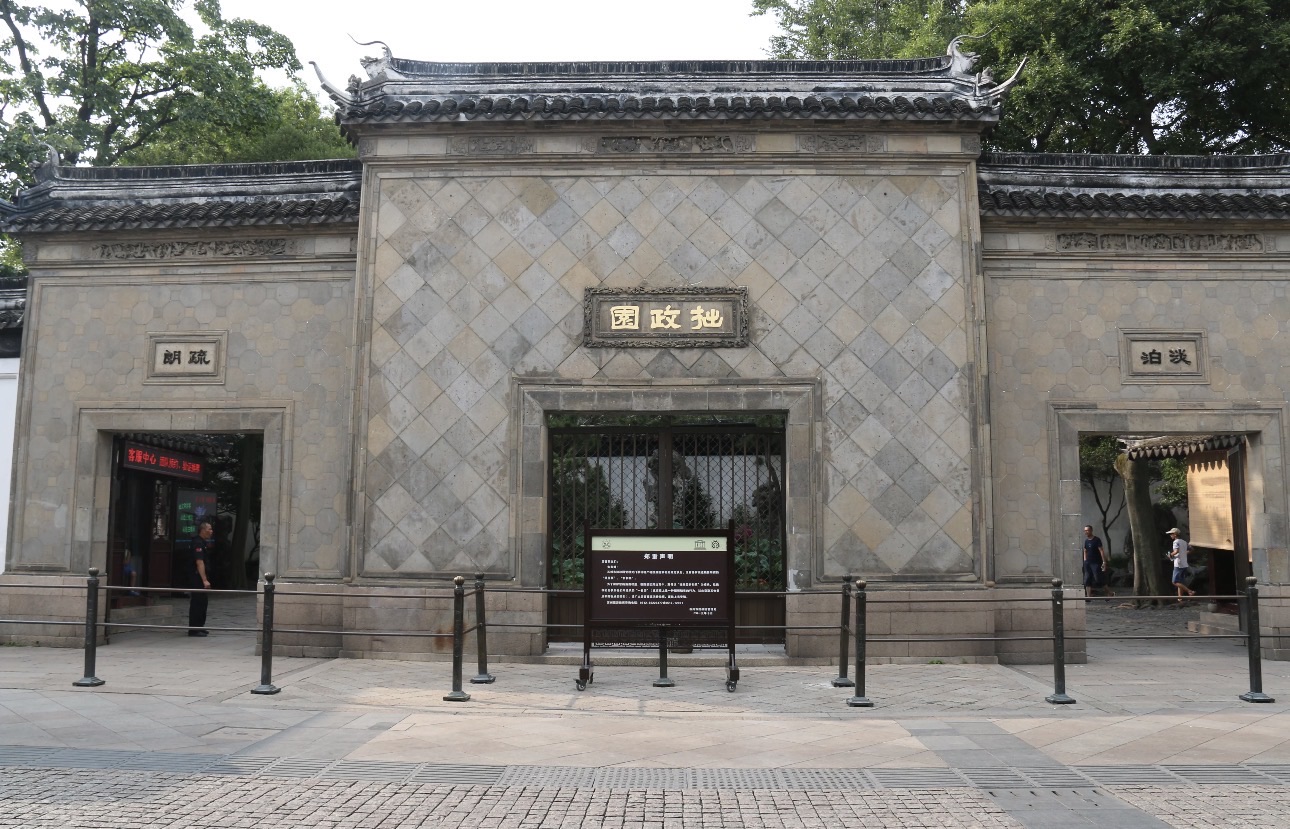
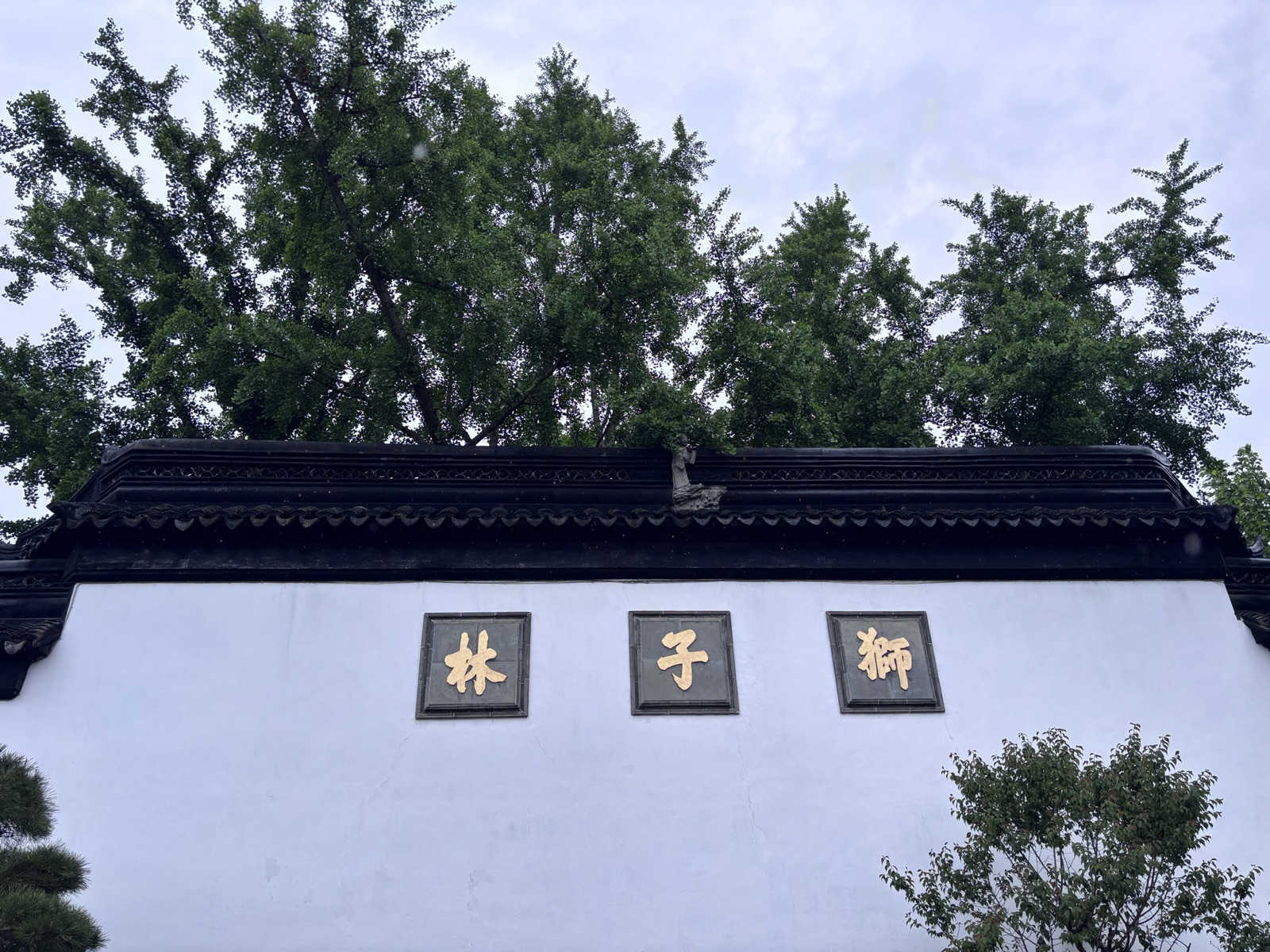
Lingering Garden is located at 338 Liuyuan Road, Gusu District, Suzhou, Jiangsu Province. It was first built in 1593 (the 21st year of the Wanli reign of the Ming dynasty) as a private garden by Xu Taishi, a vice minister of the Imperial Stud, and was then called the "East Garden." In 1794 (the 59th year of the Qianlong reign of the Qing dynasty), the garden came into the possession of Liu Shu, who renamed it "Cold Jade Villa"; because the owner's surname was Liu, locals nicknamed it "Liu's Garden." During the Xianfeng years, most gardens in Suzhou were devastated by war, but Lingering Garden survived intact. In 1873 (the 12th year of the Tongzhi reign), Sheng Kang, the Governor of Hubei, purchased the garden. Playing on the homophone of "Liu's Garden" and drawing on the meaning of "to linger in the world forever," he renamed it "Lingering Garden."
Covering about 2.3 hectares, Lingering Garden is one of the Four Great Classical Gardens of China, alongside the Summer Palace in Beijing, the Mountain Resort in Chengde, and the Humble Administrator's Garden in Suzhou. The garden integrates a residence, ancestral hall, private chapel, and landscaped grounds into a single complex. It is divided into four sections — central, eastern, northern, and western — which together compress four landscape styles (mountain-and-water, pastoral, woodland, and courtyard) into a limited space. The garden is especially celebrated for its masterful handling of architectural space: its halls are grand and richly appointed, and its courtyards endlessly varied — a definitive model of spatial artistry among Suzhou's classical gardens. In 1997, Lingering Garden was inscribed on the UNESCO World Heritage List.
Attractions in the Garden
Ancient Trees Pavilion (Gumu Jiao Ke)
Green Shade Pavilion (Lüying Xuan)
Hanbi Mountain Villa (Hanbi Shanfang)
Fragrant Osmanthus Pavilion (Wen Muxi Xiang Xuan)
Curved Brook Tower (Quxi Lou)
Five Peaks Fairy Hall (Wufeng Xianguan)
Hall of Forest and Spring Elders (Linquan Qishuo Zhi Guan)
Guanyun Peak (Guanyun Feng)
Guanyun Tower (Guanyun Lou)
Attraction Descriptions
1. Ancient Trees Pavilion (Gumu Jiao Ke)
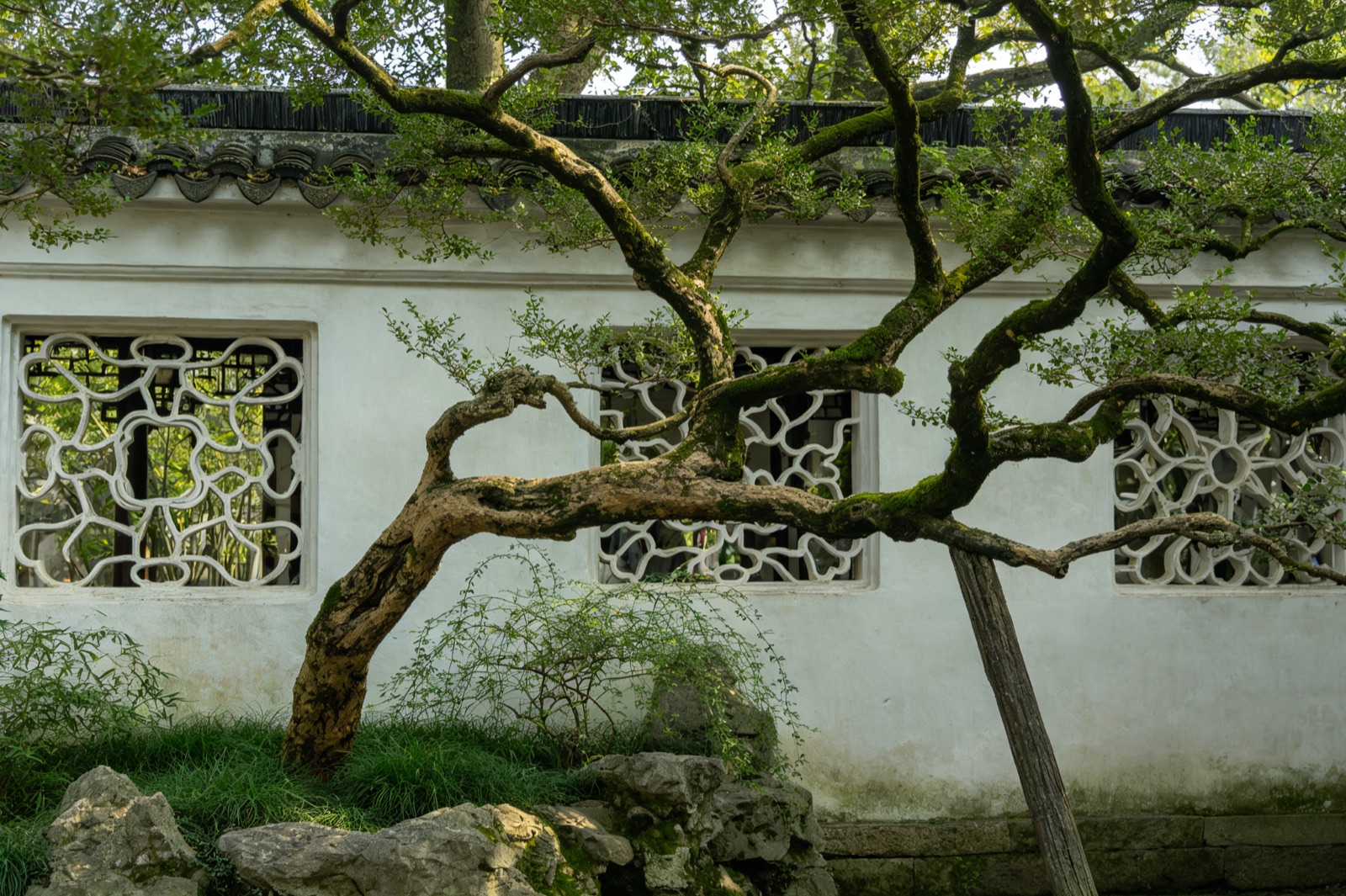
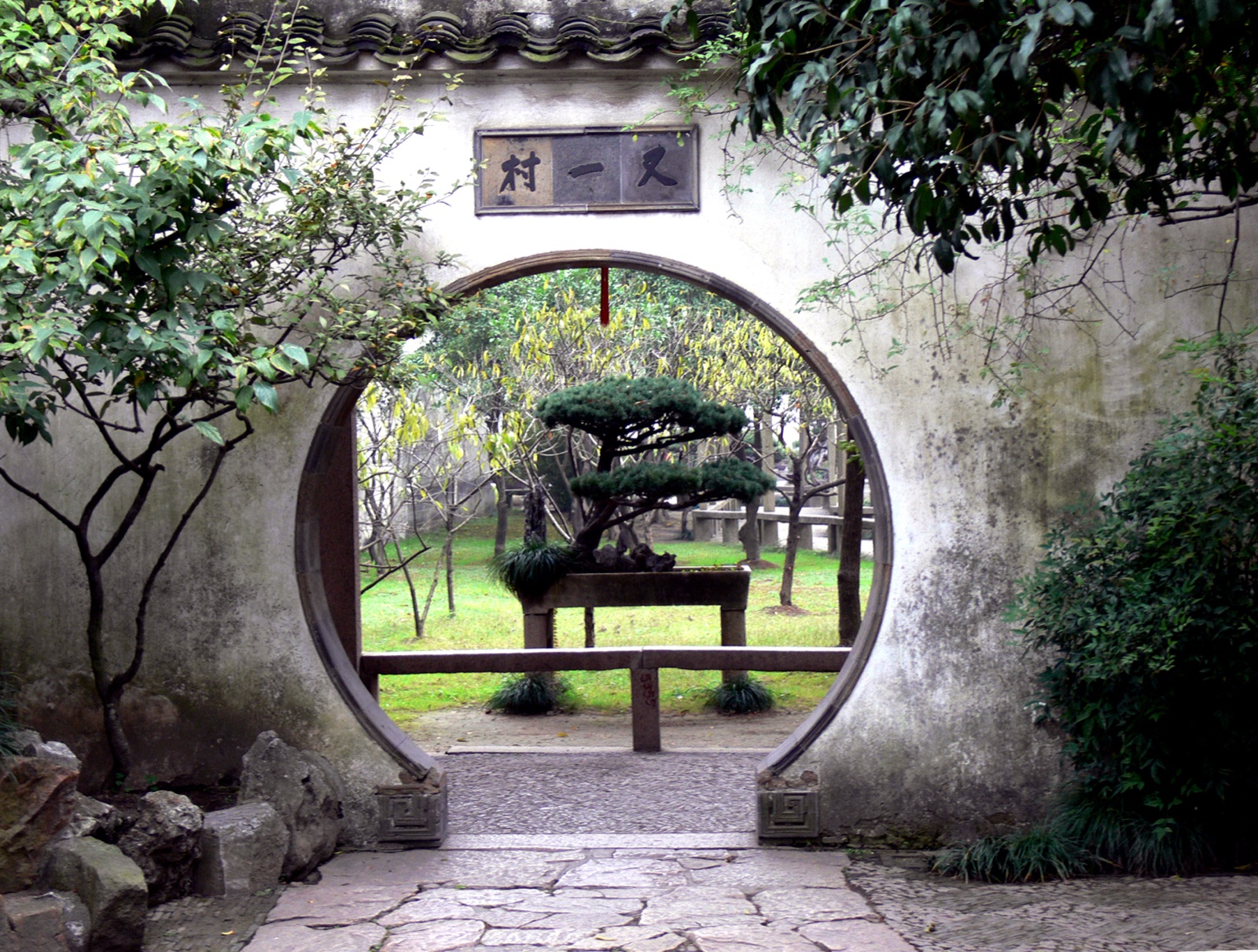
Gumu Jiao Ke is one of the Eighteen Scenic Spots of Lingering Garden. Located at the far end of the entrance corridor, it is a minimalist courtyard with a single square lattice window set into a white wall. Inside, an ancient Chinese cypress and a tea-oil tree grow side by side, their branches intertwining overhead — hence the name, which means "ancient trees with entwined branches." The designer employed the most restrained techniques of traditional Chinese ink painting, turning presence into absence and solidity into suggestion, giving the whole space a clean, spare, and quietly refined quality. It is considered a masterpiece of Suzhou garden "picture-window" framing art.
2. Green Shade Pavilion (Lüying Xuan)
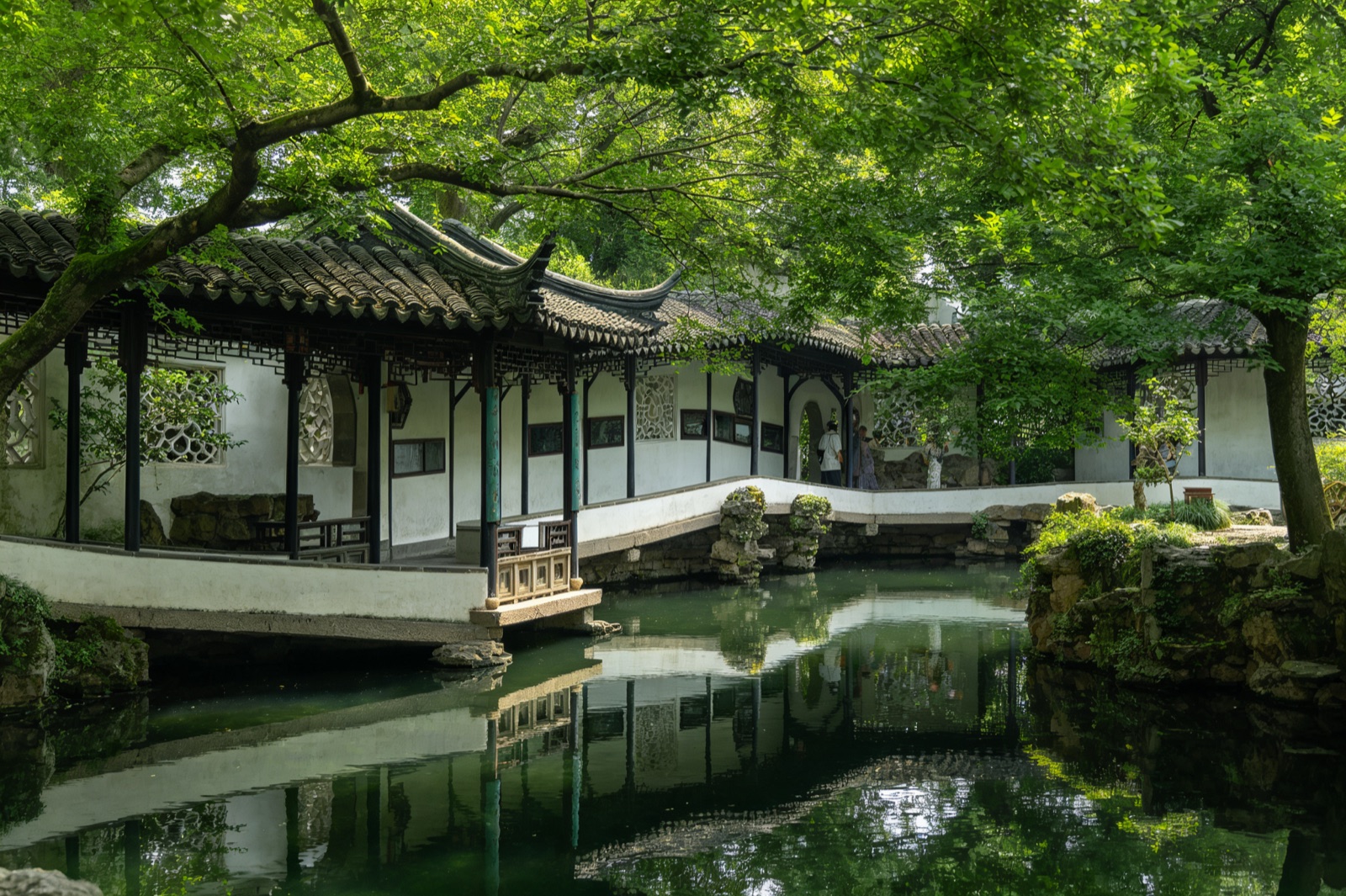
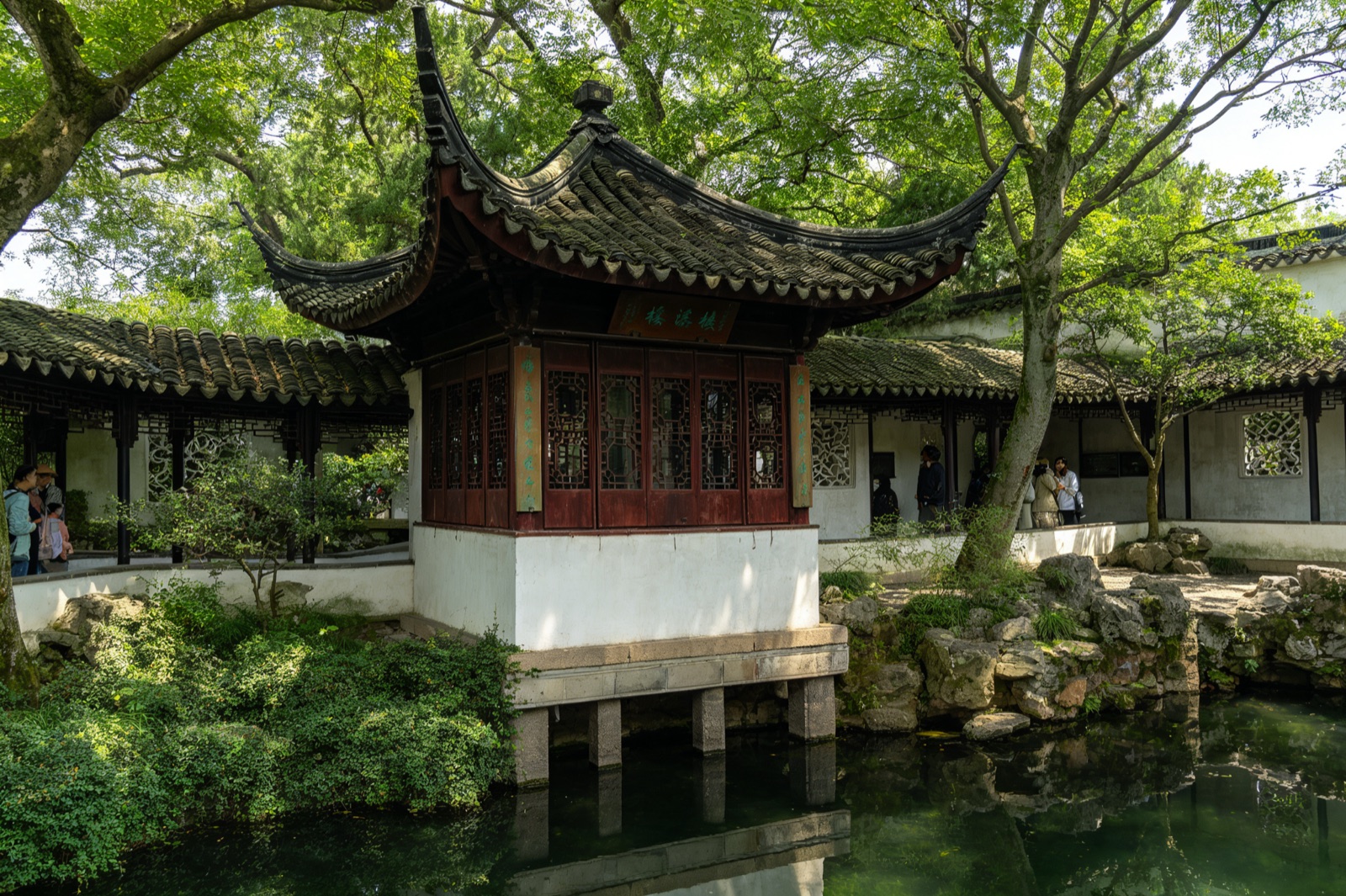
Lüying Xuan is an open pavilion set beside the central pond. It faces south with no wall on that side, fitted with ginkgo-wood lattice windows that let the breeze pass through, making it one of the finest spots for viewing the central waterscape of Lingering Garden. An ancient ginkgo tree in front casts a dense canopy of shade in summer, giving the pavilion its name. The stone bank below is built from large blocks of yellow Taihu stone, with rocky outcroppings extending into the water — a treatment that brings a sense of natural wildness rarely found along Suzhou garden shorelines.
3. Hanbi Mountain Villa (Hanbi Shanfang)
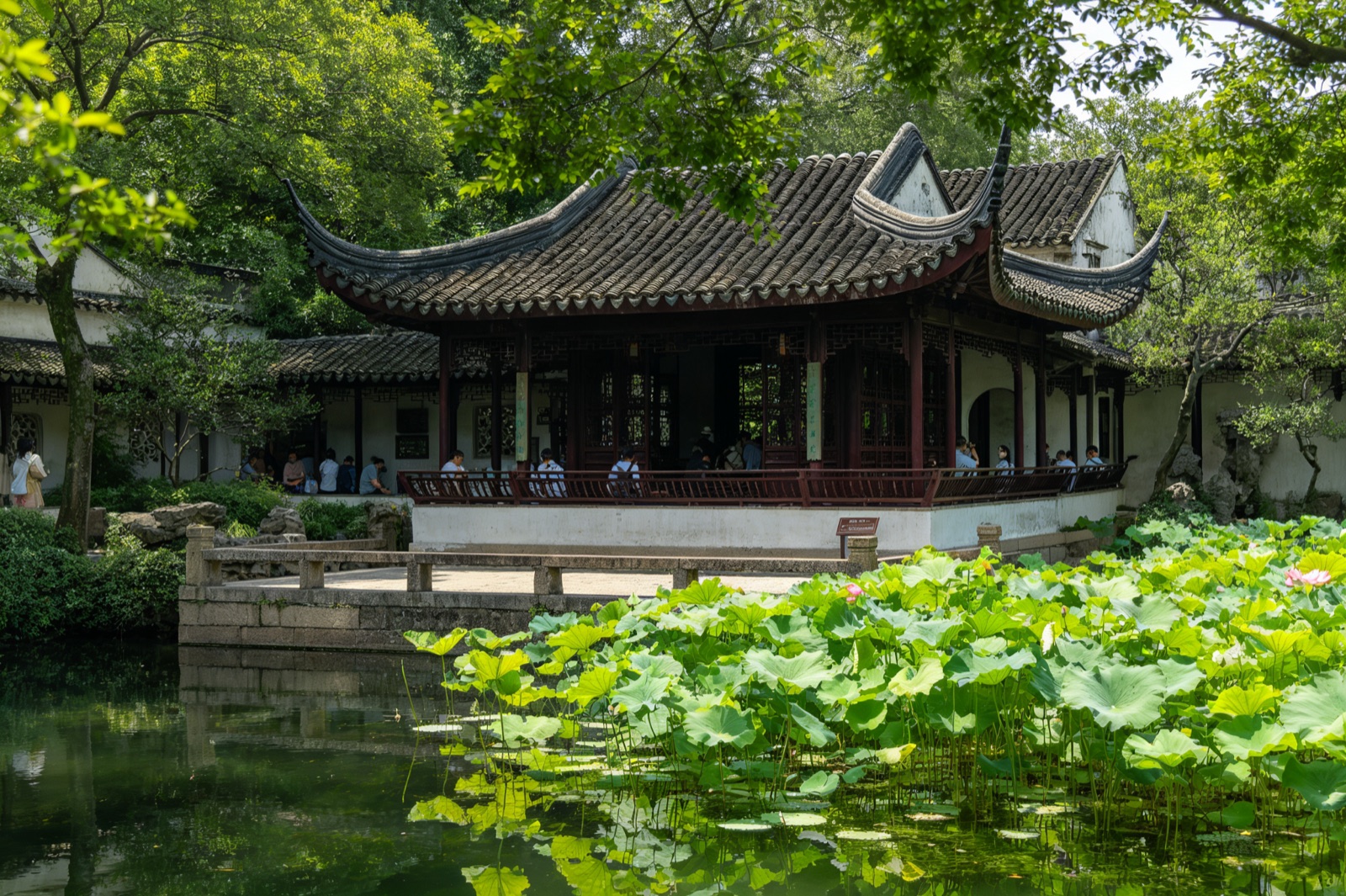
Hanbi Shanfang is the main building of the central section. Its name comes from a line by Song dynasty poet Zhu Xi: "The water just holds a jade-blue shimmer; a thousand trees have already turned red." Because a lotus pond lies just in front, it is popularly known as the Lotus Hall. The building has a hard-gable roof spanning three bays. The carved wooden beams and beam supports inside are original Ming dynasty structures, now over four hundred years old. The stone balustrade on the front terrace dates back more than two hundred years and is a rare surviving example. A hillside covered walkway at the rear of the hall leads directly to the top of the central earthen hill.
4. Fragrant Osmanthus Pavilion (Wen Muxi Xiang Xuan)
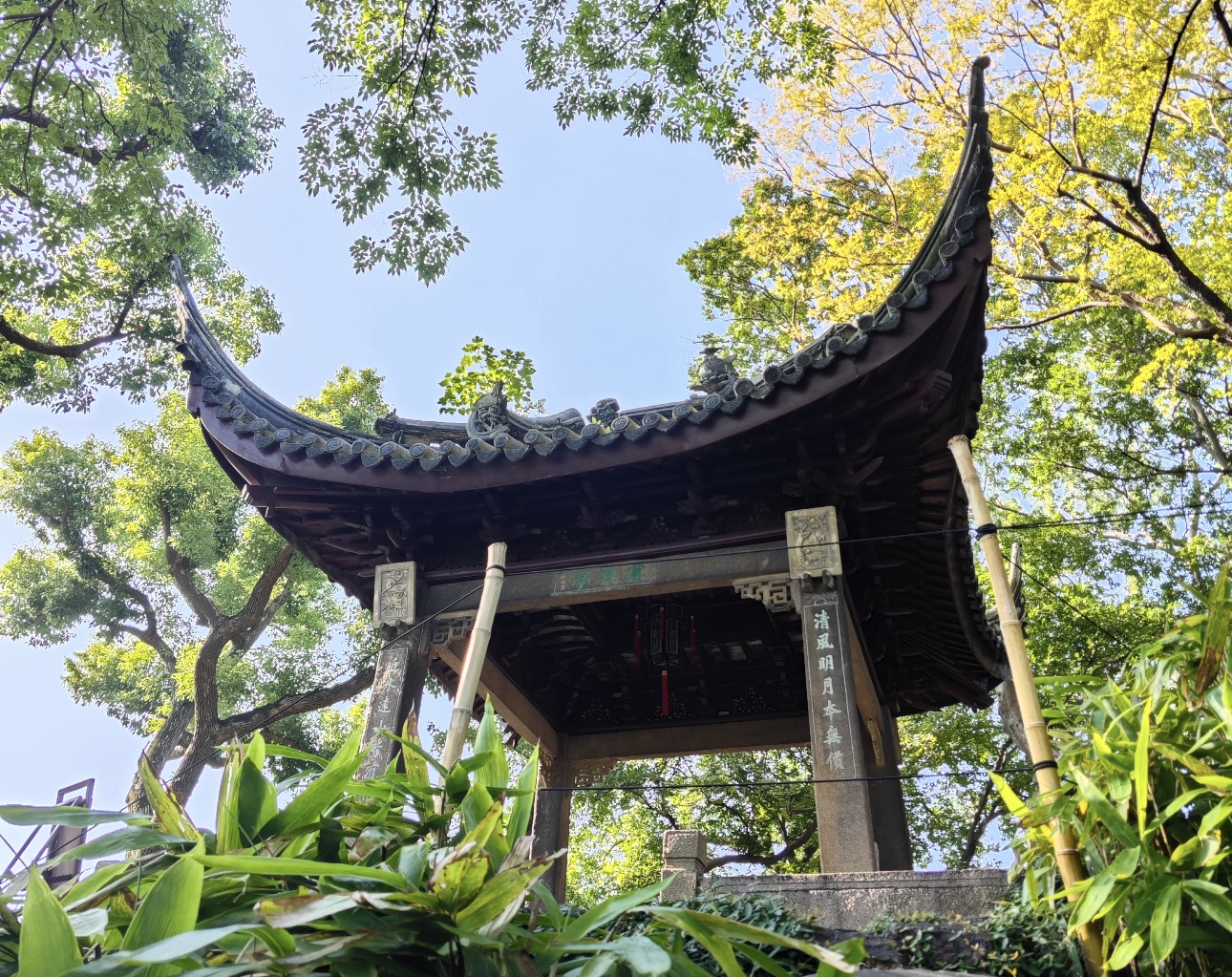
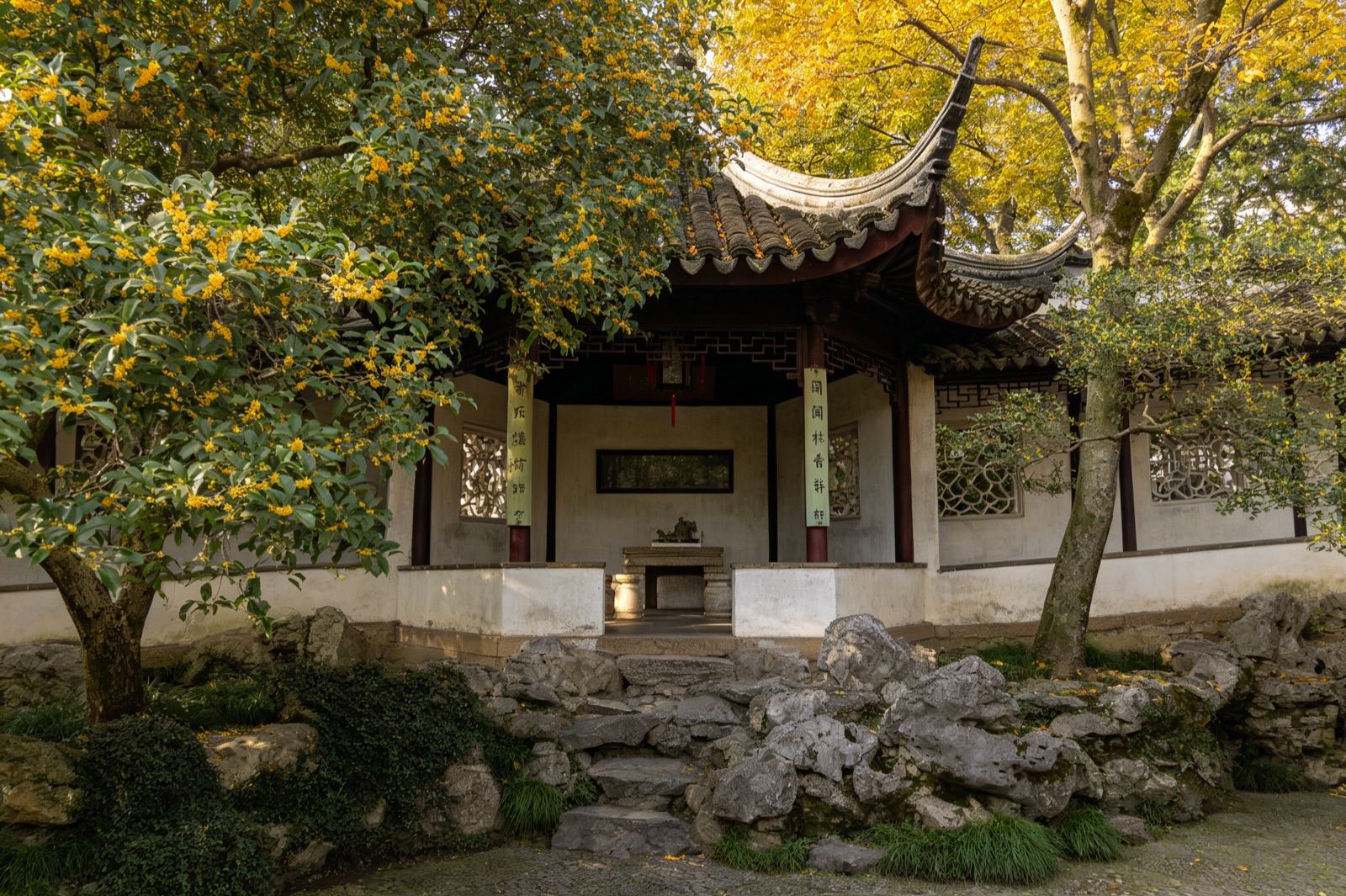
Wen Muxi Xiang Xuan is one of the best vantage points for viewing the waterscape of Lingering Garden's central section. The pavilion is surrounded by osmanthus trees, which fill the entire garden with their sweet fragrance each autumn — hence the name, meaning "the pavilion where the scent of osmanthus drifts." It has a hip-and-gable roof with a rolled eave, elegantly crafted and connected to the hillside covered walkway. From here one can look out over the entire central pond. This is one of the most recommended spots for panoramic photography of the central waterscape, especially in spring and autumn when the pond surface mirrors buildings and trees in richly layered reflections.
5. Curved Brook Tower (Quxi Lou)
Quxi Lou is one of Lingering Garden's most recognizable structures. First built during the Ming dynasty, the tower takes its name from the winding stream that once flowed before it. The building is long and narrow, built right at the water's edge; seen from the side, it looks like a moored pleasure boat, echoing the shape of the pond. The walls inside are inlaid with stone-carved calligraphy by celebrated masters including Wang Xizhi and Wang Xianzhi — making it a rare "calligraphy stele tower" in Suzhou's garden landscape. A right-angle terrace in front of the tower offers an excellent close-up view of the pond.
6. Five Peaks Fairy Hall (Wufeng Xianguan)
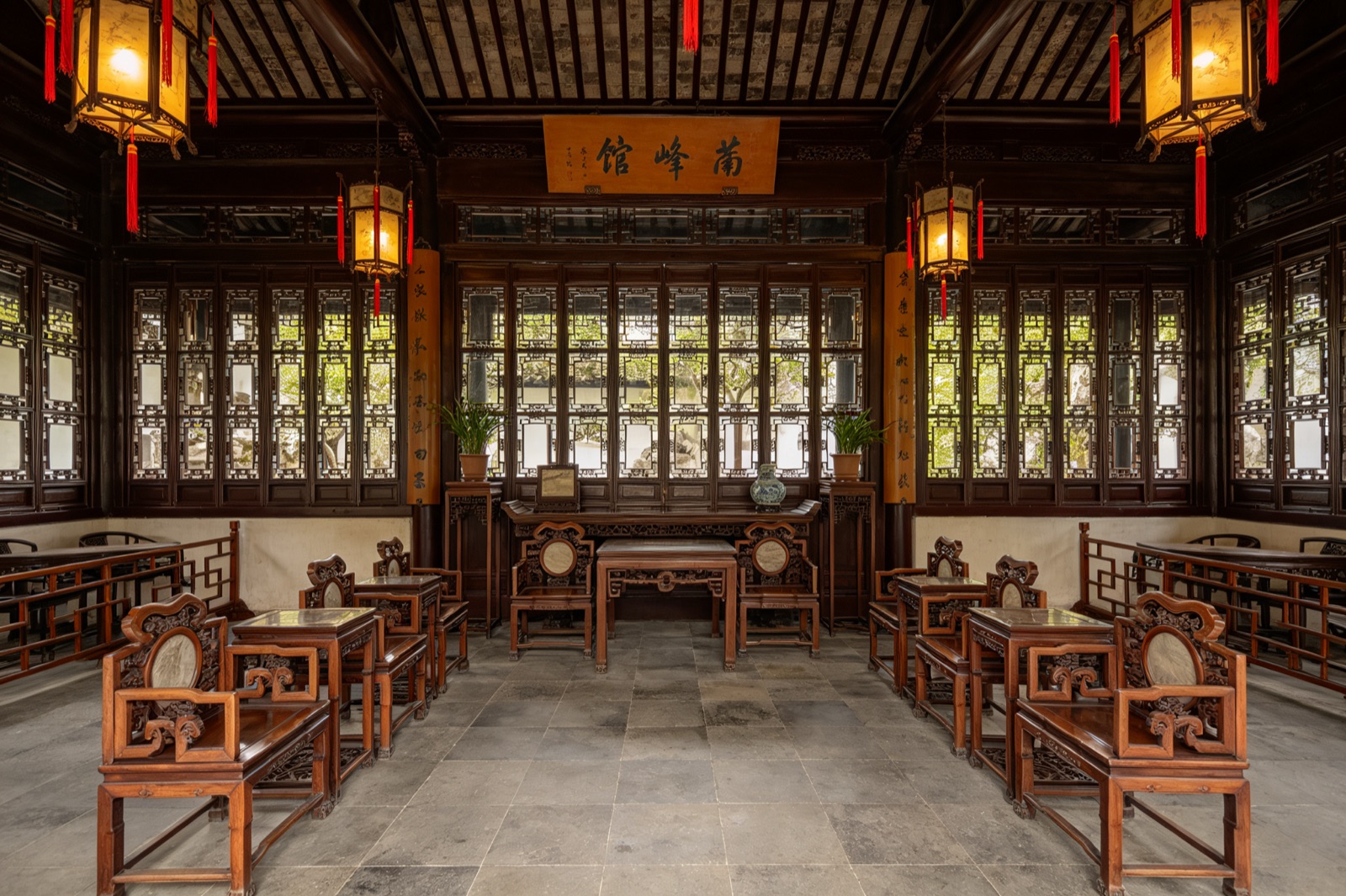
Known as "the Grandest Hall in Jiangnan," Wufeng Xianguan is the centrepiece of Lingering Garden's eastern section. Its name is drawn from a line by the Tang dynasty poet Li Bai about the five elder peaks of Mount Lu; five Taihu stone peaks are indeed stacked in the forecourt, evoking that famous mountain in miniature. The beams, columns, and furniture inside are all crafted from nanmu — a rare and fragrant hardwood also known as Phoebe zhennan — earning the hall its other name, the Nanmu Hall. Spacious and magnificently decorated, it is the largest nanmu hall in Suzhou's classical gardens and stands as an important example for studying the lifestyle of the Qing dynasty Jiangnan gentry.
7. Hall of Forest and Spring Elders (Linquan Qishuo Zhi Guan)
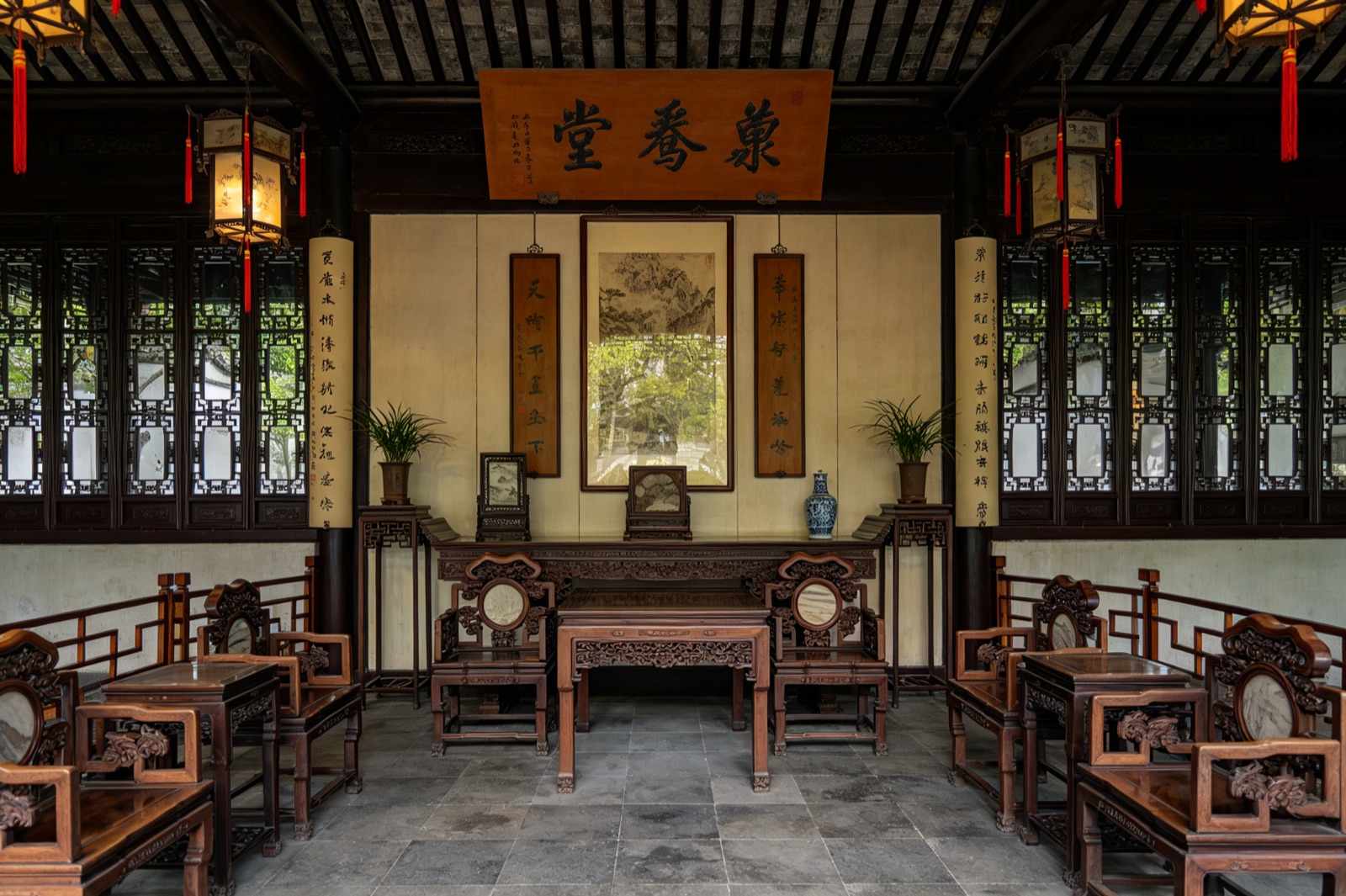
Linquan Qishuo Zhi Guan is another key building in the eastern section. It exemplifies the classic "Mandarin Duck Hall" design, in which the northern hall and the southern hall — Linquan Qishuo Zhi Guan — are in fact two faces of a single structure. The interior is lavishly carved, much of it in northern walnut, and the space is tall and expansive. In the small courtyard in front stands one of Lingering Garden's Three Treasures, Guanyun Peak, flanked on either side by Ruiyun Peak and Xiuyun Peak — the celebrated "three sister peaks" of the garden.
8. Guanyun Peak (Guanyun Feng)
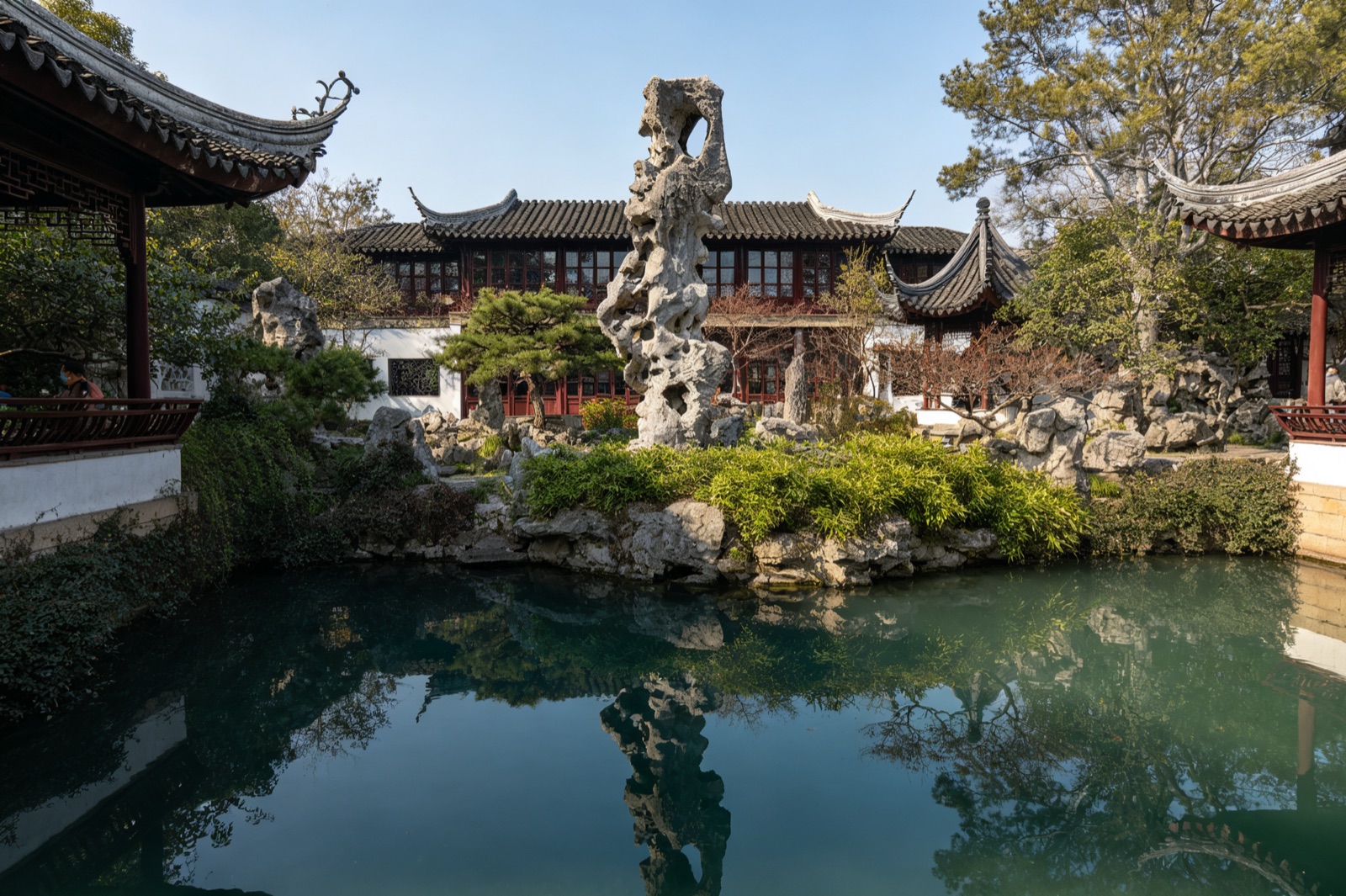
Guanyun Peak is one of Lingering Garden's Three Treasures. A relic of the Northern Song dynasty's imperial "Flower and Stone Tribute" collection, it stands roughly 6.5 metres tall and is the tallest Taihu stone in any Suzhou garden. The peak is celebrated for four remarkable qualities: slenderness, layered texture, perforations, and translucency. Its form is said to evoke a young woman gazing up at the sky — the finest stone peak among all Jiangnan garden rockery. The Huanyun Pond at its base is rimmed with stone slabs; the stone's reflection in the still water plays between the real and the illusory, making it one of the garden's must-photograph spots.
9. Guanyun Tower (Guanyun Lou)
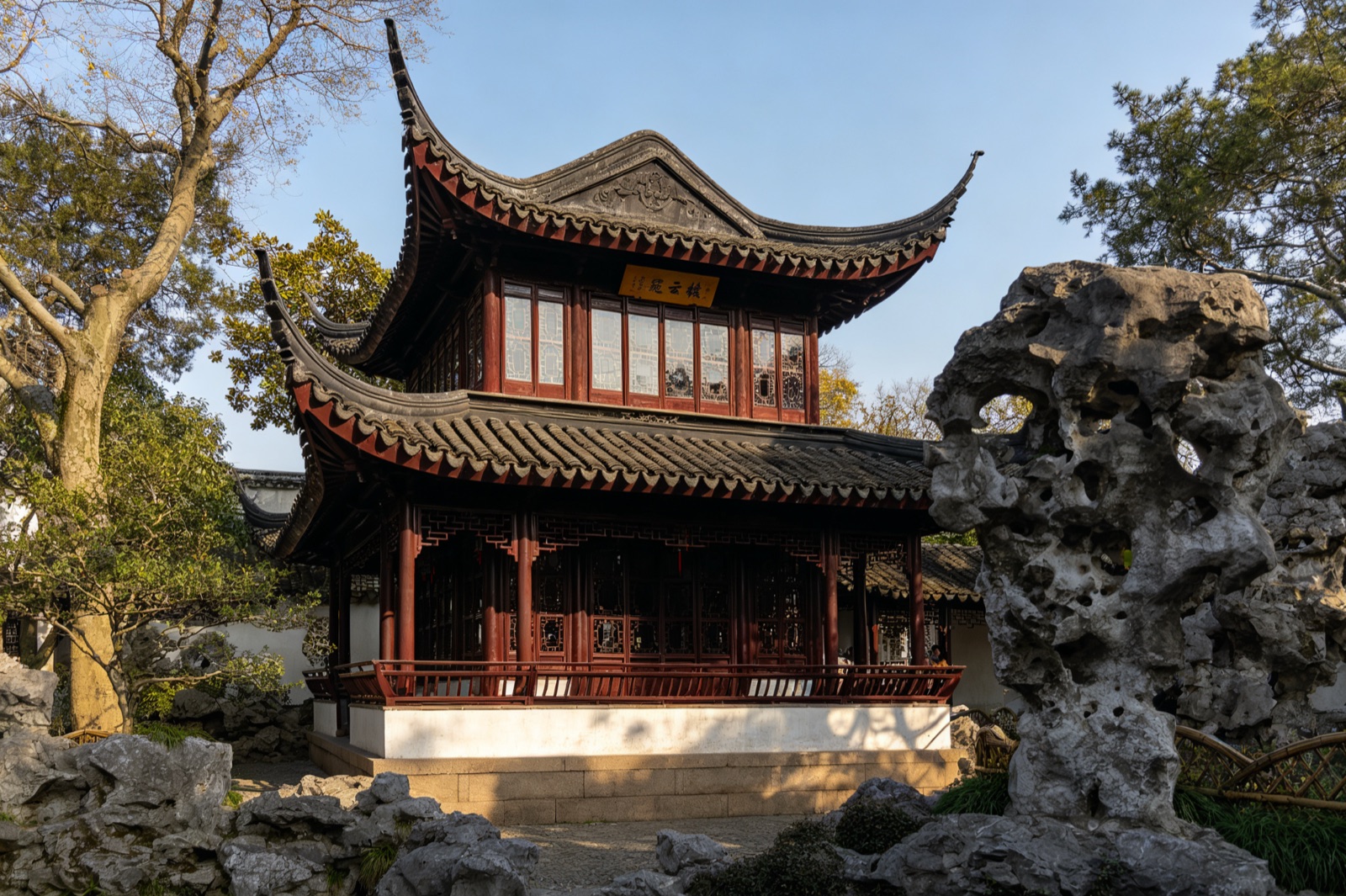
Guanyun Lou is a two-storey pavilion north of Guanyun Peak. Climbing to the upper floor offers the finest elevated view of the peak. Inside the tower, another of Lingering Garden's Three Treasures is on display: a fish fossil approximately 140 million years old, its markings as clear and vivid as a line drawing. The forecourt holds Guanyun Pavilion and Guanyun Platform; together with Guanyun Peak and Guanyun Tower, they form the centrepiece ensemble of Lingering Garden's eastern section.
9 stops, in walking order — read top to bottom, no clicking needed.

 2
 3
 4
 5
 6
 7
 8
 9