Travel Guide› Suzhou› Canglang Pavilion Scenic Area / Surging Wave Pavilion
Suzhou · Garden

Canglang Pavilion Scenic Area / Surging Wave Pavilion 沧浪亭景区

Canglang Pavilion Scenic Area / Surging Wave Pavilion
Address
No. 3 Canglangting Street, Gusu District, Suzhou, Jiangsu Province, China
Canglang Pavilion Scenic Area — Visitor Introduction

Overview

Canglang Pavilion Scenic Area is located at Number 3 Canglang Ting Street in the Gusu District of Suzhou, Jiangsu Province. It is the oldest surviving classical garden in Suzhou and is celebrated alongside Lion Grove Garden, Humble Administrator's Garden, and Lingering Garden as the "Four Great Gardens of Suzhou," representing the garden-making arts of the Song, Yuan, Ming, and Qing Dynasties respectively. The scenic area covers approximately 1.08 hectares and was inscribed on the World Heritage List in 1997 as a core component of the Classical Gardens of Suzhou.

The garden was founded in the fifth year of the Qingli reign of the Northern Song Dynasty (1045), when Su Shunqin — at the time serving as Jixian Proofreader — was demoted and came to live in Suzhou. He purchased the ruins of the poolside estate once owned by Qian Yuanliao, Prince of Guangling of the Wu-Yue kingdom, for forty thousand copper coins. He built a pavilion beside the water and named it "Canglang Pavilion," drawing on lines from the ancient elegy Encountering the Song of the Chu — The Fisherman: "When the waters of Canglang run clear, I wash my tassels; when they run turbid, I wash my feet." In the early years of the Southern Song Shaoxing reign, the site became the residence of Han Shizhong, the celebrated general who resisted the Jin invaders, and was commonly known as "Han Garden." In the Yuan Dynasty it was renamed Dayun'an Buddhist Temple; in the Ming Dynasty it fell into disuse as a monks' dwelling. It was rebuilt during the Kangxi reign of the Qing Dynasty, and further restored during the Daoguang and Tongzhi reigns, reaching its present form.

The garden's layout breaks from the traditional high-wall enclosure paradigm, pioneering instead an open structure of "water encircling the garden and a double corridor borrowing scenery": green water flows around the outer walls, an earthen hill rises within, and a winding double corridor connects the three realms of hill, water, and architecture. Its 108 lattice windows — each with a unique pattern — have been called "the crown of Suzhou garden lattice windows." The garden places an artificial hill at its visual center, with buildings arranged around the hill, embodying the Northern Song literati aesthetic of reverence for nature and the aspiration to dwell among mountains and streams. It stands as one of China's most representative surviving examples from the transitional period when classical garden-making shifted from imperial grounds to private literati retreats.

Highlights

1. Mianshui Veranda

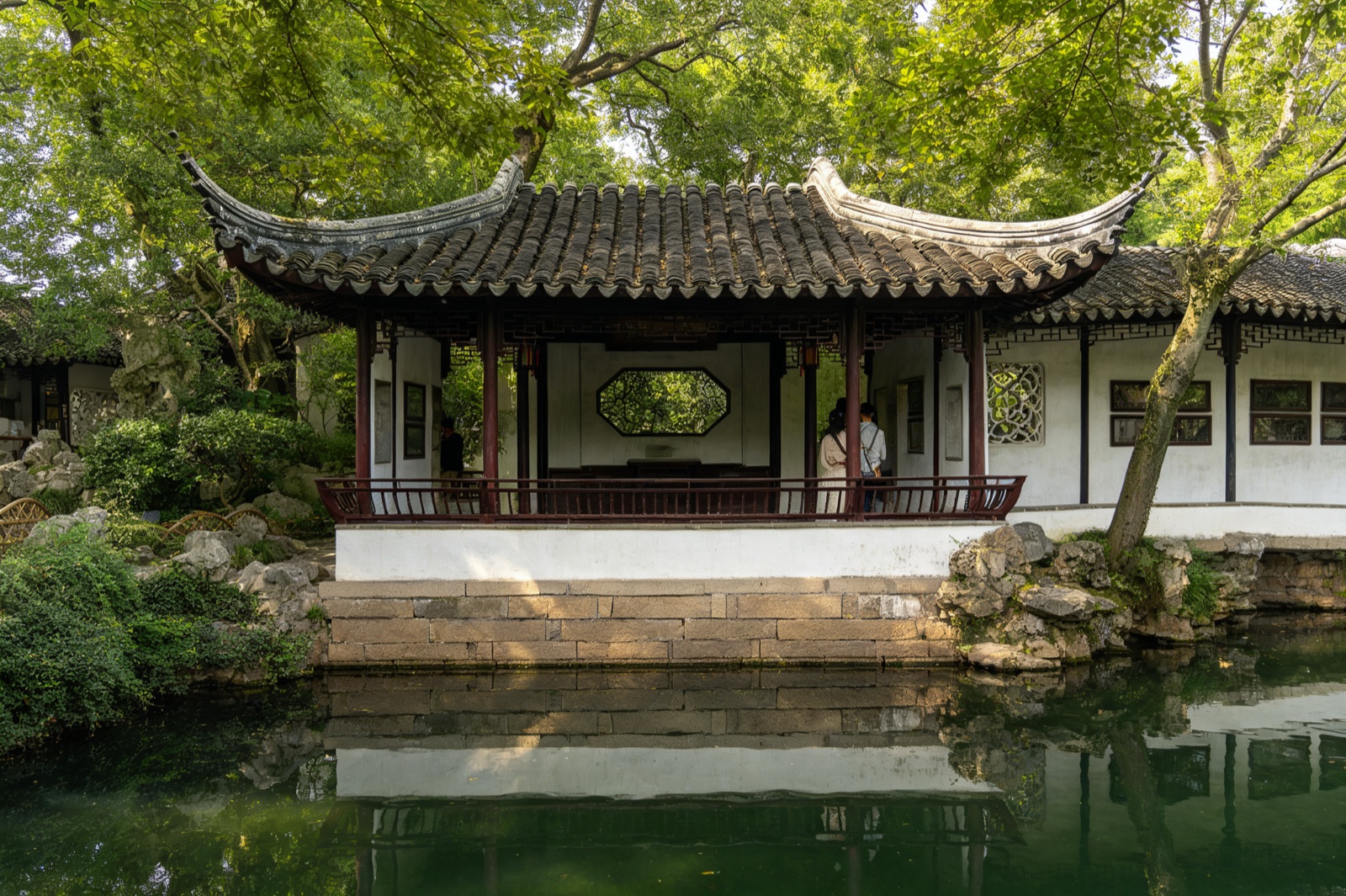
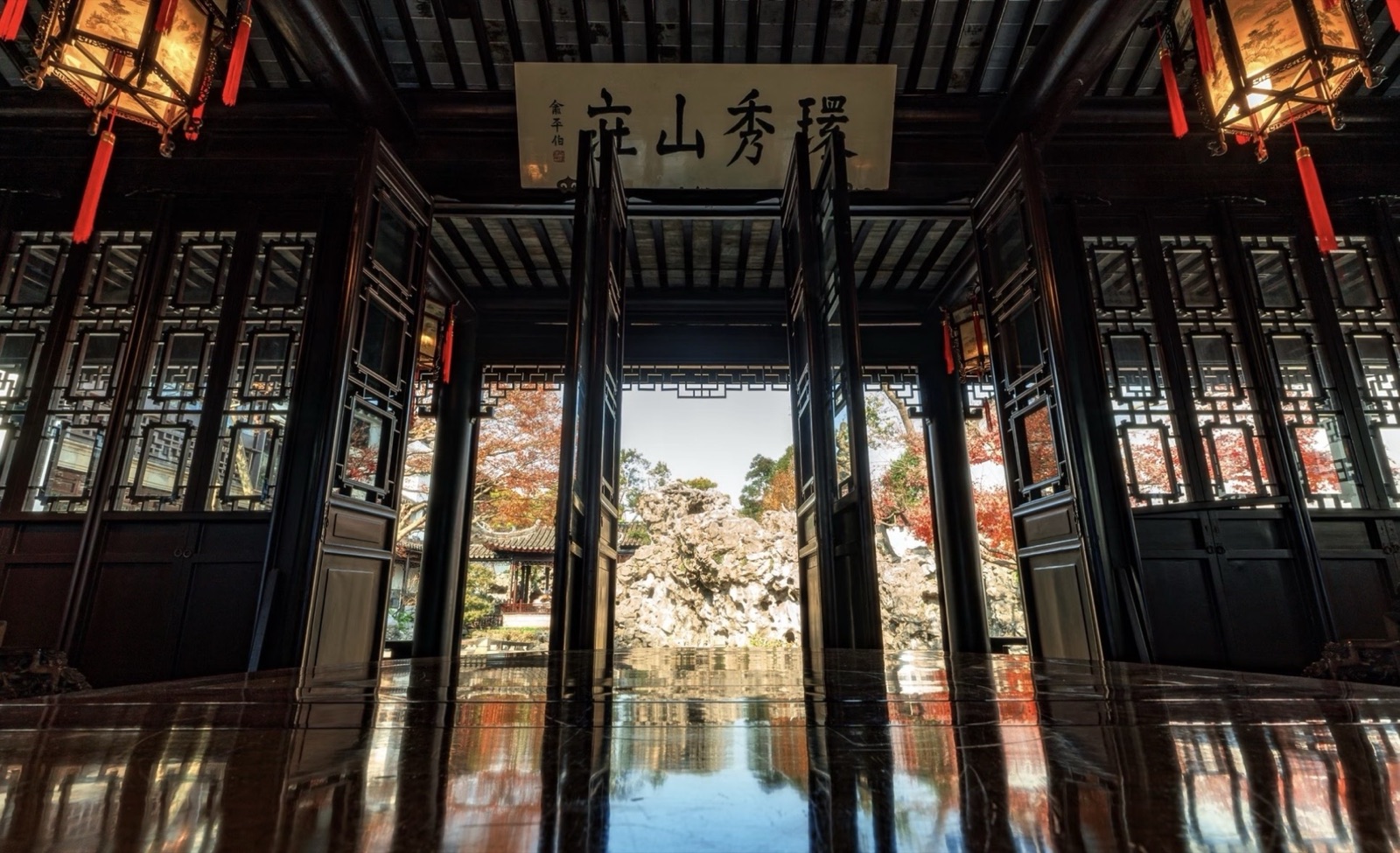
Mianshui Veranda is located in the northwestern section of the scenic area. It is a square waterside pavilion built facing the water, hence its name. The structure stands open on all four sides with expansive windows, serving as the first scenic viewpoint where visitors pause after entering the garden. A mirror-like pool lies before the veranda, while graceful bamboos shade the rear. The couplet by Su Shi — "Fresh breeze and bright moon have no price; near water and distant hills hold feeling" — hangs here. Mianshui Veranda embodies the unique layout of Canglang Pavilion Scenic Area, where water encircles the garden and the garden lies beyond the water. Through the latticed windows, visitors can simultaneously view the mountain scenery within the garden and the water scenery beyond, making this the concentrated expression of the garden's "borrowed scenery" technique.

2. Fish-Watching Spot

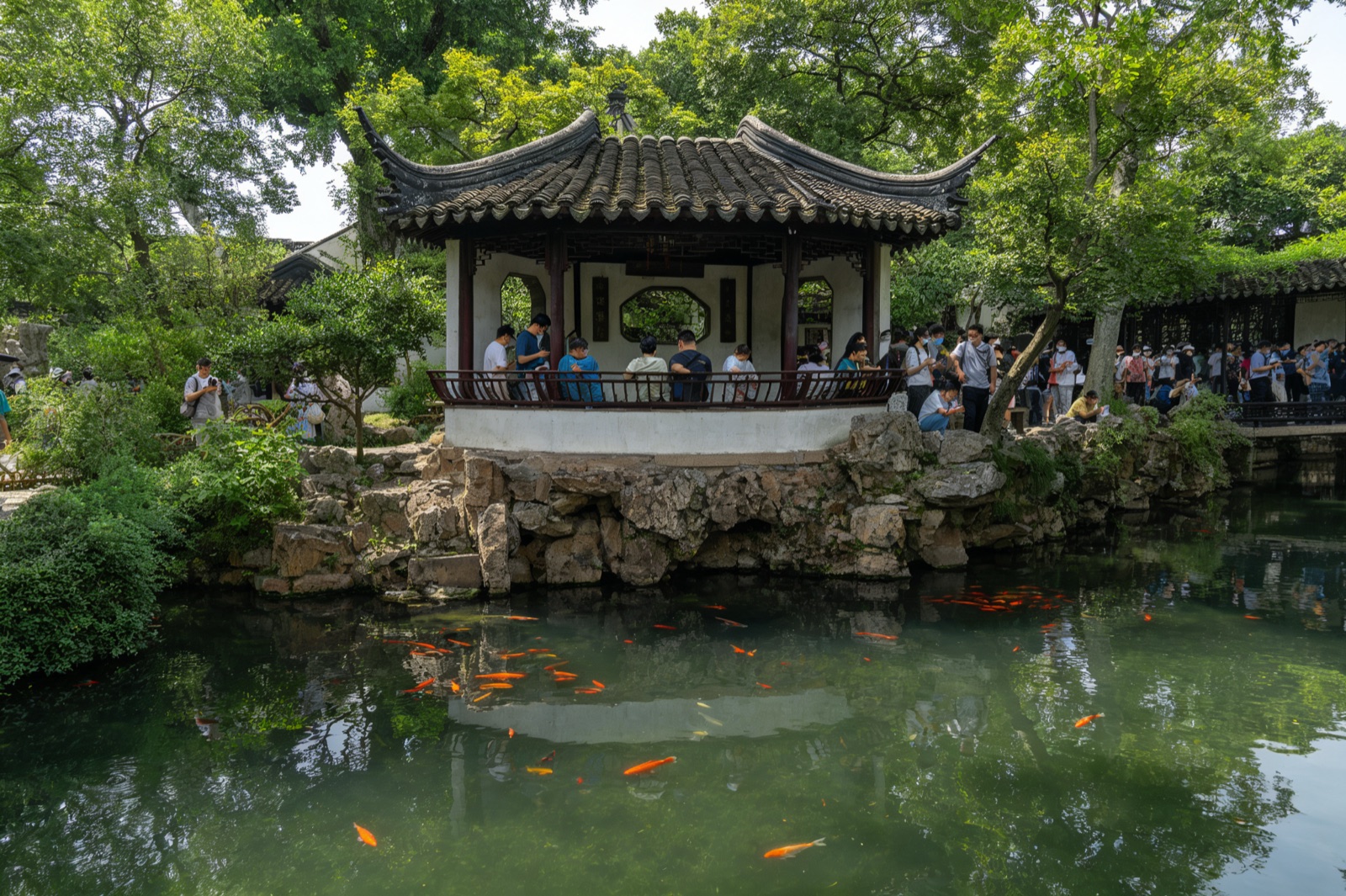
Fish-Watching Spot is located at the eastern end of the double corridor — a square waterside pavilion facing the pool, situated opposite Mianshui Veranda across the water. This is the best location in the scenic area for watching fish; the fish in the pool can be counted, and the spot has been a place of poetic inspiration for scholars and literati since the Song Dynasty. The pavilion's name derives from a famous passage in Zhuangzi — Autumn Waters: "The minnows swim out leisurely — this is the joy of fish," reflecting the state of mind of the garden's creator Su Shunqin after his demotion — finding solace in mountains and waters, transcending worldly concerns. Fish-Watching Spot and the latticed windows of the corridor create a delightful interplay; watching fish through the 108 windows of different patterns, each frame becomes a natural picture — a unique viewing experience among Suzhou's classical gardens.

3. Canglang Pavilion

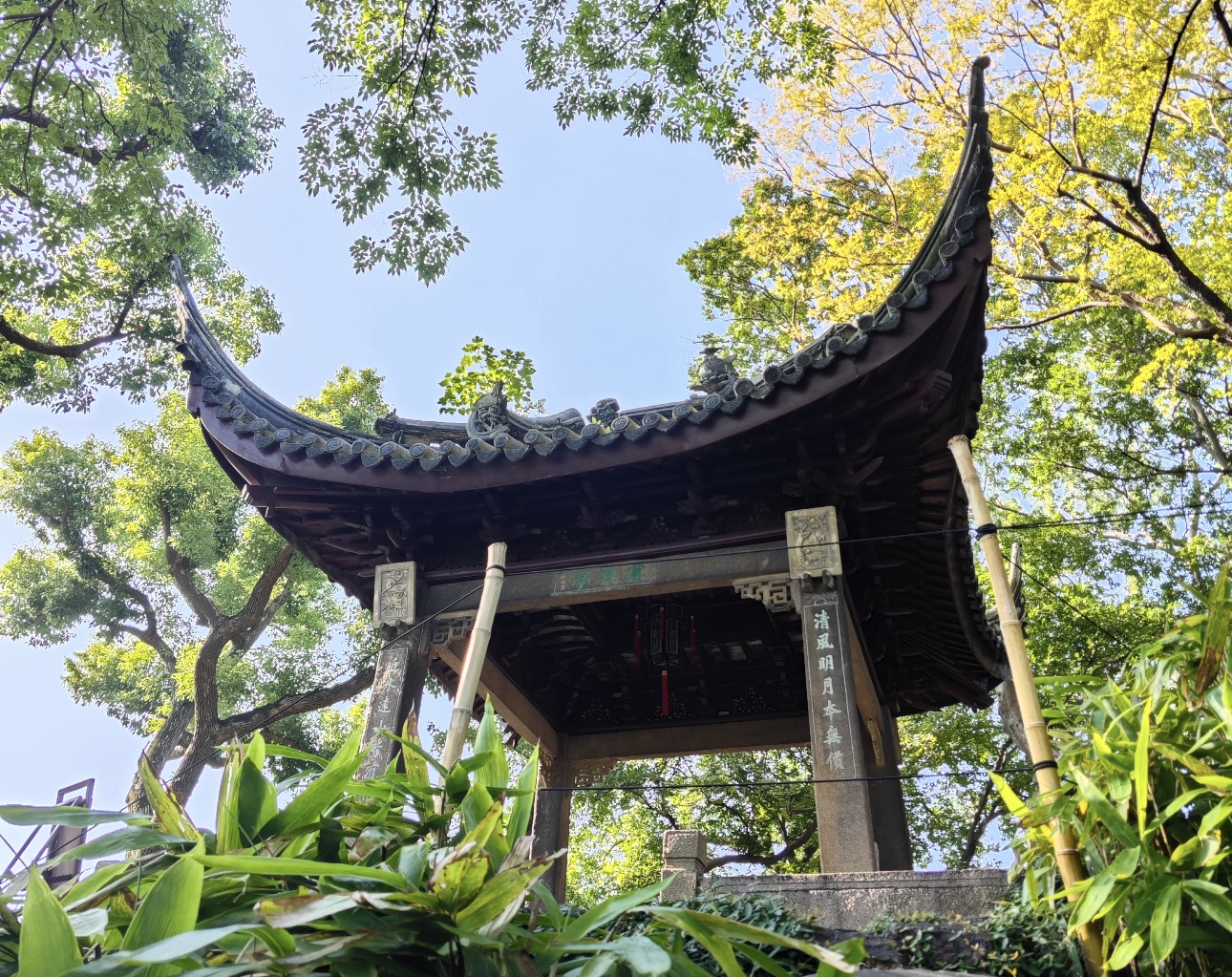
Canglang Pavilion is the core structure of the scenic area, perched atop an earthen hill. It is a square stone-pillared pavilion with soaring eaves and upturned corners, representing the highest point in the garden. The pavilion's name derives from the ancient elegy Encountering the Song of the Chu — The Fisherman: "When the water of Canglang is clear, I can wash my tassels; when the water of Canglang is turbid, I can wash my feet," expressing the scholar-official sentiment of its creator — "When successful, benefit the world; when frustrated, cultivate oneself." The pavilion's pillars bear a couplet jointly composed by Ouyang Xiu and Su Shunqin: "Fresh breeze and bright moon have no price; near water and distant hills hold feeling" — the first line from Ouyang Xiu's poem about this garden, the second by Su Shunqin himself, hailed as the finest couplet in Chinese garden history. Ascending the pavilion and looking in every direction, one takes in the full view — the artificial hill and emerald bamboos within, the encircling green water without — making this the optimal vantage point for comprehending the garden's overall composition.

4. Mingdao Hall

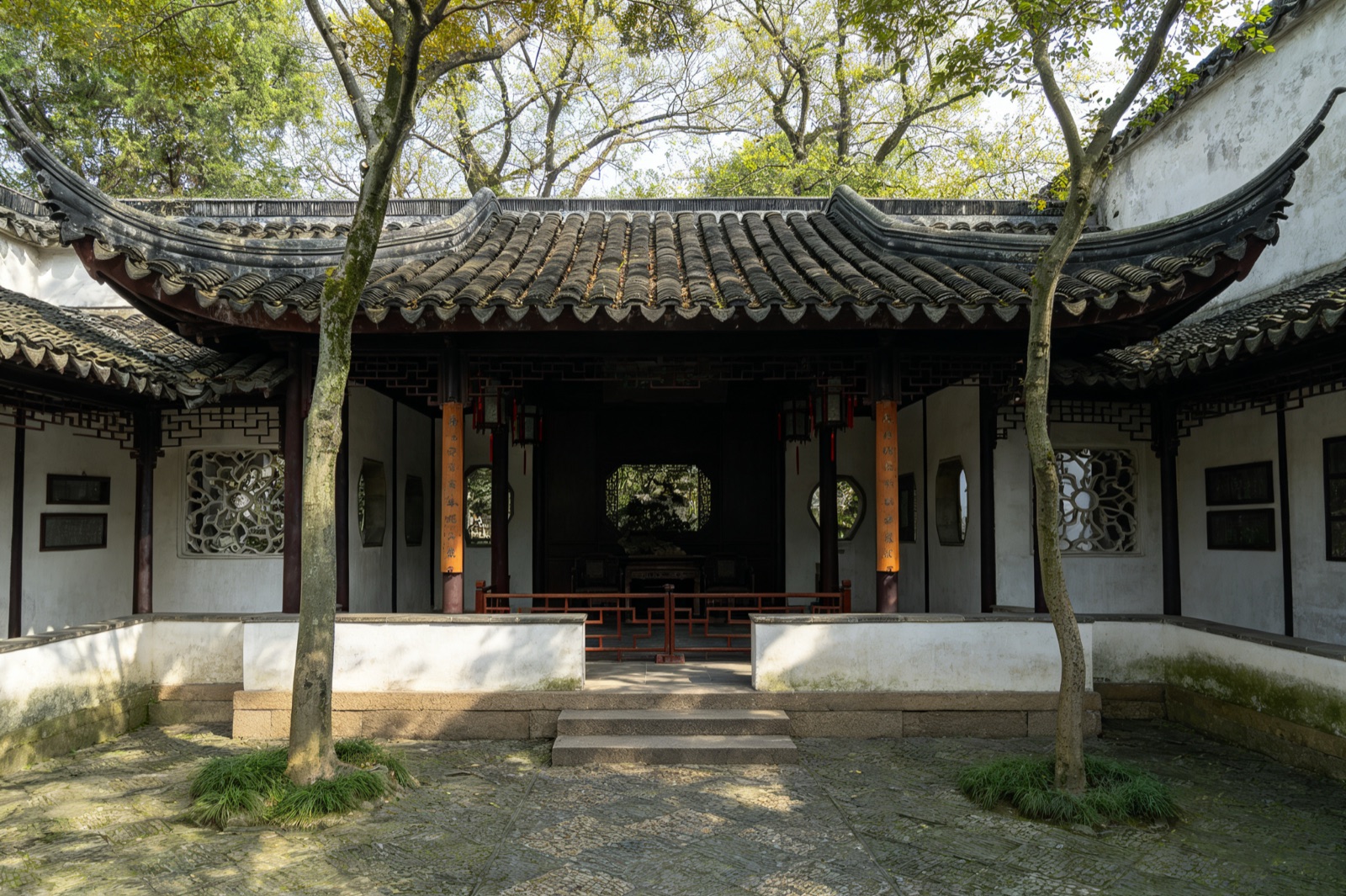
Mingdao Hall is located at the northern foot of the earthen hill and serves as the principal building of the scenic area. It spans three bays with a dignified and substantial presence. In the Ming Dynasty it served as a venue for scholarly lectures, and was later named "Mingdao Hall." "Mingdao" draws on the phrase "to illuminate bright virtue" from the Confucian classic The Great Learning, reflecting the ideal of conveying moral principle through literature and expressing aspiration through garden design. The hall displays rubbings of three Song Dynasty stone tablet maps: the Astronomic Picture, the Geographic Picture, and the Map of Pingjiang Prefecture — the most precious Song Dynasty stone-engraved documents preserved in Suzhou. The Astronomic Picture records 1,434 stars and is among the world's oldest extant star-chart stone engravings. Mingdao Hall's architectural scale is grand, with a terrace in front overlooking the garden's hill and pool — the central venue for cultural lectures and traditional ceremonial activities in the scenic area.

5. Mountain-Viewing Tower

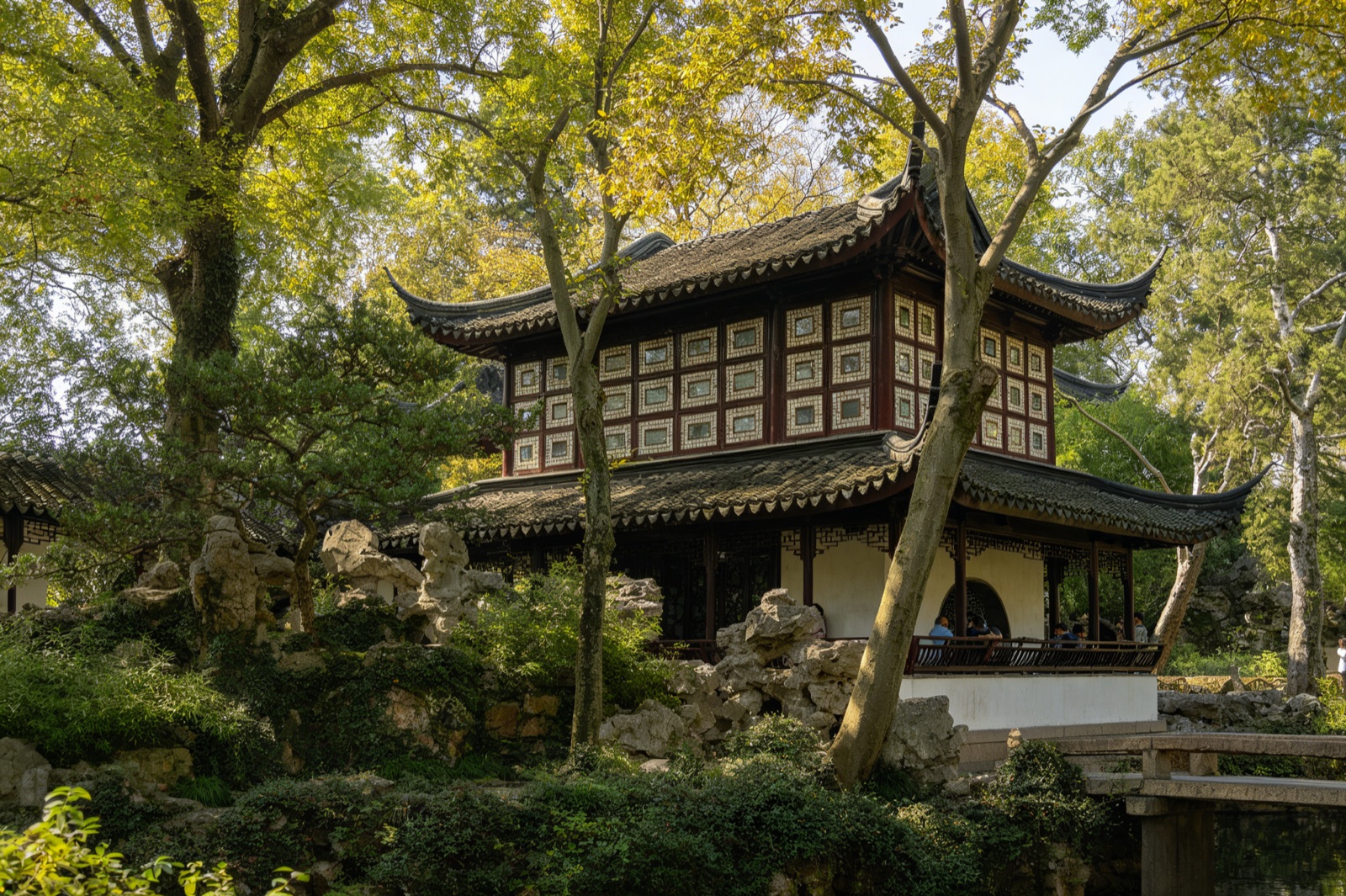
Mountain-Viewing Tower is located at the southern end of the scenic area. It is a two-story semi-corridor style ancient structure with soaring eaves and upturned corners, representing the highest point in the southern section of the garden. The tower's name conveys the spirit of "open the door and see the mountains." Ascending the tower, one can look far to the hills south of Suzhou city and survey the artificial rock formations within the garden up close — bringing distant mountains and near mountains into view together, exemplifying the superb application of "borrowed scenery" in Chinese garden design. The area around Mountain-Viewing Tower is shaded by deep woods with dancing bamboo shadows, constituting the most secluded and tranquil spot in the scenic area. The architectural form integrates three elements — tower, corridor, and pavilion — in an L-shaped plan that creates spatial resonance with the double corridor in the eastern section, demonstrating the free and fluid design style of Song Dynasty garden architecture.

6. Cuilinglong

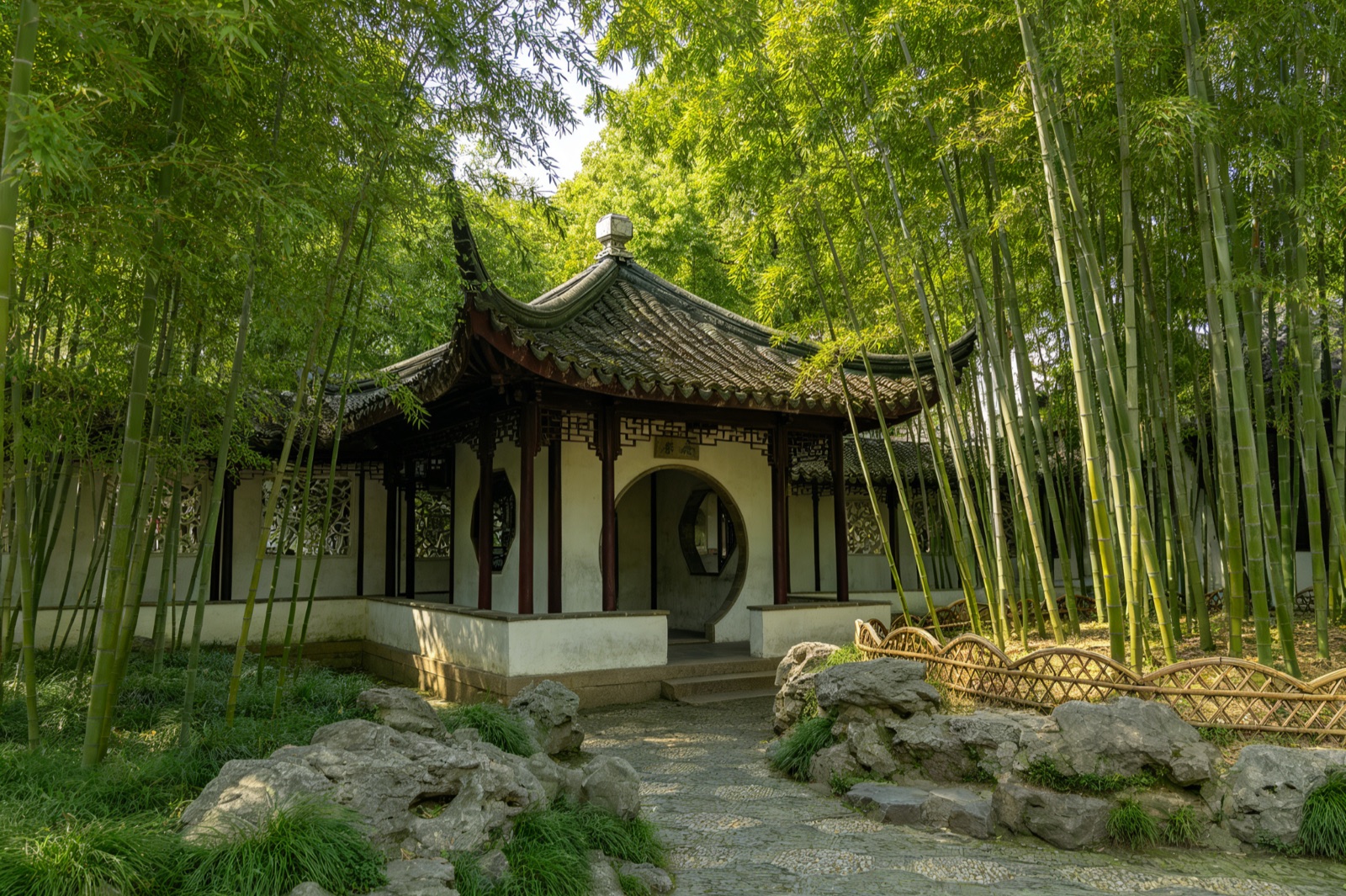
Cuilinglong is located southeast of the earthen hill. It consists of three interconnected reception halls surrounded on all sides by emerald bamboos. When the wind passes through, the bamboo leaves rustle like strumming zithers, hence the name "Cuilinglong" — meaning something like "emerald delicacy," evoking the shimmer of light through green bamboo. The building's name derives from a poem by the late Tang poet Fang Gan: "Rolling up the curtain, swallows fly in; unfolding the fan, I sit in linglong," describing the scene of bamboo shadows swaying in a setting of delicate beauty. This is the best location in the scenic area for appreciating bamboos — varieties include qinsizhu, fengweizhu, and xiangfeizhu, among others, all evergreen throughout the four seasons. The interior is simply furnished with Ming-style pieces placed informally, making it an ideal venue for literati gatherings, tea tasting, and refined conversation. Cuilinglong and Mountain-Viewing Tower are connected by a bamboo-lined path; the winding trail leads to tranquility, constituting the garden's most literary passage and fully embodying the Northern Song literati ideal: "Better to eat without meat than to dwell without bamboo."

7. Hall of Five Hundred Illustrious Worthies

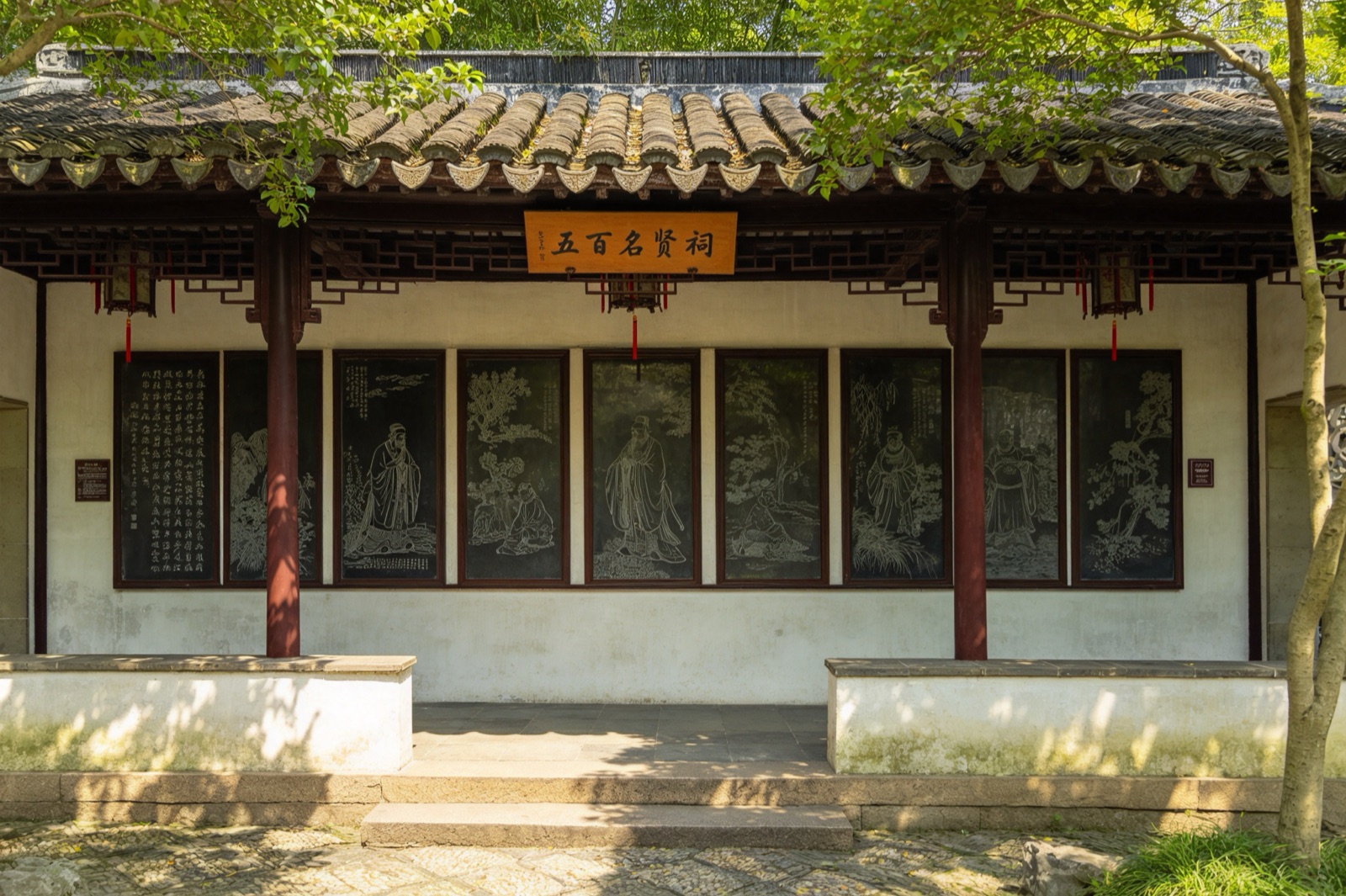
Hall of Five Hundred Illustrious Worthies is located in the western section of the scenic area. It is a structure with a hard-mountain roof style. The east and west walls inside the hall are inlaid with 594 stone engraved portraits of historical figures, initiated in 1827 during the Daoguang Emperor's reign by E Tengyi, Prefect of Suzhou. The portraits encompass 594 worthy local figures and eminent officials from Suzhou's history spanning the Spring and Autumn Period through the Ming and Qing Dynasties, including Sun Wu, Wu Zixu, Lu Xun, Zhang Xu, Fan Zhongyan, Wen Tianxiang, Tang Yin, and many others. Each portrait is accompanied by a four-line encomium, calligraphied and engraved by renowned masters. The stone portraits are carved in linear engraving technique — flowing robe patterns, distinct expressions — possessing both historical and artistic value, hailed as the portrait gallery of Suzhou's historical cultural luminaries. The hall elevates the garden from scenery appreciation to worthy veneration, embodying the spiritual core of Suzhou's literary tradition: gaze upon the virtuous and think of emulating them.

8. Imperial Stele Pavilion

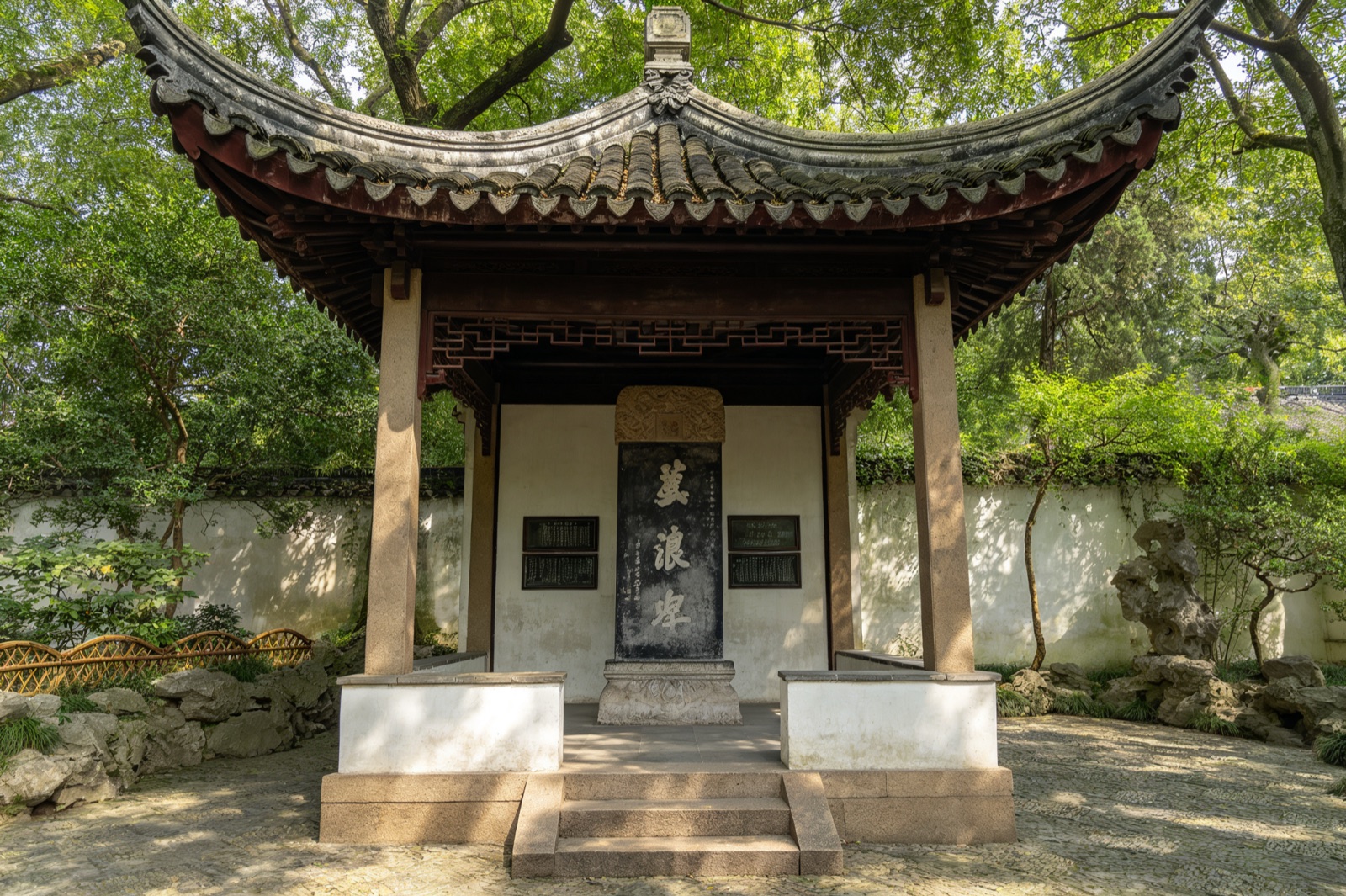
Imperial Stele Pavilion is located west of Mingdao Hall. It is a square stele pavilion housing multiple imperial stone inscriptions from the Qing Dynasty, recording the poems and prose composed by Emperors Kangxi and Qianlong when they visited Suzhou during their Southern Tours and lodged at Canglang Pavilion. Emperor Qianlong made six Southern Tours, visiting Canglang Pavilion each time and leaving behind his Record of Canglang Pavilion and several inscribed poems, praising it as "the finest garden in the Wu region." The stele inscriptions feature dignified and elegant calligraphy, representing important physical material for the study of Qing court calligraphy. The area around Imperial Stele Pavilion is densely vegetated with towering ancient trees, creating a spatial rhythm of "one open, one enclosed" with the terrace before Mingdao Hall — embodying the layout wisdom of Chinese gardens: density and sparsity alternating, tension and relaxation calibrated. This location also serves as a key node for understanding the historical evolution of Canglang Pavilion from the Song through the Qing Dynasty.

9. Lotus Flower Waterside Pavilion

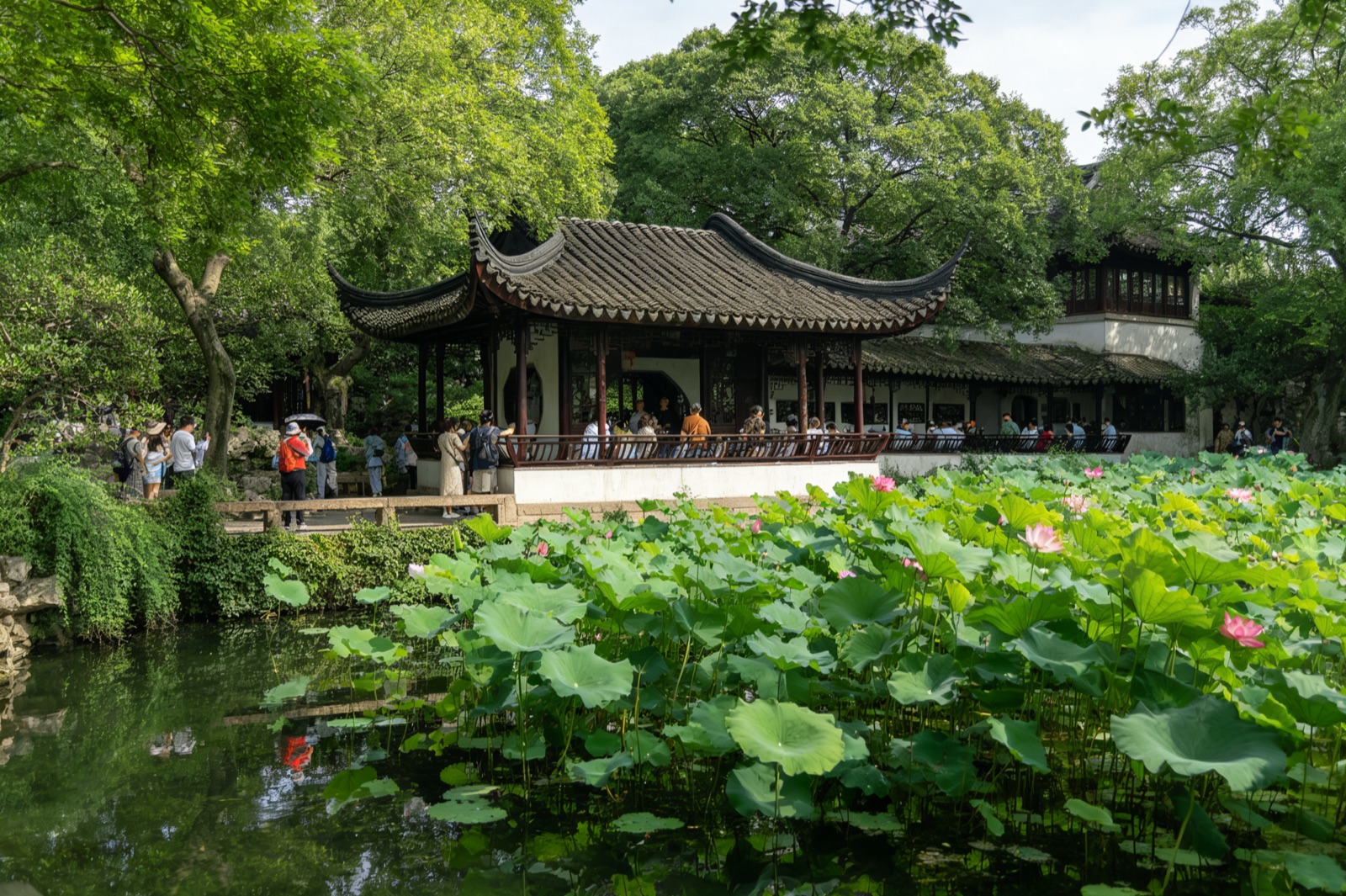
Lotus Flower Waterside Pavilion is located in the southwestern section of the scenic area. It is a waterside structure with a hip-and-gable roof, named for the lotus flowers planted on all four sides — when summer arrives and the lotuses bloom in profusion, their delicate fragrance drifts far on the breeze. This is the optimal viewing point in the scenic area during summer, echoing across the water to the artificial hill on the opposite shore — lotus flowers, emerald water, stacked stones, and ancient pavilion compose a complete Song-style landscape painting. The interior is simply and elegantly furnished with tea seats where visitors may rest and sip tea, gazing through the latticed windows at the encircling green water beyond the double corridor. Lotus Flower Waterside Pavilion embodies the Chinese garden design philosophy that every season has its scenery — emerald bamboos in spring, lotuses in summer, osmanthus fragrance in autumn, and snow in winter — introducing the temporal dimension into spatial design and transforming the scenic area into a living scroll painting through which one can stroll.

Practical info Opening hours · Ticket · Getting there
Opening hours
  • March 1 – October 31: 07:30–17:30 (ticket sales and entry stop at 17:00)
  • November 1 – February 28: 07:30–17:00 (ticket sales and entry stop at 16:30)
Ticket
  • Adult ticket: CNY 20 per person
  • Discount ticket: CNY 10 per person (students, seniors aged 60-69 with valid ID)
  • Free admission: children under 6 or under 1.4m, seniors aged 70+, active servicemen, and people with disabilities (valid ID required)
  • Note: Prices are subject to on-site announcement
Getting there
  • Metro: Take Metro Line 3 or Line 4 to Canglangting Station, then walk about 5–8 minutes
  • Bus: Take tourist lines 2, 4, or 5, or bus routes 1, 5, 27, 30, 47, 101, 102, 103, 218, 309, or 932 to Gongren Wenhua Gong (Workers' Cultural Palace) or Canglangting stops
  • Driving: Navigate to “Canglang Pavilion Scenic Area.” Public parking is available nearby, but spaces are limited on holidays; public transport is recommended
  • Taxi/ride-hailing: Set destination to “No. 3 Canglangting Street” or “Canglang Pavilion Scenic Area”

Inside Canglang Pavilion Scenic Area / Surging Wave Pavilion

9 stops, in walking order — read top to bottom, no clicking needed.

1 Mianshui Pavilion (Water-Facing Pavilion) of 9

Mianshui Pavilion (Water-Facing Pavilion)

面水轩

Mianshui Pavilion sits just north of the garden entrance and serves as the first architectural highlight visitors encounter. Facing the water on its northern side, it spans three bays with a stone terrace projecting into the pond, making it the premier spot for viewing the outer Fengxi stream and borrowed scenery. The name "Mianshui" aptly describes its defining feature of facing the water. The structure uses a flush gable roof with a low eave line, maintaining an intimate connection with the water. It stands as the garden's overture, embodying Canglang Pavilion's celebrated concept of water encircling the garden before one even enters.

On-site narration · read it where you stand
Mianshui Veranda

Friends, we've arrived at the Mianshui Veranda — the first place in the garden where you'll want to stop and take in the view. The veranda sits in the northwestern corner of the scenic area. It's a square waterside pavilion with water on three sides and the double corridor connecting it from the rear. Have you noticed how large and plentiful the windows are here? They're designed to "borrow" the water scenery outside the garden entirely — look through those windows, and the expanse of green water out there is not actually the garden's own pond. It's a river flowing outside the walls! This is what makes Canglang Pavilion so remarkable: in other gardens, you only see water once you're inside. Here, the water greets you before you've even entered.

The name "Mianshui" simply means "the veranda that faces the water." The word "mianshui" comes from a line by the Tang Dynasty poet Du Fu, describing a view of shimmering water and clear skies — luminous, calm, and far-reaching. Sitting here, you have a glittering pool ahead of you and slender bamboos behind, their leaves whispering in the breeze. There's something almost magical about it — as if you're half inside the garden and half floating on the water.

Look up at the columns inside the veranda — there's a couplet hanging there: "Fresh breeze and bright moon have no price; near water and distant hills hold feeling." This couplet has quite a story. The first line comes from a poem about Canglang Pavilion by Ouyang Xiu, the leading literary figure of the Northern Song Dynasty. The second line was written by the garden's creator, Su Shunqin. Ouyang Xiu was thirty-two years older than Su Shunqin, yet the two men were close friends across the age gap. After Su Shunqin was demoted and sent to Suzhou, Ouyang Xiu wrote him a poem in solidarity — and that first line came from it. This couplet has since been called "the finest couplet in Chinese garden history." You're seeing it in person today.

Photography tip: the large windows of the Mianshui Veranda make ideal natural frames. Sit by a window and compose your shot to include the green water outside and the willows on the far bank — the result looks like a mounted Song Dynasty painting. The best time to shoot is between 8 and 10 in the morning, when the sun slants in from the east and the water's reflection is soft and layered.

The Mianshui Veranda is also the starting point of the double corridor. Turn around and look — that winding gallery, with the garden's hill on one side and the outer river on the other, is the famous double corridor of Canglang Pavilion. It stretches about 50 meters in length, with 108 lattice windows cut into the wall — every single one a different pattern. We'll walk it slowly and enjoy each one as we go.

Guanyu Spot (Fish-Watching Spot)

观鱼处

Guanyu Spot lies east of Mianshui Pavilion, consisting of a stone terrace and a small viewing area at the water's edge. The open water teems with koi, evoking the ancient tale of Zhuangzi watching fish at Hao River, reflecting the garden owner's philosophical pursuit of transcendence. The terrace is built with Lake Tai stones arranged in varied heights, with weeping willows and sweet flag planted along the shore, their reflections enhancing the serene atmosphere. Visitors gazing at the leisurely koi can share the Song literati's spiritual resonance with "the joy of fish," making this one of the most philosophically rich viewing spots in the garden.

On-site narration · read it where you stand
Fish-Watching Spot

Friends, we've been walking east along the double corridor, and now we've arrived at the Fish-Watching Spot. This small square pavilion sits at the eastern end of the corridor, right at the edge of the water, looking back across the pond toward the Mianshui Veranda we just left. Peer into the pool — can you spot the red and golden fish gliding around down there? This is the best place in the entire garden to watch the fish, and ever since the Song Dynasty, coming here to watch and feed them has been one of the favorite pastimes of scholars and literati.

The name "Fish-Watching Spot" carries a deep philosophical reference. It comes from a famous debate in the Zhuangzi, the classic of Daoist philosophy: Zhuangzi and his friend Huizi were once walking along a bridge over the Hao River when Zhuangzi said, "Look at those minnows darting freely — that is the joy of fish!" Huizi shot back, "You are not a fish, so how could you know the joy of fish?" Zhuangzi replied, "You are not me, so how could you know that I don't know the joy of fish?" This exchange became one of the most celebrated philosophical debates in Chinese intellectual history, asking whether a human being can ever truly share in the experience of another living creature.

After Su Shunqin was demoted and arrived in Suzhou, he was downcast and spent long hours sitting here in thought. Watching those fish swim freely below, without any need for rank or political struggle, he couldn't help wondering: are they more content than those of us trapped in officialdom, swept along by forces beyond our control? So the name "Fish-Watching Spot" is about more than fish — it was the garden's creator asking himself: what kind of life do I actually want to live?

Here's a fun photography trick: shoot through one of the nearby lattice windows to frame the fish below. The double corridor wall has 108 windows, each a natural picture frame. Press your camera lens up to the lattice and focus on the fish in the pool — the result looks like a scene cut from a Song Dynasty painting.

Photography tip: pick a window with a simpler pattern — a square or circular design works well. Press your lens against the lattice, focus on the fish, and you'll get a "window-within-a-world" effect that perfectly captures the Chinese garden aesthetic. If you have some fish food or breadcrumbs, toss a little onto the water — the fish will swarm to the surface, and that's your moment to capture a great shot.

Just around the corner from the Fish-Watching Spot, the double corridor bends inward. Follow it and we'll reach the heart of the garden — the Canglang Pavilion itself, perched on top of the earthen hill.

Canglang Pavilion

沧浪亭

Canglang Pavilion is the centerpiece of the entire garden, perched atop a stone-and-earth hill at the center, exemplifying the rare Suzhou layout of "water encircling the garden with the hill as its core." The square pavilion features a four-hipped roof with upturned eaves, radiating classical elegance. Its columns bear the famous couplet by late-Qing scholar Yu Yue: "The refreshing breeze and bright moon are beyond price; near waters and distant hills both stir the heart." The name derives from the Chu Ci verse about the Canglang waters, symbolizing the owner's aspiration to retire from worldly affairs and preserve his integrity. From within, visitors gaze south at the hill and ancient trees, and north at the pond beyond the walls—the zenith of the garden's borrowing-scenery philosophy.

On-site narration · read it where you stand
Canglang Pavilion

Friends, we're going to climb a short flight of stone steps now to reach the most important stop of the day — the Canglang Pavilion itself! Look up ahead: that square stone-pillared pavilion with its soaring eaves and upturned corners, standing at the very top of the earthen hill — that is the soul of the entire garden.

Let's start with why this pavilion matters so much. It was personally sited, designed, and named by the garden's creator, Su Shunqin, during the Northern Song Dynasty, nearly 980 years ago. Do you know who Su Shunqin was? He was a celebrated poet and official of the Northern Song, a close friend of Fan Zhongyan, and a supporter of the Qingli Reforms. In 1045, because he backed Fan Zhongyan's reform movement, he was impeached by conservative opponents, stripped of his post, and sent into exile in Suzhou.

After arriving in Suzhou, Su Shunqin bought the ruins of an old estate once owned by a prince of the Wu-Yue kingdom — paying just forty thousand copper coins. He transformed the site into a garden, piled up an earthen hill, built this pavilion at the summit, and named it "Canglang Pavilion." That name changed the course of his entire later life.

"Canglang" comes from the ancient elegy Encountering the Song of the Chu — The Fisherman, written after the poet Qu Yuan was sent into exile. In it, a fisherman sings: "When the waters of Canglang run clear, I wash my tassels in them; when they run turbid, I wash my feet." The meaning: when times are good, a man of principle serves his country; when times are bad, he withdraws and keeps himself upright. By choosing this name, Su Shunqin was telling himself: I may no longer be able to change the world of politics, but I can build this garden and live the life I choose.

The pavilion's columns bear the most celebrated couplet in Chinese garden history: "Fresh breeze and bright moon have no price; near water and distant hills hold feeling." The first line comes from Ouyang Xiu's poem about this very garden; the second is Su Shunqin's own. Ouyang Xiu was thirty-two years Su Shunqin's senior, yet the two men were devoted friends across the age gap. When Su Shunqin was demoted to Suzhou, Ouyang Xiu wrote him a long poem in support — and that first line came from it. The couplet forever inscribes their friendship on this pavilion.

For photography, this pavilion offers the best panoramic view of the whole garden. The Canglang Pavilion stands at the garden's highest point. From here, looking in every direction: south are the earthen hill and bamboos; north, the pool and double corridor; east, the Mountain-Viewing Tower; west, Mingdao Hall. Take a wide-angle shot now and you can capture the garden's hills, water, and architecture all in one frame. The best angle is from the northwest corner of the pavilion, where you can get the earthen hill, the pool, and the lattice windows of the double corridor all at once.

Take a few minutes to rest here and let the atmosphere sink in — to stand where that demoted Song Dynasty poet stood, nearly a thousand years ago, and looked out at the world he had made for himself. Then we'll head back down and visit Mingdao Hall, where Ming Dynasty scholars once gathered to lecture and debate.

Mingdao Hall (Hall of Understanding the Way)

明道堂

Mingdao Hall stands south of Canglang Pavilion and is the largest hall in the garden, spanning three bays with a deep plan and a broad front terrace. The name "Mingdao" means "to understand the Way of the former sages," dating back to Su Shunqin's original Song-era garden and preserved through subsequent rebuilds. The interior exposes its timber frame with large, unpainted members, reflecting the austere architectural style of the Song dynasty. The spacious forecourt is planted with ancient magnolias and bamboo, creating an elegant ambiance. This was the venue where the owner gathered with literati for scholarly discourse and poetic exchange, embodying the intellectual spirit of Canglang Pavilion as a Song literati garden.

On-site narration · read it where you stand
Mingdao Hall

Friends, we've come down from the Canglang Pavilion and now, walking north along the stone path, we arrive at the garden's largest hall — Mingdao Hall. This is the principal building of the scenic area, spanning three bays, seated at the northern foot of the earthen hill, with a dignified and substantial presence that signals it's a place of some significance.

The name "Mingdao Hall" carries real weight. "Mingdao" draws on a phrase from the Confucian classic The Great Learning: "to illuminate bright virtue" — meaning to make clear what is morally excellent and to spread it to others, and by extension, to understand and embody the Way. In the Ming Dynasty, this hall was used as a venue for scholarly lectures. Imagine: four or five hundred years ago, a gathering of Suzhou's most learned men seated inside this hall, debating the Confucian classics and discussing how to govern the realm. It must have been quite a scene.

The most precious treasures in Mingdao Hall are the rubbings of three Song Dynasty stone maps hanging on the walls: the Astronomic Picture, the Geographic Picture, and the Map of Pingjiang Prefecture. The original stones are now kept at the Suzhou Stone Engraving Museum, but these rubbings are faithful to the originals in every detail. The Astronomic Picture records the positions of 1,434 stars — it is one of the oldest surviving star-chart stone engravings in the world. The Geographic Picture maps China's territory as it stood during the Southern Song Dynasty. The Map of Pingjiang Prefecture shows the layout of Suzhou city in the Southern Song Dynasty and is one of the oldest surviving city plans in China. Any single one of these three rubbings would be a nationally significant cultural artifact on its own.

Look closely at the Map of Pingjiang Prefecture — streets, rivers, bridges, temples, government offices, all precisely rendered, every waterway shown with its connections. This map was engraved in 1229, during the Southern Song Dynasty, nearly 800 years ago, and yet the basic urban framework it depicts can still be matched to the layout of Suzhou's old city today. Can you find Canglang Pavilion on the map?

Mingdao Hall has a large terrace in front — a perfect spot for photography. Stand on the terrace and look south: the earthen hill, the Canglang Pavilion, and the bamboos unfold in receding layers — this is the classical Chinese garden principle of layered depth and shifting scenery at every step. Photograph the view from here, framing the earthen hill and the pavilion together. The best time is between 3 and 5 in the afternoon, when the sun comes in from the west and the hill's shadow falls across the pool — it looks like an ink-wash painting.

Just to the west of Mingdao Hall is the Imperial Stele Pavilion. Let's head over and see what the Qing Dynasty emperors had to say about Canglang Pavilion.

Kanshan Tower (Mountain-Viewing Tower)

看山楼

Kanshan Tower stands on a stone terrace atop the hill at the garden's southern end, a two-story pavilion with a flush-gable roof, marking the highest point in Canglang Pavilion. Its name "Kanshan" means "viewing mountains," as ascending it reveals vistas of Tianping, Lingyan, and Lion hills to the southwest. The tower masterfully employs the "distant borrowing" technique, drawing mountains beyond the garden walls into the visual composition, creating a sense of infinite space within finite bounds. The lower level is built on a yellow-stone base, while the upper timber story spreads its eaves gracefully. From the windows, visitors see bamboo and banana leaves nearby and blue mountain silhouettes afar, capturing the idyllic serenity celebrated by Song literati.

On-site narration · read it where you stand
Mountain-Viewing Tower

Friends, from Mingdao Hall we head south and around the eastern side of the earthen hill, arriving now at the southern end of the scenic area — the Mountain-Viewing Tower. This two-story semi-corridor structure, with its soaring eaves and upturned corners, is the highest point in the southern section of the garden.

The name "Mountain-Viewing Tower" means exactly what it says — open the door and you see the mountains. Stand below the tower and look south — today you see layer upon layer of buildings and trees. In the days when this tower was built, all that was open country, and from up here you could look directly out to the hills south of Suzhou. That's why it was called the Mountain-Viewing Tower. The distant mountains are harder to see now, but the architecture itself is well worth studying.

The tower's design is genuinely unusual — it isn't quite a tower, isn't quite a corridor, and isn't quite a pavilion, but a fluid integration of all three, laid out in an L-shape. This kind of building is relatively rare among Suzhou's classical gardens, and it exemplifies the freewheeling, naturally spirited design aesthetic of Song Dynasty garden architecture. Look up at the eaves above you — see how the corners sweep upward like the wings of a bird? This "flying eaves" style is one of the most iconic features of Chinese traditional architecture. It helps shed rainwater, yes, but it's also designed to give the building a visual sense of lightness, as though it might take flight.

The whole area around the Mountain-Viewing Tower is the garden's most secluded spot — deep shade, ancient trees, bamboo shadows playing on the whitewashed walls, a soft rustle of leaves in the wind. Shen Fu, in his memoir Six Records of a Floating Life, wrote of Canglang Pavilion: "The pavilion stands at the hilltop, the setting supremely tranquil" — and he was describing exactly this part of the garden. Shen Fu and his wife Chen Yun are perhaps the most romantic visitors in Canglang Pavilion's history — they spent their days here reading, discussing history, appreciating the moonlight and the flowers, turning everyday life into poetry.

Photography tip: just to the east of the Mountain-Viewing Tower there's a small courtyard with several century-old trees. Go there and frame a shot that combines the trees' textured bark with the tower's flying eaves — it gives a wonderful sense of age. The best time is between 4 and 5 in the afternoon, when the sun comes in at a low angle from the west and the eaves' shadow falls across the white wall — a light-and-shadow effect straight out of an ink-wash painting.

A few steps east from the Mountain-Viewing Tower and we arrive at Cuilinglong — the part of the garden most densely planted with bamboo. Let's go take a look.

Cui Linglong (Emerald Chamber)

翠玲珑

Cui Linglong is a small study tucked in a bamboo grove west of Kanshan Tower. Spanning merely one and a half bays, it is surrounded by tall bamboo on three sides, with sunlight filtering through the leaves to cast dappled shadows, creating an atmosphere of profound seclusion. The poetic name combines "cui" (emerald green bamboo) and "linglong" (exquisite and translucent). This was Su Shunqin's reading chamber, where he depicted scenes of studying amid bamboo in his "Record of Canglang Pavilion." A winding path before the chamber is dotted with Lake Tai stones, their forms interplaying with bamboo shadows. Removed from the main tourist route, the spot is exceptionally tranquil, offering an ideal place to experience the reclusive life of a Song literati and the garden's technique of suggesting grandeur through intimacy.

On-site narration · read it where you stand
Cuilinglong

Friends, we walk east from the Mountain-Viewing Tower, pass through a small bamboo grove, and arrive at Cuilinglong. This is a set of three interconnected reception halls, surrounded on all sides by tall bamboos. When the wind moves through, the leaves rustle like someone plucking a zither — which is how the hall got its name. "Cuilinglong" means something like "emerald delicacy" — the shimmer and transparency of light filtering through green bamboo.

The name "Cuilinglong" comes from a poem by the late Tang poet Fang Gan. The original lines read: "Roll up the curtain and swallows fly in; unfold the fan and sit in linglong" — conjuring up a scene of bamboo shadows swaying, dappled light playing, a world of quiet and delicate beauty. Have you noticed that it feels a few degrees cooler as soon as you step into this courtyard? That's entirely the bamboo's doing — those fine, dense leaves filter out most of the sunlight, making it feel like a natural air-conditioned room.

This is the part of the garden most densely planted with bamboo, and the variety is impressive: there's qinsizhu, whose stems are striped with fine lines like zither strings; fengweizhu, whose leaves spread out in fans like a phoenix's tail; and xiangfeizhu, whose canes are marked with purplish-brown spots — legend has it these spots are the tearstains of two imperial consorts who wept for the death of the ancient Emperor Shun, their tears falling on the bamboo and staining it forever. You may know that Chinese scholars have always had a deep affection for bamboo. Su Dongpo once wrote: "Better to eat without meat than to dwell without bamboo." Bamboo represents the scholar's virtues of humble openness, upright integrity, and quiet resilience — which is why you'll find bamboo in almost every Chinese literati garden.

Cuilinglong is a set of three connected reception halls with a beautifully open, airy feel. Go inside and sit — the furnishings are all Ming-Dynasty style: clean lines, minimal ornament, expressing the scholar's ideal of simplicity and elegance. This is the best place in the whole garden to simply sit, read, and drink tea. Try to picture it: in some afternoon four or five hundred years ago, a Suzhou scholar sits here with a scroll in hand, bamboo leaves rustling overhead, the slow drift of tea fragrance — that image still feels entirely worth longing for.

Photography tip: the windows look directly out into the bamboo grove. Press your phone lens up to a window lattice and frame the bamboo through it — you'll get the effect of a bamboo painting mounted in a window. If you have a fan or a book as a prop, sit by the window with it — the literati atmosphere comes through immediately.

From Cuilinglong we head west to the Hall of Five Hundred Illustrious Worthies — the walls inside hold stone portraits of 594 of Suzhou's greatest historical figures. Absolutely worth seeing.

Five Hundred Sages Shrine

五百名贤祠

The Five Hundred Sages Shrine, located in the northwest of Canglang Pavilion, was established in the seventh year of the Daoguang reign (1827) by Tao Zhu, then Governor of Jiangsu. Its walls are inlaid with stone-carved half-length portraits of 594 Suzhou worthies spanning over two thousand years, from Ji Zha of the Spring and Autumn period to Lin Zexu of the Qing dynasty, covering politics, literature, art, and science. Each portrait is accompanied by a name and brief inscription, executed with succinct yet expressive carving. The shrine is not merely a memorial but a stone-carved chronicle of Suzhou's cultural heritage, embodying the city's reputation for producing exceptional talent. The architecture is austere and dignified, with grey brick and tile complementing the solemnity of the portraits.

On-site narration · read it where you stand
Hall of Five Hundred Illustrious Worthies

Friends, heading west from Cuilinglong, we arrive at the most culturally rich spot in the entire scenic area — the Hall of Five Hundred Illustrious Worthies. From the outside the building looks modest, but what's inside is one of a kind anywhere in Suzhou.

Look at the walls — the east and west sides are densely packed with 594 stone engraved portraits! These carvings depict 594 historical figures connected with Suzhou, spanning from the Spring and Autumn Period through the Ming and Qing Dynasties: Sun Wu, who wrote The Art of War; Wu Zixu, who built the ancient walls of Suzhou; Lu Xun, the great general of the Eastern Wu kingdom in the Three Kingdoms era; Zhang Xu, the "Sage of Cursive Script," whose wild calligraphy was legendary; Fan Zhongyan, who wrote those immortal lines about "worrying before the world worries, rejoicing only after the world rejoices"; Wen Tianxiang, the Southern Song national hero; Tang Yin, the brilliant and irreverent painter-poet. In effect, the entire hall of fame of Suzhou's 2,500-year history has been gathered into these four walls.

These stone carvings were commissioned in 1827, during the Daoguang Emperor's reign, by E Tengyi, the Prefect of Suzhou at the time. Each portrait is accompanied by a four-line encomium — a condensed verdict on that person's life and legacy — calligraphied and engraved by renowned masters of the day. Step up close and look — these carved figures are roughly palm-sized, yet the robes flow naturally and every face has its own expression. A case of the large expressed through the small, and the craftsmanship is exceptional.

Among these 594 people, you'll find military commanders, civil officials, poets, painters, scientists, and educators — together they embody Suzhou's character as a city of culture, talent, and intellectual vitality. In earlier generations, Suzhou parents would bring their children here for a walk along the walls and say: "Look — every one of these people came from Suzhou. This is who you should aspire to become."

Photography note: flash photography is not permitted inside the hall, but natural-light shots are fine. Look for portraits of figures you recognize — Fan Zhongyan, Wen Tianxiang, Tang Yin — and photograph those for a keepsake. If you have your passport with you, take a photo at the hall's entrance — proof that you've visited Suzhou's 2,500-year portrait gallery.

Heading north a few steps from the Hall of Five Hundred Illustrious Worthies brings us to the Imperial Stele Pavilion — where we'll see what Qing Dynasty emperors wrote in praise of Canglang Pavilion.

Imperial Stele Pavilion

御碑亭

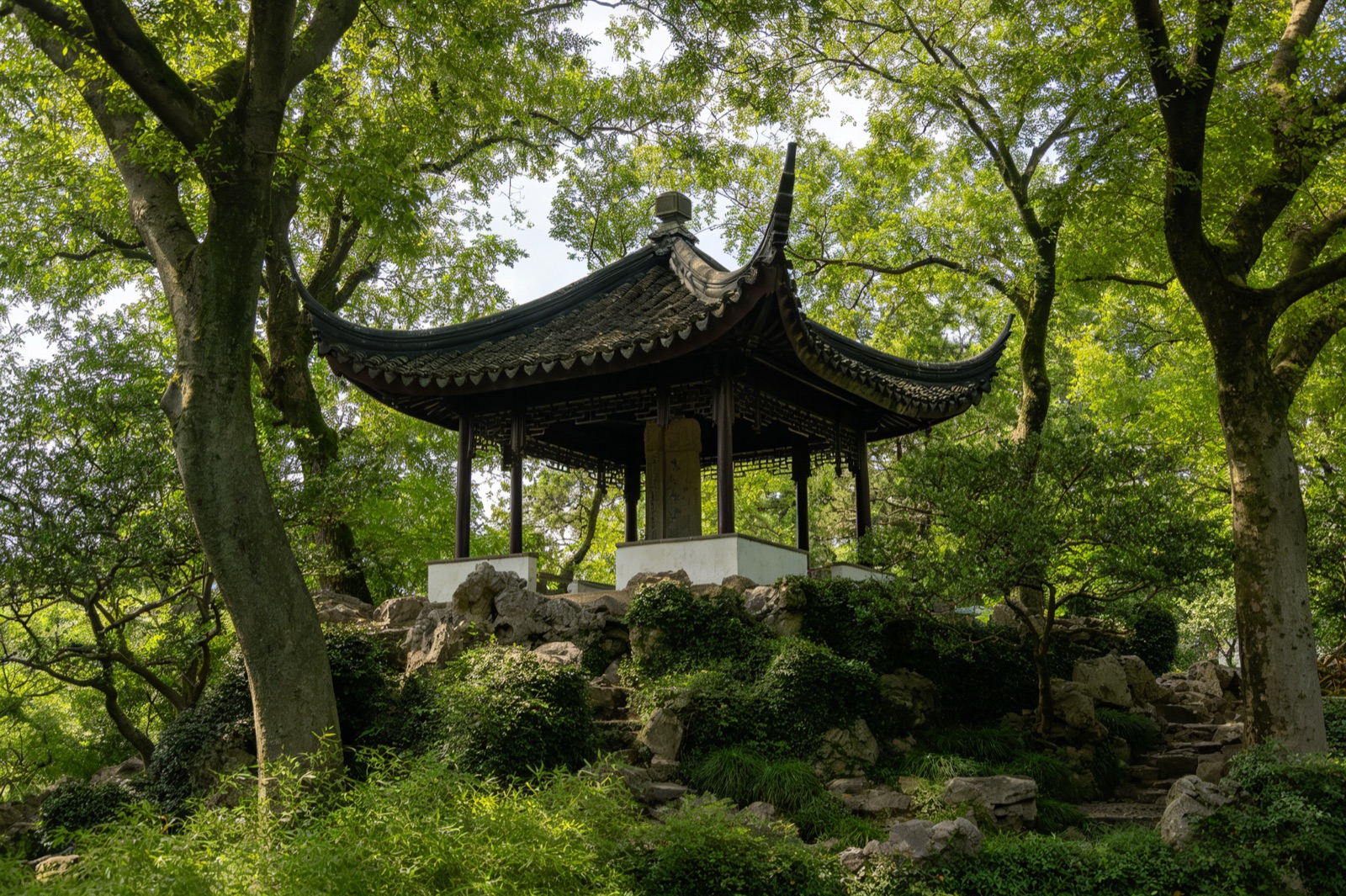
The Imperial Stele Pavilion is located in the west-central area of Canglang Pavilion, a small pavilion built specifically to shelter a stele inscribed by Emperor Kangxi of the Qing dynasty. The stele bears Kangxi's own calligraphy, composed during his southern inspection tour, praising the scenery of Canglang Pavilion and the virtue of Su Shunqin. The stele is carved from bluestone with a dragon-crested top and a bixi (mythical tortoise) base, exhibiting typical Qing imperial stele characteristics. The pavilion is square with a pyramidal roof and four stone columns, open on all sides for viewing the stele. It holds significant historical and cultural value, demonstrating the garden's sustained importance from the Song to the Qing, and represents a rare surviving example of imperial stele within Suzhou gardens.

On-site narration · read it where you stand
Imperial Stele Pavilion

Friends, walking north from the Hall of Five Hundred Illustrious Worthies, we arrive at the Imperial Stele Pavilion. This small square pavilion houses several Qing Dynasty imperial stone inscriptions — essentially, personal endorsements carved in stone by the emperors themselves.

Did you know that two Qing emperors — Kangxi and Qianlong — had a particular fondness for the Jiangnan region, for Suzhou, and especially for Canglang Pavilion? Emperor Kangxi made three Southern Tours and visited Canglang Pavilion each time, leaving behind a number of poems. Emperor Qianlong went even further: six Southern Tours, visiting Canglang Pavilion every single time, and even composing an essay titled Record of Canglang Pavilion in which he declared it "the finest garden in the Wu region" — meaning the best garden in all of Suzhou.

The steles in this pavilion mainly record the poems and prose that Emperors Kangxi and Qianlong composed during their Southern Tours when visiting Canglang Pavilion. Look at this stele — the calligraphy is stately and elegant, with an air of imperial composure. This is the hallmark style of Qing court calligraphy. Emperor Qianlong was famously prolific as a poet — he wrote more than ten thousand poems over his lifetime. The quality was uneven, but by sheer volume he was the most productive poet-emperor in history. Every time he came to Canglang Pavilion, he wrote a poem about it — and each one was eventually carved into a stele and installed here by local officials.

Have you noticed how densely wooded it is around the Imperial Stele Pavilion, with towering old trees overhead — in sharp contrast to the open terrace in front of Mingdao Hall? This is the "spatial rhythm" of Chinese garden design at work. One moment you're standing on a broad terrace gazing out in all directions in front of Mingdao Hall; the next, you're tucked into dense woodland with just a sliver of sky visible above, here at the Imperial Stele Pavilion. This alternation of open and enclosed, expansive and intimate keeps the walk perpetually interesting — you never feel bored.

Photography tip: the light inside the Imperial Stele Pavilion is relatively dim. When shooting the stele inscriptions, nudge your phone's exposure compensation upward so the characters on the stone come out clearly. On a sunny day, between 10 and 11 in the morning, sunlight filters down through the canopy above — photograph the pavilion at that hour and the dappled light falling across the stele surface gives a beautiful effect.

From the Imperial Stele Pavilion we head southwest, and we arrive at the final stop of today's visit — the Lotus Flower Waterside Pavilion. This is the most beautiful corner of the garden in summer. Let's go.

Ouhua Water Pavilion (Lotus Water Pavilion)

藕花水榭

Ouhua Water Pavilion sits at the northern water's edge of Canglang Pavilion, a classical waterside structure half-suspended over the pond. It is built facing the water, with the lower portion supported on stone columns projecting over the surface, and an upper timber structure with a flush-gable roof, open on all sides for panoramic water views. The name "Ouhua" refers to lotus flowers, which were historically planted here in abundance; in midsummer the scene of boundless green lotus leaves and crimson blooms is particularly enchanting. Beyond lotus viewing, the pavilion offers one of the best vantage points for the outer pond and borrowed scenery to the north. Even in autumn and winter, the withered lotus leaves on the water convey a melancholy beauty, embodying the Suzhou garden aesthetic of beauty in all four seasons.

On-site narration · read it where you stand
Lotus Flower Waterside Pavilion

Friends, from the Imperial Stele Pavilion we head southwest through a small bamboo grove, arriving now at the final stop of our tour — the Lotus Flower Waterside Pavilion. This is a waterside building with a hip-and-gable roof, surrounded by water on all sides. In summer, the water surface is blanketed in lotus blooms, their fragrance drifting far on the breeze — that's how the pavilion got its name.

What exactly is a "lotus flower"? In classical Chinese, "ouhua" refers to lotus or water lily blossoms. The Song Dynasty poet Yang Wanli captured the scene perfectly in his famous lines: "Lotus leaves touching the horizon — an endless sweep of green; lotus blooms catching the sun — a red unlike any other." If you're visiting in summer, between June and August, you'll find the water surface here covered in lotus flowers, and that fragrance — light, clean, faintly sweet — is the kind of thing you remember for the rest of your life.

The Lotus Flower Waterside Pavilion has a hip-and-gable roof — look at the roofline and you'll see a distinct ridge dividing it into upper and lower sections. This is the defining feature of the hip-and-gable style, which ranks second in the hierarchy of traditional Chinese roof forms (the highest is the full hip roof, reserved for palaces and imperial halls). This type of roof looks graceful and spread-out, like a great bird poised for takeoff — which is precisely why Chinese traditional architecture uses it so often to give a building a sense of lightness and lift.

The Lotus Flower Waterside Pavilion is the best place in the scenic area to sit down, rest, and have tea. Tea is available inside — when your feet are tired, settle in here with a cup and watch the lotus flowers through the windows, along with their reflections shimmering on the water. You may know that Chinese garden design follows the principle of "scenery for every season" — spring brings fresh bamboo, summer brings lotus flowers, autumn brings the scent of osmanthus, winter brings snowfall. Time itself is built into the garden, so that every season you return, you find a completely different scene waiting for you.

Photography tip: the windows of the Lotus Flower Waterside Pavilion face directly toward the earthen hill and the Canglang Pavilion on the opposite shore. Visit between 2 and 4 in the afternoon — the sun comes in from the west at a slant, the hill's reflection lies across the water, and lotus blooms rise above that reflected shadow. The layering in those photographs is extraordinary. If you have a silk scarf or a fan as a prop, step out onto the pavilion's veranda — the breeze lifting the fabric, lotus flowers framing everything behind you — it looks like you've walked right out of a Song Dynasty painting.

And with that, our tour of the Canglang Pavilion Scenic Area is complete! Today we've walked the double corridor, climbed the earthen hill, admired 108 lattice windows, paid our respects to 594 of Suzhou's greatest historical figures, and finished with tea by the lotus pond. After this full circuit, I hope you understand a little more deeply why this nearly 1,000-year-old Song Dynasty garden has captured the imagination of generation after generation of Chinese scholars and never let go.

One last reminder: the exit is in the northwestern corner — different from the entrance. Once you're outside, if you'd like more of Suzhou's classical gardens, Ke Garden is just a five-minute walk away and can be visited on the same day. Wishing you a wonderful time in Suzhou!

Prefer to be shown around?

A local guide walks these 9 stops with you and answers what the page cannot.

Browse tours ↗