Lion Grove Garden
General Overview
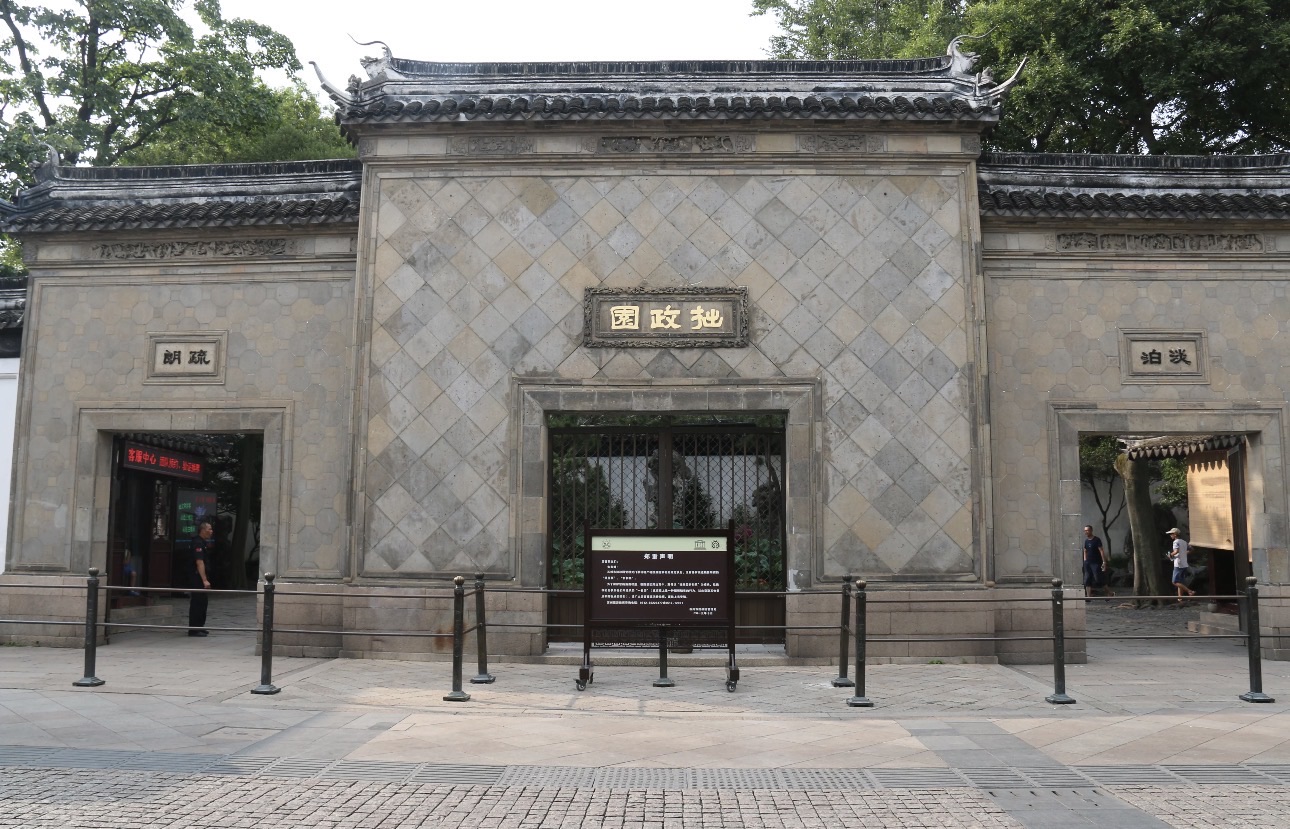
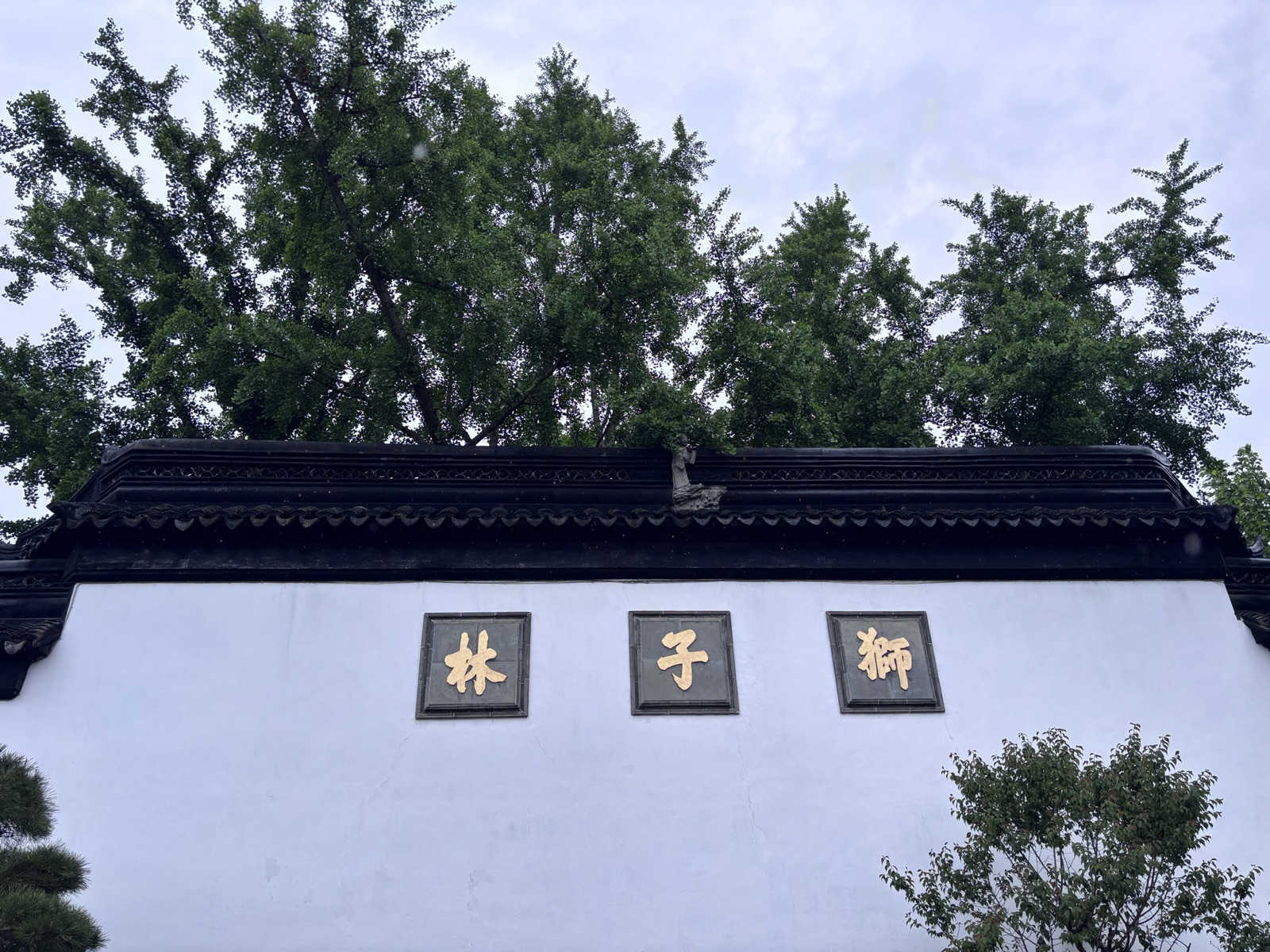
Lion Grove Garden is located in the Gusu District of Suzhou, Jiangsu Province, China. Founded in 1342 during the Yuan dynasty, it is one of the masterpieces of classical Chinese private garden design and one of Suzhou's four most celebrated gardens. In 2000, it was inscribed on the UNESCO World Heritage List as an extension of the Classical Gardens of Suzhou.
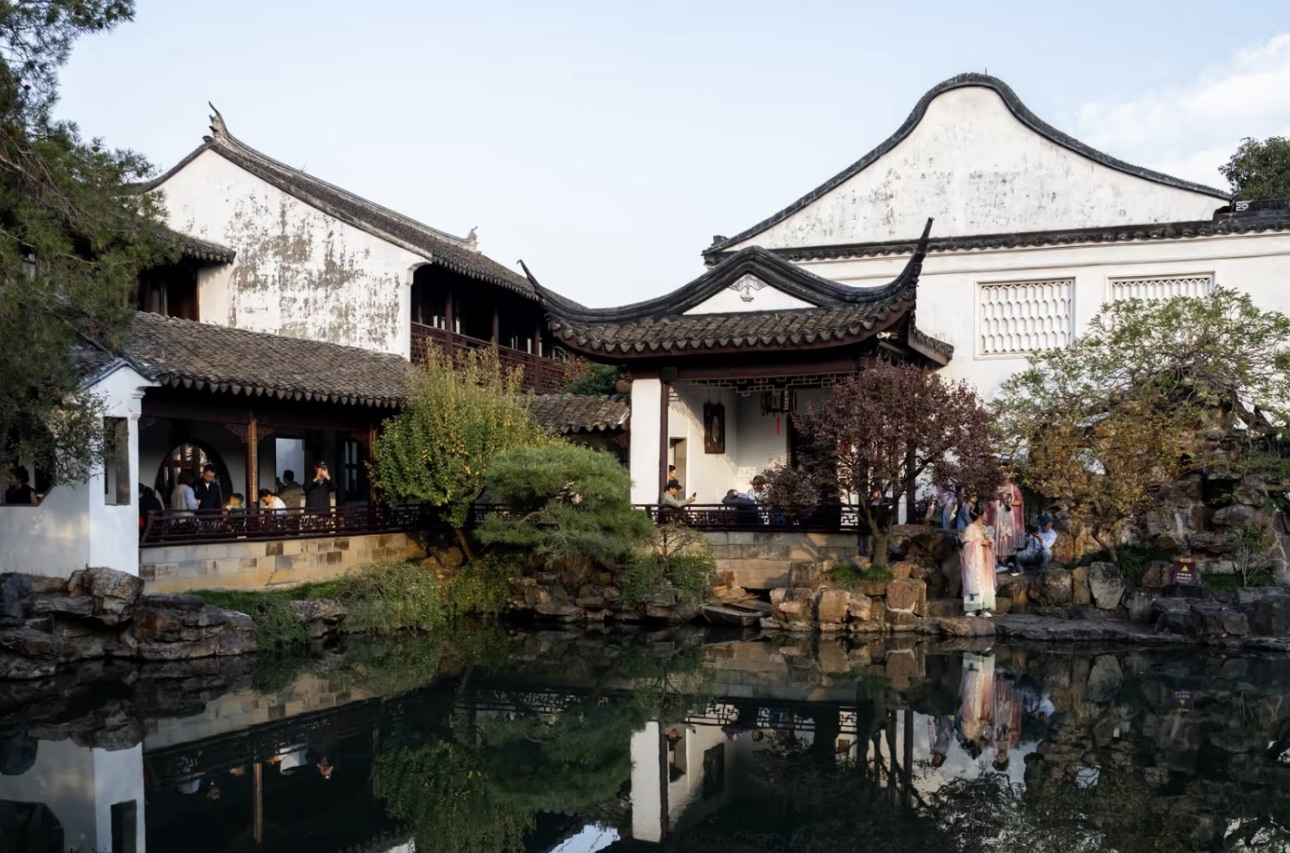
Originally the rear garden of a Chan Buddhist monastery, Lion Grove was built by Chan Master Tianru in honor of his teacher, the monk Zhongfeng. The garden takes its name from the countless Taihu stone rockeries within it, whose wild, jagged forms suggest a pride of lions. The rockery peaks rise and fall across the garden and their caves and caverns wind through like a labyrinth, earning Lion Grove the title "Kingdom of Rockeries" and making it the crowning achievement of Chinese garden rockery art. The entire garden centers on these Lake Tai stone formations, complemented by pavilions, covered walkways, water features, and plantings — blending the spirit of Chan Buddhism with garden artistry to realize the classical ideal of "mountains and forests within a handspan of space."
Lion Grove is world-famous for its extraordinary rockery maze. Over 500 stones of various sizes form 21 cave passages and 9 winding paths; visitors who enter find themselves navigating a stone labyrinth where every step reveals a new view. Emperor Qianlong came south six times and visited Lion Grove on five of those journeys, personally inscribing the plaque "True Delight" in praise of its wonders. The garden's architecture blends northern and southern Chinese styles — the refined elegance of a Jiangnan garden combined with the grandeur of an imperial northern garden — making it a comprehensive masterwork of Chinese garden art.
Attraction Descriptions
Yanyu Hall
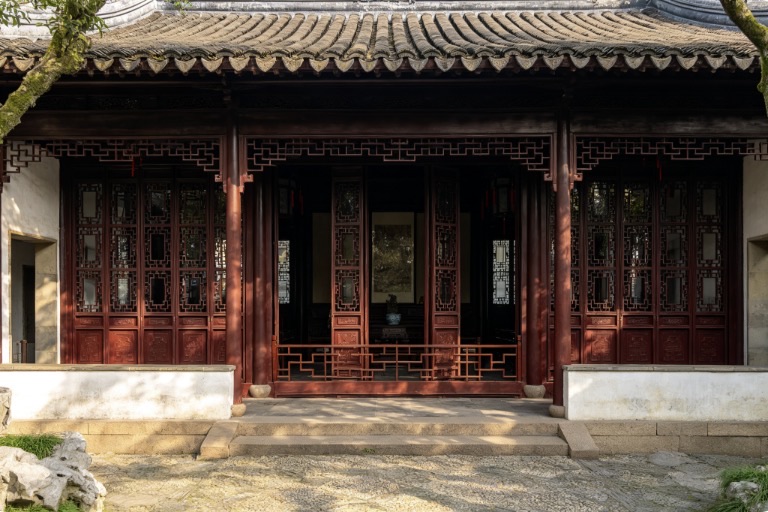
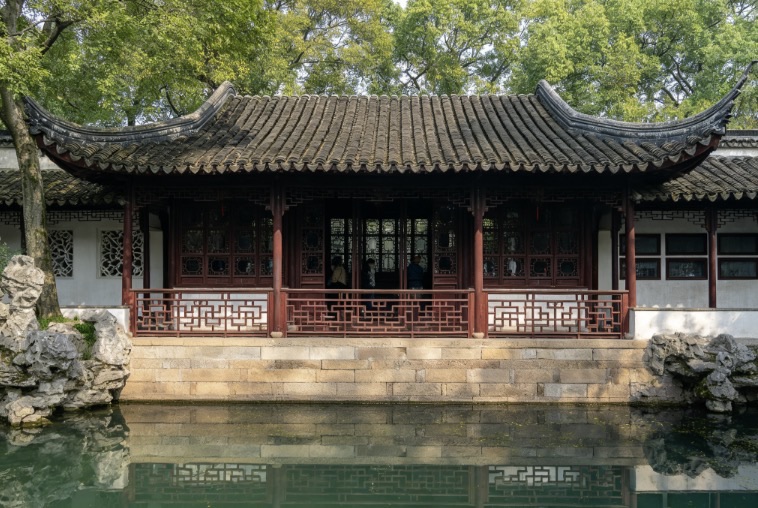
Yanyu Hall is the main hall of Lion Grove, situated in the southern part of the garden and the largest building in the complex. The hall spans five bays wide and three bays deep, built on a timber post-and-beam frame beneath a hard-gable roof clad in the small grey tiles characteristic of Suzhou. Inside, the furnishings are elegant — calligraphy scrolls and couplets hang on the walls, filling the space with the scholarly atmosphere of a Jiangnan literati garden. The name Yanyu comes from the Book of Songs: "feast in good cheer and lasting fame" — evoking joyful banquets and enduring honor. A broad terrace in front of the hall offers an early view of the rockery peaks and serves as the first major viewing point upon entering the garden. The painted beams and finely carved doors and windows here represent the finest craftsmanship of Qing dynasty Jiangnan hall architecture. Yanyu Hall was historically where the garden's owner received guests and hosted literary gatherings of poets and scholars.
Small Square Hall
The Small Square Hall stands just north of Yanyu Hall, serving as the transitional space between the southern halls and the central rockery complex. True to its name, the hall has a square floor plan — modest in scale, open on all sides, with lattice windows and moon-gate doorways that allow interior and exterior spaces to flow into one another. The walls inside are inlaid with stone-carved calligraphy, mostly Chan Buddhist verses and garden inscriptions that point back to Lion Grove's origins as a monastery garden. The hall is encircled by a covered walkway; as you stroll beneath it, fragments of rockery come into view through the lattice windows, creating a sense of layered depth — "how deep, how deep the courtyards lie." The hall's design is particularly clever: it functions both as a place to pause and rest, and as the prelude that draws you toward the rockery labyrinth — a deliberate "hold back before the reveal" technique that builds anticipation before releasing you into the maze.
Nine Lions Peak
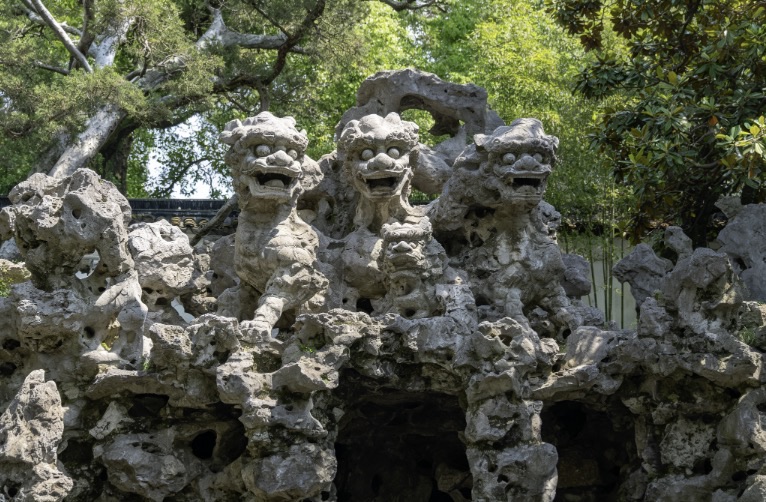
Nine Lions Peak is the most iconic single formation in the Lion Grove rockery, located at the heart of the garden. The peak is assembled from multiple Taihu stones stacked with great skill — jagged and dramatic, it shifts shape depending on where you stand, resembling lions, toads, elephants, rhinoceroses, and other creatures at different angles, though the lion forms are the most convincing. Standing roughly 4 meters tall, the peak sits on a base of bluestone with a viewing platform in front where visitors can examine it from every angle. Taihu stone is judged by four qualities: lean, wrinkled, hollow, and permeable — Nine Lions Peak embodies all four. The stone surface is textured with deep ridges and riddled with openings; when sunlight streams through the gaps, the effect is extraordinary. The Qing dynasty scholar Yu Yue marveled: "Peaks of stone stand like a forest, shaped like lions — strange and wondrous beyond description." Nine Lions Peak is not only the emblem of Lion Grove's rockery art but also a defining example of the classical garden principle of "building mountains with stone."
Zhibai Pavilion
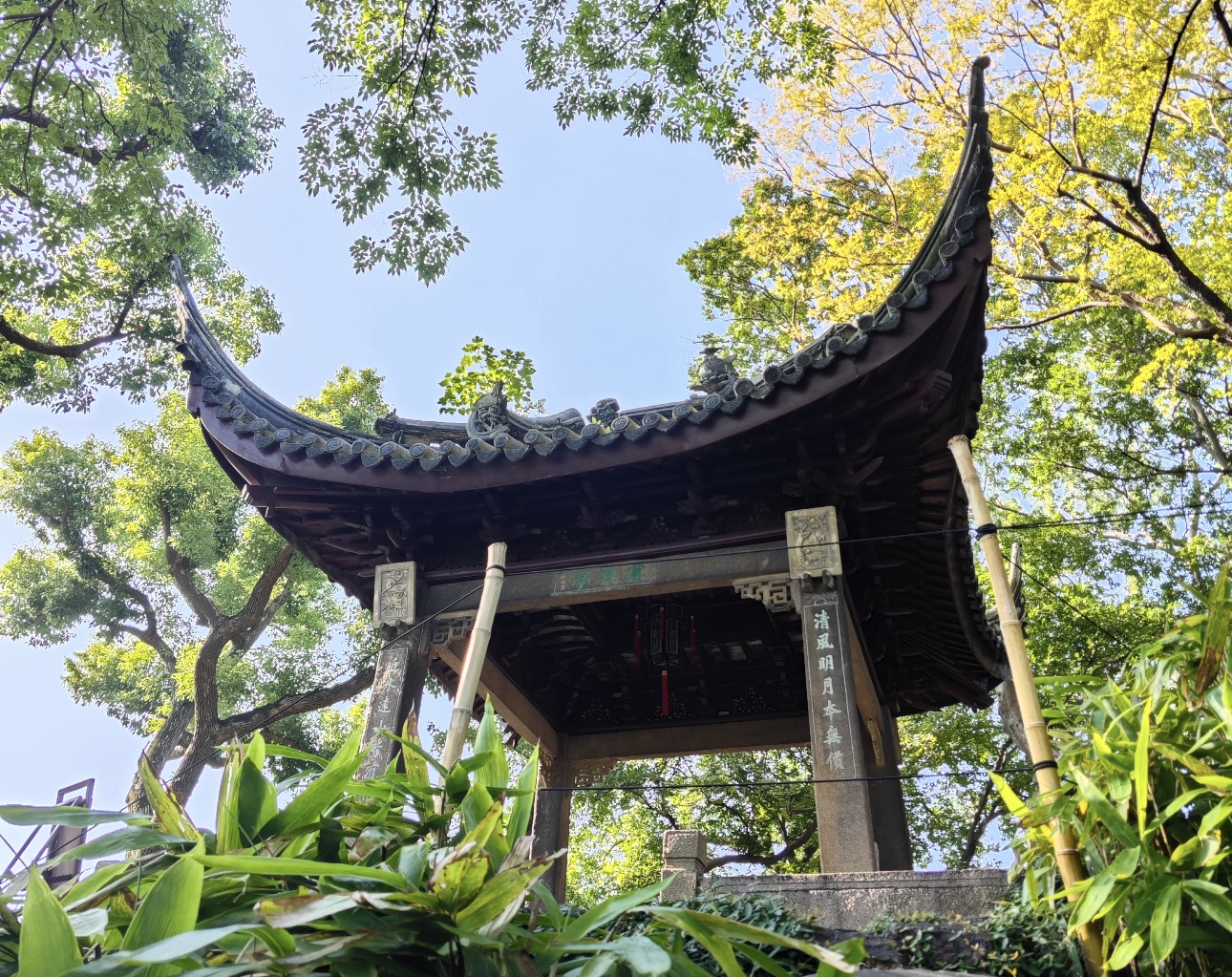
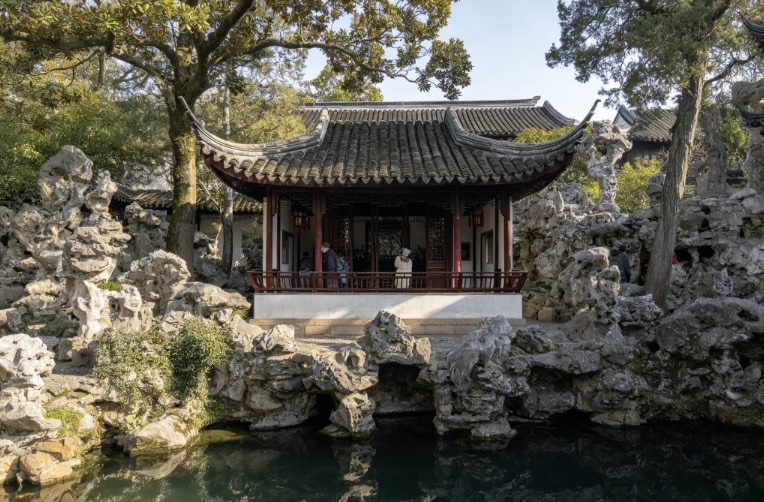
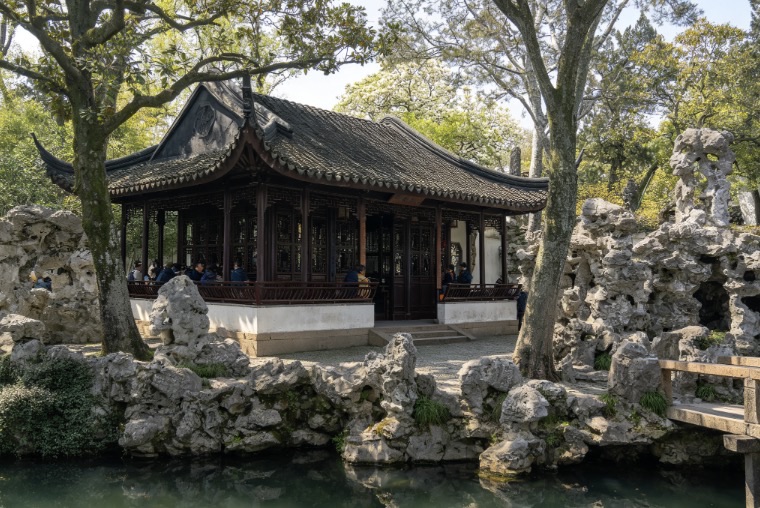
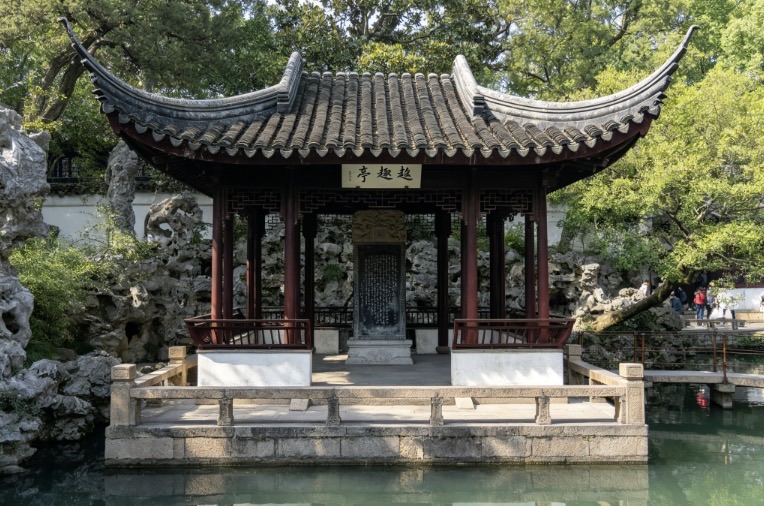
Zhibai Pavilion stands in the western part of Lion Grove, one of the garden's most important structures beside the water. Its name draws on a famous Chan koan known as "Zhaozhou's Cypress": when asked "What is the Way?", the Tang dynasty monk Congshen pointed to the cypress tree in the courtyard and answered, "The cypress tree before the hall" — meaning the Way is present in every ordinary thing. This reflects Lion Grove's deep roots as a Chan Buddhist garden. The pavilion spans three bays beneath a single-eave hip-and-gable roof, facing the water on one side and backed by rockery on the other. A few old cypress trees once grew here; those visible today were replanted by later generations. From the pavilion you can take in panoramic views of the rockery peaks and watch fish gliding lazily through the pond below. The heavy, simply carved timber columns give the structure a solid, vigorous quality characteristic of Ming dynasty architecture. Bamboo screens once hung at the windows; when the wind came through, bamboo shadows swayed across the floor and the scent of cypress drifted in — the sensory teaching of Chan itself. Plaques and couplets inside carry Chan themes, including one that reads: "a single finger-snap spans past, present, and future" — a reminder to cherish the present moment.
Flower Basket Hall
Flower Basket Hall occupies the northeastern corner of Lion Grove and is one of its most distinctive buildings. It takes its name from the central columns of its interior — the two load-bearing pillars in the main bay have been carved through and hollowed out into the shape of flower baskets, fusing structural function and decorative art into a single breathtaking element. This kind of "flower basket column" is extremely rare in Jiangnan garden architecture and stands as a high point of Qing dynasty craftsmanship. The floor is paved with Suzhou's prized "golden bricks" — dense, handmade tiles that stay warm in winter and cool in summer, once reserved for imperial palaces and the finest estates. The surrounding doors and windows feature ice-crack lattice patterns, traditionally associated with perseverance in study and scholarly success. A small courtyard in front is planted with tree peonies and herbaceous peonies; when they bloom, their fragrance fills the hall — a perfect echo of the building's name. Flower Basket Hall is a concentrated expression of the Suzhou craftsman's genius for finding the precise balance between structure and beauty.
Zhenqu Pavilion
Zhenqu Pavilion perches atop a rockery mound in the southern part of Lion Grove and is the most imperially flavored structure in the garden. The square, double-eaved pyramidal pavilion carries a plaque bearing the two characters "Zhen Qu" — "True Delight" — written in Emperor Qianlong's own hand during his fifth southern tour in 1762. The story goes that Qianlong had been winding through the rockery labyrinth and, thinking he had reached the garden's end, was told by an attendant that there was still far more to discover. The emperor was delighted and in a flash of insight brushed the characters for "True Delight," meaning he had finally grasped the garden's real wit and wonder. Qianlong came south six times and visited Lion Grove on five of those journeys, captivated each time. The pavilion also houses a stone stele engraved with an imperial poem he composed here. The elevated position of Zhenqu Pavilion makes it the finest panoramic viewpoint in Lion Grove: from here, rockeries, water, pavilions, and covered walkways spread out below in layers. Ancient trees surround the pavilion on all sides, providing welcome shade in summer.
Stone Boat
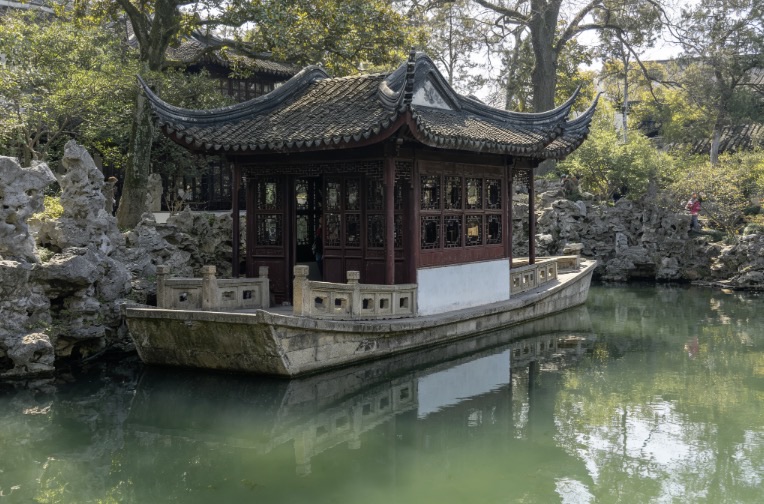
The Stone Boat sits in the northwestern part of Lion Grove near the water and is one of the garden's most striking features — a full-scale boat built entirely of stone. The hull is solid bluestone; a wooden cabin structure rises above it. The boat runs about 12 meters in length and is divided into bow cabin, mid cabin, and stern cabin, convincingly detailed. The prow is carved with a dragon's head; the hull bears wave patterns symbolizing fair winds and smooth sailing. Stone boats are a common feature in Chinese classical gardens, representing the ideal of a vessel that "never needs mooring — free to wander beyond worldly things" — an expression of the garden owner's wish to transcend earthly concerns. What sets Lion Grove's Stone Boat apart is that it rests not beside water but on land, surrounded by rockery, connected to the stone formations by a zigzag bridge. This creates the fantastical image of a ship sailing among mountains — a deliberate departure from convention that reveals the designer's bold, inventive thinking.
Anxiang Shuying Tower
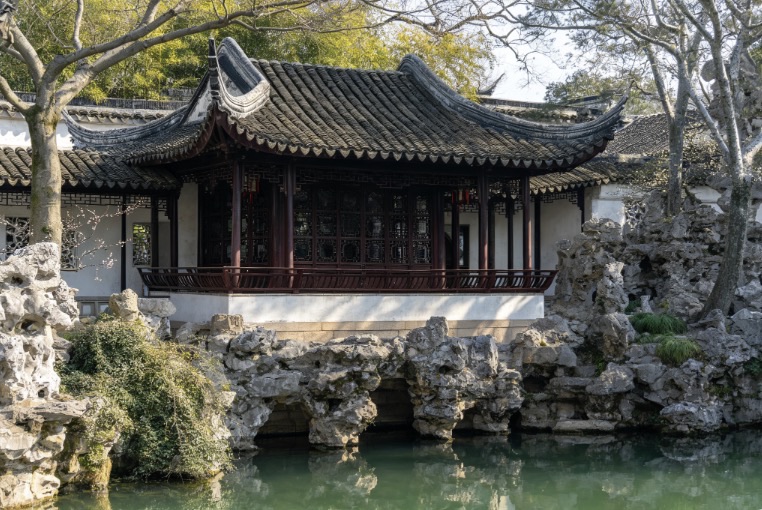
Anxiang Shuying Tower occupies a high point in the northeastern rockery of Lion Grove, a two-story pavilion building and one of the garden's finest elevated viewpoints. Its name comes from a celebrated couplet by the Song dynasty poet Lin Bu in his poem "Plum Blossoms in My Mountain Garden": "Sparse shadows slant above clear shallow water; subtle fragrance drifts through moonlit dusk." The name points to the tower's deep connection with the plum blossom: several old plum trees stand in front — varieties include Gongfen, Lue, and Zhusha — and in late winter and early spring, when they bloom, their fragrance drifts through the air and the delicate branches cast the exact shadows Lin Bu described. The building has a modest hard-gable roof; the ground floor is open for resting, while the upper floor features a leaning rail where you can gaze out over the garden. Looking east, you catch the faint outline of Suzhou's ancient city wall; looking west, the garden's rockeries and ponds spread out below. Each season offers something different: spring plum blossoms, dense summer greenery, autumn skies above the old city, and after snow in winter, a view that feels like a scene from another era entirely.
Mid-Lake Pavilion
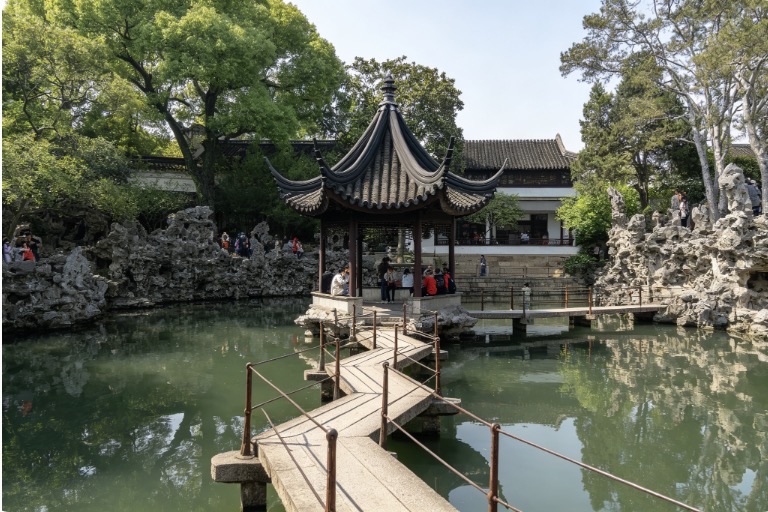
The Mid-Lake Pavilion stands at the center of Lion Grove's main pond — a small, single-eave hexagonal pavilion connected to the southern bank by a zigzag bridge and the most distinctly water-country element in the garden. The pavilion stands on the water and its reflection doubles it below, merging the real and its mirror image into a quintessential Jiangnan garden composition. Stone benches inside invite visitors to sit and watch the fish or the lotus flowers that bloom in abundance through the summer. Small as it is, the pavilion holds a commanding position at the heart of the garden, linking the northern and southern scenery. From inside, every direction frames a picture — rockery peaks to the east, Yanyu Hall to the south, winding covered walkways to the west, and Anxiang Shuying Tower to the north. It embodies the classical garden principle of "one pavilion that takes in the whole garden at a glance."
Woyun Room
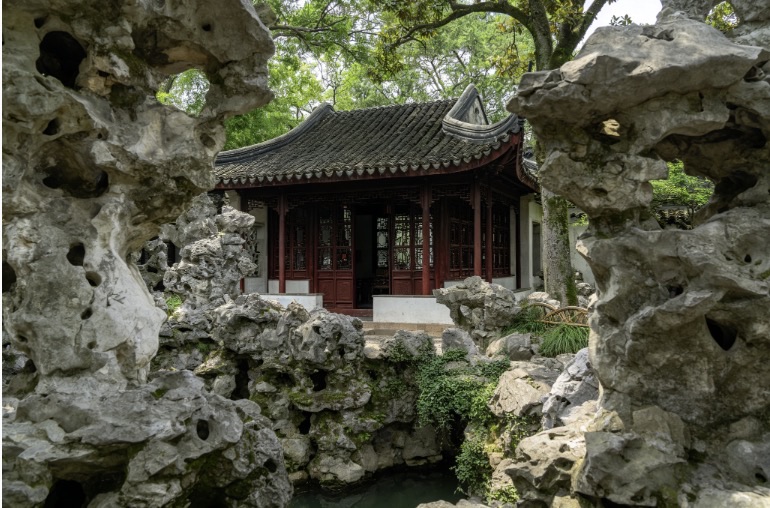
Woyun Room hides in the northwestern corner of Lion Grove, a secluded Chan retreat tucked deep within the rockery. Its name evokes the image of "lying among clouds and listening to springs" — an expression of the ideal of withdrawing from the world and living alongside the elements. The building is a modest single-story three-bay structure with a small walled courtyard in front, planted with bamboo and plantain; the atmosphere is cool and still. At the back, a cliff face of rockery rises like a screen, draped with climbing vines that form a natural barrier separating Woyun Room from the rest of the garden. Inside, the furnishings are sparse: a desk, a daybed, a few hanging scrolls. Simplicity itself — and precisely because of that simplicity, profoundly meditative. This was where the garden's original owner came to read and practice Chan, and it is the purest expression of Lion Grove's identity as a Chan garden. Visitors who arrive here after navigating the rockery labyrinth — squeezing through narrow passages, bending through caves — then step out into the quiet courtyard and feel the shift immediately. Like the passage in Tao Yuanming's famous tale: "At first the opening was extremely narrow, barely wide enough for one person; after pressing on for several dozen more steps, it suddenly opened into brightness." Woyun Room is the perfect closing note of Lion Grove's entire garden journey.
10 stops, in walking order — read top to bottom, no clicking needed.

 2
 3
 4
 5
 6
 7
 8
 9
 10