Humble Administrator's Garden — Scenic Area Introduction
Overview
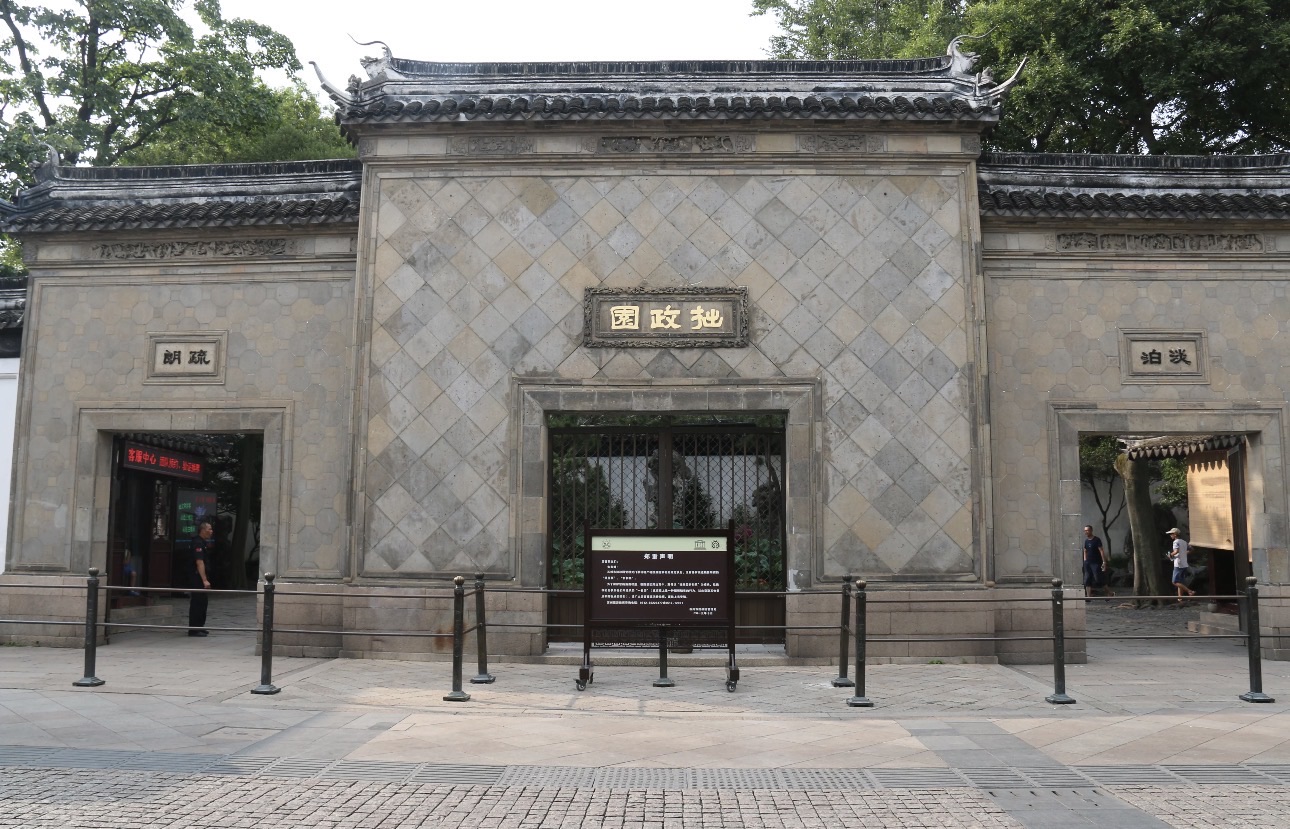
The Humble Administrator's Garden is located at 178 Dongbei Street, Gusu District, Suzhou, Jiangsu Province. Construction began in 1509, the fourth year of the Zhengde reign of the Ming dynasty, commissioned by Wang Xianchen — a jinshi graduate and imperial censor of the Hongzhi reign — as his private garden retreat after resigning from official life. The garden's name is drawn from a passage in Pan Yue's Western Jin essay "Rhapsody on Living in Retirement": "Watering the garden and selling vegetables to provide for one's daily meals... this too is the governance of the inept." It conveys the scholar-official ideal of modest self-sufficiency and principled withdrawal from the world.
The garden covers roughly 52,000 square meters (about 5.2 hectares), making it the largest surviving classical garden in Suzhou. It is ranked alongside the Summer Palace in Beijing, the Mountain Resort in Chengde, and the Lingering Garden in Suzhou as one of China's Four Great Classical Gardens. In 1997 it was inscribed on the UNESCO World Heritage List; in 2007 it was designated a National AAAAA Tourist Attraction.
Water is the garden's soul. The central pool alone accounts for more than a third of the total area, with rocky islets, zigzag bridges, pavilions, and waterside halls all arranged around it. The design follows nature rather than symmetry, embodying the highest ideal of Chinese classical garden art: "Though made by human hands, it seems as if born from nature itself." The garden is divided into three sections: the East Garden, open and airy with rolling grass, bamboo, and paulownia groves; the Central Garden, the heart of the estate, with its broad pool, hillocks, and refined halls; and the West Garden, compact and varied, with terraced pavilions, galleries, and winding covered walkways.
The Humble Administrator's Garden is the quintessential example of the Ming and Qing private garden tradition in the Jiangnan region, and its design principles have profoundly shaped Chinese garden art ever since. It is often called the "Mother of All Gardens under Heaven."
Attractions
1. Orchid and Snow Hall (Lanxue Tang)
The main entrance building of the East Garden, first built in the Ming dynasty and rebuilt during the Qianlong reign of the Qing dynasty. The hall's name is drawn from a line by the Southern-dynasty poet Li Bai: "Standing alone between heaven and earth, the clear breeze scatters orchid and snow." In front of the hall, a white marble balustrade is carved with pine, bamboo, and plum — the "Three Friends of Winter" — classic symbols of integrity in Chinese culture. Inside, a scale model of the entire garden is on display, giving visitors a clear overview of the layout before they venture further. To the south, a screen of green bamboo shelters the hall; to the north, a yellow-stone rockery built in the Ming style commands the view — a masterclass in the art of stacking rough stones into a naturalistically convincing hill.
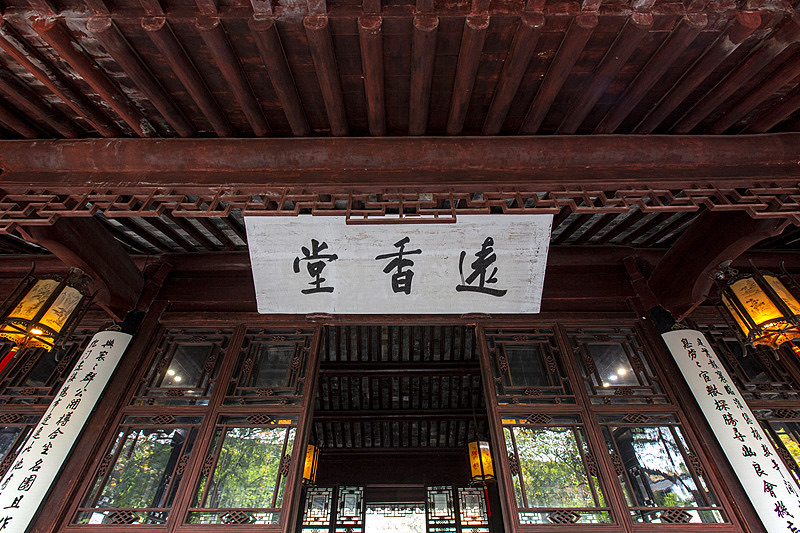
2. Hall of Distant Fragrance (Yuanxiang Tang)
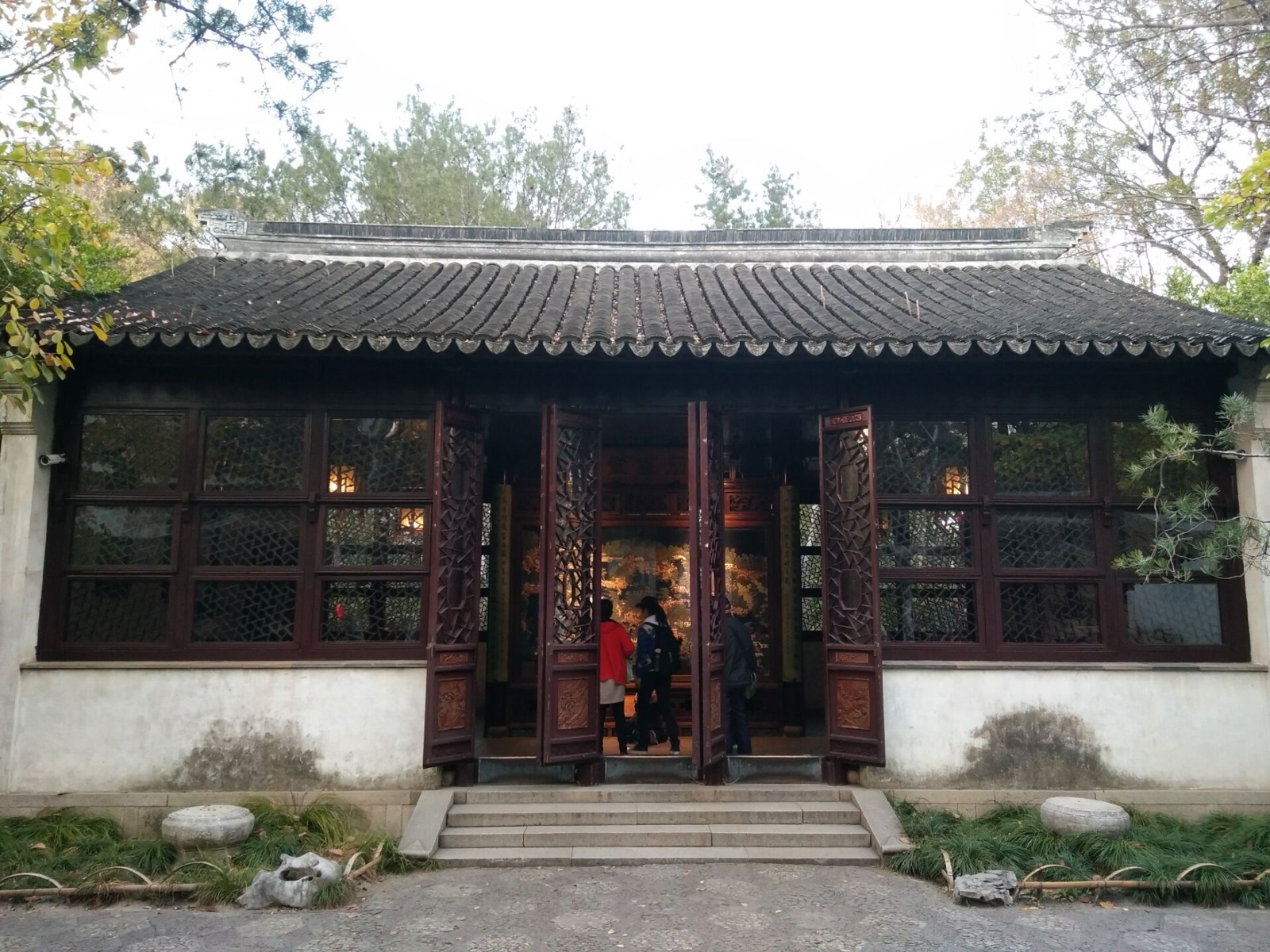
The central hall of the garden and its principal viewing pavilion. Its name comes from four characters in Zhou Dunyi's Northern Song essay "Ode to the Lotus": "xiang yuan yi qing" — the fragrance travels far and grows ever purer. The hall is built as a "four-sided hall," with floor-to-ceiling lattice windows on all four sides and no solid walls, so that every direction opens onto a living garden view. To the north lies the main lotus pool; in summer, fragrance drifts across the water from far away — hence "distant fragrance." At the center of the interior hangs a plaque bearing the hall's name, written by a Qing-dynasty calligrapher. The Hall of Distant Fragrance is the finest single vantage point in the garden, bringing the entire central landscape into view at once.
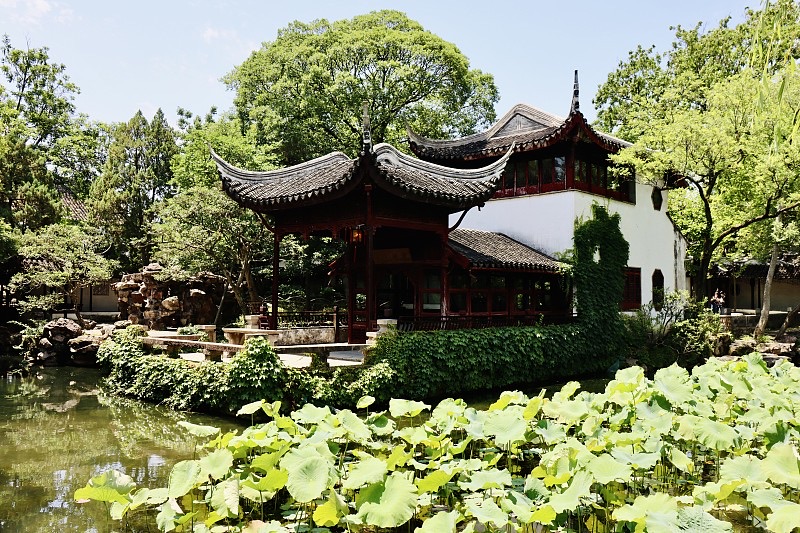
3. Fragrant Islet (Xiangzhou)
The garden's most iconic landmark, built out over the central pool. It takes the form of a moored pleasure boat — a full-scale stone vessel complete with bow, mid-deck cabin, and a two-story stern tower called the Clear-View Tower. The name means "a fragrant place surrounded by water," and it faces the Hall of Distant Fragrance across the pond, the two structures serving as each other's focal point. Inside the boat cabin hangs a plaque inscribed "Xiangzhou," alongside couplets that read: "Tall bamboo by the stream, a song for the White Plum Mountain Lodge; lotus touching the water, half a pool of autumn, a room of mountains." The reflection of Xiangzhou on the still water — structure and mirror image weaving together — is one of the most photographed compositions in the garden.
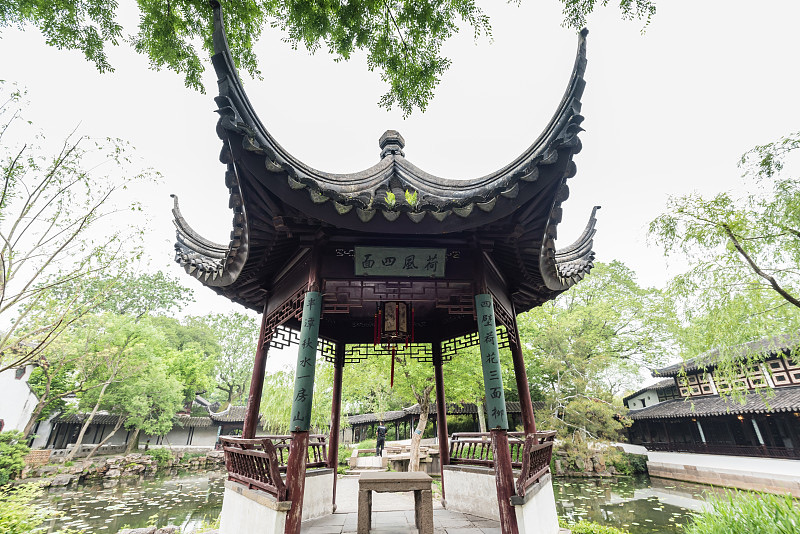
4. Pavilion Surrounded by Lotus Breeze (Hefeng Simian Ting)
A hexagonal, conical-roofed pavilion standing on a small island in the central pool, connected to both banks by zigzag bridges. The name comes from a couplet on the pavilion's columns: "Lotus flowers on all four sides, willows on three; half a pool of autumn water, a single hill like a room." In summer, the surrounding pond fills with lotus blossoms and every breeze carries their fragrance — the finest spot in the garden for appreciating the flowers. Small as it is, its position is extraordinary: looking east, you see the Hall of Distant Fragrance; west, Fragrant Islet; south, the Small Flying Rainbow Bridge; north, Mountain-Viewing Tower. It sits at the geometric center of the Central Garden and is a natural navigation point on the tour route.
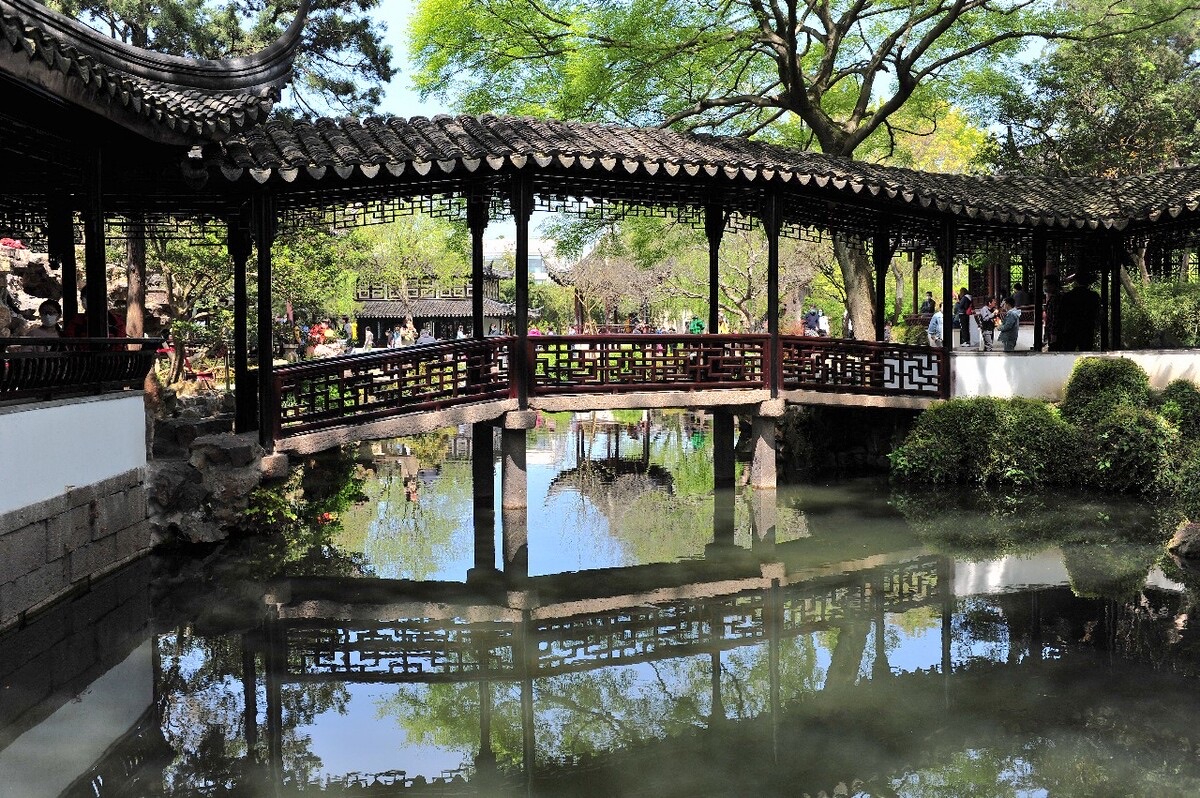
5. Small Flying Rainbow Bridge (Xiaofeihong)
The only surviving covered bridge in any Suzhou classical garden. A roofed corridor runs the full length of the bridge, and the vermillion railings and roof cast a reflection onto the pool below — shimmering on the water like a rainbow in flight, hence "Small Flying Rainbow." The bridge bends twice in a zigzag plan and stretches a little over ten meters end to end. Its gentle arch gives the sensation of skimming across the water's surface. Xiaofeihong is not merely a crossing; viewed from any angle on the pool, bridge and reflection together form a perfect circle, making it one of the most visually compelling scenes in the garden.
6. Mountain-Viewing Tower (Jianshan Lou)
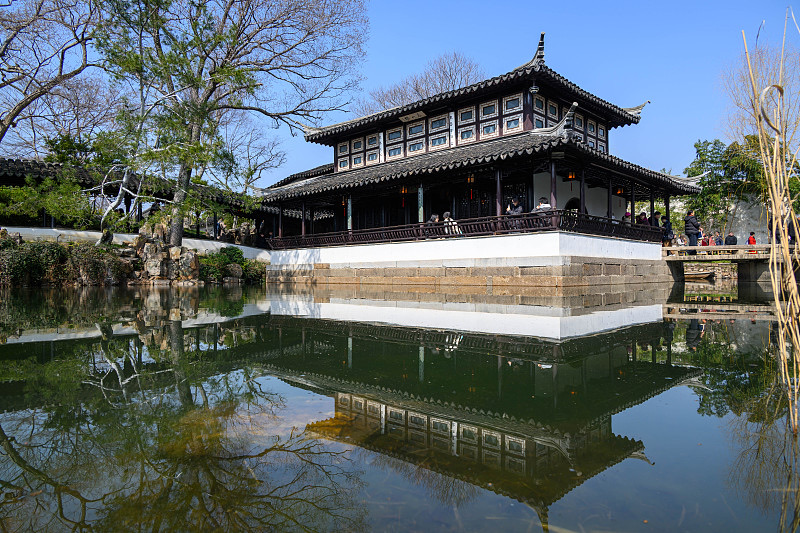
A two-story pavilion in the northwestern corner of the Central Garden and the tallest structure in the entire estate. The name is taken from Tao Yuanming's Eastern Jin poem "Drinking Wine": "Picking chrysanthemums beneath the eastern hedge, / I look up, unhurried, at the southern hills." From the upper floor, the whole central garden spreads out below: the Hall of Distant Fragrance, Fragrant Islet, the Pavilion Surrounded by Lotus Breeze, and the Small Flying Rainbow Bridge all come together like a landscape handscroll unrolling at your feet. At ground level, two elegant waterside structures sit beneath the tower — Ouxiang Xie (Lotus Root Fragrance Pavilion) and Qingfeng Chiguan (Clear Wind Pool Hall). Mountain-Viewing Tower is the best elevated vantage point for grasping how the garden's spaces relate to one another.
7. Thirty-Six Pairs of Mandarin Duck Hall (Sanshiliu Yuanyang Guan)
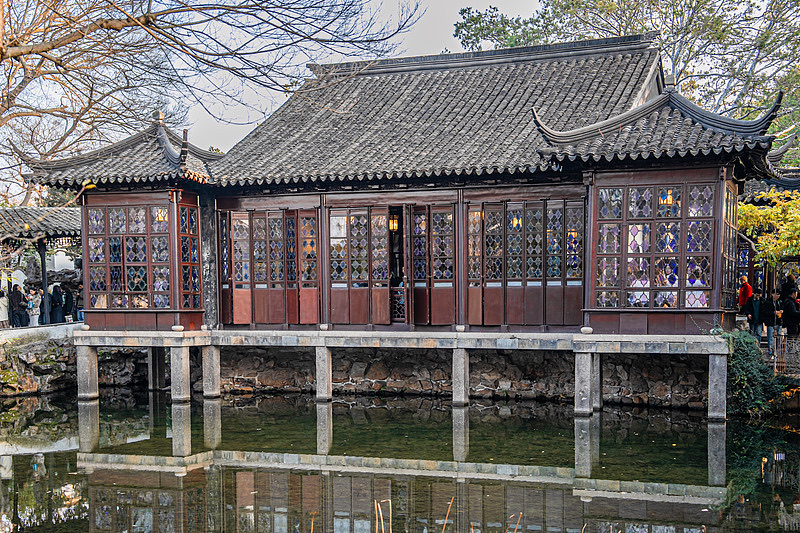
The principal building of the West Garden and the finest example of a "double-purpose hall" in any Suzhou garden. The hall is divided by a large decorative screen partition into a south room and a north room, each with its own name and purpose. The south room, the Hall of Eighteen Camellias, faces the sun and stays warm in winter; it was used for enjoying peonies and camellia blossoms. The north room, the Thirty-Six Pairs of Mandarin Duck Hall proper, faces the pool and stays cool in summer; it was used for watching the mandarin ducks on the water (the garden owner kept thirty-six pairs, hence the name). Four small antechambers are tucked into the corners, each with a designated role: warming braziers, cooling ice tubs, a waiting room for attendants, and storage for tea sets and refreshments — five centuries of ingenious comfort design. The north room's curved vault ceiling functions as a natural acoustic reflector; the garden's owner would host private kunqu opera performances here, and the sound carried perfectly to every corner without amplification.
8. With Whom Shall I Sit? Pavilion (Yu Shui Tongzuo Xuan)
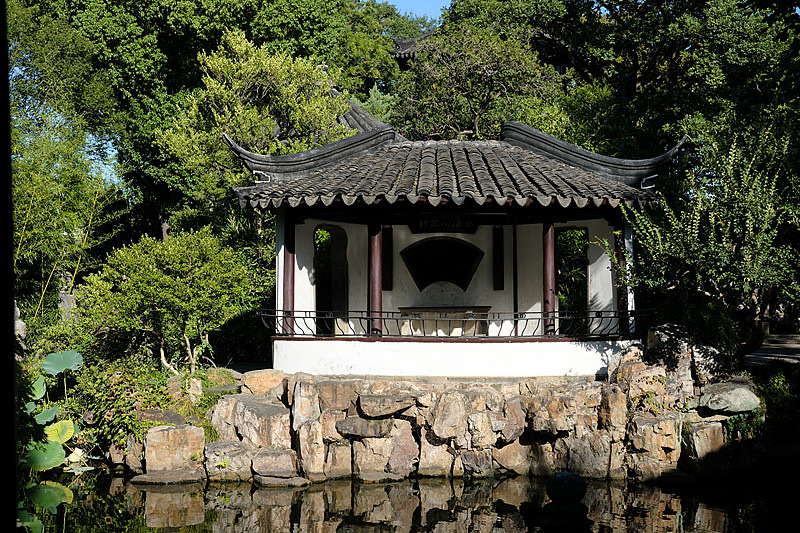
A tiny fan-shaped waterside pavilion in the West Garden, also known as the Fan Pavilion. Its name comes from the final lines of Su Shi's (Su Dongpo's) Northern Song lyric "Dian Jiang Chun": "With whom shall I sit? The bright moon, the clear breeze, and I." Every element inside — the stone table, stone stools, floor paving, and roof rafters — follows the fan motif, carried through with near-obsessive consistency yet achieving a perfectly harmonious result. The pavilion holds only three or four people, but its position is superb: it looks west toward the Thirty-Six Pairs of Mandarin Duck Hall and east across the water to the Pavilion Surrounded by Lotus Breeze. Visitors often linger here far longer than they expected.
9. Pavilion of Retained Listening (Liuting Ge)
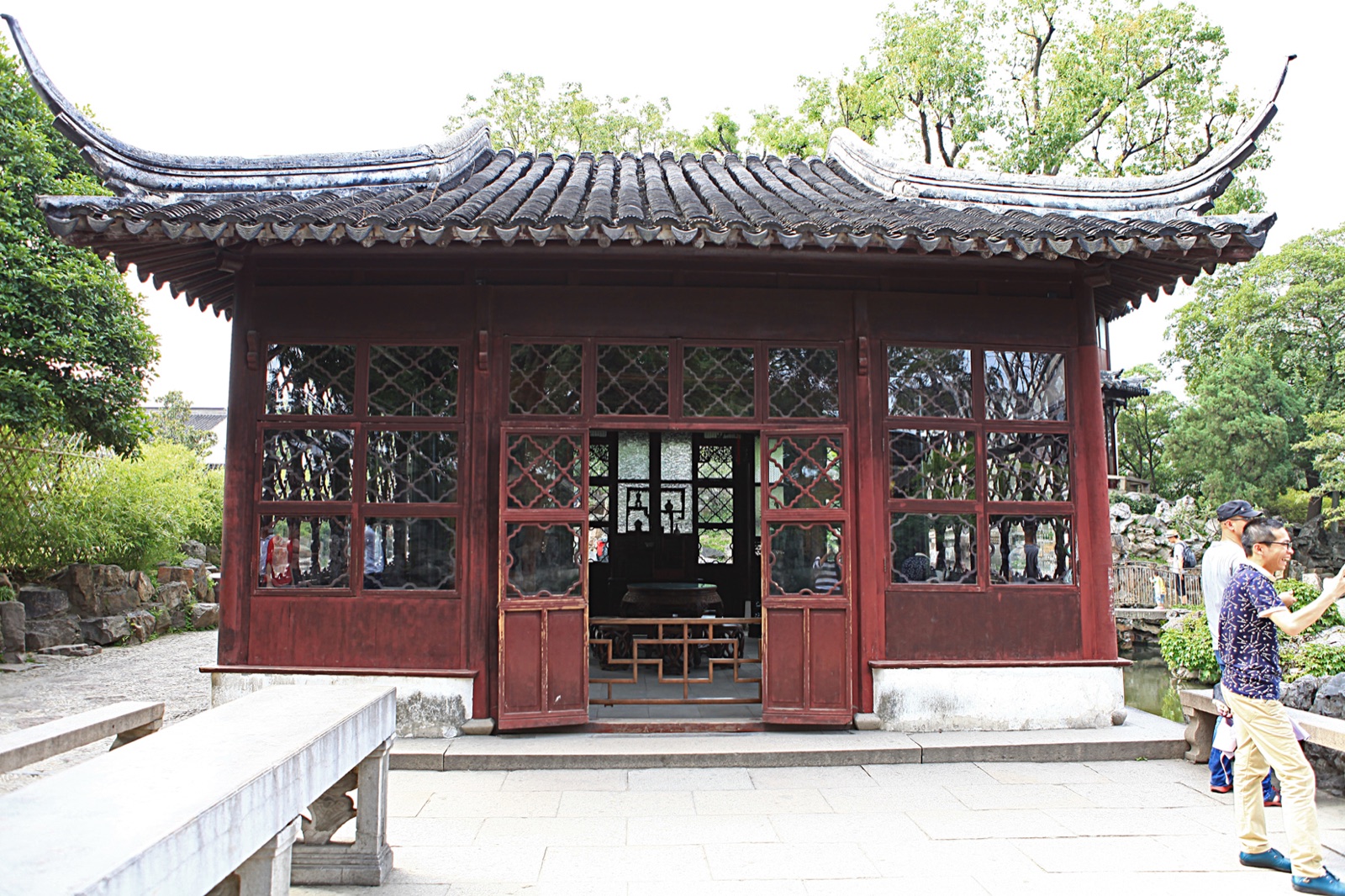
The westernmost building in the West Garden and the final stop on the standard tour route. The name comes from the closing lines of a poem by the Tang-dynasty poet Li Shangyin: "The autumn clouds will not lift and the frost comes late — but this is good, for the withered lotus remains, and we can listen to the rain falling on it." The pavilion overlooks the pool through open windows on all sides, offering a panoramic view of the West Garden's water and buildings. At the center of the interior hangs the pavilion's plaque; the room is renowned for its intricately carved nanmu-wood door canopy, worked with pine, bamboo, plum, and orchid motifs. The Pavilion of Retained Listening is the western endpoint of the garden tour; from here visitors can exit via the covered walkway or retrace their steps back through the Central Garden. In autumn, even after the lotus has faded, the sound of rain on withered stalks carries a beauty all its own.
9 stops, in walking order — read top to bottom, no clicking needed.

 2
 3
 4
 5
 6
 7
 8
 9