Suzhou Museum
Overall Introduction
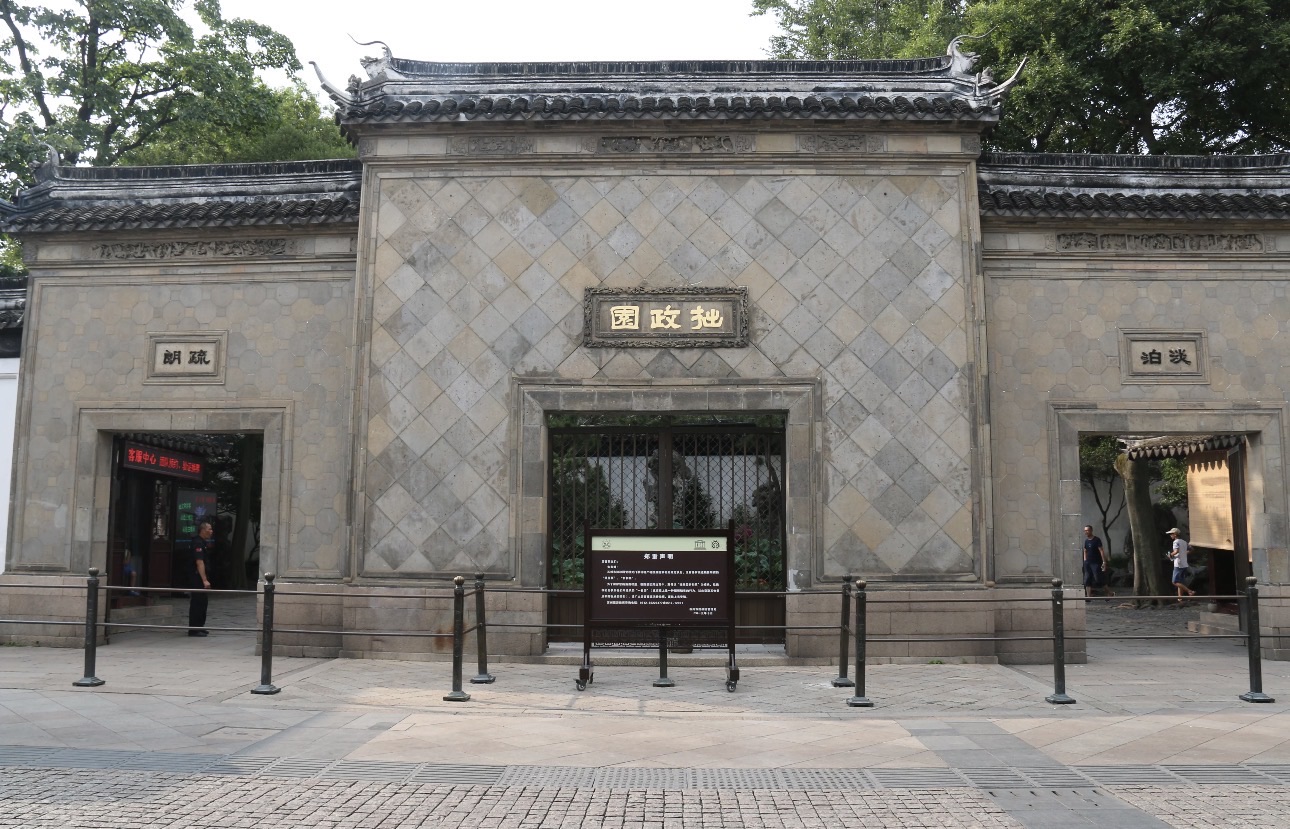
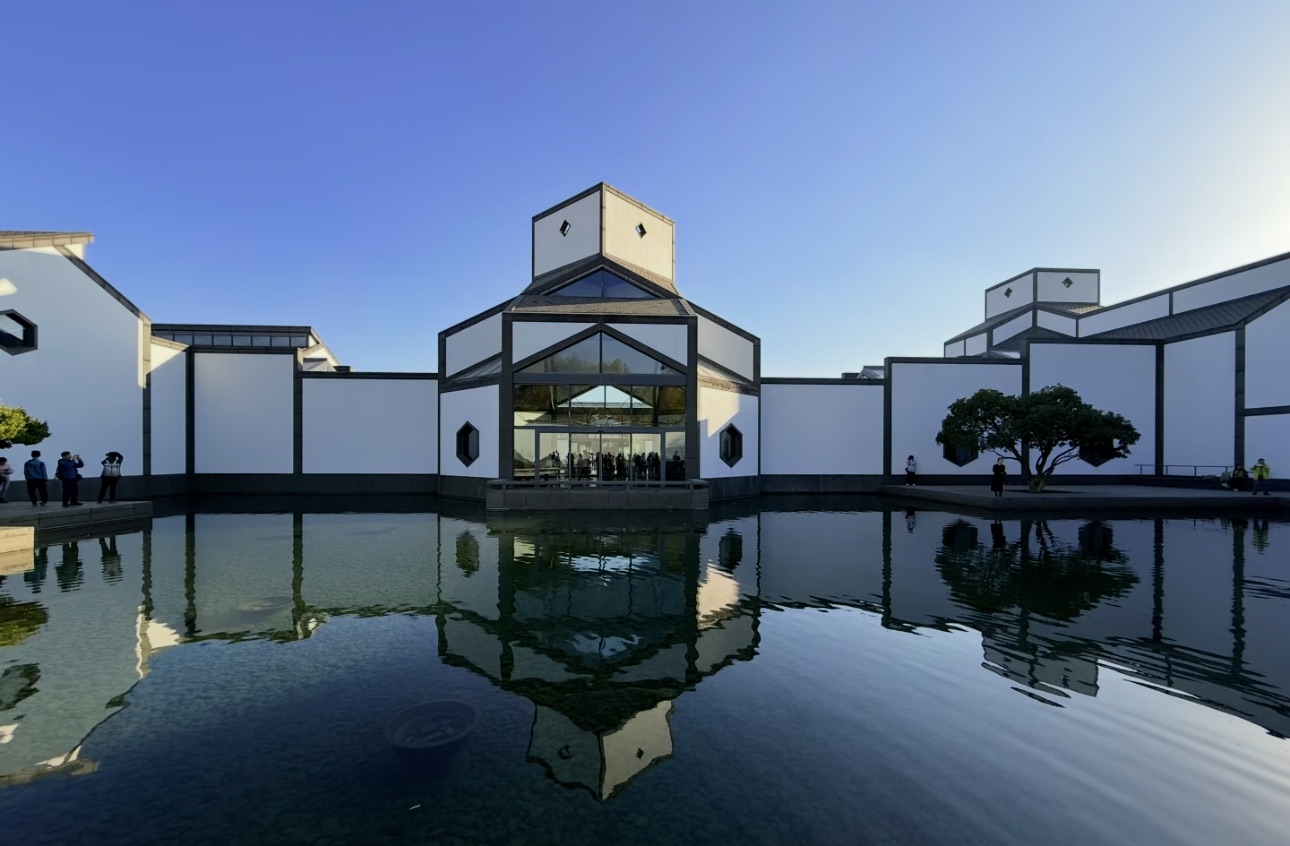
Suzhou Museum was founded in 1960. The new building, completed in 2006, was designed by world-renowned architect I. M. Pei. Located on Dongbei Street in Suzhou's historic old city, the museum sits adjacent to the Humble Administrator's Garden and the Taiping Heavenly Kingdom Loyal King's Mansion. The design philosophy is captured in the phrase "Chinese yet new, Suzhou yet new" — traditional Suzhou whitewashed walls and dark roof tiles are reimagined through modern geometric forms, producing an architectural language deeply rooted in Eastern aesthetics. The museum holds a collection of over 40,000 artifacts, with particular strengths in archaeologically excavated objects, Ming and Qing paintings and calligraphy, ceramics, jade, and revolutionary-era relics. Together they trace Suzhou's cultural history from the Neolithic era through the modern period. A National First-Class Museum, Suzhou Museum has also been celebrated as "I. M. Pei's crowning achievement" and stands as one of China's most internationally influential cultural institutions.
Spots in This Venue
- Entrance Hall
- Treasures of the Wu Region Gallery
- National Treasures from Wu Pagodas Gallery
- Elegance of the Wu Tradition Gallery
- Wu School Paintings and Calligraphy Gallery
- Neolithic Jade Gallery
- Main Courtyard (Rockery Landscape)
- Wisteria Garden
- Tea House
- Taiping Heavenly Kingdom Loyal King's Mansion
Spot Descriptions
Entrance Hall
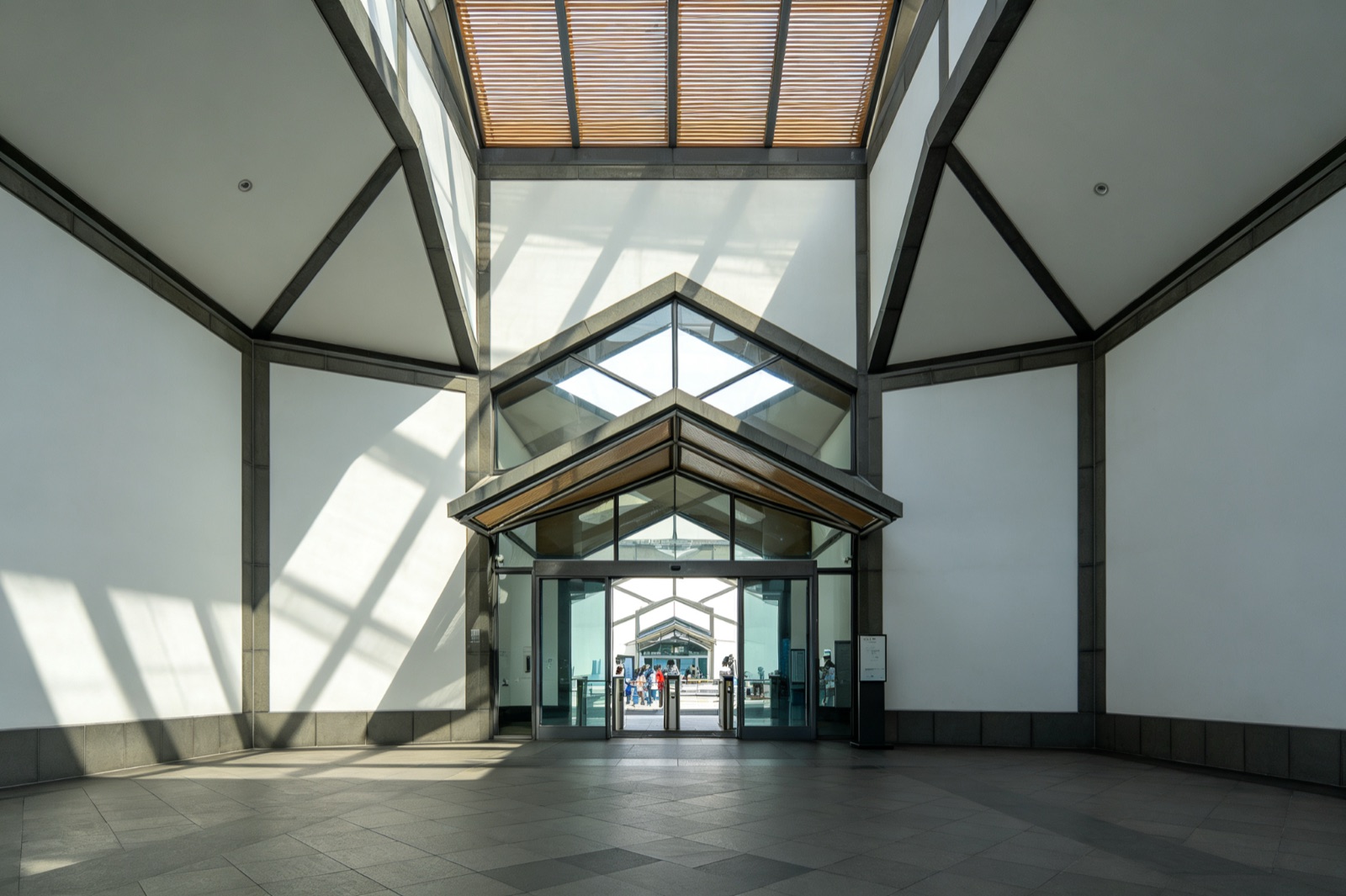
The Entrance Hall is the spatial overture of Suzhou Museum, meticulously designed by I. M. Pei. The ceiling features a geometric skylight of glass and steel, through which natural light is refracted and cast softly downward, creating an effect reminiscent of ink wash spreading across Chinese paper. At the center of the hall, a composition of minimalist geometric lines divides the space, while white-plastered walls and dark granite floors create a strong material contrast. The hall is not merely the circulation hub of the building — it is a concentrated expression of Pei's architectural philosophy: reinterpreting Suzhou's traditional architectural language through the lens of modernism. Standing at the center of the hall and looking around, visitors can watch light and shadow shift across the space as the day progresses, as if standing inside a living, breathing three-dimensional painting.
Treasures of the Wu Region Gallery
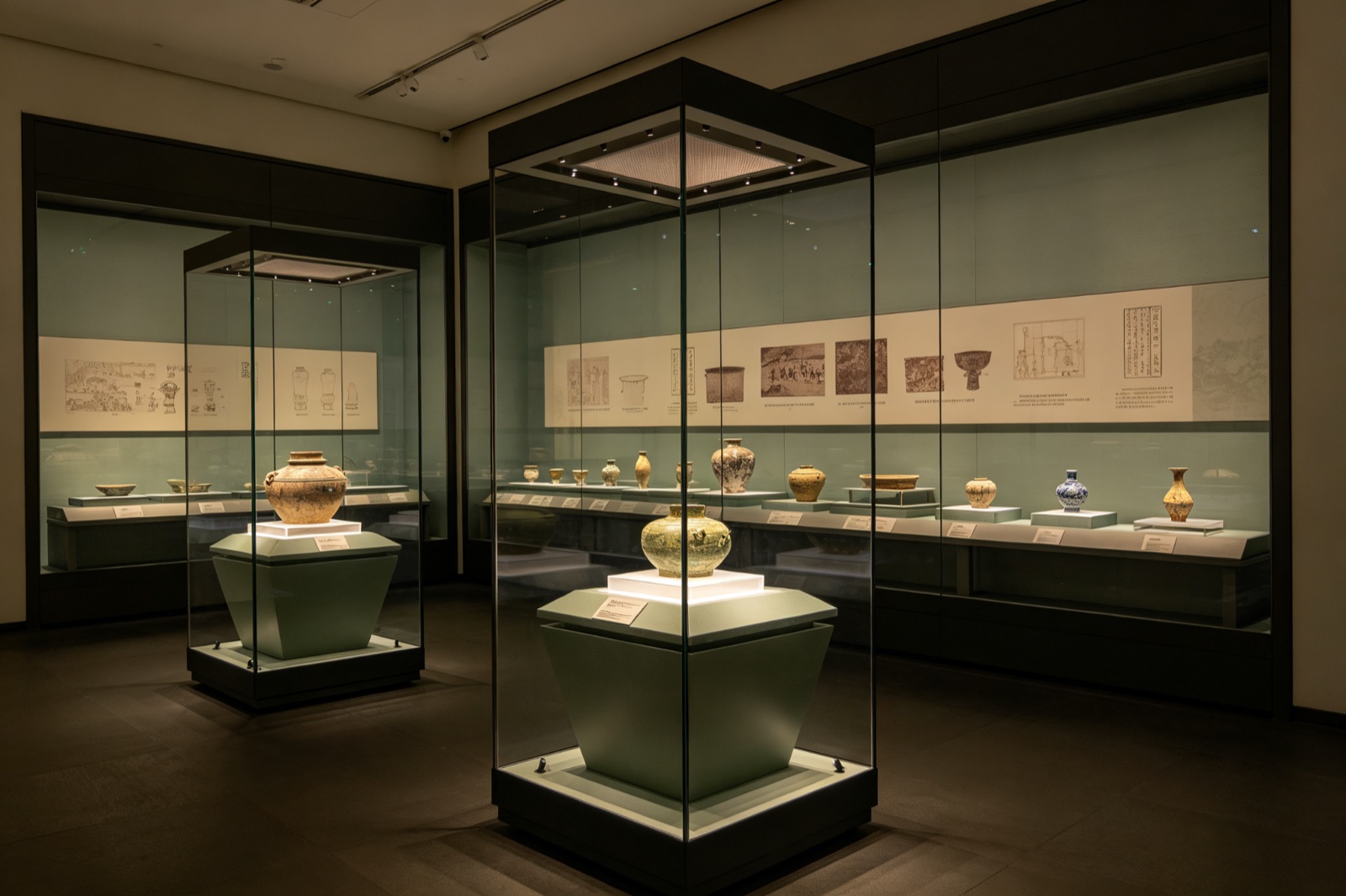
The Treasures of the Wu Region Gallery is one of the museum's permanent exhibitions. Using chronology as its organizing principle, it presents a systematic survey of archaeological finds from the Suzhou area — from the Neolithic Majiabang, Songze, and Liangzhu cultures through the Spring and Autumn and Warring States periods, and on through the Han, Tang, Song, Yuan, Ming, and Qing dynasties. The exhibition is divided into four sections: "Dawn of Civilization," "Competing Powers of the Spring and Autumn Era," "Splendor of the Jiangnan," and "Rhymes of a Prosperous City." Key highlights include a Liangzhu culture jade cong ritual vessel, a sword of King Yu Mei of the Wu state from the Spring and Autumn period, and a Five Dynasties celadon lotus bowl from the Yue kilns. The gallery space is shaped by Pei's signature geometric forms, with display cases and wall surfaces designed in his characteristic style. Carefully directed lighting falls precisely on each artifact, allowing visitors to immerse themselves in thousands of years of Suzhou's accumulated civilization.
National Treasures from Wu Pagodas Gallery
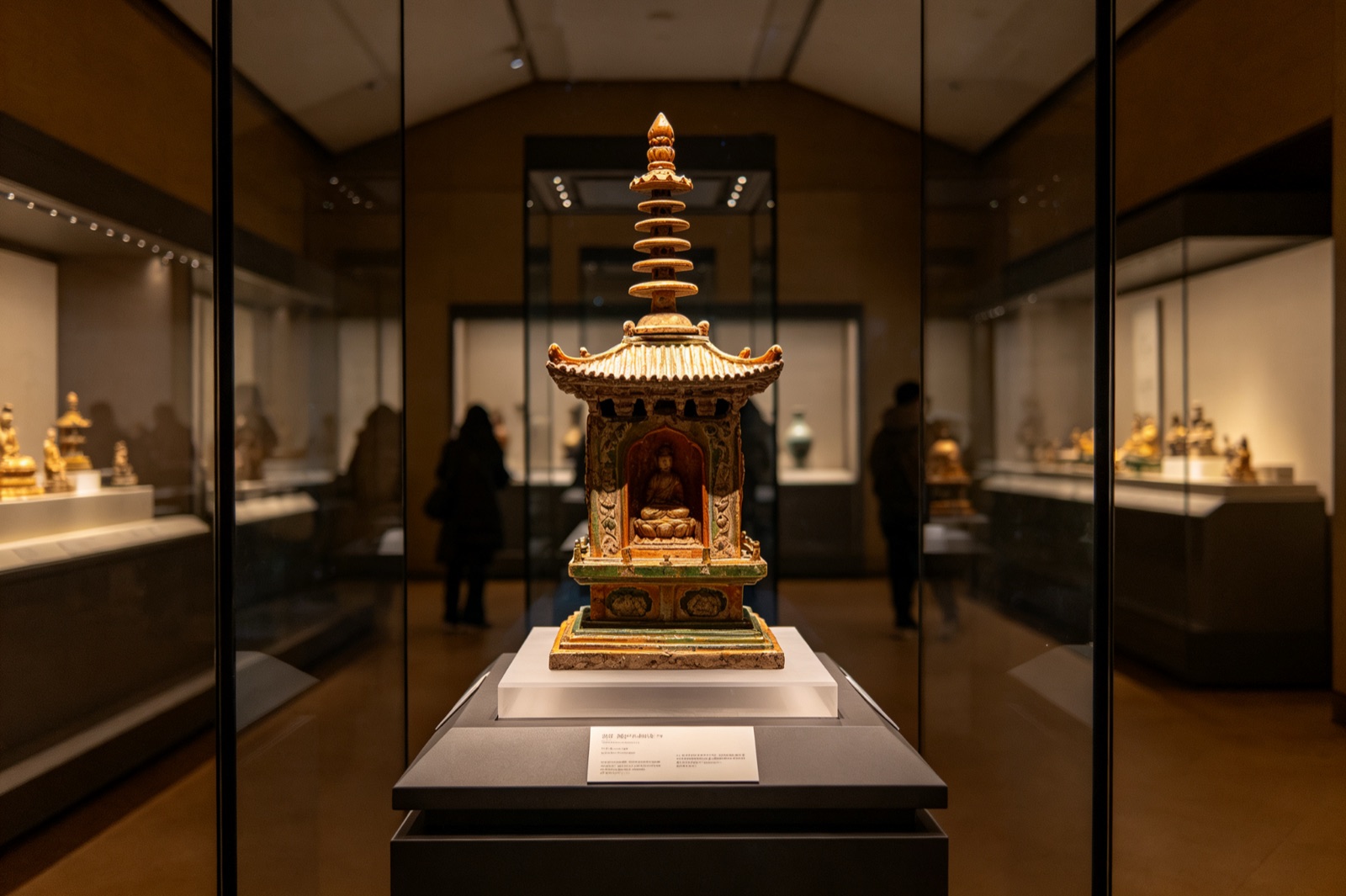
The National Treasures from Wu Pagodas Gallery is dedicated to Buddhist treasures excavated from two of Suzhou's ancient pagodas: Ruiguang Pagoda and Yunyan Pagoda, also known as Tiger Hill Pagoda. Ruiguang Pagoda was first built during the Eastern Wu period of the Three Kingdoms era, while Yunyan Pagoda dates to the Later Zhou of the Five Dynasties period. Both towers stood for nearly a millennium before modern restoration work uncovered remarkable treasures hidden within them. The gallery's centerpiece exhibits include a Northern Song-dynasty pearl reliquary stupa, an inner wooden casket painted with images of the Four Heavenly Kings, polychrome wooden statues of the Four Heavenly Kings, and a celadon lotus bowl from the Yue kilns. Among these, the pearl reliquary stupa — constructed from pearls, rock crystal, agate, sandalwood, and other precious materials — represents a pinnacle of ancient Chinese craftsmanship and has been hailed as "the crown of Chinese ancient arts and crafts." It is one of the museum's most treasured objects.
Elegance of the Wu Tradition Gallery
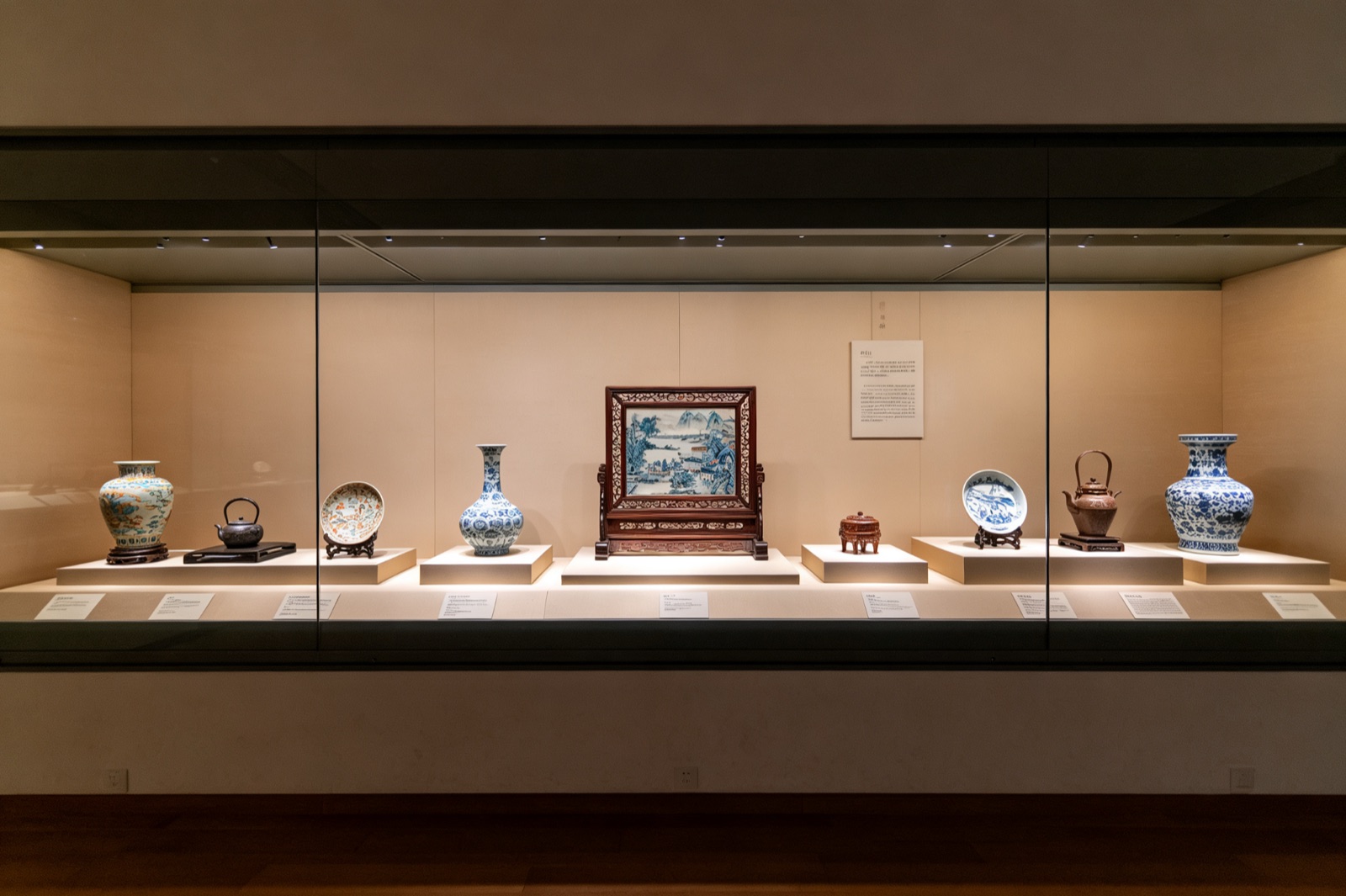
The Elegance of the Wu Tradition Gallery focuses on the aesthetic lifestyle of Suzhou's literary elite. It is organized into themed sections including "Scholar's Studio," "Leisure and Refinement," "Ink Play in the Studio," and "Embroidered Life." On display are exquisite examples of Ming and Qing craftsmanship: the four treasures of the scholar's studio, bamboo and ivory carvings, lacquerware, furniture, Suzhou embroidery, and kesi silk tapestry. Highlights include Ming-dynasty huanghuali hardwood furniture, a Qing-dynasty zitan carved dragon brush pot, fine examples of Gu embroidery, and Song brocade patterns. The gallery's display cases and architectural details echo Pei's design language, bringing out the extraordinary refinement of Suzhou's craft tradition within an atmosphere of calm minimalism.
Wu School Paintings and Calligraphy Gallery
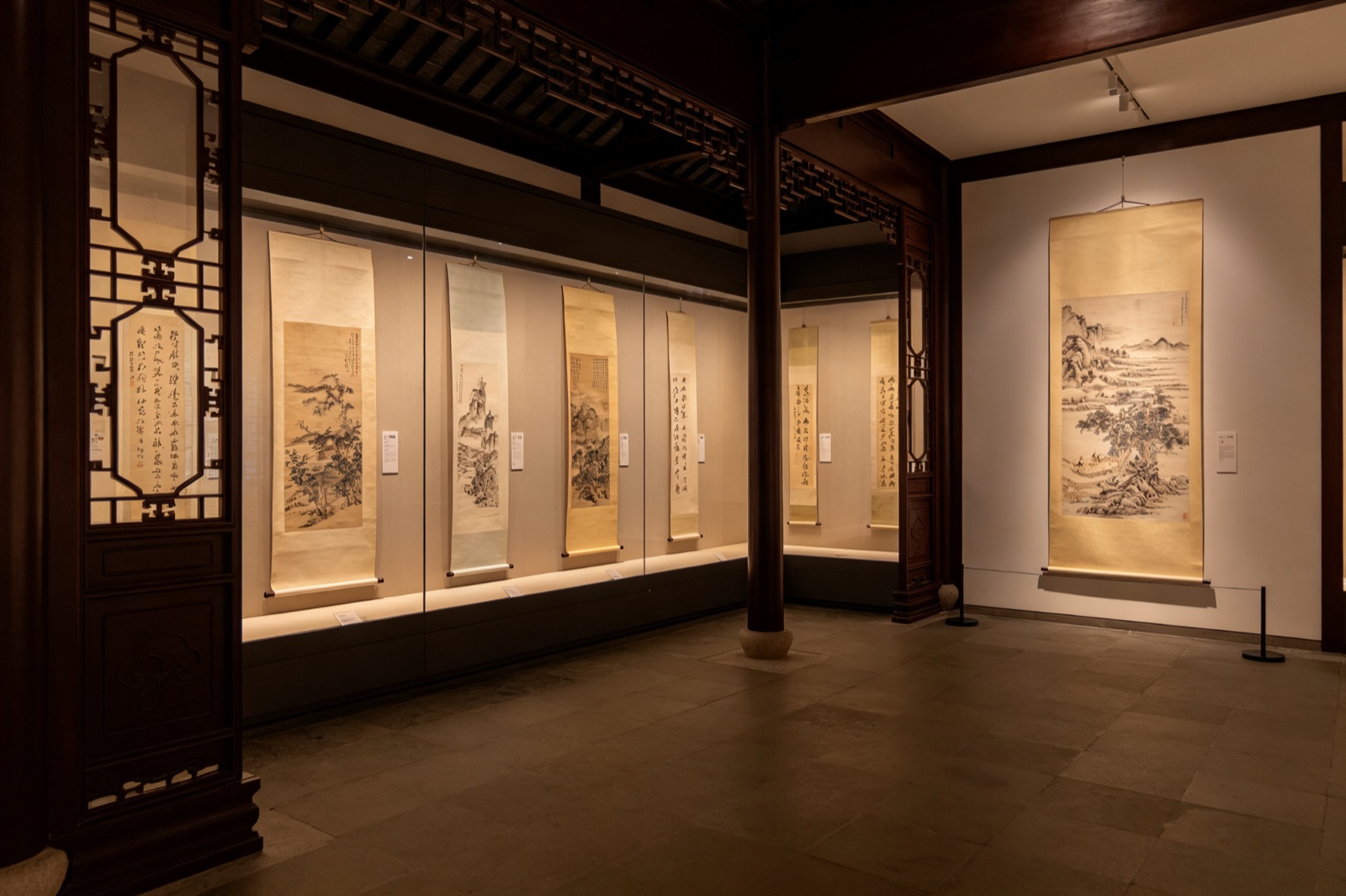
The Wu School Paintings and Calligraphy Gallery presents works by artists of the Wu School — the painting movement centered on Suzhou — alongside works by Suzhou-native painters and calligraphers of the Ming and Qing dynasties. The Wu School rose to prominence in the mid-Ming period, led by the "Four Masters of the Ming": Shen Zhou, Wen Zhengming, Tang Yin, and Qiu Ying. The school championed "learning from nature," emphasizing personal expression and the pleasures of brushwork, and holds a pivotal place in the history of Chinese painting. The gallery's collection includes Shen Zhou's album "East Manor," Wen Zhengming's album "Humble Administrator's Garden," and Tang Yin's hanging scroll "Autumn Wind and Silk Fan." The gallery uses an adjustable lighting system that precisely controls intensity and color temperature to match the preservation needs of different paper and silk works, striking a careful balance between conservation and viewing experience.
Neolithic Jade Gallery
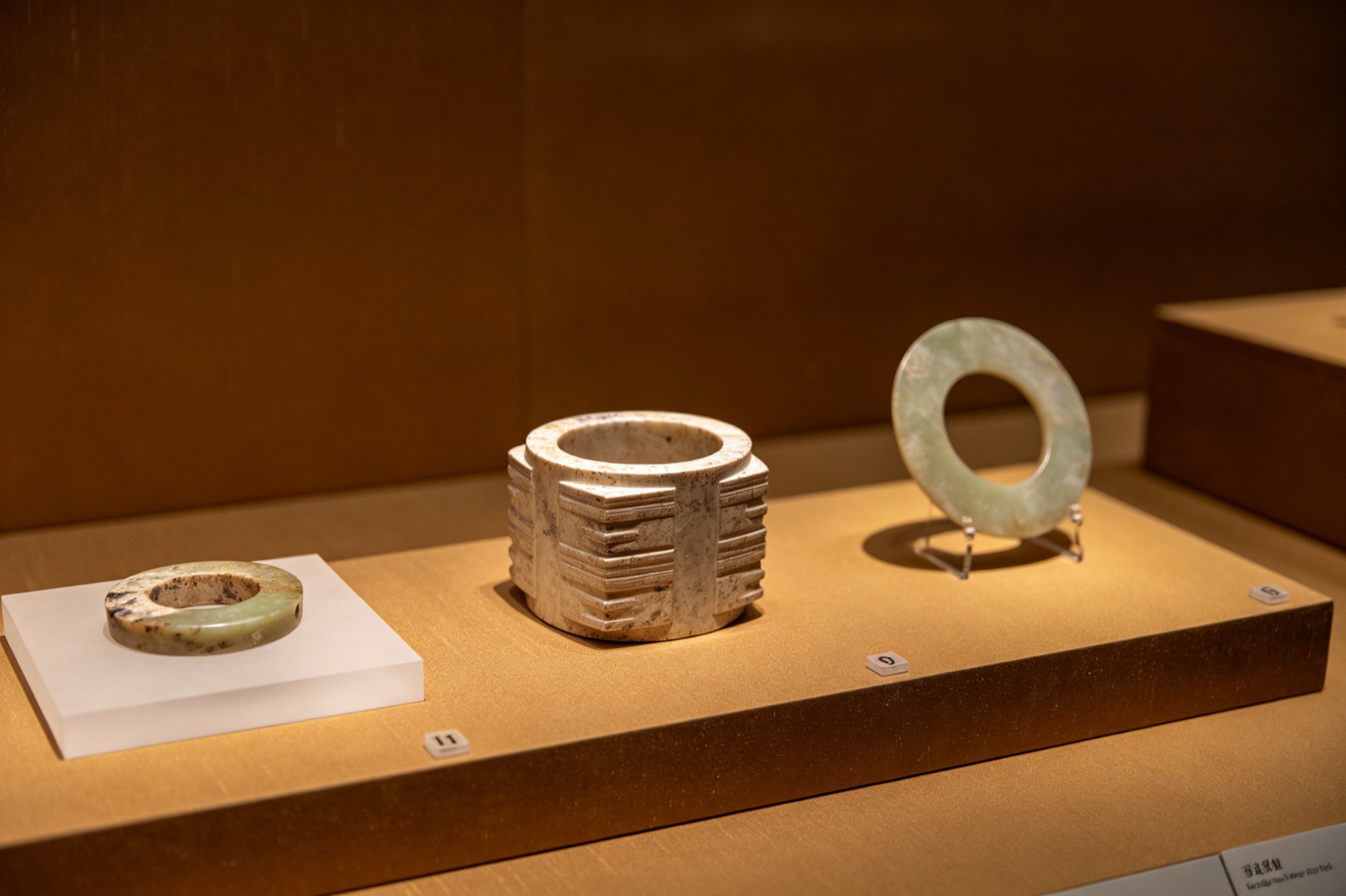
The Neolithic Jade Gallery occupies the basement level of the museum and brings together outstanding jade objects from Liangzhu culture and other Neolithic sites. Liangzhu culture flourished roughly 5,300 to 4,300 years ago across the Taihu region straddling northern Zhejiang and southern Jiangsu — an area with Suzhou at its core — and represents one of the important early threads in the formation of Chinese civilization. Its jade-working techniques had already reached a remarkably high level. The gallery's centerpiece exhibits include ritual vessels such as jade cong, jade bi discs, jade yue axes, and jade huang crescents. The jade cong, with its square outer profile and circular inner bore, embodies the ancient Chinese cosmological concept of the round sky above and the square earth below. Its surface is engraved with intricate deity-and-beast face motifs, giving physical form to the religious beliefs and power structures of the Liangzhu people. The gallery uses low-level warm lighting to create a solemn, reverent atmosphere, guiding visitors toward a sense of the mystery and weight of this ancient civilization.
Main Courtyard (Rockery Landscape)
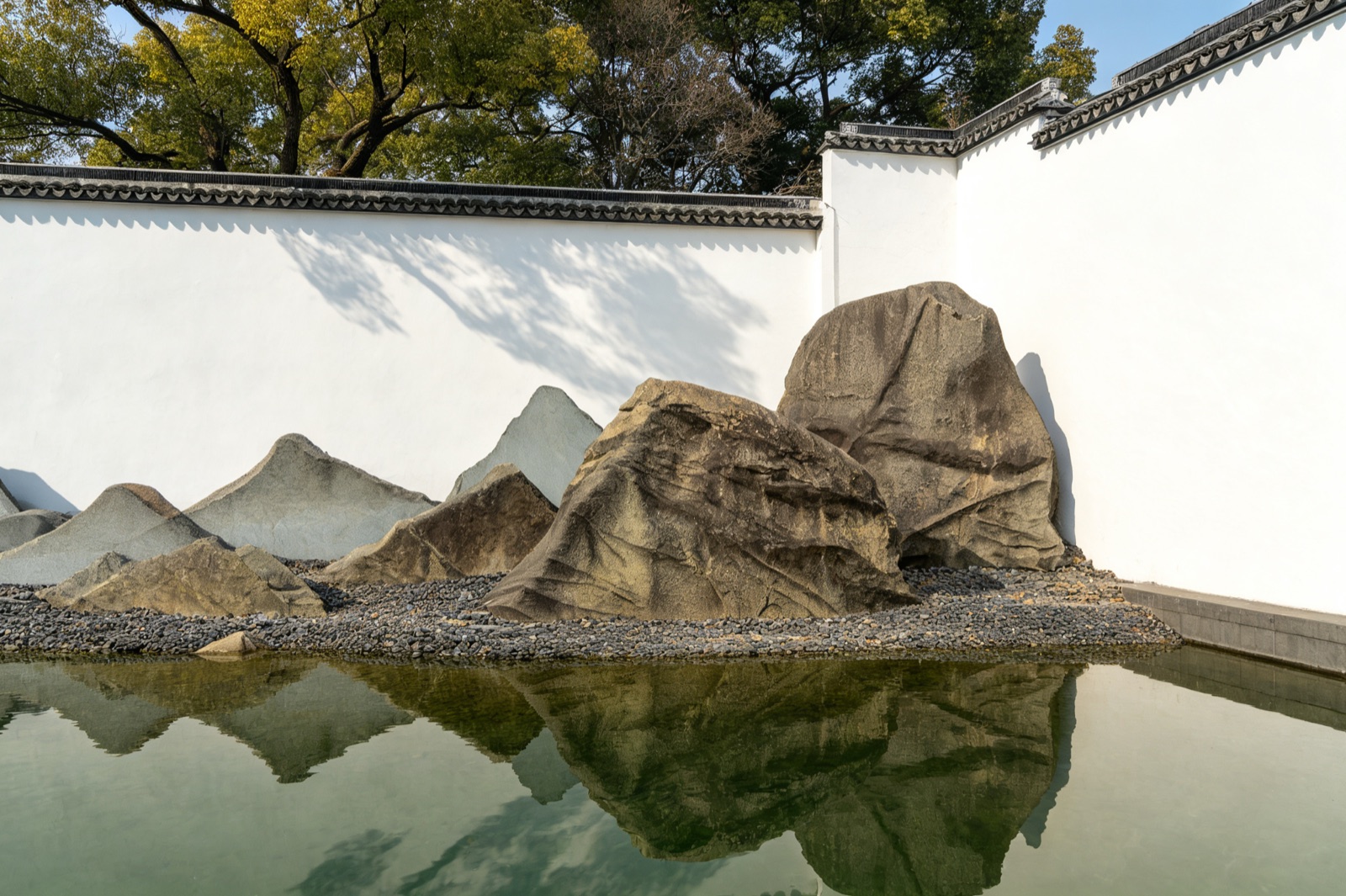
The Main Courtyard is the soul of Suzhou Museum's architecture, designed by I. M. Pei himself, with the "slice-stone rockery" as its central feature. The courtyard uses the white wall as paper, the stone slabs as ink, and the reflecting pool as mirror — bringing the landscape spirit of Song-dynasty painter Mi Fu to life as a three-dimensional space. The stones, quarried from the outliers of Mount Tai in Shandong Province, were cut into thin slabs and arranged against the white wall using traditional rockery-building techniques, composing a landscape painting that is continuously rewritten as light and viewing angles shift. The glassy surface of the pool mirrors the rockery and the surrounding architecture, creating a dialogue between the real and the reflected, between stillness and movement. This is the most contemplative and poetic space in the entire museum — architectural critics have called it "I. M. Pei's love letter to Chinese garden art."
Wisteria Garden
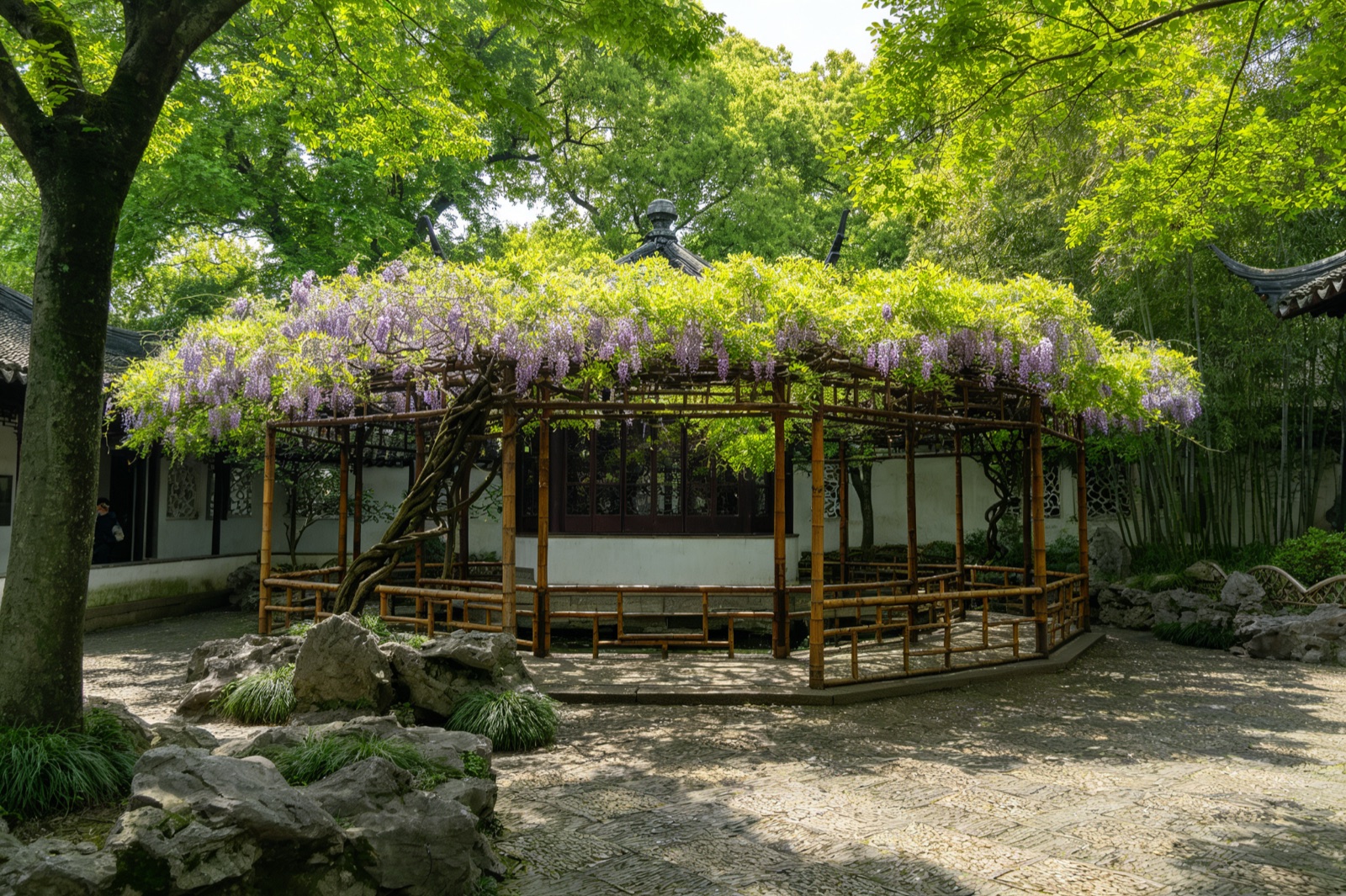
The Wisteria Garden is located near the museum's exit and was once a corner of the Humble Administrator's Garden. The centerpiece is a wisteria planted by Wen Zhengming — one of Suzhou's celebrated Four Men of Talent from the Ming dynasty — during the Jiajing reign period, making it over 470 years old and one of the oldest wisterias surviving in Suzhou. Each year from late April through early May, the vine erupts in a cascade of pale purple blooms, trailing down from the ancient gnarled trunk in fragrant clusters and entering into a striking dialogue across centuries with the white walls of Pei's modern building. The garden is paved with gravel and planted with green bamboo and moss, preserving the unhurried, poetic spirit of Suzhou's classical garden tradition. It is the last place to pause before leaving the museum — and a cultural thread connecting the classical and the contemporary.
Tea House
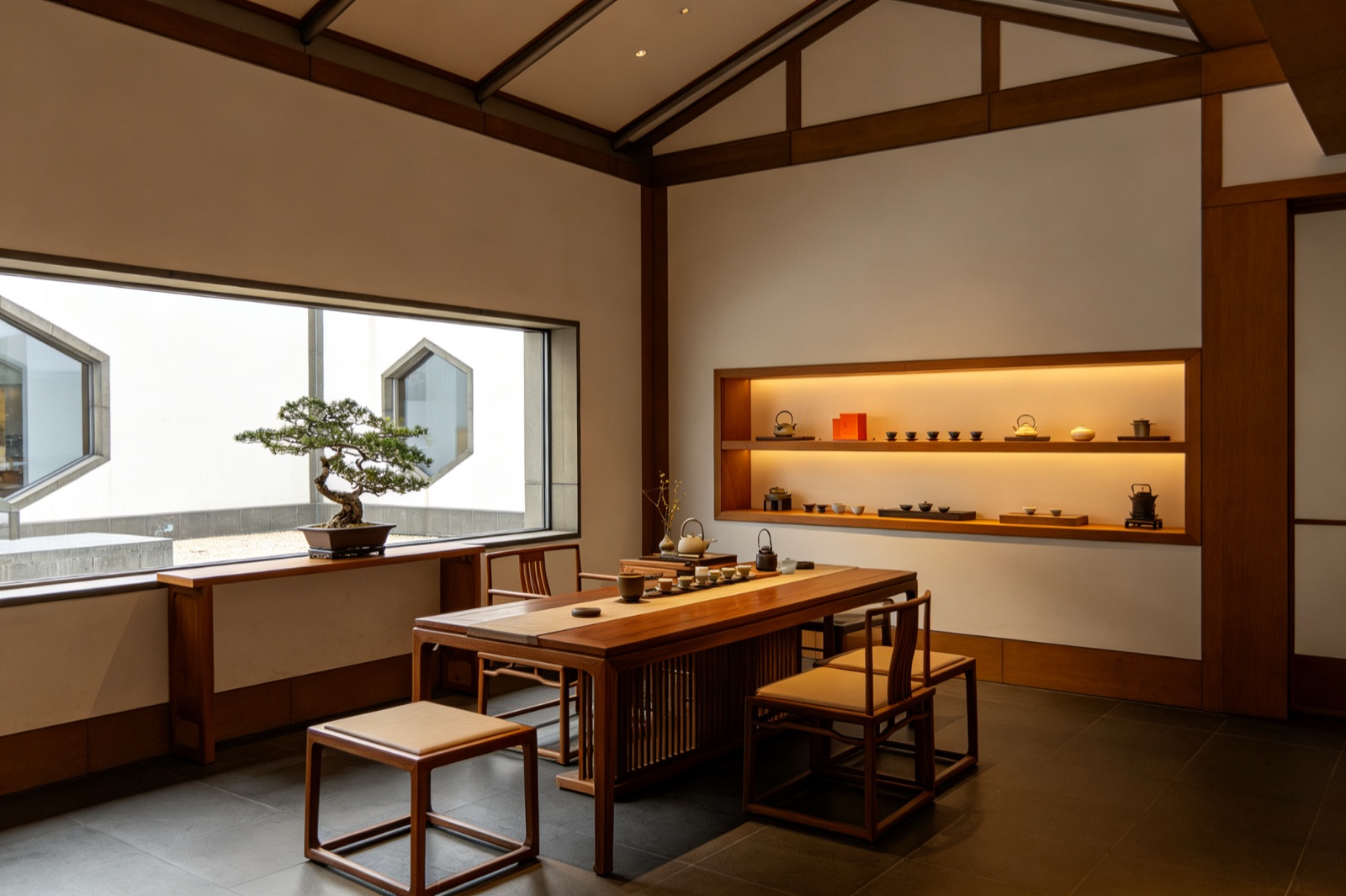
The Tea House is located in the museum's west wing, adjacent to the Loyal King's Mansion, and was designed by I. M. Pei as a light and airy modern space built with glass and steel. The interior is elegantly furnished in the spirit of traditional Suzhou furniture, and serves famous teas including Biluochun and Longjing, alongside Suzhou-style pastries. The Tea House overlooks the Wisteria Garden and the Loyal King's Mansion courtyard, so visitors can enjoy a classical garden view while sipping tea. It is the museum's resting point and an ideal setting for experiencing Suzhou's cultural tradition of tea and contemplation. The Tea House weaves Suzhou's tea culture seamlessly into a contemporary architectural space, offering visitors a quiet moment of Jiangnan-style slow living after the intensity of the galleries.
Taiping Heavenly Kingdom Loyal King's Mansion
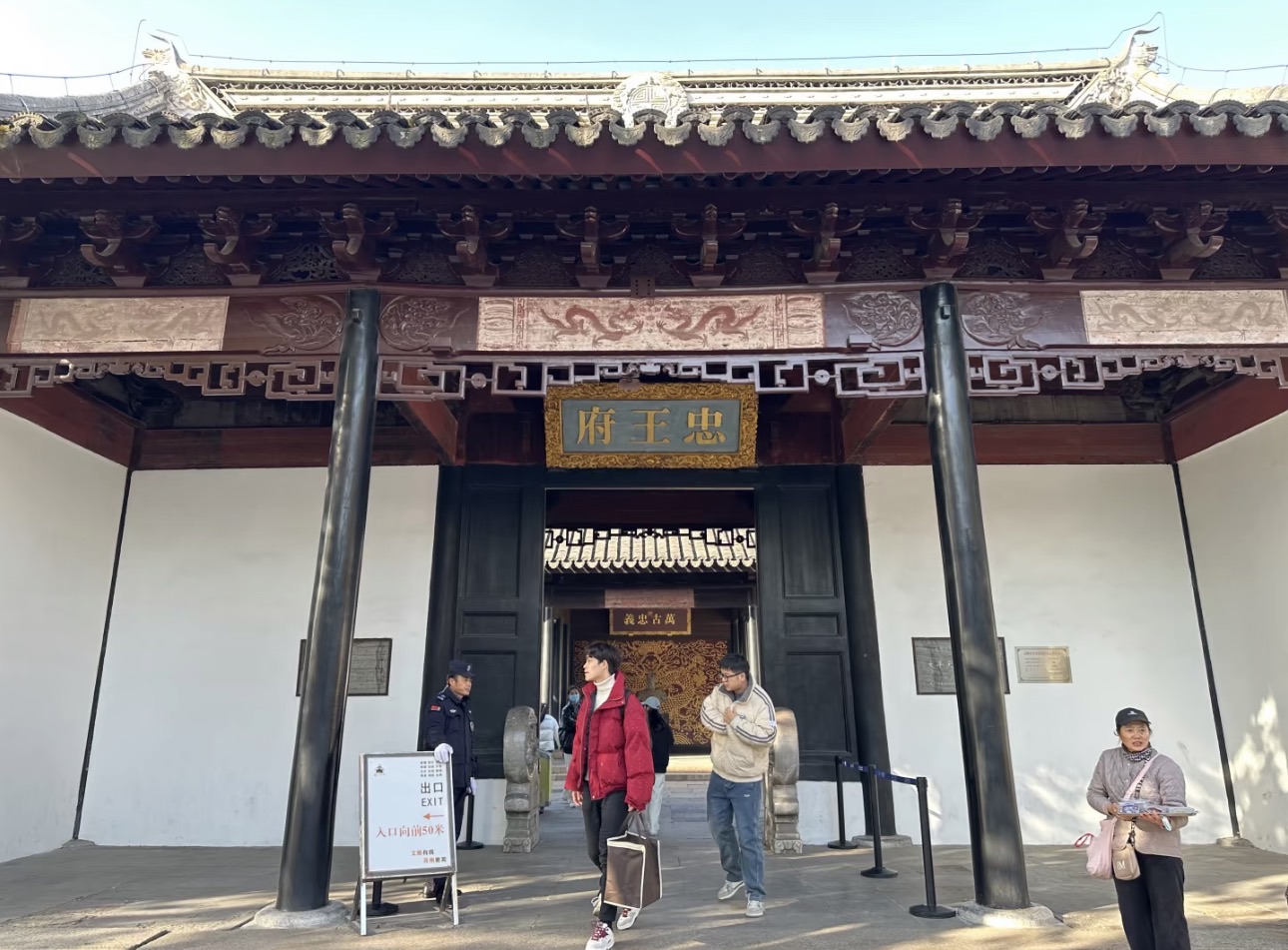
The Taiping Heavenly Kingdom Loyal King's Mansion is the most completely preserved architectural complex from the Taiping Heavenly Kingdom period in China. It was designated a national key cultural heritage site in 1961. The mansion originally formed the eastern section of the Humble Administrator's Garden during the Qing dynasty. In 1860, after Taiping forces under Loyal King Li Xiucheng captured Suzhou, the site was converted into a royal residence and construction continued over three years. The complex faces south, is organized along three parallel axes — central, eastern, and western — and includes a main gate, ceremonial gate, main hall, rear hall, study, and garden, covering approximately 15,000 square meters in total. The mansion retains extensive Taiping-era painted murals, wood carvings, and brick carvings; the dragon medallion painted ceiling in the main hall is the highest-grade decorative survivor from the Taiping Heavenly Kingdom period. After the new museum building opened, the Loyal King's Mansion was brought under the museum's management, becoming the final gallery in the visitor circuit and an important landmark connecting Suzhou's historical memory with the revolutionary era of modern China.
10 stops, in walking order — read top to bottom, no clicking needed.

 2
 3
 4
 5
 6
 7
 8
 9
 10