Travel Guide› Suzhou› Pingjiang Road Historical Block / Pingjiang Historic District
Suzhou · Market & old street

Pingjiang Road Historical Block / Pingjiang Historic District 平江路历史街区

Pingjiang Road Historical Block / Pingjiang Historic District
Address
Pingjiang Road, Gusu District, Suzhou, Jiangsu Province, China (from Ganjiang Road in the south to Baita East Road in the north)
Pingjiang Road Historic District

Overview

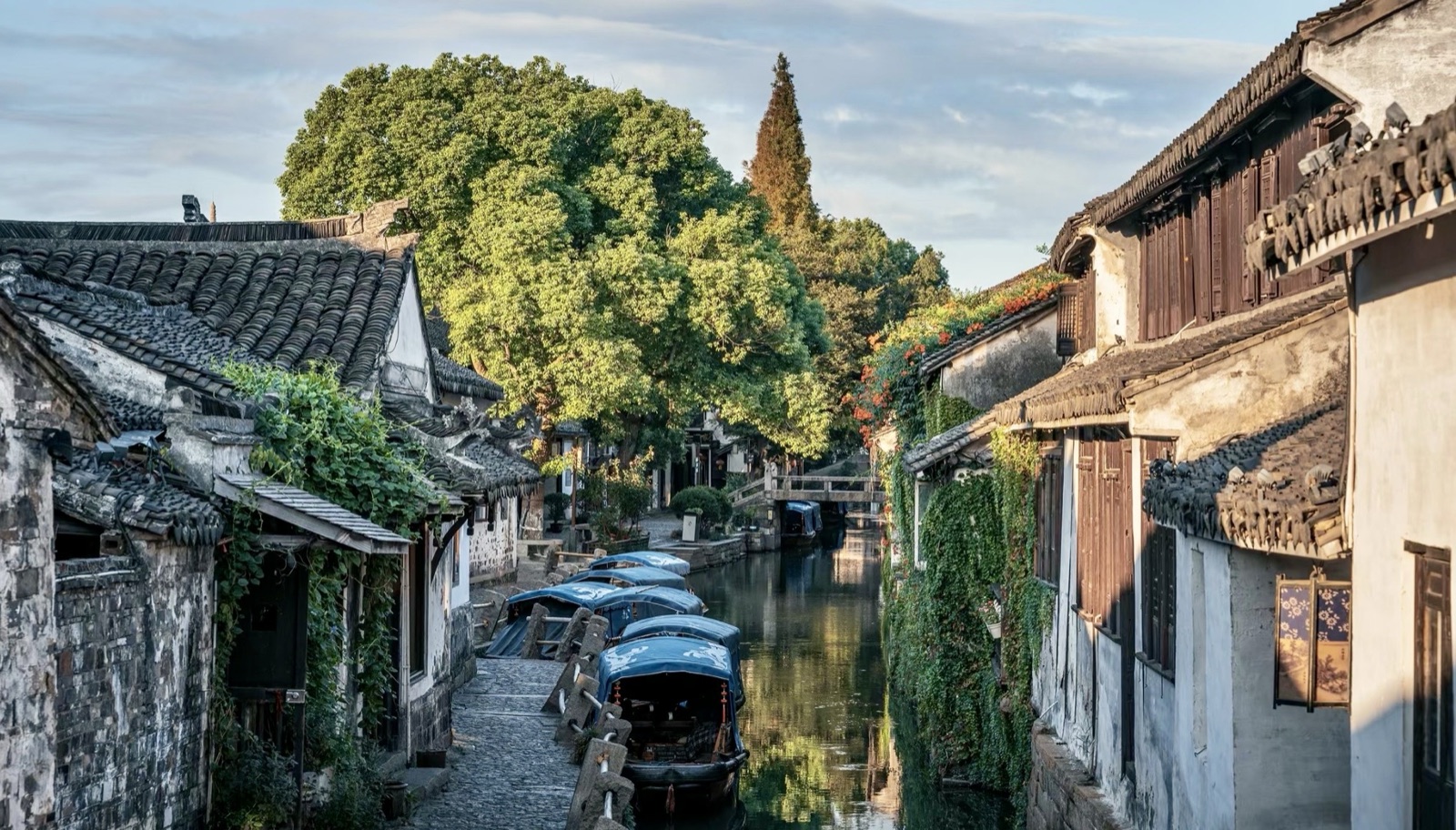
Pingjiang Road Historic District sits in the northeastern part of Gusu District, Suzhou, Jiangsu Province. It stretches from Ganjiang East Road in the south to Dongbeijie in the north — 1,606 meters long and roughly 3.2 meters wide — making it one of the best-preserved historic neighborhoods in Suzhou's ancient city. The district traces its origins to the Tang dynasty, giving it a history of more than 1,200 years, and it is a living example of Suzhou's signature "parallel canal and road" urban layout, where waterway and street run side by side. In 2009 it was named one of the inaugural "Famous Historic and Cultural Streets of China," and in 2011 it was designated a National AAAA Tourist Attraction.

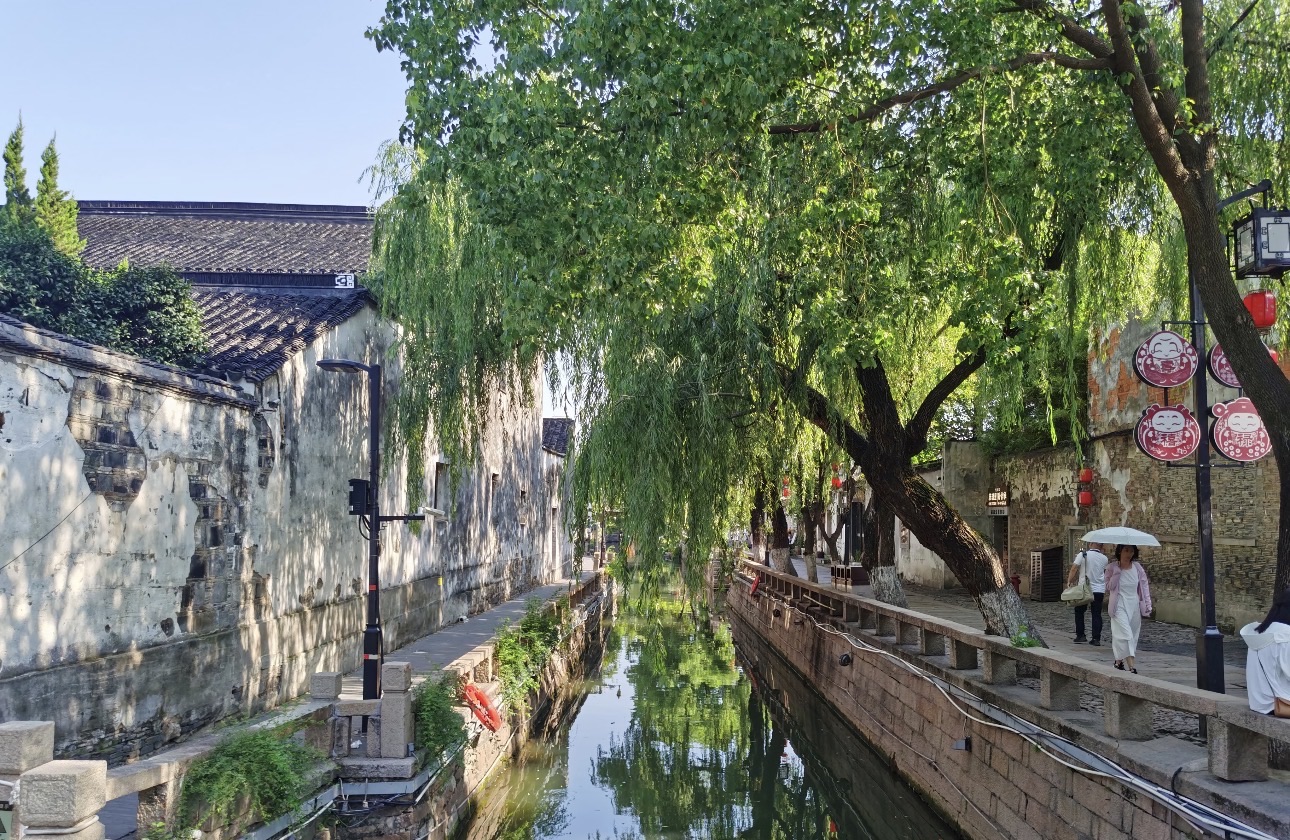
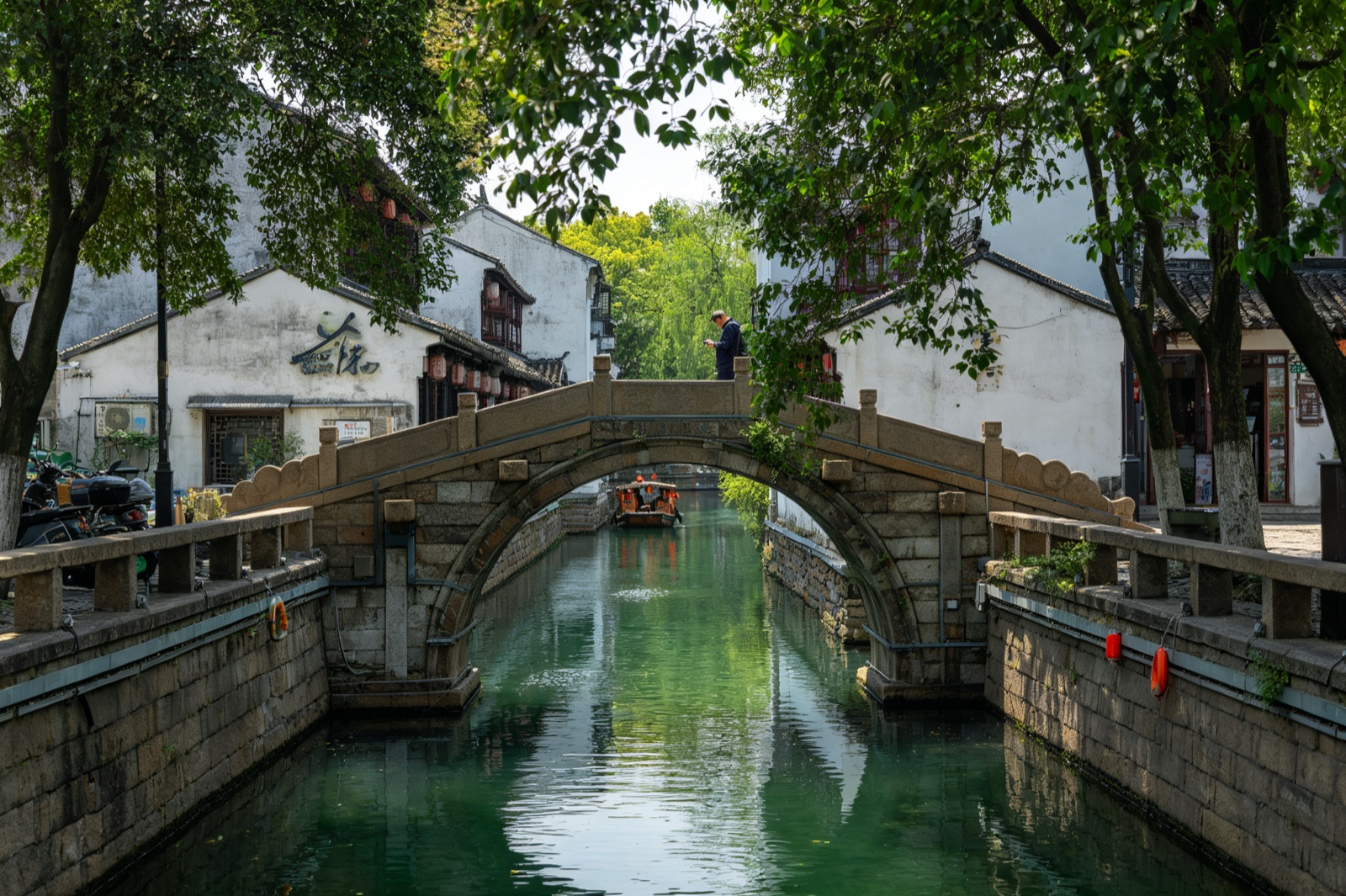
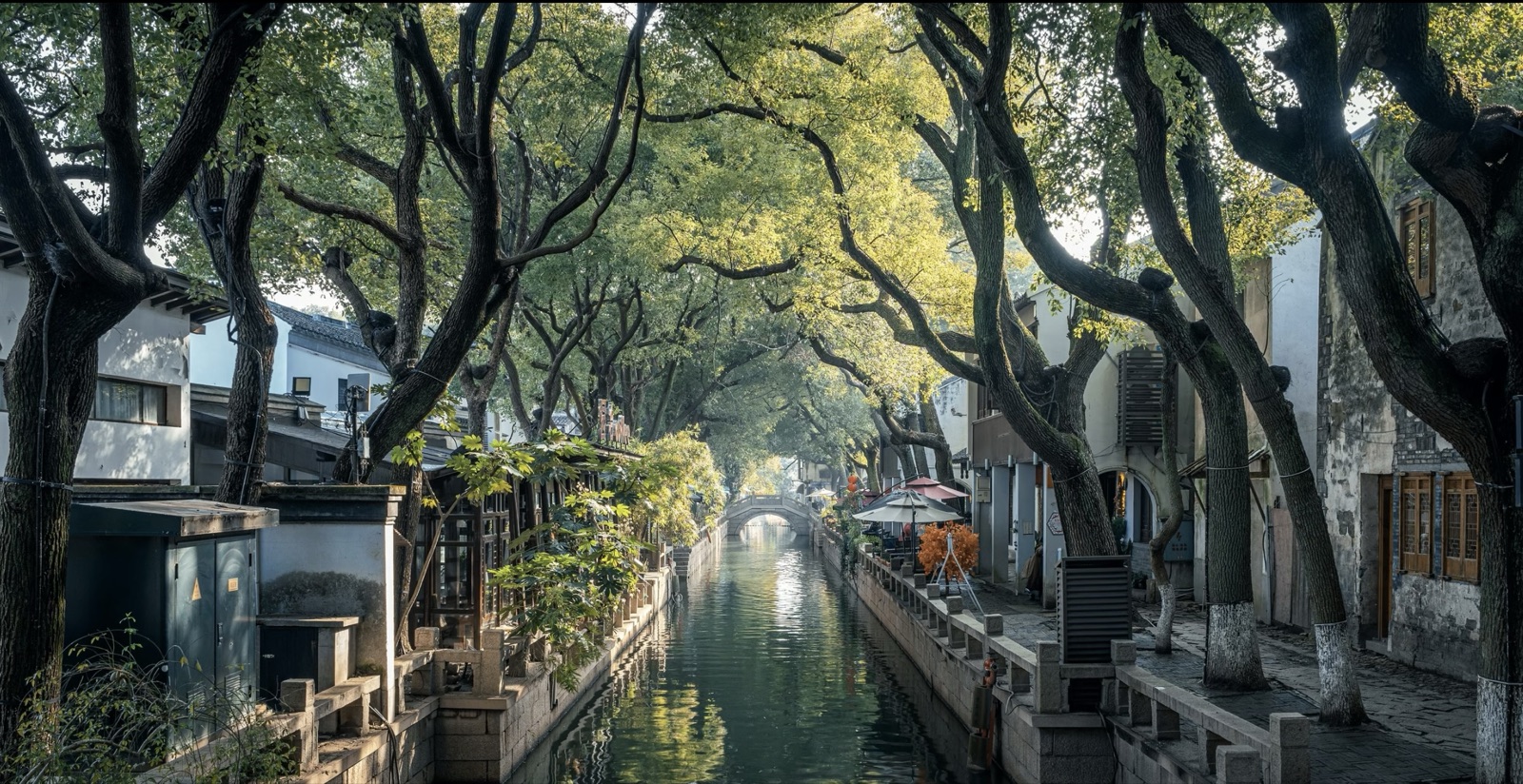
Pingjiang Road follows the course of Pingjiang Canal, which runs alongside it throughout its length. This pairing of canal and road is one of the defining features of Suzhou's ancient cityscape. Along both sides of the street, a large number of traditional Ming and Qing dynasty residences survive intact — whitewashed walls, dark-tiled rooftops, and upturned eaves composing the classic Jiangnan watertown image of "small bridges, flowing water, and homes." Seventeen ancient bridges span the canal within the district, among them Sipo Bridge, Qingshi Bridge, and Huxiangshi Bridge — all precious survivors from the Song or Ming dynasties.

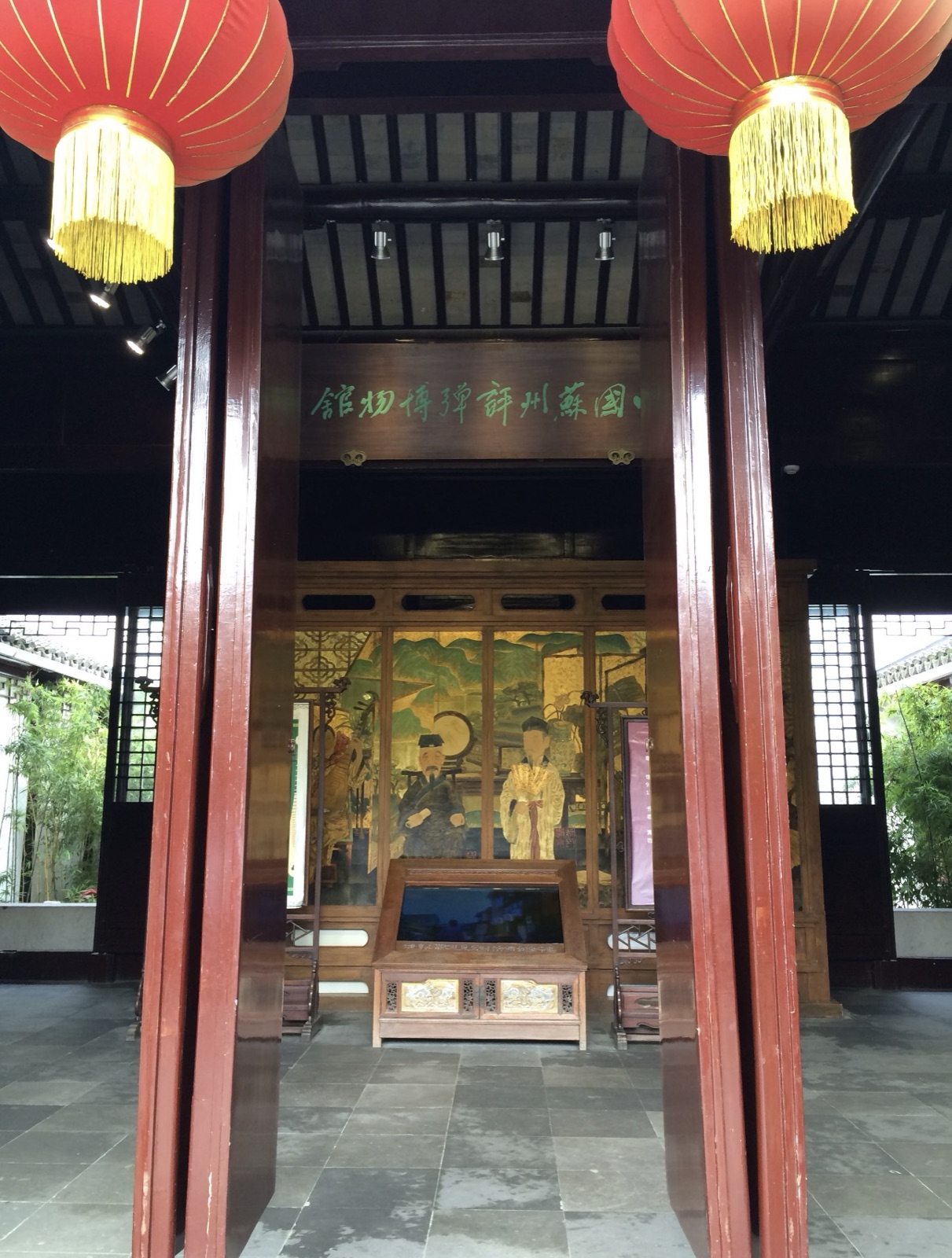
Pingjiang Road is more than a street; it is a cultural corridor. The district is home to the Suzhou Pingtan Museum, the China Kunqu Opera Museum, the Suzhou Number One Scholar Museum, and the Suzhou Fan Museum, making it a key showcase for Suzhou's intangible cultural heritage. Across the centuries, writers and scholars such as Dai Wangshu, Hong Jun, and Huang Pilie all left their mark here. The branching lanes that open off the main street — Xuanqiao Lane, Daru Lane, and Lilac Lane among them — each carry their own distinct character and layers of history.

Pingjiang Road is free to enter at all hours and rewards a visit in any season. The district blends traditional craft workshops, teahouses, and guesthouses with modern cafes and design boutiques — a lively mix of old and new, and an ideal place to experience both the beauty of Suzhou's ancient city and the unhurried rhythm of Jiangnan life.

Individual Stops

1. Xiangmen Entrance

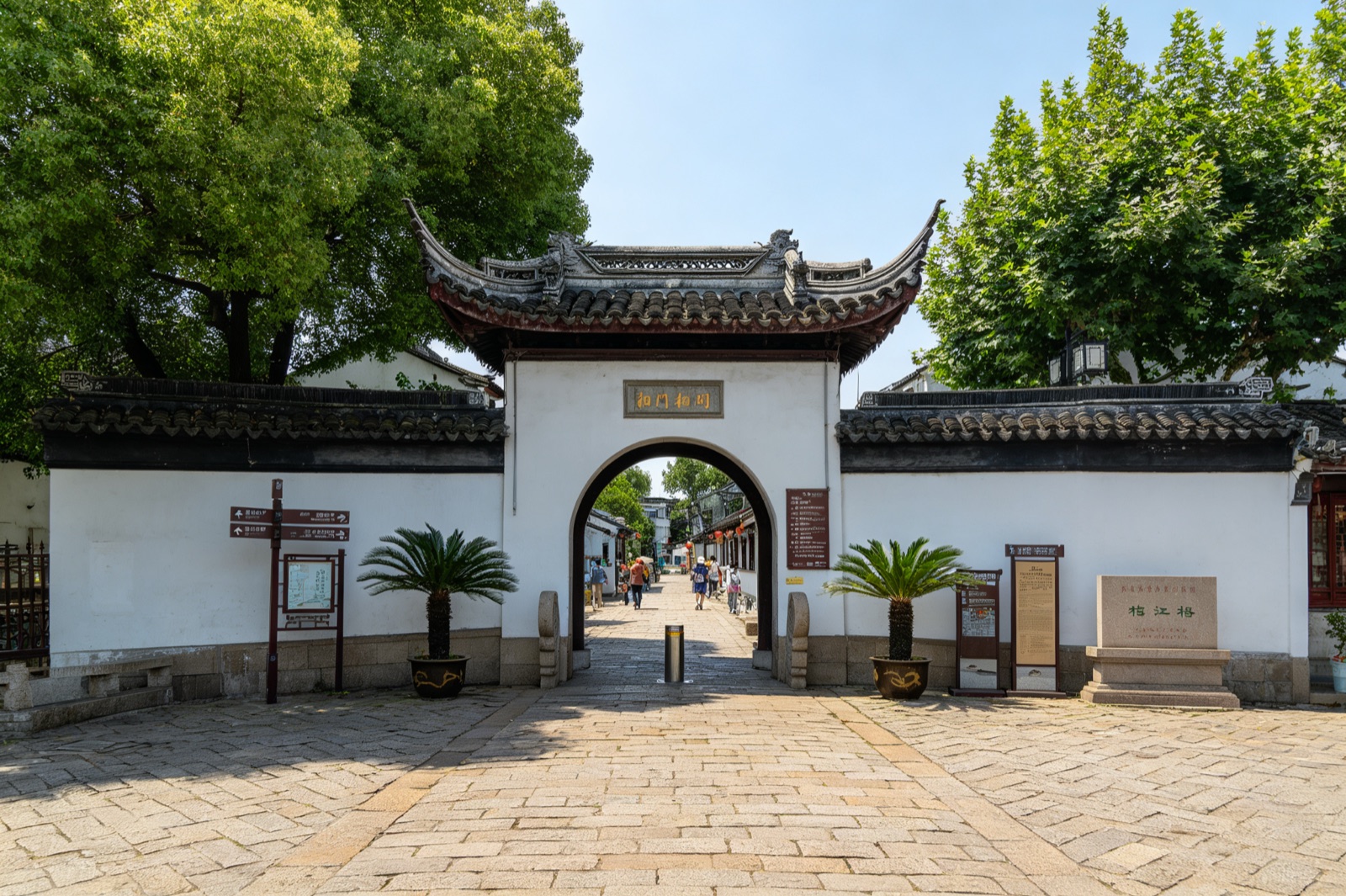
Xiangmen Entrance is the main southern gateway to Pingjiang Road Historic District, right next to Xiangmen Station on Suzhou Metro Line 1. A signature decorative archway and a visitor map mark the starting point of the walk. From here, heading north along Pingjiang Road, visitors can experience the full "canal-and-road" layout at its best. The area around the entrance is well served by restaurants and shops, making it a natural gathering point before setting out.

2. Yuan Bridge

Yuan Bridge sits at the southern end of Pingjiang Road, near the Ganjiang East Road entrance. Legend holds that this spot was once the royal hunting grounds and gardens of King Helv of Wu during the Spring and Autumn period — hence the name "Yuan," meaning garden or enclosure. The bridge is the southernmost span over Pingjiang Canal and the first ancient bridge visitors encounter after entering the district. Standing on Yuan Bridge, you can look out over the whitewashed walls, dark-tiled rooftops, and trailing willows lining both banks — one of the classic viewpoints for taking in the full character of Pingjiang Road.

3. Sipo Bridge

Sipo Bridge is the southernmost east-west crossing over Pingjiang Canal, a Song dynasty survivor of nearly a thousand years and the oldest bridge along the street. The name "Sipo" comes from a touching legend: a devoted son, parted from his mother who had married far away, would come to this bridge every day to gaze toward where she had gone, longing for her return. "Po" is the local term for an older woman, used here affectionately for a mother. The bridge is a flat stone slab construction — simple, unadorned, and in quiet harmony with the residences on either bank. The stonework has held firm through the centuries; the carvings on the railings are worn but still legible. Standing on Sipo Bridge, you can feel the weight of nearly a thousand years of history.

4. Lilac Lane

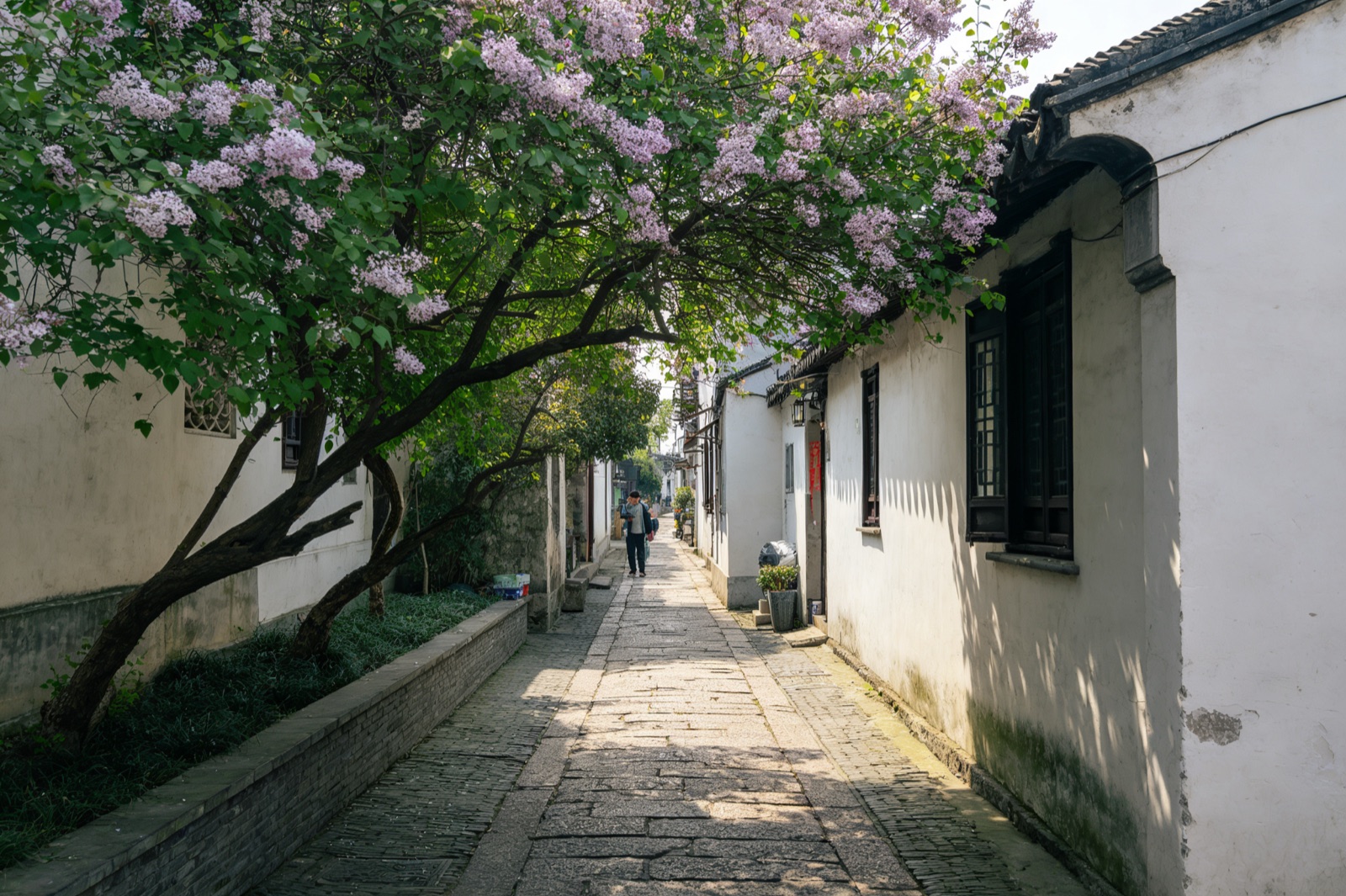
Lilac Lane is a branching alley on the west side of Pingjiang Road, named for the lilac trees that once grew here. The lane is celebrated around the world as the inspiration for "Rainy Lane," the signature poem by Dai Wangshu, one of China's finest modern poets. The poem's famous opening — "Holding an oil-paper umbrella, I wander alone / through the long, long and desolate rainy lane" — draws its mood and imagery directly from this alley. The lane winds deep between whitewashed walls and dark-tiled old houses; on a rainy day, walking through it conjures exactly the melancholy poetry Dai Wangshu captured. Lilac Lane has become one of the defining cultural symbols of Pingjiang Road.

5. Zhongzhangjia Lane (Suzhou Pingtan Museum)

Zhongzhangjia Lane opens off the western side of Pingjiang Road at its midpoint and is home to the Suzhou Pingtan Museum. Pingtan — the collective name for Suzhou storytelling (Pinghua) and ballad-singing (Tanci) — is celebrated as "the most beautiful sound in China" and is a national intangible cultural heritage. The museum holds a rich collection of historical artifacts, instruments, costumes, and documents tracing the art form's development, and runs a live performance hall where visitors can watch a genuine Suzhou Tanci performance for a small fee. Performed in the soft Wu dialect with a lilting, melodic delivery, Pingtan is one of the finest ways to experience Suzhou's living traditional culture.

6. Niujia Lane (Suzhou Number One Scholar Museum)

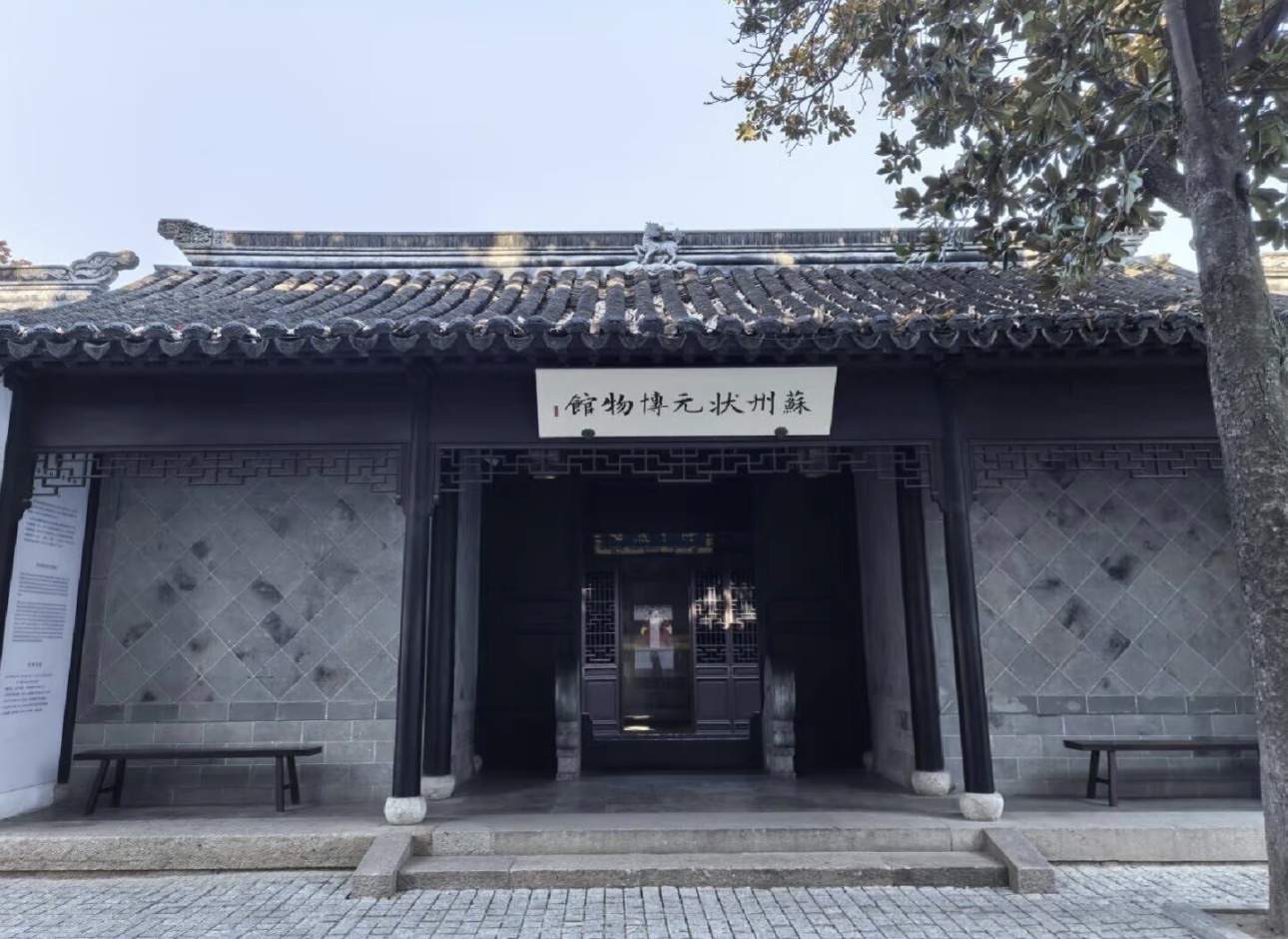
Niujia Lane runs off the middle section of Pingjiang Road and is home to the Suzhou Number One Scholar Museum. Built around the former residence of Pan Shi'en — a top imperial examination scholar of the Qing dynasty — the property is more than 200 years old and a classic example of Suzhou-style garden architecture, now listed as a Jiangsu Province Cultural Heritage Site. The museum is arranged across four halls — the Sedan Chair Hall, the Double-sided Hall, the Official's Hat Hall, and the Rear Hall — separated and connected by elegant courtyard gardens, together tracing the history of Suzhou's examination culture and the imperial civil service system. At Number 33 Niujia Lane there is also a remarkable "Boat House," a residence whose main structure is built in the shape of a boat — a rare architectural form constructed during the Jiaqing reign of the Qing dynasty.

7. Daru Lane

Daru Lane runs off the eastern side of Pingjiang Road at its midpoint, named after Wang Jingchen, a celebrated Ming dynasty scholar who once lived here. Wang was a man of vast learning and exemplary character, honored by his contemporaries as a "great Confucian" — "daru" in Chinese — and the lane took his name. Several Ming and Qing dynasty buildings survive in the alley, but its most celebrated feature is a centuries-old ginkgo tree that once belonged to the Zhaoqing Temple. Every autumn the leaves turn gold, and when the wind blows, they swirl down to carpet the lane in yellow. Quiet and deeply atmospheric, Daru Lane is one of the most richly humanistic side alleys in the entire district.

8. Xuanqiao Lane (Hong Jun's Former Residence, Boat House)

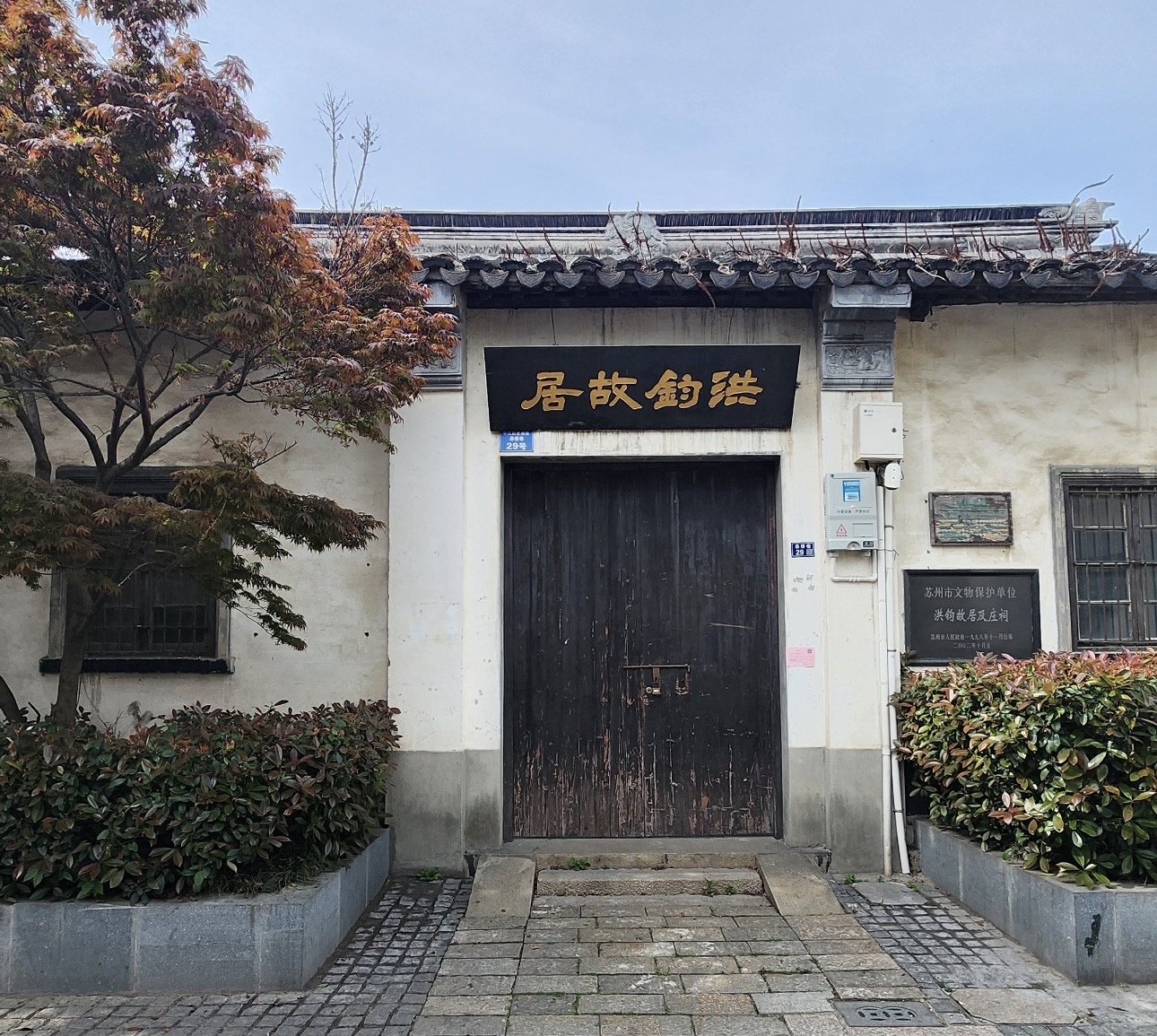
Xuanqiao Lane branches off the western side of Pingjiang Road toward its northern end and is the most storied alley along the entire street. Its most famous address is the former residence of Hong Jun — a top imperial scholar and prominent diplomat of the late Qing dynasty who served as China's envoy to Russia, Germany, Austria, and the Netherlands. Hong Jun's concubine, Sai Jinhua, is one of the most legendary women in late Qing history; their intertwined lives are full of drama and historical intrigue. The lane also preserves the former site of Huang Pilie's "Shili Residence," once one of the most celebrated private libraries of the Qing dynasty. Also in the vicinity is the "Boat House" at Number 33 Niujia Lane — built during the Jiaqing reign, its main structure is shaped like a vessel, an exceptionally rare architectural form within Suzhou's ancient city.

9. Qingshi Bridge

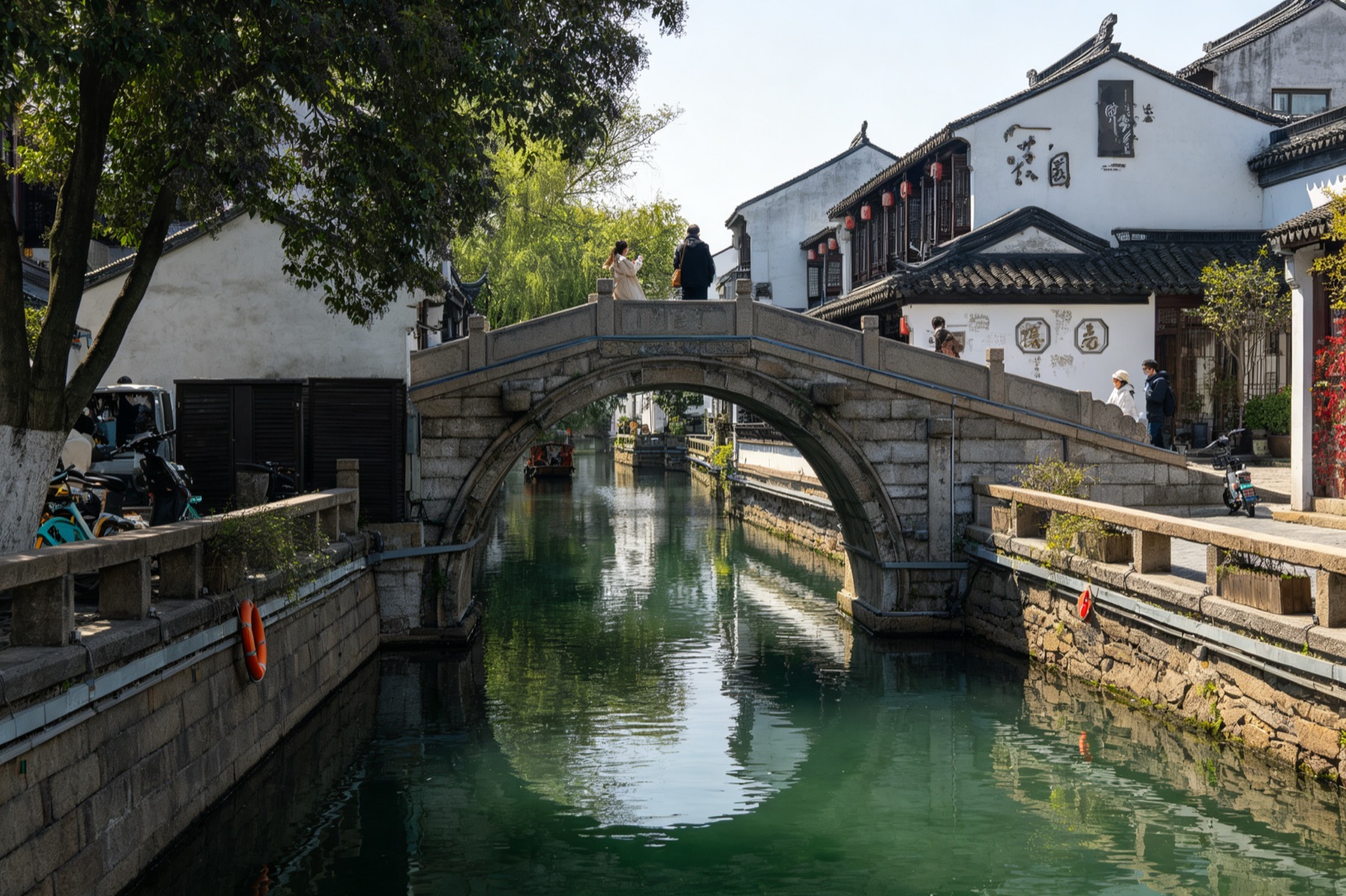
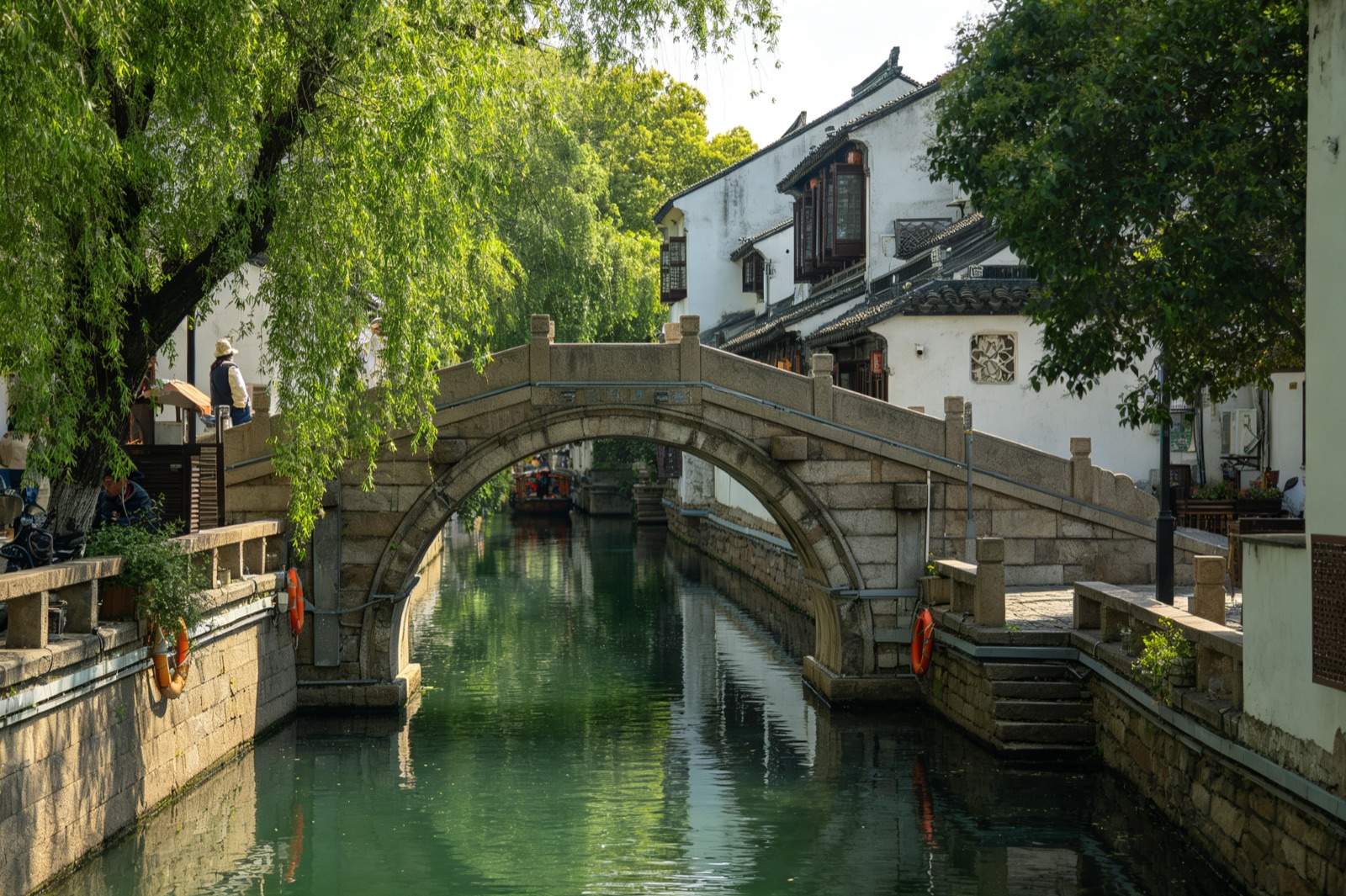
Qingshi Bridge sits toward the northern end of Pingjiang Road and is an arched stone bridge built entirely from qingshi — the gray-blue limestone characteristic of Suzhou. The original structure dated from the Ming dynasty; it was rebuilt to the same design in 2003. Qingshi has a cool gray tone that pairs beautifully with the white walls and dark-tiled rooftops of Pingjiang Road. The bridge's curved form is graceful, its lines smooth, and the railings carry restrained, elegant carving. Standing on Qingshi Bridge and looking north, the quieter upper stretch of the canal comes into view; looking south, the outlines of Sipo Bridge and Yuan Bridge are visible in the distance. It is one of the most representative bridges along the entire street.

10. Jin-Shanxi Guild Hall / Suzhou Opera Museum

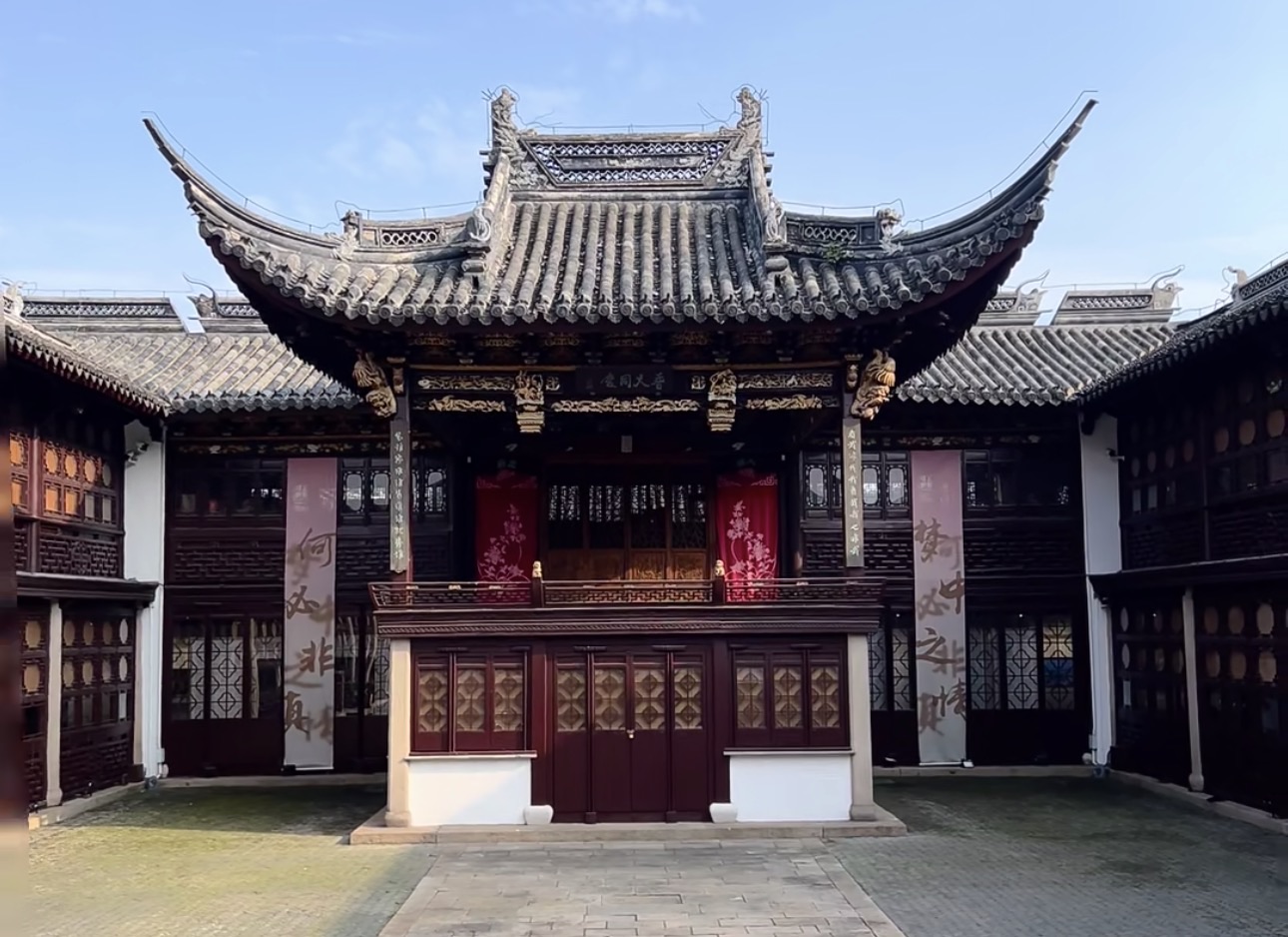
The Jin-Shanxi Guild Hall stands at the northern end of Pingjiang Road and is a national key cultural heritage site, now operating as the Suzhou Opera Museum (also known as the China Kunqu Opera Museum). Built during the Qianlong reign of the Qing dynasty by Shanxi merchants trading in Suzhou, the complex is grand in scale and exquisite in craftsmanship. Its historic stage is one of the finest surviving examples of a traditional theater stage in Suzhou, and the caisson ceiling above the performance area is a masterpiece of woodcarving — praised by the architect I.M. Pei as "an architectural miracle." Assembled from hundreds of individually carved wooden pieces, the ceiling rises in concentric layers like a lotus in bloom, combining extraordinary aesthetic beauty with remarkable acoustic properties. The museum holds extensive collections of Kunqu opera, Pingtan, and other performing arts artifacts, and is the finest single destination for exploring Suzhou's rich theatrical culture.

Practical info Opening hours · Ticket · Getting there
Opening hours
  • The street is open 24 hours a day
  • Shops, restaurants, and museums along the street generally operate from 09:00 to 22:00; hours vary by venue
Ticket
  • The street is open to the public free of charge, 24 hours a day
  • Some internal attractions, museums, guild halls, and gardens charge separate admission fees; check on-site notices
  • Boat rides: charged separately according to posted rates
Getting there
  • Metro: Take Metro Line 1 to Xiangmen or Lindun Road station and walk 5–10 minutes to Pingjiang Road
  • Bus: Take tourist lines 1, 2, or 5, or bus routes 2, 5, 9, 40, 60, 89, 146, 178, 200, 202, 204, 261, 305, 307, 311, 529, 800, 900, 923, or 925 to Xiangmen, Pingjiang Road, Lindun Road, or Suzhou Municipal Hospital East District stops
  • Driving: Navigate to “Pingjiang Road Historical Block.” Roads in the old city are narrow and parking is scarce; park in nearby lots and walk
  • Taxi/ride-hailing: Set destination to “Pingjiang Road” or “Pingjiang Road Historical Block (Xiangmen Entrance)”

Inside Pingjiang Road Historical Block / Pingjiang Historic District

10 stops, in walking order — read top to bottom, no clicking needed.

1 Xiangmen Entrance of 10

Xiangmen Entrance

相门入口

Xiangmen, also known as Jiangmen (Craftsman's Gate), is one of the eight ancient gates of Suzhou, named after the legend that King Helu of Wu ordered swordsmiths to work here. The restored city wall now stands majestically at the southern end of Pingjiang Road, serving as the primary gateway for visitors entering this thousand-year-old historic block. The surrounding city wall heritage park is shaded by lush greenery, and climbing the wall offers panoramic views of the ancient city's canal-and-alley landscape. It serves both as the starting point of a Pingjiang Road stroll and as a significant landmark for appreciating Suzhou's city layout and gate culture.

On-site narration · read it where you stand

Welcome, everyone, to Pingjiang Historic District in Suzhou. Today we start at the Xiang Gate entrance in the south and walk our way north, taking it slow and soaking it all in along this street with more than 1,200 years of history.

We're standing right now at the southern entrance to Pingjiang Road — the Xiang Gate entrance. It sits right next to Xiang Gate station on Metro Line 1, so getting here is very easy. Look up and you'll see the iconic archway marked "Pingjiang Road" in large characters. Notice the style of this archway. It's not the flashy, overblown kind you see at most tourist spots — it's clean and understated, white walls and dark roof tiles, blending seamlessly with everything on the street. That is pure Suzhou taste: quiet, restrained, and quietly profound.

Pingjiang Road is open every day, free of charge, with no tickets and no reservations required. You're welcome to drop in any time. The street runs roughly 1,606 metres end to end, with a width of just 3.2 metres — genuinely old-street proportions. Think about it: more than 1,200 years ago, in the Tang dynasty, people walked this very same route to trade goods, visit neighbours, and catch up on gossip. The bluestone paving underfoot has been repaired over the centuries, but the path's position and direction have barely changed. Walking here is, in a sense, walking in the same footsteps as people from the Tang dynasty.

Look to either side. To the east of Pingjiang Road runs the Pingjiang River; to the west sit the residences and shops lining the bank. This "one river, one street" layout is a defining feature of Suzhou's ancient city — a pattern of waterways and roads running side by side, neighbourhood after neighbourhood. Many water-town districts survive in the Jiangnan region, but a historic street like Pingjiang Road, this intact, sitting at the heart of a major city, is genuinely rare.

In 2009, Pingjiang Road was named one of China's first ten National Historic and Cultural Streets — only ten streets in the whole country made the inaugural list, and this was one of them. In 2011 it became a national AAAA-rated tourist area. One important thing to keep in mind: Pingjiang Road is not a sealed-off tourist park. It's a living neighbourhood — residents still live here. Please keep your voice down and respect the daily rhythms of people's lives as you explore.

For photographers, the entrance area offers one of the best full-length views of Pingjiang Road. Stand under the archway, look north, and you'll see the stone path stretching into the distance, flanked by white-walled, dark-tiled houses with bridges appearing faintly in the middle ground. Try using your phone's ultra-wide mode or a lens wider than 24mm to capture the full depth and the buildings on both sides. The best light is around eight or nine in the morning, and again around four or five in the afternoon, when the sun hits at an angle, casting light and shadow across the stone path for the most photogenic results.

Alright, let's set off. We head north along Pingjiang Road. Just ahead is the first bridge over the southern end of the Pingjiang River — Yuan Bridge.

Yuan Bridge

苑桥

Yuan Bridge spans the Pingjiang River as a classic stone arch bridge embodying the Jiangnan water-town aesthetic. Its name derives from the royal or private gardens that once graced its vicinity; though those gardens have faded into history, the bridge's elegant form still evokes the prosperity of bygone eras. Standing on the bridge, one gazes east at whitewashed residences lining the canal and west at the winding flagstone path, where reflections and dwellings create a charming interplay. Yuan Bridge is not only a key node in Pingjiang Road's dual water-and-land layout but also an ideal spot for photographers and visitors to capture the iconic imagery of "small bridge, flowing water, and humble home."

On-site narration · read it where you stand

From the entrance, heading north, we've arrived at Yuan Bridge. Yuan Bridge is the first bridge over the southern end of the Pingjiang River — and the first ancient bridge you encounter as you enter Pingjiang Road.

Let's talk about how Yuan Bridge got its name. Legend has it that during the Spring and Autumn period, this area was King Helü of Wu's royal garden and hunting ground — an imperial preserve known as a yuanyou — and so the bridge was named Yuan Bridge. Think about it: more than 2,500 years ago, King Helü may have stood right here, taking in the garden scenery or riding through with his entourage. The feeling of crossing centuries is almost physical.

Yuan Bridge is a flat stone bridge, simple in structure, its surface paved with stone slabs and fitted with stone railings on both sides. Look closely at the carvings on the railings — weathered and worn in places, but you can still make out the craftsmanship underneath. Run your hand along one of these stone railings. The surface has been smoothed by the touch of countless generations until it feels almost warm, like polished jade. That deep, worn lustre is the most precious kind of decoration — one that only time can provide.

Standing on Yuan Bridge, take a look around. To the east, the Pingjiang River stretches out, a small boat drifting slowly past as the oars break the surface and send ripples spreading outward. To the west, old houses line the bank — white walls, dark roof tiles, laundry hanging from balconies, full of everyday life. To the north, Pingjiang Road extends into the distance: stone path, old houses, and trees layered together like an unrolling scroll of Jiangnan painting.

This is a classic spot for a full panoramic shot of Pingjiang Road. Stand in the middle of the bridge, face north, shoot horizontally, and you can capture the road, the river, and the buildings on both banks in a single frame. Try shooting at f/8 to f/11 to keep everything sharp from foreground to background. If you come in the early morning, there may be a thin mist over the river, and the result is a softly blurred, ink-wash quality — genuinely beautiful.

Look down at the water too. The river runs clear enough to see the stone slabs on the bottom and the occasional small fish passing through. Pingjiang River is not large, but the water quality has stayed good, thanks to years of restoration work on Suzhou's ancient canal system. Willows line the banks: in spring, fresh green branches trail down to the surface; in summer, their canopy blocks the sun; in autumn, yellow leaves drift down to speckle the water; in winter, bare branches trace strong, elegant outlines against the sky. Each season brings a different beauty.

Right, let's cross Yuan Bridge and keep walking north. The next stop is the oldest bridge on all of Pingjiang Road — Sipo Bridge.

Sipo Bridge

思婆桥

Sipo Bridge is among the oldest bridges on Pingjiang Road. Legend attributes its name—"Sipo" meaning "remembering the granny"—to a kind old woman who offered tea and alms here; another theory links it to "Shipo" (female shaman or nun). Regardless of origin, this single-arch stone bridge has endured centuries of weather, its flagstones polished to a warm sheen by countless footsteps, its low rail blending seamlessly with the modest riverside dwellings. In morning mist or evening lamplight, Sipo Bridge paints a faint ink-wash canal scene, serving as one of the finest windows into Suzhou's neighborhood philosophy that "bridges are life itself."

On-site narration · read it where you stand

We've arrived at the oldest bridge along Pingjiang Road — Sipo Bridge. This bridge dates from the Song dynasty, nearly a thousand years old, making it the most ancient of the 17 historic bridges along Pingjiang Road.

Listen to the story behind the name "Sipo Bridge." Legend tells of a young man whose mother had remarried far away, leaving him behind. Missing her deeply, he came to this bridge every day and gazed in the direction she had gone, longing for her return. The people around him were so moved by his devotion that they named the bridge after his vigil. "Po" in the local Suzhou dialect is a term for an older woman, and here it refers to a mother. The image of someone coming to a bridge every day, year after year, waiting for a parent — that kind of love still resonates today.

Look carefully at the structure of this bridge. Sipo Bridge runs east to west, a flat stone-slab bridge, its surface formed from a few large stone panels with low stone railings on either side. After nearly a thousand years of wind and rain, the bridge remains solid. The carvings on the railings have worn away somewhat, but the bridge itself holds firm. Crouch down and take a close look at the stone surface. You'll see deep grooves worn into it — carved not by tools but by centuries of footsteps and passing carts. These grooves are history's growth rings, each one recording the passage of countless lives.

Sipo Bridge is strikingly unadorned. No elaborate decoration, no dramatic arch — just a handful of stone slabs laid across the water. Yet that very plainness embodies the Song-dynasty aesthetic of finding beauty in simplicity. The Song dynasty was the peak of Chinese classical aesthetics: in architecture, painting, and poetry alike, the ideal was something restrained, natural, and effortlessly composed. Sipo Bridge is a living expression of that philosophy.

Stand on Sipo Bridge and feel the atmosphere. The bridge sits low over the water; you're close enough to hear the gentle current below. The old houses on both banks crowd right up to the bridge — stand here and you could almost shake hands with a neighbour across the canal. That sense of intimate closeness is part of what makes Jiangnan water towns so distinctive: between people and water, people and buildings, people and each other, there is almost no distance at all.

For photographers, Sipo Bridge is an ideal spot for candid, human-interest shots. Find a place on the bridge and wait: wait for a small boat to glide through under the arch, or for an elderly person to cross with a walking stick. Catch that moment, and the photograph tells a story by itself. Shoot from the side with a longer lens to compress the bridge, its reflection on the water, and the buildings on both banks into one frame. On a rainy day, the wet stone darkens and deepens in colour, throwing the white walls alongside into sharp contrast — the texture in those shots is exceptional.

Alright, across Sipo Bridge and continuing north. Ahead is the most poetic side lane along Pingjiang Road — Lilac Lane.

Dingxiang Lane (Lilac Lane)

丁香巷

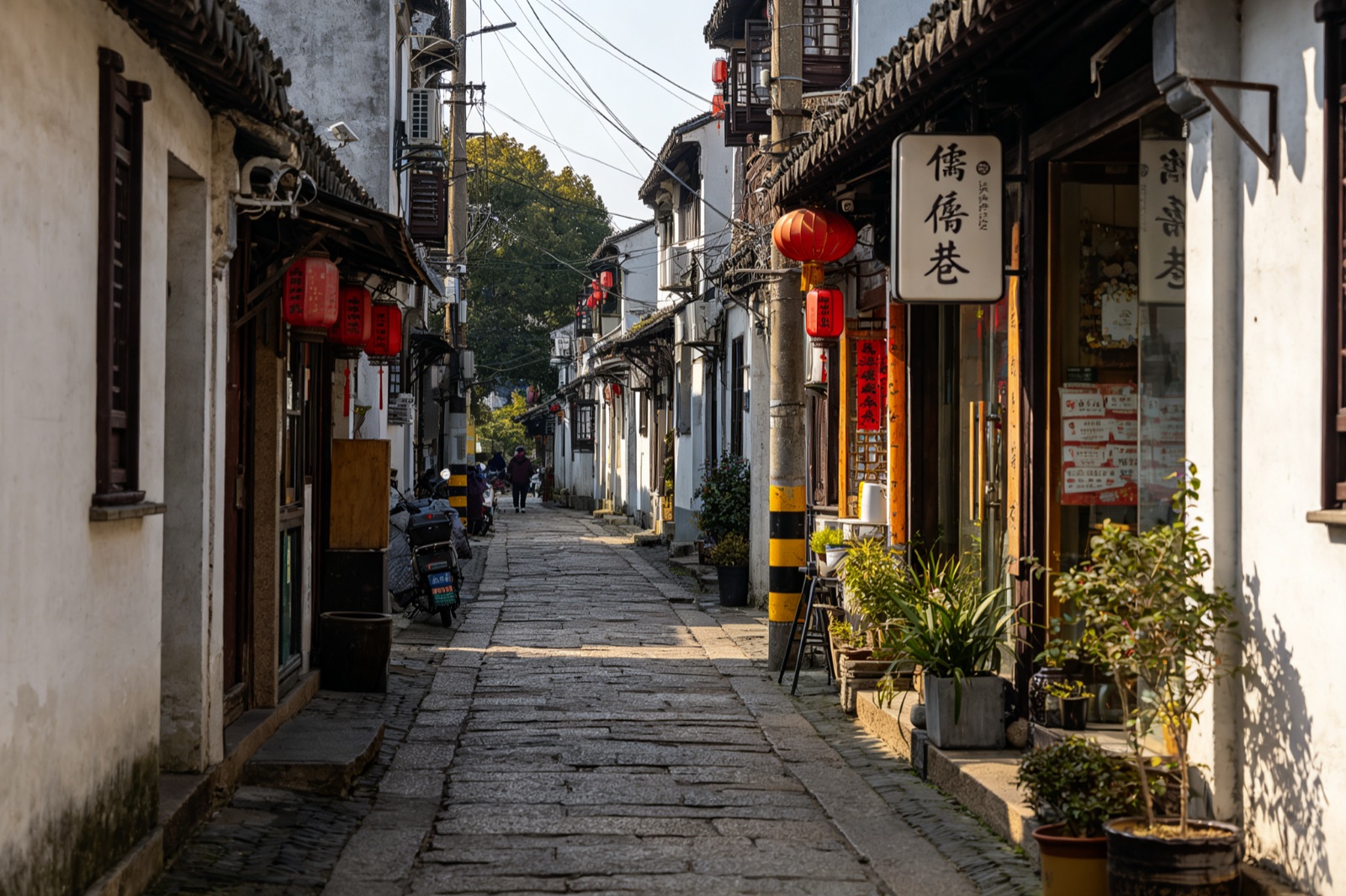
Dingxiang Lane is a narrow, deeply secluded branch lane east of Pingjiang Road, named after the lilac trees that once filled it. In late spring and early summer, purple petals drift onto flagstones, perfuming the alley with a subtle fragrance. It also houses the former residence of the modern scholar Gu Jiegang, intertwining academic heritage with floral poetry. Old doorways stand half-open, cats dart past, and drying clothes coexist with carved lintels in a vivid neighborhood tableau. With its quietude and scent, Dingxiang Lane becomes the most moving literary corner beyond the bustling main street, drawing writers and wanderers who linger here in search of inspiration.

On-site narration · read it where you stand

We've arrived at Lilac Lane, a side alley branching off the west side of Pingjiang Road. It's short, but its fame is considerable — because this lane inspired the famous poem "Rain Alley" by modern Chinese poet Dai Wangshu, one of the most celebrated works in modern Chinese literature.

Let me share a few lines: "Holding an oil-paper umbrella, alone I wander through the long, long and desolate rain lane, hoping to encounter a young woman like a lilac, wrapped in sorrow." The image is vivid, isn't it? When Dai Wangshu wrote this poem, he was living in Suzhou. He would often walk along this lane — the deep alley, the bluestone path, the white walls and dark roof tiles, the drizzle rolling in off the water. All of it fed his imagination.

Step inside and look around. The alley is narrow, with high white walls rising on both sides, a few branches spilling over the top. The bluestone underfoot is slightly uneven, and you can feel the texture of age beneath your feet. Look at the walls closely. In places the plaster has flaked away to reveal the grey brick beneath — but that's the soul of an old lane. Imperfect, but real.

Why "Lilac Lane"? Because lilac trees once grew here, filling the alley every spring with a faint, sweet fragrance. Lilac flowers are pale purple, their tiny blossoms clustered together in a way that carries a quiet, melancholy elegance — a perfect match for the mood of the poem. The lilac trees are mostly gone now, but the name and the poetry have stayed.

If you ever get the chance, I strongly recommend coming back on a rainy day. The bluestone darkens as rain soaks into it, reflecting the grey-blue sky. The white walls go deeper and quieter. Walk through holding an umbrella, with nothing but the sound of rain on the canopy around you — and you'll feel exactly as though you've stepped inside the poem.

For photographers, Lilac Lane is one of the best spots for atmospheric shots along Pingjiang Road. A rainy day here almost takes care of itself — just point and shoot. But even in sunshine, the lane has remarkable light and shadow: because it's so narrow and the walls are tall, sunlight only enters as a thin strip from directly overhead, creating a strong contrast between brightness and shade. Stand in the middle of the lane facing the entrance, shoot into the backlight, and a person there becomes a beautiful silhouette. Try using your phone's portrait mode to let the background blur naturally, drawing the eye to the subject against the lane's long perspective.

Another technique: shoot from very low down, holding your phone or camera close to the ground and angling up, so the walls form a symmetrical frame with a small bright opening at the far end. The sense of depth — that feeling of "long, long" the poem describes — comes through powerfully.

Alright, out of Lilac Lane and back onto the main street, heading north. Ahead is Zhongzhang Family Lane, home to the Suzhou Pingtan Museum.

Zhongzhangjia Lane (Suzhou Pingtan Museum)

中张家巷(评弹博物馆)

Zhongzhangjia Lane is intimately tied to Pingtan culture. The Suzhou Pingtan Museum housed here is China's only museum dedicated to Suzhou Pingtan (storytelling and musical performance). Its collections include extensive historical documents, manuscripts, records, and stage props tracing Pingtan's evolution from the Qing dynasty to today. The highlight is the regular live performances: visitors can sit in a traditional storytelling house, sip Biluochun tea, and hear authentic Pingtan openings, experiencing the rhythmic cadence of Wu dialect singing and the delicate accompaniment of stringed instruments. This is an essential hall for understanding Suzhou's "sound culture" and Pingjiang Road's most vibrant site of living heritage.

On-site narration · read it where you stand

Out of Lilac Lane, we continue north along Pingjiang Road to this westward side alley — Zhongzhang Family Lane. Inside the lane is the Suzhou Pingtan Museum, and I strongly recommend you take a look. It's one of the best places to experience Suzhou's traditional performing arts.

First, a quick introduction to Pingtan. Pingtan is a collective term for Suzhou Pinghua (storytelling) and Suzhou Tanci (ballad singing) — a style of performance unique to the Suzhou region, with a history of over 400 years. It is listed as a national intangible cultural heritage. Pingtan has been called "the most beautiful sound in China." Performers sing and narrate in the soft, lilting tones of the Wu dialect — melodic, flowing, somewhere between song and speech. Even if you don't understand a word of the Wu dialect, just sitting back and letting the melody and tone wash over you is a genuine pleasure.

The Suzhou Pingtan Museum is right here in Zhongzhang Family Lane, and admission is free. The collection covers a wide range of historical artefacts: ancient instruments, costumes, scripts, and old photographs. Take your time and trace the full arc of Pingtan's history — from its origins in the Ming dynasty, through its flourishing in the Qing, to its golden age during the Republic of China era, right up to today, when it still performs on stage.

What's the highlight of the museum? The storytelling hall. There's a small performance hall inside, and every afternoon Pingtan artists perform there live. Tickets are very affordable — just five to ten yuan for a half-hour to an hour of authentic Suzhou Pingtan. Picture yourself sitting in a beautifully traditional hall, watching a performer in a qipao cradling a pipa, singing softly in Suzhou Tanci style, while outside the window the water of Pingjiang Road flows quietly by. That experience exists nowhere else in the world but Suzhou.

Pingtan performances draw on classic stories — tales of scholars and beauties, loyalty and devotion — with titles like "Pearl Tower," "Gold-Painted Phoenix," and "Love with Tears and Laughter." The stories themselves may feel distant, but the performers bring every character vividly to life. A glance, a gesture, a sigh carries the full weight of the moment. Even if you can't follow the words, watching the body language and expressions is entertaining in its own right.

For photographers, the museum contains old photographs and artefact displays that make excellent human-interest subjects. During performances in the hall, please switch off your flash and keep your voice down out of respect for the performers and other audience members. The hall itself is beautifully photogenic — wooden tables and chairs, old-fashioned table lamps, calligraphy scrolls on the walls, all rich with a sense of another era. Shoot at a higher ISO setting to work with the hall's soft, low light.

A tip for those who want to go deeper: after the museum, continue north along Pingjiang Road and you'll find the Quanjin Guild Hall — now home to the China Kunqu Opera Museum — where there's also an ancient stage with live performances. Pingtan and Kunqu opera are Suzhou's two great performing-arts treasures: one is storytelling and song, the other is theatrical performance. Experience both, and you'll come away with a genuine feel for Suzhou's performing arts culture.

Alright, out of Zhongzhang Family Lane and continuing north. Ahead is Niu Family Lane, home to the Suzhou Zhuangyuan Museum.

Niujia Lane (Suzhou Zhuangyuan Museum)

钮家巷(状元博物馆)

The Suzhou Zhuangyuan Museum on Niujia Lane is set within Fengchi Garden, the former residence of Qing dynasty Zhuangyuan Pan Shi'en. Suzhou has produced over fifty Zhuangyuan since the Song dynasty—more than any other city in China—earning the title "Home of Zhuangyuan." Using Pan Shi'en's life as an entry point, the museum displays exam papers, honor plaques, robes, and daily artifacts, comprehensively illustrating the journey from arduous study to imperial triumph and the profound influence of Zhuangyuan families on Suzhou's educational traditions. The residence itself is an elegant Suzhou mansion with spacious halls and graceful landscaping, allowing visitors to appreciate the layout aesthetics of Jiangnan scholar-official dwellings alongside the exhibits. It is a cultural hall where scholarly spirit and architectural beauty merge seamlessly.

On-site narration · read it where you stand

We're now at Niu Family Lane, in the middle section of Pingjiang Road. Inside the lane is the Suzhou Zhuangyuan Museum — the zhuangyuan being the top-ranked graduates of China's imperial examinations — housed in the former residence of Pan Shi'en, a Qing-dynasty zhuangyuan whose home has stood here for over 200 years. It is a Jiangsu provincial cultural heritage site.

Let me give you some background on Suzhou's zhuangyuan culture. Suzhou produced more top imperial examination graduates than almost any other city in Chinese history — more than 50 zhuangyuan in total, accounting for nearly one-tenth of all zhuangyuan nationwide. That's why Suzhou is known as "the hometown of scholars." Think about it: out of cities across the entire country, one prefecture-level city produced that many top graduates. That tells you how deep the culture of learning ran here. Among those scholars were celebrated writers, statesmen, and thinkers, each with a fascinating story.

Pan Shi'en was one of the most distinguished among them. He achieved the top ranking during the Qianlong era of the Qing dynasty and eventually rose to Grand Scholar of the Wuying Hall — roughly the equivalent of Prime Minister. His former residence is a classic Suzhou-style garden compound. Now repurposed as a museum, it still preserves the spatial layout and spirit of the original garden.

The museum is organised into four halls: the Sedan Chair Hall, the Mandarin Duck Hall, the Official's Cap Hall, and the Rear Hall. Let's walk through them together.

First, the Sedan Chair Hall — the room where sedan chairs were parked in the old days. It displays a model of a Qing-dynasty sedan chair, illustrating the pomp and ceremony that surrounded a successful zhuangyuan. Take note of the chair's specifications. This is what was called an "eight-bearer sedan chair," requiring eight men to carry it and reserved exclusively for high-ranking officials. Ordinary people made do with a two-bearer chair — or simply walked.

Second, the Mandarin Duck Hall, a distinctive form of Suzhou garden architecture. A single large hall is divided by a partition into a south half and a north half, each fitted out differently: the south side for staying cool in summer, the north side for catching the winter sun. One hall, two uses — elegantly practical. Look at the beams, columns, and lattice windows in this hall. The woodcarving is exquisite, and after more than 200 years it remains in excellent condition.

Third, the Official's Cap Hall, named for the way the hall's roof beams resemble the black gauze cap worn by imperial officials. The hall displays imperial examination artefacts: answer papers, ink boxes, inkstones, and writing brushes. Look at these old examination papers. The brushwork is meticulous and faultless — in the imperial examination system, calligraphy standards were exceptionally high. A poor hand could eliminate a candidate regardless of the quality of the writing itself. As the saying goes, "one's writing reveals one's character" — in historical China, calligraphy was a measure of a person's cultivation.

Fourth, the Rear Hall, dedicated to the stories and artefacts of Suzhou's zhuangyuan through the ages. Portraits and biographies line the walls; manuscripts, seals, and personal items fill the display cases. See if you recognise any of the scholars featured — Wen Zhengming, Weng Tonghe, Hong Jun. Yes, Hong Jun is the very man whose home we'll be visiting next, in Xuanqiao Lane.

For photographers, the museum building itself is a beautiful subject. The hallmarks of Suzhou garden style — white-plastered walls, dark roof tiles, upturned eaves, flowering courtyard plants — are all on display. Focus on a few spots in particular: the symmetrical partition in the Mandarin Duck Hall; the flowers, rocks, and scholar's stones in the courtyard; and close-up details of the artefacts using macro mode to bring out texture and craftsmanship.

One more thing worth noting in Niu Family Lane: there is a particularly special structure here — a boat-shaped house. Number 33 in the lane contains a Qing-dynasty compound built during the Jiaqing era, inside which stands a building designed in the form of a boat — hence the name. In water-town Suzhou, even a house can be built to look like a vessel. That tells you how central water and boats are to the Suzhou spirit. This boat house is an extremely rare architectural form within Suzhou's old city, and genuinely precious.

Alright, out of Niu Family Lane and continuing north along Pingjiang Road. Ahead is Great Scholar Lane.

Daru Lane (Great Scholar Lane)

大儒巷

Daru Lane takes its name from the renowned Ming dynasty scholar Wang Ren—"Daru" (Great Scholar) itself distills Suzhou's reverence for learning. Several Ming and Qing residences and scholar sites still survive here, their blue-brick gateways and lattice windows hinting at a bygone literary aura. Meanwhile, Daru Lane is also one of Pingjiang Road's most concentrated artisan branches, dotted with Su embroidery studios, nut-carving workshops, and woodwork shops, where literati ethos and craftsman spirit run parallel. The lane's intimate scale and sparse foot traffic invite unhurried exploration, allowing visitors to read between doorways and window frames the symbiotic humanistic ecology of Suzhou's "letters and crafts."

On-site narration · read it where you stand

Out of Niu Family Lane and continuing north, we reach this eastward side alley — Great Scholar Lane (Daru Xiang). The lane takes its name from Wang Jingchen, a celebrated scholar of the Ming dynasty. Wang was so learned and so admired for his moral character that his contemporaries called him a "great Confucian scholar" — da ru — and the lane took the title.

Wang Jingchen was a prominent scholar in the middle and late Ming dynasty, who taught in Suzhou for many years and educated a great many students. His learning centred on the Confucian classics, but he was no rigid traditionalist — he advocated putting knowledge into practice, insisting that learning must connect to real life. In his day, anyone who came to Suzhou to study but didn't attend Wang Jingchen's lectures was considered to have made the trip in vain. You can imagine how lively this lane must have been several hundred years ago, students coming and going, books under their arms, debating ideas as they walked.

Step into Great Scholar Lane. It's narrower and quieter than the main Pingjiang Road, with high-walled compounds on both sides, their gates closed, only the occasional branch or eave visible above. This feeling of deep enclosure was exactly the living environment classical scholars sought — removed from the noise of the world, self-sufficient, ideal for reading and thinking.

The most rewarding sight in the lane is the ancient ginkgo tree, once belonging to Zhaoqing Temple. The temple itself is gone, but the tree has survived — hundreds of years old and still standing. Come in the autumn if you possibly can. In deep autumn, the leaves turn gold, and when a breeze passes through, they fall in drifts and cover the entire lane like a golden carpet. There is no other word for it but stunning.

The ginkgo is a tree native to China, often called a "living fossil" because it has survived on Earth for some 270 million years — older than the dinosaurs. Ginkgo trees are extraordinarily resilient, and some ancient specimens live for more than a thousand years. This particular tree has stood in Great Scholar Lane for centuries, witnessing all the neighbourhood's rises and falls. It is a living chapter of history.

Several Ming and Qing dynasty buildings also survive in Great Scholar Lane. Most are not open to visitors, but from the outside you can see white walls, dark tiles, brick-carved gate frames, and wooden window lattices — all in remarkably good condition. Pay attention to the doors of the old residences as you walk. The lintels carry brick carvings, the door rings are cast in brass, and some door panels still bear faded couplets. Every one of these details is a layer of time.

For photographers, Great Scholar Lane is the place to shoot stillness. The main street is busy, but here it's quiet and unhurried, with few tourists. A few subjects worth focusing on: the ancient ginkgo in autumn — shoot from below, angling upward to capture the canopy against the sky, the golden leaves brilliant against the blue; the lane's depth from end to end, shot with a longer lens to compress the space and turn the walls into converging lines; and close-up details of the old gates — brick carvings, door rings, faded couplets.

A practical note: the eastern end of Great Scholar Lane connects to Cang Street, which runs along the inner edge of Suzhou's old city wall. Following Cang Street northward leads to Ou Garden. Walking from Great Scholar Lane to Ou Garden takes about ten minutes, so the two can easily be combined in one visit.

Alright, back out to the main street and heading north. Next up is the most storied side lane on all of Pingjiang Road — Xuanqiao Lane.

Xuanqiao Lane (Hong Jun's Former Residence & Boat House)

悬桥巷(洪钧故居、船屋)

Xuanqiao Lane, named after a suspension bridge that once stood at its entrance, is Pingjiang Road's most legendary branch. No. 27 is the former residence of late-Qing Zhuangyuan Hong Jun, who served as envoy to several European nations and later lived here with the famous courtesan Sa Jinhua—a story still avidly recounted. The residence's most distinctive feature is a "boat house"—an entire building constructed in the shape of a boat, with two cabins and orderly hull-style lattice windows, resembling a dry-docked vessel in the lane, standing as Suzhou's most creative singular example of residential architecture. The lane itself is deep and tranquil, old eaves intertwining with creeping vines; a stroll here feels like walking into a fold of late-Qing turbulence compressed by time.

On-site narration · read it where you stand

We've arrived at Xuanqiao Lane, the most legend-filled side alley on all of Pingjiang Road. Hidden within it is one of Suzhou history's most extraordinary stories.

The most celebrated figure associated with Xuanqiao Lane is Hong Jun. Hong Jun was the top imperial examination graduate during the Tongzhi era of the Qing dynasty, and eventually rose to Vice Minister of War. He was also one of China's earliest modern diplomats, most notably as minister to Russia, Germany, Austria, and the Netherlands — among the first generation of Chinese envoys posted abroad. But what has kept Hong Jun's story alive across the generations is not only his scholarship and rank — it is his remarkable marriage.

Hong Jun's concubine was Sai Jinhua, one of the most extraordinary women in modern Chinese history. Born into poverty, she became a celebrated courtesan, and was later taken as Hong Jun's concubine. When Hong Jun was posted to Europe, Sai Jinhua accompanied him, living there for several years, learning German, and reportedly meeting the German emperor and empress. After Hong Jun died, Sai Jinhua's life grew even more turbulent — she married multiple times and faced hardship after hardship, but never broke. During the Eight-Nation Alliance's occupation of Beijing, legend has it that Sai Jinhua used her connections with German officers to persuade the alliance commander, Field Marshal Waldersee, to reduce civilian casualties, thereby protecting many residents of Beijing. Whether this episode is historically accurate remains debated, but Sai Jinhua's story has become one of the enduring legends of modern Chinese history.

Take a look at Hong Jun's former residence, here in Xuanqiao Lane. It's a classic Suzhou traditional dwelling — white-plastered walls, dark roof tiles, a succession of deep courtyards. The building has passed out of the Hong family's hands, but the original layout survives in good shape. Stand at the gate and imagine the scene: a little over a hundred years ago, the young top scholar Hong Jun walked out of this very door and set off for the examination halls, then the capital, then the legations of Europe. And Sai Jinhua, for a time, was part of this household too. One old house carries far too much history.

Xuanqiao Lane also contains another cultural site — the former location of Huang Pilie's private library, known as Shili Ju (the House of Ritual Propriety). Huang Pilie was a celebrated bibliophile of the Qing dynasty. His Shili Ju was one of the most famous private libraries of its era, holding a vast collection of rare texts. Huang Pilie's devotion to books bordered on obsession — he didn't just collect them; he collated, annotated, and republished them, preserving an enormous body of rare literature for future generations. Shili Ju itself is long gone, but Huang Pilie's name and his contribution to Chinese cultural heritage are a permanent part of Suzhou's intellectual history.

Look at the buildings on either side of Xuanqiao Lane. Most of these old houses date from the Qing dynasty and the Republican era. On many of the gate frames, brick and wood carvings are still clearly visible. A hundred years of weathering, and they still carry the dignity of their original proportions. Deeper in the lane you'll find small light wells and inner courtyards, invisible from the street — step inside, and you discover a world within a world. That is the character of Suzhou's traditional residences: plain on the outside, refined within.

For photographers, Xuanqiao Lane offers excellent material. Hong Jun's former residence gate makes a compelling composition: brick carvings above the lintel, drum stones flanking the door, a weathered name plate. Shoot with sidelight to cast shadows across the brick carvings and bring out their three-dimensional texture. The old walls of the lane are equally worth shooting — cracked plaster, weathered patches, moss. These "imperfections" are precisely the most honest record of age. Find a foreground element — a shaft of light, a fallen leaf, a passing stranger — to give the shot a story.

If the story of Hong Jun and Sai Jinhua has caught your interest, consider spending an extra day in Suzhou and visiting the Suzhou Library or Suzhou Museum for related historical materials. Their story touches on late-Qing politics, diplomacy, and social customs — an excellent window into modern Chinese history.

Alright, out of Xuanqiao Lane and back onto the main street, heading north. Just ahead is the most beautiful stone arch bridge on Pingjiang Road — Qingshi Bridge.

Qingshi Bridge (Bluestone Bridge)

青石桥

Qingshi Bridge, named for its bluestone construction, is one of Pingjiang River's most understated yet evocative ancient bridges. The bridge vicinity is Pingjiang Road's most lived-in stretch, where several canal-side teahouses extend wooden awnings with tables half-reaching over the water. As patrons sip tea and chat, awning boats glide slowly beneath the bridge, composing a living water-town tableau. Qingshi Bridge is also among the most enchanting night scenes on Pingjiang Road: after dark, lantern reflections float on the canal, teahouse warm light mirrors on the water, and the ancient bridge silhouette flickers between brightness and shadow. We recommend lingering at least half an hour—sit in a bridge-side teahouse and, over a cup of Suzhou Biluochun tea, truly read Pingjiang Road's philosophy that "slowness is beauty."

On-site narration · read it where you stand

Out of Xuanqiao Lane, continuing north along Pingjiang Road, we've arrived at Qingshi Bridge. This bridge is one of the most iconic ancient bridges along Pingjiang Road. Built entirely from qingshi — the blue-grey stone characteristic of the Suzhou region — its quiet grey-blue colour sits in perfect harmony with the white walls and dark roof tiles all around it.

A word about qingshi. Qingshi is a local stone found in the Suzhou area: blue-grey in colour, hard in texture, and highly resistant to weathering — ideal for construction. Many of the ancient bridges, wells, and stone paths throughout Suzhou's old city are made from it. Look at the stone slabs on this bridge surface. The colour is even, the grain fine, and after all these years of foot traffic, the surface has become smooth and almost luminous — yet the stone itself remains solid. Run your hand across it and you'll feel it: cool and silky. That's qingshi.

Qingshi Bridge is a stone arch bridge, its body curving in a graceful arc — not a wide span, but beautifully proportioned, the curve flowing naturally from bank to bank. Stone railings run along both sides, carved with simple geometric patterns, restrained and dignified. Stand on the bridge and look down. The water passes quietly below, and the white walls and dark rooftops of the buildings on both banks are reflected on the surface, forming a perfect mirror image. Bridge, water, buildings, sky — four elements together, one classic Jiangnan water-town painting.

Qingshi Bridge was originally built in the Ming dynasty, but was reconstructed in 2003 following the original design. Though rebuilt, the materials and construction methods were as faithful as possible to the Ming-era original, so the bridge still carries genuine historical weight. You might wonder: why rebuild it? After several hundred years of use, the original bridge foundations had become dangerously unstable. For safety, a full reconstruction was undertaken. Engineers preserved as much of the original stonework as possible — stone that could be reused was incorporated into the new structure — so the bridge you're looking at still contains pieces of the old one.

Standing on Qingshi Bridge and looking north, you can see the quieter northern stretch of Pingjiang Road — fewer visitors, a slower pace, ideal for lingering. Looking south, you can just make out the profiles of Sipo Bridge and Yuan Bridge in the distance. That's the magic of Pingjiang Road: 17 bridges in a single street, each with its own story, each revealing a different view.

For photographers, Qingshi Bridge is one of the most rewarding shooting spots on Pingjiang Road. Here are three angles worth trying.

The first: shoot the whole bridge from the side. Stand on the riverbank, use a wide-angle mode, and frame the entire bridge, the water, and the buildings on both sides. Qingshi Bridge's arched body forms a perfect reflection on the water below — a symmetrical image, upper and lower. Try shooting at f/8 to f/11 for sharpness throughout the frame. Morning and evening light is best, when sunlight comes in at an angle to make the bridge's volume and texture stand out.

The second: shoot along the river channel from on top of the bridge. Stand at the centre of the bridge, face north or south, and use a longer focal length to pull the canal close. The buildings on both banks form a corridor, and the river narrows to a vanishing point in the distance — a composition full of depth that captures the sense of Pingjiang Road stretching endlessly onward.

The third: shoot the arch from below. Walk down to the bank at water level and angle upward into the arch. The stone arch frames a perfect circle, through which you can see the sky and buildings on the far side. This frame-within-a-frame composition has strong graphic appeal. Try it with your phone's wide-angle mode.

Alright, across Qingshi Bridge and heading north. Just ahead is the northern end of Pingjiang Road — where you'll find the Quanjin Guild Hall, now home to the Suzhou Opera Museum, also known as the China Kunqu Opera Museum.

Quanjin Guild Hall - Suzhou Chinese Opera Museum

全晋会馆 - 苏州戏曲博物馆

Quanjin Guild Hall is Pingjiang Road's most architecturally stunning landmark. Built with funds raised by Shanxi merchants doing business in Suzhou during the Qianlong era, it served for fellow-provincial gatherings and business deliberations. The hall's most striking feature is its theater building: above the stage, a caisson ceiling composed of hundreds of carved wooden components stacked into an inverted dome, painted red and gold, stands as one of the finest surviving ancient theater caissons in the Jiangnan region. Today the guild hall has been transformed into the Suzhou Chinese Opera Museum, displaying artifacts and visual materials of Kunqu, Peking Opera, Su Opera, and other genres, with regular Kunqu performances. This building is both a historical imprint of Shanxi merchants in Suzhou and a three-dimensional textbook of Chinese traditional opera art.

On-site narration · read it where you stand

We've walked all the way from the southern end of Pingjiang Road to this final stop at the northern end: the Quanjin Guild Hall, now the Suzhou Opera Museum, also known as the China Kunqu Opera Museum. This is the cultural centrepiece of the Pingjiang Road tour — and the finest window into Suzhou's performing arts heritage.

About the name "Quanjin Guild Hall." A guild hall in historical China was a kind of social organisation, typically built and funded by merchants from the same region, providing a place to maintain hometown ties, do business, and perform ancestral rites. The Quanjin Guild Hall was built during the Qianlong era of the Qing dynasty by Shanxi merchants who had come to Suzhou to trade. Imagine it: far from home, in unfamiliar territory, these Shanxi merchants pooled their resources to build this hall — part hometown club, part commercial meeting ground.

The Quanjin Guild Hall is an impressively large complex, spanning several thousand square metres, making it the largest historic building compound in the Pingjiang Road district. It comprises a gate hall, a main hall, a stage, and side rooms, all laid out with precision and built with exceptional craftsmanship. In 2006, the Quanjin Guild Hall was listed as a national key cultural heritage site — a designation that reflects the scale of its historical significance.

But the most treasured element of the Quanjin Guild Hall is its ancient stage. This stage is one of the finest surviving historic performance stages in Suzhou, and it is the crowning glory of the entire complex. Look up at the caisson ceiling above the stage — it is the most breathtaking part of the whole building.

What is a caisson ceiling? It's a recessed, elaborately decorated ceiling element found in Chinese classical architecture, typically at the centre of halls or above stages. The caisson ceiling at the Quanjin Guild Hall is assembled from hundreds of individual carved wooden pieces, layer upon layer, rising inward like a lotus in full bloom — or like a starscape suspended overhead. This ceiling was described by the architect I.M. Pei as "an architectural miracle." I.M. Pei — the Chinese-American architect who designed the glass pyramid at the Louvre. For someone of his stature to use the word "miracle" is rare praise indeed.

Look closely at the structure of this caisson ceiling. It tapers inward from the outer ring layer by layer, each ring carrying different carved motifs: dragons, phoenixes, flowers, birds, auspicious clouds. At the very centre is a circular medallion, with carved timber ribs radiating outward like the petals of a lotus. More remarkable still, this ceiling is not only beautiful — it also functions as a sophisticated acoustic system. With no amplification technology in the old days, performers' voices would travel up into the caisson, which reflected and resonated the sound outward to every corner of the hall. In other words, this caisson ceiling is simultaneously a work of art and a sound system built by the ancients.

The Quanjin Guild Hall now operates as the Suzhou Opera Museum (China Kunqu Opera Museum), with collections covering Kunqu opera, Pingtan, and other performing arts traditions — costumes, props, instruments, scripts, and historical photographs. Kunqu opera is one of the oldest theatrical forms in China, originating in Kunshan, near Suzhou. It has a history of more than 600 years and is often called "the ancestor of all Chinese opera forms." In 2001, UNESCO inscribed Kunqu opera as a Masterpiece of the Oral and Intangible Heritage of Humanity — the first Chinese performing art to receive that honour.

With a bit of luck, you may arrive during one of the museum's regular Kunqu opera performances. Watching a genuine Kunqu performance on a stage this ancient is something close to time travel. Kunqu opera's vocal style is flowing and deeply expressive, its stagecraft refined to the last detail — every posture, every gesture has meaning; every glance, every smile carries feeling. Fewer young people follow Kunqu today, but sit with it once, properly, and most people find themselves moved by its beauty.

For photographers, the Quanjin Guild Hall is the single best location for photography along Pingjiang Road. Here are three spots worth focusing on.

First: the caisson ceiling. This is unmissable, but challenging to shoot — it's directly overhead, which means shooting straight up. Raise your phone or camera as high as you can and use the wide-angle mode to get the whole ceiling in frame. If the light is low, increase your ISO. For best results, fix your camera on a tripod and use a longer exposure to capture the fine detail of the carvings.

Second: the stage. Stand in the audience area, face the stage, and you can frame the stage and the caisson ceiling together in one shot. If there is a performance in progress, try to capture performers mid-movement. Use burst mode — Kunqu movements are quick and precise, and burst mode gives you the best chance of catching the perfect instant.

Third: the gate hall and main hall. The brick-carved gate arch at the entrance and the beam-and-column structure inside the main hall are both excellent subjects. These architectural details are a showcase of Qing dynasty craftsmanship — every section rewards a second look.

And with that, our walk along Pingjiang Road comes to an end. From the Xiang Gate entrance in the south to the Quanjin Guild Hall in the north, we have covered 1,606 metres of Pingjiang Road, passing Yuan Bridge, Sipo Bridge, Lilac Lane, the Pingtan Museum, the Zhuangyuan Museum, Great Scholar Lane, Xuanqiao Lane, and Qingshi Bridge, and arriving here at the Quanjin Guild Hall.

What is Pingjiang Road? It is more than a street. It is a living cross-section of Suzhou's 1,200-year history — a working example of the Jiangnan water-town ideal of "bridges, flowing water, and homes." It is a place where countless poets and scholars have left their footsteps and their verses. Walking Pingjiang Road, you tread stone paths from the Tang dynasty, pass houses from the Ming and Qing dynasties, and catch the sound of Suzhou Pingtan drifting through the air. Ancient and alive. Quiet and full of spirit.

Thank you all for walking with us today. We hope Pingjiang Road has left you with something beautiful to carry home. If you have time remaining, continue north — Zhuozheng Garden, Lion Grove Garden, and the Suzhou Museum are all nearby, and each deserves a full day of its own. Safe travels, and goodbye!

Prefer to be shown around?

A local guide walks these 10 stops with you and answers what the page cannot.

Browse tours ↗