Travel Guide› Shanghai› Suzhou Creek Twelve Nations Colors
Shanghai

Suzhou Creek Twelve Nations Colors 苏州河十二国色

Suzhou Creek Twelve Nations Colors
Address
Along Suzhou Creek, Putuo District, Shanghai (core experience area concentrated around Changshou Road, Changhua Road, Moganshan Road, and Guangfu West Road); specific starting points vary by route
Twelve Colors of Suzhou Creek — Site Introduction

Overview

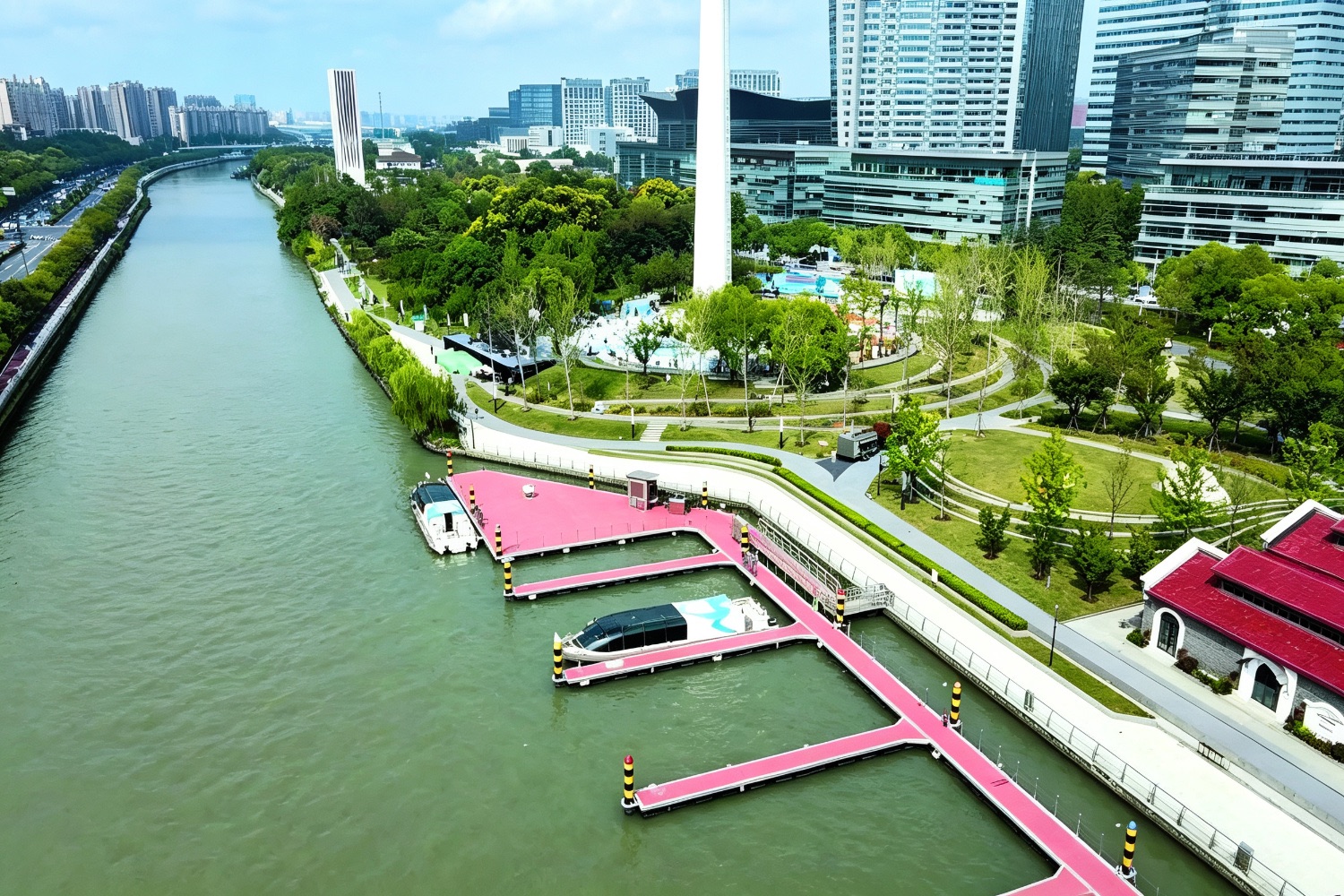
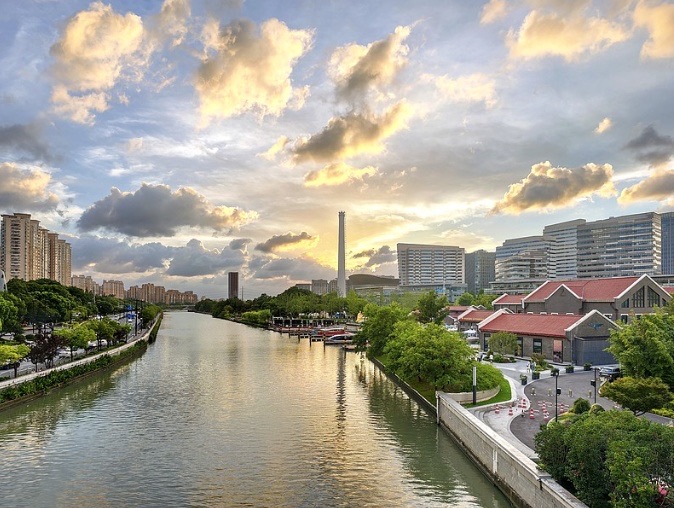
The Twelve Colors of Suzhou Creek runs along the banks of Suzhou Creek (Putuo Section) in Putuo District, Shanghai. It was developed by the Putuo District Bureau of Culture and Tourism as a signature waterfront cultural tourism experience for the 2024 Shanghai Tourism Festival. Suzhou Creek, historically known as the Wusong River, takes its current name from its connection to Suzhou after Shanghai opened as a treaty port. It is the largest tributary of the Huangpu River — Shanghai's mother river — stretching roughly 53 kilometers in total, with the Putuo section spanning about 21 kilometers, or roughly half of the creek's Shanghai length. This stretch is known as the "Half-Marathon Suzhou Creek."

The twelve colors are drawn from the twelve hues of traditional Chinese ink painting: egg yellow, vermilion, moon white, hibiscus, jade green, sky blue, bamboo green, deep black, lilac, cobalt blue, begonia purple, and amber. Each color serves as a cultural marker for one of twelve landmark cultural tourism sites along Suzhou Creek in Putuo District, spanning historic architecture, industrial heritage, creative parks, urban parks, intangible cultural heritage experiences, and Haipai-style commercial spaces. The experience aims to connect the Haipai spirit of Putuo's local culture with the rich tradition embedded in these classic Chinese colors, offering international visitors a poetic portrait of China and giving Shanghai residents an aesthetic map of their own "half-marathon" waterway.

The Twelve Colors of Suzhou Creek was officially launched in July 2024 as one of the headline highlights of the Shanghai Tourism Festival. It debuted with four themed tour routes, later expanding to ten routes, with over sixty tour groups organized and more than a thousand participants. The project's artistic advisor is noted painter Li Zhimi, who matched the twelve sites to twelve deeply resonant Chinese colors, encouraging the public to look more closely at China's classical cultural heritage as they explore everyday Haipai life in Putuo.

The Twelve Sites

1. Gaoling Market (Egg Yellow)

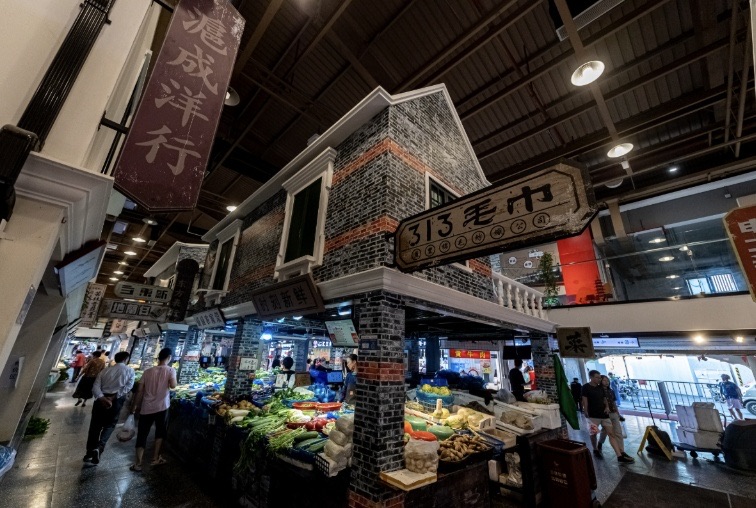
Gaoling Market sits in the Zhenru neighborhood of Putuo District, celebrated as one of Shanghai residents' favorite "neighborhood gems." It brings together a fresh-produce market, a community canteen, and cultural exchange spaces under one roof, and is widely considered the go-to place for experiencing the lived-in warmth of Shanghai's everyday street life. Named after the ancient place name Gaoling, the building's facade is painted a cheerful egg yellow. Inside, the space is open and modern, blending the lively energy of a traditional wet market with the convenience of contemporary commercial services. Visitors can try their hand at making classic Shanghai snacks like fresh-meat moon cakes and soup dumplings, and get a real taste of Haipai street culture.

2. Caoyang New Village (Moon White)

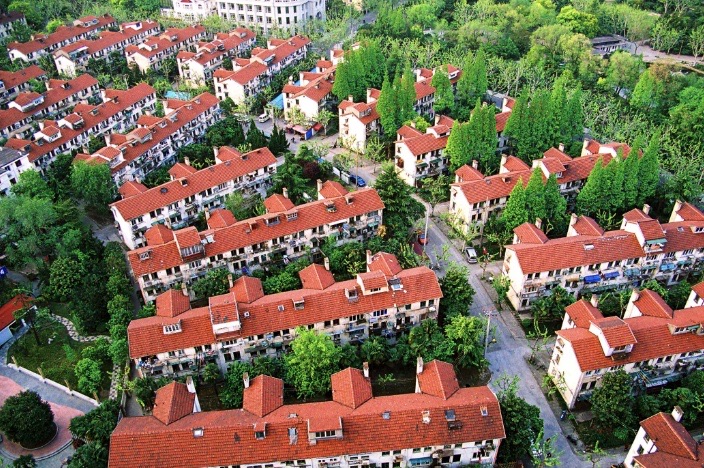
Caoyang New Village, in the Caoyang area of Putuo District, was the first residential community in the People's Republic of China to be officially designated a "Workers' Village." Construction began in 1951, and the community became known as the "Model Workers' Village" because its first residents were all labor heroes and outstanding workers. The overall aesthetic is a quiet, refined moon white, with rows of residential blocks laid out according to the neighborhood-unit planning principles of the era — a built expression of early New China's vision of the good life. Today it serves as a model for Shanghai's "15-minute community life circle" initiative, offering visitors a window into the daily life of ordinary Shanghai residents and a living record of the city's evolution from Workers' Village to People's City.

3. Jade Buddha Temple (Vermilion)

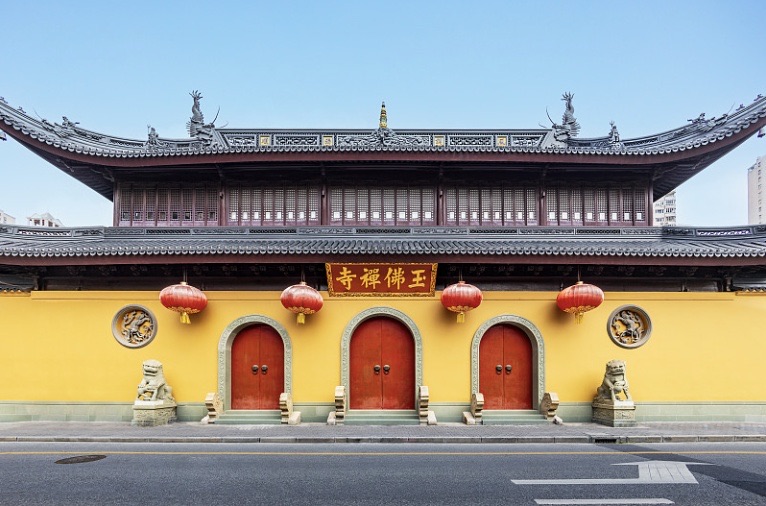
Jade Buddha Temple stands on Anyuan Road in Putuo District. Built in 1882 during the Guangxu reign of the Qing dynasty, it takes its name from two jade Buddha statues brought back from Myanmar and is counted among Shanghai's four great Buddhist temples. The main halls are dressed in traditional vermilion, soaring and majestic, filled with the gentle sound of sutras. Beyond its role as a place of worship, the temple is an important cultural landmark in Shanghai, and its vegetarian restaurant is famous across the city. Visitors can soak in the distinctive atmosphere of Shanghai's Haipai Buddhist culture and experience the calm and dignity of an urban sanctuary.

4. M50 Creative Park (Jade Green)

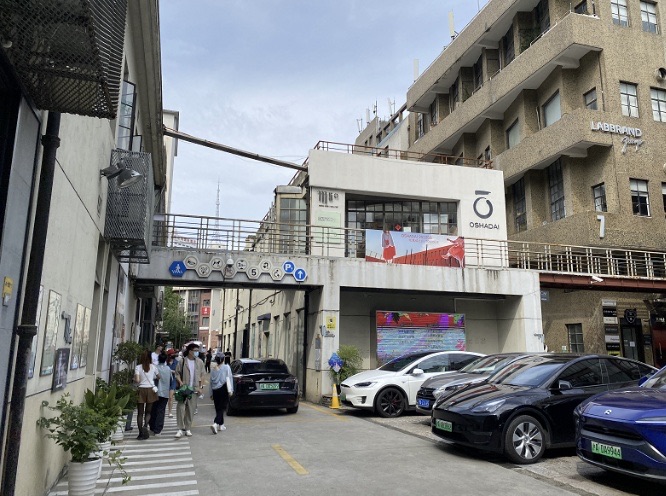
M50 Creative Park occupies a stretch of Moganshan Road in Putuo District, on the south bank of Suzhou Creek. Its predecessor was the Shanghai Chunming Coarse Textile Factory. From 2000 onward it gradually transformed into a hub for artistic creation, and it is now one of Shanghai's most influential contemporary art parks. The park has preserved a wealth of industrial buildings from the 1930s through the 1990s, their outer walls draped in jade-green ivy that mirrors the color of the creek nearby. Artists have turned the interiors into studios, galleries, and exhibition spaces. Visitors can watch live demonstrations of Chinese painting, calligraphy, bamboo weaving, and other intangible cultural heritage crafts, and experience the organic fusion of industrial heritage and contemporary art.

5. Chuangxiang Tower (Hibiscus)

Chuangxiang Tower stands at Number 100 Yejiazhai Road in Putuo District, beside the Baocheng Bend of Suzhou Creek. It was converted from a century-old industrial site and commands one of the most scenic spots along the Putuo section of the creek. Its exterior walls are painted in a warm hibiscus hue, and the complex divides its space roughly seventy percent commercial and office to thirty percent specialty retail, drawing a lively mix of cafes, designer studios, creative markets, and art spaces favored by young entrepreneurs and creatives. The park has preserved brick walls and steel structures from the original factory, and visitors can try on traditional Han-style clothing and take part in traditional craft workshops, experiencing a wonderful collision of classical style and industrial grit.

6. Wuyuan Tea House (Sky Blue)

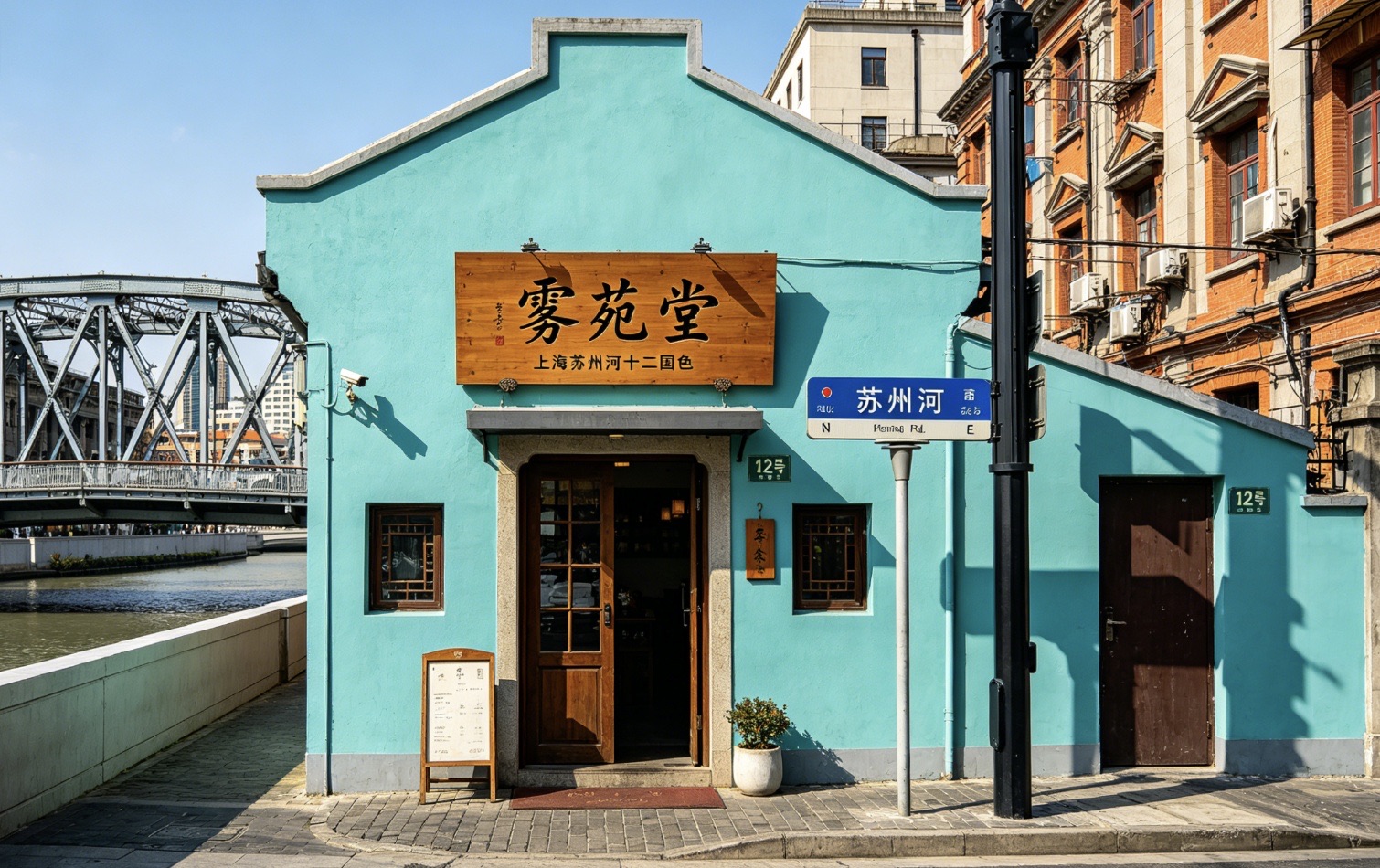
Wuyuan Tea House sits on the bank of Suzhou Creek in Putuo District — a Chinese garden cultural space steeped in Song-dynasty aesthetics, with sky blue as its dominant tone. The color evokes the celebrated line about Ru-ware glazes: "sky blue after rain breaks through the clouds." The layout follows the format of a Song-dynasty literati gathering, with dedicated spaces for tea ceremonies, incense appreciation, and qin (a classical stringed instrument) performances. The house hosts regular events including intangible cultural heritage workshops, lectures on Chinese classical studies, and demonstrations of traditional martial arts. Visitors can sit down to a pot of Chinese tea and, if the timing is right, experience Lu's Xinyi Boxing — a national-level intangible cultural heritage practice — discovering how classical Chinese ways of life are being carried forward today.

7. Bamboo Weaving Heritage Experience Hall (Bamboo Green)

The Bamboo Weaving Heritage Experience Hall, located along the Suzhou Creek waterfront in Putuo District, is a dedicated cultural space for showcasing and passing on Shanghai's bamboo weaving craft. Bamboo green is its signature color. Bamboo weaving is a representative item on Shanghai's intangible cultural heritage list. Using high-quality local bamboo as raw material, craftspeople work through more than ten steps — selecting bamboo stalks, splitting them into fine strips, soaking, and weaving — to produce beautiful objects such as fan frames, carrying boxes, and lamp shades. Visitors can watch a heritage master demonstrate the craft live, then try bamboo weaving themselves and experience firsthand the artisanal spirit and cultural memory carried in this fingertip art.

8. Gu Zhenghong Memorial Hall (Deep Black)

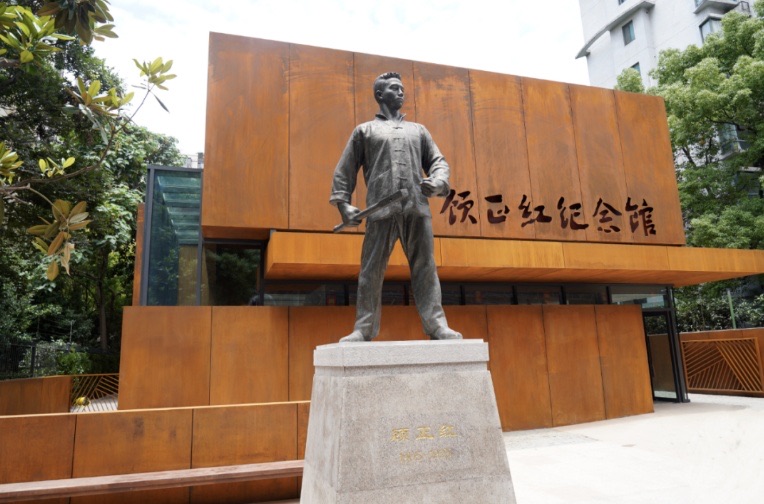
Gu Zhenghong Memorial Hall stands on Aomen Road in Putuo District. It was built to commemorate Gu Zhenghong, a worker and labor leader who died during the May Thirtieth Movement of 1925. The building's exterior is finished in deep black — xuancai in the classical color vocabulary, the heaviest and darkest of blacks — a color that carries the weight and gravity of revolutionary history. Inside, historical photographs, archival documents, physical artifacts, and recreated scenes document Gu Zhenghong's life and the full course of the May Thirtieth Movement. Together with the nearby Historical Exhibition Hall of the West Shanghai Workers' Half-Day School, the hall forms the "Industrial Origins" cultural precinct — an important patriotic education base and a key site for understanding Shanghai's red heritage.

9. Suzhou Creek Industrial Heritage Museum (Lilac)

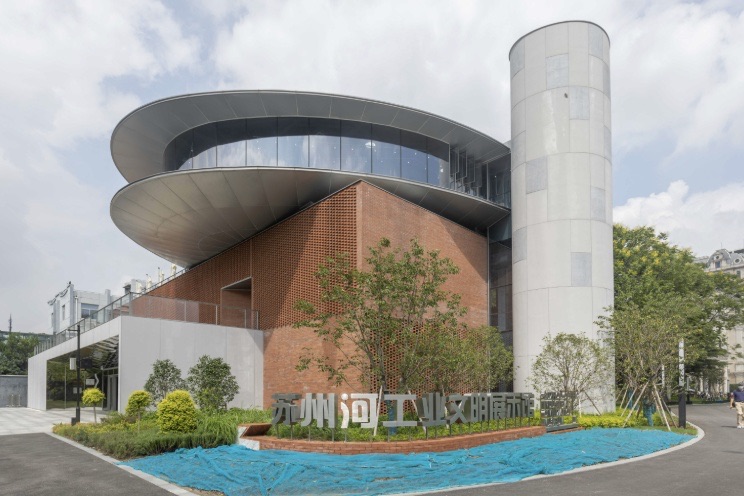
The Suzhou Creek Industrial Heritage Museum is located on Guangfu West Road in Putuo District, on the north bank of Suzhou Creek. It is a dedicated museum tracing the development of industrial civilization along the Putuo section of the creek. The building's lilac exterior suggests a quiet continuity — the gentle passing down of culture through the ages. The Putuo stretch of the creek was once known as the "West Shanghai Industrial Corridor," home to hundreds of factories producing textiles, flour, chemicals, and more, making it one of the cradles of modern Chinese national industry. Through rare artifacts, archival footage, and interactive installations, the museum vividly brings to life the glory days of Suzhou Creek's industrial heritage and its transformation in the modern era.

10. Banma Suhe Park (Cobalt Blue)

Banma Suhe Park stretches along the Suzhou Creek waterfront through Putuo District, a large open urban park built around the creek's riparian landscape. Cobalt blue is its visual signature, echoing the depth and breadth of the water itself. The park runs approximately 21 kilometers end to end, threading together industrial heritage sites, creative parks, residential neighborhoods, and public spaces along the Putuo section of the creek. It features waterfront promenades, sports facilities, art installations, and nature interpretation signage. Visitors can walk, cycle, or simply sit by the water and watch boats pass — and witness a remarkable urban revival story, as a creek once notorious for industrial pollution has been transformed into a living waterway where egrets, wild ducks, and fish have returned.

11. Baixi Park (Begonia Purple)

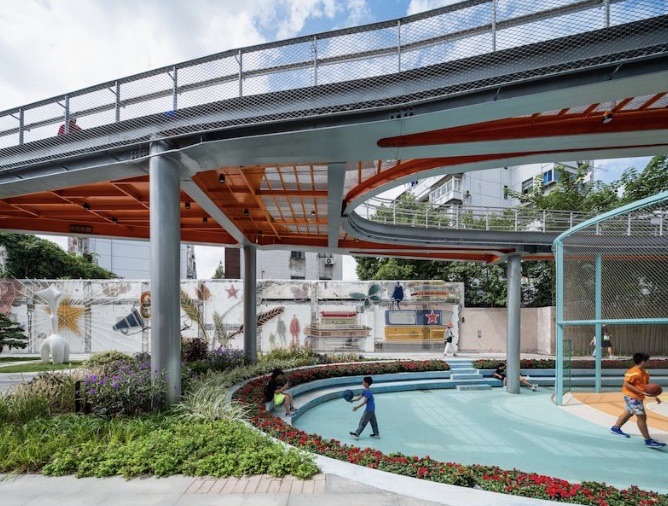
Baixi Park sits in the Caoyang area of Putuo District, transformed from what was once Shanghai's longest market — the Caoyang Railway Farmers' Market. It is Shanghai's first elevated park, sometimes called a "high-line park," and begonia purple runs through its entire visual identity. The park stretches roughly 800 meters and is organized across three levels: the upper level is an elevated walkway, the middle level hosts art exhibition spaces, and the lower level serves as a community activity area. The journey from farmers' market to high-line park is a story of urban renewal at its most inventive. Visitors can experience this open-air art park embedded in a living community, and enjoy the layered visual pleasure of looking down from the upper promenade onto the moon-white building clusters of Caoyang New Village below.

12. Hongshou Fang (Amber)

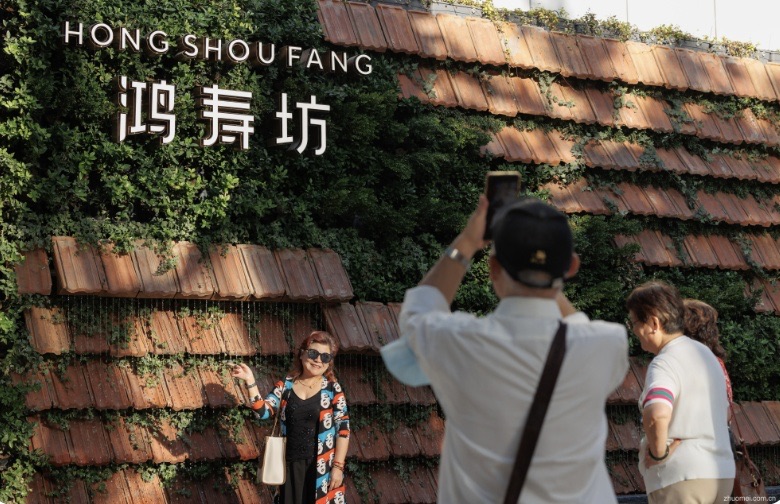
Hongshou Fang occupies the Changshou Road area of Putuo District. It is a new-model community commercial and cultural space built around the bones of a century-old shikumen (stone-gate) alley neighborhood, with amber as its defining tone — a color that speaks of time settling slowly into warmth and glow. The project has preserved the original shikumen building clusters in their entirety while introducing modern commercial programming and a curated mix of first-store retail concepts, creating what it calls an "ideal neighborhood" scene. Visitors can brew a jar of plum wine, sample creative Haipai cuisine, and experience the organic blending of urban memory and contemporary city life — a front-row seat to Shanghai's most forward-thinking community renewal.

Inside Suzhou Creek Twelve Nations Colors

11 stops, in walking order — read top to bottom, no clicking needed.

1 Gaoling Market (Goose Yellow) of 11

Gaoling Market (Goose Yellow)

高陵集市(鹅黄色)

Gaoling Market is a renovated community food market along Suzhou Creek, named for its warm goose-yellow façade that has become a visual landmark of the Putuo District riverfront. Originally a traditional wet market, it was transformed in 2023 into a modern, multi-level food hall combining fresh produce, cooked-food stalls, and community dining spaces. The interior features clean industrial design with exposed ductwork and polished concrete floors, while the exterior's yellow cladding references both the historical grain warehouses of the area and the warm, approachable spirit of neighborhood market culture. The market serves as both a daily grocery destination for local residents and a foodie stop for visitors exploring the Suzhou Creek waterfront trail.

On-site narration · read it where you stand

Welcome, everyone. Our first stop is Gaoling Market. Take a look at the building's facade — that bright, warm egg yellow. Doesn't it just make you feel hungry and at home? Gaoling Market sits in the Zhenru neighborhood of Putuo District. It's one of those places Shanghai residents call a "neighborhood gem right on the doorstep" — bringing together a fresh-produce market, a community canteen, and cultural exchange spaces all in one.

The highlight here is getting hands-on with classic Shanghai snacks. Fresh-meat moon cakes, soup dumplings, pan-fried buns — these are the snacks Shanghai people have grown up eating. Here, you don't just buy them; you can learn to make them with a master. The moon cake dough needs to be rolled out thicker in the center and thinner at the edges. The meat filling gets stirred clockwise until it firms up. And the seal has to be pinched tight. These skills look simple until you try them yourself, and that's when you realize how much practice they take. We recommend booking a snack-making workshop online in advance — you get to take home whatever you make.

The market also has a community cultural space that hosts occasional events like Shanghainese language classes and exhibitions of old Shanghai photographs. If you have children with you, this is the best starting point for experiencing the daily life of ordinary Shanghainese — no entrance fee, no barriers, just the real warmth of a Shanghai neighborhood.

Photography tip: The egg-yellow facade looks best in morning light on a clear day. For a full-facade shot, stand in the small square across from the market. Inside, the warm lighting makes the snack-making process a naturally lively subject.

Caoyang New Village (Moon White)

曹杨新村(月白色)

Caoyang New Village is China's first planned workers' residential community, built in 1951 as a model socialist housing project. Its moon-white façade color references the clean, optimistic aesthetic of 1950s modernist architecture. The neighborhood features a distinctive radial layout with curved lanes, low-rise apartment blocks, and generous green spaces designed around the concept of 'neighborhood units.' Designated as a national cultural relic in 2021, the village preserves original Soviet-influenced residential architecture, community centers, and the historic Caoyang Workers' Cultural Palace. A small museum inside the community documents the history of workers' housing in Shanghai, making it a key site for understanding the city's post-1949 urban development.

On-site narration · read it where you stand

Welcome, everyone. We've arrived at Caoyang New Village. Did you know this is the first residential community in the history of the People's Republic of China to be officially named a "Workers' Village"? Construction started in 1951, and it was celebrated as the "Model Workers' Village" — because every single one of the first residents was a labor hero or an outstanding worker.

The overall color palette of Caoyang New Village is a quiet, refined moon white. The neat rows of residential blocks and the neighborhood-unit planning concept reflect early New China's spatial vision of a good life. As you walk through the village, you can see the layers of different eras stacked on top of one another — workers' housing from the 1950s, kitchen extensions added in the 1980s, community service facilities upgraded in the 2000s. It's essentially a living specimen of the history of housing in the People's Republic.

Today Caoyang New Village is a model for Shanghai's "15-minute community life circle" initiative. Walking around, you'll spot senior activity rooms, a community canteen, a neighborhood health station, a reading room, and outdoor exercise equipment — this is what daily life looks like for ordinary Shanghai residents. Take your time, and if you see any grandparents sitting in the sun, try striking up a conversation. Quite a few of them are the original labor heroes who moved in during those early years, or their descendants — and they can tell the story of this village like they know it by heart.

Jade Buddha Temple (Vermilion)

玉佛寺(朱红色)

The Jade Buddha Temple is a Chan Buddhist temple founded in 1882 to house two white jade Buddha statues brought from Myanmar by monk Huigen. The temple's vermillion-red walls and golden roof tiles follow traditional Chinese Buddhist temple architecture, with a layout comprising the Heavenly Kings Hall, the Great Treasure Hall, and the Jade Buddha Tower where the seated jade Buddha (1.92 meters tall) is enshrined. A second reclining jade Buddha lies in a side hall. The temple remains an active place of worship and is one of Shanghai's most important Buddhist sites, drawing both devotees and tourists. The complex was rebuilt in 1928 at its current Putuo District location after the original temple was destroyed by fire.

On-site narration · read it where you stand

Welcome, everyone. We've arrived at Jade Buddha Temple, one of Shanghai's four great Buddhist temples. Look at the main buildings — that deep, ceremonial vermilion. In Chinese tradition, vermilion is the color of palaces and temples, a symbol of solemnity, good fortune, and protection.

Jade Buddha Temple was founded in 1882, during the Guangxu reign of the Qing dynasty. It takes its name from two jade Buddha statues brought back from Myanmar. When we go inside, make sure to take a good look at the seated jade Buddha — carved from a single piece of Burmese jade, standing 1.95 meters tall and weighing 3 tonnes, with a luminous quality to the stone and exquisite craftsmanship. It is the temple's greatest treasure. There is also a reclining jade Buddha, one meter long, also carved from a single piece of jade, with an expression of serene repose.

Jade Buddha Temple is not only a place of worship — its vegetarian restaurant is famous across Shanghai. Luohan vegetarian noodles, mushroom noodles — light, fragrant broth, generous toppings. Many Shanghai locals make a special trip to the temple just for a bowl of vegetarian noodles. It has become a ritual in its own right.

Photography reminder: Photography is prohibited in certain halls inside the temple. Please watch for signs at the entrance to each hall. When entering the halls, please dress appropriately — shorts, short skirts, or tops that expose the shoulders are not suitable.

M50 Creative Park (Emerald Green)

M50 创意园(翠绿色)

M50 Creative Park is Shanghai's premier contemporary art district, housed in a former textile printing and dyeing factory complex dating to the 1930s. The emerald-green accents of its industrial façade reference the site's manufacturing heritage. Since 2000, when artist Xue Song established the first studio here, M50 has grown into a dense cluster of galleries, artist studios, design firms, and independent cultural spaces, hosting over 100 artists and 30+ galleries. The complex retains its raw industrial character—exposed brick walls, rusted steel frames, and factory windows—while serving as the epicenter of Shanghai's contemporary art scene, regularly hosting exhibitions, open studio events, and art fairs.

On-site narration · read it where you stand

Welcome, everyone. We've arrived at M50 Creative Park. Look at the park's outer walls — covered in jade-green ivy, playing off the color of Suzhou Creek just beside it. That's exactly where the "jade green" inspiration comes from.

M50 started out as the Shanghai Chunming Coarse Textile Factory. From 2000 onward it gradually transformed into a hub for artistic creation, and it is now one of Shanghai's most influential contemporary art parks. Walk through the park and you'll encounter industrial buildings from every decade between the 1930s and the 1990s — bare brick walls, sawtooth factory skylights, old crane rails. These are the physical remains of Shanghai's national industrial history.

What makes M50 truly special is the live energy of art in the making. The park is home to over a hundred artists' studios, galleries, and exhibition spaces. If you happen to catch an artist mid-creation or setting up a show, stop and watch — that experience of art in production is something you simply cannot get in a museum. The park also hosts regular live demonstrations and workshops in Chinese painting, calligraphy, bamboo weaving, and other intangible cultural heritage crafts.

Wuyuantang Teahouse (Sky Blue)

雾苑堂茶室(天青色)

Wuyuantang Teahouse is a contemporary tea space perched along the Suzhou Creek waterfront, its sky-blue façade evoking the celadon glazes of Song dynasty ceramics. Designed as a quiet retreat from the urban riverfront, the teahouse features floor-to-ceiling glass walls framing views of the creek, a minimalist interior with raw concrete and warm wood, and a curated tea menu spanning Chinese white, green, and dark teas. The architecture blends traditional tea-culture aesthetics with modernist sensibility, creating a space where visitors can experience the ritual of tea preparation against the backdrop of Suzhou Creek's industrial heritage. The teahouse also hosts tea ceremony workshops and seasonal cultural events.

On-site narration · read it where you stand

Welcome, everyone. We've arrived at Wuyuan Tea House. Does it feel noticeably quieter here? Like you've suddenly been lifted out of the noise of the city? That's the spirit of sky blue — "the sky clears to blue where the rain breaks through the clouds." The essence of Song-dynasty aesthetics is exactly this quality of stillness.

Wuyuan Tea House is a Chinese garden cultural space shaped by Song-dynasty aesthetic principles. Its layout follows the format of a Song literati gathering, with dedicated spaces for tea ceremonies, incense appreciation, and qin performances. In a moment you can take a seat at one of the tea tables and enjoy a pot of Chinese tea — Longjing, Biluochun, Da Hong Pao, Puer — there's a fine selection. The tea masters will walk you through the brewing methods and etiquette for different teas. It's the perfect introduction to Chinese tea culture, and well worth listening to carefully.

Wuyuan Tea House also offers a special experience: live teaching of Lu's Xinyi Boxing, a national-level intangible cultural heritage practice. Xinyi Boxing is a traditional martial art that originated in Henan and has been practiced in Shanghai for generations, built on the principle that mind and intention move as one, cultivating both inner and outer strength.

Bamboo Weaving ICH Experience Hall (Bamboo Green)

竹丝编非遗体验馆(竹青色)

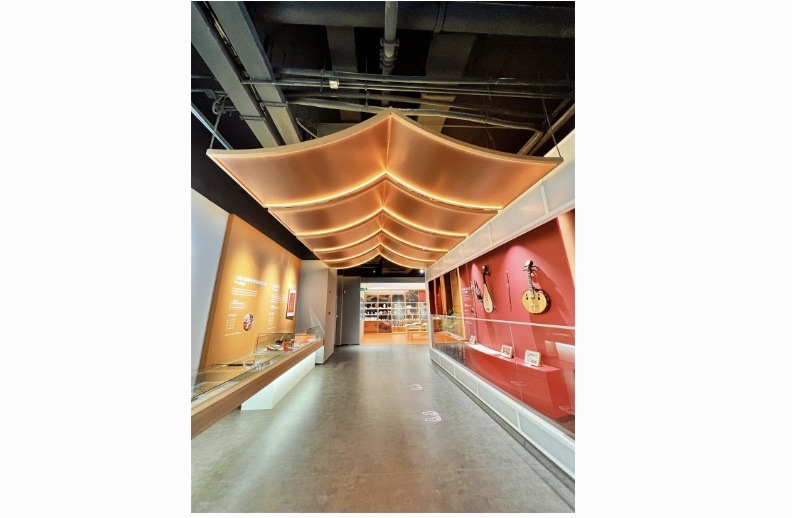
The Bamboo Weaving Intangible Cultural Heritage Experience Hall is a craft workshop and exhibition space dedicated to the traditional art of bamboo splint weaving, a craft listed on China's intangible cultural heritage registry. The bamboo-green color of its entrance reflects the natural hue of its primary material. Inside, visitors can view intricate bamboo-woven artworks—from practical baskets and tea trays to large-scale installation pieces—and participate in hands-on workshops led by master craftsmen. The hall documents the history of bamboo weaving in the Jiangnan region, showcases tools and techniques passed down through generations, and sells finished pieces, making it both a cultural preservation site and an interactive craft destination along the Suzhou Creek cultural corridor.

On-site narration · read it where you stand

Welcome, everyone. We've arrived at the Bamboo Weaving Heritage Experience Hall. Look at these pieces on display — fan frames, carrying boxes, lamp shades woven from strips of bamboo as fine as silk thread. That delicacy and transparency is something you really have to see in person to believe. This is Shanghai's intangible cultural heritage: bamboo weaving.

The raw material is high-quality local bamboo. From raw stalk to finished object, the craft involves more than ten distinct steps — selecting three-year-old moso bamboo, splitting it into strips as thin as hair, soaking it in a special herbal solution, and then weaving. The weaving itself takes years to master. In a moment you'll be able to watch a heritage master at work — fingers moving almost too fast to follow, bamboo strips flowing like threads. Watching them, you'll understand in a visceral way what the idea of craftsmanship really means.

The hands-on session is the highlight of this stop. Everyone can try the basic weaving movements themselves.

Gu Zhenghong Memorial Hall (Dark Purple)

顾正红纪念馆(玄采色)

The Gu Zhenghong Memorial Hall commemorates Gu Zhenghong, a workers' movement leader whose death in 1925 sparked the May 30th Movement, a pivotal event in modern Chinese history. The dark purple-gray exterior conveys solemnity and historical weight. The memorial hall, built on the site of the former Japanese-owned cotton mill where Gu worked and was killed, displays historical photographs, documents, and artifacts related to the workers' movement and the anti-imperialist struggle of 1920s Shanghai. The adjacent bronze statue of Gu Zhenghong and the memorial plaza serve as sites for commemorative events. The hall provides crucial historical context for understanding Shanghai's role as a birthplace of the Chinese labor movement.

On-site narration · read it where you stand

Welcome, everyone. We've arrived at Gu Zhenghong Memorial Hall. Look at the building — that deep, somber dark tone. It matches this history perfectly. In the classical Chinese color palette, xuancai is the heaviest and darkest of blacks. For a memorial to revolutionary history, no color could be more fitting.

Gu Zhenghong was a worker and labor leader who died during the May Thirtieth Movement of 1925. He was only twenty years old. Inside the museum you'll find a rich collection of historical photographs, archival documents, and physical artifacts — a reproduction of Gu Zhenghong's clothing, strike banners used during the walkouts, original newspapers from the time of the May Thirtieth Movement, and a recreated scene of a workers' assembly. The exhibition systematically documents Gu Zhenghong's life and the full course of the May Thirtieth Movement.

Together with the nearby Historical Exhibition Hall of the West Shanghai Workers' Half-Day School, this memorial forms the "Industrial Origins" cultural precinct. It is a designated patriotic education base in Shanghai, and an important window into the city's revolutionary heritage.

Suzhou Creek Industrial Civilization Exhibition Hall (Lilac)

苏州河工业文明展示馆(丁香色)

The Suzhou Creek Industrial Civilization Exhibition Hall is housed in a converted factory building along the creek, its lilac-grey façade blending with the industrial brick textures of the surrounding Putuo District waterfront. The museum traces the industrial history of Suzhou Creek from the late 19th century through the present, displaying vintage machinery, factory models, historical photographs, and interactive exhibits that show how the creek's banks became China's most concentrated corridor of light industry, textiles, and flour mills. The exhibits also document the creek's environmental remediation and waterfront renewal, offering a comprehensive narrative of Shanghai's industrial rise, decline, and post-industrial transformation.

On-site narration · read it where you stand

Welcome, everyone. We've arrived at the Suzhou Creek Industrial Heritage Museum. Look at the building's exterior — that soft lilac, like the quiet passing down of culture through peaceful years. Gentle, unhurried.

Before we go in, let me give you a bit of context about Suzhou Creek and Shanghai's industrial history. The Putuo stretch of Suzhou Creek was once known as the "West Shanghai Industrial Corridor." From the early to mid twentieth century, hundreds of factories producing textiles, flour, chemicals, and ships lined these banks, making it one of the cradles of modern Chinese national industry. You may have heard of "Textile Mill One" and "Textile Mill Two" — these were working mills right here, producing cotton yarn and cloth that supplied the whole country. Fuxin Flour Mill operated here too, and its Peony Brand flour was sold across China and beyond.

Inside, the museum holds a rich collection of artifacts, archival footage, and interactive installations. Don't miss the recreated scene of walking through an old factory floor — the roar of machinery, the shouts of workers, the smell of cloth. The curatorial team has used multimedia to bring the historical environment to life with remarkable vividness.

Half-Marathon Suzhou Creek Park (Cobalt Blue)

半马苏河公园(钴蓝色)

Half-Marathon Suzhou Creek Park is a 21-kilometer linear waterfront park stretching along both banks of Suzhou Creek, named for its half-marathon-length continuous trail. The cobalt-blue accents of its wayfinding and recreational facilities echo the water itself. Opened progressively from 2021, the park connects dozens of previously inaccessible industrial waterfront parcels into a unified public space, featuring running and cycling paths, riverside seating, children's play areas, and ecological wetlands. The park passes through multiple districts, linking landmarks such as M50, the Dream Center, and Changfeng Park, and has become Shanghai's most popular urban linear park for jogging, cycling, and riverside leisure.

On-site narration · read it where you stand

Welcome, everyone. We've arrived at Banma Suhe Park. Look toward the water — the cobalt blue of Suzhou Creek catching the sunlight, the buildings on the far bank reflected in the surface. This image is the most poetic part of what the "Half-Marathon Suzhou Creek" name holds.

Banma Suhe Park stretches for roughly 21 kilometers, threading together the industrial heritage sites, creative parks, residential neighborhoods, and public spaces along the Putuo section of the creek. You can walk or cycle through the park, or simply sit on the waterfront promenade and watch the boats go by. There are sports facilities and nature interpretation signs throughout — if you have children with you, you can learn about the plants and birds along Suzhou Creek as you walk.

Here's something worth knowing: Suzhou Creek was not always like this. In the 1980s and 1990s, untreated industrial and household wastewater flowed directly into the creek, turning it black and foul-smelling. It was known as "Shanghai's dirtiest river." After more than twenty years of cleanup and restoration, the creek today is home to egrets, wild ducks, and a variety of fish.

Baixi Park (Purple Brown)

百禧公园(紫棠色)

Baixi Park is an elevated linear park built on the former site of the Baixin Railway, Shanghai's longest abandoned railway corridor. Its purple-brown paving references the rust and earth tones of the decommissioned rail tracks. Opened in 2021, the park stretches approximately 800 meters at elevated levels, featuring three tiers of public space: a ground-level community garden, a mid-level walking promenade with fitness equipment, and an elevated skywalk with panoramic views of the surrounding Caoyang neighborhood. The design integrates the park's rail heritage—preserving sections of original track—while providing much-needed green space in one of Shanghai's densest residential areas. It is often compared to New York's High Line as a model of post-industrial urban reuse.

On-site narration · read it where you stand

Welcome, everyone. We've arrived at Baixi Park. Does this park feel a little unusual? It's built on an elevated structure — like an aerial corridor running through the neighborhood. This is Shanghai's first high-line park, inspired by New York's High Line, but Baixi has its own story to tell.

Baixi Park's predecessor was the Caoyang Railway Farmers' Market, once Shanghai's longest market, stretching roughly 800 meters. In 2021, Putuo District transformed this former railway site into a high-line park with three stacked levels — an elevated walkway on top, art exhibition spaces in the middle, and community activity areas at ground level. From farmers' market to high-line park: that's the magic of urban renewal.

The overall color of Baixi Park is begonia purple — a reddish-brown with a hint of violet, holding both the steadiness of old railway iron and the energy of a new public garden. Take your time walking through. From the upper level, looking down on the moon-white buildings of Caoyang New Village, the layered view is really something.

Hongshoufang (Amber)

鸿寿坊(琥珀色)

Hongshoufang is a historic shikumen neighborhood recently revitalized into a mixed-use commercial and cultural complex, its amber-toned brick façades preserving the warm hues of 1920s Shanghai residential architecture. The site retains the original lane-and-courtyard layout of traditional shikumen housing while introducing boutique retail, specialty food halls, co-working spaces, and cultural exhibition areas. The renovation carefully preserved historic elements—stone gateways, carved lintels, and internal staircases—while inserting modern amenities. Located near the Suzhou Creek waterfront in Putuo District, Hongshoufang has become a model for adaptive reuse of Shanghai's historic lilong architecture, blending neighborhood-scale retail with heritage preservation.

On-site narration · read it where you stand

Welcome, everyone. We've reached the final stop on our Twelve Colors journey — Hongshou Fang. Look at these buildings: amber-toned shikumen brick walls glowing warm in the sunlight. That's exactly what amber means here — time settling slowly into something luminous and lasting.

Hongshou Fang sits in the Changshou Road area of Putuo District. It is a new-model community commercial and cultural space built around the bones of a century-old shikumen alley neighborhood. Walk through the complex and you'll find the original shikumen buildings fully intact — red brick walls, the characteristic carved stone gate frames, open courtyards, and the small rooms above stairwells known as tingzijian. All the defining elements of old Shanghai alley architecture are here.

The real joy of Hongshou Fang is its unhurried pace. Find a cafe or a small bar with a seat facing the lane, brew a jar of plum wine or order a hand-drip coffee, and let yourself sit quietly across from those century-old brick walls. That particular kind of daydreaming — with a hundred-year-old wall right in front of you — is something that belongs to Shanghai alone.

Prefer to be shown around?

A local guide walks these 11 stops with you and answers what the page cannot.

Browse tours ↗