Travel Guide› Shanghai› The Bund, Shanghai
Shanghai · Park

The Bund, Shanghai 上海外滩

The Bund, Shanghai
Address
Zhongshan East 1st Road, Huangpu District, Shanghai (from Waibaidu Bridge in the north to Shiliupu Dock in the south), approximately 1.5 km long

Overview

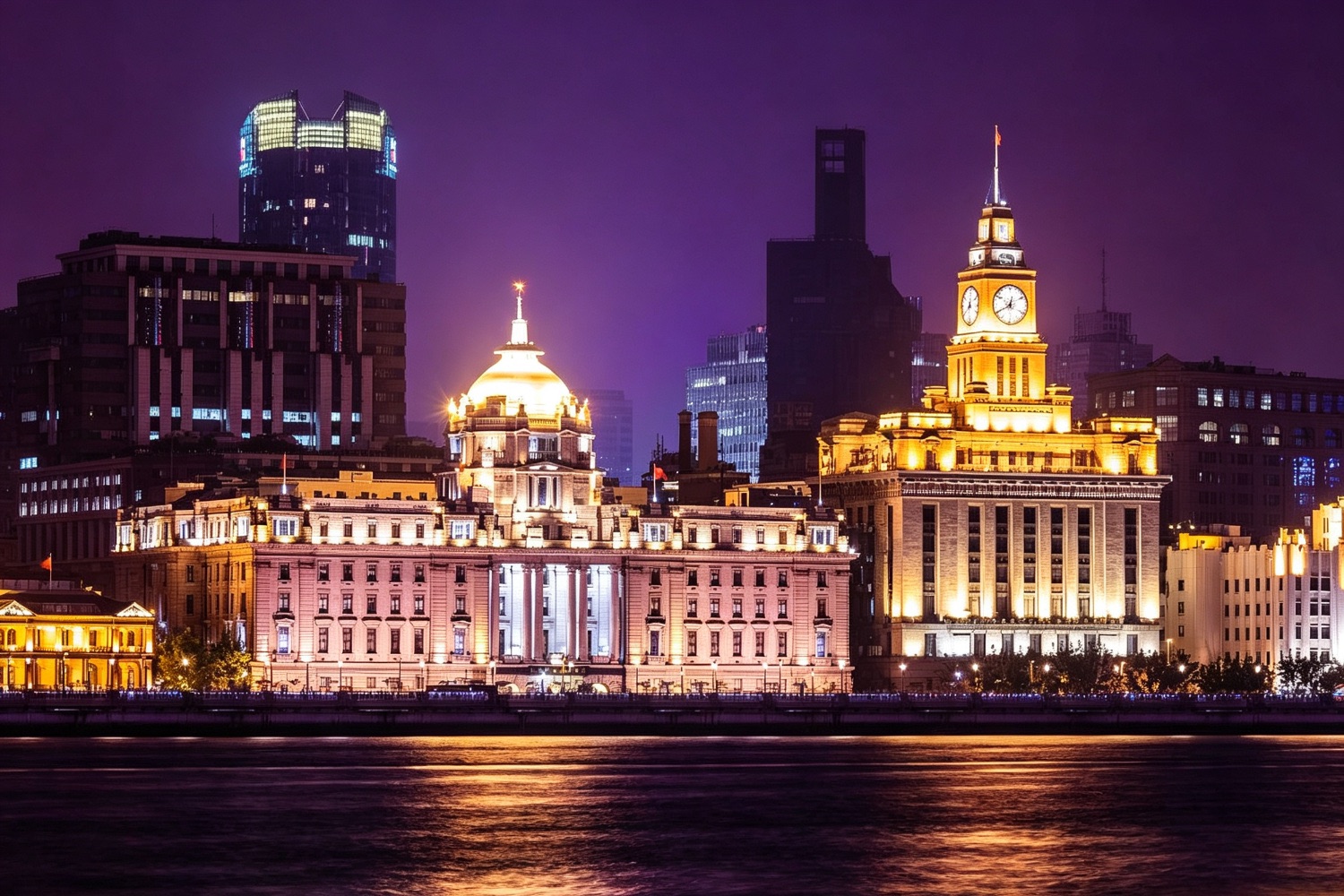
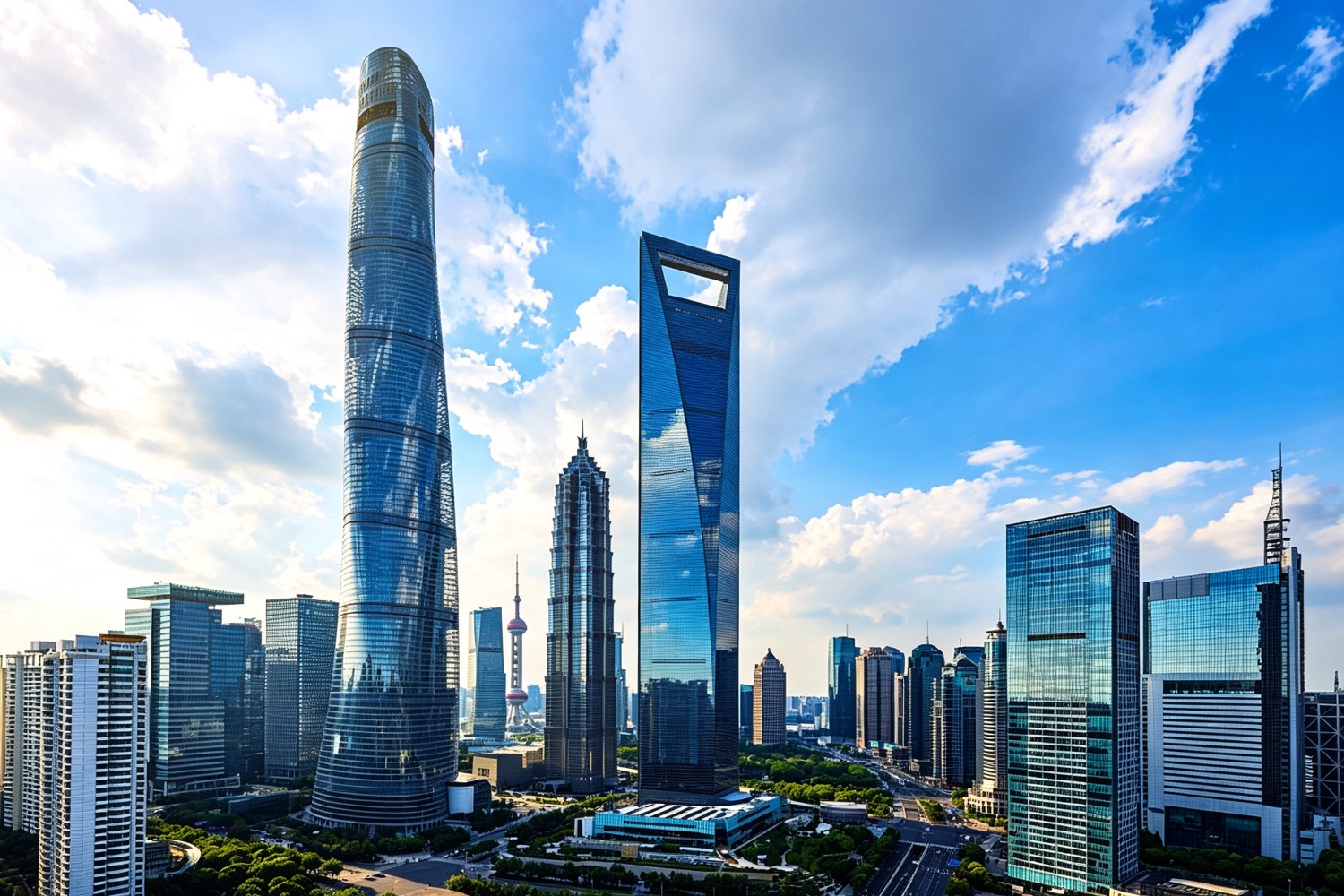
The Bund runs along Zhongshan East Road Number 1 in Huangpu District, stretching roughly 1.5 kilometres from Waibaidu Bridge at the mouth of Suzhou Creek in the north to Shiliupu Wharf near East Jinling Road in the south. It is Shanghai's most iconic urban landscape and an open-air museum of China's modern history. Along the western side of the Bund stand 52 historical buildings from the past century, spanning Gothic, Baroque, Neoclassical, Art Deco, Renaissance, and other major architectural traditions — earning the strip its reputation as the "Gallery of International Architecture." These buildings took shape between the late 19th century and the 1930s, representing the finest standards of architectural design and construction of their era, and bearing witness to Shanghai's full transformation from a treaty port into the financial capital of the Far East. Directly across the Huangpu River on the eastern bank lies the Lujiazui Finance and Trade Zone, where a forest of modern skyscrapers — the Oriental Pearl Tower, Shanghai Tower, Jin Mao Tower, and the Shanghai World Financial Center — forms a contemporary skyline that faces the historic Bund in a dialogue between old and new across the water. In 1996, the Bund's architectural ensemble was designated as one of China's fourth batch of Major Historical and Cultural Sites Protected at the National Level. Today the Bund serves both as the heart of Shanghai's financial corridor and as a world-class public space combining sightseeing, culture, commerce, and exhibitions, drawing tens of thousands of visitors each day to the banks of the Huangpu River.

Attractions Along the Bund

Shiliupu Wharf

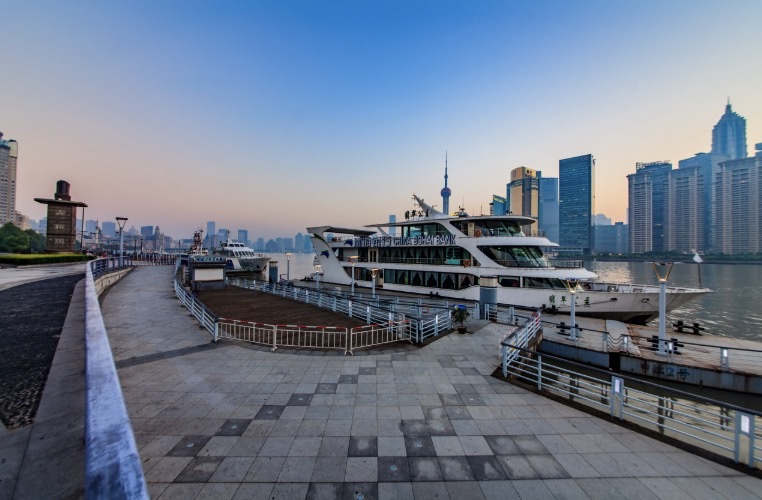
Shiliupu Wharf sits at the southern end of the Bund and is Shanghai's oldest waterfront gateway since the city opened as a treaty port. During the Xianfeng period of the Qing dynasty (1851–1861), Shanghai County divided the riverside into more than twenty sections called "pu," and this particular stretch was designated as the sixteenth — hence the name "Shiliupu," meaning Number Sixteen. After the Opium War, merchant vessels from many nations surged into the Huangpu River, and Shiliupu became the busiest passenger and freight hub in China. At its peak, the wharf received over ten million travellers a year — a staggering figure given that Shanghai's entire population at the time was only around three million. For generations of Shanghainese and new arrivals alike, it was the first solid ground they set foot on in this city. The wharf has since been modernised; two of the original warehouses have been converted into cultural and commercial spaces, and a cruise terminal now serves as the starting point for evening cruises on the Huangpu River.

Bund 18

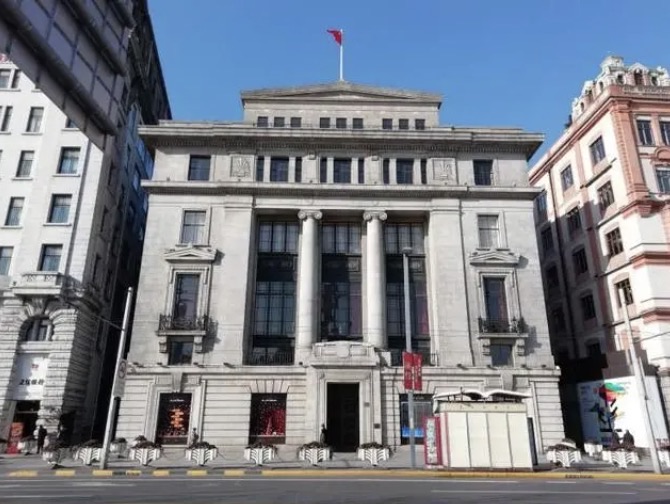
Bund 18, at Number 18 Zhongshan East Road Number 1, was originally the Shanghai headquarters of the Chartered Bank of India, Australia and China — known today as Standard Chartered Bank. The building was completed in 1923, designed by the British firm Palmer and Turner in a Neoclassical style. Its facade features grand Ionic columns spanning the second and third floors, with finely carved heraldic ornaments along the top. In 2004, an Italian architectural team spent two years restoring the building, preserving century-old mosaic floor tiles, marble columns, and a stained-glass dome inside. The project subsequently received the UNESCO Asia-Pacific Award for Cultural Heritage Conservation. Today Bund 18 operates as a mixed-use destination combining high-end dining and an art gallery.

The China Merchants Steam Navigation Company Building

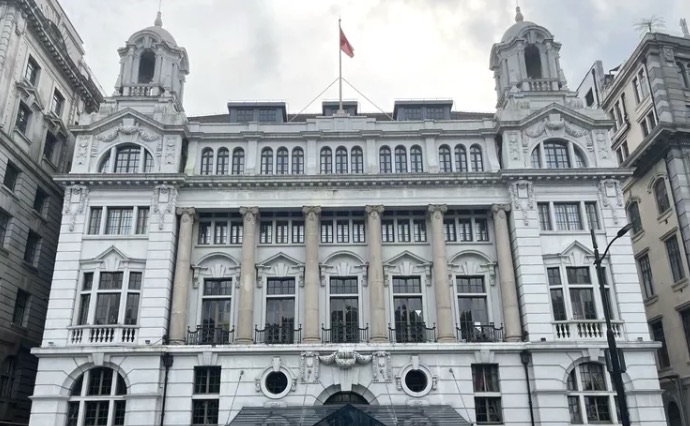
This building at Number 9 Zhongshan East Road Number 1 was once the headquarters of the China Merchants Steam Navigation Company — China's first national shipping enterprise. Designed in 1901 by the British firm Atkinson and Dallas, it is a three-storey brick-and-timber structure with exposed red brick walls accented by white stone pilasters, in a Late Victorian Renaissance style. The shipping company was established by Li Hongzhang in 1872 and was one of the earliest joint-stock enterprises in China's modern national industry. The building still retains its original cast-iron staircase and wooden revolving door, standing as a testament to the birth and growth of China's modern national shipping industry. It continues to be used by China Merchants Group.

The Asia Building (Bund Number 1)

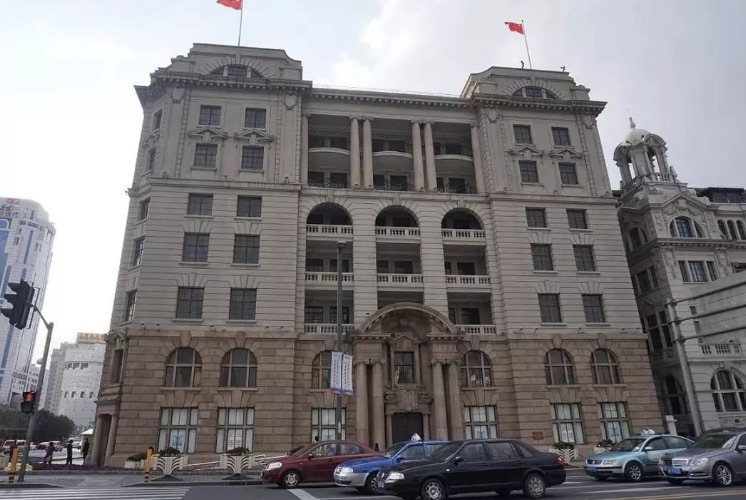
The Asia Building at Number 1 Zhongshan East Road Number 1 — the first address on the Bund — was completed in 1916 and has long been known as "the Bund's premier building." Standing eight storeys tall, it has a hollow square floor plan with a large central courtyard and a cracked-ice-patterned glass dome at the top, making it a superb example of Baroque and classical architecture combined. Originally built by a British trading firm, it took its name from the Asiatic Petroleum Company, which later occupied the premises and once held a monopoly over China's kerosene market. After 1949, the building served successively as the Metallurgical Design Institute and the Pacific Insurance Company headquarters. It is now the Jiushi International Arts Centre, home to the Fosun Foundation and Christie's Shanghai.

The Shanghai Club (Waldorf Astoria)

This building at Number 2 Zhongshan East Road Number 1 was completed in 1910, designed by the British firm Moorhead and Halse. It was the first building on the Bund to use a reinforced concrete structure, built in a Baroque Revival style. Six enormous Ionic columns stand at the main entrance, and the interior once housed a 34-metre-long bar counter made from black-and-white marble — celebrated as "the longest bar in the Far East." At its height, the building served as the Royal Club, the most exclusive social club for British expatriates in Shanghai and a true hub of the city's elite. After 1949 it was renamed the Dongfeng Hotel, and Shanghai's first KFC opened here. It now operates as the Waldorf Astoria Shanghai on the Bund.

The Former HSBC Building (Pudong Development Bank Headquarters)

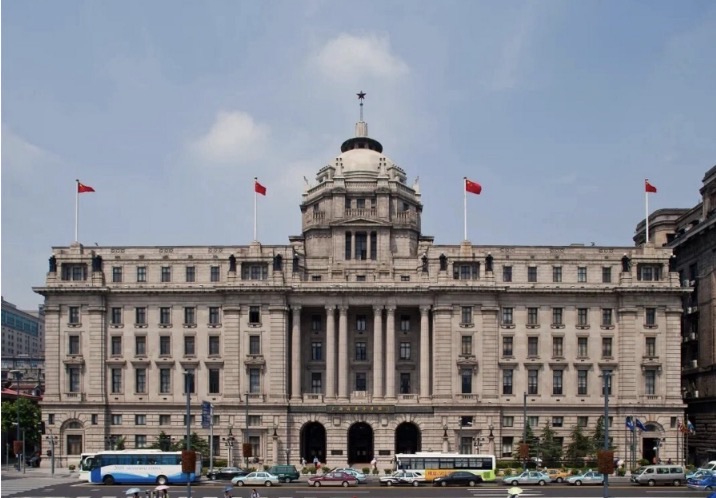
This building at Number 12 Zhongshan East Road Number 1 was completed in 1923, designed by the British firm Palmer and Turner in a Neoclassical style. It features a full steel-frame structure, with all marble imported from Italy, and was considered the largest and most luxurious bank building in the Far East at the time of its completion. The crowning artistic treasure of the building is a monumental mosaic mural spanning 15 metres in diameter on the dome ceiling of the octagonal banking hall, titled "All Under Heaven Are Brothers." Created by Italian craftsmen over two years, it depicts eight cities — Shanghai, Hong Kong, London, Paris, New York, Tokyo, Bangkok, and Calcutta — alongside figures from ancient Greek mythology, symbolising the global financial network of the early 20th century. The building's crown features a dome modelled on Rome's Pantheon. It now serves as the headquarters of Shanghai Pudong Development Bank.

The Customs House

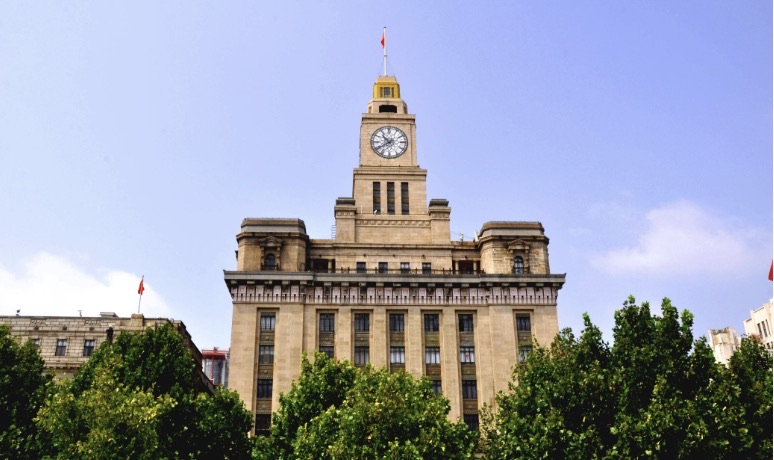
This building at Number 13 Zhongshan East Road Number 1 was completed in 1927 as Shanghai's third-generation customs building, designed by the British firm Palmer and Turner in a Greek Revival Neoclassical style. The building's most prominent feature is its clock tower, which rises 79 metres and was once the tallest point on the Bund. Each of its four faces carries a large clock with a diameter of 5.4 metres; the clock mechanism was made by the same British manufacturer responsible for London's Big Ben. The clock began chiming in 1928, originally playing the Westminster Quarters. Over the decades the tune has been changed from "Westminster" to "The East Is Red," which it plays today. For nearly a century, the deep, resonant chimes have been the most familiar sonic landmark for Shanghai residents and visitors to the Bund alike.

The Peace Hotel (Sassoon House)

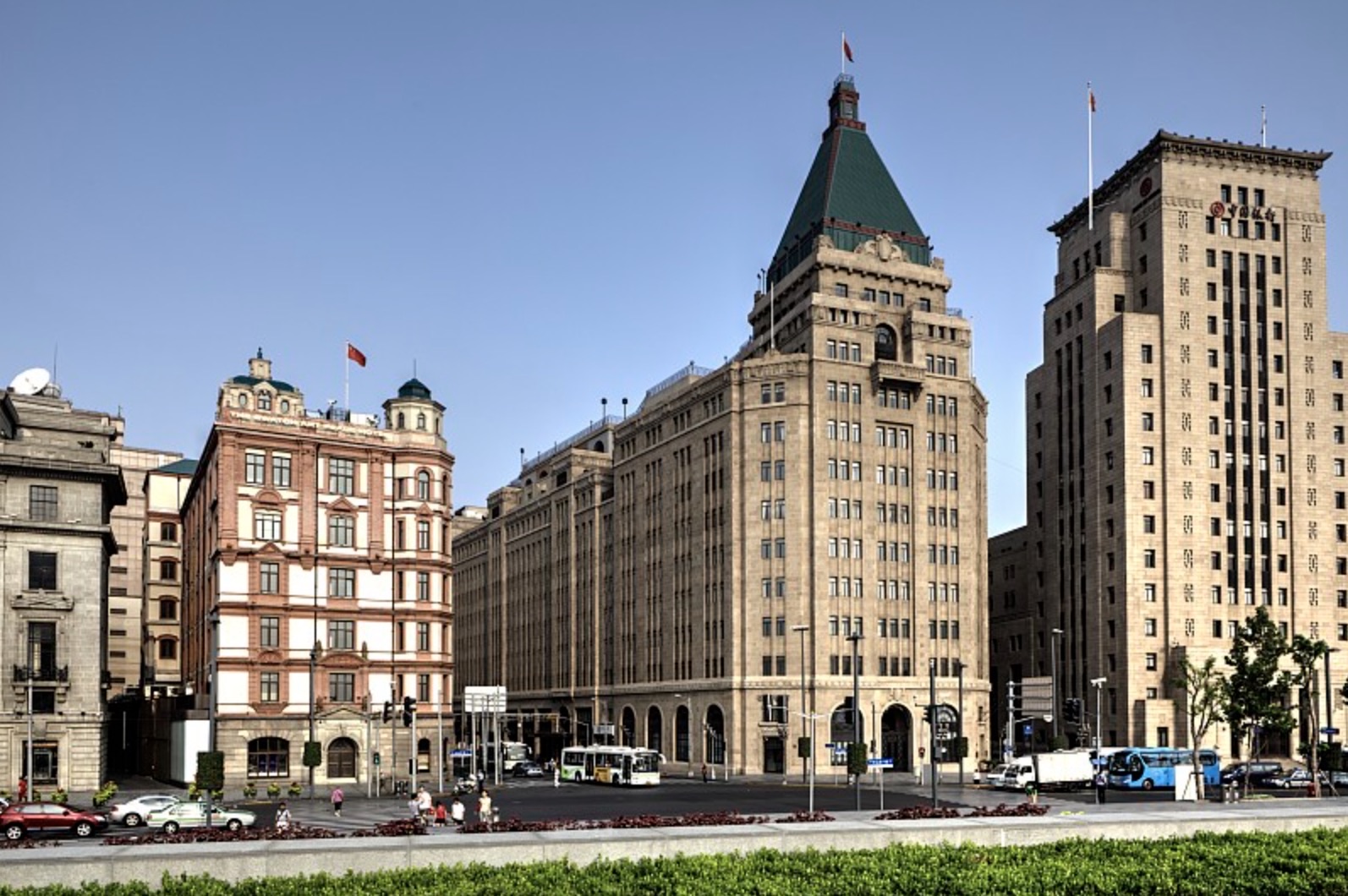
This building at Number 20 Zhongshan East Road Number 1 was completed in 1929, financed by the British Sassoon family's Victor Sassoon company and designed by the British firm Palmer and Turner. It stands as the supreme achievement of Art Deco architecture on the Bund. The building rises 77 metres — at the time the tallest structure in Shanghai and across the Far East — with a facade of Indian red stone and clean, bold geometric lines. Its most striking feature is the deep green pyramidal copper dome at the top, which glows like a jade crown when lit at night. From the moment it opened, the hotel was the most luxurious in the Far East; Charlie Chaplin and George Bernard Shaw both stayed here. After 1949 it was renamed the Peace Hotel, where Premier Zhou Enlai received the French prime minister, and the American table tennis team also stayed here — sending the signal that opened the era of Ping-Pong Diplomacy between China and the United States. In recent years, the hotel has regained widespread attention due to the hit television series "Blossoms Shanghai."

Chen Yi Square and the Statue of Chen Yi

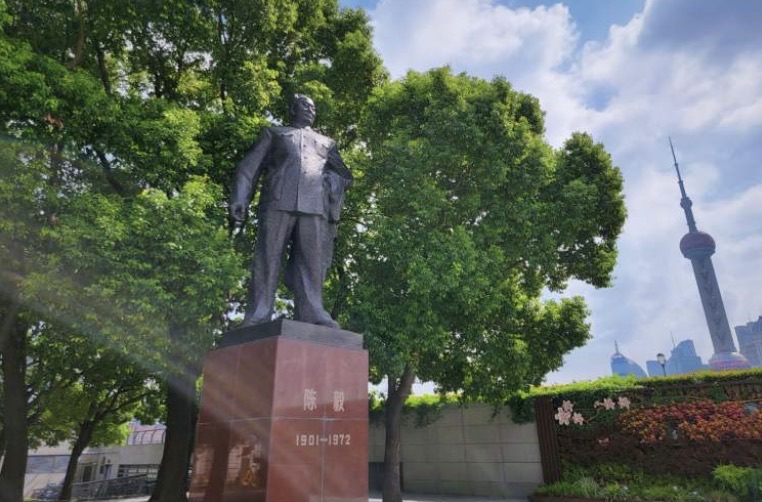
Chen Yi Square sits at the heart of the Bund, at the junction of East Nanjing Road and Zhongshan East Road Number 1, and is the largest and most visited public plaza on the Bund. At the centre stands a full-length bronze statue of Chen Yi, the first mayor of Shanghai under the People's Republic of China. The statue stands 9 metres tall, was created by the celebrated sculptor Zhang Yonghao, and was unveiled on the eve of National Day in 1993. Mayor Chen Yi led his troops into Shanghai in May 1949 and took over the old municipal government building here, opening a new chapter in the city's history. The square serves both as a memorial and a civic gathering space — it is one of the best vantage points on the Bund, offering a view north to the Monument to the People's Heroes, south along the full facade of the international architecture ensemble, and directly across the river to the Lujiazui skyline.

The Bund Bull

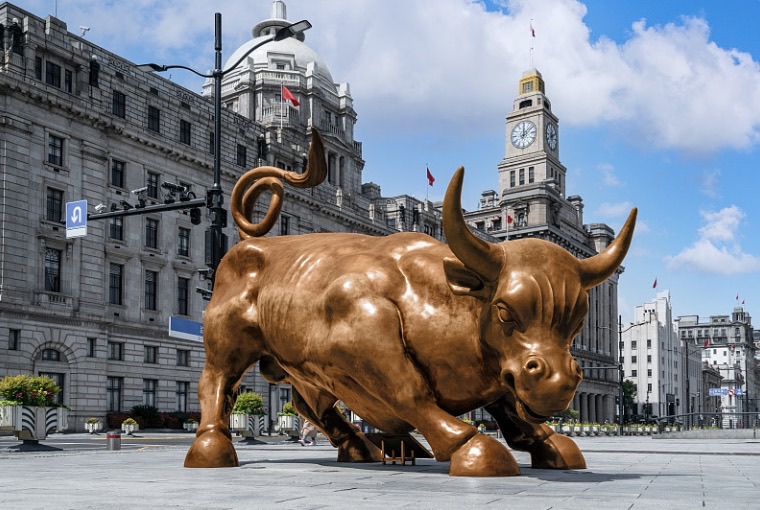
The Bund Bull stands on the viewing platform south of Chen Yi Square. It is a bronze bull sculpture by Italian-American artist Arturo Di Modica, unveiled during the 2010 Shanghai World Expo. The same artist created the famous Charging Bull on Wall Street in New York. This bull weighs 2.5 tonnes and has a more youthful, dynamic posture than its Wall Street counterpart; it faces in the direction of Lujiazui, symbolising the vigour and momentum of China's economy. The Bund Bull points directly toward Shanghai Tower across the river and has become one of the most photographed sculptures on the Bund.

The Monument to the People's Heroes of Shanghai

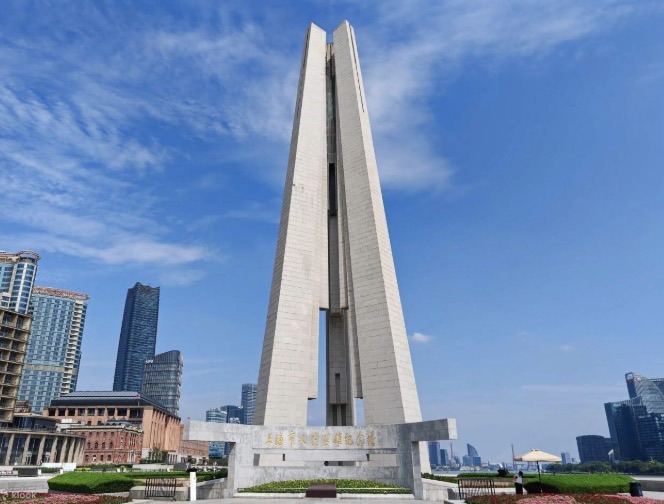
This monument stands inside Huangpu Park at the confluence of the Huangpu River and Suzhou Creek. It was completed and opened on 27 May 1994, the 45th anniversary of Shanghai's liberation. The monument consists of three towering columns, each rising 60 metres, forming a composition of clean, solemn grandeur. The design conveys that the heroes who gave their lives for Shanghai's liberation and national independence — from the Opium War and the May Fourth Movement through the War of Liberation — will be remembered forever. The base of the monument offers a direct view of the broad mouth of Suzhou Creek and the full panorama of Lujiazui on the opposite bank. From the earliest discussions to its eventual completion, this project took 45 years — making it the largest and most significant memorial structure on the Bund.

Waibaidu Bridge

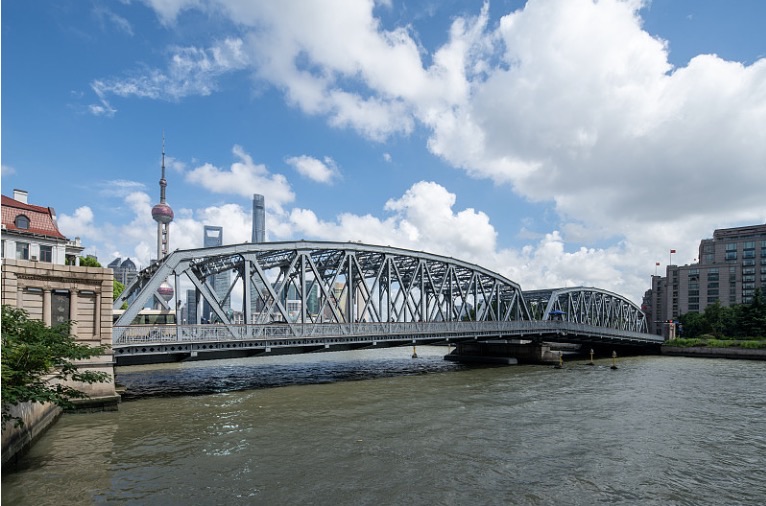
Waibaidu Bridge spans the mouth of Suzhou Creek where it flows into the Huangpu River, connecting Huangpu District and Hongkou District. It is China's first all-steel riveted bridge, measuring roughly 104 metres in length with a main span of 52.16 metres. The first bridge on this site was a wooden structure built in 1856, replaced by an iron bridge in 1873. The current steel structure was completed in 1907, built entirely using riveted construction with no welding, and fitted with a wooden pedestrian walkway. Because it was the only bridge over Suzhou Creek that charged no toll, Shanghai residents called it "Baidu Bridge" — meaning "the bridge you cross for free." Now more than a century old, Waibaidu Bridge is a landmark of Shanghai's industrial heritage and a favourite filming location for Chinese and international productions, most notably "Suzhou River," "Lust, Caution," and "Tiny Times."

The Bund Source (Waitanyuan)

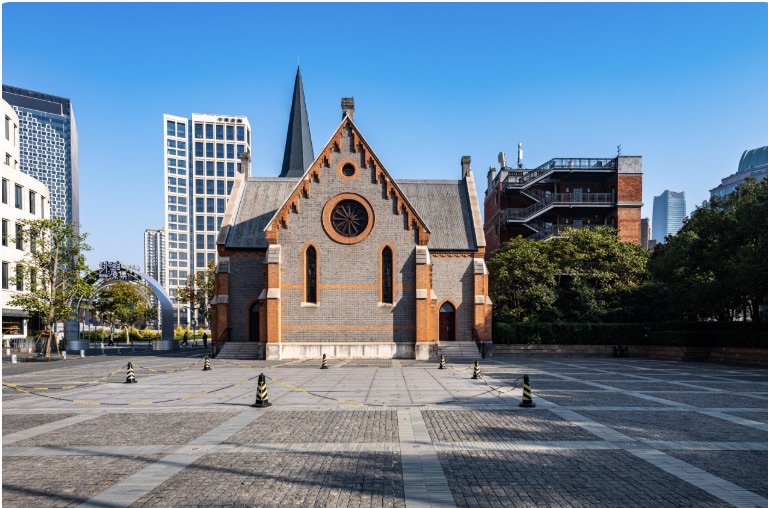
The Bund Source, known as Waitanyuan, marks the historical starting point of the Bund's international architecture ensemble. Located at the confluence of the Huangpu River and Suzhou Creek — around South Suzhou Road and Yuanmingyuan Road — this was where the British Consulate was established in 1849, making it the earliest developed section of the Bund. Several early 20th-century buildings survive in the area today. The most notable is the former British Consulate General (Waitanyuan Number 1), built in 1873, featuring an exposed red brick facade and a colonnaded arcade with arched openings — the oldest surviving building on the Bund. The Union Church next to it was built in 1886, its Gothic spire and rose window rising beside the river, forming a classic compositional pairing with Waibaidu Bridge. Other protected buildings in the Bund Source area include the North-China Branch of the Royal Asiatic Society Building (now the Rockbund Art Museum) and the Zhenguang Building (now home to a Shanghai-Hong Kong banking history exhibition). Green lawns, plane trees, coffee shops, and art galleries weave together to create a quiet, refined cultural haven tucked away from the crowds on the main Bund promenade.

The Bund Promenade

The Bund Promenade stretches roughly 1.7 kilometres, running from East Jinling Road northward to just south of Waibaidu Bridge. It is the central walkway for taking in the scenery on both banks of the Huangpu River. On the inland side stretches the continuous facade of the international architecture ensemble; on the river side opens a broad view of the Huangpu and the full panorama of the Lujiazui financial district — the Oriental Pearl Tower, Jin Mao Tower, the Shanghai World Financial Center, and Shanghai Tower lined up one after another, forming one of the world's most recognised skylines. The promenade is fully accessible throughout its length, with viewing platforms and information panels at multiple points along the way.

Inside The Bund, Shanghai

12 stops, in walking order — read top to bottom, no clicking needed.

1 Shiliupu Wharf of 12

Shiliupu Wharf

十六铺码头

Shiliupu Wharf is located at the southern end of the Bund along the Huangpu River, with a history tracing back to the Xianfeng era of the Qing Dynasty, named after the old Shanghai Shiliupu commercial district. It was once Shanghai's water gateway to Jiangsu and Zhejiang, with peak daily passenger traffic exceeding 100,000. After 2000, the terminal's passenger functions gradually ceased, and a comprehensive renovation was completed before the 2010 World Expo, creating a large multi-level complex with three underground levels and a waterfront observation deck above. Today the wharf retains some sightseeing cruise routes, offering boat rides to enjoy both banks of the Huangpu River, while integrating commerce, dining, and waterfront promenades, becoming a 'waterfront living room' for citizens and tourists to experience Shanghai's 'wharf culture.'

On-site narration · read it where you stand

Hello everyone, and welcome to Shanghai! Today I'll be walking you along the western bank of the Huangpu River, taking you through the route from Shiliupu Wharf to Bund 18, the Asia Building, the Shanghai Club, the HSBC Building, the Customs House, the Peace Hotel, Chen Yi Square, the Monument to the People's Heroes, Waibaidu Bridge, and finally the Bund Source. Together, we'll travel through this 1.5-kilometre stretch of history — a "Gallery of International Architecture" that compresses roughly 180 years of China's modern story into a single riverside walk.

Let's start with a little background on the Bund. The name itself goes back to the Qing dynasty — "Bund" referred to the mudflats along the Huangpu River just outside the old city walls of Shanghai County. "Wai" means outside the city; "tan" means the riverbank mudflats. When Shanghai opened as a treaty port in 1843, British, French, and American settlers carved out their concessions along these mudflats. Banks, trading houses, chambers of commerce, and clubs went up one after another, and by the 1920s and 30s, barely two kilometres of riverfront was lined with 52 buildings representing the world's major architectural traditions. The Bund became the largest financial centre in the Far East — known as "the Wall Street of the East."

The Bund is unlike every other attraction you've visited — there's no entrance gate, no ticket, and it's open around the clock, because it's simply a city street. You can come and go whenever you like. But if you just walk past without engaging, you're missing everything. I encourage you to follow me and read through this stretch of history layer by layer — like reading a novel written in stone.

We're now standing at the southernmost starting point of the Bund — Shiliupu Wharf. The name "Shiliupu" has been around since the Qing dynasty. Back then, Shanghai County managed the riverfront by dividing it into more than twenty sections called "pu," and this area was Number Sixteen — so it was called Shiliupu.

After the Opium War, foreign merchant ships came thundering into the Huangpu River, and Shiliupu became the busiest passenger terminal in all of China.

Here's a figure to put it in perspective: during the Republican era, Shiliupu received over ten million visitors a year, at a time when Shanghai's entire population was only about three million. People from Jiangsu, Zhejiang, Anhui, Guangdong, and Fujian — they all took a boat, stepped off onto this gangway, and set foot in Shanghai for the very first time. Many of them never left. So for generations of Shanghainese, "Shiliupu" isn't just a place name — it's the first coordinate of their life in this city.

Take a look across the river toward Lujiazui in Pudong. A hundred years ago, that was all farmland and makeshift housing. Now it's China's densest cluster of skyscrapers: Shanghai Tower at 632 metres tall, the second tallest building in the world; and beside it Jin Mao Tower and the Shanghai World Financial Center, which Shanghainese jokingly call "the kitchen trio" — Jin Mao looks like a syringe, the World Financial Center like a bottle opener, and Shanghai Tower like a hand mixer. But behind that joke is a fact: from Shiliupu to Lujiazui, separated by just a few hundred metres of river, China leapt in a hundred years from the age of steam-powered ships all the way to a building 632 metres in the air. That's what "compressed time" means.

Alright, let's say goodbye to Shiliupu and head north along the Bund.

Bund 18

外滩十八号

Bund 18 is located at 18 Zhongshan East 1st Road, designed by the British firm Palmer & Turner Architects, completed in 1923, and formerly housed the Shanghai branch of Chartered Bank (now Standard Chartered Bank). The building is a seven-story reinforced concrete structure with a neoclassical facade—rusticated granite at the base, an Ionic colonnade spanning the second floor and above, and a entrance retaining exquisite bronze doors and marble staircases. In 2006, the building underwent a conservation-minded renovation and was transformed into a mixed-use space combining luxury brand flagships, art galleries, Michelin-starred restaurants, and boutique offices, becoming a classic model of the Bund's 'readable architecture' initiative.

On-site narration · read it where you stand

On your right — Number 18 Zhongshan East Road Number 1. This is Bund 18. Completed in 1923, it was originally the Shanghai headquarters of the Chartered Bank of India, Australia and China — the institution we know today as Standard Chartered Bank. Designed by the British firm Palmer and Turner in a Neoclassical style. Look at those columns running across the second and third floors — notice the tops, where two rings of spiral scrolls curl upward. That's the Ionic order, the column style ancient Greece reserved for goddesses, chosen for its elegance.

The most remarkable story connected to this building happened in 2002. By that point it had fallen into serious disrepair and was nearly lost. A Taiwanese entrepreneur purchased the entire building, then brought in a Venetian architectural restoration team from Italy who approached the work like surgery, stripping it back layer by layer to uncover what lay underneath. Their first task was to chip away concrete that had been plastered over the original surfaces, revealing the 1919 mosaic floor tiles beneath. Then came the Carrara marble columns from Italy and the stained-glass dome. In 2006, the project was awarded the UNESCO Asia-Pacific Award for Cultural Heritage Conservation.

If you have time to step inside, just look up at the dome. During the day, sunlight filters through the coloured glass and scatters patches of blue, red, and gold across the floor below. Everything people mean when they talk about "blending East and West with intelligence" is written right there on that ceiling.

Asia Building (Bund No. 1)

亚细亚大楼(外滩一号)

The Asia Building is located at 1 Zhongshan East 1st Road, earning the title 'Bund's First Building' as it sits at the southernmost starting point of the Bund's international architectural ensemble. The building was invested by the British McBain & Co., designed by Palmer & Turner Architects, and completed in 1913, originally named the McBain Building. Its main facade features a Baroque style with a three-story Ionic colonnade at the center, curved corners, and a semicircular pediment at the top, blending Classical and Neoclassical aesthetics. After the Asiatic Petroleum Company (a predecessor of Shell) purchased the building in 1917 and used it as headquarters, it became known as the 'Asia Building.' It now serves as the headquarters of China Pacific Insurance and is one of the best-preserved and most representative early high-rise buildings in the Bund complex.

On-site narration · read it where you stand

Just ahead on your right — Number 1 Zhongshan East Road Number 1. The Asia Building. Completed in 1916, it was the tallest building on the Bund when it was built, which earned it the title of "the Bund's premier building." Look closely at the secret of this building's floor plan: it isn't a simple rectangle — it's a hollow square, with the centre cut away to create a courtyard. That way every room on every floor gets light from two sides. Designers over a century ago already understood that a building needs to breathe.

Where did the name "Asia" come from? From the company that moved in — the Asiatic Petroleum Company, which at the time held a monopoly over China's entire kerosene market. What does "monopoly" mean here? Every drop of kerosene that every household in China burned for light had to be bought from this one company. It's roughly equivalent to all electricity today belonging to a single corporation. Monopoly profits on that scale were enormous — large enough to justify occupying the prime address of Number 1 on the Bund.

Today the building is home to the Jiushi International Arts Centre — inside you'll find the Fosun Foundation and a space for the international auction house Christie's. A hundred years ago it sold oil; today it sells art. The water of the Huangpu River hasn't changed, but the story this building tells has transformed completely.

Shanghai Club (Waldorf Astoria Shanghai on the Bund)

上海总会(华尔道夫酒店)

The Shanghai Club Building is located at 2 Zhongshan East 1st Road, built in 1910, designed by the British firm Atkinson & Dallas, with interior decoration by Japanese architect Kikutar Shimoda. The building features an English Renaissance style, with an Ionic colonnade spanning the second and third floors on its facade, a domed corner tower, and Baroque detailing. Because its interior decoration referenced Japanese imperial court style, it was once hailed as 'the London of the East.' The building housed a 34-meter marble bar—the 'longest bar in the Far East'—and was the core social venue for Shanghai's foreign community in the early 20th century. After renovation in 2010, the building was transformed into the Waldorf Astoria Shanghai on the Bund, preserving its historical character while providing luxury hotel service.

On-site narration · read it where you stand

Look to your right — the building with six massive white columns. Number 2 Zhongshan East Road Number 1. This is the former Shanghai Club, now the Waldorf Astoria Shanghai on the Bund. "Club" was translated into Chinese as "zong hui," meaning general assembly. Completed in 1909, this was historically the first building on the Bund to use reinforced concrete construction. Those six columns at the main entrance are Ionic — look at the two spiral scrolls at the top of each one, carved entirely by hand. Shanghainese have a word for a certain effortless refinement: "qiaodiao." You're looking at it right now.

Inside was a 34-metre-long bar counter made from black-and-white marble, celebrated at the time as "the longest bar in the Far East." Thirty-four metres — about the length of a railway carriage. Picture it: a hundred years ago, gentlemen lined up along this bar, swirling their whisky, discussing what? The price of silk, cotton, opium, the sterling exchange rate. The wealth intelligence of the entire Far East passed from mouth to ear along this counter.

After 1949 the building was renamed the Dongfeng Hotel. Shanghai's very first KFC opened here. Sit with that image for a moment — fashionable young people eating fried chicken beneath a century-old European-style dome. This is Shanghai's most extraordinary quality: it has never cared about mixing incompatible things together, and somewhere in the mixing, it produces its own unmistakable style.

Now the building has returned to its original calling — the Waldorf Astoria. Walk into the lobby and you'll find the black-and-white marble and the hand-carved staircase banisters exactly as they were a hundred years ago.

Former HSBC Building

原汇丰银行大楼

The Former HSBC Building is located at 12 Zhongshan East 1st Road, completed in 1925, designed by Palmer & Turner Architects, and formerly housed the Shanghai branch of the Hongkong and Shanghai Banking Corporation. The building is a quintessential example of neoclassical architecture, with a seven-story main body, a six-column Ionic colonnade on the central facade, and a massive hemispherical dome whose interior is adorned with exquisite mosaic murals depicting eight global financial centers. The building was once praised as 'the most magnificent building between the Suez Canal and the Bering Strait.' From 1955 to 1995, it served as the Shanghai Municipal Government office building. In 1997, it was acquired and restored by Shanghai Pudong Development Bank, which now uses it as its headquarters, making it one of the Bund's most iconic historic buildings.

On-site narration · read it where you stand

This next building is the one I most recommend you take a good look at — Number 12 Zhongshan East Road Number 1, the former HSBC Building. Completed in 1923, it was once described as "the most magnificent building between the Suez Canal and the Bering Strait." Full steel-frame construction, every piece of marble quarried in Italy, shipped over, and carved on site. A hundred years on, look at the colour of the stone on the outer walls — the wind and rain of the Huangpu River have left almost no mark on it. That's what Italian stone is made of.

The real showpiece is inside. Most of the time it isn't open to the public, so I'll paint the picture for you — keep it in your mind. On the dome ceiling of the octagonal banking hall hangs a monumental mosaic mural 15 metres in diameter, covering roughly 200 square metres, titled "All Under Heaven Are Brothers." Italian craftsmen spent two years placing millions of pieces of coloured glass and metal tessera to depict eight cities: Shanghai, Hong Kong, London, Paris, New York, Tokyo, Bangkok, and Calcutta. At the very centre, the sun god drives his chariot across the sky. When you stand beneath that dome and look up, one thought comes to you clearly — "the whole of human civilisation is above my head."

Why would a bank spend that kind of money on something customers see only by looking up? It's a brilliant piece of logic: you come in to deposit your money, you glance upward, and you see the pinnacle of human civilisation gathered in one place. Can you possibly doubt that this bank is trustworthy? Architecture is the highest-order investment in the cost of trust.

Photography tip: a slightly right-of-centre angle from the front lets you capture both the dome silhouette and the full row of columns. Between four and five-thirty in the afternoon, the facade turns golden in the evening light.

Customs House (Shanghai)

海关大楼

The Customs House is located at 13 Zhongshan East 1st Road, designed by Palmer & Turner Architects and rebuilt in 1927. It is one of the most recognizable buildings in the Bund's international architectural ensemble. The eight-story building features a Greek neoclassical facade supported by a Doric colonnade at the base, exuding grand solemnity. Its most striking feature is the clock tower—a tall square tower with four clock faces, manufactured in the style of Big Ben at the Palace of Westminster in London, cast by the British Joyce & Co. clock foundry. The clock chimes every fifteen minutes, and its resonant bell once echoed across both banks of the Huangpu River, earning it the title 'Asia's First Clock.' The building is still used by Shanghai Customs today and stands as the spiritual landmark of the Bund's 'Expo of World Architecture.'

On-site narration · read it where you stand

Right next door — the Customs House. You'll know it the moment you spot the clock. Completed in 1927, the clock tower rises 79 metres, deliberately built a notch taller than the HSBC Building next to it. That was a classic "architectural competition" on the Bund: you go up six metres, I'll go up eight. But the clock is today's real star.

It shares the same British clockmaker's mechanism as Big Ben in London. Each of the four clock faces measures 5.4 metres in diameter — one on every side of the tower. On New Year's Day 1928 it struck for the first time, playing the British Westminster Quarters. Old Shanghainese didn't say "what time is it" — they said "how many times has the Customs clock rung." The whole city kept time by it.

There's a person I want to tell you about — Wei Yunsi, the clock keeper. From 1991 onwards, he climbed that near-vertical iron ladder up to the clock tower every single day to wind the mechanism, calibrate it, and carry out maintenance. For over thirty years, without a single break. In his hands, this clock has never run more than two seconds off. You're facing a precision machine that has been chiming faithfully through countless hours, kept alive by one person working in quiet, unseen dedication. That is Shanghai's true character — you get the job done properly, whether anyone is watching or not.

The clock now plays "The East Is Red" on the hour. When it strikes, the river wind carries the sound across the Huangpu to the opposite bank. If you happen to be passing at the top of the hour, stop and listen — one stroke at a time. Every chime is a hundred years.

Peace Hotel (Fairmont Peace Hotel)

和平饭店

The Peace Hotel is located at 20 Zhongshan East 1st Road, invested by the British Jewish businessman Sir Victor Sassoon, designed by Palmer & Turner Architects, and completed in 1929. Originally named Sassoon House, it was once 'the tallest building in the Far East.' The building features an Art Deco style, ten stories high, with a granite facade crowned by the iconic green copper pyramidal spire, striking in the sunlight. The building housed the Cathay Hotel, the premier hotel in the Far East during the first half of the 20th century, hosting celebrities such as Charlie Chaplin and George Bernard Shaw. Renamed the Peace Hotel in 1952, it underwent a major renovation from 2007 to 2010 and is now managed by the Fairmont hotel group, featuring the iconic Jasmine Lounge and nine nationality-themed suites.

On-site narration · read it where you stand

Coming up — the one that's impossible to miss. The dark green roof. That's the Peace Hotel. Completed in 1929, it was originally called Sassoon House. The Sassoon family — wealthy British-Jewish merchants who made their fortune in the opium trade — at their peak owned a quarter of Shanghai's real estate. This building was the Sassoon family's crowning achievement: 77 metres tall, the tallest structure in all of Shanghai, a masterpiece of Art Deco architecture.

Three details to hold onto. First, the colour: most buildings on the Bund are grey-white, but this one is Indian red stone, a deep reddish hue. Against Shanghai's grey winter skies, that red stands out like a silk ribbon tied along the river. Second, the roof: a deep green pyramidal copper dome — copper oxidises continuously, its colour deepening slowly with the years. The green you're seeing now took a full hundred years to develop. Third, the jazz band: the veteran jazz ensemble on the ground floor has an average age of over seventy and has been playing here for more than forty years. Every evening when the saxophone starts up, you understand exactly what "a living legend" means.

The history of this building is a miniature version of Shanghai's history. Charlie Chaplin stayed here and called it "the most fashionable place to stay in the Orient." After 1949 it was renamed the Peace Hotel, where Premier Zhou Enlai received the French prime minister in the ninth-floor suite, and the American table tennis team also stayed here — the signal that launched the era of Ping-Pong Diplomacy went out from this lobby. If you've seen the television series "Blossoms Shanghai" in recent years: the main character's penthouse suite is right here, with the Bund and the Huangpu River outside the window. One building, four eras, four entirely different stories.

Photography tip: stand diagonally across the street to capture the relationship between the pyramidal copper dome and the horizontal roofline of the international architecture ensemble below. After dark, the lit dome glows as a deep, luminous green.

Chen Yi Square and Bronze Statue of Chen Yi

陈毅广场与陈毅铜像

Chen Yi Square is located on the waterfront observation platform between Nanjing East Road and Fuzhou Road on the Bund, the most densely trafficked core area of the Bund. At the center of the square stands the bronze statue of Chen Yi, sculpted by Zhang Yonghao and unveiled on the eve of National Day in 1993. The statue, approximately 9 meters tall, depicts Mayor Chen Yi wearing an overcoat with hands clasped behind his back and a serene smile, facing the Huangpu River and gazing at the Pudong Lujiazui skyline, symbolizing his hopes for the development of new Shanghai. Chen Yi (1901–1972) served as the first mayor of Shanghai under the People's Republic (1949–1958), during which he stabilized prices, restored production, and restored public order, earning deep affection from Shanghai citizens. The square serves both as a leisure and sightseeing spot and as the central venue for Shanghai's major festivals and celebrations.

On-site narration · read it where you stand

The large square just ahead is Chen Yi Square. The bronze statue at the centre — 9 metres tall — is Chen Yi, the first mayor of Shanghai under the People's Republic of China. In May 1949, Chen Yi led the People's Liberation Army into Shanghai and took over the city.

You may not know much about Chen Yi's relationship with Shanghai. The city came through the fighting largely undamaged, and a major reason for that was the order Chen Yi and the PLA issued at the time: "catch the mouse without breaking the china shop." Better to sustain more casualties among your own soldiers than to destroy this world-famous city. On 28 May 1949, Chen Yi walked into the old municipal government building beside the Bund and received the keys to the great city of Shanghai. At that moment, the average life expectancy in Shanghai was under 35 years. In his three years as mayor, industrial output quadrupled. That is the real first line of what people call "the Shanghai legend."

The square itself is the finest viewpoint on the entire Bund. Stand beside the statue and look north — the three silver columns of the Monument to the People's Heroes rise into the sky. Look south — the full facade of the international architecture ensemble unfolds like an open scroll. Look straight across the river — the Oriental Pearl Tower, Jin Mao Tower, the Shanghai World Financial Center, and Shanghai Tower line up one after another. Whether you use a phone or a camera, from this single spot you already have three completely different visions of Shanghai.

Bund Bull (Shanghai Financial Bull)

外滩牛

The Bund Bull is located at the Bund Financial Square at the intersection of Zhongshan East 1st Road and Fuzhou Road. Created by Italian-American artist Arturo Di Modica, it was officially unveiled during the 2010 Shanghai World Expo. Di Modica is the same sculptor who created the Charging Bull on Wall Street in New York, making the Bund Bull its 'sister work.' The bronze sculpture, cast in a dark red-brown patina, weighs approximately 2.5 tons and is slightly larger than its Wall Street counterpart. The bull is depicted in a lowered-head, charging posture with taut muscles and forward-thrusting horns, brimming with kinetic energy, symbolizing a 'bull market' and the robust development of Shanghai's financial markets. Since its installation, it has quickly become a popular Bund landmark, with visitors commonly touching the bull's horns for good fortune.

On-site narration · read it where you stand

Walk twenty or thirty metres south of Chen Yi Square and you'll see a bull — the Bund Bull. Unveiled during the 2010 Shanghai World Expo, it was created by the same artist as the famous Charging Bull on Wall Street in New York: Italian-American sculptor Arturo Di Modica. This bull weighs 2.5 tonnes, and its posture is younger and more energetic than its Wall Street counterpart. Its head points in the direction of Lujiazui.

Why a bull? In financial culture, a bull represents a bull market — a rising market. Wall Street has one, so the Bund needed one too. But more importantly, consider the direction it's facing: its horns point straight toward Shanghai Tower across the river. In 1884 the British built a racecourse here; in 1923 HSBC raised its financial empire; in the 1990s Pudong's development began; in 2016 Shanghai Tower was topped out. Through all those years, the Bund never once stopped its drive to go higher. This bull embodies that spirit — the instinct that never looks back.

There are always crowds around it, so I'd suggest waiting ten to fifteen minutes — there's usually a window when it clears. Rest your hand on one of the horns and angle from below, with Shanghai Tower on the opposite bank in the frame.

Shanghai People's Heroes Memorial Tower

上海市人民英雄纪念塔

The Shanghai People's Heroes Memorial Tower is located in Huangpu Park at the northern end of the Bund, at the confluence of the Huangpu River and Suzhou Creek. Built in 1993 and officially opened on May 27, 1994 (the 45th anniversary of Shanghai's liberation), the memorial consists of three 60-meter-tall granite rifle-shaped towers leaning against each other and pointing skyward, symbolizing the people's heroes who sacrificed their lives in the Opium War, the May Fourth Movement, and the War of Liberation. At the base of the towers lies a sunken circular plaza surrounded by large granite reliefs depicting scenes of the Shanghai people's revolutionary struggles. With a total construction area of approximately 16,000 square meters, the memorial is an important patriotic education base and red-cultural landmark of Shanghai, as well as an excellent vantage point for viewing the Pudong Lujiazui skyline.

On-site narration · read it where you stand

Further north, three silver columns thrust straight up into the sky — the Monument to the People's Heroes of Shanghai. Completed in 1994, each column stands 60 metres tall. The designer's intention is unmistakable: three columns representing all who gave their lives for Shanghai's liberation and national independence across three defining chapters of modern Chinese history — the Opium War, the May Fourth Movement, and the War of Liberation.

This monument took 45 years to build from conception to completion. The idea was first raised in 1949 by Chen Yi himself — he said: "Shanghai has been liberated; we must erect a memorial for those who came before us." But for various reasons it was delayed decade after decade, and it was only on 27 May 1994 — the 45th anniversary of Shanghai's liberation — that it was finally finished. Think about this: when Chen Yi said those words in 1949, he could not have known that forty-five years later, he too would be standing on the Bund — in the form of that bronze statue we just visited — looking across at this monument.

Stand at the base of the monument and look south — Shiliupu Wharf is at the far end; look north — Waibaidu Bridge; to your left, Suzhou Creek flows into the Huangpu River. Three waterways meet here, three columns rise to the sky. On the windiest days, standing at the centre of the monument's base, you can hear both rivers at once — and they sound different from each other.

Waibaidu Bridge (Garden Bridge of Shanghai)

外白渡桥

Waibaidu Bridge is located at the northern end of the Bund, spanning the mouth of Suzhou Creek where it flows into the Huangpu River. It connects Huangpu Park to the south and the North Bund in Hongkou District to the north, and is an important landmark of Shanghai's modern urban development. The bridge was originally built in 1856 (as a wooden bridge); the existing steel bridge was completed in 1907, designed and manufactured by the British Cleveland Bridge & Engineering Company. It was China's first all-steel riveted truss bridge, measuring 104 meters long and 18 meters wide, with two steel spans connected by rivets in an elegant, archaic form. The name 'Waibaidu' originates from the site's history as a creek crossing point, where 'baidu' meant a free ferry crossing (no longer charging a fee). In 2008, the bridge was entirely moved to a shipyard for major repairs and then reinstalled in its original position, restoring the century-old steel structure. Waibaidu Bridge has been a filming location for numerous films and television dramas and is an excellent spot for viewing the Pudong skyline and the Bund's architectural ensemble.

On-site narration · read it where you stand

The bridge just ahead is Waibaidu Bridge. Built in 1907, it is China's first all-steel riveted bridge — not a single weld, held together entirely by rivets driven in one by one. Look at the dense rows of round bumps along the bridge's frame — every one of them is a hand-driven rivet, and after more than a hundred and ten years, not one has come loose.

Why is it called "Baidu Bridge" — the "free crossing bridge"? During the Xianfeng period of the Qing dynasty, the first bridge at this site was a wooden one that charged a toll to cross. Later, the Public Works Department of the International Settlement built a new iron bridge alongside it and announced: this one is free — no charge. Shanghainese used the word "bai" to mean "for free," as in "crossing for nothing." So "Waibaidu Bridge" literally means "the bridge near the Bund where you cross for free." It's a commoner's name, not one bestowed by an emperor — the people gave it that name themselves.

This bridge has appeared in more films than perhaps any other landmark in Shanghai. In Lou Ye's "Suzhou River," Zhou Xun rides the back of a motorbike and sweeps across this bridge in a single frame. In Ang Lee's "Lust, Caution," Tang Wei walks from the north end to the south, with the Suzhou River behind her in grey-white tones. If you stand at the midpoint of the bridge and look east, the river flows beneath your feet into the Huangpu, the century-old international architecture ensemble is on your left, and the Pudong skyscrapers rise on your right. This is the only spot in all of Shanghai where you can see three different eras at once.

Photography tip: from the northern end, shoot down along the bridge to capture the rivet details — it's quieter in the early morning. After dark the bridge is lit in warm amber, and its steel framework casts a reflection on the water like a latticed palace.

The Origin of the Bund (Waitanyuan)

外滩源

Waitanyuan (The Origin of the Bund) is located on the southwest side of the confluence of the Huangpu River and Suzhou Creek, bounded by the Huangpu River to the east, Sichuan Middle Road to the west, Suzhou Creek to the north, and Dianchi Road to the south, covering approximately 16.4 hectares. It is called 'the source of the Bund' because the earliest buildings of the Bund's international architectural ensemble were born in this area. The core building, 'Bund Source No. 1' (33 Zhongshan East 1st Road), was the former British Consulate General in Shanghai, with its main building dating from 1872—the oldest surviving building on the Bund's first facade, in the English Renaissance style. The area also preserves multiple historic buildings including the China Federation Building, the North China Branch of the Royal Asiatic Society Building, and the Yuanying Road Apartments. After conservation-minded development, it has become a pedestrian district centered on Yuanying Road, integrating art exhibitions, fine dining, and boutique retail—a unique neighborhood for experiencing the cultural charm of 'old Shanghai, new Bund.'

On-site narration · read it where you stand

Once we cross Waibaidu Bridge, we arrive at the true origin of the Bund — the Bund Source, or Waitanyuan. "Source" here carries a double meaning: it's where the two rivers meet, and it's where time begins. On your right is that red brick building completed in 1873 — the former British Consulate General, the oldest surviving structure on the Bund. Exposed red brick walls, a colonnaded arcade with curved arched openings. Notice that it doesn't carry the heavy "official authority" of a typical government building? It feels less like a consulate and more like an English country estate far from London. That's the hallmark of colonial veranda architecture — a blend of tropical ventilation and British aesthetics.

Beside it, the Gothic church with the pointed spire — the Union Church, built in 1886. Red brick tower, rose window. In 2007 a fire destroyed most of its roof, and when the time came to restore it, a clever decision was made: preserve the traces of the fire. New materials were placed over the charred wooden beams rather than replacing them. So what you're looking at today is both the 1886 church and a space reborn in 2007 at the same time.

The Bund Source is the quietest corner of the entire Bund. While the crowds press shoulder to shoulder on the main promenade, you can turn into Yuanmingyuan Road and find nothing but plane trees overhead and coffee shops and galleries all around — the old Royal Asiatic Society building has become the Rockbund Art Museum, and the Zhenguang Building has become a Shanghai-Hong Kong banking history exhibition hall. There are fewer people here. Sit on the lawn with a coffee, watch the cars and pedestrians flow across Waibaidu Bridge in front of you, and you'll understand what it means to find true solitude in the heart of a city.

That's it, everyone. We've walked from Shiliupu to the Bund Source — about 1.5 kilometres from south to north. It's not a long road, but it took 180 years to walk — from the cannon fire of the Opium War to the light shows over Lujiazui tonight.

Three things to take away with you from today:

First, the Bund is not decoration. Every building here is a note left in Shanghai by a nation that once ruled a piece of the world. The British left their banks, the French left their plane trees, and the Chinese people left behind the wisdom of preserving all of it and putting it to use again.

Second, the buildings on the Bund are not dead. They have gone from "taipan clubs" to "general trade union offices," from "trading-house warehouses" to "art museums." The buildings haven't changed; the people looking at them have. That shift itself is the story of China's modern history.

Third, if you can only carry one image away from today — I suggest you come back to the entrance of the Peace Hotel at dusk, just as the Customs House clock strikes the hour, the setting sun turns the international architecture ensemble gold, and the lights of Lujiazui across the river are just switching on. At that moment, you'll find that the world's yesterday and tomorrow are converging right there on the stretch of river in front of you.

If there's a particular building you'd like to explore more, or you'd like to find a coffee or come back for the night views, just let me know — the Bund is always lit.

Prefer to be shown around?

A local guide walks these 12 stops with you and answers what the page cannot.

Browse tours ↗