 2
 3
 4
 5
 6
 7
 8
 9
 10
Ancient Chinese Bronze Gallery
中国古代青铜馆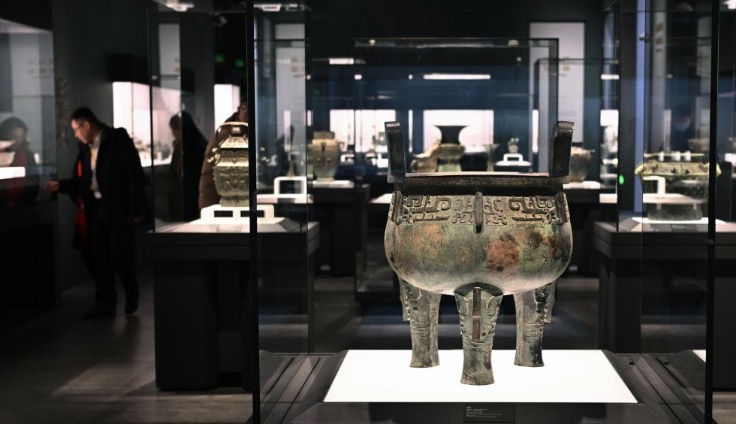
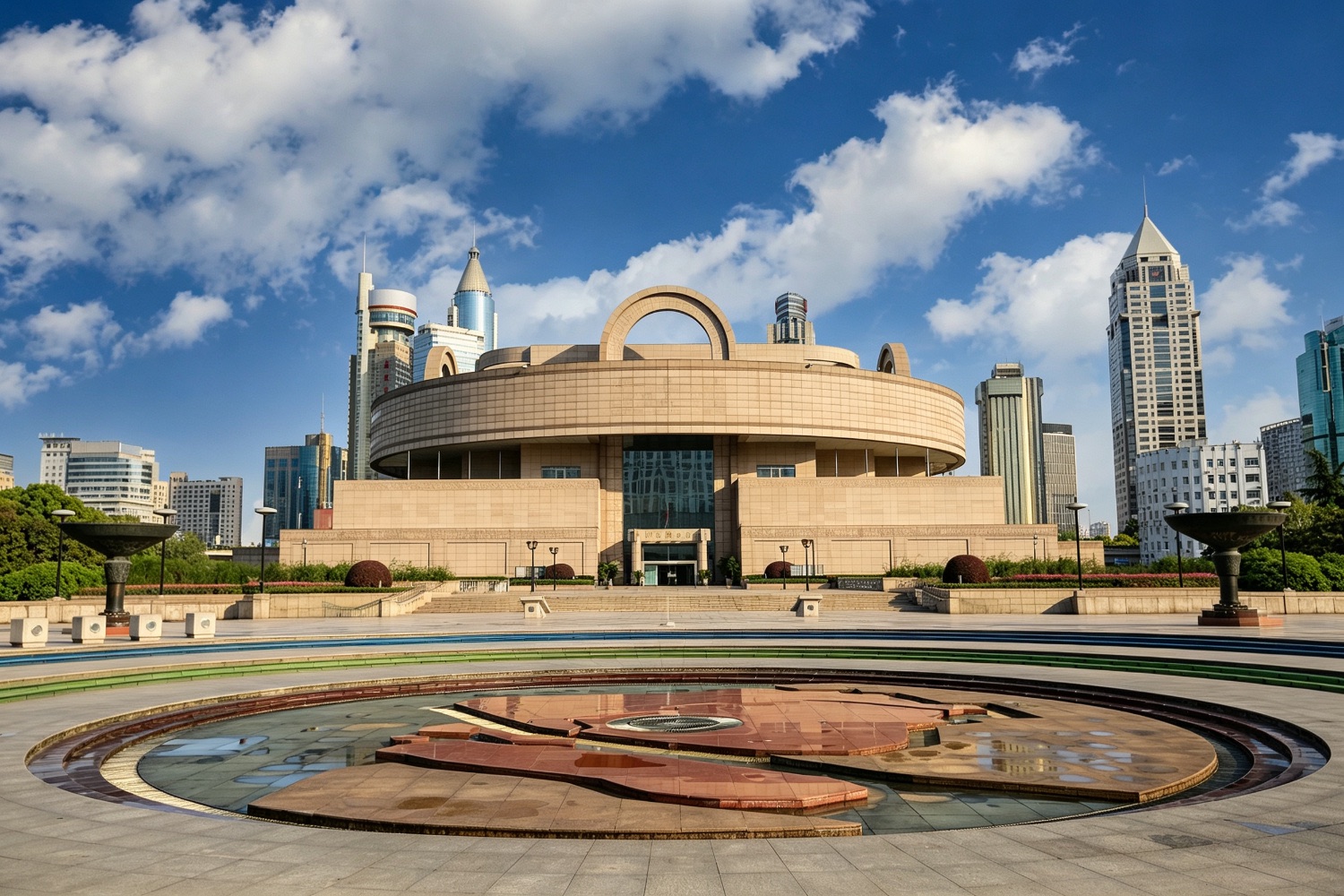
The Ancient Chinese Bronze Gallery, on the east wing of the first floor of the Shanghai Museum's People's Square building, is one of the most academically significant permanent exhibitions in the museum's "half-of-China" collection. Covering about 1,200 square meters, it is organized into seven sections—Emergence, Growth, Apex, Transition, and Renewal—together with two thematic units on bronzes from peripheral regions and on smelting and casting techniques. Highlights include Erlitou-culture bronze jue vessels, Shang-dynasty taotie-pattern square ding, Western Zhou masterpieces such as Da Yu Ding and Mao Gong Ding, the Spring and Autumn Lotus and Crane Square Hu, and a replica of the Marquis Yi of Zeng bell set alongside Chu-style rising ding. The route reveals ritual, political, and metallurgical dimensions of early Chinese bronze civilization through vessel typology, inscriptions, and craftsmanship.
Welcome to the Ancient Chinese Bronze Gallery at the Shanghai Museum. This gallery is located on the 1st floor, covers 1,200 square meters, and displays more than 400 bronze masterpieces. It traces 1,500 years of Chinese bronze art from the 21st century BC to the 3rd century BC. The displays are arranged in six sections — the formative period, the developmental period, the golden age, the transitional period, the renewal period, and bronzes from outlying regions — walking you through the entire "coming-of-age story" of Chinese bronzeware.
The object in the standalone case straight ahead of you is the gallery's crown jewel — the Da Ke Ding. Take a closer look at the inner wall of the vessel: it is inscribed with 290 characters, making it one of the longest inscriptions found on any Western Zhou bronze. The text records a nobleman named Ke receiving a grant of land from the king. How big is this thing? It stands 93.1 centimeters tall and weighs 201.5 kilograms — roughly the weight of a full-grown adult. The Da Ke Ding is permanently banned from traveling overseas, so this is the only place in the world you can see it in person. It is counted alongside the Da Yu Ding at the National Museum of China in Beijing and the Mao Gong Ding at the National Palace Museum in Taipei as the "Three Great Treasures of the Land" — which tells you everything about its status. For photos, try pressing your phone lens right against the glass — it cuts the glare and makes the inscription remarkably sharp. For a shot of the full vessel, step around to the 45-degree angle at the side of the case — you avoid the crowd and capture the whole thing.
The flat, square bronze object beside it is the Shang Yang Square Measure. It may not look like much, but its history is extraordinary. This is a standard measuring vessel made in 344 BC during Shang Yang's reforms, and its surface carries inscriptions from several different hands — one by Shang Yang himself, one added when Qin Shi Huang unified the empire, and later additions still — making it a living archive that witnessed the entire process by which the Qin dynasty standardized weights and measures. The Da Ke Ding represents ritual order; the Shang Yang Square Measure represents institutional reform — together, they embody the two great pillars of Chinese bronze civilization.
Continue ahead into the Shang dynasty section. Notice the pig-shaped you wine vessel — it's round and plump, like a piggy bank, but it was actually a Shang wine container. The idea that people 3,000 years ago used such charming objects to hold their wine is rather delightful. The four-ram-head vase beside it is also remarkable: four ram heads are cast onto its shoulders, with curved horns rendered with striking realism, revealing just how vivid the Shang craftsmen's imagination and technical skill could be.
Further ahead is the Spring and Autumn and Warring States section — make sure you see the Xi Zun. This is a cattle-shaped ritual wine vessel with a fluid, lifelike form, and its decoration uses the gold-and-silver inlay technique — fine threads of gold and silver pressed into grooves in the bronze surface. After more than 2,000 years it still catches the light. The openwork serpent-and-dragon drum stand nearby is covered in seven dense layers of coiling serpent patterns, intricate enough to make your head spin — proof that by the Spring and Autumn period, bronze casting had reached an almost virtuosic level of refinement.
In the outlying regions bronze section, you'll find storage vessels from the ancient Dian Kingdom in Yunnan and animal-motif belt plaques from the northern steppes — styles that are utterly different from the Central Plains tradition, demonstrating that bronze civilization was not centered in one place but was genuinely diverse. The final area, "Smelting and Casting of Chinese Bronzes," uses actual objects and diagrams to show the full process from ore to finished vessel. How did ancient people turn a pile of copper ore into a ding this magnificent? After this section, you'll understand.
Photography tips: The bronze gallery is dimly lit and the display cases can create glare. When photographing with your phone, get the lens as close to the glass as possible. The Da Ke Ding draws the biggest crowds — consider visiting at off-peak hours. The gold-and-silver inlay patterns on the Xi Zun look best in raking light; try crouching down and shooting from the side. Plan to spend about 40 minutes in this gallery.