Travel Guide› Shanghai› Oriental Pearl Radio & Television Tower
Shanghai · Palace

Oriental Pearl Radio & Television Tower 东方明珠广播电视塔

Oriental Pearl Radio & Television Tower
Address
No. 1 Century Avenue, Pudong New Area, Shanghai (Located in the core Lujiazui area)
Oriental Pearl Radio and TV Tower

Overview

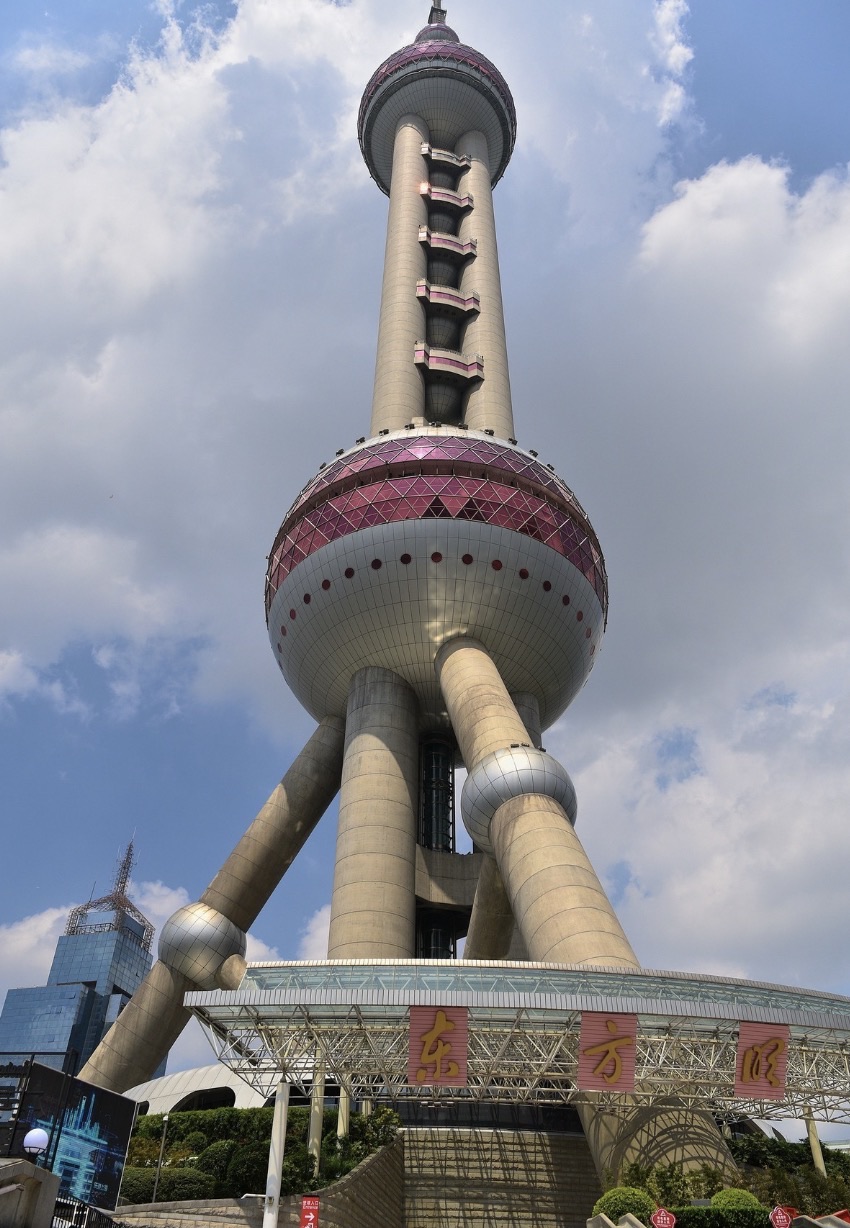
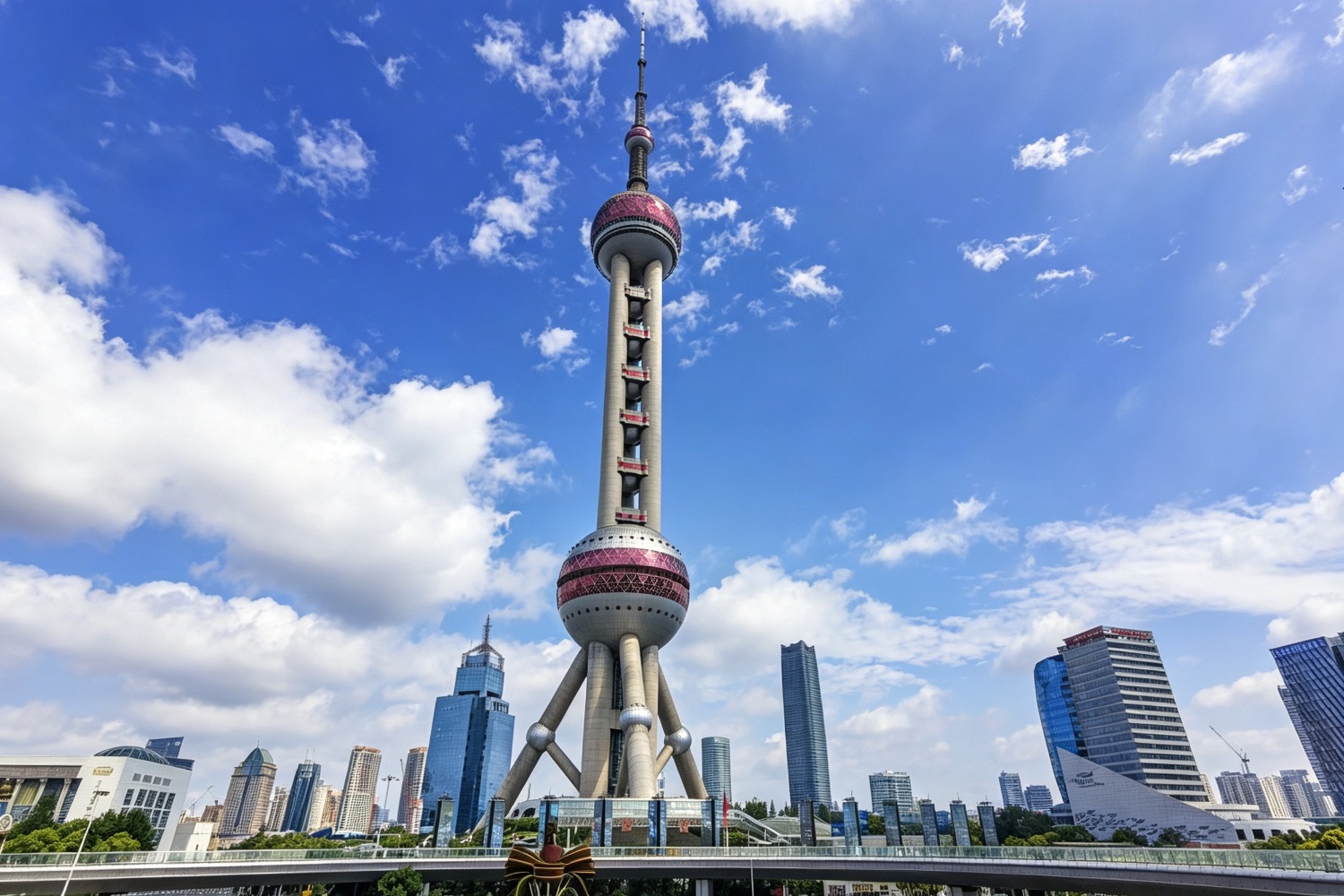
The Oriental Pearl Radio and TV Tower stands on the Lujiazui waterfront in Pudong New Area, Shanghai, facing the Bund's famous row of colonial-era buildings across the Huangpu River. It is Shanghai's most iconic landmark. The tower reaches a total height of 468 metres; construction began on July 30, 1991, and it opened on October 1, 1994, entering the record books as Asia's tallest structure and the world's third tallest at the time. The design was inspired by the poetic image of "large pearls and small pearls tumbling onto a jade plate" — eleven spheres of varying sizes are strung from sky to ground, with two enormous globes lifted high into the air like suspended rubies, the whole composition unified and unmistakable. The Oriental Pearl integrates urban sightseeing, dining, shopping, entertainment, historical exhibitions, Huangpu River cruises, and broadcast transmission in one structure. It is a National 5A-rated tourist attraction. Backed by the modern skyline of Lujiazui and facing the luminous panorama on both banks of the Huangpu, it is the centrepiece of Shanghai's skyline and a historic monument to Pudong's opening and development.

Attractions Inside the Tower

I. Space Capsule (351 metres)

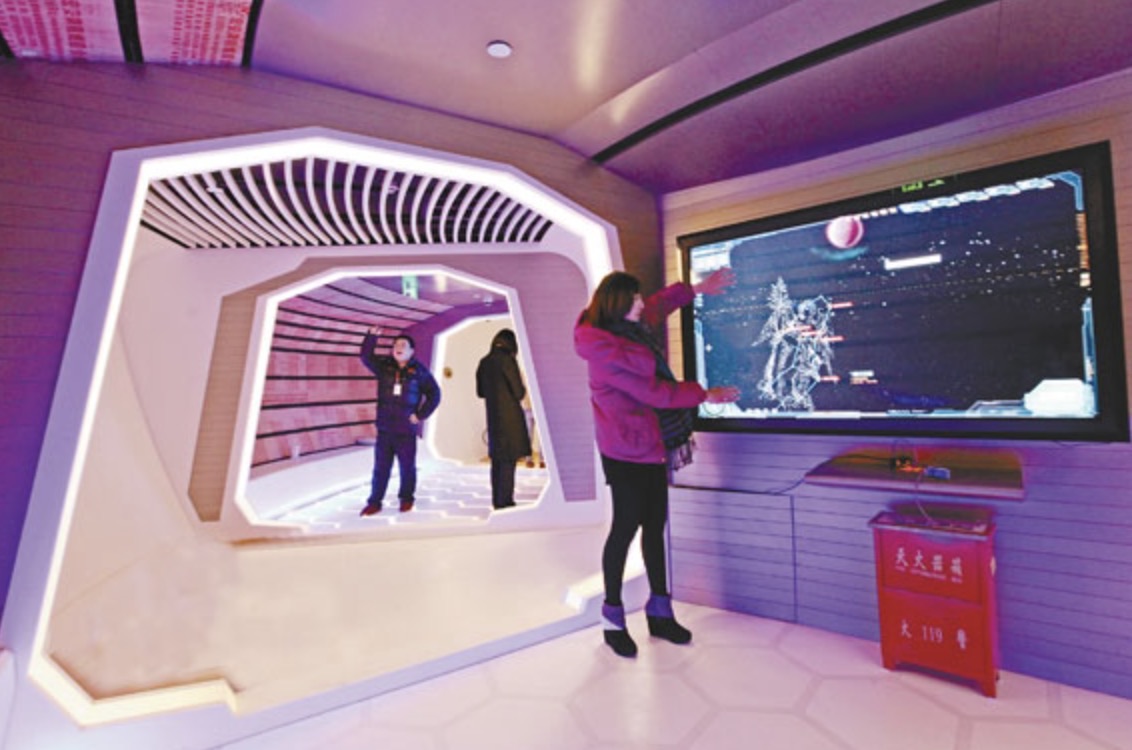
The Space Capsule occupies the highest observation level in the tower. The interior is themed around space exploration, with interactive star-gazing experiences and science exhibits that use multimedia technology to reveal the wonders of the universe. Visitors enjoy a 360-degree view across Shanghai's entire cityscape, taking in the sweeping panorama on both banks of the Huangpu from close to the clouds.

II. Revolving Restaurant (267 metres)

One of the highest revolving restaurants in Asia, completing one full 360-degree rotation every two hours. The restaurant serves an international buffet, letting guests savour food while the city slowly turns past the windows — Pudong's supertall towers on one side, the Bund's historic buildings on the other — an elevated dining experience that blends great food with great views.

III. Main Observation Deck (263 metres)

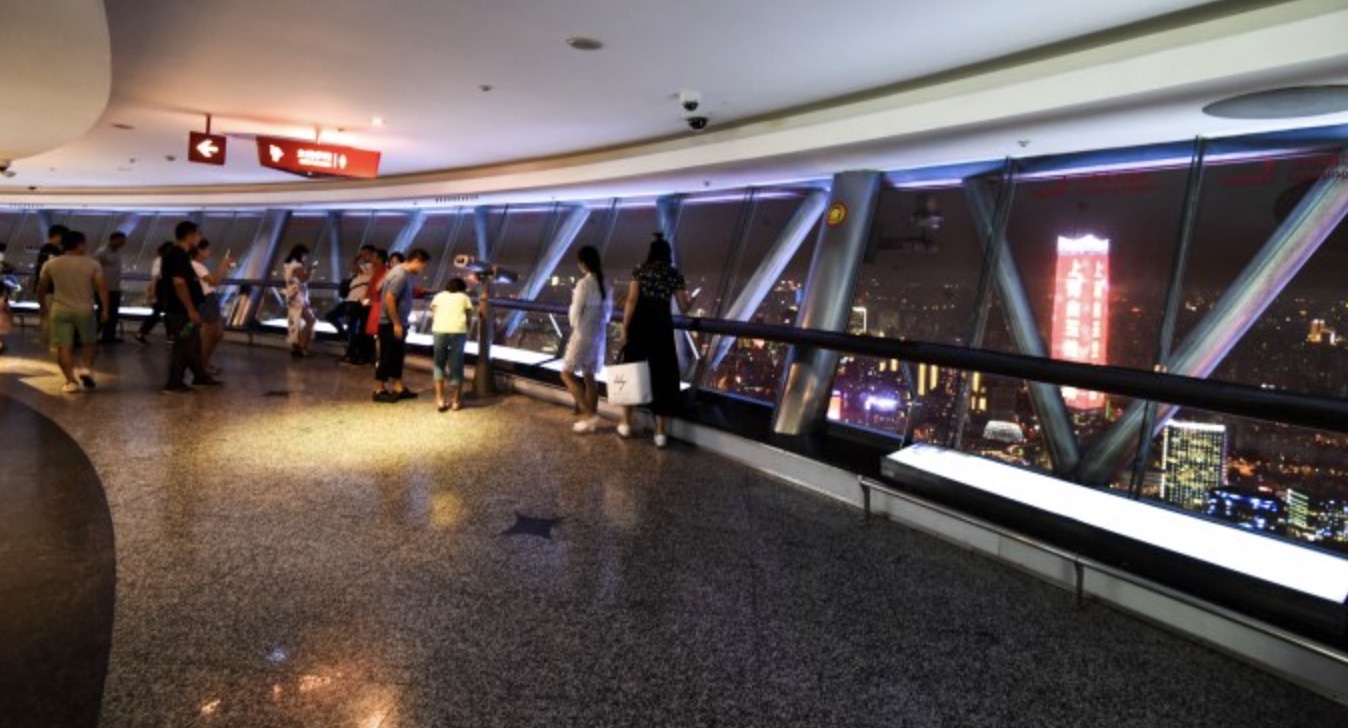
The tower's core viewing level and the finest place to take in Shanghai's full panorama. Floor-to-ceiling glass wraps 360 degrees around the deck, framing more than 3,000 high-rise buildings on the Puxi side and over 1,000 newer towers in Pudong, with Lujiazui's modern financial skyline and the Bund's historic architecture playing off each other in the same view. Coin-operated telescopes are available for a closer look at the city's details.

IV. Transparent Glass Sightseeing Corridor (259 metres)

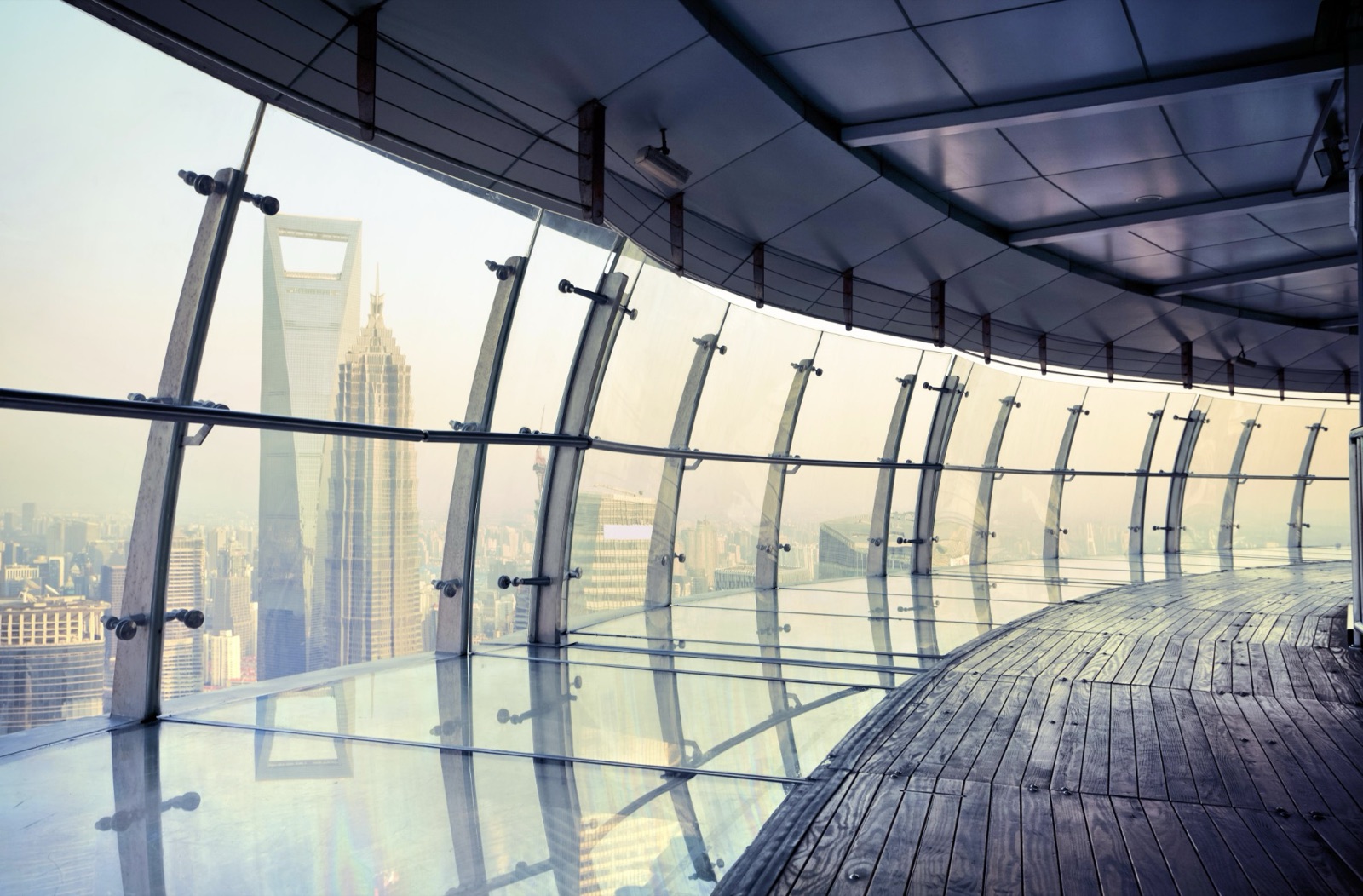
A one-of-a-kind 360-degree fully transparent glass sightseeing corridor — the only one of its kind in the world. Visitors can walk on clear glass and look straight down 259 metres to the city streets below, with the Lujiazui "Big Three" skyscrapers directly in front. It is the most popular high-altitude photo spot in the tower, and the visual impact is breathtaking.

V. Outdoor Observation Deck (90 metres)

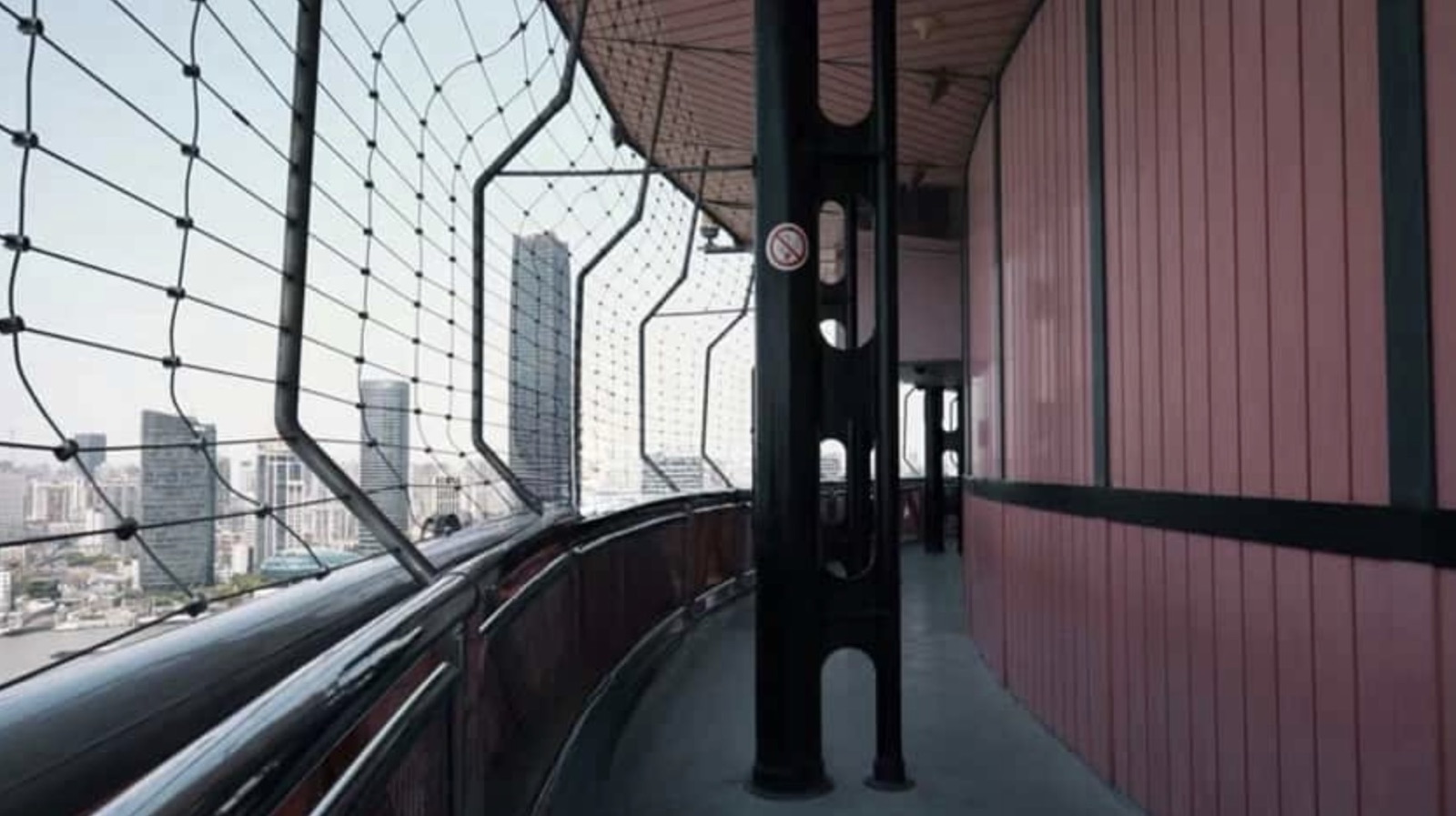
The observation level in the tower's lower sphere, and the best position for close-up views of the Bund's historic waterfront. The open-air platform faces the Huangpu River directly, with clear views of the Bund's row of heritage buildings and the city on both banks. Ferries and pleasure boats move across the water below, making this the ideal spot to grasp Shanghai's great "river and canal" urban layout.

VI. "More Shanghai" Multimedia Show (78 metres)

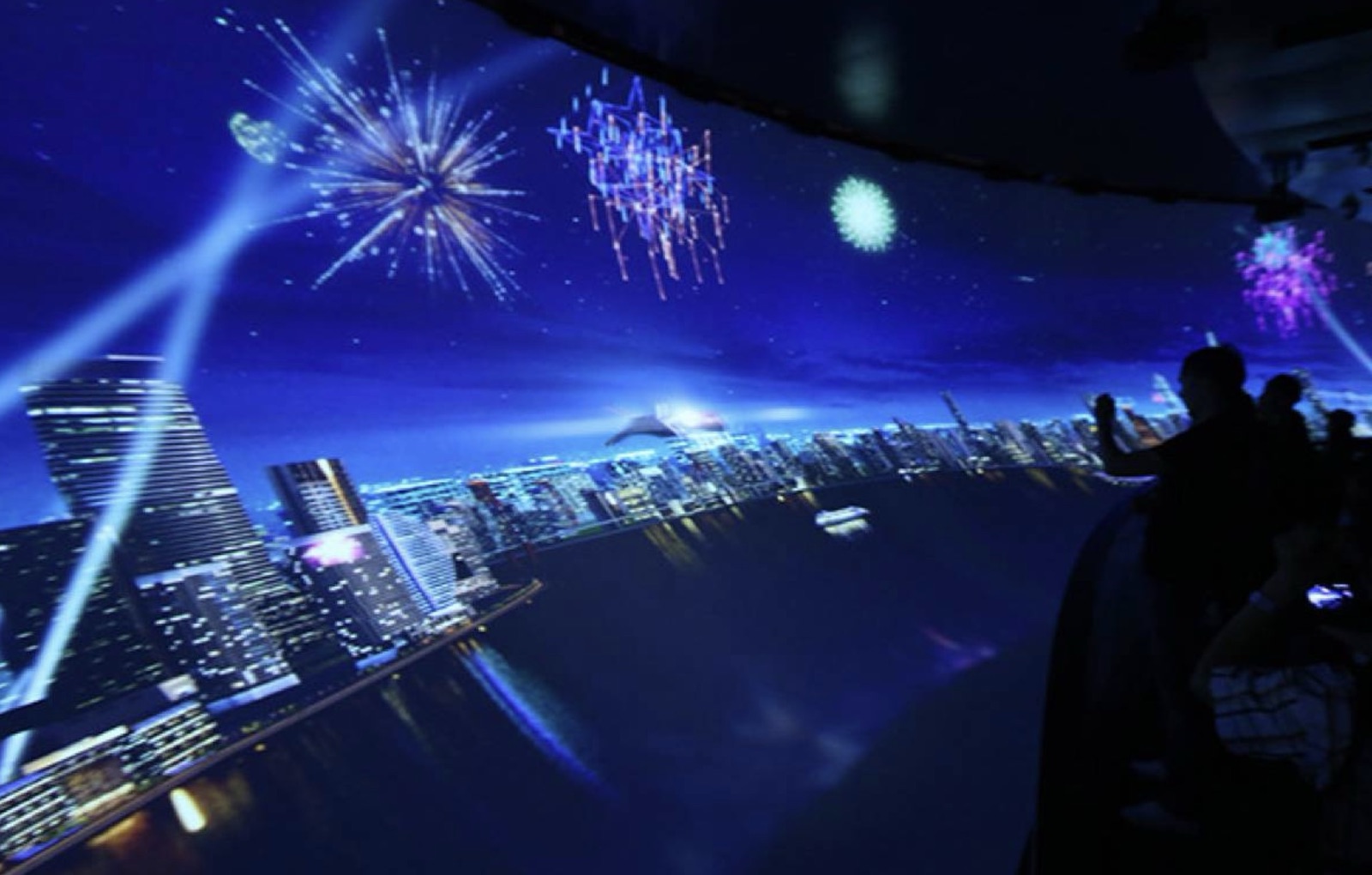
An immersive multimedia experience using surround-screen technology to present a vision of the future city's multi-level transport network. Through scenes of layered roadways, big-data-driven mobility, and smart urban systems, the show imagines how Shanghai might develop in harmony 70 years from now — letting visitors sense the intelligence of a future metropolis through a fusion of light, sound, and motion.

VII. Shanghai Urban History Development Museum (Ground Level)

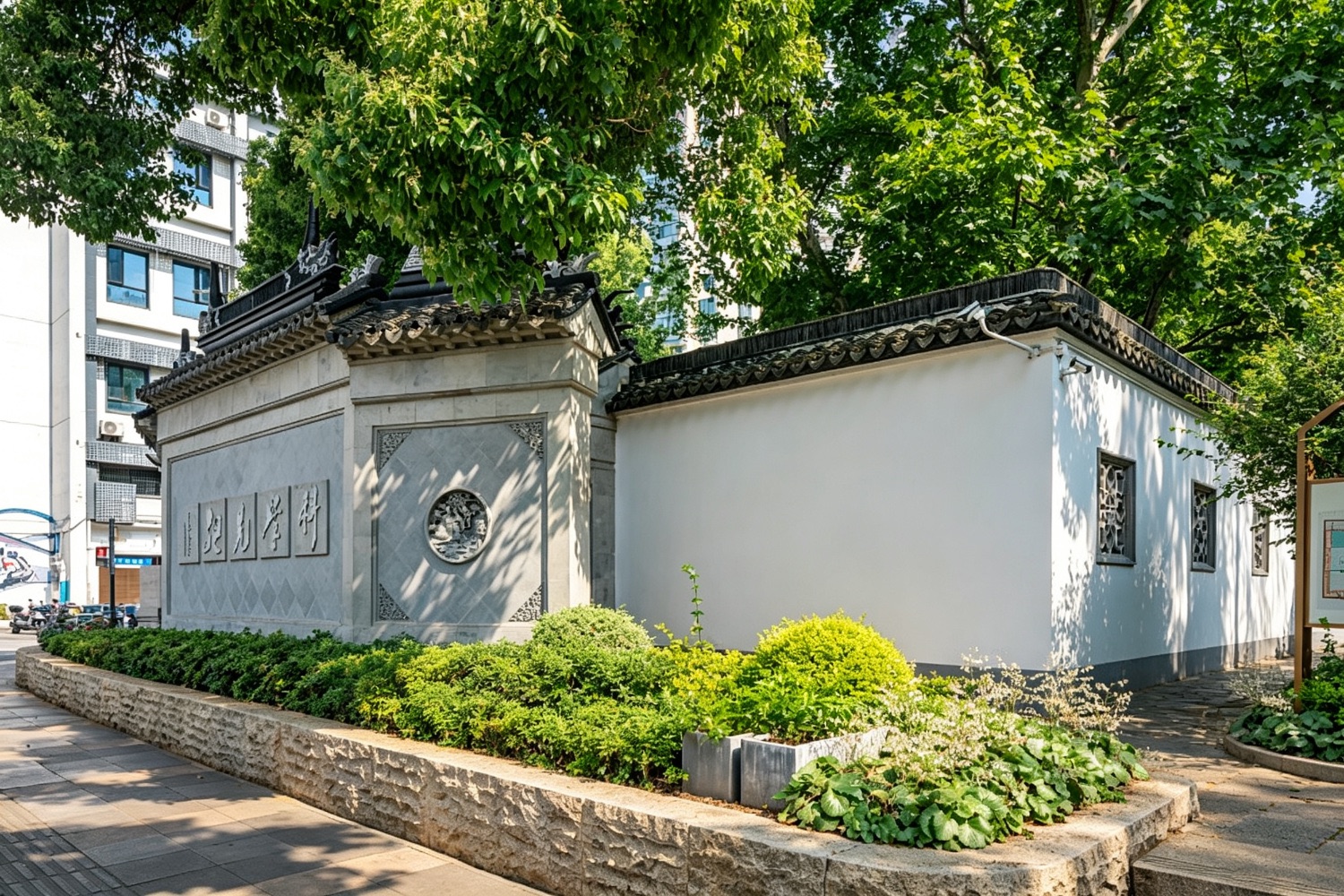
Located at the base of the tower, this museum uses life-size recreations to trace 700 years of Shanghai's urban history. Inside, old Shanghai's lanes come alive again — rickshaws, blacksmith workshops, wheelbarrows, preserved-goods shops, cotton-fluffing craftsmen — every scene reconstructed faithfully to its historical original. It is known as "a miniature portrait of old Shanghai," preserving the everyday life of different eras and the intangible cultural heritage that is all but vanished from the city today.

Inside Oriental Pearl Radio & Television Tower

7 stops, in walking order — read top to bottom, no clicking needed.

1 Ticket Gate of 7

Ticket Gate

检票口

The Ticket Gate of the Oriental Pearl TV Tower is located at the south podium entrance, adjacent to the Lujiazui Riverside Walk and facing Century Avenue. Designed with a "bright pearl" motif, its facade combines silver-white metal and glass, paired with LED ticker displays showing real-time queue and boarding information. Visitors must present their e-ticket QR code or ID card (swipe-to-enter), and pass through security and metal detectors. Inside the gate is the prelude hall, offering accessible lanes, luggage lockers, a baby-care room, and group reception counters. High-speed elevators at 9 m/s take guests directly to each observation level, with no fixed batch restrictions during opening hours. On holidays, arrive an hour early to avoid peak queues; on regular days, completing the ticket check before 9:30 offers a near-private tower experience.

On-site narration · read it where you stand

Hello, dear visitors, and welcome to the Oriental Pearl Radio and TV Tower in Shanghai! Today I will lead you in this order — Ticket Entrance → Main Observation Level (263 metres) → Space Capsule (351 metres) → Fully Transparent Suspended Skywalk (259 metres) → Outdoor Observation Level (90 metres) → "Higher Shanghai" Immersive Multimedia Show (78 metres) → Shanghai Municipal History Museum (0 metres) — as we take in together this Shanghai landmark that combines city sightseeing, historical exhibition and the scenery of the Huangpu River.

First, a little about the Oriental Pearl itself — this tower is no ordinary structure. Construction began on 30 July 1991, and it opened on 1 October 1994. The tower stands four hundred and sixty-eight metres tall, and at the time of its completion it was the tallest tower in Asia and the third tallest in the world. Look at its form — do you find it especially distinctive? The designer drew inspiration from a famous line by the Tang dynasty poet Bai Juyi in his "Song of the Pipa": "Large pearls and small pearls cascade onto a jade plate." Eleven spheres of varying sizes are strung together from sky to ground, two enormous spheres held high like rubies, the whole structure unified as one — this is the Oriental Pearl's signature "string of pearls" form. It stands on the bank of the Huangpu River at Lujiazui, backed by Pudong's cluster of modern skyscrapers and facing, across the river, the gallery of international architecture along the Bund. It is a national AAAAA-rated tourist attraction.

Now please have your tickets ready, as we are about to check in and enter the tower. The tour of the Oriental Pearl runs from high to low — we first take a high-speed lift directly to the upper sphere at 263 metres, the Main Observation Level, then make our way down. If you have purchased the three-sphere combination ticket, you can continue by lift from the Main Observation Level up to the Space Capsule at 351 metres. All right, please follow me, and let us ascend the tower together!

Main Observation Deck

主观光层

Long Description**: The Main Observation Deck sits inside the tower's third sphere at 263 meters — the original core observation level open to the public. With a 20-meter inner diameter, the circular walkway is fully glazed, offering sweeping views of the Bund's historic buildings, Pudong's skyscrapers, and the winding Huangpu River. Sunset (around 17:30–18:30, seasonally shifting) brings Shanghai's most celebrated "golden hour" as city lights come on. The deck features transparent floor windows, photo spots, vending machines, and a light-snack corner. A wide-angle lens and a phone's night mode are recommended; be aware of glass glare, so press close to the glass or pick a column-free spot. The level connects by elevator to the 259m Skywalk, 350m Space Capsule, 78m "More Shanghai" immersive show, and the 0m Shanghai History Exhibition.

On-site narration · read it where you stand

Dear visitors, welcome to the Main Observation Level at 263 metres. This is the core observation level of the Oriental Pearl Tower, and the finest place from which to take in a panorama of the city of Shanghai.

Come quickly to the window and look out — is not the whole of Shanghai laid before you? This is a 360-degree wraparound floor-to-ceiling glass wall, so wherever you stand you have an unobstructed panorama of the city. We suggest you first walk a full circle clockwise, taking in the scenery in all four directions, so as not to miss any side.

Please look first toward Puxi. Those classical buildings ranged in a row, winding along the Huangpu River, are the world-famous gallery of international architecture along the Bund. Can you see that building with the clock tower? That is the Customs House, completed in 1927; the great clock on its tower was modelled on Big Ben at the Houses of Parliament in London, chiming on every hour — one of the Bund's most iconic buildings. Look a little to the left, and those two symmetrical buildings with green pyramid roofs are the south and north wings of the Peace Hotel, old Shanghai's most famous hotel, where countless historical figures once stayed. This row of buildings was constructed from the early twentieth century through the 1930s, bringing together Gothic, Baroque, Neoclassical, Art Deco and many other Western architectural styles, earning it the name "exposition of international architecture" — a microcosm of a hundred years of modern Shanghai history.

Now please turn toward Pudong. This dense cluster of skyscrapers before you is the Lujiazui Financial and Trade Zone. The three tallest buildings — from left to right, the Shanghai Tower (632 metres), the Shanghai World Financial Center (492 metres) and the Jin Mao Tower (420 metres) — are known as the "three pieces of Lujiazui." Notice the spiralling form of the Shanghai Tower; it is the tallest building in China, its exterior like a dragon coiling upward, with a strikingly avant-garde design. The Shanghai World Financial Center beside it has a trapezoidal opening at its top, jokingly called the "bottle opener" by Shanghainese. The Jin Mao Tower combines a Chinese pagoda style with a modern skyscraper, its three-tiered form inspired by ancient Chinese pagodas.

Did you know that when the Oriental Pearl was completed, there were barely a handful of skyscrapers in all of Lujiazui? When the tower was first finished in 1994, this area was still largely farmland and old factories, and the Oriental Pearl was Pudong's first super-tall landmark. The Shanghai Tower only broke ground in 2008 and was not completed until 2015. You could say the Oriental Pearl has witnessed the entire transformation of Pudong from a stretch of wasteland into a world-class financial centre. Standing here and looking down, beneath your feet is one of the most spectacular achievements of China's reform and opening-up.

On a clear day, the more than three thousand high-rises of Puxi and the more than one thousand newly built towers of Pudong are all in plain view. If visibility is especially good, you can even make out the distant directions of Hongqiao Airport and Chongming Island. But on a hazy or rainy day, visibility drops sharply, so we suggest you choose a clear day to ascend the tower.

This level has coin-operated telescopes, and those interested may use them to bring the clock tower and statues of the Bund buildings closer, or to spot the sightseeing boats and cargo ships coming and going on the Huangpu River. The telescopes are fixed in direction, so we suggest you first observe which view appeals to you most, then insert your coin.

Photography tip: the Main Observation Level has 360-degree wraparound floor-to-ceiling glass, so take care to avoid reflections when shooting. We suggest holding your phone or camera lens as close to the glass as possible, using one hand to shield the light source from the side. Dusk is the best time to shoot — the Bund direction gives a backlit silhouette effect, while the Pudong direction is frontlit, with clear architectural detail, so the two directions feel completely different. If you wait until the lights come on, with the Bund buildings and the Lujiazui towers lit at the same time, you will have the most classic photo of the Shanghai night.

All right, please enjoy the view and take photos freely here; we will gather at the exit in ten minutes. Those with the three-sphere combination ticket will next take the lift up to the Space Capsule at 351 metres; those with the two-sphere ticket will proceed to the Fully Transparent Suspended Skywalk at 259 metres.

351-Meter Space Capsule

351 米太空舱

The 351-Meter Space Capsule sits inside the tower's highest sphere, originally completed in 2008 and upgraded in 2023 into a "space + metaverse" immersive experience venue. With a 14-meter inner diameter, its walls combine starry ceilings and mirrored metals, paired with holographic projections and surround sound, creating a "spacewalk" atmosphere. Highlights include 360° views of Shanghai's four skylines (Lujiazui, the Bund, North Bund, Xuhui Riverside), AI interactive photo booths (generating "astronaut" souvenir images), VR immersive "China Space Station" simulations, and remote-controlled "Yutu Lunar Rover" demos on the floor. The outer deck is a closed observation corridor with double-glazed safety glass, offering unobstructed full-city photography. Capacity is capped at 30 people with 10-minute rotations.

On-site narration · read it where you stand

Dear visitors, welcome to the highest point of the Oriental Pearl Tower — the Space Capsule at 351 metres. This is the spot closest to the sky in the whole tower, and the Oriental Pearl's highest vantage point.

As you step in, does the atmosphere feel completely different from the observation level below? The interior of the Space Capsule is themed on the exploration of the cosmos; the whole space — its colour palette, its lighting and its exhibits — is full of a sense of technology and the future, in striking contrast to the city-viewing style of the Main Observation Level at 263 metres below.

Here there is a popular-science exhibition on space, along with interstellar interactive experiences. Take a look at these exhibits — this side displays the characteristics of the eight planets of the solar system, each planet accompanied by a detailed introduction in Chinese and English, including its diameter, orbital period, surface temperature and other data. Do pay particular attention to the area on the development of China's space programme, which traces China's journey from "Dongfanghong-1" to the "Shenzhou" series of crewed spacecraft and on to the building of the "Tiangong" space station — a microcosm of China's achievements in space.

In terms of the view, 351 metres is eighty-eight metres higher than 263 metres, so the vista is even more open. Looking out 360 degrees from here, the Huangpu River winds through the city like a golden ribbon, the boats upon it grown as small as ants, and the whole outline of Shanghai spreads out beneath your feet. Look toward Puxi and you can see the city's buildings stretching even farther into the distance; look toward Pudong and the Lujiazui skyscrapers are right beneath you, the spire of the Shanghai Tower almost at your eye level.

If you come to the Space Capsule at dusk, watching the sunset is a superb experience. The sun sinks slowly toward Puxi, the sky shifting from gold to orange-red and then to deep purple, before the whole city gradually lights up with countless lamps — seen from the height of the Space Capsule, this transition is like watching a symphony of the city. The sheer impact of it can only be appreciated with your own eyes.

Would you like one more piece of trivia? The Space Capsule of the Oriental Pearl is not only an observation level; it also serves to broadcast radio and television signals. The full name of the tower is the "Oriental Pearl Radio and TV Tower," and the antenna mast above the Space Capsule is responsible for transmitting television and radio signals across the whole Shanghai region. In other words, where you are standing now is the very "source" of Shanghai's broadcast signals.

A few reminders: first, the Space Capsule has fixed visiting hours, open only from 11:00 to 14:00 each day, so do plan your time well; second, the tour of the Space Capsule is led by a dedicated guide, so please follow the guide closely and do not get separated; third, the Space Capsule is relatively small and can become crowded in peak season, so please visit in an orderly way and refrain from pushing.

All right, please look around and take photos freely here, and savour the unique experience of standing at the summit of Shanghai. We will gather at the exit in ten minutes, take the lift back down to 263 metres, and continue to the next stop — the Fully Transparent Suspended Skywalk at 259 metres.

Transparent Glass Skywalk (Sky Observatory)

全透明悬空观光廊

The Transparent Glass Skywalk runs along the underside of the tower's second sphere at 259 meters. Below the walkway, visitors can see Lujiazui's core traffic, the tower's signature "pearl-string" silhouette, the riverside promenade, and the Bund's historic skyline. The corridor features 6 "brave photo spots," with LED screens embedded beneath the glass that play a "star river" animation at night. The glass can support up to 800 kg per square meter, with a limit of 8 people per section. The skywalk is temporarily closed during strong winds, rain, or snow.

On-site narration · read it where you stand

Dear visitors, we now arrive at the most popular and most thrilling level of the Oriental Pearl — the Fully Transparent Suspended Skywalk at 259 metres. This is the only 360-degree fully transparent glass skywalk in the world!

Look beneath your feet — yes, you read that right, what you are standing on is entirely transparent glass! Looking down through the glass, the city streets, traffic and pedestrians 259 metres below come clearly into view. The first time they step on, many people's legs go weak — but that is precisely its appeal.

Why not summon up your courage and walk slowly onto the glass floor. It may feel frightening at first, but once you take that first step, you will discover how wonderfully strange that feeling of "floating above the city" really is. Beneath your feet is nothing but a few centimetres of glass, and you feel as though you are drifting in mid-air over Shanghai. Looking down, the streets of Lujiazui are as orderly as a chessboard, the cars the size of matchboxes, the pedestrians so tiny as to be almost invisible — a way of looking down on the city you will not experience on any ordinary viewing platform.

This level is the best position from which to photograph the "three pieces" of Lujiazui. Look toward Pudong, and the Shanghai Tower, the Shanghai World Financial Center and the Jin Mao Tower are right before you, three skyscrapers like three sharp swords thrust into the clouds. Standing on the transparent glass with them as your backdrop makes for an utterly spectacular shot — your feet, the transparent glass floor and the distant skyscrapers all in one frame, as if you were posing with the skyscrapers in mid-air.

A small photography tip: have your companion crouch down and shoot upward from a low angle, taking in your feet, the transparent glass floor and the distant skyscrapers all together — this makes for the most striking photo. If you have a wide-angle lens, be sure to use it — the skywalk is not large, and a wide angle captures a more complete city skyline. Also, we suggest wearing brightly coloured clothing for your photos — against the glass floor and the grey-blue city backdrop, bright colours will make you stand out in the picture.

You may wonder, is this glass safe? There is no need to worry at all. The skywalk glass is aviation-grade multi-layer laminated tempered glass, each pane able to bear several tonnes of weight, and it has passed rigorous safety testing. Put simply, even if you jump on it, the glass will be perfectly fine. So you can walk, take photos and even try out all sorts of creative poses with complete confidence.

Of course, if you have a fear of heights, there is no need to force yourself. The edge of the skywalk has solid-wall sections, along which you can walk and still enjoy the magnificent city views. Many visitors afraid of heights dare not step onto the glass at first, but, encouraged by their companions, slowly give it a try, and in the end all come away with photos they are happy with. So be brave — this is a one-of-a-kind experience found nowhere else in the world!

There is also an interesting phenomenon: in different weather, the skywalk experience is completely different. On a clear day, the city below is sharp and vivid in colour; on an overcast day, clouds and mist drift past beside you, giving a sense of strolling among the clouds; come at dusk, and the city lights below gradually come on, neon reflected on the glass, the whole space turning dreamlike. So whenever you come, there is a different surprise.

All right, please enjoy the thrill of this walk in the sky to the full and take your most spectacular photos. We will gather at the exit in fifteen minutes and proceed to the Outdoor Observation Level at 90 metres.

Outdoor Observation Terrace

户外观光层

From here, visitors look up at the 351m Space Capsule "jade pillar" and down on the S-shaped bend of the Huangpu River and the Bund skyline. A breeze of Beaufort 3–5 makes for a refreshing experience; the terrace closes in winds above Beaufort 6. Access is via a dedicated gate on the 350m elevator level. No seating is provided; a 15–30 minute stay is recommended.

On-site narration · read it where you stand

Dear visitors, we now arrive at the Outdoor Observation Level at 90 metres. This is the lower sphere of the Oriental Pearl Tower, and the finest place to admire the gallery of international architecture along the Bund at close range.

Unlike what you saw at the Main Observation Level at 263 metres, this is a semi-open outdoor platform. With no glass in the way, you can feel the high-altitude breeze directly, the view is even clearer, and your photos will have no problem with glass reflections. Many photography enthusiasts say the 90-metre Outdoor Observation Level is the best vantage point for shooting the Bund — even better than 263 metres.

Please look toward Puxi — that row of classical buildings ranged along the Huangpu River opposite is the world-famous gallery of international architecture along the Bund. From left to right, you can see, in turn:

First, on the far left, the Asia Building, built in 1916, the very first building on the Bund, in Neoclassical style, with two Ionic columns at its entrance.

To its right is the Shanghai Club building, completed in 1910, in English Renaissance style, which held what was then the longest bar counter in Asia — an L-shaped bar thirty-four metres long.

Further right is the HSBC Building, completed in 1923, hailed as "the most sumptuous building between the Suez Canal and the Bering Strait." Notice its dome, modelled on the Pantheon in Rome, with exquisite mosaic murals on the interior of the dome.

Notice that building with the clock tower — that is the Customs House, completed in 1927, its clock tower about thirty-three metres tall; the great clock atop it was modelled on Big Ben at the Houses of Parliament in London, chiming every fifteen minutes, the sound of its hourly chime carrying several kilometres. In the days before phones and watches, the sailors on the Huangpu River set their time by this chime.

Look further right, and those two symmetrical buildings are the south and north wings of the Peace Hotel. The north wing, originally named Sassoon House, was completed in 1929, in the Chicago School Gothic style, its green copper-clad pyramid roof its hallmark. Sassoon House was once the tallest building on the Bund, its ten-storey pyramid roof prominent on the Shanghai skyline. Countless historical figures stayed here, including Charlie Chaplin and George Bernard Shaw.

Seeing the Bund from a height of 90 metres is utterly different from seeing it at ground level. On the ground you can only look up at these buildings and cannot see them whole; here, you can look across at, or even down upon, the skyline of the entire row, making out the rooftop details of every building — domes, spires, statues, chimneys, all crystal clear. The Huangpu River flows beneath your feet, sightseeing boats and cargo ships passing back and forth on its surface, and the Bund buildings on the far bank gleaming in the sunlight — this is the most classic image of Shanghai, the setting of countless postcards and film shots.

Look further upriver and you can see the Nanpu Bridge, that enormous cable-stayed bridge spanning the Huangpu River, with a main span of four hundred and twenty-three metres. Look downriver and you can faintly make out the Yangpu Bridge — the two bridges like two rainbows arching over the Huangpu River, vital hubs of Shanghai's urban transport.

Photography tip: the 90-metre Outdoor Observation Level is one of the best vantage points for a panorama of the Bund. We suggest a horizontal composition, framing the whole row of Bund buildings together with the Huangpu River. At dusk, when the lights of the Bund buildings come on and mingle with their reflections in the river, the result is a perfect Shanghai postcard. Since there is no glass in the way here, the photos are very sharp, with no need to worry about reflections. If you have a telephoto lens, you can bring the statues and clock-tower details of the Bund buildings closer, with excellent results.

One more reminder: the wind on the outdoor level is quite strong, especially in winter, so we suggest you bring a coat. There are several columns on the platform behind which you can shelter from the wind.

All right, please look around and take photos freely here; in ten minutes we will proceed to the "Higher Shanghai" Immersive Multimedia Show at 78 metres.

"More Shanghai" 360° Immersive Multimedia Show

更上海环动多媒体秀

Long Description**: The "More Shanghai" Immersive Multimedia Show is located at 78 meters on the tower's main shaft. The theater has a 30-meter inner diameter with a 360° wraparound screen and a synchronized "motion floor" projection; seats rotate 360 degrees. The 10-minute show uses five chapters — River, Sea, Tide, Wind, Charm — to trace Shanghai's century-long evolution: from the 1843 treaty-port opening, 1920s Bund construction, 1949 liberation, 1990 Pudong development, 2010 World Expo, 2020 urban renewal, to 2035 planning vision. Capacity is 80 people, with a show every 15 minutes. It is best watched as a mid-tour interlude, serving as a "city-background lesson" before ascending the main observation levels.

On-site narration · read it where you stand

Dear visitors, we now arrive at the "Higher Shanghai" Immersive Multimedia Show at 78 metres. This is a future-city experience space created with immersive multimedia technology, completely different from the scenery you have seen so far.

The name "Higher Shanghai" is intriguing — it means "an even more futuristic Shanghai." This exhibit shows neither the Shanghai of the past nor the Shanghai of the present, but the Shanghai of seventy years from now — the Shanghai of the 2090s. What you saw at the 263-metre Main Observation Level is the "Shanghai of the present"; the museum at 0 metres is the "Shanghai of the past"; and what is shown here is the "Shanghai of the future." Through an exhibit such as this, the Oriental Pearl links together the three dimensions of time — past, present and future.

As you step in, you can feel the whole space completely enveloped in light, sound and electronic technology. An enormous curved screen wraps around 270 degrees, combined with surround sound and dynamic lighting, so that you seem to stand on the streets of a future city. Please find a good spot to stand, and let us watch together.

Notice the images on the screen — multi-level roadways interweave three-dimensionally in the air. In the Shanghai of the future, traffic is no longer confined to a single ground level but unfolds in the air like a three-dimensional maze: the first level is the ground road, the second is the elevated expressway, the third is a dedicated lane for autonomous vehicles, the fourth a maglev track... Each level has a different function, none interfering with the others, with a big-data system managing the whole city's traffic in real time.

Look again at those self-driving cars — in the Shanghai of the future, all cars are autonomous, requiring no human driver, and there are no traffic accidents. Vehicles weave in orderly fashion along intelligent tracks, traffic lights replaced by big-data algorithms, every car reaching its destination by the optimal route at the fastest speed. This is not a scene from a science-fiction film but the Oriental Pearl's imagining and vision for Shanghai's future development.

The screen also shows other scenes of the future city: vertical farms growing vegetables and fruit inside skyscrapers, sky gardens floating among the buildings, robots handling delivery and cleaning in smart communities... Each scene embodies how technology will change city life, and the city of Shanghai's hopeful expectations for the future.

What makes this multimedia show special is its immersiveness. Unlike an ordinary cinema screen, the screen here surrounds most of your field of vision and, combined with surround sound, makes you feel not that you are "watching" a future city but that you have "walked into" one. We suggest you stand quietly through the whole cycle — about ten minutes per loop — and you will see a full panorama of future Shanghai from dawn to night: at dawn, the city wakes in the sunlight and the self-driving cars take to the roads; at noon, the vertical farms harvest their vegetables and the sky gardens are watered; at dusk, the lights come on and the whole future city is illuminated; at night, the big-data system keeps running amid the city lights, watching over the journeys of every citizen.

For visitors with children, this place is especially popular — children are always full of curiosity about the technological scenes of a future city. The exhibit also has an interactive section, where children can choose different modes of transport via a touchscreen and see what travel is like in the future city.

This exhibit also embodies the Oriental Pearl's unique identity as a radio and TV tower. The Oriental Pearl is not merely a sightseeing tower; it is also the transmitting tower for Shanghai's broadcast signals, a hub of the city's information and communication. The "Higher Shanghai" multimedia show looks ahead to the city's future precisely in the language of information technology — wholly in keeping with the Oriental Pearl's role of "connecting the city with the future."

All right, please enjoy the charm of the city of the future to the full here. In ten minutes we will proceed to our final stop — the Shanghai Municipal History Museum at 0 metres.

Shanghai History Development Exhibition Hall

上海城市历史发展陈列馆

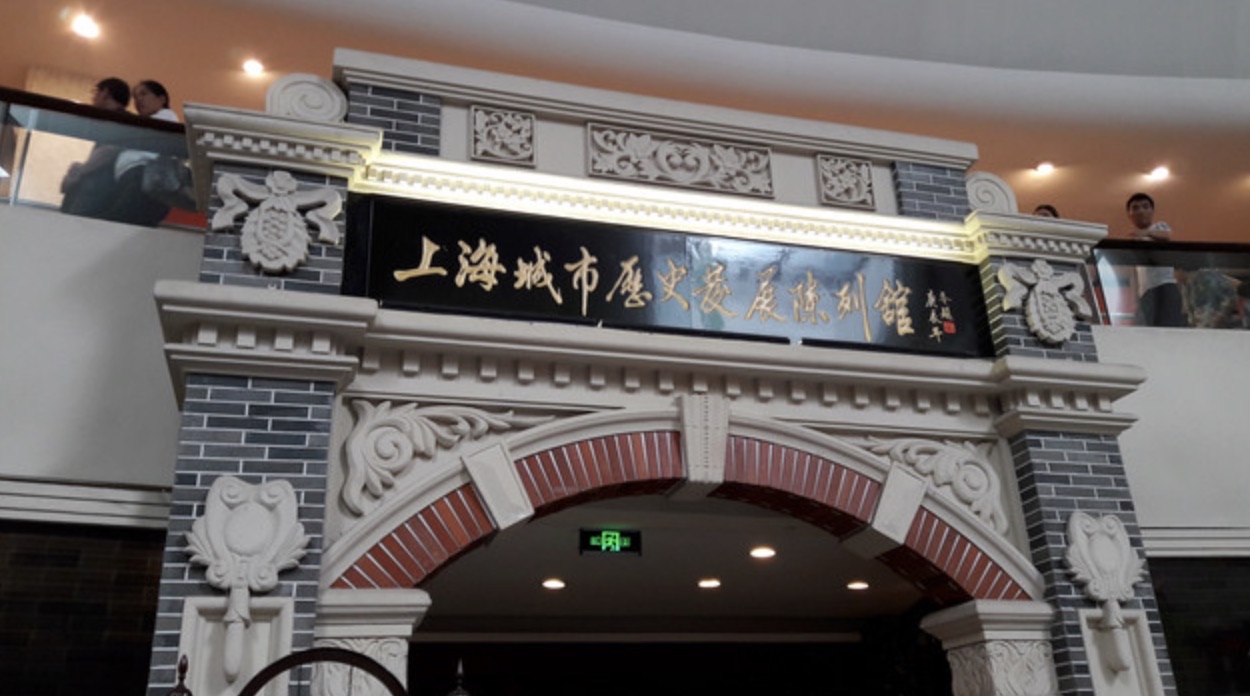
The Shanghai History Development Exhibition Hall occupies approximately 6,000 square meters on Level 0 of the Oriental Pearl TV Tower's podium, one of China's earliest "tower + museum" themed venues. The hall is divided into five sections — Prelude, Shanghai before the Treaty Port, Rise of the Modern City, New China's Shanghai, and Pudong Development & New Shanghai — displaying more than 1,000 items including vintage photographs, archives, wax figure scenes, physical models, and interactive installations.

On-site narration · read it where you stand

Dear visitors, we now return to the zero-metre level at the tower's base and arrive at today's final stop — the Shanghai Municipal History Museum. This is completely different from the high-altitude sightseeing of the upper levels, taking you back to the streets and lanes of old Shanghai.

This museum is hailed as "a microcosm of old Shanghai," showing the vicissitudes of the city over seven hundred years. As you step in, do you feel as though time has suddenly turned back? Beneath your feet are bluestone-paved roads, and on either side are recreated old Shanghai streets and lanes — a rickshaw parked by the roadside, the furnace glowing red in a blacksmith's forge, a wheelbarrow leaning in a corner, the signboard of a salted-goods shop still hanging, a cotton-fluffer who seems to have just set down his tools... Every scene is recreated one-to-one according to its historical appearance, lifelike in every detail.

First, look at this rickshaw. It was the most common means of transport in old Shanghai, introduced from Japan in the late nineteenth century, pulled by human power — the main way ordinary citizens got around in that era. Imagine: a puller running through the streets with his rickshaw, a lady in a qipao or a gentleman in a long gown seated behind, the wheels creaking over the stone-paved road — this is the most classic street scene of old Shanghai. Later, as cars and trams became widespread, the rickshaw gradually disappeared, but its place in old Shanghai culture has always remained.

Now look at the blacksmith's forge over here. The smith hammers ironware beside the furnace, finished kitchen knives, hoes and iron pots laid out alongside — in the age before industrialization, the ironware used in every Shanghai household came from small workshops like this. Notice the smith's tools: the bellows, the hammer, the tongs, the quenching bucket... every one of them has a history of more than a hundred years. Beside the forge is a tinsmith's shop, which made tin kettles, tin candlesticks and other tin goods — old crafts now almost never seen in the modern city.

Now look at this wheelbarrow, also called a "rooster cart," a means of transport used in the rural outskirts of old Shanghai to carry goods. One wheel, pushed by two people, creaking along the field paths. Simple as it looks, in the countryside of old it was the most important means of transport, able to carry several hundred jin of goods, far more efficient than carrying loads on one's shoulders.

Notice the layout of this street — it is a typical commercial street of old Shanghai. Shops line both sides, selling cloth, salt and goods from north and south, along with teahouses, pawnshops and pharmacies. This pattern of streets and lanes is the true face of the old walled city before Shanghai's opening as a treaty port. Before Shanghai was opened in 1843, it was merely an ordinary Jiangnan county town, and the old walled city was its urban core — the area enclosed by the city wall was the whole of Shanghai.

Step up to this teahouse scene and take a look. Teahouses in old Shanghai were not only places to drink tea but social centres. Merchants talked business here, friends reminisced here, storytellers recounted the Romance of the Three Kingdoms and Outlaws of the Marsh here, and even matchmaking took place in teahouses. The eight-immortals tables, the long benches, the covered tea bowls, the calls of the waiters... were all standard features of old Shanghai teahouse culture.

The museum also recreates a lane scene of old Shanghai. The shikumen buildings you see are a form of dwelling unique to Shanghai — brick-and-timber structures, stone doorframes, black-lacquered gates, with a courtyard, main hall and side rooms inside. A dozen or so households lived in a single lane, neighbours seeing each other constantly, and when one family cooked something delicious the whole lane knew about it. This lane life is the most warmly human memory of old Shanghai.

The museum recreates not only the buildings and streets but also various intangible cultural heritages on the verge of disappearing. For example, cotton-fluffing — loosening old cotton with a large bow and remaking it into quilts, something every household did before winter. There is also bamboo-basket weaving, tin-kettle making, brown-cane bed-mending, scissor-sharpening... old crafts now almost never seen in the modern city, all preserved in full here.

The museum's route is arranged in chronological order, beginning with Shanghai's fishing-village era, passing through its opening to trade, the concession era and the prosperity of the Republican period, all the way to the early form of modern Shanghai. We suggest you follow the route and not skip any section — each era has its own distinctive story. The old photographs on the walls, the abacus on the counter, the clothes on the drying poles, the coal-ball stove in the corner... every detail tells the story of an age.

For foreign visitors, this museum is the finest window onto Shanghai's history. The observation levels above show Shanghai's present and future, while here you see Shanghai's past. From a small fishing village seven hundred years ago, to the "ten-mile foreign settlement" after its opening in 1843, to today's international metropolis, every step of Shanghai's transformation has left its mark in this museum. If the high-altitude sightseeing of the Oriental Pearl makes one marvel at Shanghai's modernity, this museum lets one feel Shanghai's deep historical heritage — the dazzling brilliance of a city is always built upon weighty historical foundations.

All right, dear visitors, please look around freely here. This is our final stop, and once you have finished you may leave the Oriental Pearl Tower through the exit. We hope this journey from 351 metres down to 0 metres has given you a more rounded and profound understanding of the city of Shanghai — from the clouds to the ground, from the future to the past, this is the charm of the Oriental Pearl. Thank you all, and we wish you a wonderful journey in Shanghai!

Prefer to be shown around?

A local guide walks these 7 stops with you and answers what the page cannot.

Browse tours ↗