Attraction Overview (App Listing Page)
General Introduction
Niushoushan Cultural Tourism Area is located in Jiangning District, Nanjing, about 10 kilometers from Zhonghua Gate. The mountain gets its name — "Ox Head Mountain" — from its twin peaks, which rise side by side like a pair of horns. It is also known as Tianque Mountain, and ranks among the Four Great Scenic Spots of Jinling. Since ancient times it has been celebrated under the saying "Spring comes first to Niushoushan." The scenic area covers roughly 500 hectares and holds both National Forest Park and AAAA-level Tourist Attraction designations. Niushoushan is one of the most important birthplaces of Chan Buddhism in China: during the Zhenguan reign of the Tang dynasty, the monk Farong founded the Niutou (Ox Head) school of Chan here, and the mountain was ranked alongside Mount Wutai in Shanxi and Mount Emei in Sichuan as one of China's three great Buddhist sacred sites. In October 2015, the sole surviving skull relic of Shakyamuni Buddha — the only such relic in the world — was permanently enshrined here, and the scenic area opened to the public at the same time. The centerpiece complex, Foding Palace, was built above a deep iron-ore pit that once hollowed out the mountain's western peak, making it the first large-scale public building in China constructed inside a mine crater. The project received both the Luban Prize and the Zhan Tianyou Civil Engineering Award. The area also preserves the Hongjue Temple Pagoda (founded in the Tang dynasty, rebuilt in the Ming, and the oldest surviving brick pagoda in the Nanjing region built in imitation of timber-frame architecture), the ramparts where Yue Fei repelled the Jin army (Southern Song dynasty), Ming-dynasty cliff carvings, the tomb of Zheng He, and other relics spanning many dynasties. Niushoushan brings together Buddhist sacred relics, a thousand years of Chan lineage, Tang and Song pagodas, Ming and Qing stone carvings, and natural forest in a single landmark site — a defining example of how contemporary Buddhist architecture and historical heritage can be woven seamlessly together.
Attraction List
The Sacred Buddhist Summit: Foding Palace | Foding Pagoda | Foding Temple
Entrance Landscape: Foding Front Garden
Chan Heritage: Niutou Chan Cultural Park (Hongjue Temple Pagoda) | Ming-Dynasty Cliff Carvings
Cultural & Historical Sites: Zheng He Cultural Park | Yue Fei's Anti-Jin Ramparts
Natural Scenery: Peach Blossom Stream
Foding Palace
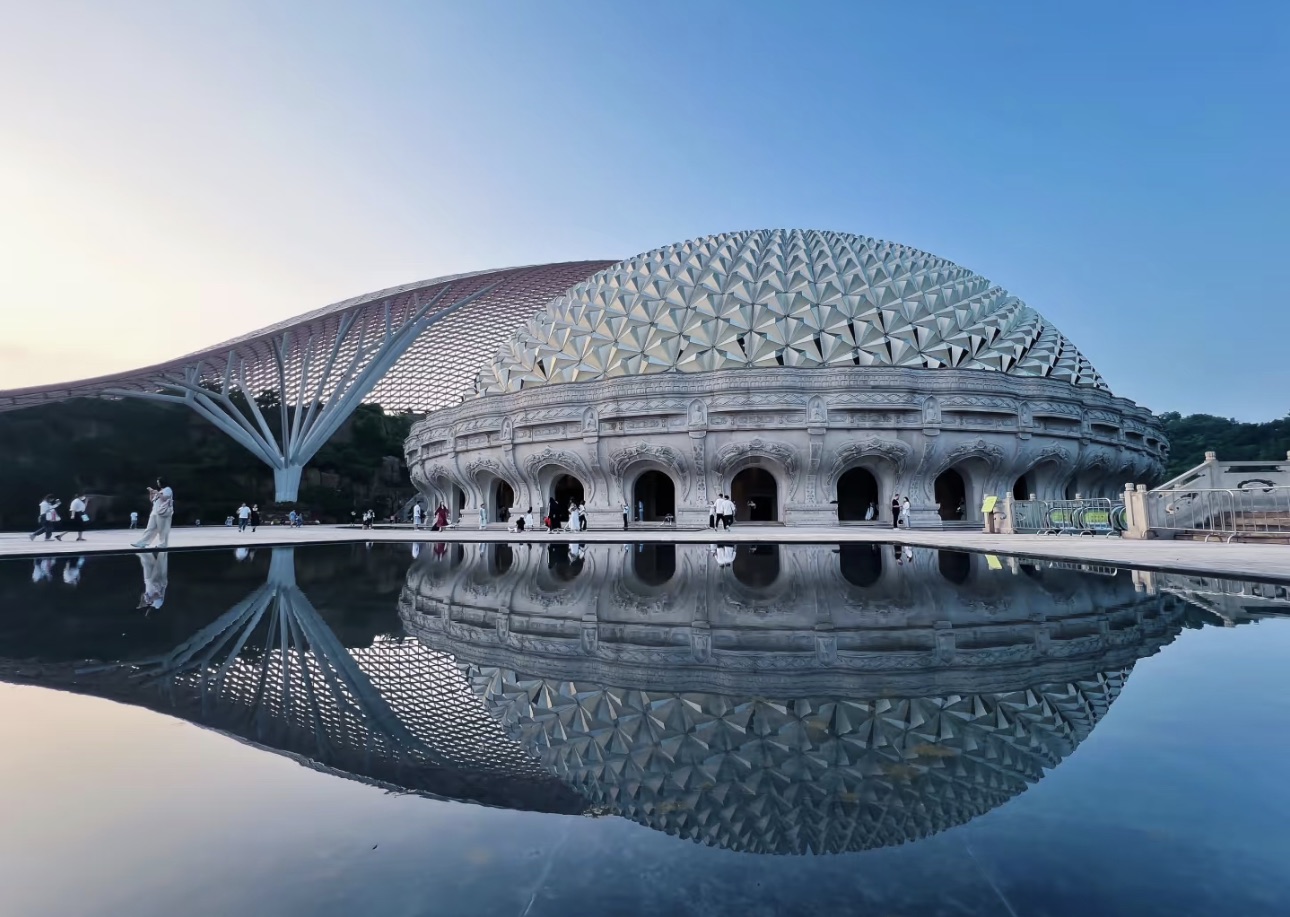
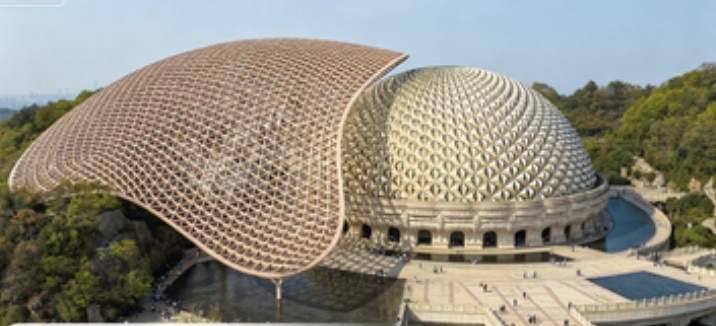
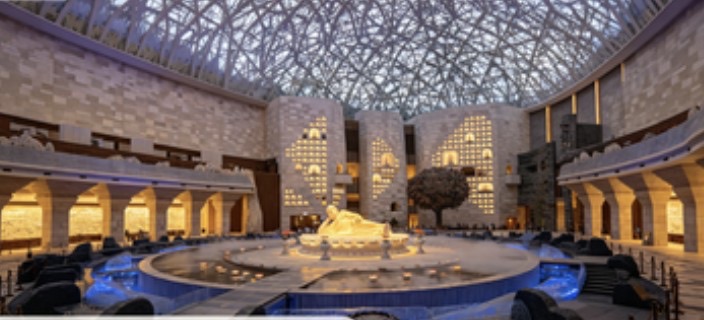
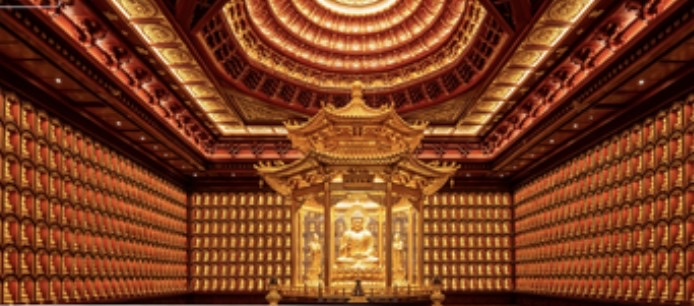
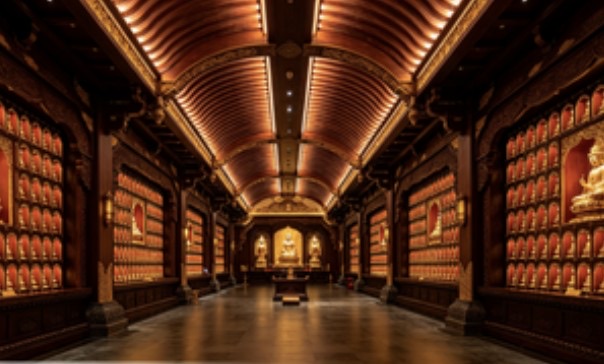
Foding Palace is the centerpiece of Niushoushan, built directly over the old iron-ore pit on the mountain's western peak — a deep-pit construction unlike any other. The building measures 220 meters long and 160 meters wide, rises to a total height of 89.3 meters, and has a floor area of roughly 136,000 square meters across nine levels — three above ground and six below. The exterior is defined by two domes: the large outer dome spans 120 meters and is shaped like the Buddha's flowing robe; the smaller inner dome represents the Buddha's ushnisha (the protrusion on top of the head symbolizing wisdom). The base is designed as a lotus throne, with 56 Flying Apsaras Bodhi Gates and 56 Cloud-Gate Ruyi Columns, symbolizing the 56 ethnic groups of China and evoking the image of "a lotus cradling a jewel." Inside, three major spaces flow into one another: the Chan Panorama, the Relic Hall, and the Relic Crypt. The Chan Panorama stretches 112 meters from north to south, covering more than 6,000 square meters, and uses a reclining Buddha and a Lotus Theater to narrate the life of Shakyamuni. The Hall of a Thousand Buddhas houses a 21.8-meter gilded bronze relic stupa. The Relic Crypt, 44 meters underground, is the permanent resting place of the Buddha's skull relic. The Gallery of Ten Thousand Buddhas runs through three levels of the underground palace, presenting Chinese Buddhism, Indian Buddhism, and the Jataka tales of the Buddha's previous lives. Above ground, the Foding Cliff features Buddhist grottoes and sutras carved on two levels, together forming the shape of an enormous hand of the Buddha.
Foding Pagoda
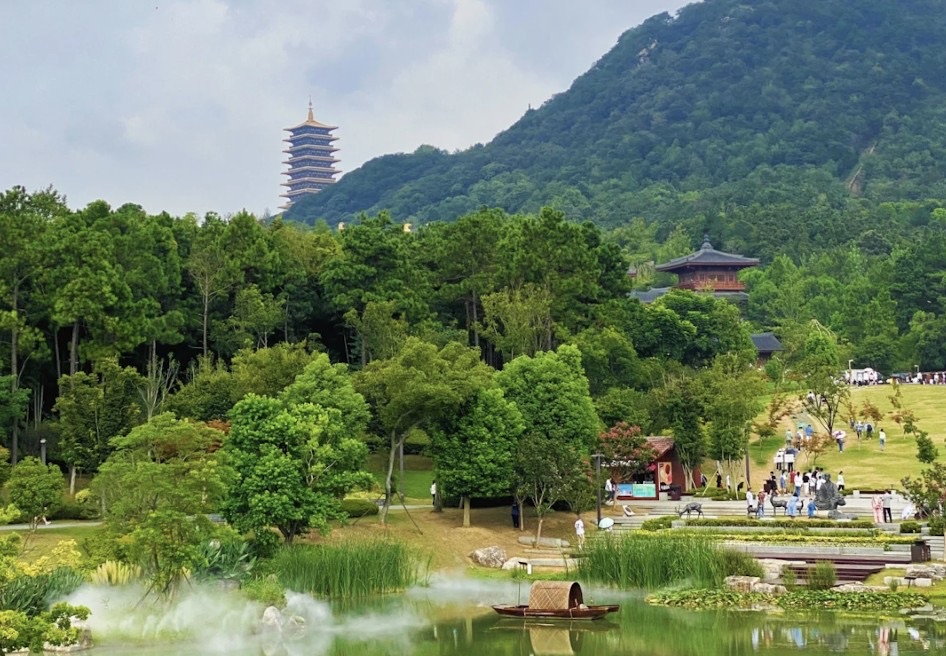
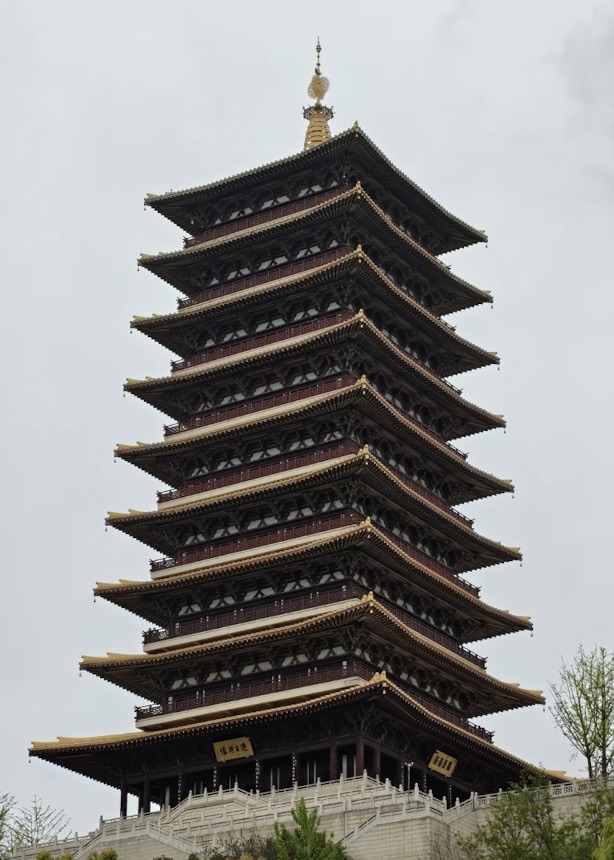
Foding Pagoda stands in the Sacred Summit zone on Niushoushan's western peak. Built in the style of a Tang-dynasty pagoda, it rises 88 meters with nine tiers and four faces, covering a floor area of 4,677 square meters. In the Tang dynasty, the western peak originally held the Pizhita Pagoda, which faced the Hongjue Temple Pagoda on the eastern peak to create the celebrated "Twin Peaks, Twin Pagodas" panorama. After the original pagoda was demolished in 1958 to make way for iron-ore mining, Foding Pagoda was rebuilt in 2015, restoring the twin-pagoda silhouette that had defined Niushoushan for a thousand years. Levels one through seven display murals depicting Buddhist stories; the eighth level houses the Foding Vajra Bell, cast entirely in bronze and engraved around its body with the full text of the Diamond Sutra in the calligraphy of Venerable Longxiang. Bell-ringing ceremonies are held here on New Year's Day and during the Spring Festival. The ninth level, the Tathagata Hall, enshrines a seated statue of Vairocana Buddha. From the pagoda's railings, the full seasonal panorama of Niushoushan spreads out in every direction.
Foding Temple
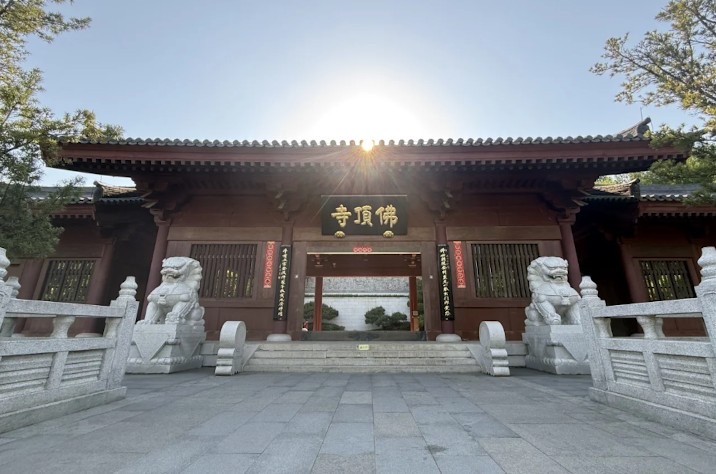
Foding Temple is the monastic community that guards and venerates the Buddha's skull relic, situated on the south slope of the mountain's eastern peak and covering 23,000 square meters. The temple follows the traditional Chan Buddhist seven-hall layout, with a strict central axis and symmetrical arrangement. All principal structures are built in the Tang style — unadorned timber frames, gently pitched rooflines with deep overhanging eaves — blending naturally into the surrounding forest. Proceeding from south to north along the central axis, one passes the Mountain Gate, the Heavenly Kings Hall, the Mahavira Hall, and the Dharma Hall; the side halls include a bell tower, a drum tower, the Sangharama Hall, the Patriarch Hall, the Guanyin Hall, and the Medicine Buddha Hall. The Mahavira Hall is the spiritual heart of the temple, seven bays wide, enshrining statues of the Three Buddhas of the Three Ages. In its restrained Tang aesthetic, the temple as a whole embodies the Chan ideal that "dignity arises not from ornament, but from its own nature."
Foding Front Garden
Foding Front Garden is an entrance landscape zone developed in 2018, serving as the walking path leading to Foding Temple and the Sacred Summit. It covers roughly 100,000 square meters and features 15 scenic nodes, including the Tianque Scenic Culture Wall, Tingxin Lake, the Yumei Pavilion, Jixian Bridge, the Ten Ox Herding Pictures, Farong Plaza, and Xinlian Plaza. The culture wall uses bas-relief to trace Niushoushan's history — from its Tang-dynasty name Tianque to Farong's founding of the Niutou Chan school to the enshrining of the Buddha's skull relic in modern times. Weeping willows brush the surface of Tingxin Lake, and Tianque Road winds quietly along the shore. Foding Front Garden distills the mountain's layered cultural heritage into a single landscape, offering a gradual transition from the noise of the city into the stillness of a mountain monastery.
Niutou Chan Cultural Park (Hongjue Temple Pagoda)
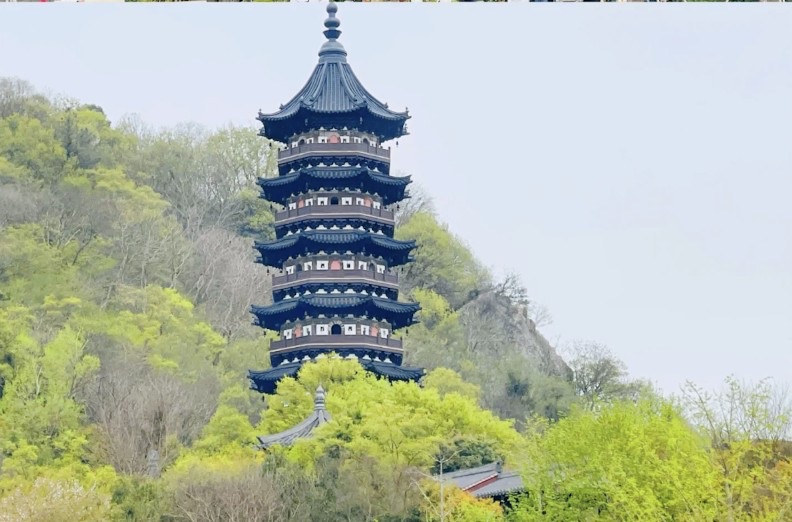
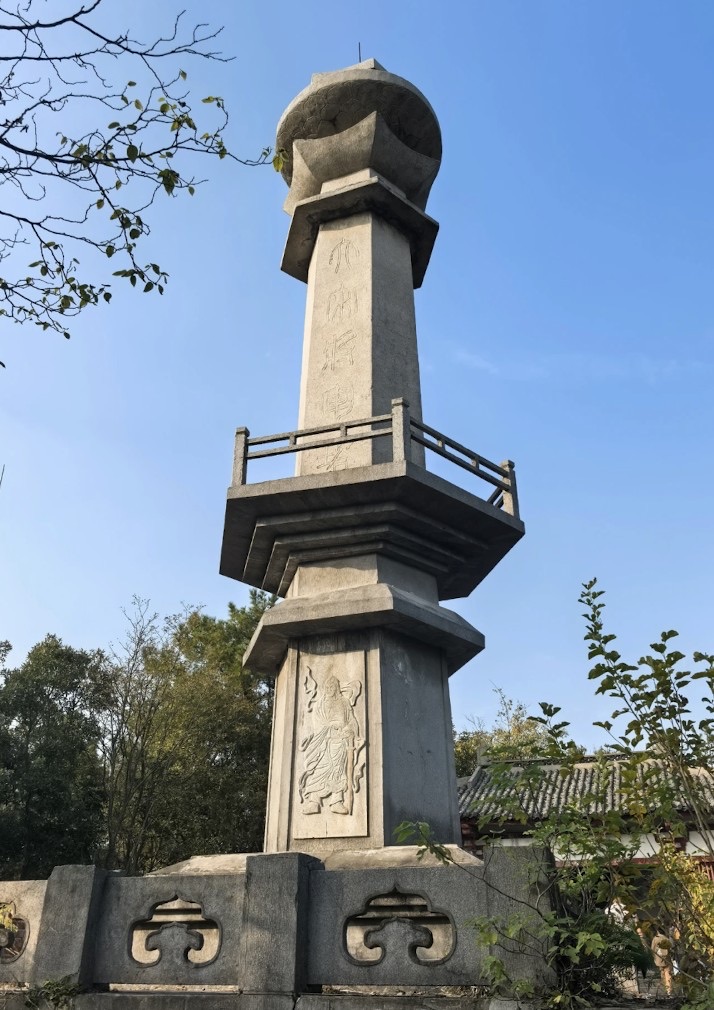
Niutou Chan Cultural Park sits at the summit of Niushoushan's eastern peak, built on the site of the former Hongjue Temple. The temple was founded in 503 CE (the second year of the Tianjian reign of Emperor Wu of the Liang dynasty) under the name Fogusi — "Temple of the Buddha's Grotto" — and became the ancestral home of the Niutou school of Chan Buddhism during the Tang dynasty. At the heart of the park stands the Hongjue Temple Pagoda: 45 meters tall, seven tiers, octagonal in plan, and the oldest surviving brick pagoda in Nanjing built in imitation of timber-frame construction. According to the Book of Tang, Emperor Daizong of the Tang dynasty (Li Yu) dreamed that a Pratyekabuddha appeared before him; upon waking, he ordered Crown Prince Li Shi to build this pagoda on Niushoushan. The pagoda was rebuilt during the Zhengtong reign of the Ming dynasty. In 1956, excavations at the pagoda's foundation uncovered a crypt containing first-class national cultural relics, including a gilded Lamaist stupa, a jade bottle, a gold reclining Buddha, and a celadon jar — all now in the collection of the Nanjing Museum. The park also features a statue of the Chan master Farong and a dedicated Niutou Chan Cultural Exhibition Hall, which systematically traces the lineage from Farong's founding of the school through successive generations.
Ming-Dynasty Cliff Carvings
The Ming-dynasty cliff carvings are located on the north face of the Doushuyan cliff on Niushoushan's eastern peak. The cliff surface forms a roughly angular U-shape and preserves five niches containing 133 carved figures, including Amitabha Buddha, Maitreya Buddha, Heavenly Kings, disciples, and donors. They date to the Chenghua through Jiajing reigns (1465–1566). One niche bears inscriptions in Sanskrit, Tibetan, and other scripts — important physical evidence of cultural exchange between Han and Tibetan Buddhism during the Ming dynasty. Carved directly into the cliff face and exposed to centuries of wind and rain, many of the figures have worn away at the finer details, yet the overall outlines and drapery lines remain legible. Listed as a Jiangsu Provincial Cultural Heritage Site in 2002, the carvings offer a rare Ming-dynasty cross-section within Niushoushan's thousand-year accumulation of Buddhist history.
Zheng He Cultural Park
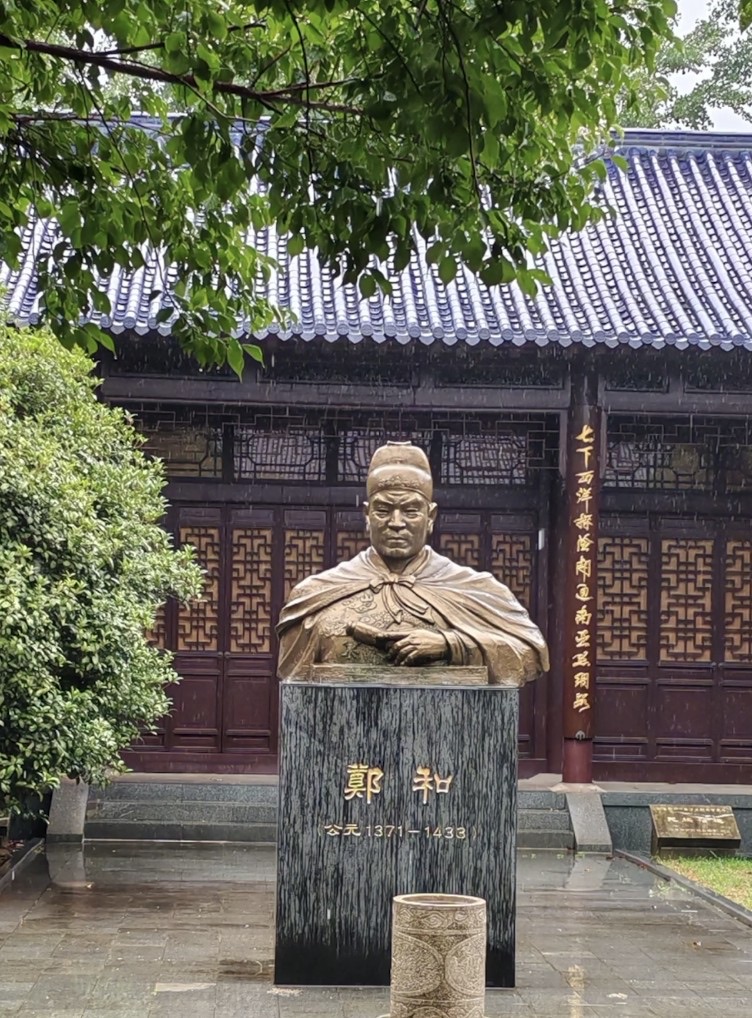
Zheng He Cultural Park is the burial ground of Zheng He, the renowned Ming-dynasty mariner, located on the southern slope of Niushoushan. It consists of Zheng He's tomb and a historical exhibition hall. The Qing-dynasty gazetteer Tongzhi Shangjiangliang Xianzhi records: "On Niushoushan there is the tomb of the eunuch Zheng He. By imperial command in the Yongle reign, he sailed to the Western Ocean; in the early Xuande reign, he returned and died at Calicut. He was given a burial on the mountain slope." The tomb faces south, with four terraced platforms in front, each with seven steps — 28 steps in all, representing the seven voyages and the 28 years they spanned. The historical exhibition hall is arranged around a courtyard; a bronze bust of Zheng He stands at its center. The galleries use multimedia technology to blend interactive nautical experiences with archival displays tracing the voyages of Zheng He's fleet to nearly 40 countries across Asia and Africa. Zheng He represents the pinnacle of ancient Chinese seamanship and stands as the most important historical figure of the Maritime Silk Road.
Yue Fei's Anti-Jin Ramparts
These earthworks are the remnants of defensive fortifications built by the Song-dynasty general Yue Fei in 1130 (the fourth year of the Jianyan reign), when he set an ambush on Niushoushan and routed the Jin army. The History of Song — Yue Fei's Biography records the engagement in brief: "Wuzhu advanced on Jiankang. Fei set an ambush on Niushoushan to await him. By night he sent a hundred men in black garments to infiltrate the Jin camp and strike from within. The Jin troops were alarmed and turned on one another." This battle is known in history as the "Great Victory at Niushoushan." The ramparts are built from reddish-brown stone, roughly half a meter wide at the base and about 1.5 meters tall. Approximately 200 meters of the wall survive, winding through the mountain forest. Hundreds of rounded stones were stacked using a dry-laid technique — no mortar of any kind — yet the wall retains its form after more than eight centuries. Moss now covers the stones, and the weathered surface has merged almost seamlessly with the color of the hillside.
Peach Blossom Stream
Peach Blossom Stream lies in the southeastern corner of the Niushoushan scenic area, named for the peach trees planted densely along both banks. The area covers roughly 160,000 square meters in total, with 30,000 square meters of water surface. More than 2,000 peach trees of over 30 varieties grow along the valley floor. Each spring, varieties including Chinese flowering peach, red peach, crimson peach, and dwarf longevity peach bloom in succession, draping the valley in cascading layers of pink and white above natural streams and small waterfalls. Peach Blossom Stream is not only a seasonal destination for blossom viewing but also an important component of the scenic area's water conservation and ecological corridor — embodying the landscape ideal that Niushoushan is "half Buddhist temple, half blooming hillside."
10 stops, in walking order — read top to bottom, no clicking needed.

 2
 3
 4
 5
 6
 7
 8
 9
 10