I. Attraction Description (App Listing Page)
Overview
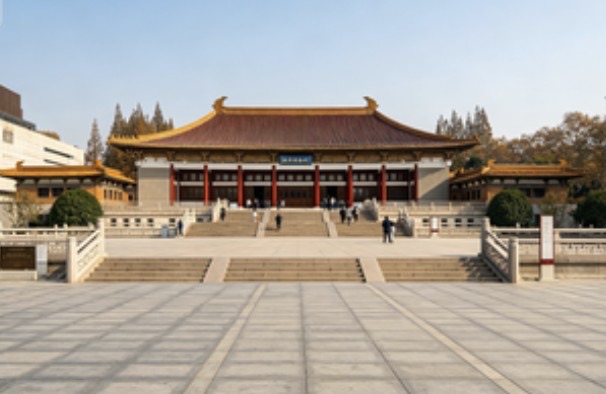
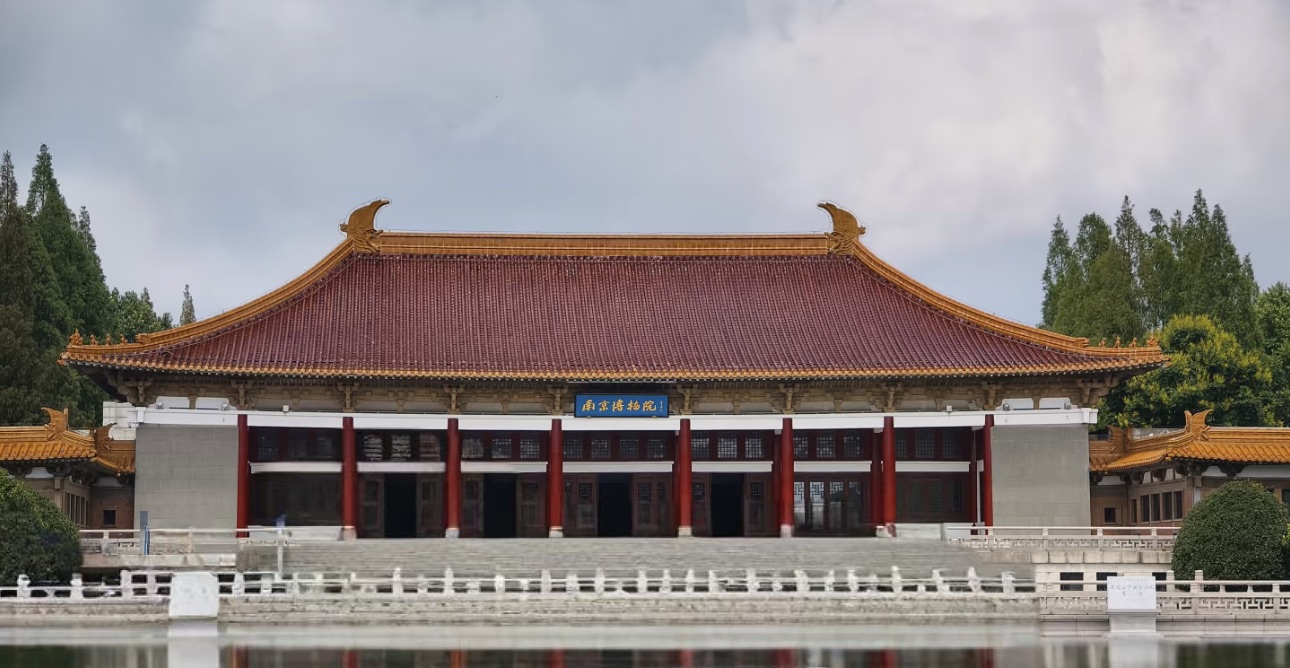
The Nanjing Museum sits at the southern foot of Zijin Mountain, just inside Zhongshan Gate on the north side. It is the first large-scale, comprehensive museum in China built with national funding. Founded in 1933 at the initiative of Cai Yuanpei, it began as the preparatory office of the National Central Museum, and its main hall was completed in 1948. The building was designed by Xu Jingzhi and revised by Liang Sicheng, drawing on the architectural style of the Liao dynasty — a design recognized as a twentieth-century architectural heritage of China. The museum complex covers more than 130,000 square meters and houses six pavilions: the History Gallery, Special Exhibitions Gallery, Art Gallery, Republic of China Gallery, Digital Gallery, and Intangible Cultural Heritage Gallery. Its collection of over 430,000 artifacts — more than 370,000 of them classified as treasures — ranks among the largest in the country. Together with the Palace Museum in Beijing and the National Palace Museum in Taipei, the Nanjing Museum is considered one of China's three great museums and a vital window into Chinese civilization and the history of Jiangsu province.
Attractions
History Gallery
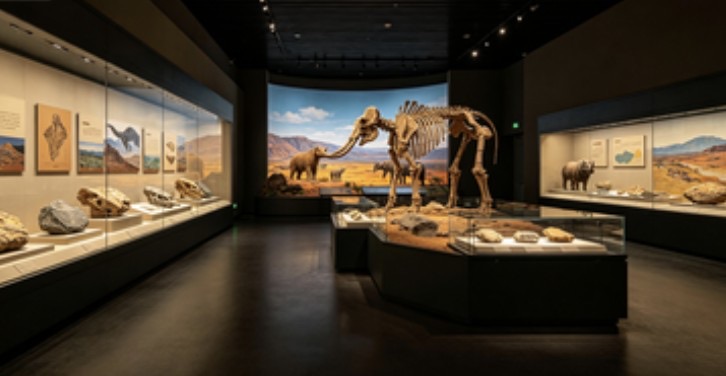
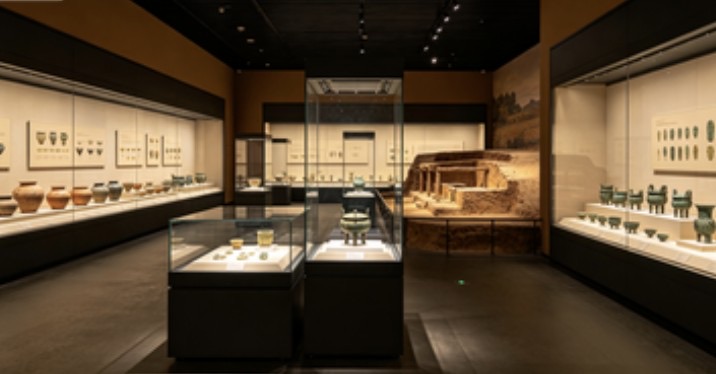
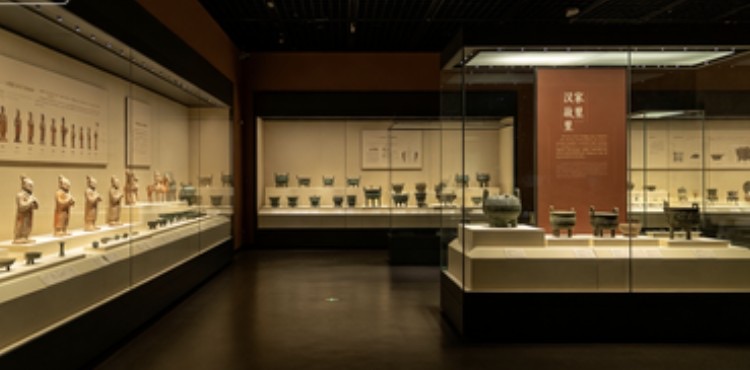
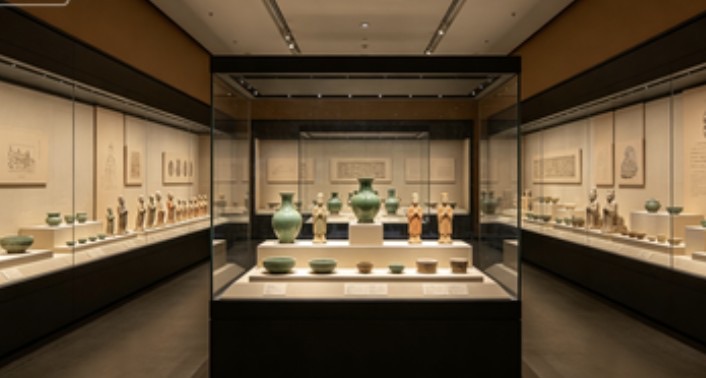
The History Gallery occupies the museum's main building. Its permanent exhibition, "Ancient Civilization of Jiangsu," follows a chronological path from the Paleolithic era through the Ming and Qing dynasties, unfolding across six halls: Echoes of the Ancient World; Prehistoric Splendor and the Wu-Yue Period; Han Homeland; Six Dynasties Elegance; The Grand Canal Era; and The Prosperous Jiangnan of Song, Yuan, Ming and Qing. Centered on the regional civilization of Jiangsu, the exhibition showcases some of the museum's most celebrated treasures: the Nanjing hominid skull fossil, the gold seal of the King of Guangling, a jade burial suit sewn with silver thread, a silver-inlaid bronze ox lamp, a celadon mythical beast zun, a brick-relief painting of the Seven Sages of the Bamboo Grove, and a glazed archway from the Porcelain Tower of Bao'en Temple. Told in chronological sequence, it traces thousands of years of Jiangsu's civilizational history and is the gallery most visitors head to first.
Special Exhibitions Gallery
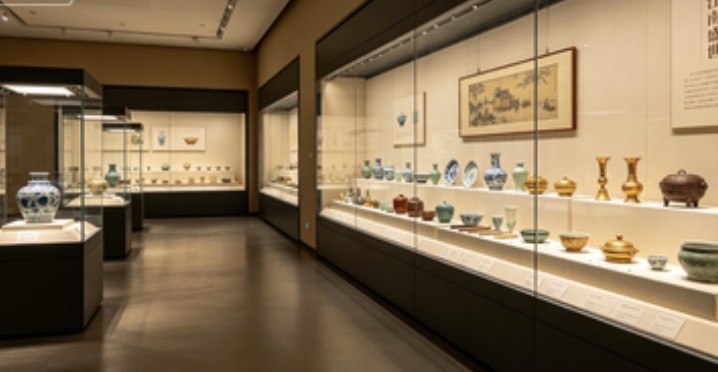
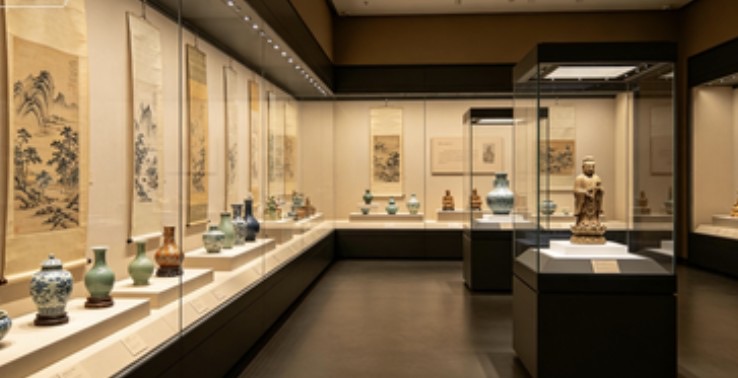
The Special Exhibitions Gallery is a five-story independent building located west of the History Gallery. It houses permanent themed exhibitions including a Hall of the Museum's Greatest Treasures, a display of Qing imperial porcelain from the Kangxi, Yongzheng, and Qianlong reigns, a collection of antique timepieces, and "Approaching the Buddha: An Exhibition of Buddhist Art." Large-scale temporary exhibitions from China and abroad are also hosted here on a rotating basis. The Hall of Greatest Treasures displays national-level artifacts including a Ming dynasty gilt Tibetan-style stupa and a golden beast. Through a combination of thematic installations and changing exhibitions, this gallery offers the most concentrated look at the museum's finest holdings and the achievements of world civilization.
Art Gallery
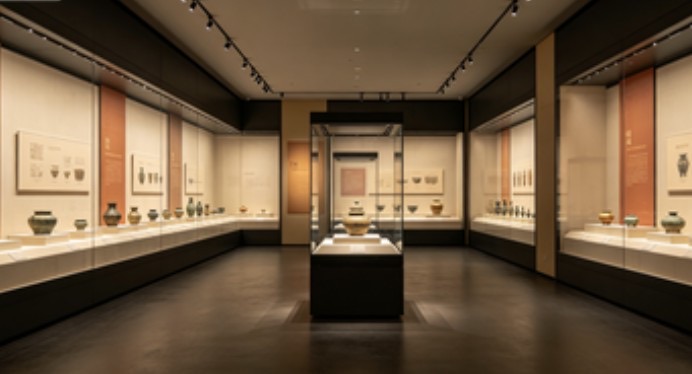
The Art Gallery spans seven thousand square meters and features galleries dedicated to sculpture, painting, and calligraphy across the dynasties, alongside four dedicated halls honoring artists Fu Baoshi, Chen Zhifo, Su Tianci, and Wu Weisan — all closely linked to Jiangsu. A Jiangsu folk customs exhibition rounds out the space. The sculpture gallery brings together stone carvings from the Shang dynasty site at Yinxu, Han dynasty tomb figurines, and Buddhist sculptures in the styles of Yungang and Longmen. The painting gallery systematically traces the artistic achievements of ten regional schools of the Ming and Qing periods, including the Jinling and Yangzhou schools. The Su Tianci oil painting hall presents a body of twentieth-century Chinese art that bridges Eastern and Western traditions. A reproduction of Matteo Ricci's world map, the Kunyu Wanguo Quantu, is also on display here.
Republic of China Gallery
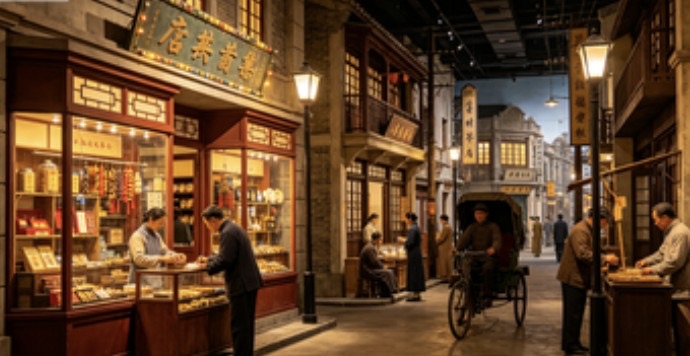
The Republic of China Gallery recreates the streetscape of Nanjing during the Republican era through fully immersive, walk-in scenography. Using lighting and sound technology to simulate sky and weather conditions, the hall features a complete mock street lined with buildings in Republican-era European style. Visitors can step into a post office, a barbershop, a traditional pharmacy, a bookshop, a silversmith, and other storefronts, each staffed by attendants in period dress. The experience is hands-on: you can actually mail a letter, browse for books, fill a herbal prescription, pick out silver jewelry, and buy local Jiangsu specialties. Vintage Ford automobiles and a locomotive complete the atmosphere, making this the museum's most interactive and immersive pavilion.
Digital Gallery
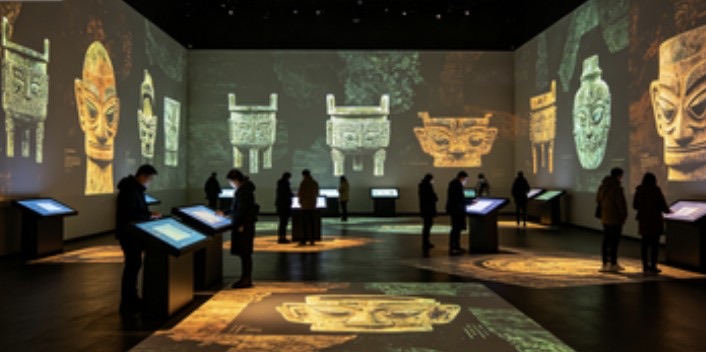
The Digital Gallery combines a physical exhibition hall of approximately 1,200 square meters with a virtual online counterpart. The physical space uses multi-screen displays, transparent screens, motion capture, and real-time compositing to create a three-dimensional viewing environment. The virtual gallery extends the physical exhibition online through internet and image-recognition technology, creating a museum that never closes. A variety of interactive games throughout the hall translate ancient civilization into the language of modern technology, making this pavilion particularly well suited for children and families.
Intangible Cultural Heritage Gallery
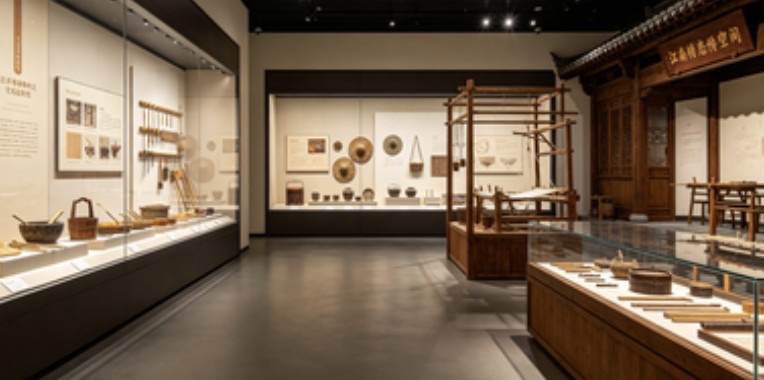
The Intangible Cultural Heritage Gallery — Jiangsu Province's dedicated ICH pavilion — is organized into three sections: a main exhibition area, a Master Craftsman's Workshop, and a Folk Customs Teahouse. The exhibition covers representative Jiangsu projects inscribed on UNESCO's Representative List of the Intangible Cultural Heritage of Humanity as well as China's national ICH registry, spanning folk literature, traditional music, performing arts, traditional medicine, and folk customs. The Master Craftsman's Workshop hosts nationally recognized ICH bearers who demonstrate traditional skills such as paper cutting, lantern making, and Yunjin brocade weaving, with opportunities for visitors to participate. The Folk Customs Teahouse stages regular live performances of Kunqu opera, Suzhou pingtan storytelling, and Nanjing Baiju folk song.
11 stops, in walking order — read top to bottom, no clicking needed.

 2
 3
 4
 5
 6
 7
 8
 9
 10
 11