Attraction Introduction (App Listing Page)
General Overview
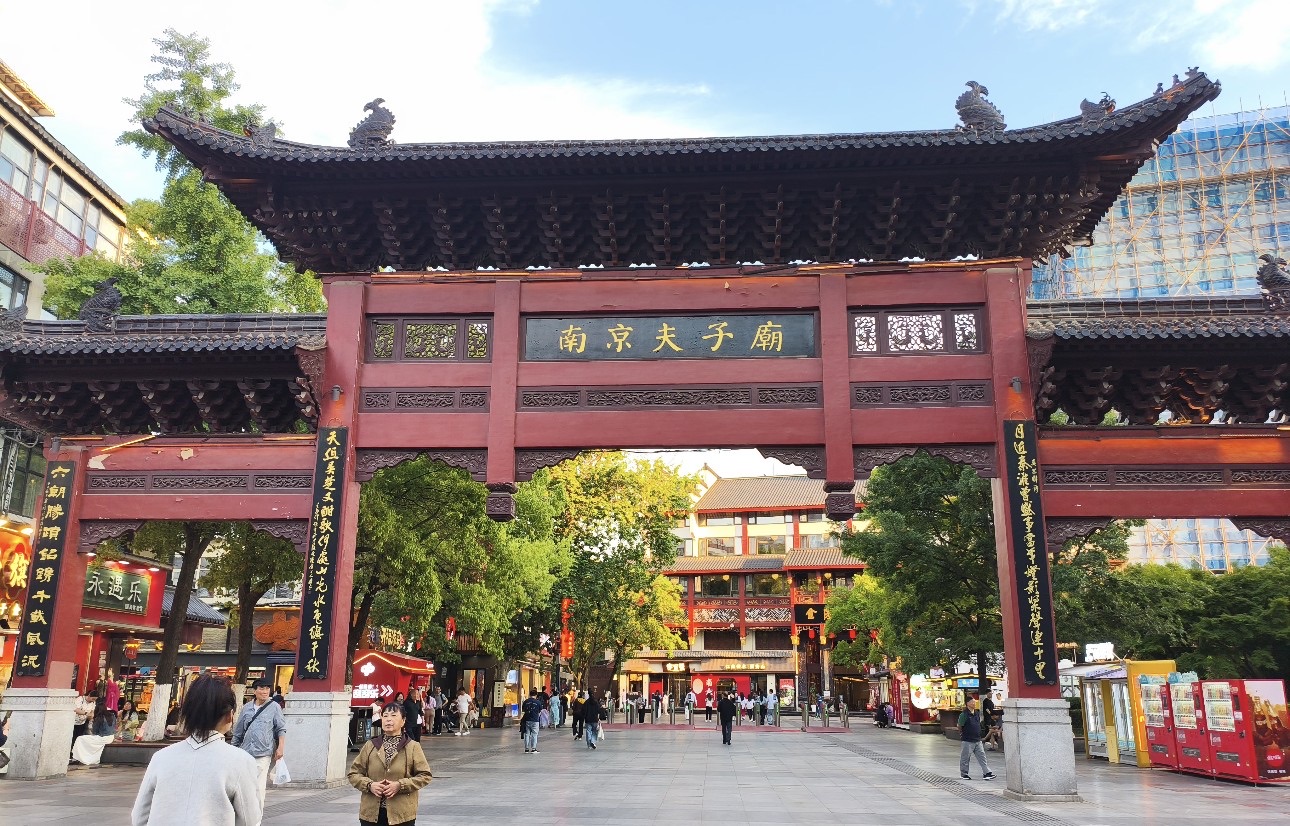
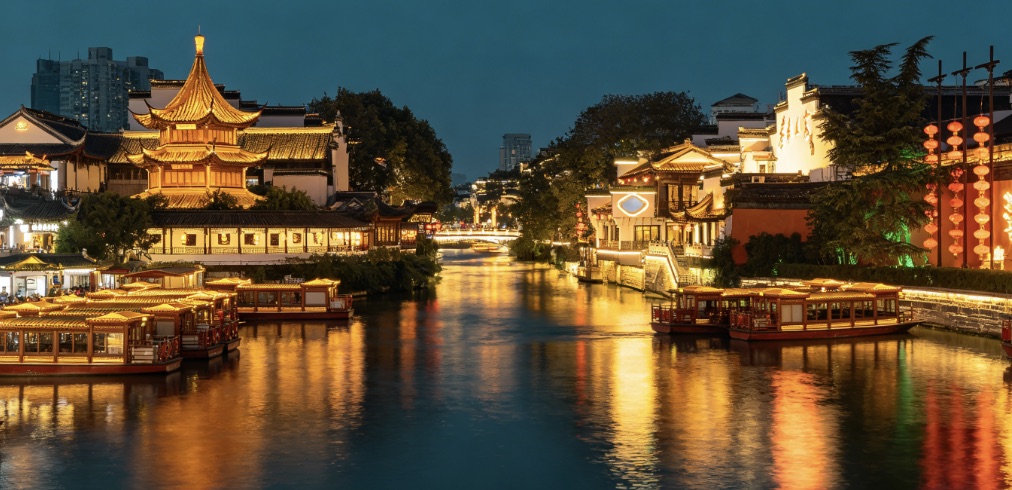
The Nanjing Confucius Temple is a complex dedicated to the memory and worship of Confucius, the ancient Chinese philosopher and educator. It sits on the north bank of the Qinhuai River in Qinhuai District, stretching from the East Water Gate in the east to the West Water Gate in the west, with the Qinhuai River as its central axis linking three major architectural ensembles: the Confucian Temple, the Imperial Academy, and the Jiangnan Examination Hall. Founded in the third year of the Xiankang era of the Eastern Jin dynasty (337 AD), the temple was expanded to its north-bank site during the first year of the Jingyou era of the Northern Song dynasty (1034 AD), when it also became a center for Confucian rites. It is regarded as China's earliest national institution of higher learning and one of the Four Great Confucian Temples of China. The broader Confucius Temple-Qinhuai Scenic Belt covers approximately 4.69 square kilometers, weaving together ceremonial architecture, imperial examination heritage, historic residential quarters, and riverside gardens. The existing buildings date primarily from reconstructions during the Tongzhi reign of the Qing dynasty and restoration work undertaken after the 1980s. The area holds a 5A national tourism designation and serves as the principal venue for the Qinhuai Lantern Festival, a national intangible cultural heritage.
Attraction Highlights
Spirit Wall and Pan Pond
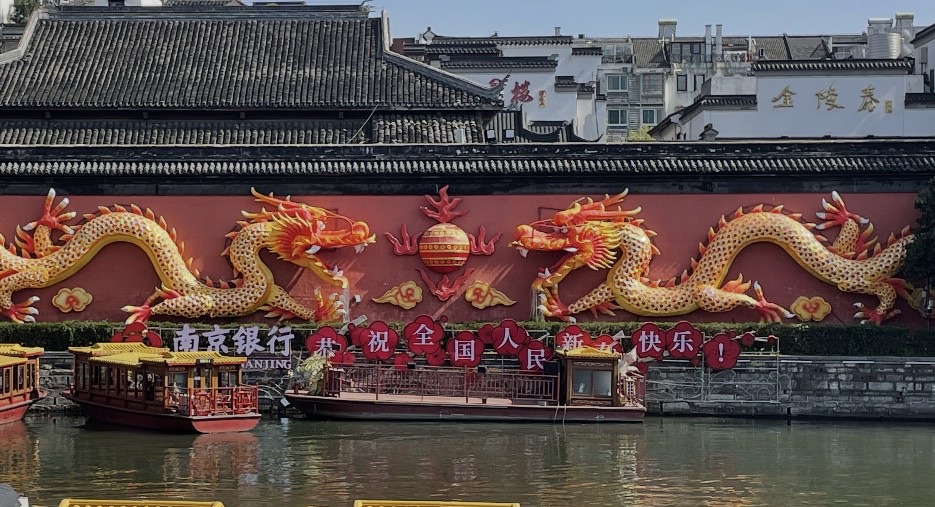
Located on the south bank of the Qinhuai River facing the temple, the Spirit Wall was built in the third year of the Wanli era of the Ming dynasty (1575 AD). It stretches 110 meters in length and stands 10 meters tall, faced with grey bricks and decorated at its center with a raised relief of two dragons playing with a pearl on a red background. It is the longest spirit wall surviving in China. The water in front of it forms the temple's Pan Pond — not an artificial pool, but a section of the Qinhuai River itself, making it the only Confucian temple in China whose Pan Pond is a natural waterway. The tradition derives from the Zhou dynasty ritual system, which distinguished between the emperor's fully encircled school (Biyong) and the lords' half-encircled school (Pangong). The solid-stone balustrade on the north bank was built in the ninth year of the Zhengde era of the Ming dynasty (1514 AD) and is the oldest surviving architectural element at the Confucius Temple.
Tianxia Wenshu Archway and Juxing Pavilion
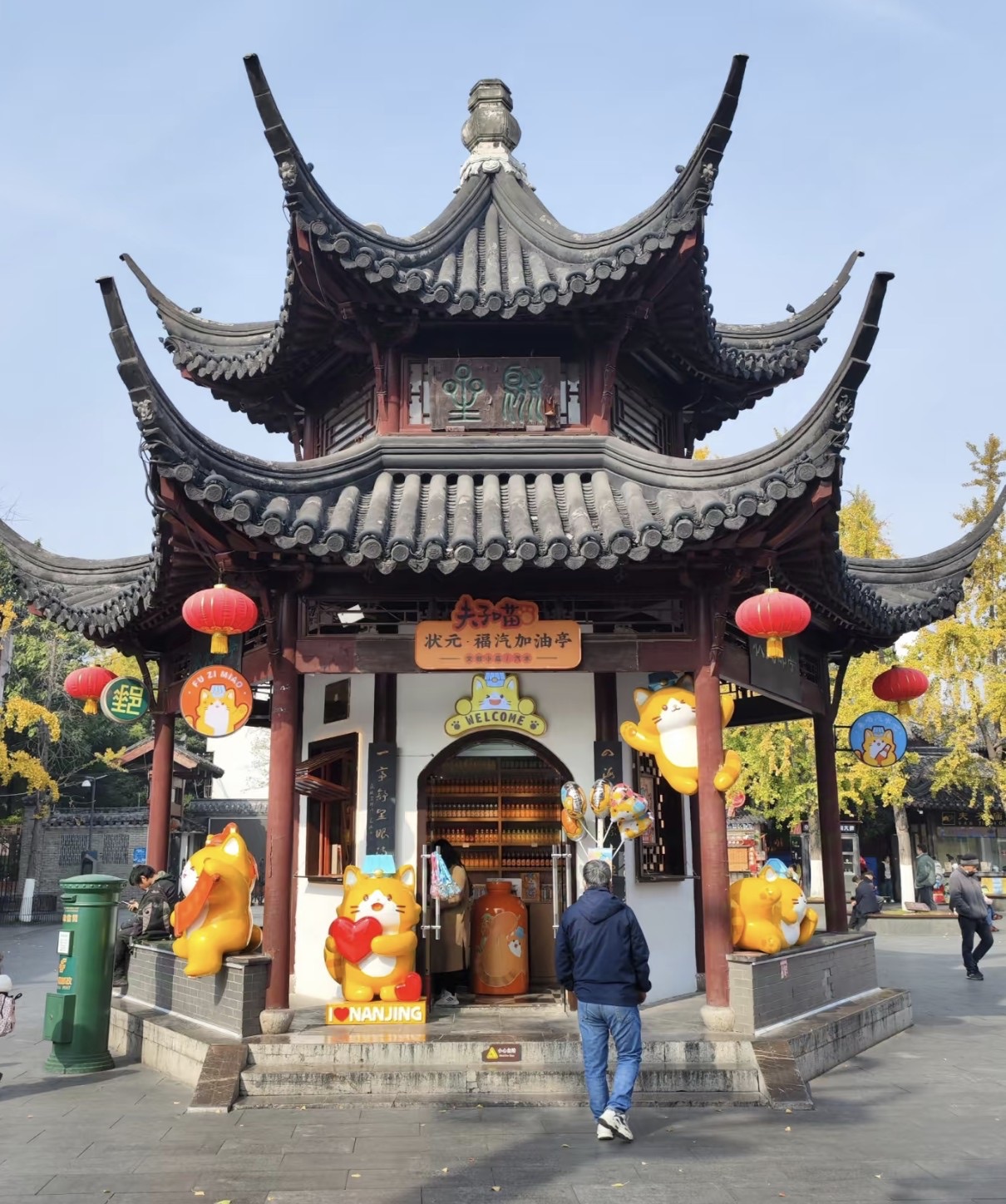
The Tianxia Wenshu Archway is a stone paifang with three bays and four columns, standing at the head of the central axis on the north bank of the Pan Pond. Its horizontal tablet bears the inscription "Tianxia Wenshu" — meaning "the pivot of all learning and virtue under heaven" — proclaiming Nanjing's central role in China's cultural and scholarly tradition from the Six Dynasties period through the Ming and Qing. To the west of the archway stands Juxing Pavilion, a hexagonal double-eaved structure with a pyramidal roof. Its name evokes the gathering of stars and the convergence of talent. Originally a meeting place for scholars to exchange ideas, it is now one of the landmark pavilions of the temple square.
Lingxing Gate
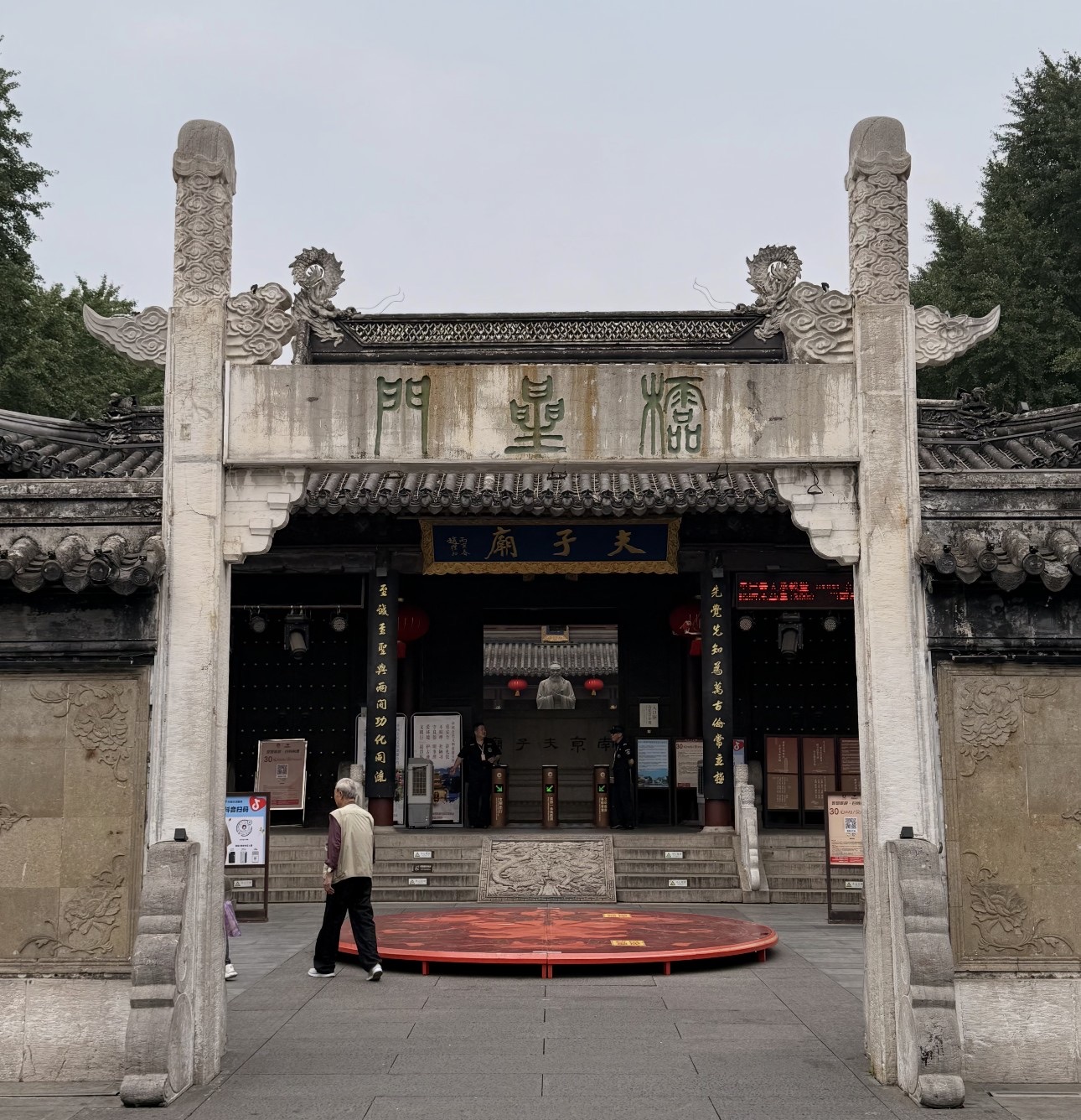
Standing to the north of the Tianxia Wenshu Archway along the central axis, Lingxing Gate is a stone paifang with six columns and three gateways in the soaring pillar style, the column tops decorated with cloud-patterned finials and the spaces between the lintels carved with peony relief panels. The central gateway bears an incised inscription reading "Lingxing Gate," while the flanking gateways are inscribed with the names of four of Confucius's disciples — Zeng Shen, Yan Hui, Zisi, and Mengke (Mencius). The Lingxing is the celestial field star; in ancient times, emperors were required to make offerings to this star before conducting the rites of Heaven. By placing a Lingxing Gate at the entrance to the Confucian Temple, the builders signaled that worshipping Confucius was to be accorded the same reverence as worshipping Heaven itself — the cultural principle of "honoring Confucius as one honors Heaven."
Dacheng Hall
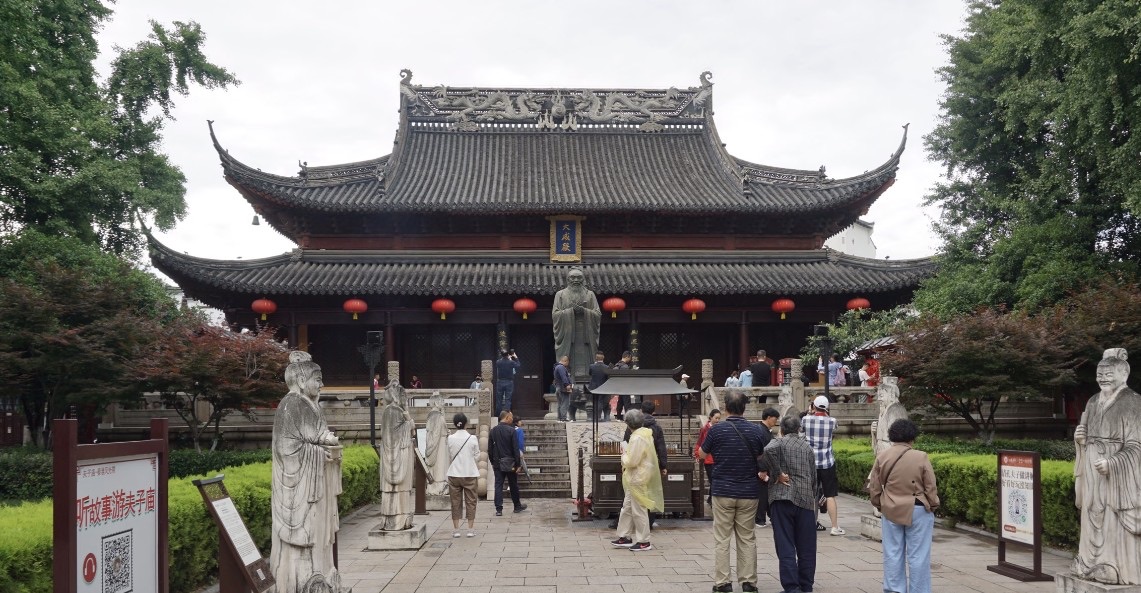
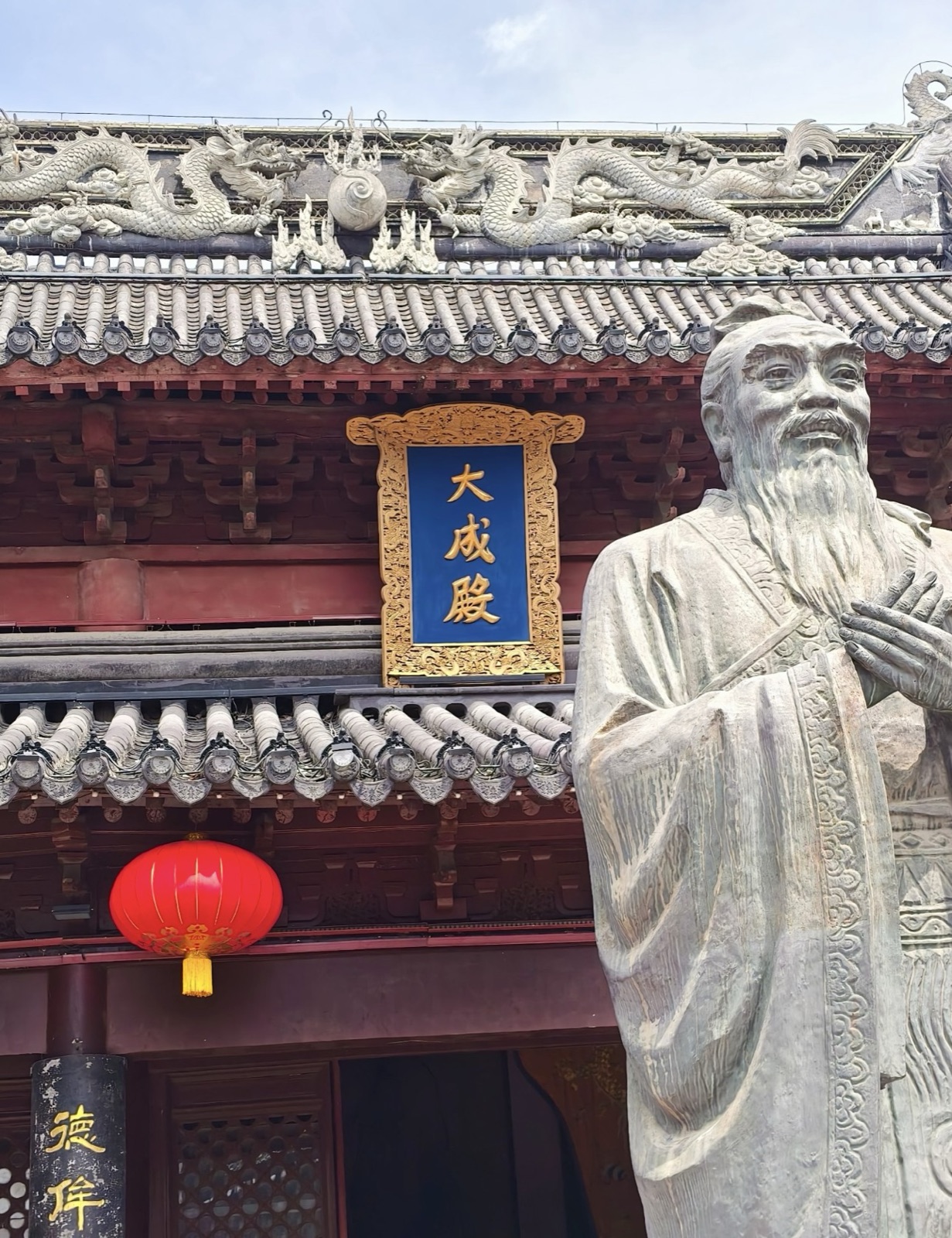
The heart of the Confucius Temple complex, Dacheng Hall stands 16.22 meters tall, measures 28.1 meters across its facade, and 21.7 meters in depth, with a double-eaved hip-and-gable roof covered in yellow glazed tiles. At the center of the terrace in front of the hall stands the largest bronze statue of Confucius in China, at 4.18 meters tall. Inside, the largest portrait of Confucius in China (6.5 meters tall by 3.15 meters wide) hangs at the center. The four walls are set with 38 polychrome stone relief panels depicting scenes from the life of Confucius — the Shengji Tu — crafted from jade, jadeite, cornelian, chicken-blood stone, longevity stone, and gold. The panels tell the full story of Confucius's life, from his travels among the feudal states to his teaching under the apricot tree and his compilation of the Six Classics. Flanking the walkway in front of the hall are white marble statues of Confucius's twelve principal disciples.
Mingde Hall and Zunjing Pavilion
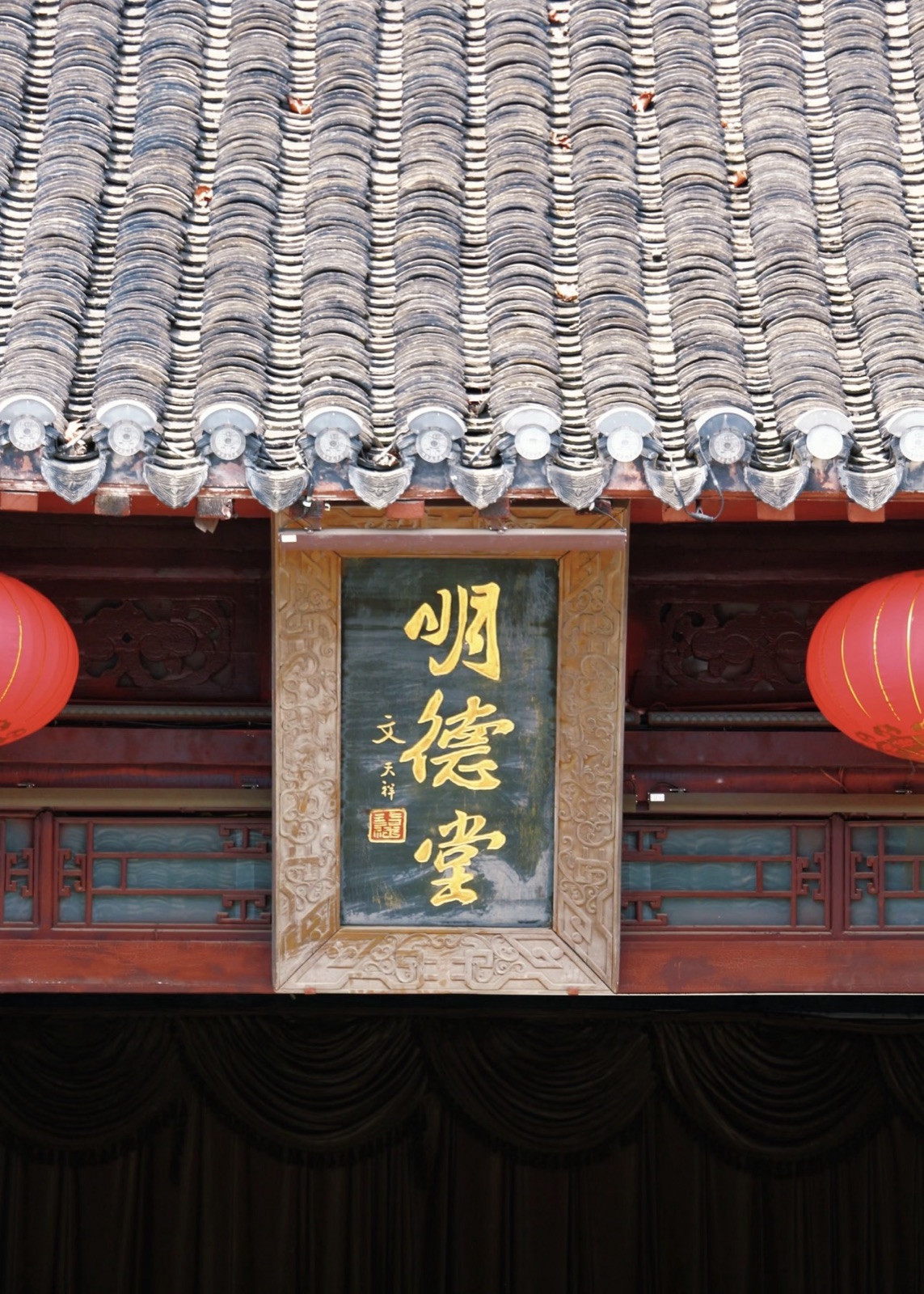
Mingde Hall stands behind Dacheng Hall as the central building of the Imperial Academy precinct. First built in the first year of the Jingyou era of the Northern Song dynasty (1034 AD) and restored during the Southern Song, its horizontal tablet was rewritten by the statesman Wen Tianxiang. Confucian academies across China conventionally named their principal hall "Minglun Hall" — the Hall of Illuminated Human Relationships — but the Nanjing Confucius Temple uses "Mingde Hall" instead, a distinction found nowhere else in China. Behind the hall, Zunjing Pavilion was originally a two-story building: the upper level stored Confucian classics, the lower level served as a teaching space for the academy head. It now houses the Confucius Temple Folk Arts Gallery, displaying Nanjing's intangible cultural heritage including Yunjin brocade weaving, Qinhuai lantern craft, paper-cutting, and miniature ivory carving.
Jiangnan Examination Hall (China Imperial Examination Museum)
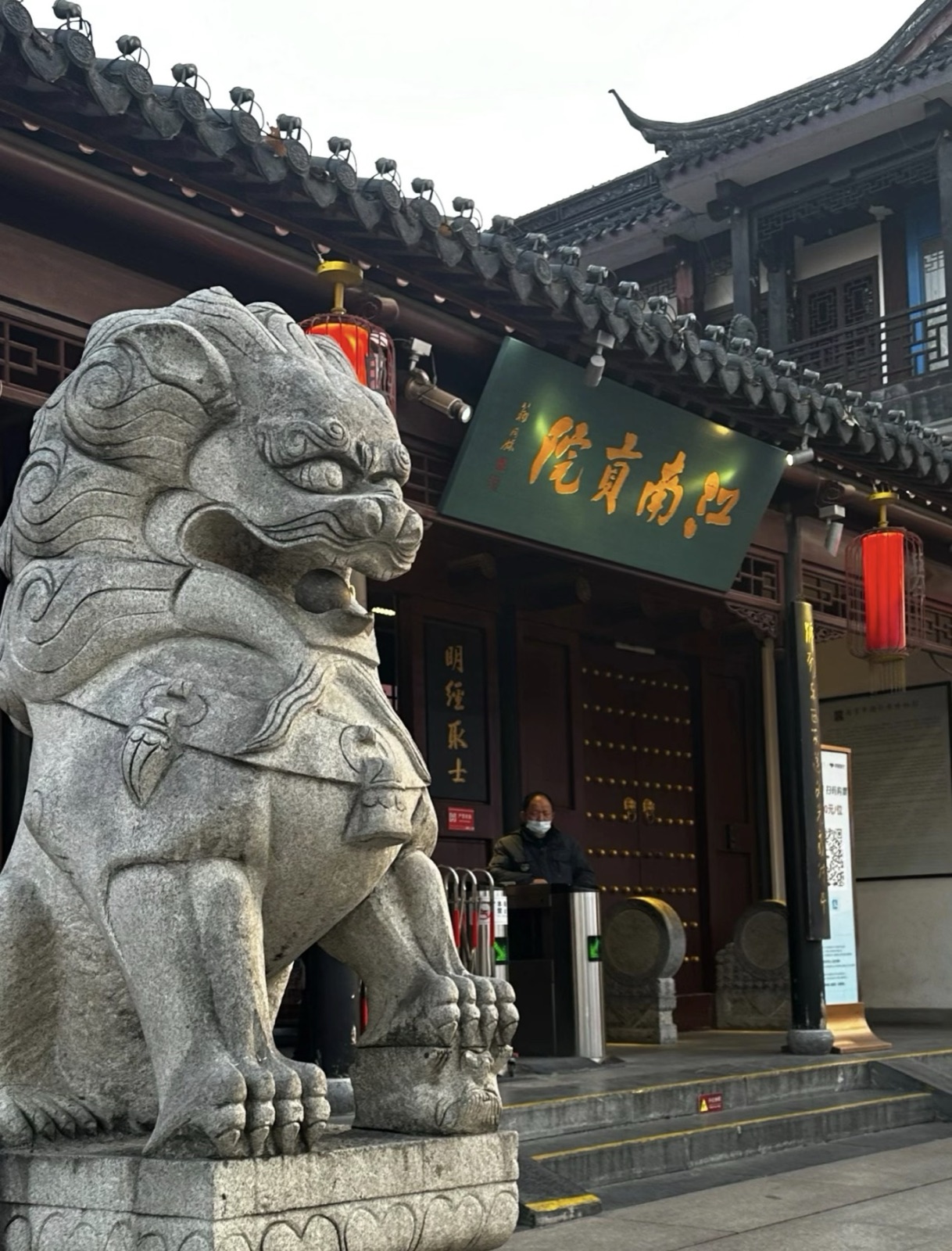
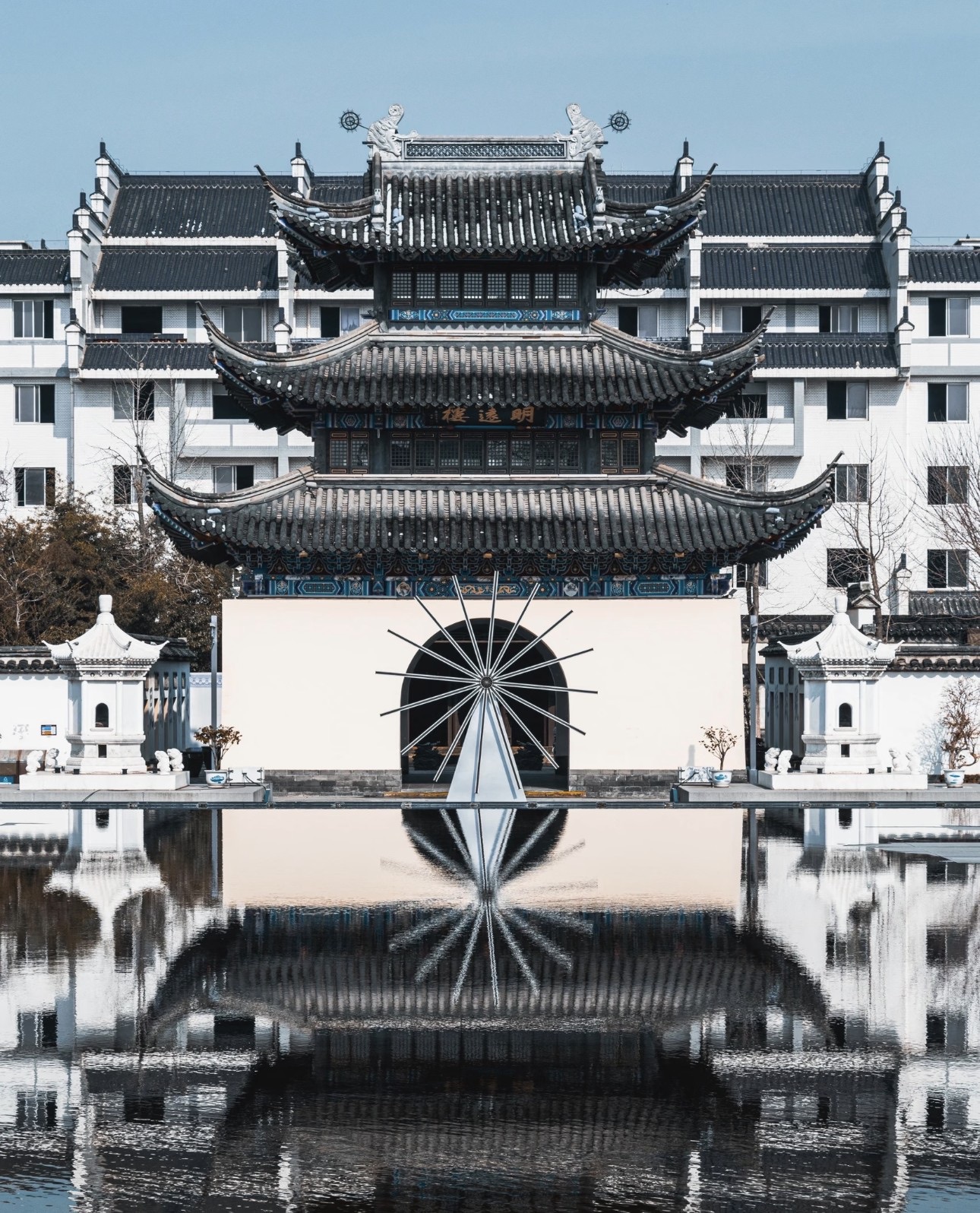
Located to the east of the temple's central axis, the Jiangnan Examination Hall was founded in the fourth year of the Qiandao era of the Southern Song dynasty (1168 AD) and grew into the largest imperial examination venue in Chinese history. At its height, it contained 20,644 individual examination cells, accommodating more than twenty thousand candidates simultaneously. The surviving structures include Mingyuan Tower, Zhigong Hall, and portions of the original examination cell site. Mingyuan Tower, built in the thirteenth year of the Jiajing era of the Ming dynasty (1534 AD), is a three-story timber watchtower and the best-preserved examination building from any imperial examination compound. In 2014, the China Imperial Examination Museum was established on the site, with its main building sunk four stories underground. A 130-meter ramp symbolizes the 1,300-year lifespan of the examination system, guiding visitors through a comprehensive exploration of its history, procedures, and cultural legacy.
Wende Bridge
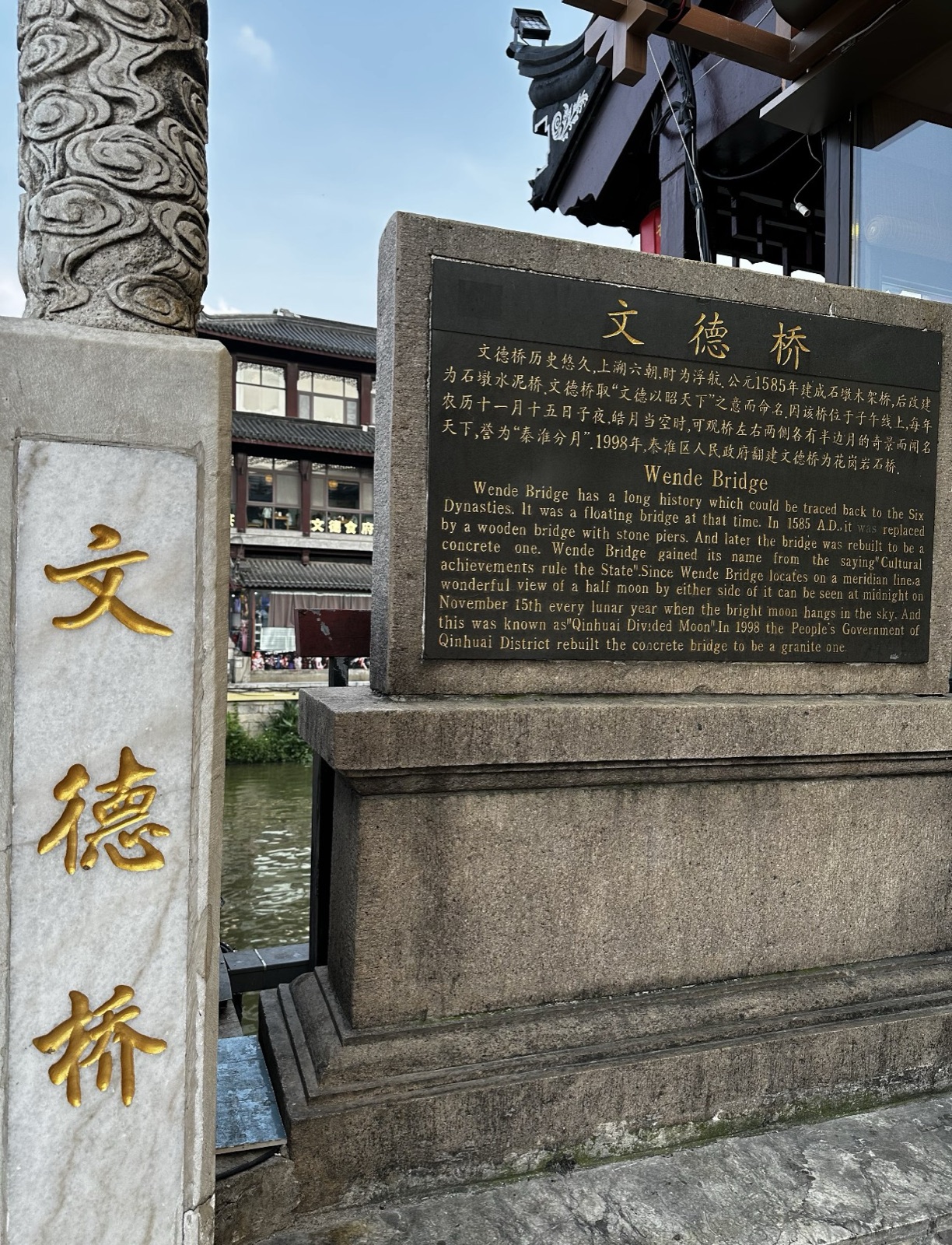
Spanning the Qinhuai River and linking the north and south banks at the Confucius Temple, Wende Bridge was first built in the thirteenth year of the Wanli era of the Ming dynasty (1585 AD). Its name is drawn from the Confucian ideal of "supreme virtue through learning." Because the bridge sits precisely on the earth's meridian, every year on the fifteenth night of the eleventh lunar month at midnight, the full moon's reflection in the water is split exactly in two by the bridge — a spectacle known as "Wende Moon-Splitting," ranked alongside the Five Pavilion Moon at Slender West Lake in Yangzhou and the Three Pools Mirroring the Moon at West Lake in Hangzhou as the three great moonviewing wonders of the Jiangnan region. Tradition holds that the Tang dynasty poet Li Bai once leaned over this bridge in a drunken attempt to grasp the moon's reflection in the water and tumbled in. Later generations built a Moon-Catching Terrace at the bridgeside to mark the story.
Wuyi Lane (Wang Dao and Xie An Memorial Hall)
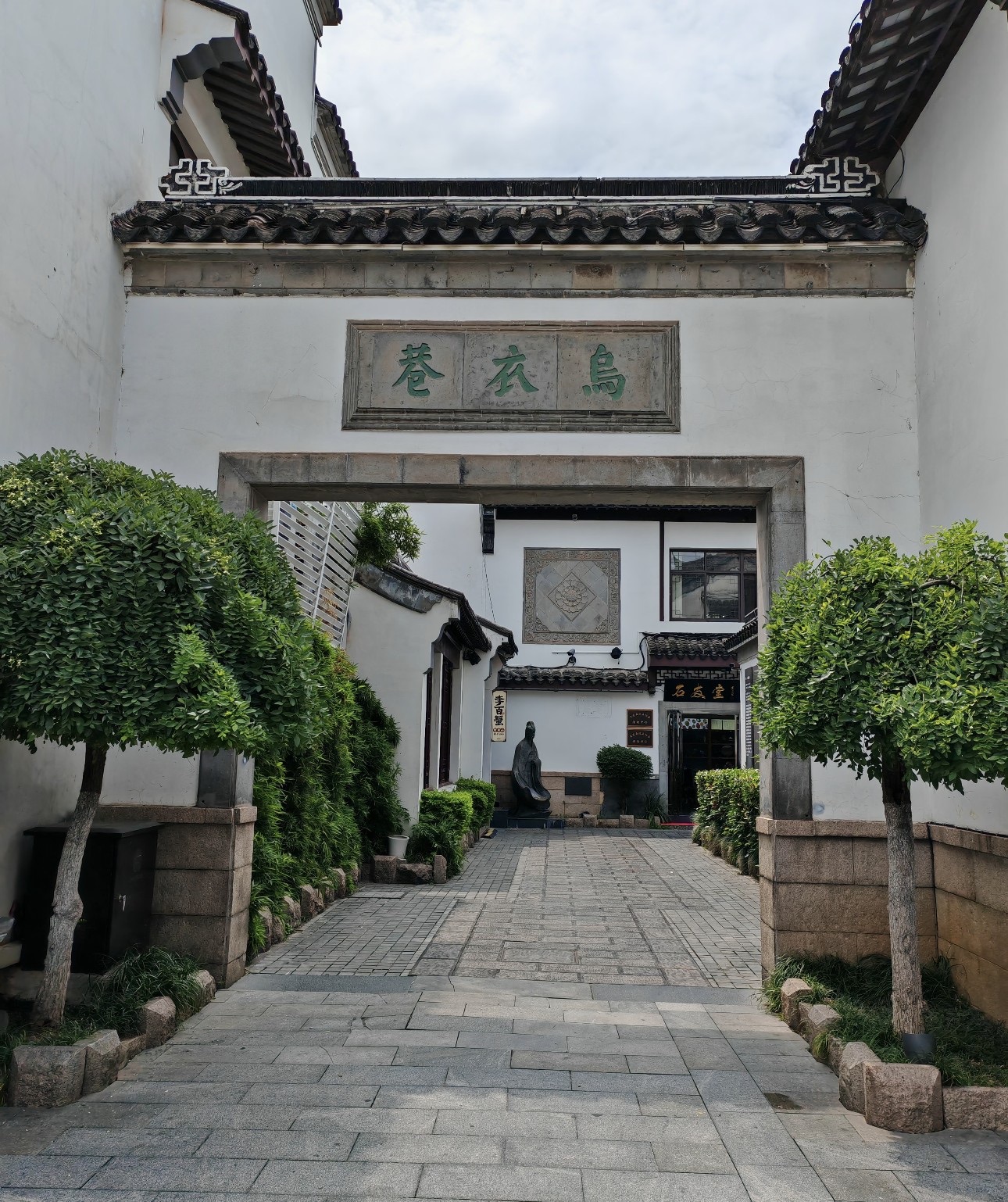
Situated west of Wende Bridge on the south bank of the Qinhuai River, Wuyi Lane is one of the oldest named streets in China. During the Three Kingdoms period, it served as a garrison for the Wu army guarding Stone City; the troops' black uniforms gave the lane its name — wu yi meaning "black robes." During the Eastern Jin dynasty, the great statesmen Wang Dao and Xie An lived here as neighbors, and the lane became home to a constellation of cultural figures: the calligraphers Wang Xizhi and Wang Xianzhi from the Wang clan, the poets Xie Lingyun and Xie Tiao from the Xie clan. "Wuyi pedigree" became synonymous with aristocratic refinement during the Eastern Jin. The Tang poet Liu Yuxi immortalized the lane in his poem: "By Zhuque Bridge, wildflowers bloom untended; / At the mouth of Wuyi Lane, evening sun slants low. / The swallows that once graced the halls of Wang and Xie / now flit into the homes of common folk below." The Wang Dao and Xie An Memorial Hall inside the lane displays Six Dynasties artifacts and the history of both families.
Qinhuai Painted Boat
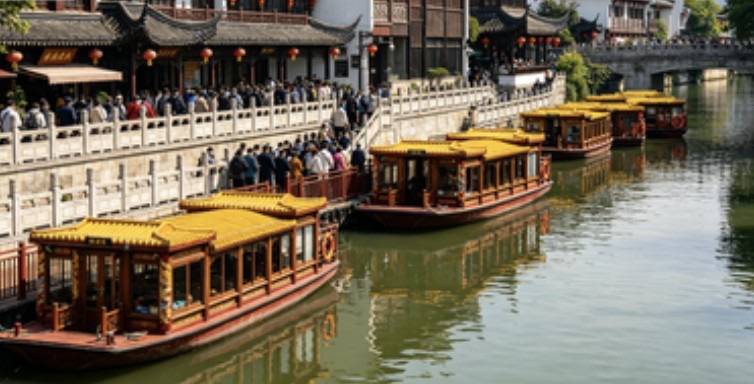
Departing from the Pan Pond pier at the Confucius Temple, the painted boat travels along approximately ten li of the inner Qinhuai River, passing the historic sites of Taoye Ford, Bailu Island Park, and the East Water Gate. The full journey takes around forty minutes. Qinhuai painted boats have been an iconic feature of Nanjing's city life since ancient times. The Tang poet Du Mu captured their spirit in a line still known by heart across China: "Mist veils the cold water, moonlight veils the sand; / Night-moored on the Qinhuai, close by a riverside inn." In modern literature, the essayists Zhu Ziqing and Yu Pingbo each wrote a piece titled "In the Sound of Oars and the Glow of Lanterns on the Qinhuai River" after a shared boat trip in 1923, cementing the river's place in the Chinese literary imagination. The boats run two routes: the east route passes the principal Six Dynasties heritage sites; the west route travels toward Zhonghua Gate and Shuixi Gate.
12 stops, in walking order — read top to bottom, no clicking needed.

 2
 3
 4
 5
 6
 7
 8
 9
 10
 11
 12