Travel Guide› Beijing› Mutianyu Great Wall
Beijing · Historic wall

Mutianyu Great Wall 慕田峪长城

Mutianyu Great Wall
Address
Mutianyu Village, Bohai Town, Huairou District, Beijing (along the Great Wall in the northern part of Huairou District)

Mutianyu Great Wall

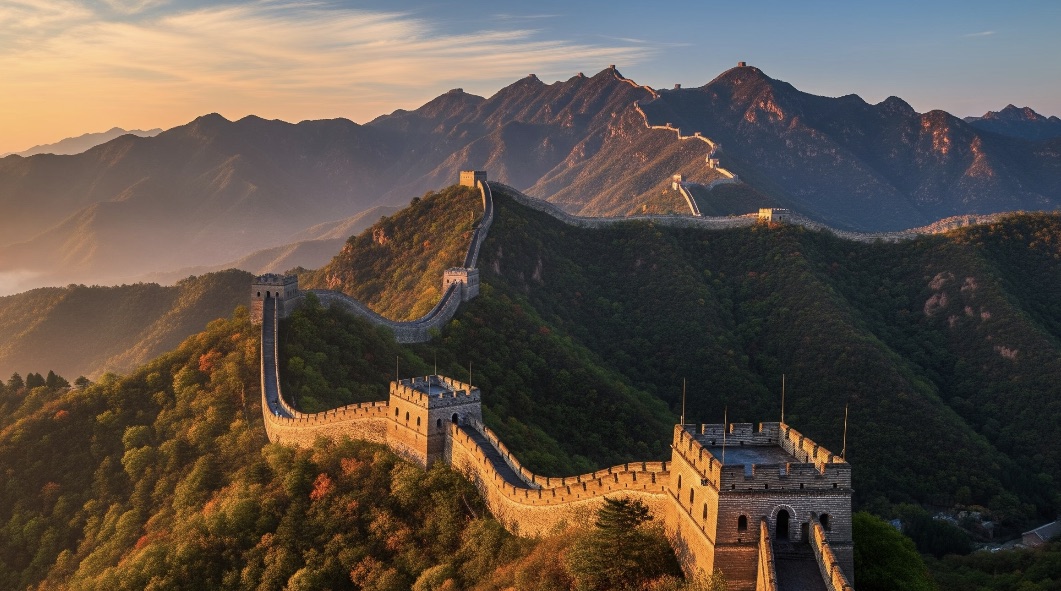
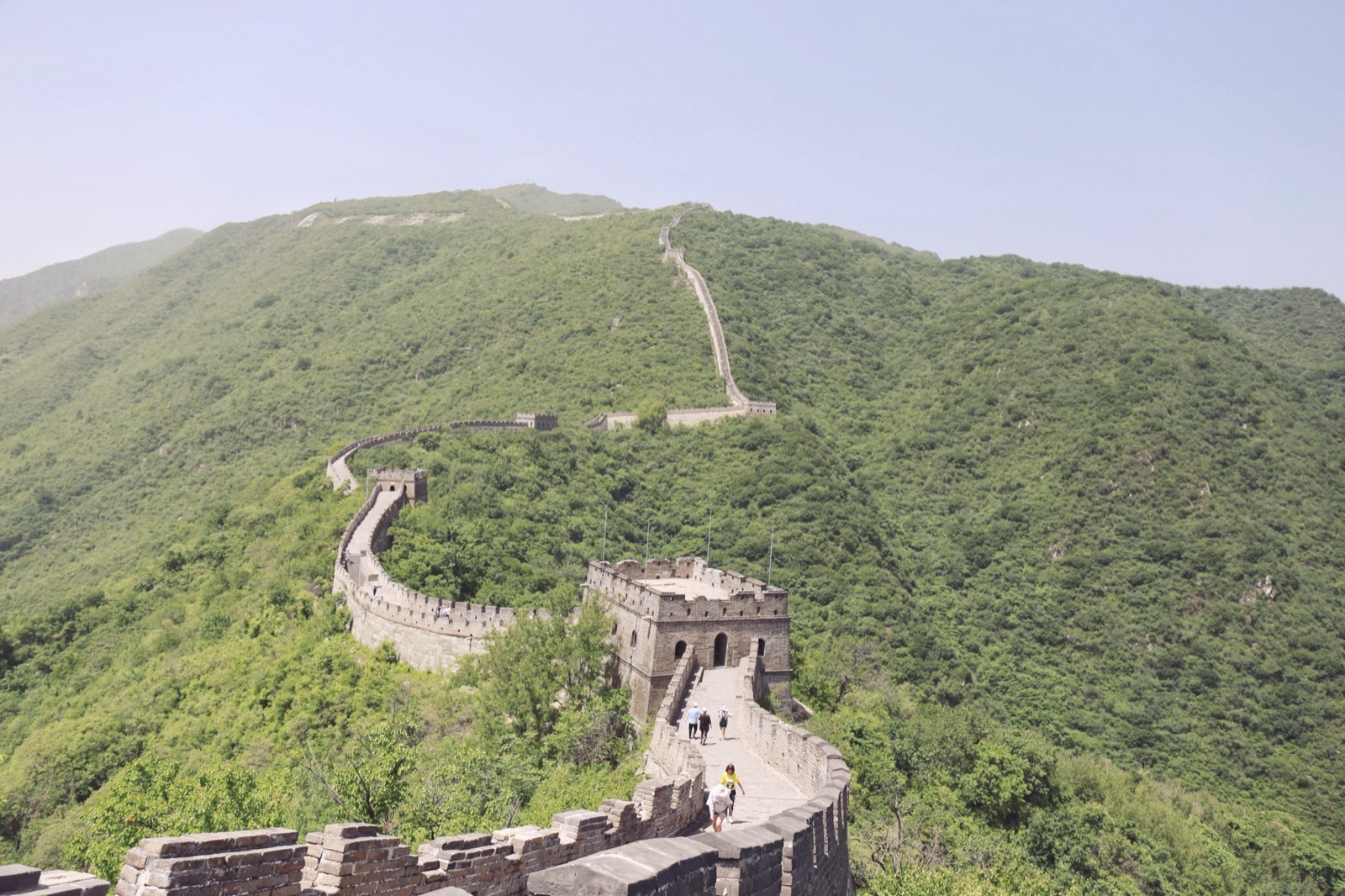
The Mutianyu Great Wall sits in Huairou District, Beijing. Stretching 5,400 meters in total, it carries the reputation of being "the crown jewel of the Great Wall" — with vegetation covering over 90% of its surroundings, it is one of the best-preserved and most scenic sections in Beijing. Watchtowers are densely spaced along the wall, averaging roughly one every 100 meters, numbered 1 through 20 from east to west for a total of 20 towers. The scenic area offers three classic routes: the West Route, which starts at the north ticket gate, takes a cable car up to Tower No. 14, then heads west toward Tower No. 20 — the steepest and most challenging stretch; the East Route, which starts at the south ticket gate, rides the gondola up to Tower No. 6, walks east to Tower No. 1 (the Great Corner Tower, passing Zhengguan Terrace), and descends by toboggan slide — a relatively gentle path; and the Central Route, which takes the cable car to Tower No. 14, then walks east to Tower No. 6 to descend by toboggan — downhill the entire way, with the least physical demand.

Tower No. 1 — Great Corner Tower

The Great Corner Tower stands at the eastern end of the Mutianyu Great Wall and is its most iconic landmark. Its name comes from its unusual position where three sections of wall converge: one runs west toward Badaling, one runs east toward Gubeikou, and one runs south along an inner spur wall known as the "Stubby Tail." From any angle, the structure looks like a sharp corner of the wall, hence the name. Built during the Ming dynasty, it marks the boundary between the Jizhen section of the wall to the east and the Changzhen section to the west, and served as a key military stronghold guarding the capital and imperial tombs. The tower has a double-story hollow interior with corridors arranged in a grid pattern, fitted with arrow windows and observation platforms. From the top, the Great Wall winds through the mountains like a dragon.

Tower No. 4 — Zhengguan Terrace

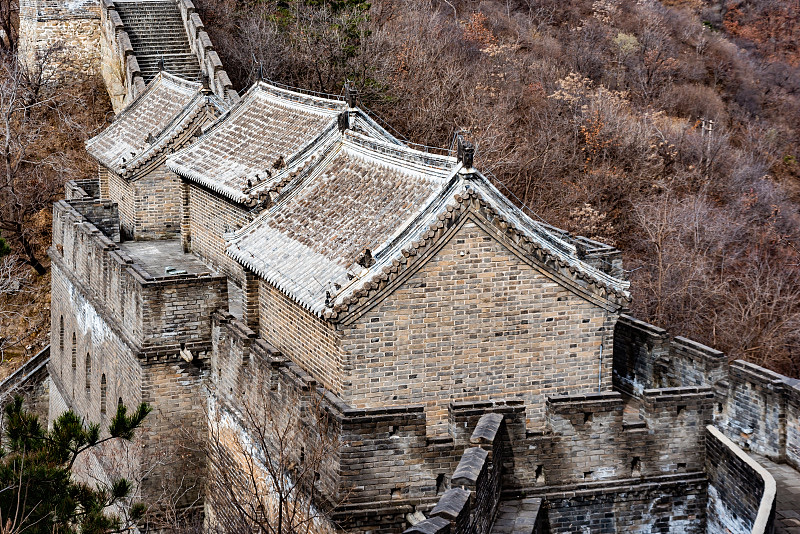
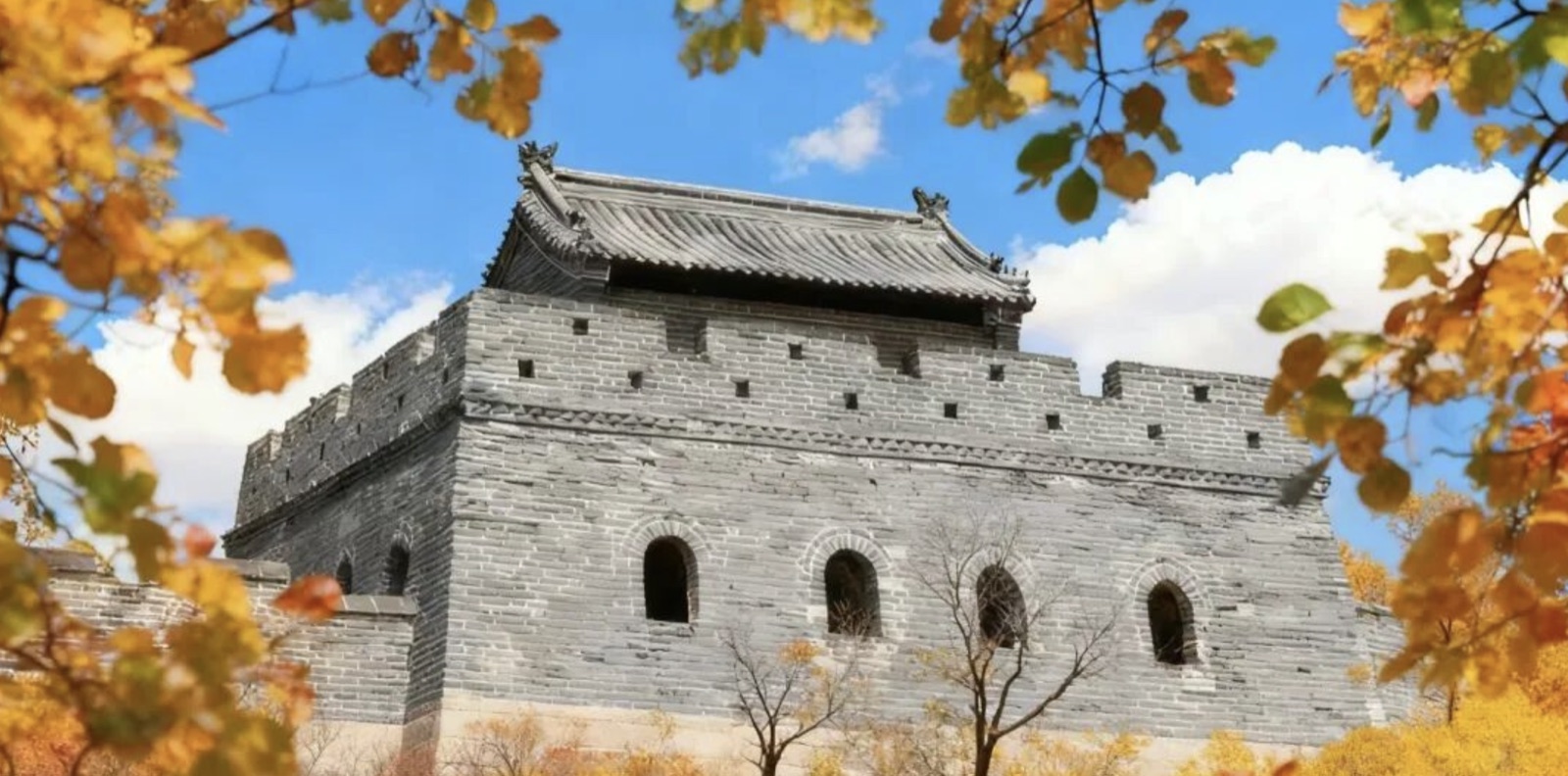
Zhengguan Terrace is the defining structure of the Mutianyu Great Wall's eastern section. Built in the second year of the Yongle reign (1404), it was the earliest Mutianyu pass of the Ming dynasty. The tower is made up of three hollow watchtowers standing side by side — a configuration rarely seen anywhere along the Great Wall — reaching approximately 20 meters in height and 40 meters in width. All three towers are divided into two stories: the ground floors connect to one another, while the upper floors each have their own lookout pavilion, forming a layout of a main hall with two side chambers. Notably, the main gate is not centered but set on the eastern side of the terrace, with a gate on each of the two flanking towers to allow vehicles and pedestrians to pass through. At an elevation of just 483 meters, Zhengguan Terrace is the lowest-lying tower in the scenic area, giving it a wide-open field of view across both sides of the wall. A small exhibition inside explains its historical defensive function.

Tower No. 6 — Gondola and Toboggan Station

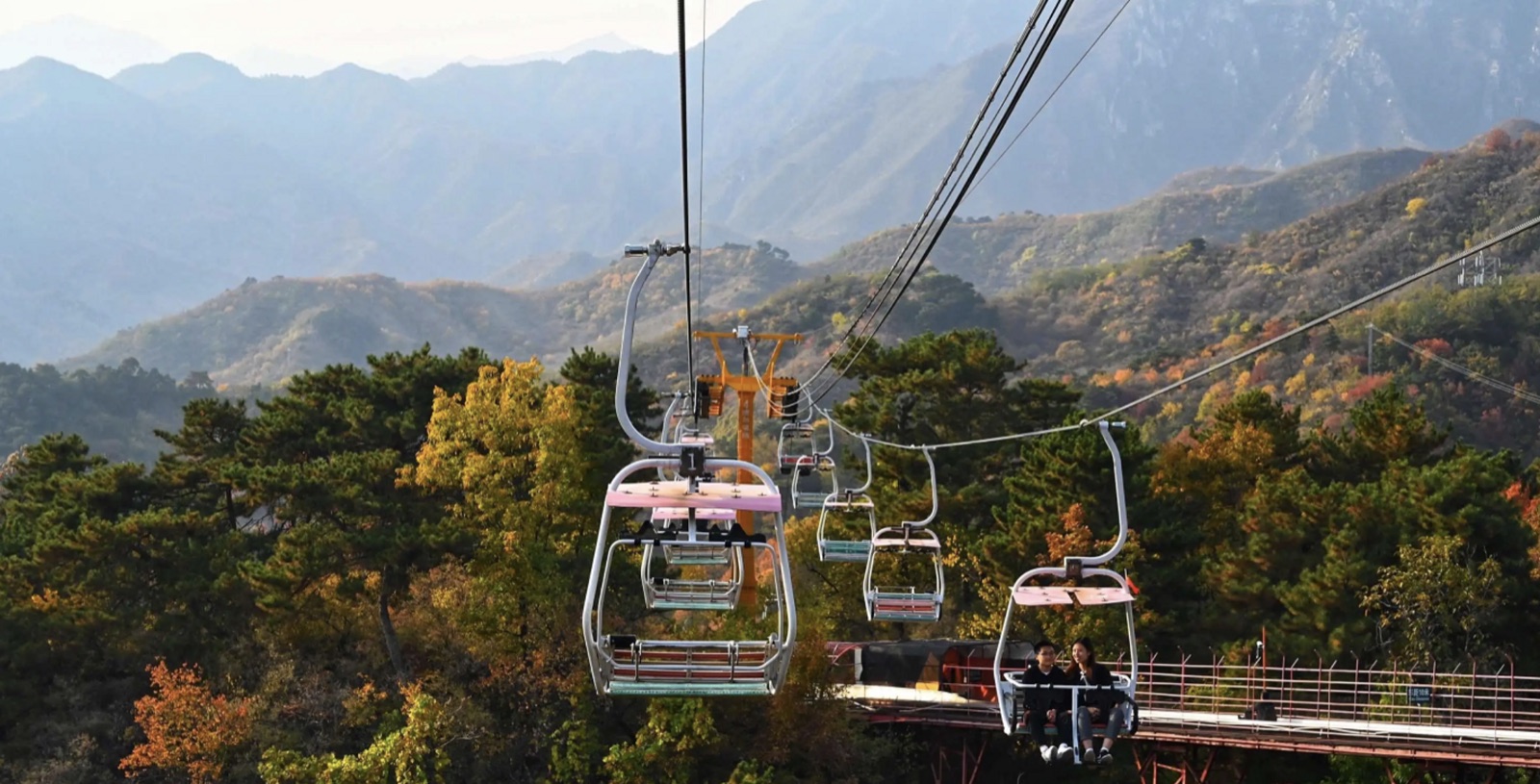
Tower No. 6 sits on the eastern stretch and serves as both the upper terminus of the east-route gondola and the starting point for the toboggan descent. The gondola is a semi-open chairlift with a total length of approximately 550 meters. Walking east from Tower No. 6 to Tower No. 1 (the Great Corner Tower) is a relatively flat trail well suited to families traveling with children or elderly visitors. The tower itself has a double-story hollow structure fitted with arrow windows and observation platforms.

Tower No. 14 — Cable Car Station

Tower No. 14 sits at the summit of the central section of the Mutianyu Great Wall and is the upper terminus of the cable car for both the West and Central routes. Inside stands a stone stele inscribed with Mao Zedong's famous line, "You are not a true hero until you have climbed the Great Wall." The north-facing platform outside features an officially sanctioned graffiti wall. Tower No. 14 commands a broad view and is an ideal spot to look down at the winding wall below.

Tower No. 15 — Filming Location of "If You Are the One 2"

Tower No. 15 stands just west of Tower No. 14. It served as a filming location for director Feng Xiaogang's 2010 romantic comedy If You Are the One 2, where the character Qin Fen (played by Ge You) proposes to Liang Xiaoxiao (played by Shu Qi). A clearly marked film-location sign stands near the tower. The structure has a double-story hollow design with a parapet on top and arrow windows on all four sides, and visitors can climb to the top for a panoramic view. The stretch between Tower No. 15 and Tower No. 18 is relatively flat.

Tower No. 17 — "Loyal to Chairman Mao" Stone Inscription

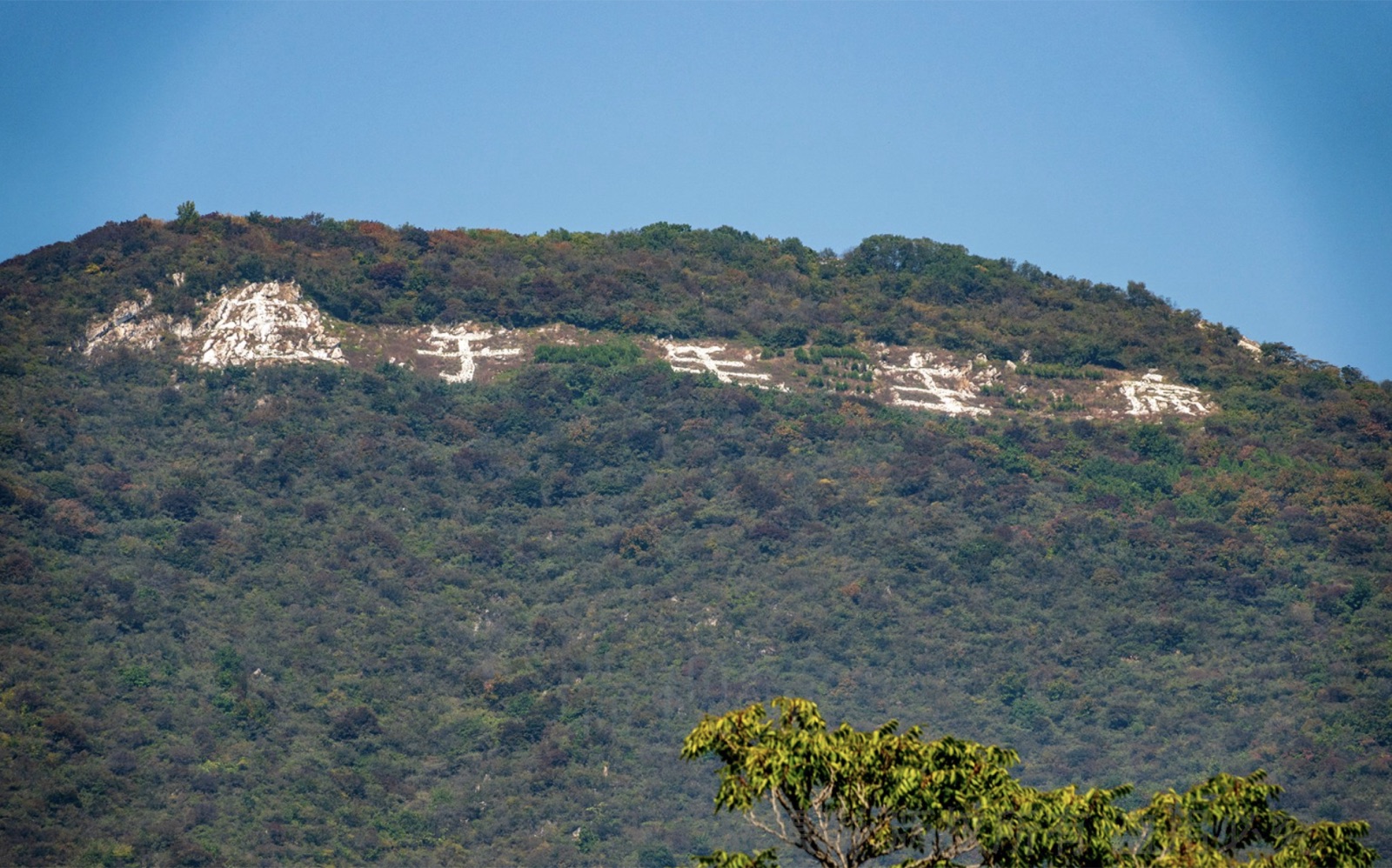
On the hillside near Tower No. 17, a massive slogan spelled out in white stones reads "Loyal to Chairman Mao" (Zhong yu Mao Zhuxi). Each character measures roughly 12 meters in diameter and is clearly visible from a distance. The inscription dates from the 1970s and, though not part of the tower itself, has become one of Mutianyu's most distinctive historical features. Tower No. 17 is the ideal viewpoint for taking in the entire inscription. The tower has a double-story hollow interior fitted with arrow windows.

Tower No. 18 — Boundary Tablet

A stone plaque dated to the seventh year of the Chenghua reign (1471) is set into the south wall of Tower No. 18. It reads: "To the east lies the territory of Mutianyu; to the west lies the territory of Jia'erling" — marking the western boundary of the Mutianyu pass jurisdiction during the Ming dynasty. The tower has a double-story hollow structure with arrow windows and observation platforms. On clear days, looking north from the eastern side of the tower, visitors can see the China Zun skyscraper (CITIC Tower) rising from Beijing's CBD — a rare frame where a six-hundred-year-old Ming-dynasty fortification and the modern city skyline appear side by side. The tower also preserves a restored display of ancient defensive equipment.

Tower No. 19 — Hero Slope

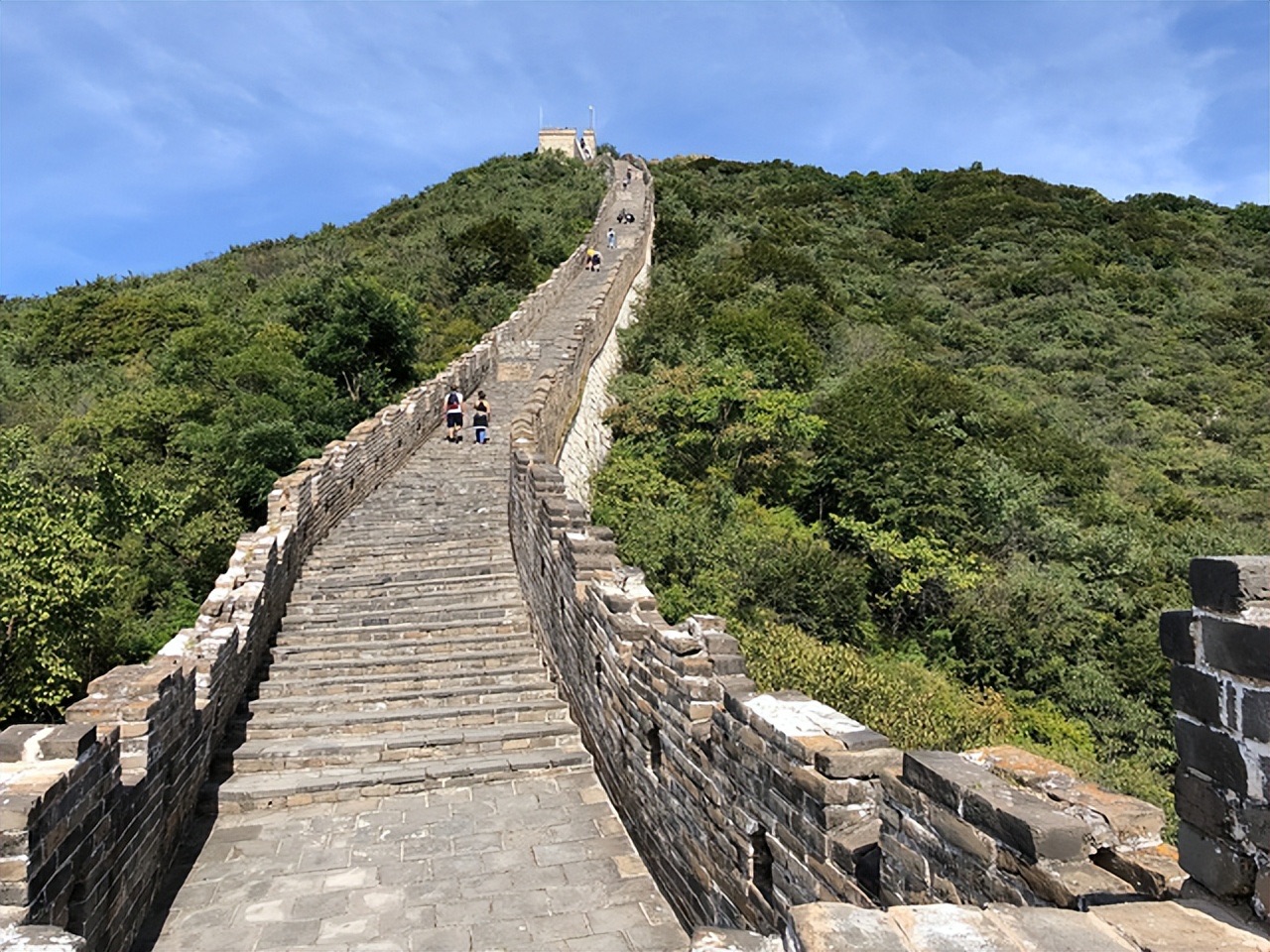
Tower No. 19 marks the start of the steepest section on the West Route, the stretch known as "Hero Slope" (Haohan Po) that climbs toward Tower No. 20. The steps here reach a gradient of 70 degrees and hug the mountain ridge; visitors should hold the handrails on both sides and proceed carefully. This is the highest point on the West Route, and the view looking back over the entire wall from the top makes the climb well worth the effort. Note: from April 2026, the upper section between Tower No. 19 and Tower No. 20 is temporarily closed for renovation works. Visitors should turn back at the lower section of Tower No. 19.

Practical info Opening hours · Allow · Ticket · Getting there
Opening hours
  • April 1-October 31: 07:30-18:00 (last entry at 17:00)
  • November 1-March 31 next year: 08:00-17:30 (last entry at 16:30)
  • Cable Car/Chairlift/Alpine Slide operating hours: Usually synchronized with the scenic area's opening hours, but may be temporarily closed due to weather conditions
  • Note: Visiting Mutianyu Great Wall takes about 3-4 hours (including cable car up and down the mountain and Great Wall strolling); it is recommended to go in the morning to avoid the tour group peak in the afternoon; autumn (mid-October to early November) is the most beautiful season for Mutianyu Great Wall, with red leaves covering the mountains and layers of forests dyed
Allow
  • Note: Visiting Mutianyu Great Wall takes about 3-4 hours (including cable car up and down the mountain and Great Wall strolling); it is recommended to go in the morning to avoid the tour group peak in the afternoon; autumn (mid-October to early November) is the most beautiful season for Mutianyu Great Wall, with red leaves covering the mountains and layers of forests dyed
Ticket
  • Admission: 45 RMB/person
  • Cable Car: Round-trip 120 RMB/person; One-way 100 RMB/person (recommended, saves physical strength)
  • Chairlift: Round-trip 120 RMB/person; One-way 100 RMB/person
  • Alpine Slide (Toboggan): 100 RMB/person (strongly recommended, unique experience of sliding down from the Great Wall)
  • Discounted Tickets: Students, seniors (over 60), military personnel, etc. can enjoy half-price or free admission with valid ID
  • Combo Ticket: Admission + round-trip cable car + alpine slide, about 260 RMB/person (relatively cost-effective)
  • Note: It is recommended to purchase admission and chairlift/cable car tickets in advance on the official website or travel platforms for discounts and to avoid on-site queuing; visitor flow is larger on weekends and holidays, so weekday visits are recommended
Getting there
  • Self-driving:
    • Route: Depart from Beijing urban area, drive along the Beijing-Chengde Expressway (G45) to Exit 13 (Beitai Road/Huairou Urban Area Exit), drive along Huaihuang Road (X009) to the Mutianyu Roundabout, follow signs to the scenic area parking lot, about 1.5-2 hours' drive
    • Parking: The scenic area has a large parking lot; parking fee is about 20 RMB/vehicle (small car)
  • Public Transportation:
    • There is no direct rail transit or bus from Beijing urban area to Mutianyu Great Wall. The most common options are:
  • 1. Take subway or bus from Beijing urban area to Dongzhimen Hub Station, transfer to the "Mutianyu Great Wall Tourist Special Line" bus (about 20-30 RMB/person, about 1.5-2 hours' drive; special line buses usually only operate from spring to autumn, and may suspend service in winter)
  • 2. Sign up for a Mutianyu Great Wall one-day tour group in Beijing urban area (about 150-300 RMB/person, including round-trip transportation, admission, tour guide)
  • 3. Take urban rail transit to Huairou North Station, then transfer to bus or taxi to Mutianyu Great Wall (more troublesome, not recommended)
  • Taxi/Ride-hailing: Taking a taxi from Beijing urban area to Mutianyu Great Wall costs about 250-350 RMB one-way (excluding return trip), suitable for visitors traveling in groups
  • Note: Mutianyu Great Wall is far from Beijing urban area and inconvenient for transportation; it is strongly recommended to plan round-trip transportation in advance; if you choose to take the tourist special line bus, be sure to remember the return assembly time and place clearly to avoid missing the last bus

Inside Mutianyu Great Wall

6 stops, in walking order — read top to bottom, no clicking needed.

1 Great Corner Tower of 6

Great Corner Tower

大角楼

The Great Corner Tower is the first watchtower on the eastern section of the Mutianyu Great Wall, perched on a ridge at approximately 600 meters elevation. It earned its name because three sections of the wall converge here at a sharp angle, forming a dramatic corner. Originally constructed during the Hongwu reign of the Ming Dynasty under the supervision of General Xu Da, it was later reinforced by renowned commanders Tan Lun and Qi Jiguang. The tower features a unique three-arch connected design, serving multiple functions including lookout, defense, and troop billeting. From its summit, visitors can gaze eastward to see the Jiankou Great Wall snaking like a dragon across the peaks, southward to view the Mutianyu pass in its entirety, and northward over verdant valleys. As a critical node in the Great Wall defense system, it commanded a strategically vital position and remains a precious physical relic for the study of Ming Dynasty frontier military engineering.

On-site narration · read it where you stand

Hello, everyone, and welcome to the Mutianyu Great Wall in Huairou, Beijing. There's a saying here: "Of all the Great Wall, Mutianyu stands alone in its beauty" — and today we're going to walk one of the best-preserved and most stunning sections of the entire wall.

First, let's talk about how to explore it. Mutianyu stretches 5,400 meters in total. Watchtowers are densely packed — roughly one every 100 meters — numbered 1 through 20 from east to west, twenty towers in all. The scenic area has three classic routes. The West Route is the most challenging: take the cable car from the north gate up to Tower No. 14, then climb west toward Tower No. 20, conquering the 70-degree gradient of Hero Slope. The East Route is the most gentle: take the gondola from the south gate up to Tower No. 6, walk east to Tower No. 1 (the Great Corner Tower), and descend by toboggan slide. The Central Route is the easiest: cable car to Tower No. 14, walk east to Tower No. 6, and it's downhill all the way. Today we'll cover the highlights at both ends of the wall — pick whichever route matches your energy level.

Let's start at the eastern end — Tower No. 1, the Great Corner Tower. This is Mutianyu's most famous landmark. The name tells its own story: three separate sections of wall meet here — one running west toward Badaling, one running east toward Gubeikou, and one running south along an inner spur wall known as the "Stubby Tail." No matter which direction you look at it from, the structure forms a corner of the wall — which is exactly where the name "Great Corner Tower" comes from. It was built during the Ming dynasty and marks the boundary between the eastern Jizhen section and the western Changzhen section of the wall, serving as a critical military stronghold that guarded both the capital and the imperial tombs. Step inside and take a look: the tower has a double-story hollow interior with corridors arranged in a grid pattern, fitted with arrow windows and observation platforms on all sides. From the top, the Great Wall stretches out like a dragon coiling through the mountains. After the Great Corner Tower, we'll follow the wall west to see the most distinctive structure on the eastern stretch — Zhengguan Terrace.

Zhengguantai Pass

正关台

Zhengguantai Pass is the core fortress of the Mutianyu Great Wall, composed of three hollow watchtowers connected side by side from east to west. This three-tower arrangement is extremely rare along the entire Great Wall and represents the most iconic architectural feature of the Mutianyu section. Built during the Yongle reign of the Ming Dynasty, the towers are interconnected at the ground level while each has its own crenellated upper level, capable of simultaneously housing hundreds of soldiers. The three towers rise at staggered heights—the central one tallest, flanked by two slightly lower ones—appearing from afar as three ramparts standing together in imposing grandeur. The walls extend east and west along the ridgeline from the pass, built on granite block foundations with blue brick superstructures approximately 7-8 meters high and 4 meters wide at the top, wide enough for five horses or ten soldiers abreast. Commanding the valley passage, Zhengguantai was a vital military pass guarding the northern gateway to the imperial capital and has witnessed centuries of martial history.

On-site narration · read it where you stand

We've now reached Tower No. 4 — Zhengguan Terrace, the most impressive watchtower on Mutianyu's eastern section. It was built in the second year of the Yongle reign — that's 1404 — making it the earliest Mutianyu pass of the Ming dynasty.

Look up at the structure. What you're seeing is extremely rare along the entire length of the Great Wall. A typical watchtower stands alone, but Zhengguan Terrace is three hollow watchtowers connected side by side, the combined structure reaching roughly 20 meters tall and 40 meters wide. All three towers are divided into two stories: the ground floors open into each other, while the upper floors each have their own lookout pavilion, creating a layout of a main hall with two side chambers. There's also a detail worth noting: the main gate is not in the center but on the eastern side of the terrace, with a gate on each of the two flanking towers, making it easier for carts and travelers to pass through in Ming times. Zhengguan Terrace sits at an elevation of just 483 meters — the lowest of any tower in the scenic area — which gives it a remarkably wide-open view in every direction. There's also a small exhibition inside that explains its historical defensive role. After taking in Zhengguan Terrace, we'll continue west toward Tower No. 6.

Tower No. 6 and Cable Car Station

六号敌楼与缆车站

Tower No. 6 is one of the most popular boarding points along the Mutianyu Great Wall, situated adjacent to the upper cable car station and serving as the starting point for most visitors' wall exploration. The Mutianyu cable car spans approximately 700 meters with an elevation gain of about 400 meters, completing a one-way trip in just 4-5 minutes. It transports passengers from the mountain base directly to the vicinity of Tower No. 6, eliminating the strenuous hike and greatly enhancing accessibility. Tower No. 6 is a square hollow watchtower with a spacious interior and a sturdy vaulted ceiling. From its summit, visitors can survey the magnificent panorama of the entire Mutianyu Great Wall winding through the mountains. This is also one of the finest vantage points for photographing the wall—spring brings blooming wildflowers, summer clothes the slopes in vivid green, autumn paints the forests in fiery colors, and winter drapes everything in pristine white, offering breathtaking scenery in every season.

On-site narration · read it where you stand

We've now arrived at Tower No. 6. This tower is a transportation hub — the East Route gondola terminates right here, and the toboggan slide down the mountain also starts from this spot. The gondola is a semi-open chairlift running approximately 550 meters, with mountain scenery all the way up. The walk east from Tower No. 6 to Tower No. 1 (the Great Corner Tower) is a relatively flat trail, making it a great choice for families traveling with children or elderly visitors. The tower itself has a double-story hollow structure fitted with arrow windows and observation platforms.

From Tower No. 6, continue west to the summit of the central section and you'll reach Tower No. 14 — the upper terminus for the cable car on both the West and Central routes. Most visitors begin their time on the wall right here. Inside this tower you'll find a stone stele inscribed with the famous line "You are not a true hero until you have climbed the Great Wall" — almost every visitor to the Great Wall wants a photo with it. The platform on the north side of the tower also has an officially sanctioned graffiti wall. Tower No. 14 offers a sweeping view looking down at the wall as it winds through the mountains below. Once you've caught your breath, we'll head west to see a tower that's become something of a celebrity.

"If You Are the One" Filming Location

非诚勿扰取景地

Mutianyu Great Wall gained an added layer of romance after serving as a filming location for the movie "If You Are the One II" (2010, directed by Feng Xiaogang). The iconic scene in which the characters played by Ge You and Shu Qi have their proposal moment on the Great Wall was shot between Towers No. 14 and 16 of the Mutianyu section. This stretch of wall sits at a high elevation with an open panorama—the wall unfurls along the ridgeline like a ribbon, with layered peaks rising on both sides in magnificent splendor. After the film's release, this spot quickly became a popular destination for visitors, especially favored by couples and newlyweds. The scenic area has placed identification markers near the filming location for easy photo positioning. Strolling along this section, visitors can simultaneously feel the weight of history and relive the romance of the film—a unique experience that beautifully merges cultural heritage with popular culture at Mutianyu.

On-site narration · read it where you stand

We've now reached Tower No. 15, just west of Tower No. 14. If you're a fan of Chinese cinema, this place might look familiar.

This is the filming location of director Feng Xiaogang's 2010 romantic comedy If You Are the One 2. In the film, Qin Fen — the character played by Ge You — proposes to Liang Xiaoxiao, played by Shu Qi, right here in this tower. You'll spot the official film-location marker near the tower — worth looking out for. The tower has a double-story hollow structure with a parapet on top and arrow windows on all four sides; you can climb to the top for a panoramic view. The stretch from Tower No. 15 to Tower No. 18 is relatively flat and easy going. We'll follow the wall west from here to see something quite unusual — an inscription carved into the mountainside.

Chairman Mao Stone Inscription and Boundary Marker

毛主席石刻与界碑

The Chairman Mao Stone Inscription is located within the Mutianyu Great Wall scenic area, bearing the famous line from Mao Zedong's poem "Clean Plain Melody: Liupan Mountain"—"He who has not reached the Great Wall is not a true man"—carved in vigorous, imposing calligraphy. This quote originated from Mao's reflections during the Red Army's crossing of Liupan Mountain on the Long March in 1935 and has since become a classic inspiration for countless visitors to climb the Great Wall. The stone regularly draws large crowds of tourists posing for photographs and has become one of the signature photo spots at Mutianyu. Nearby stands an administrative boundary marker for Huairou District, indicating the geographical location of the site. The boundary marker and the stone inscription stand side by side—one marking geographic coordinates, the other carrying spiritual significance. Here, visitors can confirm they stand on the soil of Huairou while feeling the bold spirit of being a "true man"—a special waypoint that combines both cultural and geographical meaning along the Great Wall.

On-site narration · read it where you stand

We've walked to Tower No. 17. Follow my hand and look across at the hillside opposite — you'll see a large slogan spelled out in white stones.

Those five characters read "Loyal to Chairman Mao" (Zhong yu Mao Zhuxi). Each character measures roughly 12 meters in diameter, clearly legible from a great distance. This was created during the 1970s. Though it is not part of the tower itself, it has become one of Mutianyu's most distinctive historical landmarks. Tower No. 17 is the perfect vantage point to take in the full inscription in one glance. The tower has a double-story hollow interior fitted with arrow windows.

Continue west to Tower No. 18, where a Ming-dynasty "boundary tablet" is hidden in plain sight. Look at the south wall of the tower — set into it is a stone plaque dated to the seventh year of the Chenghua reign, 1471, inscribed with the words: "To the east lies the territory of Mutianyu; to the west lies the territory of Jia'erling." Think of it as a Ming-dynasty boundary marker, officially noting that the western limit of the Mutianyu pass jurisdiction ended right here. The tower also preserves a restored display of ancient defensive equipment. There's one more thing to look out for at this tower: on a clear day, looking north from the eastern side, you can spot the China Zun skyscraper — also known as CITIC Tower — rising from Beijing's CBD. A six-hundred-year-old Ming-dynasty fortification and today's city skyline in the same frame: it's a rare sight. After taking in the boundary tablet, we head off to tackle the final challenge of the day — Hero Slope.

Hero Slope

好汉坡

Hero Slope is the highest point of the Mutianyu Great Wall, located near Tower No. 20 at an elevation of approximately 540 meters. The terrain here is steep, with the wall climbing along the ridgeline and some steps angled at nearly seventy degrees, making the ascent quite strenuous—hence the name "Hero Slope," inspired by the saying "He who has not reached the Great Wall is not a true man." To reach the summit, visitors set out from Zhengguantai Pass or Tower No. 6, climbing along the wall past multiple watchtowers, a journey of about one to two hours. Upon reaching the top, the vista opens dramatically—mountains stretch as far as the eye can see, and the Great Wall unfurls like a colossal dragon over the peaks into the distance in breathtaking grandeur. This is also an ideal spot for watching sunrise and sunset. When the first rays of dawn or the golden glow of dusk bathes the wall and mountains, the scenery is truly awe-inspiring. Conquering Hero Slope is not merely a physical challenge but a spiritual experience, allowing one to truly appreciate the boldness and heroism embodied in the word "hero."

On-site narration · read it where you stand

Our last stop today is Tower No. 19 — the starting point of the steepest section on the West Route, the legendary Hero Slope (Haohan Po).

Look at the steps climbing from Tower No. 19 toward Tower No. 20: the gradient hits 70 degrees, almost a vertical scramble along the ridge. Hold the handrails on both sides and take it one careful step at a time. This is the highest point on the West Route. The climb is demanding, but the moment you turn around and see the entire wall spread out beneath you, the sense of achievement — of having truly become a "hero" who has climbed the Great Wall — hits you all at once. One important note: from April 2026, the upper section between Tower No. 19 and Tower No. 20 is temporarily closed for renovation works. Please turn back at the lower section of Tower No. 19.

From the Great Corner Tower in the east to Hero Slope in the west, today we've walked through a Ming-dynasty pass, a rare triple-tower structure, a movie filming location, a hillside stone inscription, and a Ming-dynasty boundary tablet. More than seventy percent of this five-thousand-meter stretch of wall is wrapped in forest, weaving the wall's military grandeur together with the beauty of the natural landscape — and that's exactly why Mutianyu has earned the name "the crown jewel of the Great Wall." Thank you all for joining me today. I hope this stretch of the Great Wall leaves you with a memory that stays with you long after you've left. Safe travels, and until we meet again!

Prefer to be shown around?

A local guide walks these 6 stops with you and answers what the page cannot.

Browse tours ↗