Zhongxing Road, Yuzhong District, Chongqing (entrance of Mountain City Trail, near Zhongxing Road Bus Stop)
I. Attraction Listing Copy (App Attraction List Page)
General Overview
Shancheng Walkway (Third Walkway) sits at the heart of Yuzhong District, Chongqing. It is a cliff-hugging historical corridor that has weathered more than a century of change and captures the city's defining geography and cultural evolution more fully than anywhere else. The path is built along the sheer rock face of Shibanpo, linking — in a single vertical thread — key historical sites spanning the late Qing dynasty, the wartime capital era, and the modern age. Its backbone is a sequence of blue-stone flagged lanes, Ming- and Qing-dynasty city walls, a suspended boardwalk, and the courtyards of old urban neighborhoods. Together they weave the city's trademark steep-climbing terrain into the grand panorama of the Yangtze River, forming a living heritage district that concentrates Chongqing's urban roots, mother-city culture, and three-dimensional spatial character in one continuous walk.
Attractions Along Shancheng Walkway
Trail Entrance Archway
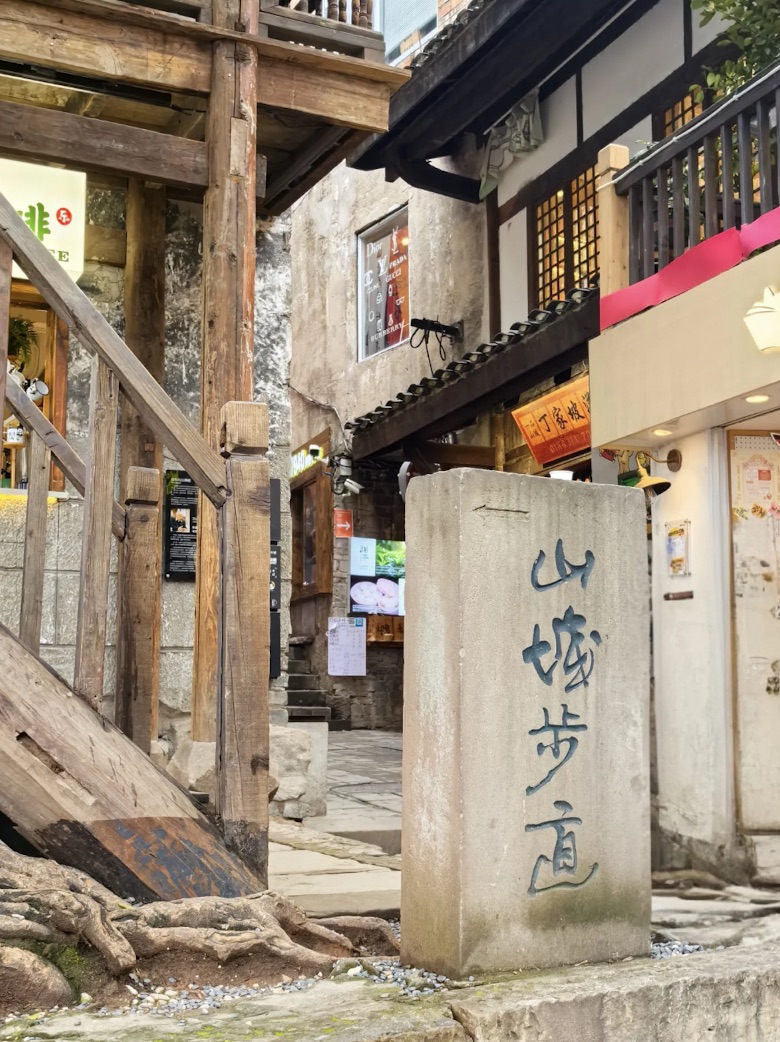
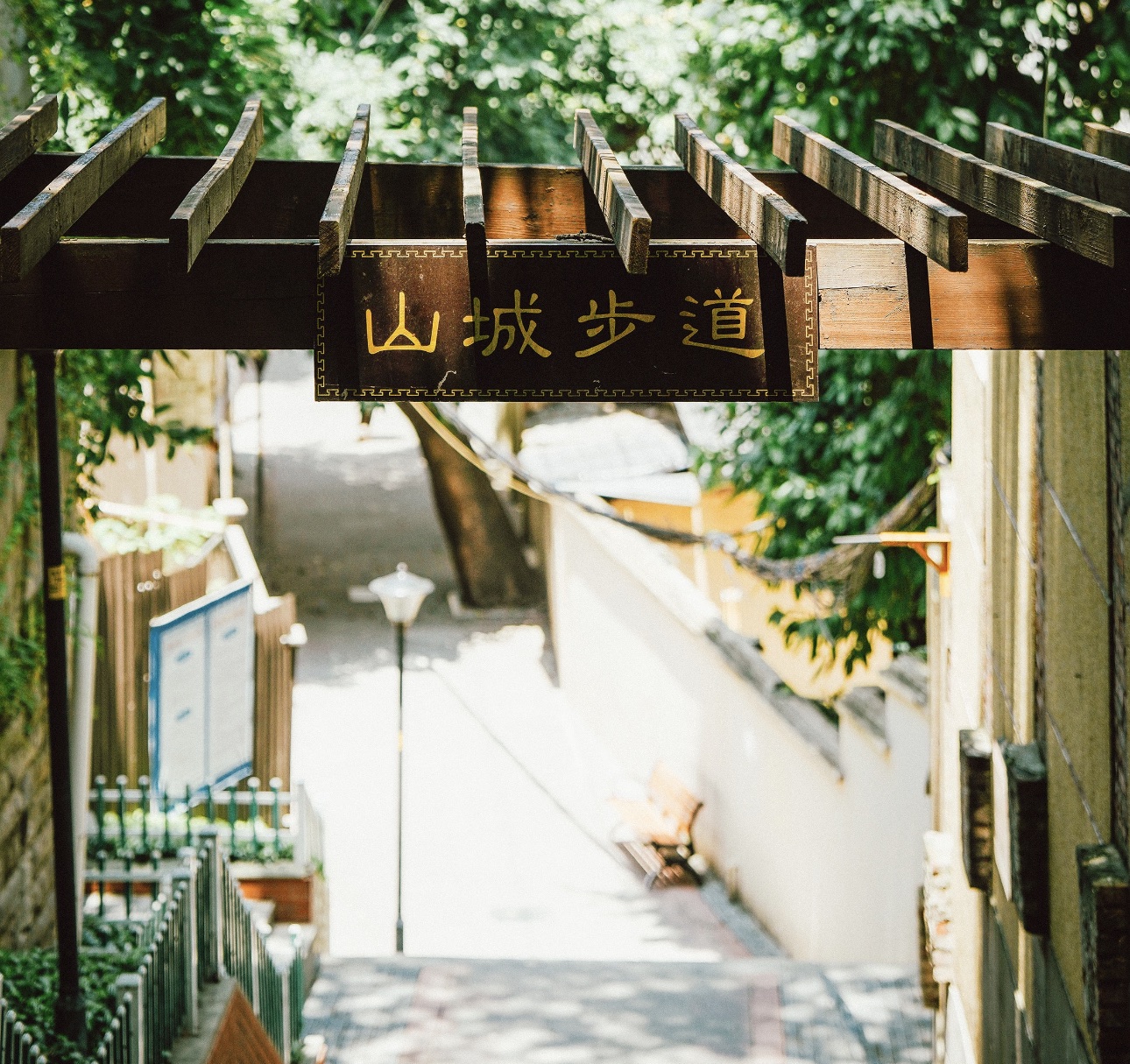
The entrance archway stands at the main gate on Zhongxing Road and serves as the visual gateway to Shancheng Walkway's historical trail through the mother city. Built from solid traditional cut stone and grey brick, the archway is plain and powerful in form, bearing the landmark inscription "Shancheng Walkway." Beyond marking the spatial axis of the trail, it speaks in the quiet language of traditional architecture about the city's evolution — from riverside docks at the foot of the hill to a fortress-city built on the heights above.
Houlu
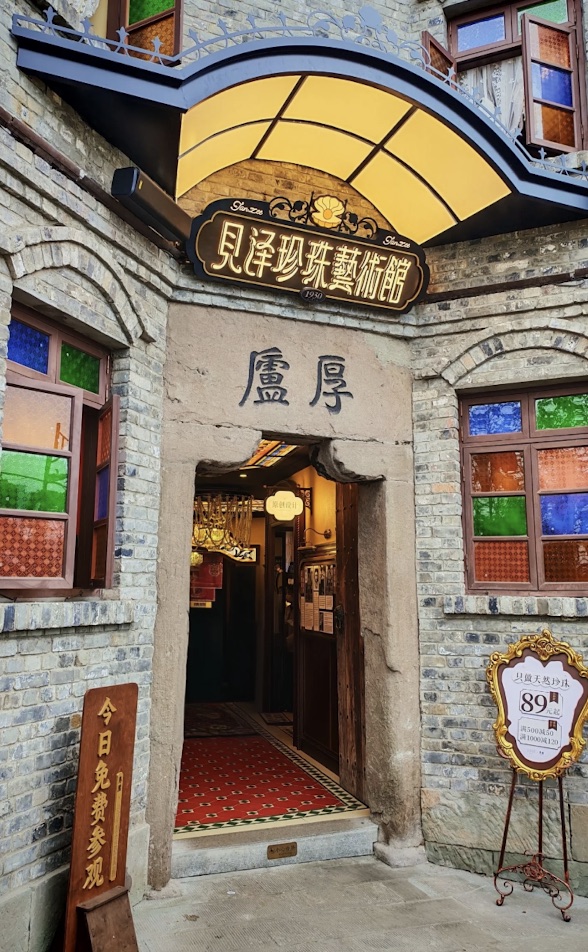
Houlu sits at the mid-section of the walkway and is one of the most representative surviving official residences from Chongqing's wartime capital period. Built in the 1930s, it combines Chinese and Western construction methods in a brick-and-timber structure: the exterior walls are laid in carefully coursed grey brick, and the entrance is framed by an elegant rounded arch that reflects the refined aesthetic of Republican-era architecture. Designated a Chongqing cultural heritage site, Houlu documents the architectural character of a pivotal period in history and stands as a primary physical record for studying the social transformation and residential culture of the city in the modern era.
Suspended Boardwalk
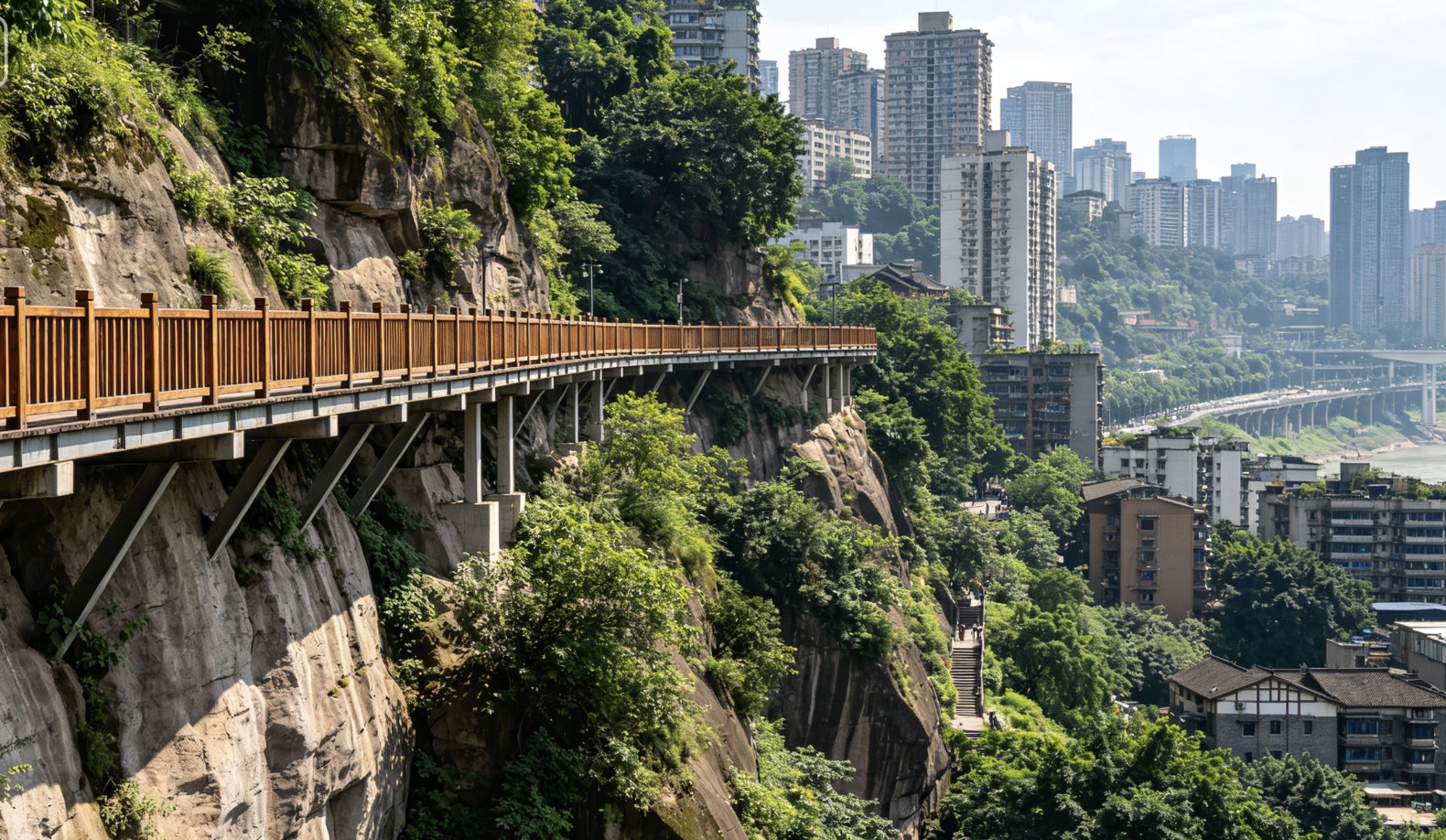
The suspended boardwalk hangs high above the steep cliff face of Shibanpo and is the most dramatic piece of modern engineering on the entire trail, showcasing the stacked, layered geometry that defines mountain-city design. Stretching several hundred meters, the walkway runs alongside the surviving remnants of Ming- and Qing-dynasty city walls on one side, while the other side opens completely onto the broad expanse of the Yangtze River. The spatial layering here is extreme — this is the finest vantage point for sweeping views of the urban skyline on the south bank and for watching the stacked traffic interchange of the Caiyuanba Yangtze River Bridge.
Ren'ai Wilderness Theater (Former Site of the French Ren'ai Hospital)
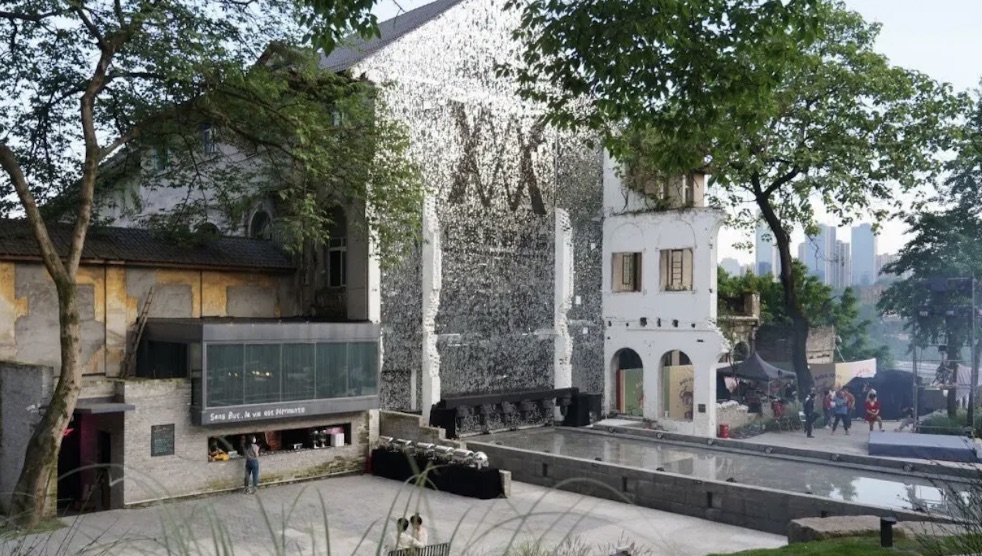
Ren'ai Wilderness Theater is built on the remains of a hospital founded in 1902 by French Catholic missionaries. It is a public arts space where historical weight and contemporary ecological design meet. The site preserves the original building's grand Western-style Roman arches, weathered brick-and-stone foundations, and the silhouette of a bell tower. Within the ruins of the abandoned courtyard, natural plantings and an open-air theater have been introduced, bringing the site back to life in a way that vividly illustrates the meeting of Chinese and Western cultures and the regeneration of urban history.
Practical infoOpening hours · Ticket · Getting there
Opening hours
Trail Public Areas: Open 24/7
Note: Daytime visits are recommended, as you can see the old buildings and river views clearly and ensure walking safety; it is also highly recommended to watch the sunset and night views from the viewing platform on the trail at dusk
Ticket
Free admission (no ticket required for the trail public areas; some cafes, cultural and creative shops, homestays along the way are charged separately)
Getting there
Rail Transit: Take Chongqing Rail Transit Line 1 or 2, get off at Jiaochangkou Station, walk about 10 minutes from Exit 9; or take Line 1, get off at Xiaoshizi Station, walk about 15 minutes
Bus: Take buses 108, 112, 143, 293, 320, 346, 372, 376, 429, 440, etc., get off at Zhongxing Road Station, walk about 3 minutes to the trail entrance
Taxi/Ride-hailing: Directly tell the driver "Mountain City Trail" or "Zhongxing Road Mountain City Trail Entrance"; you will arrive right at the destination
Note: The entire Mountain City Trail consists of stone steps and slopes; the walking intensity is moderate; comfortable shoes and drinking water are recommended
Inside Mountain City Trail (Shancheng Buda)
4 stops, in walking order — read top to bottom, no clicking needed.
The Trail Entrance Archway stands at the main entrance of Shancheng Trail on Zhongxing Road in Yuzhong District, a stone archway combining traditional Ba-Yu architectural style with modern urban wayfinding. It features a four-pillar, three-bay structure in blue-gray stone, with gilded characters (Shancheng Trail) engraved on the crossbeam and couplets depicting old Chongqing street life carved on the flanking pillars—solemn, classical, and highly recognizable. Behind the archway begins the trail's core uphill section, where stone steps wind upward along the mountainside, with old residences and new viewing platforms alternating on both sides. The moment you pass beneath the archway, you officially enter the time corridor of Shancheng Trail. A small plaza in front of the archway features a trail map and historical introduction panels, making it the first stop for visitors to understand the full route and plan their walk. The archway itself is a popular photo spot—especially at dusk when warm lights illuminate the carved characters against the layered silhouette of mountain-city buildings behind.
On-site narration · read it where you stand
Welcome, everyone! You have arrived at the place that best captures the bones and soul of old Chongqing — Shancheng Walkway. Today I will take you along the official standard route: Trail Entrance Archway $\rightarrow$ Houlu $\rightarrow$ Suspended Boardwalk $\rightarrow$ Ren'ai Wilderness Theater. We will measure the roots of this 3D city on foot, tracing a hundred years of history carved into cliff and stone.
We are standing at the starting point: the Trail Entrance Archway on Zhongxing Road. For first-time visitors to Chongqing, this is the best place to start understanding the "climbing and stepping" way of life that defines the mountain city. Take a look at the archway in front of you — it is built entirely from local blue stone and grey brick, plain and solid. Chongqing is a city built on rock. In the days before modern transport, residents made their way through the city and porters hauled their goods on nothing but these stone steps, rising one tier at a time. Look up the flagstone path and you will see staircase after staircase disappearing into the trees and old houses above — this is the most authentic grain of Chongqing's urban fabric. Take a breath, and let's begin this remarkable climb through history.
Houlu Residence
厚庐
Houlu Residence is a historically significant Republic-era building along the middle section of Shancheng Trail, originally built in the 1930s–40s during the War of Resistance as a private mansion of a military-political official. The two-story brick-and-wood structure faces north and is built against the hillside, with a blue-brick facade, traditional gray-tile roof, clean eave lines, and a portico supported by square pillars—reflecting the East-meets-West architectural style of the Republic era, combining the solid simplicity of traditional Ba-Yu dwellings with the geometric order of Western architecture. The name "Houlu" derives from the Chinese saying "thick virtue carries all things," and the stone plaque above the doorway remains well-preserved. The interior retains original wooden staircases, latticed windows, and period furnishings, offering a time-travel experience back to the wartime era. Several other contemporary buildings surround Houlu, forming a relatively complete Republic-era architectural cluster. As a key node in Shancheng Trail's historical fabric, Houlu is not just a building but a microcosm of Chongqing's memory as the wartime capital.
On-site narration · read it where you stand
After climbing the blue-stone steps and passing through several old residential courtyards, you will see a striking grey-brick building on your right — that is Houlu.
For anyone interested in China's modern history, this building is well worth your attention. It was built in the 1930s as the private residence of Shi Qingyang, a Sichuan warlord, and later served as the personal estate of senior officials during the wartime capital period of the Second Sino-Japanese War. Look closely at the exterior: the design blends Chinese and Western elements. The entrance is a semicircular stone arch in the Western classical tradition, while the walls are built in the Chinese manner with high-quality grey brick laid in a running bond. Because of the hillside terrain, the entire residence follows the slope of the mountain, giving the interior spaces a compact and varied character. The dark timber doors worn by time and the weathered brick walls speak silently of that turbulent era. This is also an excellent spot for photography with a vintage, Republican-era feel — take your time here.
Suspended Cliffside Walkway
悬空栈道
The Suspended Cliffside Walkway is the most visually striking and experiential section of Shancheng Trail, built cantilevered off the cliff face in Yuzhong District. It extends over 100 meters with a width of 1.5 to 2 meters, with sections paved in transparent glass, revealing the vertical cliff drop of tens of meters below and the layered rooftops of the old town—an experience of pure visual thrill. The walkway uses steel beams as its skeleton, with anti-corrosion wood and tempered glass as surface materials, and stainless steel railings with wire mesh that minimize visual obstruction while ensuring safety. Walking along, one side is the solid mountain rock face, the other an abruptly open panorama—distant views of the Yangtze River and the South Bank skyline, close-up views of the dense gray-tiled rooftops and crisscrossing stone alleys of Shancheng Lane's old quarter. On clear days, sunlight refracts through the glass panels in dappled patterns, creating a fascinating contrast with the old-town atmosphere below. At dusk, it is a prime spot to watch sunset glow illuminate the Yangtze, as warm orange light intertwines with the mountain-city skyline, forming a three-dimensional landscape painting unique to Chongqing.
On-site narration · read it where you stand
Leaving Houlu behind, we continue along the walkway and the path opens up — we have stepped onto the Suspended Boardwalk, hanging in mid-air.
This is the most breathtaking and visually striking section of the entire Shancheng Walkway. Standing here, you will understand exactly why Chongqing is called a "magical 3D city." Look to your left: those rough stone walls running right alongside you are remnants of the city walls, originally built during the Ming and Qing dynasties — they are several hundred years old. Now look to your right: a sheer cliff drops tens of meters straight down to the broad, rushing waters of the Yangtze River below. The key sight ahead of you is the enormous red double-deck bridge — Caiyuanba Yangtze River Bridge. Vehicles travel on the upper deck; urban rail trains run on the lower deck. Add the ships crossing the river below, and you have a three-dimensional transport spectacle that spans the river and connects the skyline. In the early morning or at dusk — when the river fills with mist or the sky blazes with the last light — looking out from this spot, the layered depth of the whole city reaches its absolute peak.
Ren'ai Wilderness Theater
仁爱荒野剧场
Ren'ai Wilderness Theater is located on the upper section of Shancheng Trail, on the site of the former Ren'ai Church. After a thoughtful redesign, it has become an open-air theater blending historical ruins with wild aesthetic sensibility. The preserved remnants of the old church serve as a backdrop—stone walls covered in vines and moss, where the mottled marks of time contrast with and complement new plant growth. The center features a semicircular terraced stone seating area accommodating about 100 people, with a simple stage built from reclaimed wood and stone. The overall design is rugged and unadorned yet reveals carefully curated artistic intention at every turn. Native wildflowers and ornamental grasses surround the theater—lush and fragrant in spring and summer, evoking a melancholy poetry of bare branches in autumn and winter. Small concerts, poetry readings, theatrical performances, and outdoor screenings are held here regularly, and the space often becomes a spontaneous gathering spot for street artists and creative souls. Even on days without performances, simply sitting in this ruin-garden listening to wind and birdsong while gazing at the mountain-city skyline is enough to feel the unique cultural warmth and romantic undertone of Chongqing.
On-site narration · read it where you stand
Follow the suspended boardwalk to its end, then turn left and climb the stone steps — and you arrive at our final stop: Ren'ai Wilderness Theater.
The moment you step inside, you may be stopped in your tracks by the remarkable sight of architecture and nature growing together. This was originally the site of the Ren'ai Hospital and the Holy Family School, built here in 1902 by the French Catholic mission. Look at the row of tall, ornate Roman arches and the ruined bell tower standing before you. After more than a century, what remains of the original Western buildings are broken walls and foundations — yet the historical skeleton still stands with real presence. Modern designers made the inspired choice to keep the weathered red brick and moss-covered stone bases exactly as they found them, then planted a layered landscape of wild vegetation within the ruins and shaped it all into an open-air public theater. In this place, the classical Western architectural aesthetic and the untamed plant life of the mountain city find a perfect balance, embodying the quiet layering of time and the renewal of a living city. Here, in this wilderness theater that holds both history and a certain romance, our walk along Shancheng Walkway comes to a close. We hope this journey of climbing and listening has given you a genuine sense of Chongqing's soul. Enjoy the rest of your time in the city!

 2
 3
 4