No. 1 Zhongxing Road, Yuzhong District, Chongqing (Shiba Ti Traditional Customs Area, near Jiaochangkou)
Overview
Shiba Ti Traditional Historic District sits on the Jiefangbei Peninsula in Yuzhong District, Chongqing. It is the historic and cultural corridor linking the city's Upper Town and Lower Town, and one of the finest surviving clusters of hillside vernacular architecture in China. Built to follow the dramatic natural grade changes of the terrain, the district is defined by its stilted diaojiaolou buildings, cascading stone stairways, and cobblestone lanes — a living showcase of Ba-Yu residential architecture and the storied character of Chongqing's founding city. As a snapshot of everyday old-Chongqing life and street culture, Shiba Ti not only preserves the city's urban roots but has also evolved through thoughtful renewal into a window onto Chongqing's layered spatial aesthetics and its vibrant, unpolished street-level spirit.
Attractions at Shiba Ti Traditional Historic District
The Grand Paifang of Shiba Ti (Upper Town Entrance)
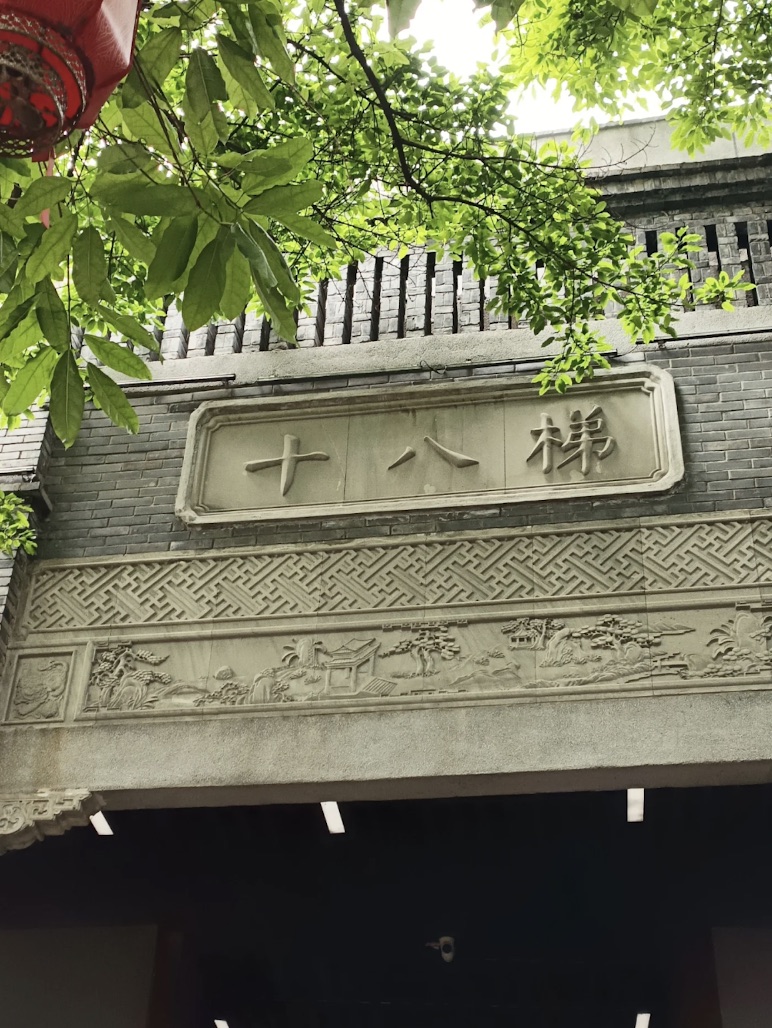
The Grand Paifang stands at the main entrance on Jiaochangkou, serving as the visual gateway and spatial starting point of the entire historic district. Built in the traditional chuandou timber-frame style on a dressed-stone base, the gate has a bold, austere presence; the name "Shiba Ti" is carved into its central beam. It anchors the north-south axis of the district while marking the boundary where visitors leave behind the modern commercial energy of the Jiefangbei shopping precinct and step into the ancient street life of old Chongqing.
Shanguojuan and the Mountain City Memory Museum
The historic buildings along Shanguojuan Lane occupy the upper stretch of the walkway and form the district's primary venue for exploring Chongqing's social history and everyday life. At the heart of the complex, the Mountain City Memory Museum is built within the shell of an original old building. Using modern digital multimedia alongside rare historical artifacts, it presents a systematic picture of the city across different eras — its changing urban landscape, the evolution of diaojiaolou architecture, and scenes from the daily lives of ordinary residents. The museum functions as a living archive for understanding the human history and folk customs of Chongqing's founding city.
Yuetaiba (Hillside Courtyard)
Yuetaiba is a well-preserved cluster of Ba-Yu mountain courtyard houses and traditional residential compounds. Every structure here was designed around the natural slope, producing a staggered, tiered spatial arrangement that rises and falls with the hillside. Grey brick walls, dark roof tiles, latticed timber windows, and carved beams are the defining visual elements, reflecting the ingenious ways that Chongqing's traditional builders adapted to complex mountain terrain. Yuetaiba is the most tangible surviving example of the city's historic residential culture.
The Da Suidao Tunnel Ruins (WWII Memorial Site)
The Da Suidao Tunnel Ruins are located at the lower end of Shiba Ti and stand as an important memorial and historic remnant of the devastating Japanese bombing campaigns during the Second Sino-Japanese War. The ruins preserve the original rock-hewn structure of the wartime air-raid tunnels along with their heavy iron doors, while the surrounding walls bear relief sculptures and inscribed memorials. As a site of patriotic education, the ruins commemorate the resilience of Chongqing's people during the darkest years of the war and remain a powerful symbol of the city's defiant, unbreakable character.
Practical infoOpening hours · Ticket · Getting there
Opening hours
Customs Area Public Areas: Open 24/7
Shops/Restaurants: About 10:00-23:00 (may extend to 24:00 in summer)
Note: Evening to nighttime visits are recommended to experience both the daytime old-street style and the nighttime neon lights and immersive nightscape
Ticket
Free admission (no ticket required for the customs area public areas; some exhibitions, performances, or specialty shops may charge separately)
Getting there
Rail Transit: Take Chongqing Rail Transit Line 1 or 2, get off at Jiaochangkou Station, walk about 3 minutes from Exit 11 to the north entrance of the customs area; or take Line 1, get off at Xiaoshizi Station, walk about 12 minutes
Bus: Take buses 108, 112, 143, 293, 320, 346, 372, 376, 429, 440, etc., get off at Jiaochangkou or Zhongxing Road Station, walk about 5 minutes
Taxi/Ride-hailing: Directly tell the driver "Shiba Ti" or "Shiba Ti Traditional Customs Area"; you will arrive right at the destination
Walking: About 10 minutes walk from Jiefangbei
Inside Shiba Ti (Eighteen Steps)
4 stops, in walking order — read top to bottom, no clicking needed.
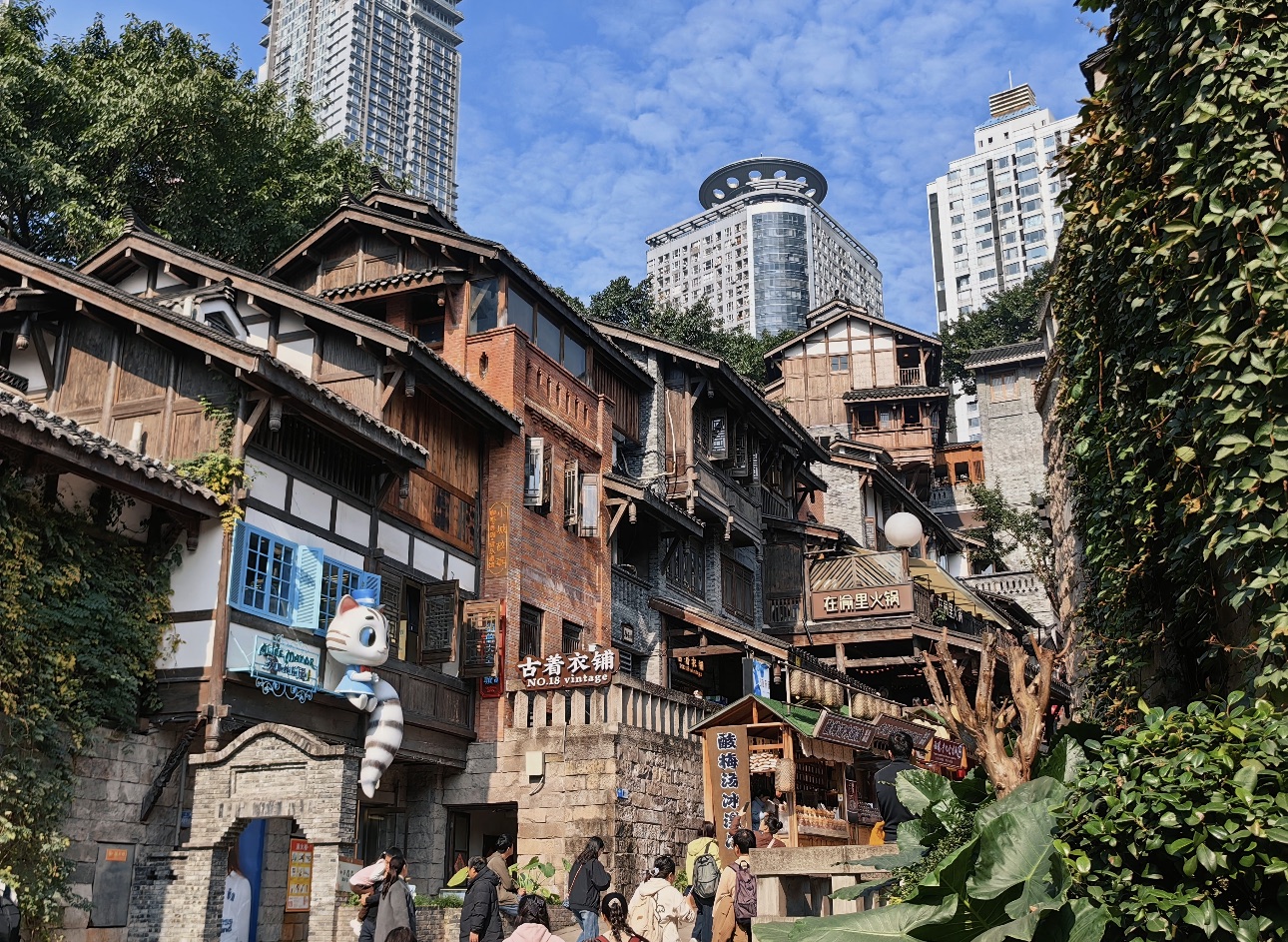
The Shiba Ti Grand Archway stands at the southern entrance of the Shiba Ti Traditional Heritage District, serving as the first landmark for visitors entering this century-old street. Built from blue stone in a four-pillar, three-bay sky-reaching style, it stands over ten meters tall—imposing yet refined and elegant. The central plaque is inscribed with three gold-leaf characters reading "Shiba Ti," while the crossbeams feature relief carvings of bats, auspicious clouds, and ruyi patterns. The stone-drum pillar bases are finely carved, combining the robustness of Ba-Yu stone carving with the gracefulness of southern Chinese archways. A small plaza surrounds the archway with faux-antique stone paving, ficus bonsai, and decorative lamp posts. After dark, warm yellow lights illuminate the stone structure, creating a rich atmosphere of old Yuzhou charm. Looking north from here, the main street of Shiba Ti unfolds in cascading stone steps descending the hillside, with stilt-house-style shops lining both sides, and modern skyscrapers in the distance overlapping with tiled eaves nearby. A guide map and electronic touch screen beside the archway mark all attractions and recommended routes, making it an essential stop for planning visits and taking photos.
On-site narration · read it where you stand
Welcome, everyone! You've arrived at the very soul of old Chongqing — Shiba Ti Traditional Historic District. Today I'll be taking you along the official recommended route: The Grand Paifang of Shiba Ti $\rightarrow$ Shanguojuan and the Mountain City Memory Museum $\rightarrow$ Yuetaiba (Hillside Courtyard) $\rightarrow$ The Da Suidao Tunnel Ruins. We'll descend step by step, climbing down the slopes as we travel back through time to touch the most authentic memories of this founding city.
We're currently standing at the Grand Paifang of Shiba Ti, right here at Jiaochangkou. For those visiting Chongqing for the first time, this spot offers a truly surreal urban scene: behind you stands the gleaming, high-rise world of the Jiefangbei commercial district, while ahead of you an ancient cobblestone stairway drops steeply down the hillside, disappearing into the layers below. In earlier times, this was the main artery connecting the political and commercial hub of the Upper Town with the docks and river trade of the Lower Town. Legend has it that back in the Ming dynasty, there was a well here, exactly eighteen steps from the nearest homes — and that is how "Shiba Ti," meaning Eighteen Steps, got its name. Take a moment to look at this paifang gate, crafted entirely from timber, with upswept eaves and a commanding presence. From this point on, the noise of the modern city will gradually fade away. Step down onto the stone stairs and walk with me into the heart of old Chongqing's street life.
Shanguo Lane and Mountain City Memory Hall
善果巷与山城记忆馆
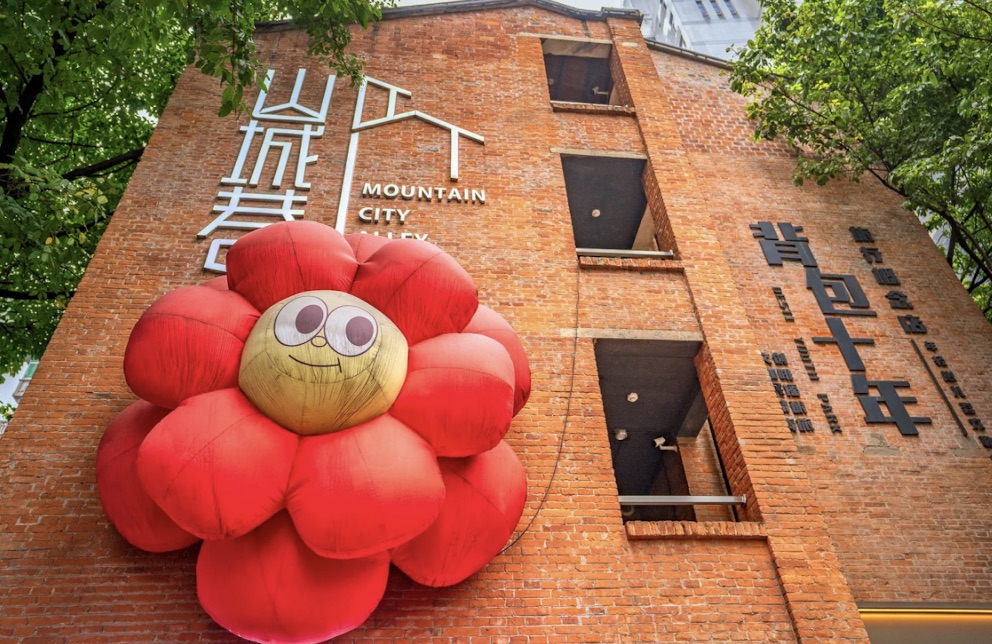
Shanguo Lane is a historic stone-step alley within the Shiba Ti Heritage District. Its name originates from the Shanguo Temple that once stood here during the Qing Dynasty, carrying forward the spirit of charity and goodwill. The alley is about two meters wide, bordered by old brick walls and stone embankments intertwined with ficus tree roots, covered in moss and draped with vines—walking through it feels like traveling back to the slow-paced old Chongqing. Within the lane sits the Mountain City Memory Hall, a micro-museum converted from a traditional residence. With its grey tiles, white walls, and wooden windows, the exterior is understated, yet stepping inside reveals a hidden world. The hall uses "Upper City and Lower City" as its theme, presenting through old photographs, vintage objects, oral history videos, and interactive installations the century-long evolution of Shiba Ti—from the bustling pier trade of the late Qing and early Republic, through the wartime capital's population surge, to modern urban renewal. Exhibits include old kerosene lamps, bamboo-woven thermos flasks, hand-written street signs, and yellowed household registers—everyday objects full of warmth that bear authentic witness to ordinary Chongqing residents' lives. A "sound wall" features recordings of street hawker cries, work chants, and riverboat whistles—put on the headphones and listen to the vanishing sounds of the mountain city.
On-site narration · read it where you stand
Follow the cobblestone steps down through a few turns into this quiet lane, and you've arrived at Shanguojuan and the Mountain City Memory Museum.
For anyone who wants a fast, vivid sense of Chongqing's past and present, this is the one venue you absolutely cannot skip. The name Shanguojuan comes from the traditional Chinese idea of "good causes bearing good fruit." The lane is lined on both sides by classic Ba-Yu chuandou timber-frame buildings, and the Mountain City Memory Museum in front of us was created within the bones of an original old house. Follow me inside: the museum uses advanced 3D holographic projection alongside old photographs and everyday objects to bring back to life the street scenes of old Chongqing — the shoulder-pole carriers, the "bangbang" porters, the roadside barbers, and all the characters of working-class city life. The centrepiece to focus on is the diaojiaolou model display in the middle of the main hall. It shows clearly how Chongqing's early residents managed to build entire homes on sheer cliff faces using nothing more than a handful of wooden posts — a genuine feat of vernacular engineering. Once you've taken it all in, step back to a window and look out at the old street below. You'll feel the weight of that history in a completely different way.
Yuetai Ba (Mountain Courtyard)
月台坝(山地院落)
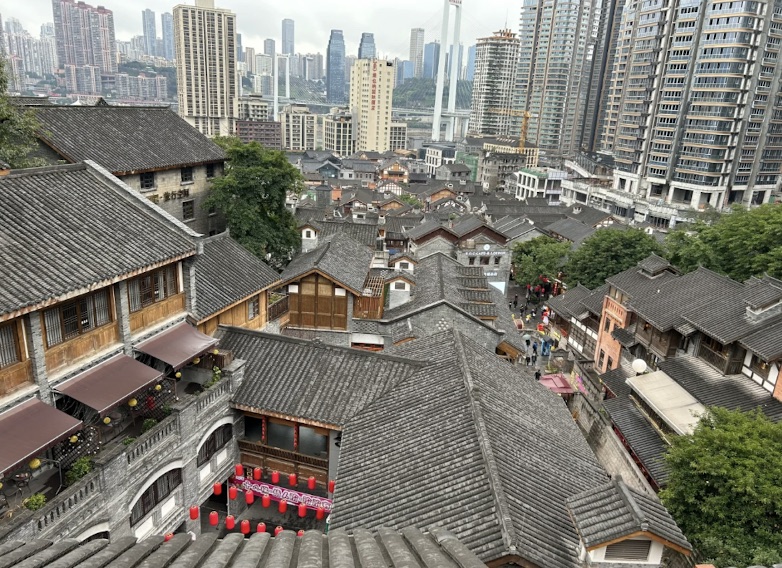
Yuetai Ba is located mid-way along Shiba Ti—a cluster of terraced courtyard residences naturally formed by the hillside gradient, and one of the nodes that best embodies Chongqing's mountain architecture within the entire heritage district. The name "Yuetai" (Moon Platform) comes from the broad, flat stone platform in front of the courtyards, shaped like a moon terrace. In the past, residents gathered here to cool off, chat, dry laundry, and let children play—it was the heart of neighborhood social life. The courtyard complex features timber frame structures with blue brick and stone walls, stepping down the slope in successive terraces. Looking up from below, rows of grey-tiled eaves rise like steps; looking down from above, courtyards, skylights, and stone stairs interlock in rich spatial layers. After renovation, Yuetai Ba retains its original architectural bones and spatial fabric, with damaged components restored using traditional craftsmanship, while new businesses—creative shops, teahouses, and craft workshops—have been introduced. Narrow stone-step alleys connect the courtyards, with stone water vats and ficus bonsai at corners, revealing the old Chongqing philosophy of "climbing slopes and turning corners" everywhere. Sitting in a bamboo chair on the moon platform with a bowl of covered tea, overlooking the half-cityscape and distant river views, is the most authentic way to experience the slow life of the mountain city.
On-site narration · read it where you stand
Coming out of the Memory Museum, continue down the main stone stairway, then turn left into a slightly more open, level area — this is Yuetaiba.
Take a moment to stop here and look around. The ground rises in a crescent shape, which is exactly how the place got its name: yuetai means "moon platform." For visitors from abroad, Yuetaiba is the spot that best captures the traditional residential aesthetic of China's southwest mountain communities. Look at the courtyards around you: they're nothing like the symmetrical siheyuan courtyard compounds of northern China's flat plains. Here, everything follows the slope — stacked, staggered, and intertwined with the landscape. One family's rooftop is the next family's front yard. Grey brick and dark roof tiles weave seamlessly into the roots of the ancient huangjue fig trees that grow between the walls. Look closely at the carved wooden window lattices and the worn stone steps weathered by decades of rain — they tell the story of how Chongqing's residents made every inch of difficult mountain terrain work for them, a philosophy sometimes described as "making a grand ceremony in a snail's shell." This was also a favourite retreat for scholars and officials of earlier times, and even now the place carries a quality of elegant restraint that feels close to classical Chinese garden design.
Great Tunnel Relics
大隧道遗址
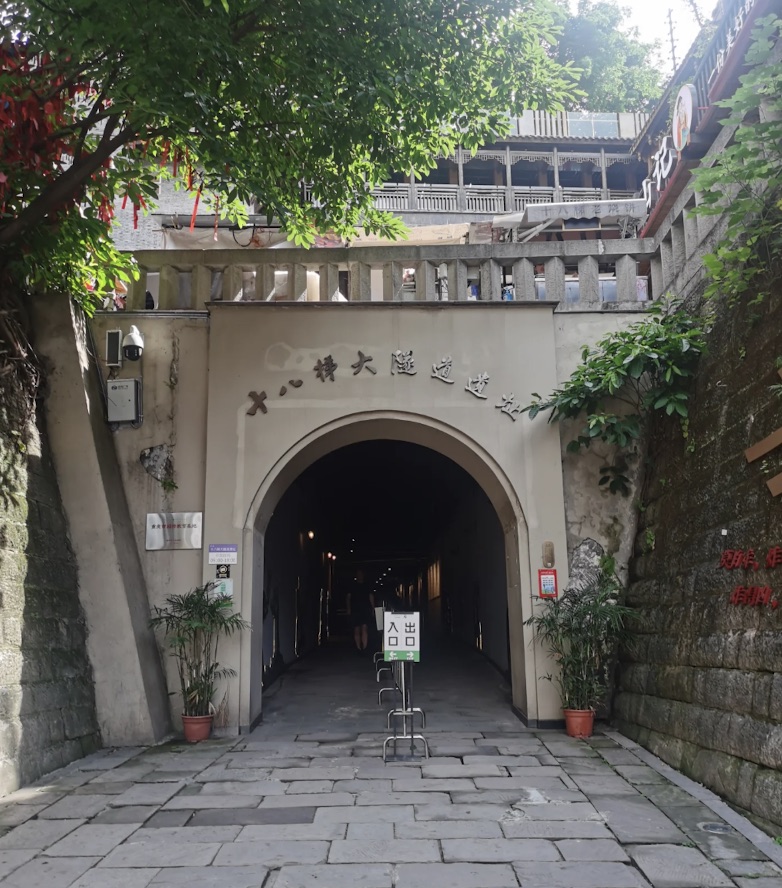
The Shiba Ti Great Tunnel Relics are a vital part of Chongqing's WWII air defense engineering. After the Nationalist Government relocated the capital to Chongqing in 1937, Japanese forces conducted indiscriminate strategic bombing of the city for five and a half years. To protect civilian lives, Chongqing mobilized the entire city to excavate a massive network of air-raid shelter tunnels. The Shiba Ti Great Tunnel was one of these, approximately 2 km long, carved by hand into sandstone hillside. The interior stands about 2 meters high and 2–3 meters wide, capable of sheltering thousands simultaneously. The tunnel was equipped with ventilation shafts, drainage channels, rest areas, and rudimentary medical stations—crude conditions that nonetheless saved countless lives during the darkest years. The now-open section has been safety-reinforced and scenically restored. Chisel marks and smoke stains from the era remain visible on the walls. Information panels and multimedia installations inside detail the historical background of the Chongqing Bombing, the tunnel construction process, and civilian shelter life. Walking through, one hears simulated air-raid sirens and infants' cries, creating a profound sense of the resilience and survival spirit of the Chongqing people during those fiery years—a historically educational immersive site.
On-site narration · read it where you stand
Leaving Yuetaiba, we return to the main stairway and descend toward the lower end of the district. On your right, cut deep into the living rock, you'll see a vast stone cavern — this is our final destination today: the Da Suidao Tunnel Ruins.
Standing here, I want to share a piece of history that is both profoundly moving and deeply sobering. During the Second World War, Chongqing served as China's wartime capital, and for years it endured relentless, devastating bombing raids carried out by Japanese forces. To survive, the people of Chongqing carved air-raid tunnels stretching for kilometres through solid bedrock — with their bare hands. The ruins in front of us are part of what was once the famous Jiaochangkou tunnel network. Look carefully at the heavy iron door, its surface marked and worn by time, and at the relief carvings and inscriptions on the rock walls nearby. They record in silence the story of a city's people holding onto each other in the dark, refusing to break. It is here, in front of these tunnel ruins that carry the scars and the rebirth of an entire city, that our journey through Shiba Ti comes to an end. I hope that walking this path — up and down, through layers of time — has shown you not just Chongqing's beauty, but the iron will that has always run through this city's backbone. Thank you all, and enjoy the rest of your travels.

 2
 3
 4