Travel Guide› Nanjing› Memorial Hall of the Victims in Nanjing Massacre by Japanese Invaders
Nanjing · Museum

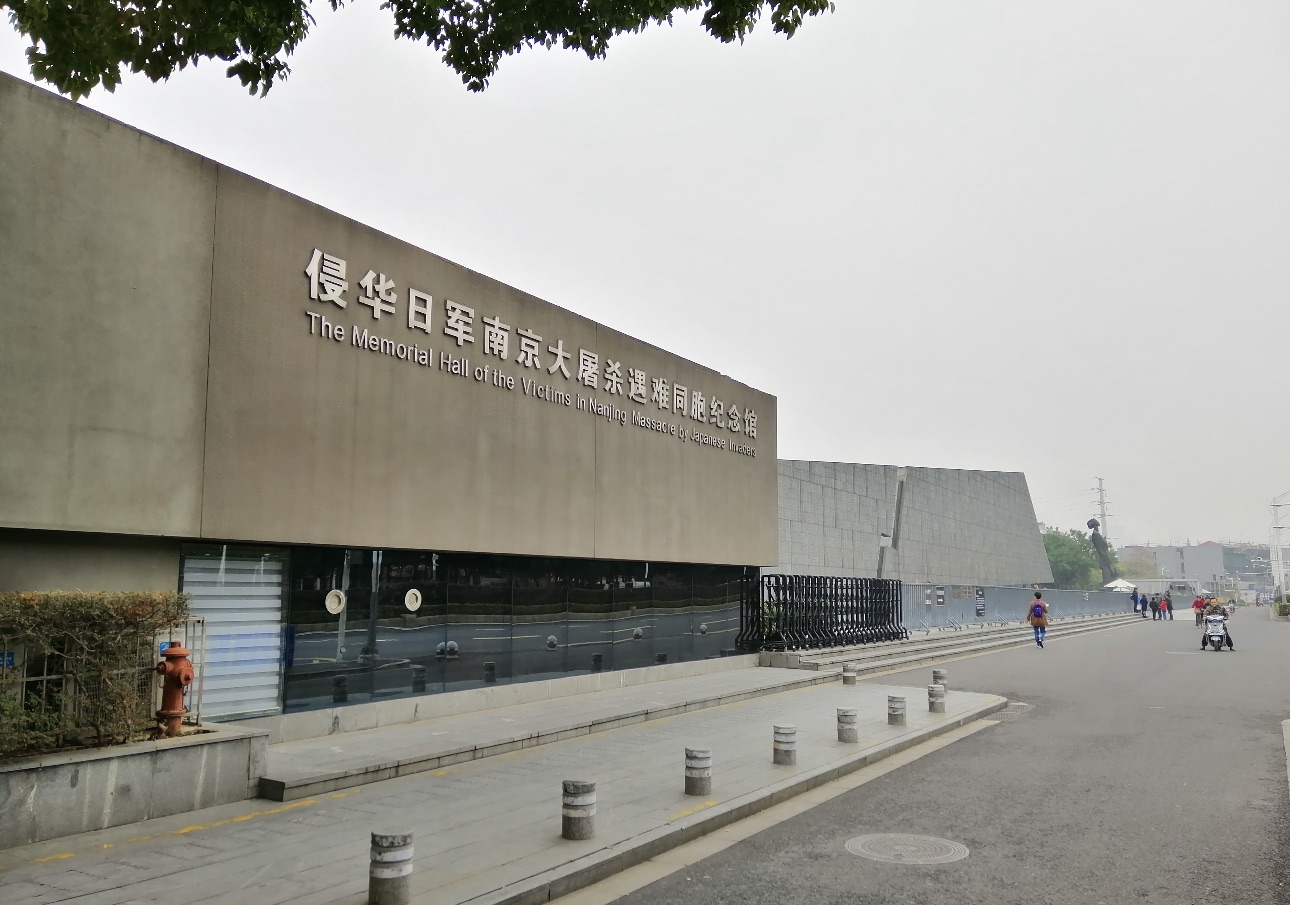
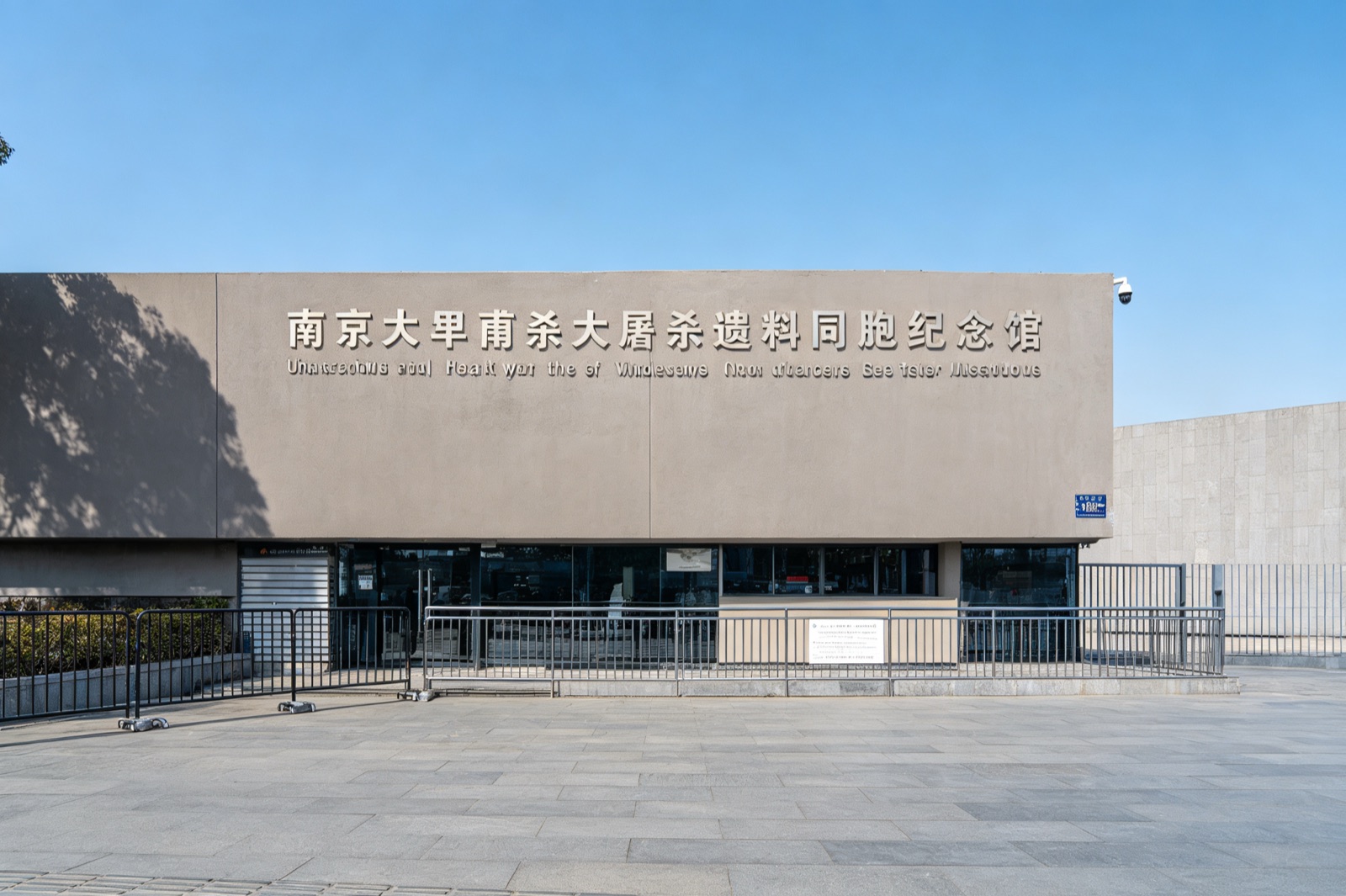
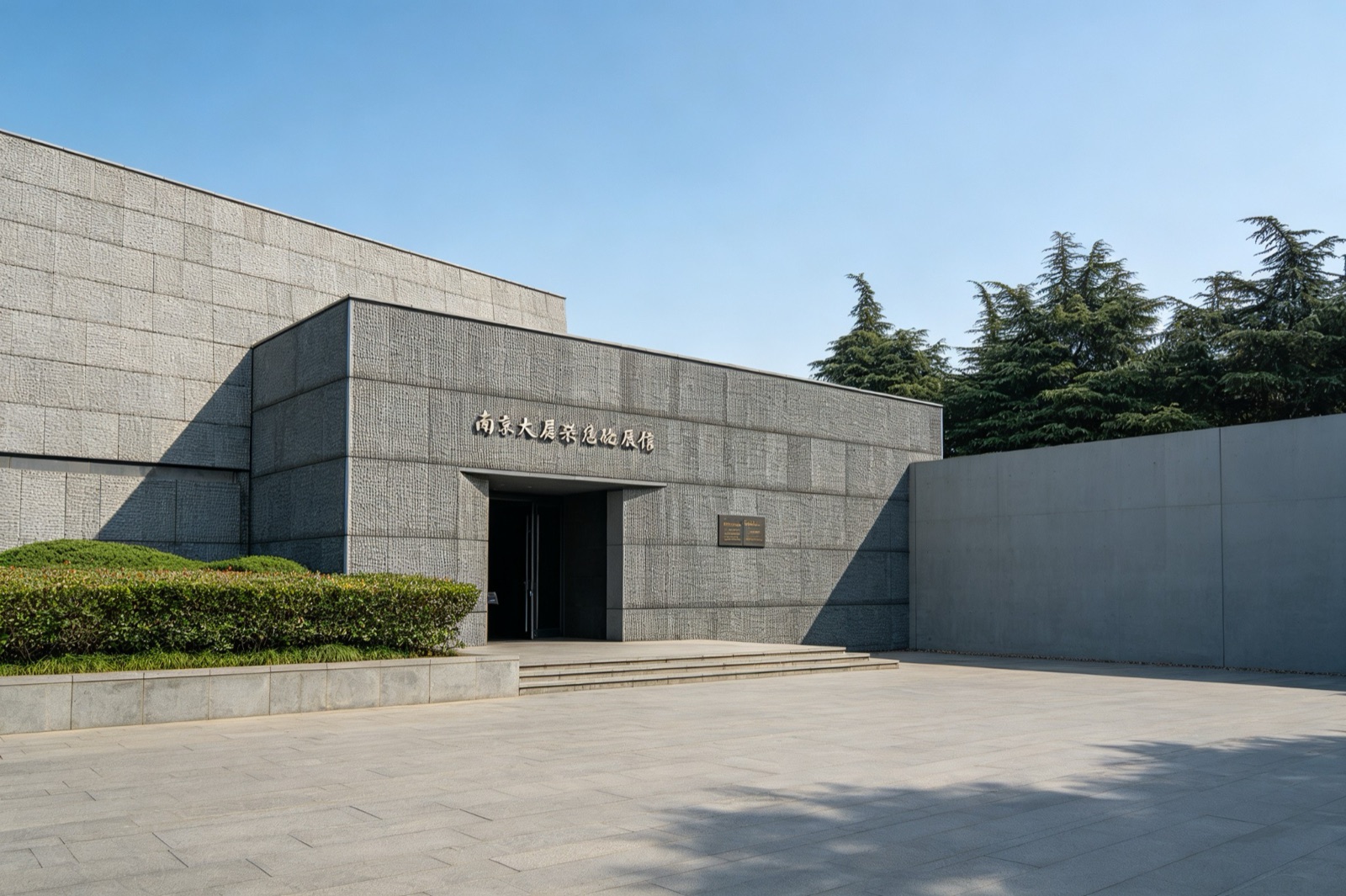
Memorial Hall of the Victims in Nanjing Massacre by Japanese Invaders 侵华日军南京大屠杀遇难同胞纪念馆

Memorial Hall of the Victims in Nanjing Massacre by Japanese Invaders
Practical info Opening hours · Ticket · Getting there · Address
Opening hours
  • **Opening hours:** Tuesday to Sunday 8:30–17:30 (last entry at 16:30)
  • **Closing time:** Closed on Mondays (open on national statutory holidays)
  • **Special periods:** Opening hours may be adjusted during statutory holidays and periods of large visitor flow, please pay attention to official announcements
  • **Recommended visiting time:** 2–3 hours
Ticket
  • **Ticket price:** Free admission (advance reservation required)
  • **Reservation method:** Make an advance reservation through the memorial hall's official WeChat public account or official website. Enter the hall with the reservation voucher and valid ID document
  • **Special note:** Closed on Mondays (open on national statutory holidays); special opening arrangements may be implemented on December 13 (National Memorial Day for Nanjing Massacre Victims), please pay attention to official announcements
Getting there
  • **Metro:** Take Metro Line 2 to Yunjin Road Station, exit at Exit 2 and enter the hall through Gate 1; during statutory holidays and periods of large visitor flow, exit at Exit 3 and enter the hall through Gate 1
  • **Bus:** Take Bus No. 7, 37, 61, 63, 166, 170, 186, etc. and get off at "Shuiximen·Jiangdongmen" stop or "Jiangdongmen Memorial Hall" stop
  • **Self-driving:** Navigate to "Memorial Hall of the Victims in Nanjing Massacre by Japanese Invaders." Vehicles can be parked in the "Three Victories" underground parking lot (near the intersection of Shuiximen Street and Jiangdong Middle Road)
  • **Tip:** Visitor flow is large during holidays and memorial days. Public transportation is recommended, and please complete the reservation in advance
Address
  • **Main Exhibition Area (Nanjing Massacre History Exhibition Area, Three Victories Exhibition Area):** No. 418 Shuiximen Street, Jianye District, Nanjing, Jiangsu Province
  • **Former Site of Lijixiang Comfort Women Station Exhibition Area:** No. 2 Liji Lane, Qinhuai District, Nanjing, Jiangsu Province

Inside Memorial Hall of the Victims in Nanjing Massacre by Japanese Invaders

9 stops, in walking order — read top to bottom, no clicking needed.

1 Sculpture Plaza of 9

Sculpture Plaza

雕塑广场

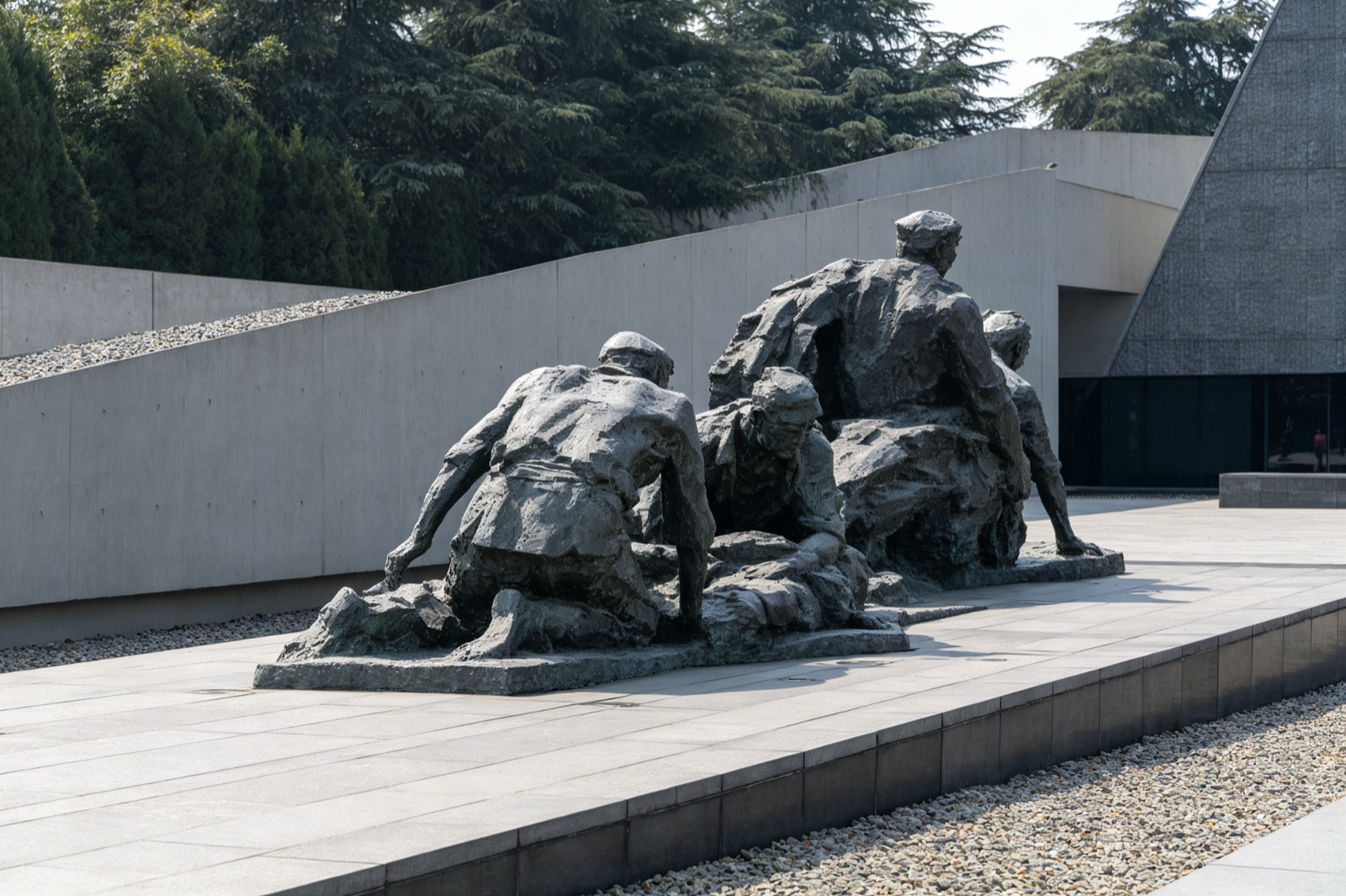
The Sculpture Plaza serves as the prologue to the memorial hall's visiting sequence, featuring large-scale bronze sculptures created by renowned sculptor Wu Weishan. The sculptures include "Broken Family, Dead People," "Fleeing," and "Screaming Souls," with the tallest reaching twelve meters in height. Crafted in a rugged and solemn style, they depict scenes such as a mother holding her deceased infant and civilians fleeing in panic, recreating the profound suffering of the Chinese people during the 1937 Nanjing Massacre. The sculptures integrate seamlessly with the architectural environment, silently conveying the weight of history and inspiring visitors to cherish peace and reverence for life.

On-site narration · read it where you stand

Welcome, everyone. Thank you for being here at the Memorial Hall of the Victims in Nanjing Massacre by Japanese Invaders. Today I'll guide you along this route: Sculpture Plaza — Ceremony Plaza — Historical Exhibition Hall — "Pit of Ten Thousand Corpses" Relic Site — Cemetery Plaza — Memorial Altar and Hall of Contemplation — Peace Park — Victory Plaza — "Three Certainties" Thematic Exhibition Hall. This is a journey into a chapter of history that must not be forgotten.

Before we enter, I'd like to say a few words. This is not an ordinary tourist site. It is a memorial built on the ground where the victims of the Nanjing Massacre were buried. Every step we take today is on the same earth where 300,000 people fell in the winter of 1937. Inside, please keep your voices low and silence your phones. In the relic site area, please do not take photographs. This will not be a comfortable visit — but it is a necessary one. A meeting with history. A walk alongside the truth.

The sculpture before you now is called Shattered Family. A mother, her clothes torn, holds her dead child to her chest. Her face is turned upward, her mouth open — and yet she makes no sound. Her rigid body and posture of absolute despair speak for all 300,000 victims of the winter of 1937. In silence, they are deafening. The sculptor Wu Weisan cast in bronze one of the darkest moments in human history.

Please walk slowly along the path. The figures you see scattered on both sides are part of the Flight of Refugees ensemble. Each one is rooted in actual historical documentation: a grandfather struggling forward with his dead grandson in his arms; an orphan searching through icy water for his mother; a child wailing beside the body of his mother, who had been stabbed to death. At the base of each figure, a few lines of text — pulled from survivor testimonies and historical archives. Please slow down and read them. These are not cold bronze figures. They were people with names, with lives, with faces.

Further ahead, two more large sculptural groups stand in the plaza: Howling Souls and The Catastrophe of an Ancient City. Together, this Sculpture Plaza is the opening page of a book written in stone — and from this moment, we have entered Nanjing, 1937.
Public Memorial Square

公祭广场

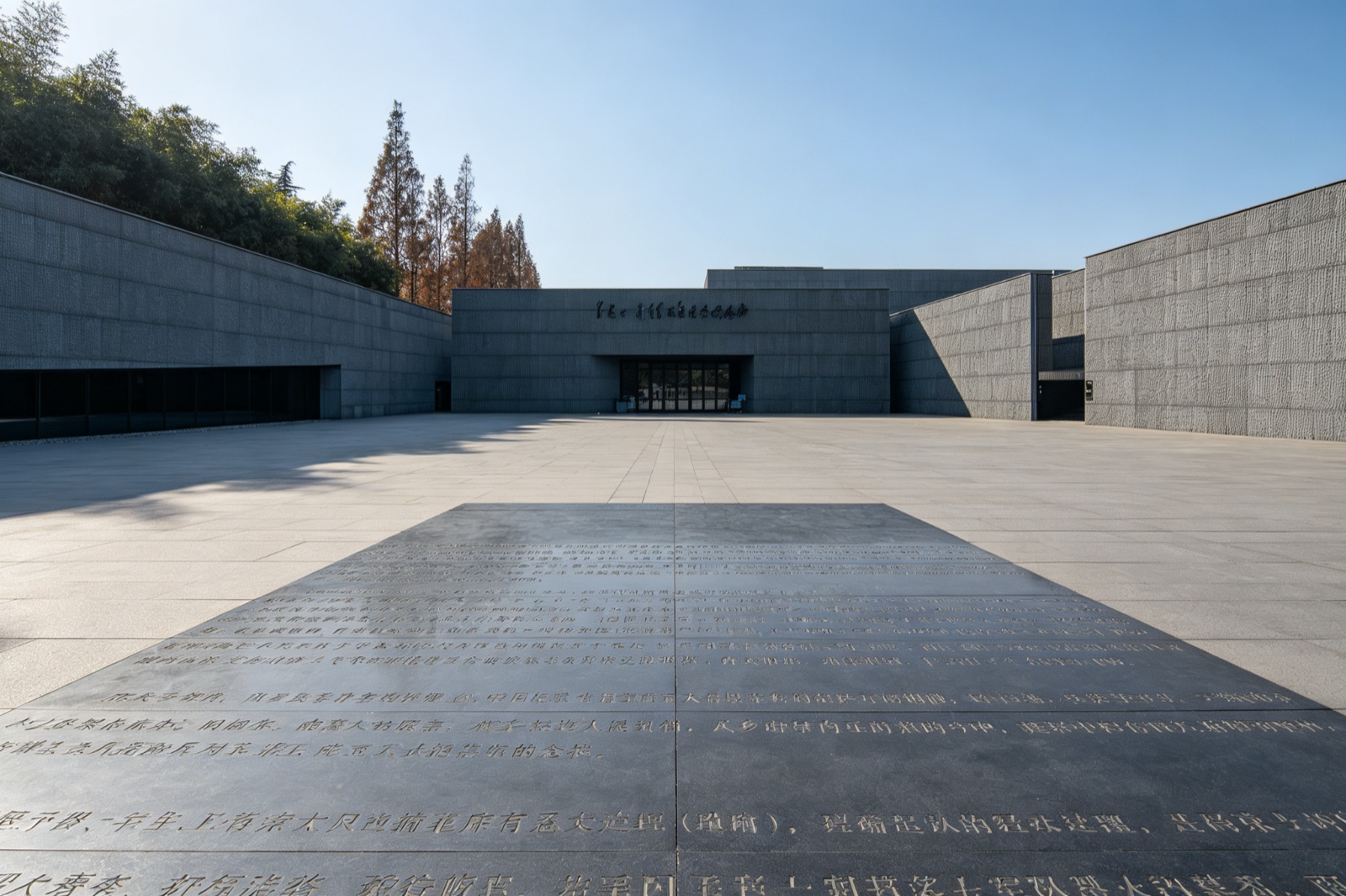
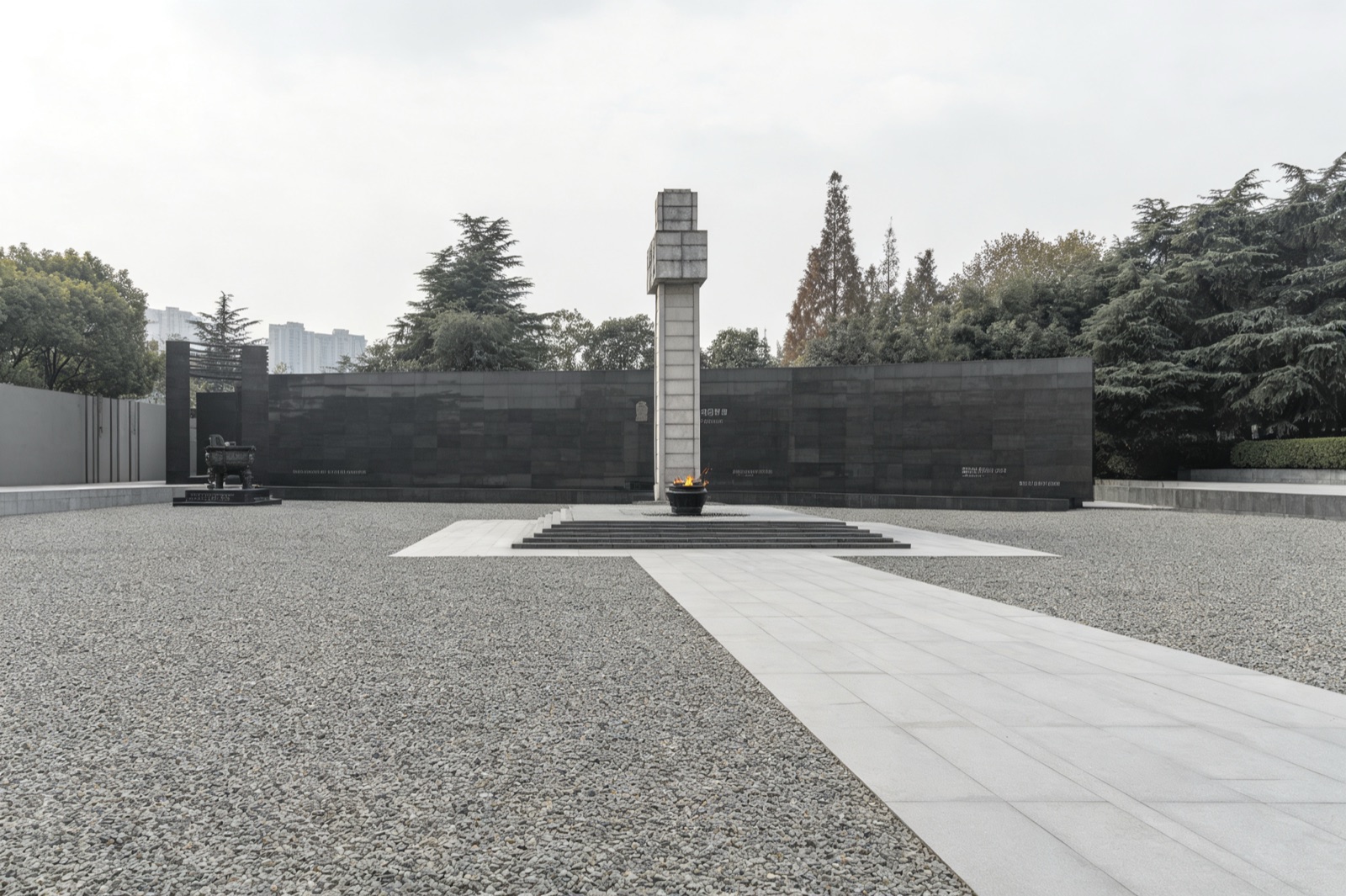
The Public Memorial Square is the core square of the memorial hall and the venue for the annual National Memorial Ceremony for the Victims of the Nanjing Massacre held on December 13. At its center stands a cross-shaped marker inscribed with "1937.12.13—1938.1," reminding visitors never to forget that tragic history. The square is paved with gray granite, and its surrounding walls bear the numeral "300,000" in commemoration of the three hundred thousand compatriots who perished in the massacre. The expansive and solemn space can accommodate ten thousand people for memorial ceremonies. The predominantly gray-and-white architecture creates a somber and tragic atmosphere, making it an essential site for collective mourning and remembrance.

On-site narration · read it where you stand

Passing through the sculpture corridor, we arrive at the Ceremony Plaza — the central venue for China's National Memorial Ceremony.

Please look to your right at the Wall of Catastrophe. On its dark gray stone surface, the words "300,000 Victims" are inscribed in Chinese, English, and Japanese. Three hundred thousand — this is not an estimate. It is the figure confirmed by the verdicts of the International Military Tribunal for the Far East and the Nanjing War Crimes Tribunal after the war. It means that in the six weeks following December 13, 1937, a Chinese life was taken by Japanese forces on average every twelve seconds.

At the center of the plaza stands the landmark stele, shaped like a cross. Its upper section bears the dates of the Nanjing Massacre: 1937.12.13 — 1938.1. In Western tradition, the cross is a symbol of suffering and redemption. Here, it stands as a reminder to every visitor: the loss of 300,000 lives is a wound that human civilization can never fully heal.

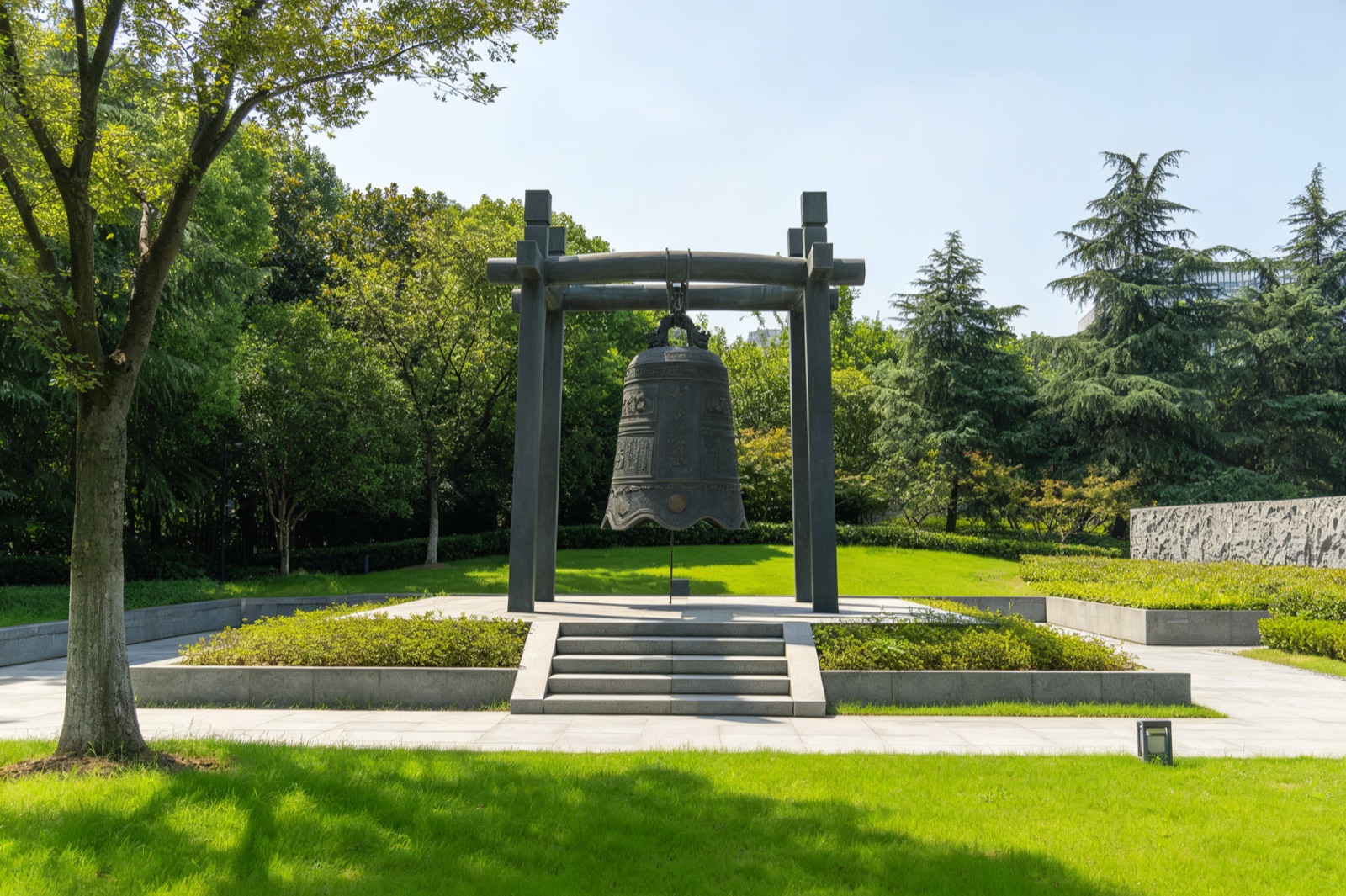
To the left of the plaza is the Peace Bell, cast in bronze. Every year on December 13, at ten in the morning, air raid sirens sound across the city of Nanjing. Traffic stops, horns are sounded, pedestrians stand in silent tribute. At this plaza, representatives from all walks of life toll the Peace Bell together — its resonance carrying across the memorial grounds, and into every person who hears it. Since 2014, China has observed December 13 as the National Memorial Day for the victims of the Nanjing Massacre, and this plaza is the permanent site of that ceremony.

Historical Materials Exhibition Hall

史料陈列厅

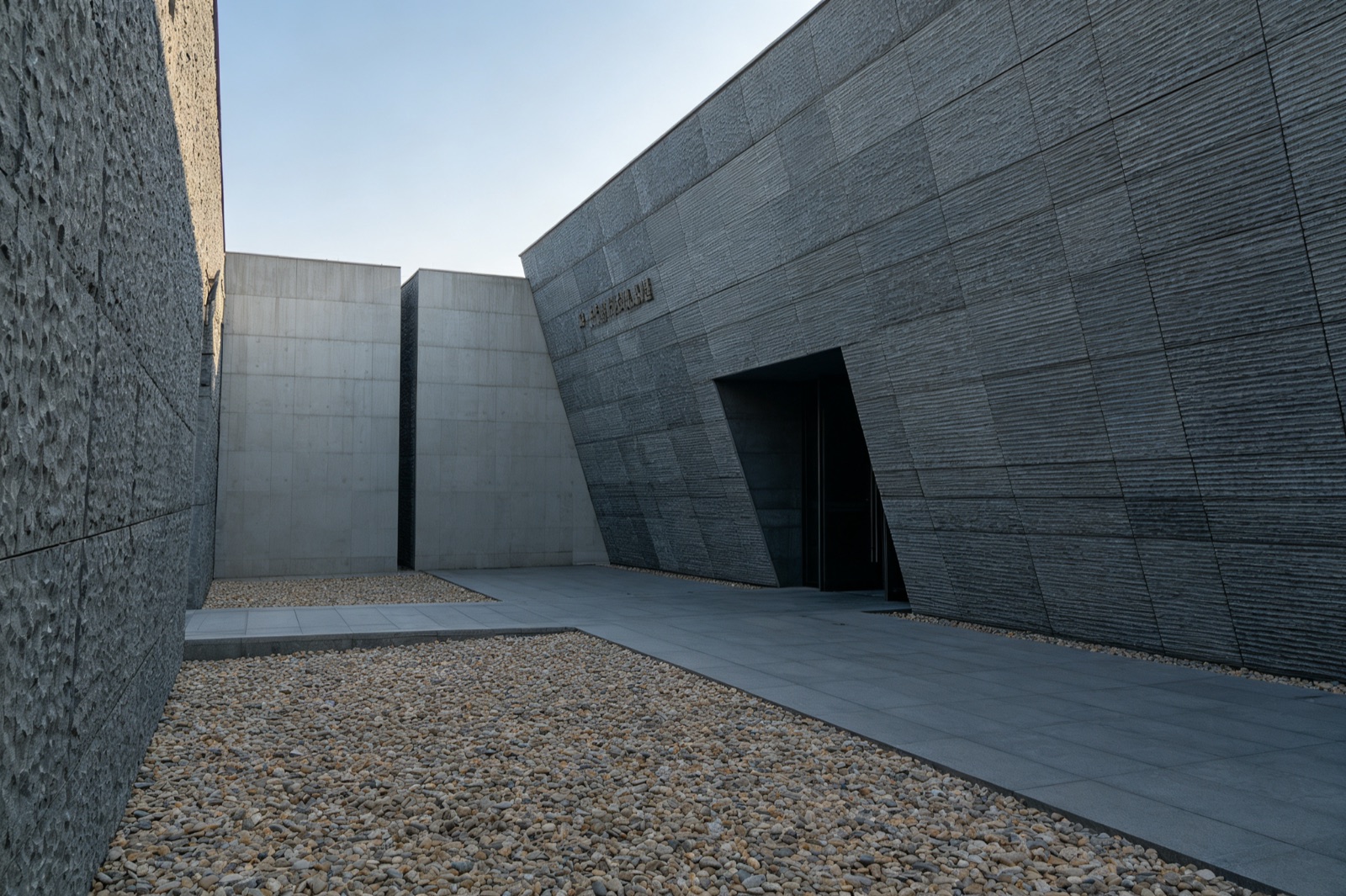
The Historical Materials Exhibition Hall is the principal exhibition space of the memorial hall. Organized chronologically, it systematically presents the complete history of the Japanese army's occupation of Nanjing in 1937 and the implementation of the massacre. The hall displays a large number of precious historical artifacts, including Japanese military maps, weapons and equipment, victims' belongings, video testimonies of survivors, correspondence archives of international friends, and trial records from the International Military Tribunal for the Far East. The exhibition employs diverse methods—physical displays, document exhibitions, multimedia presentations, and scene reconstructions—to present historical truth from multiple perspectives. The hall also features a victims' name wall and a survivors' archive database, providing irreplaceable documentary support for historical research.

On-site narration · read it where you stand

Please follow me into the Historical Exhibition Hall — the core exhibition space of the memorial. The permanent collection here is titled "A Catastrophe of Humanity: Historical Facts of the Nanjing Massacre by Japanese Invaders." It is organized into five sections, drawing on more than three thousand artifacts, photographs, archival documents, and film materials to document systematically what happened in Nanjing.

Section One: The Situation Before Nanjing Fell. This section presents the military campaign planned by Japanese militarists to capture Nanjing in 1937. The Battle of Shanghai broke out on August 13; Shanghai fell in November; Japanese forces advanced on Nanjing — then the capital of China — from three directions. As they moved through the countryside, they massacred civilians, burned villages, looted homes, and committed widespread sexual violence.

Section Two: The Chinese Defenders' Battle of Nanjing. From December 1, when Japanese forces issued their order of attack, to December 13, when the city fell, approximately 100,000 Chinese troops fought to defend Nanjing with equipment and numbers far inferior to those of the enemy. The weapons used in those final days and the personal effects of commanding officers are displayed here. You may notice that many of the soldiers in the photographs look very young. Many of them were not yet twenty years old when they died.

Please continue forward to Section Three: "Nanjing — A Living Hell on Earth." This is the most difficult part of the exhibition. Every photograph on display, every document — they are irrefutable evidence. After occupying Nanjing, Japanese forces carried out organized, large-scale massacres: shootings, bayoneting, decapitation, burial alive, burning. More than 300,000 people were killed. In the first month of occupation alone, more than 20,000 cases of sexual assault were recorded. One third of the city's buildings were burned to the ground. I'll pause here — please take a moment to look at these documents and photographs. They have not been modified or aestheticized in any way. It is precisely that restraint and objectivity that gives them their most powerful force.

This is the Survivor Portrait Wall. When the memorial first opened, more than a thousand survivors had been registered. One by one, as the years have passed, they have left us — each year, the memorial holds a light-extinguishing ceremony for those who have died. Today, fewer than thirty survivors remain alive. Each time one of those lights goes out, a living memory disappears forever. But their testimonies have been fully recorded and play on a continuous loop in this hall. Please listen — the aged voices you hear are not telling a story about history in the abstract. They are describing what happened to a specific person, with a name, a family, a life.

Near the end of the exhibition, please stop at the "12 Seconds" installation. If 300,000 people were killed over the six weeks of the Nanjing Massacre, one life was extinguished every twelve seconds. Here, a drop of water falls. A photograph lights up in the dark, then fades. Another follows. The cycle continues without end. Stand here for one minute, and you will witness five lives disappear. In the twelve seconds between each drop, be still — it may be the longest twelve seconds you have ever felt.

Section Five of the exhibition covers the post-war trials of Japanese war criminals. We'll explore that in greater depth at the "Three Certainties" Exhibition Hall. For now, please follow me to the next stop — the "Pit of Ten Thousand Corpses" relic site.

"Ten Thousand Bodies Pit" Site

"万人坑"遗址

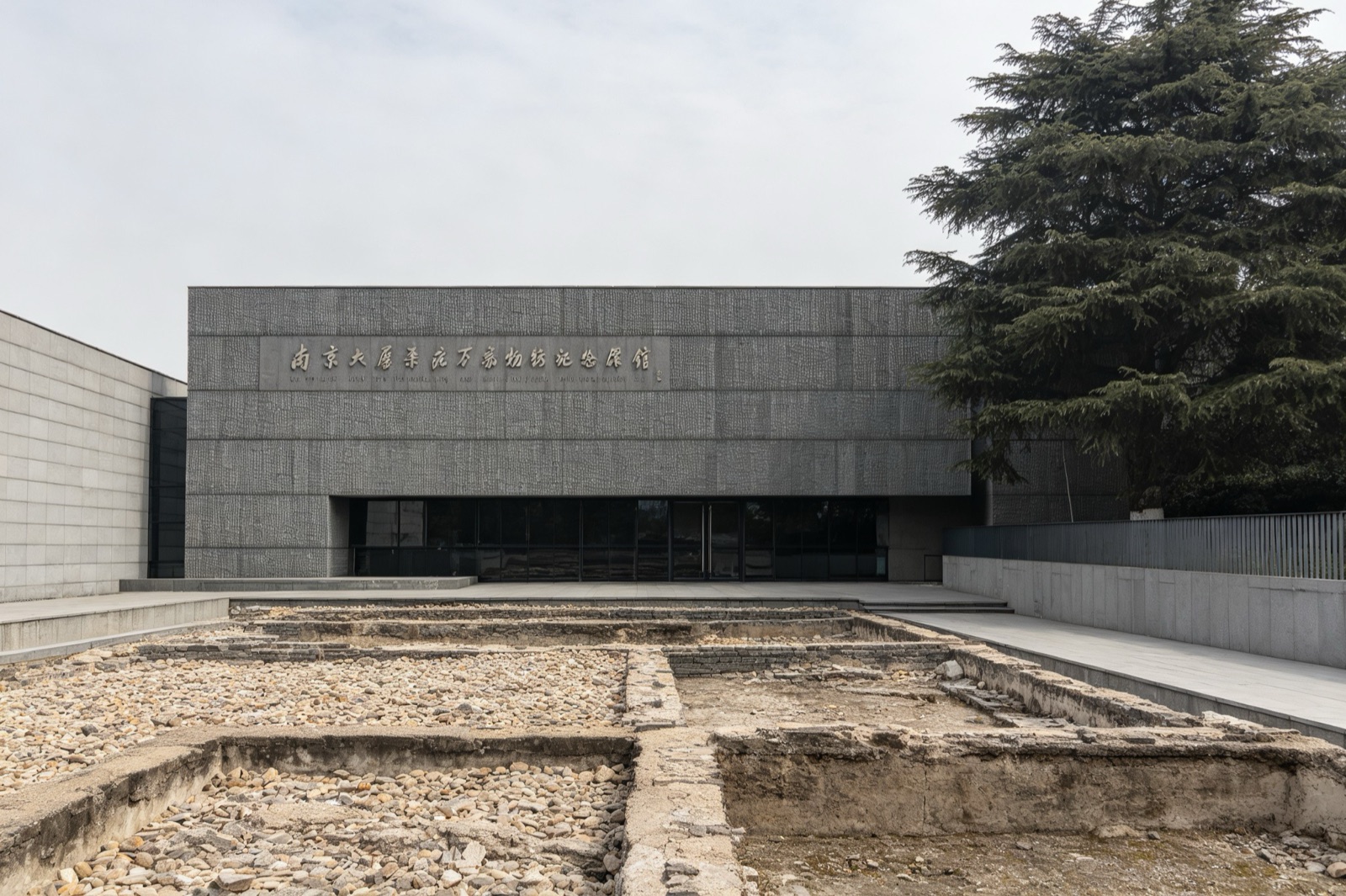
The "Ten Thousand Bodies Pit" Site is the most profoundly shocking area of the memorial hall. In 1984, a large number of victims' remains from the Nanjing Massacre were excavated here, and forensic examinations confirmed they all resulted from unnatural deaths. The site is preserved in situ, covered with a glass floor through which visitors can clearly see the densely layered remains. The bones are distributed in varying postures, some bearing clear marks of violent death, providing irrefutable evidence of the Japanese army's mass killings. Adjacent to the site is a remains display room, complemented by archaeological excavation records and forensic reports, preserving this tragic history with indisputable physical evidence and warning future generations never to forget national humiliation.

On-site narration · read it where you stand

We are now entering the most solemn part of this memorial — the "Pit of Ten Thousand Corpses" Relic Site. I need to ask once more: please maintain absolute silence. Please do not take photographs.

The ground we are standing on right now is the original site of the Jiangdongmen mass killing. This is the very earth where victims of the Nanjing Massacre were buried in the winter of 1937. When the memorial was established in 1985, this location was chosen precisely so that the physical evidence of history would remain in the ground where history happened.

Please look down through the glass. The intertwined bones you see were excavated here — first in 1985 when the memorial was built, and again after 1998. Forensic scientists, archaeologists, and medical specialists rigorously examined these remains and confirmed they are the bones of victims of the Nanjing Massacre. Look at the postures of the skeletons. Some are frozen mid-struggle. On some skulls, bullet holes are clearly visible. Seven years old. Seventeen. Seventy. There are no labels on these bones. But every one of them was a life cut short by violence, and every one of them has a story.

This is not the only burial site. Between 1937 and 1938, Japanese forces carried out mass killings at multiple locations across Nanjing, burying the victims in mass graves afterward. Jiangdongmen was the largest of these sites. The bones lay in the ground for nearly half a century, until the builders of this memorial excavated them and brought this silent evidence into the light.

Standing before this relic site, words become inadequate. The bones in the ground are themselves the most powerful indictment of what was done here. Please walk quietly around the perimeter, and then follow me forward.

Cemetery Square

墓地广场

The Cemetery Square is an important mourning space within the memorial hall's visiting sequence, using architectural language to create a cemetery-like atmosphere of solemnity. At the center of the square stands a symbolic tomb, representing the collective burial and eternal remembrance of the perished compatriots. The tomb wall is constructed of black granite, inscribed with the names of identified victims, a list that continues to be expanded. Both sides of the square are paved with cobblestones, barren of vegetation, symbolizing the desolation of death and the passing of lives. Visitors pause here in silent tribute, gazing at the names on the wall, sensing the once-living individuals behind each name. With minimalist architectural vocabulary, the square expresses profound grief and is one of the most moving spaces in the memorial hall.

On-site narration · read it where you stand

Coming out of the bone vault, we enter the Cemetery Plaza. Notice what you feel beneath your feet — the entire plaza is paved with cobblestones, which crunch softly as you walk. This was a deliberate design choice. The stones evoke a field of bones; each step presses down on history's wounds.

The bare, weathered trees and crumbling walls throughout this space are not ornamental. They are a reconstruction of Nanjing's landscape after it fell in the winter of 1937 — a ruined city. The space is composed entirely in gray, white, and black. No color. This is the emotional register the architect intended: mourning.

Three large relief sculptures stand in the plaza: Catastrophe, Massacre, and Mourning, carved from gray granite. They advance in sequence — the fall of the city, the killing of 300,000 people, and the grief of those left behind.

The seventeen smaller stone monuments along the pathways deserve close attention. Each one marks the site of a specific mass killing in Nanjing: Xiaguan, Caoxie Gorge, Yanziqi, Hanzhong Gate — location after location where people were gathered and killed. Each monument represents a mass grave. Together, they account for the figure of 300,000. This is not a museum display. It is the entire city's bloodstained record, gathered in one place to tell you the full truth.

Over there is the Wall of Names — also called the "Wall of Tears." More than ten thousand names are engraved in the stone — and these are only the victims whose identities could be verified. Families have run their hands over these names again and again; some sections of the stone have been worn smooth and bright. Next to it stands a Stele of Atonement erected in 1987 by Japanese citizens, expressing the remorse of part of the Japanese public for the atrocities of the Nanjing Massacre.

Memorial Ceremony Ground and Meditation Hall

祭场与冥思厅

The Memorial Ceremony Ground is the core venue for mourning activities within the memorial hall, featuring an eternal flame and a flower-offering terrace where visitors may lay flowers to express their deep condolences for the perished compatriots. The eternal flame burns year-round, symbolizing the eternal remembrance of the deceased. The Meditation Hall, located behind the ceremony ground, is a semi-underground structure with dim interior lighting illuminated only by candlelight, creating a tranquil and profound atmosphere. A water-dripping device is installed inside, and the gentle sound of falling water drops echoes in the silent space, symbolizing the passage of time and the eternity of memory. Visitors slow their pace here, conversing with history in stillness and contemplating the preciousness of peace and the dignity of life.

On-site narration · read it where you stand

Passing through the Cemetery Plaza, we enter the quietest part of the memorial — the Memorial Altar and Hall of Contemplation.

The Memorial Altar is a place for acts of tribute. Every day, visitors from across China and around the world come here to lay a white chrysanthemum and bow in respect for the 300,000 victims. There is no particular religious ceremony here, no distinction by nationality or belief — only a shared identity. As human beings, mourning a human tragedy.

The Hall of Contemplation is a semi-enclosed space of light and shadow. The domed ceiling is scattered with small points of light, like candleflames, representing the 300,000 lives that have passed — now as stars above. The water surrounding the space is perfectly still, and the only sound is the soft echo of footsteps. The architects hoped that everyone who entered would pause here for a moment. Not to find answers — some catastrophes in history have none — but to stand in silence and hear their own inner voice. Remembering suffering is not about sustaining hatred. It is about drawing from history the wisdom to prevent such tragedies from ever happening again.

Peace Park

和平公园

Peace Park is situated at the conclusion of the memorial hall's visiting route, marking a thematic transition from painful history toward a peaceful future. The park features green vegetation and water surfaces as its primary landscape elements, forming a striking contrast with the preceding gray-and-white architectural palette, symbolizing the continuation of life and the rebirth of hope. The central feature is the "Peace" sculpture, depicting a mother holding an infant in one arm and releasing a dove of peace with the other, expressing the Chinese people's aspiration and pursuit of peace. The park also features the Peace Spring, Peace Grove, and other landscape elements, with murmuring water and shaded trees, providing visitors with a space to soothe and settle their minds after departing from the heavy history, conveying the core concept of "remembering history and cherishing peace."

On-site narration · read it where you stand

Stepping out of the Hall of Contemplation, the space suddenly opens before you — this is the Peace Park.

You'll likely notice it right away: the light here is abundant, the space wide, the palette alive with color. This shift is intentional. The architects designed the experience as a gradual passage — from the dark exhibition halls, through the somber relic site and the muted tones of the Cemetery Plaza, and finally into this open green. It is a movement from the depths of history toward the horizon of peace.

At the center of the park stands a white marble sculpture called Peace — also known as the Goddess of Peace. A mother raises a dove in one hand and cradles a child in the other, her posture open and serene. Look back toward the entrance for a moment. From the Shattered Family sculpture at the beginning to this one here, we have made a complete journey: from death to peace, from despair to hope. Two mothers. One has lost her child; one holds her child close. The same gesture, opposite meanings — and between them, the entire message of this memorial.

The Zijin Grass Garden beside you holds a true story. In 1939, a Japanese military doctor named Yamaguchi Seitaro, who had served in the invasion, was deeply shaken by what he witnessed in Nanjing. Before returning to Japan, he gathered seeds of the February orchid from the slopes of Zijinshan — giving them the name "Zijin Grass" for their purple flowers. For decades afterward, he and his family traveled across Japan scattering these seeds, hoping that this flower from Nanjing might carry a message of repentance and a prayer for peace. Zijin Grass now blooms across Japan, and has become a shared symbol of peace between the Chinese and Japanese peoples. In 2007, through the joint efforts of Yamaguchi Seitaro's hometown and Nanjing, this garden was created here within the memorial.

Nearby stands a bronze figure of a young girl holding Zijin Grass in her hands. Every spring, the flowers bloom in great sweeps of purple across the garden. They open quietly. They say everything without saying a word.

Wall of Victory and Victory Square

胜利之墙与胜利广场

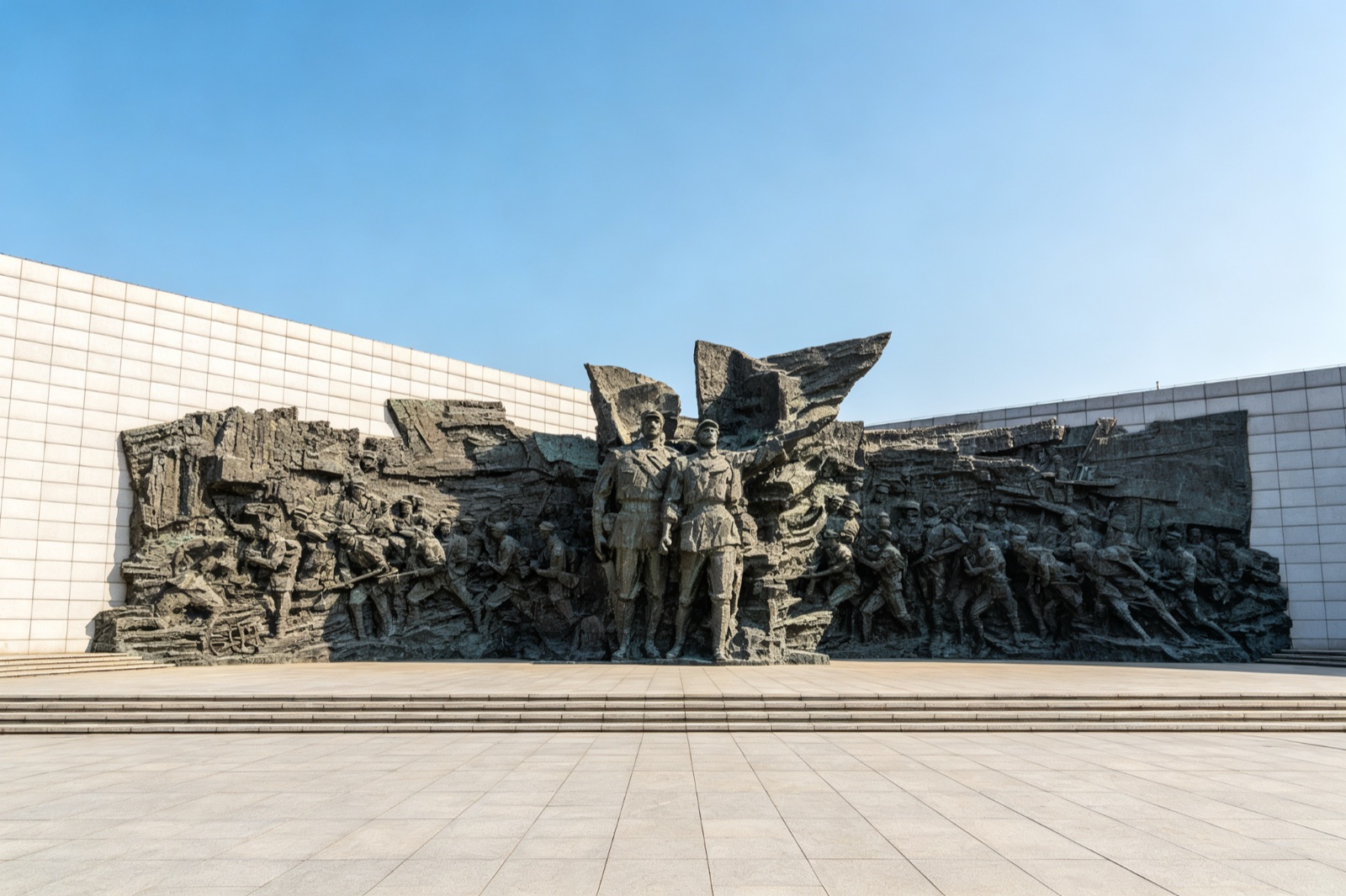
The Wall of Victory and Victory Square are important components of the memorial hall's expansion project, officially opened in 2015 on the occasion of the seventieth anniversary of the victory of the Chinese People's War of Resistance Against Japanese Aggression and the World Anti-Fascist War. The Wall of Victory presents a grand historical panorama in the form of large-scale reliefs, depicting the Chinese military and civilians fighting heroically and ultimately achieving victory. The reliefs vividly portray key scenes including battlefield charges, civilian support for the front lines, and Japan's surrender. The Victory Square is expansive and dignified, capable of hosting large-scale memorial events, with victory-themed sculptures standing upon it. Centered on the theme of "victory," it forms a narrative progression from the preceding themes of "disaster" and "mourning," demonstrating the historical logic from suffering to triumph and highlighting the indomitable spirit of the Chinese nation.

On-site narration · read it where you stand

Following the path through Peace Park, we reach the centerpiece of the memorial's third-phase expansion — the Wall of Victory and Victory Plaza.

The sweeping rust-red arc before you is the Wall of Victory. It is made of steel, treated with a special oxidation process that gives it this deep iron-red color — red for the eight years of war and the blood they cost; the weathered texture for the weight of history. At the top of the wall, a "7"-shaped form rises against the sky. The "7" references July 7, 1937 — the Marco Polo Bridge Incident — the moment when China's full-scale war of resistance began. But stand back and take in the whole picture. The wall, the arc, and the "7" together trace the outline of a phoenix spreading its wings — in Chinese culture, the phoenix rises from fire and is reborn. It is the image of a nation that endured war and flame and emerged standing.

The path rising behind the wall is called the Victory Road. It climbs gradually to the torch platform at its summit — sixteen meters high, with the date of victory carved into its base: September 9, 1945. On normal days, two beams of light shoot upward from the platform into the night sky. During major commemorative events, "the Flame of Victory" is lit and burns day and night.

The large elliptical plaza below the torch platform is Victory Plaza, also called "9-9 Plaza." The name marks September 9, 1945 — the day the surrender ceremony for the Chinese Theater of War was held in Nanjing, when General Okamura Yasuji, commander-in-chief of Japanese forces in China, signed the instrument of surrender. It was the conclusion of a war that had begun in 1931 and lasted fourteen years. Viewed from above, two curved paths through the plaza trace the shape of two nines, side by side — a quiet piece of design that inscribes a date into the ground itself.

"Three Must-Wins" Theme Exhibition Hall

"三个必胜"主题展厅

The "Three Must-Wins" Theme Exhibition Hall is one of the core pavilions of the memorial hall's expansion project, themed on the important proposition put forward by General Secretary Xi Jinping: "Justice will prevail, Peace will prevail, and People will prevail." Through a wealth of historical artifacts, documentary archives, audiovisual materials, and multimedia presentations, the hall comprehensively reviews the glorious course of the Chinese People's War of Resistance Against Japanese Aggression, highlighting the cornerstone role of the Communist Party of China during the war, the heroic deeds of the entire nation's bloody struggle, and the great victory of the World Anti-Fascist War. The hall also presents post-war trials and the reconstruction of the international order, guiding visitors to profoundly understand the great significance of justice, peace, and the power of the people while remembering the tragic history, and to strengthen their commitment to safeguarding world peace.

On-site narration · read it where you stand

Our visit to the memorial is now complete. We have walked the full route together: Sculpture Plaza — Ceremony Plaza — Historical Exhibition Hall — "Pit of Ten Thousand Corpses" Relic Site — Cemetery Plaza — Memorial Altar and Hall of Contemplation — Peace Park — Victory Plaza — "Three Certainties" Thematic Exhibition Hall.

Before we part, I'd like to leave you with three things to carry with you.

First: "300,000" is not a number — it is 300,000 broken hearts. Three hundred thousand people who never had the chance to say goodbye. Just as this memorial stands on the ground where victims were buried, the truth of history cannot be buried by time.

Second: Remembering is not the same as holding onto hatred. The full name of this place is the Memorial Hall of the Victims in Nanjing Massacre by Japanese Invaders. The most important word in that name is "victims" — this place does not commemorate an abstract historical event. It commemorates people who were part of our human family. We remember their suffering so that such a tragedy is never repeated.

Third: As you walk out of this door, you become a messenger for peace. At the exit, an eternal flame burns quietly beside words carved in stone: "We may forgive, but we must never forget." Forgiveness is a choice. Forgetting is a betrayal. Please take what you have seen, heard, and felt today and share it with others — because history only stops repeating itself in the places where it is remembered.

Thank you.

Prefer to be shown around?

A local guide walks these 9 stops with you and answers what the page cannot.

Browse tours ↗