Lingyin Temple
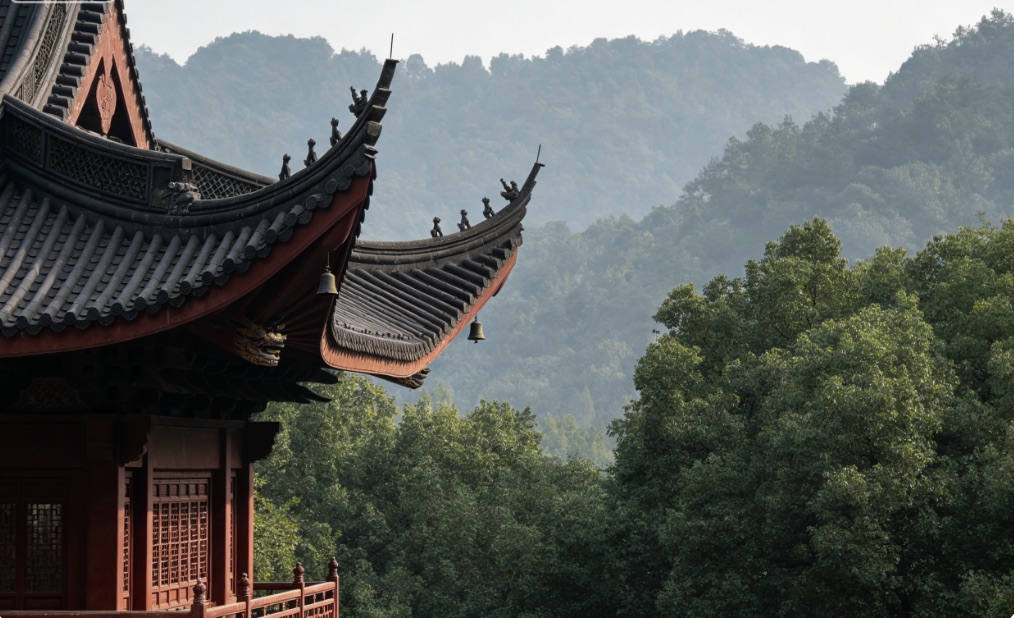
Lingyin Temple is located within the Feilai Feng Scenic Area in the Xihu District of Hangzhou, Zhejiang Province. Founded in the first year of the Xianhe era of the Eastern Jin Dynasty, the temple has stood for more than 1,600 years, making it the oldest renowned Buddhist monastery in Hangzhou and one of the ten great ancient Chan monasteries in China. The temple is backed by the Northern Peak and faces Feilai Feng, with the two peaks flanking it on either side, the forest rising tall around it, and the whole setting wrapped in a quiet, serene atmosphere. The temple has been destroyed and rebuilt many times over the centuries; the structures standing today date primarily from the Qing Dynasty reconstruction. Along the central axis stand, in sequence, the Heavenly King Hall, the Mahavira Hall, the Bhaisajyaguru Hall, the Sutra Library, the Avatamsaka Hall, and other halls — a complex of grand scale and enduring spiritual vitality, long celebrated as the "Buddhist Kingdom of the Southeast."
Entrance of Lingyin Temple Scenic Area
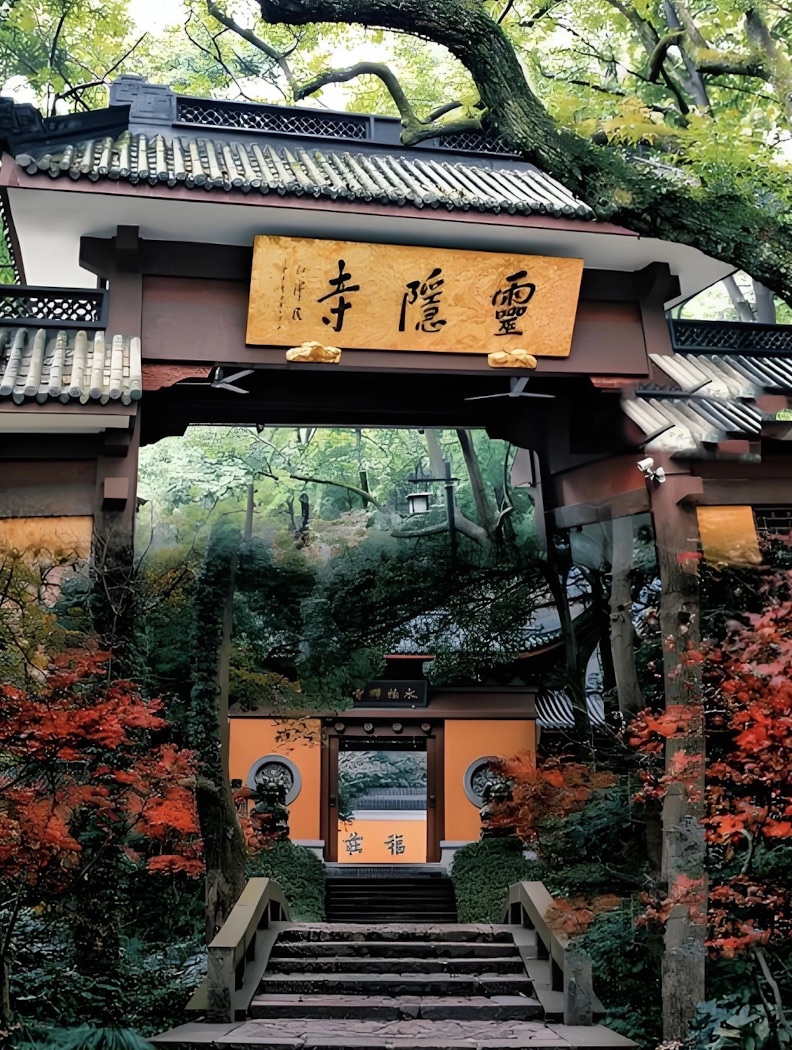
The entrance to the Lingyin Temple Scenic Area is located on Lingyin Road, serving as the gateway into the Feilai Feng scenic area. The entrance is equipped with a ticket office, a visitor center, and interpretive facilities, surrounded by towering ancient trees and the sound of a gurgling stream. From here, visitors first explore the Feilai Feng rock carvings before following the Lengquan Stream to reach the main gate of Lingyin Temple.
Feilai Feng Grottoes
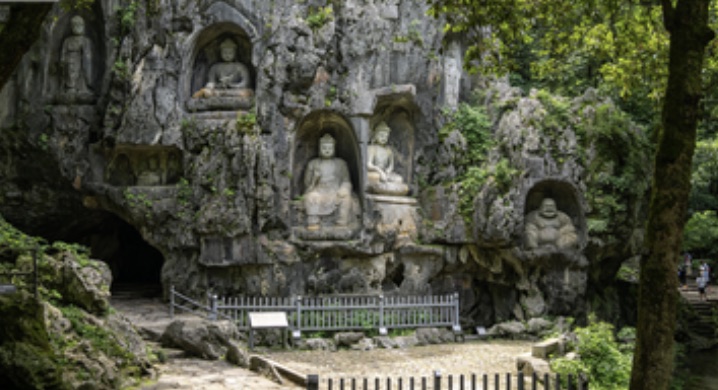
The Feilai Feng carvings are spread across the cliff faces along the stream at the base of Feilai Feng, forming one of the largest and longest-developed grotto sculpture complexes in southeast China. More than 380 carvings survive today, with work beginning in the Five Dynasties period and flourishing through the Song and Yuan dynasties. The subjects are primarily Maitreya, Guanyin, and the Luohan, with the round-bellied Maitreya flanked by eighteen Luohan being the most celebrated — lively and expressive, they embody the distinctive character of Jiangnan Buddhist art.
Ligong Pagoda and Lengquan Pavilion
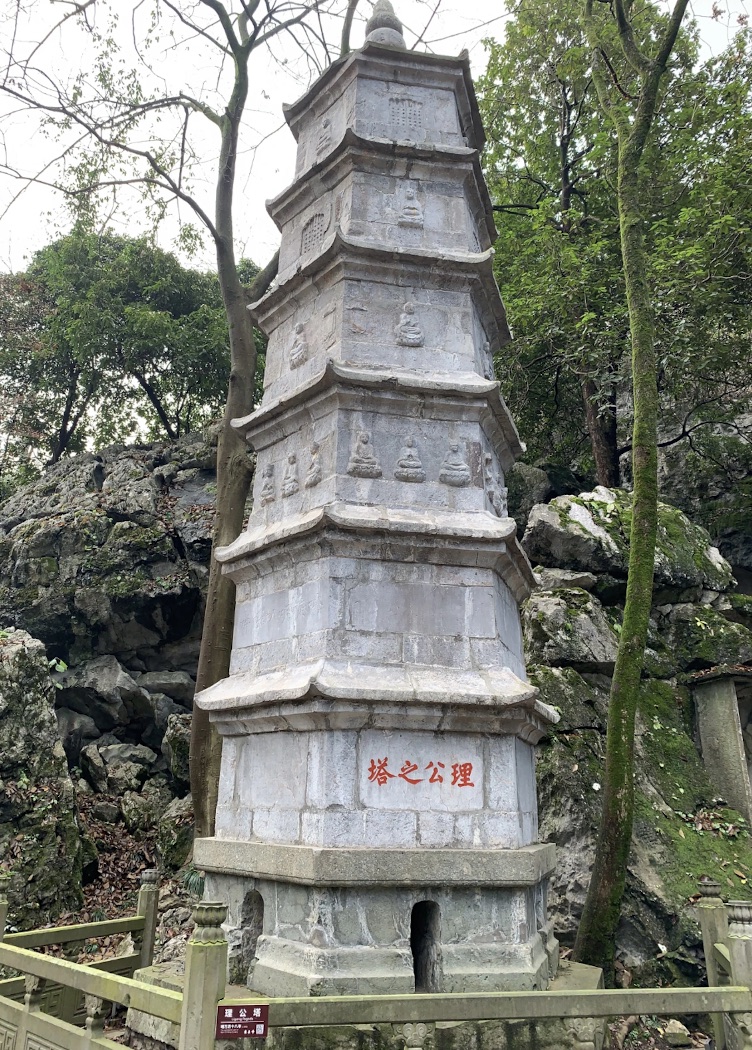
Ligong Pagoda stands in front of the main gate of Lingyin Temple, built to commemorate Huili, the Indian monk who founded the temple. The stone pagoda is carved with Buddhist figures and scriptures. Beside it stands Lengquan Pavilion, in front of which the Lengquan Stream flows year-round, cold and clear. This is an ideal spot to rest and settle the mind before entering the temple.
Heavenly King Hall
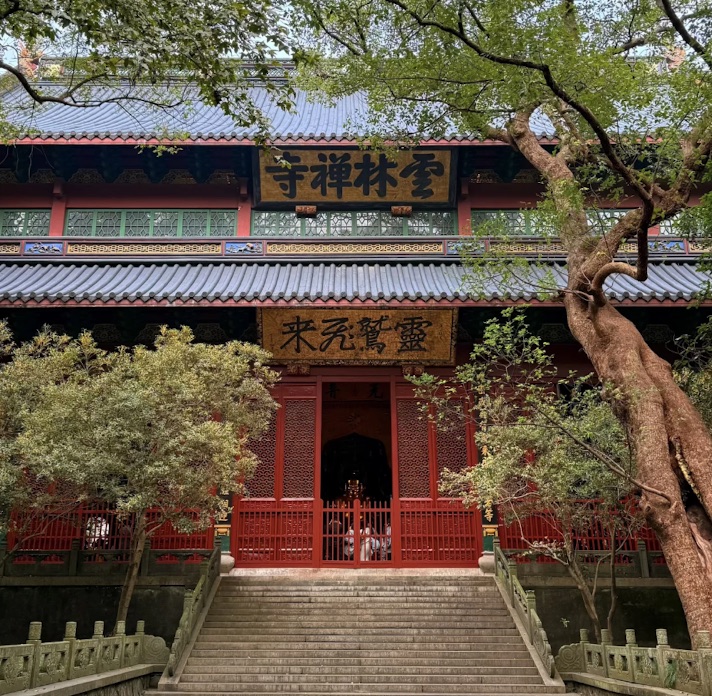
The Heavenly King Hall is the first hall visitors encounter at Lingyin Temple. At its center stands a seated Maitreya Buddha, with Weituo Bodhisattva behind him and the Four Heavenly Kings flanking the sides. The plaque reading "Yunlin Chan Monastery" hangs above the entrance — calligraphy written by the Kangxi Emperor during his imperial tour of the south in the Qing Dynasty. Solemn in architecture and commanding in its statuary, this hall serves as the ceremonial gateway to the heart of Lingyin Temple.
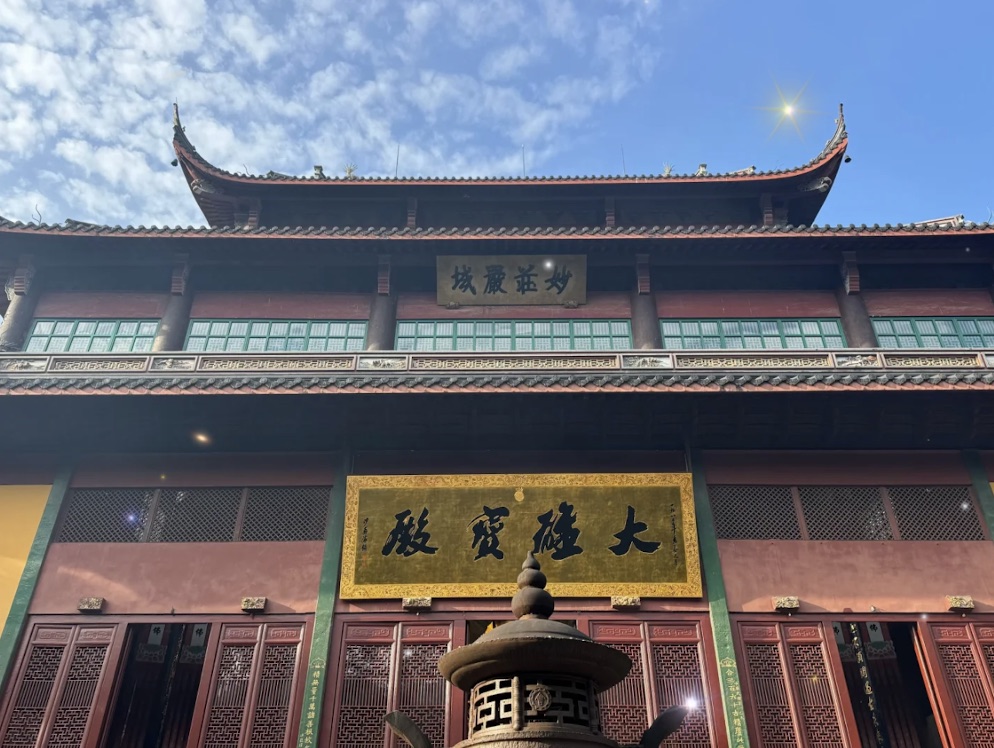
Mahavira Hall
The Mahavira Hall is the main hall of Lingyin Temple and one of the tallest single-story, double-eaved timber-frame structures surviving in China. Inside, the central Shakyamuni Buddha statue stands 24.8 meters tall, carved in sections from camphor wood and then gilded — magnificent in presence. Eighteen Luohan line the side walls, and Buddhist narrative murals extend across the east and west walls. The hall as a whole commands deep reverence.
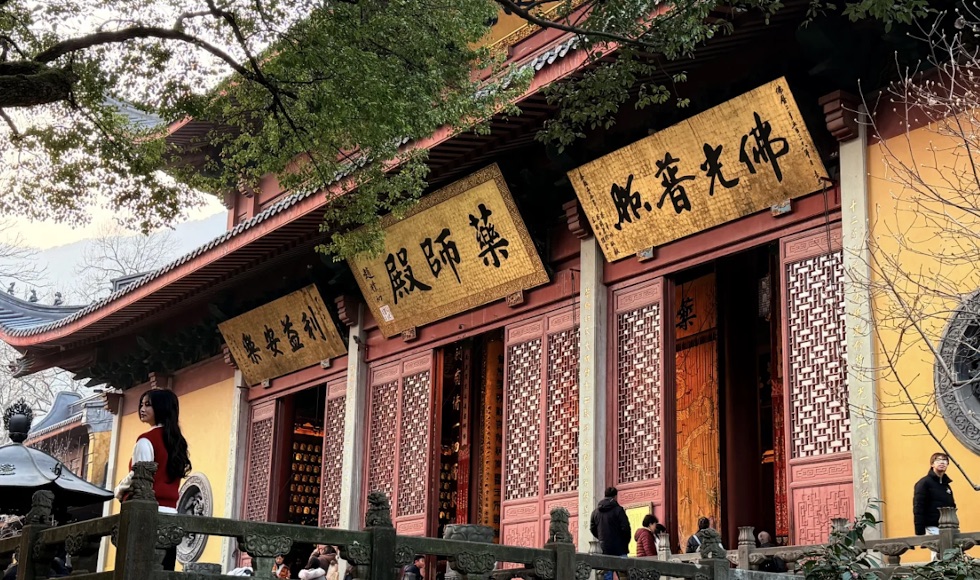
Bhaisajyaguru Hall
Located behind the Mahavira Hall, the Bhaisajyaguru Hall enshrines Bhaisajyaguru — the Medicine Buddha and master of the Pure Lapis Lazuli World of the east — symbolizing the relief of suffering and the granting of long life and health. Sunlight Bodhisattva and Moonlight Bodhisattva are enshrined on either side, and the Twelve Yaksha Generals stand watch throughout the hall. Devotees frequently come here to pray for health and well-being.
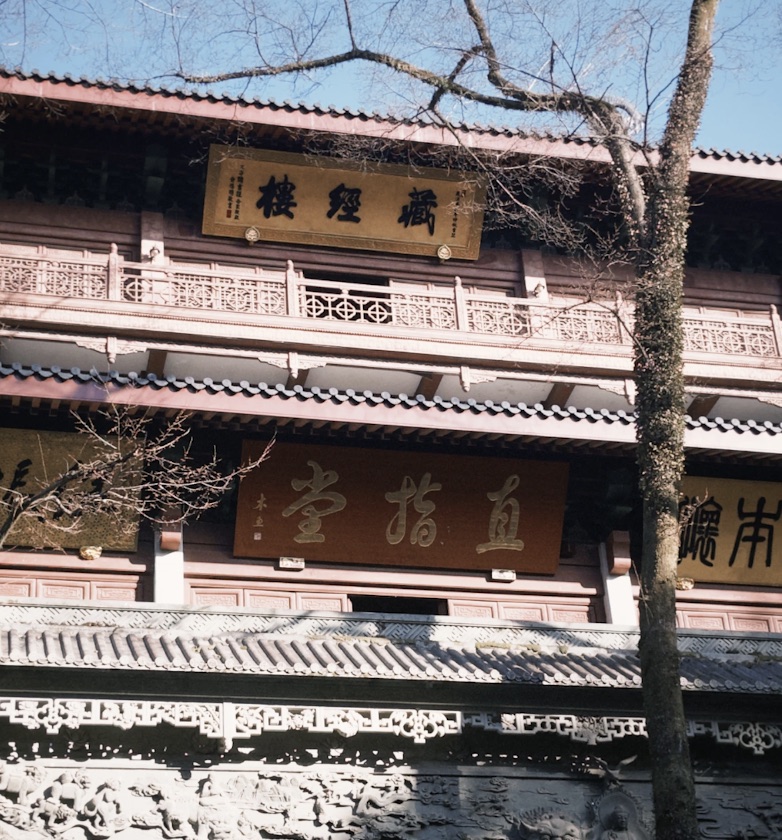
Sutra Library
The Sutra Library stands on the temple's central axis and serves as the repository for Lingyin Temple's Buddhist scriptures and cultural relics. Its collection includes Buddhist canon editions printed across different dynasties, works of calligraphy and painting by notable figures, and temple archives — an invaluable resource for studying Chinese Buddhist culture and the temple's own history. The architecture is refined and elegant, reflecting the time-honored tradition of Buddhist scriptural preservation.
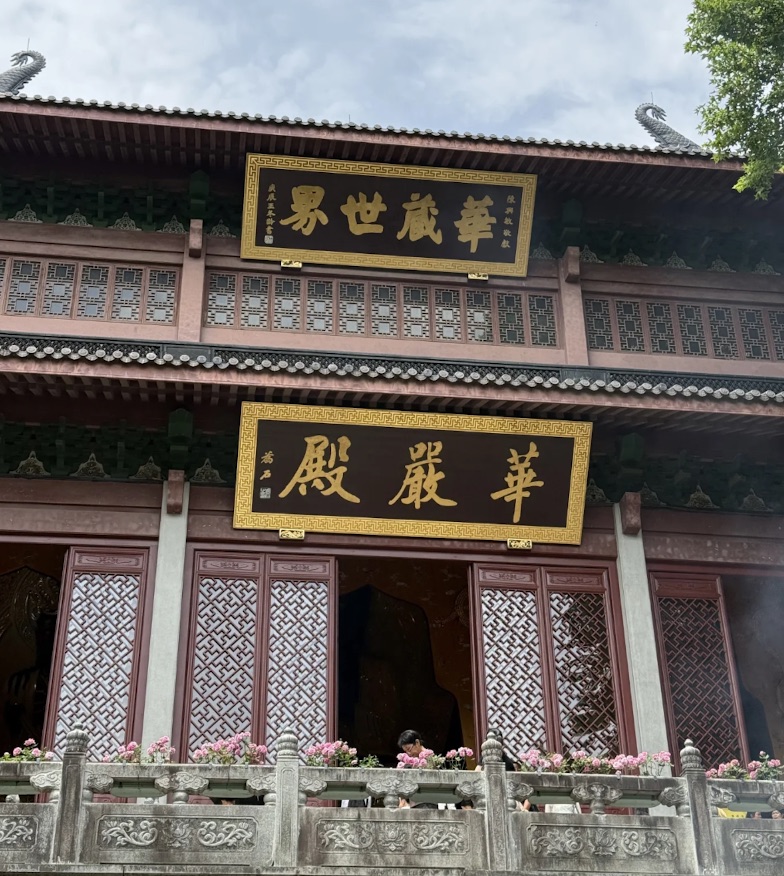
Avatamsaka Hall
The Avatamsaka Hall is the final hall on Lingyin Temple's central axis, enshrining the Three Sages of the Avatamsaka: Vairocana Buddha, Manjushri Bodhisattva, and Samantabhadra Bodhisattva. The hall takes its name from the Avatamsaka Sutra and embodies its teaching that the dharma realm is perfectly luminous and that principle and phenomena interpenetrate without obstruction. The statuary inside is imposing and finely wrought, and the murals are vivid with color, expressing the splendid artistic vision of the Huayan school of Chinese Buddhism.
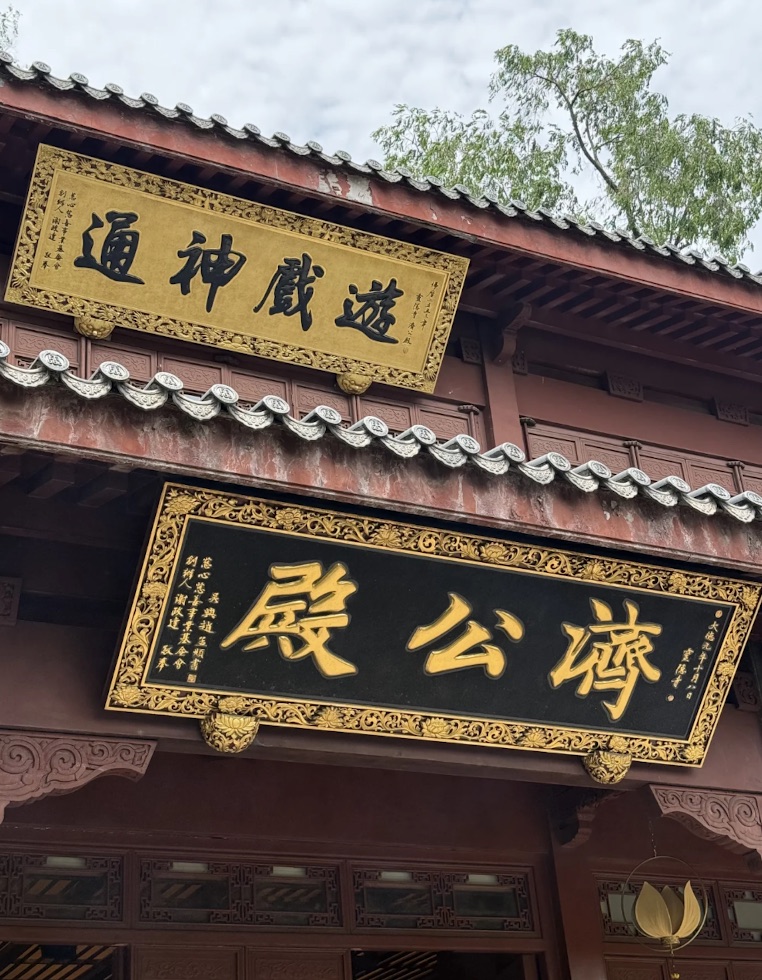
Jigong Hall
Jigong Hall stands on the eastern side of Lingyin Temple, enshrining the legendary Southern Song Dynasty monk Jigong. His monastic name was Daoji, and Lingyin Temple once took him in. He became famous for his seemingly erratic behavior and his acts of charity, earning the popular title "the Living Buddha Jigong." The hall displays a statue of Jigong alongside murals and accounts of his life and legendary exploits, giving this space a warmth and liveliness unlike any other hall in the temple.
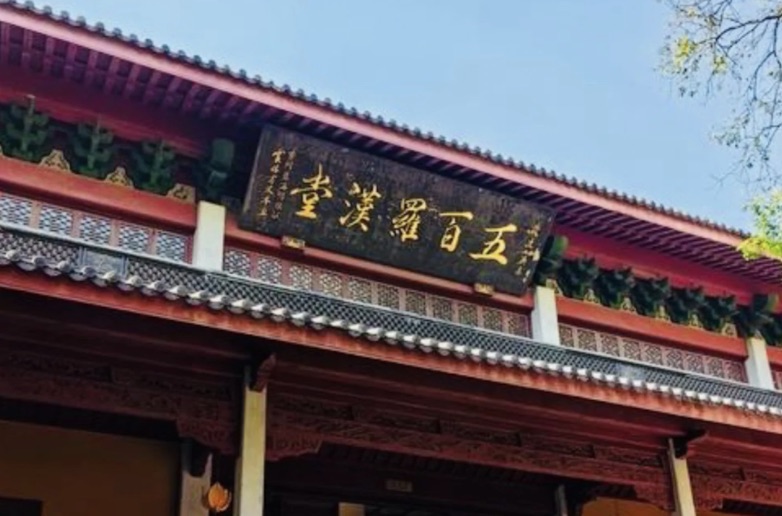
Five Hundred Arhats Hall
The Five Hundred Arhats Hall sits on the western side of Lingyin Temple. Inside, five hundred bronze Arhat statues are arranged in vivid variety — no two alike. At the center stands a bronze shrine of the Four Sacred Buddhist Mountains, crafted with exceptional artistry. The Arhats represent the enlightened disciples of the Buddha, and this hall holds one of the richest Arhat sculpture collections in China.
10 stops, in walking order — read top to bottom, no clicking needed.

 2
 3
 4
 5
 6
 7
 8
 9
 10