Xixi National Wetland Park
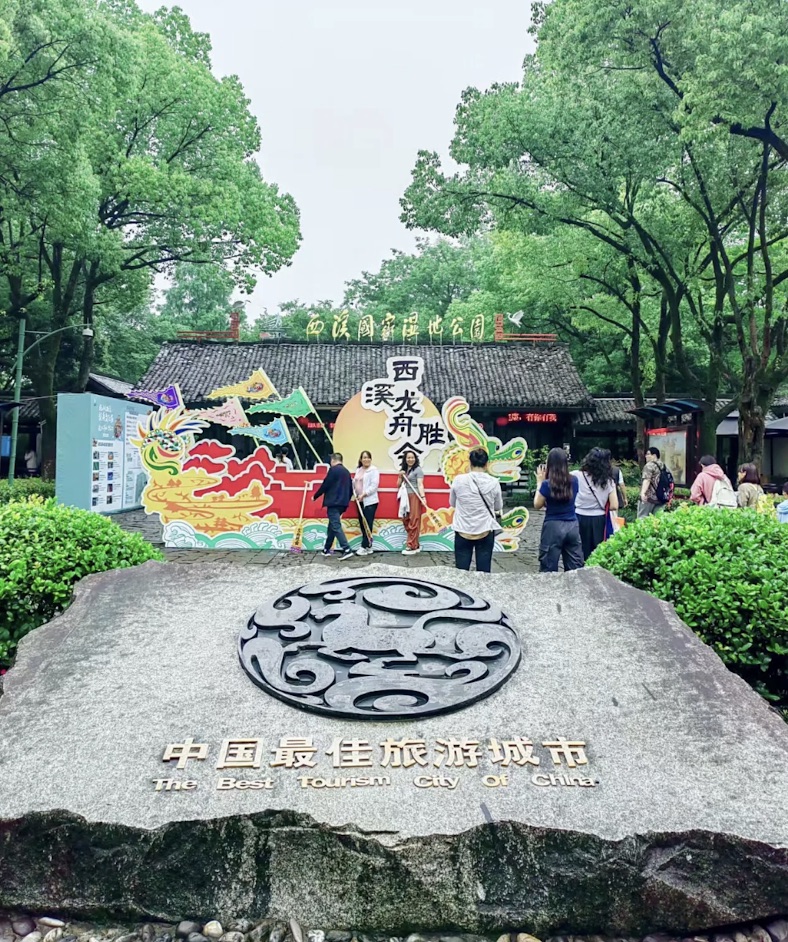
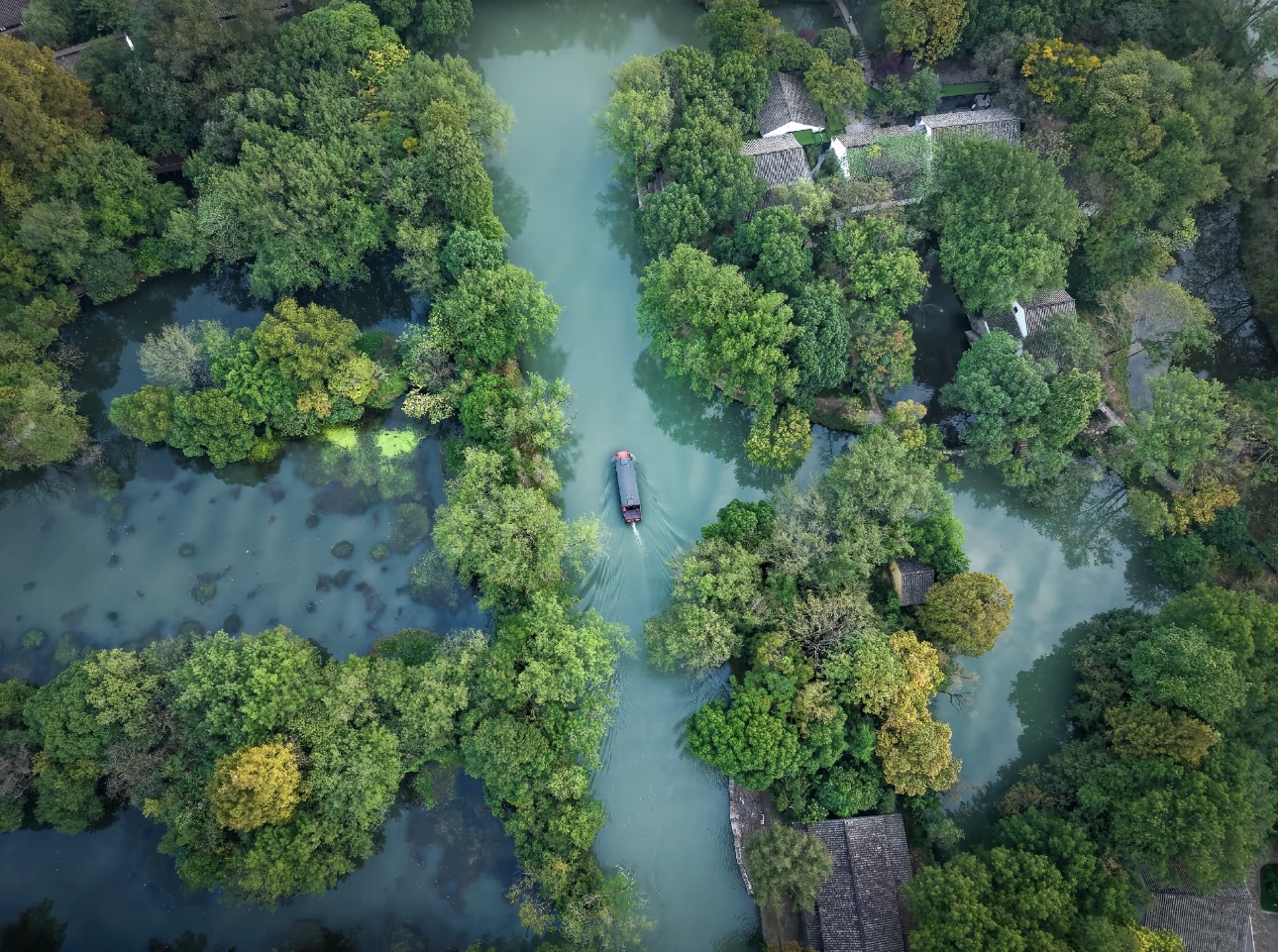
Xixi National Wetland Park sits on the border of Xihu District and Yuhang District in Hangzhou, Zhejiang Province. It is China's first national wetland park to integrate urban wetland, agricultural wetland, and cultural wetland in a single site, and the first Chinese national wetland park to be listed as a Ramsar Wetland of International Importance. Covering roughly 11.5 square kilometres, the park weaves together waterways, marshes, woodland, and historic villages. Since ancient times it has been celebrated with the phrase "every bend of the stream, a veil of mist." With a long history and deep cultural heritage, Xixi is counted alongside West Lake and Xiling as the "Three Xis of Hangzhou," forming a vital part of the city's ecological and cultural landscape.
Zhoujiacun Entrance
Zhoujiacun Entrance is one of Xixi National Wetland Park's main gateways, located on Tianmushan Road next to Zhoujiacun Pier. The entrance hosts a visitor centre, ticketing services, and a boat dock, making it the traditional starting point for a water tour of the wetland. Zhoujiacun retains the character of a classic Jiangnan water-village and serves as an authentic gateway into the natural ecology of Xixi.
Yanshui Yuzhuang
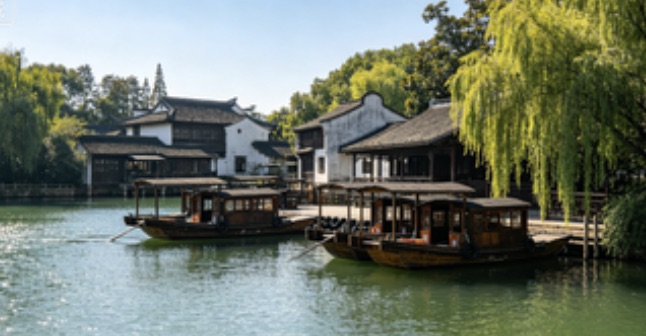
Yanshui Yuzhuang (Misty Waters Fishing Village) is located near Yanshui'an within the wetland and showcases Xixi's fishing and farming heritage. The site preserves traditional water-village dwellings, fish ponds, mulberry gardens, and scarecrows. Visitors can learn about the lives of Xixi's fishermen, watch folk performances, and soak in the timeless atmosphere of "fishing boats singing at dusk."
Shentankou
Shentankou (Deep Pool Ferry) is one of Xixi Wetland's most celebrated ancient crossings and a key stop on the water route. It is also one of the filming locations for the popular film "If You Are the One." The waterway here is unusually wide and deep, shaded by ancient camphor trees whose sweeping canopies create a uniquely atmospheric wetland scene. Nearby landmarks include a restored open-air opera stage and a century-old camphor tree.
Hezhu Street
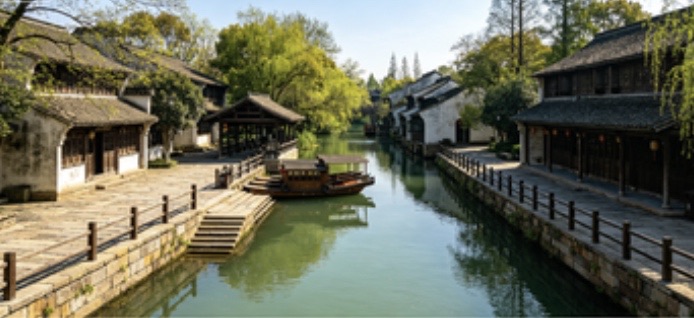
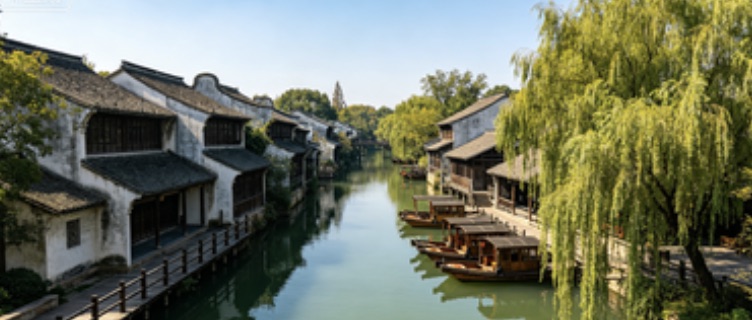
Hezhu Street is a re-created Jiangnan water-village commercial street inside the wetland, bringing together traditional craft shops, teahouses, snack stalls, and folk culture exhibition halls. The street runs along the water, with whitewashed walls, grey-tiled rooftops, and flagstone paths evoking everyday life in old Xixi. At the far end of the street, the Hezhu Pagoda offers the best elevated view over the wetland.
Fudi Causeway
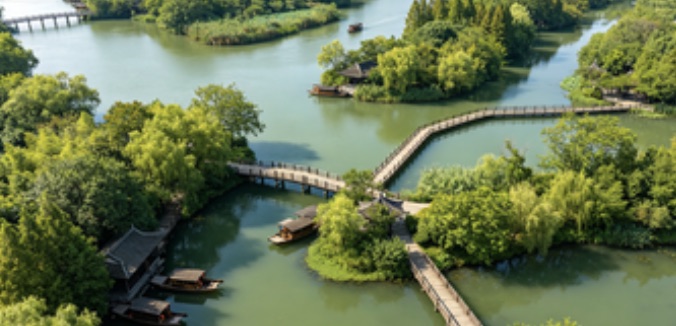
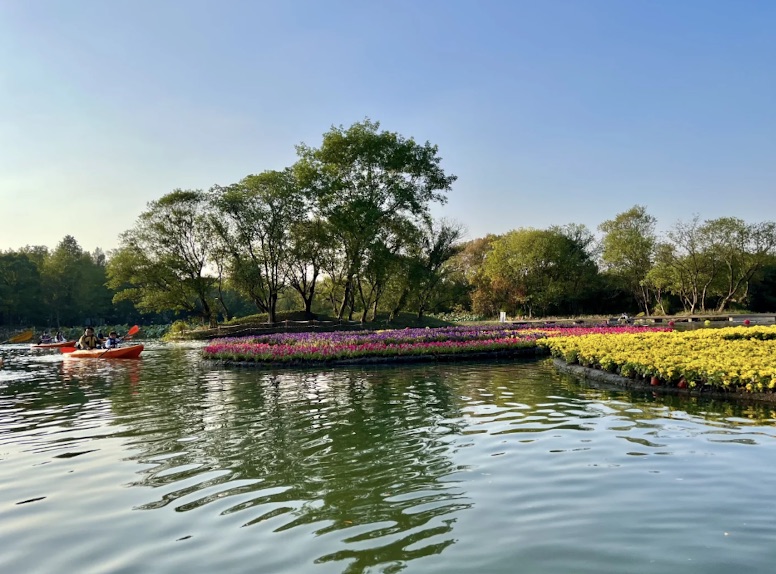
Fudi Causeway is an ecological scenic embankment running roughly 2.3 kilometres from north to south through Xixi Wetland, linking Zhoujiacun with Hezhu Street and other areas. The embankment is lined with shady trees and flowers that bloom in every season, with walking paths and a cycling lane running its full length. Along the way, visitors can observe wetland vegetation, waterfowl, and open countryside — an ideal route for walking, cycling, and getting close to nature.
Gao Village
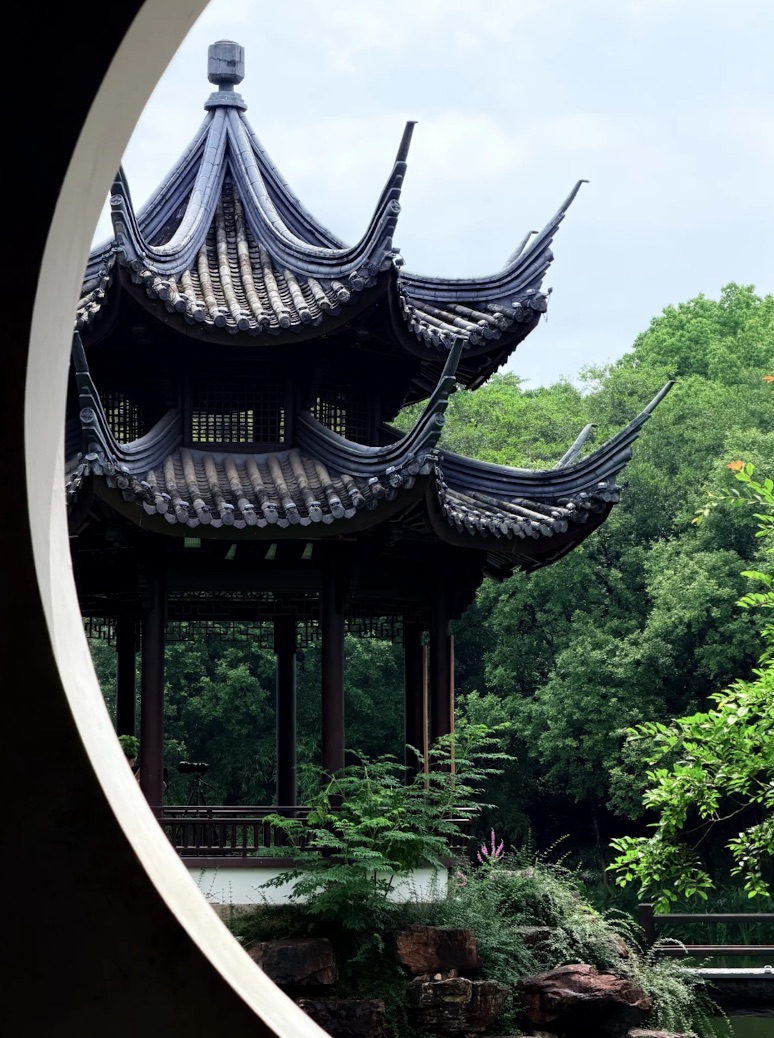
Gao Village, also known as Xixi Villa, is the site of the former private garden and residence of Qing dynasty scholar-official Gao Shiqi. Built at the water's edge, the estate features pavilions, towers, rockeries, and ornamental ponds arranged with elegant precision, blending the refinement of a Jiangnan garden with the natural grace of a wetland waterscape. The remaining structures recall where Gao Shiqi once read and entertained friends, making this one of the most historically significant spots in the park.
Meizhu Villa
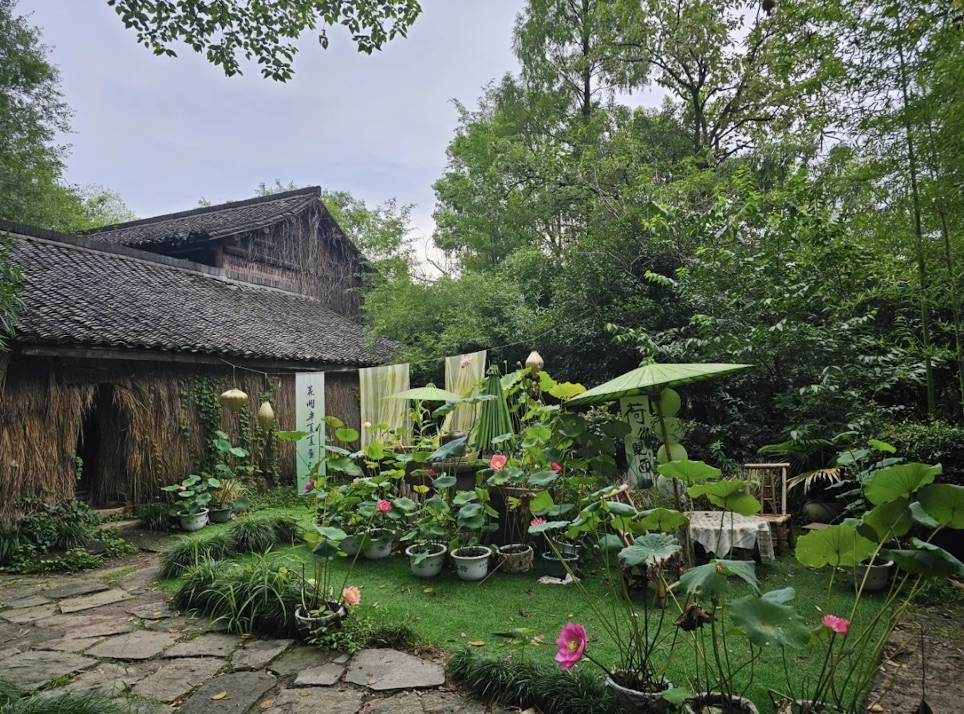
Meizhu Villa is a classical garden within Xixi Wetland themed around plum blossoms and bamboo, named for the groves of plum trees and bamboo that have flourished here throughout its history. In early spring, plum blossoms open in abundance, filling the air with a quiet fragrance; in summer, the bamboo groves offer cool shade and a gentle breeze. The villa's architecture is quietly elegant, making it a perfect place to enjoy the blossoms, drink tea, and experience the refined sensibility prized by classical Chinese scholars.
Hong Garden
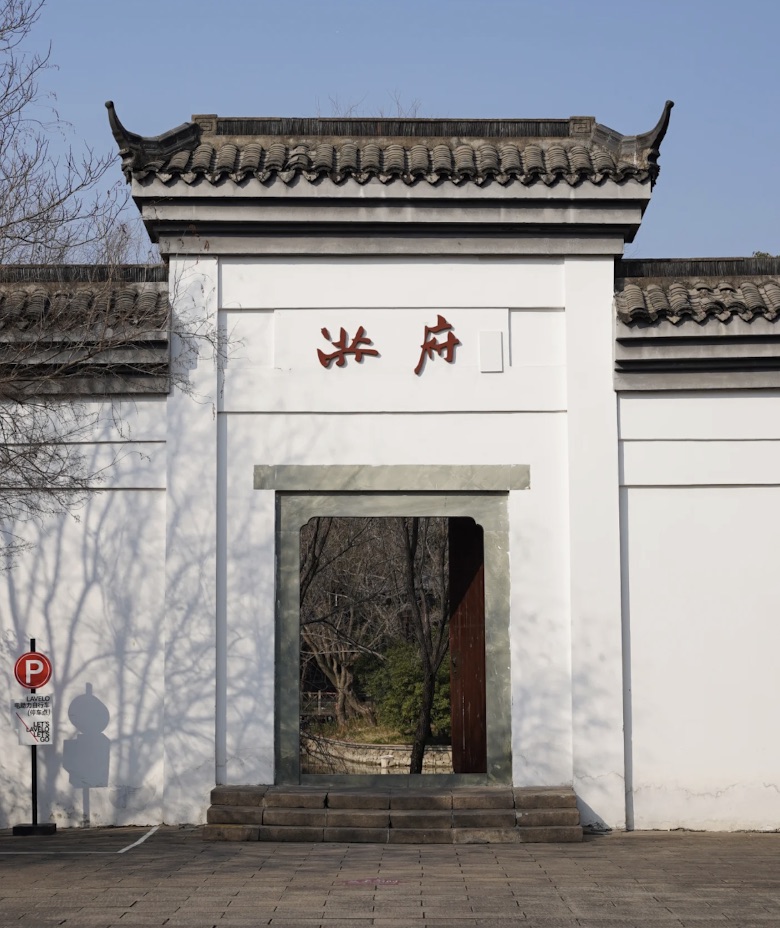
Hong Garden is the cultural heart of Xixi Wetland's story of the Hong family of Wuchang — one of Hangzhou's most distinguished cultural dynasties. The family has lived in the wetland since the Ming dynasty. The garden houses the Hong Ancestral Hall and the Qiantang Notable Families Museum, using photographs, written records, and reconstructed scenes to tell the story of the family's legacy and the deep human roots of Xixi Wetland.
Xixi Water Street
Xixi Water Street is a leisure district threaded through with waterways, representing the meeting point of modern tourism and the wetland's ancient culture. Traditional water-village architecture lines both banks, with specialty restaurants, creative shops, and guesthouse experiences woven into the old fabric of the street. Boats drift quietly past as visitors dine, browse, and explore — a living blend of old and new.
Wu Jiawan
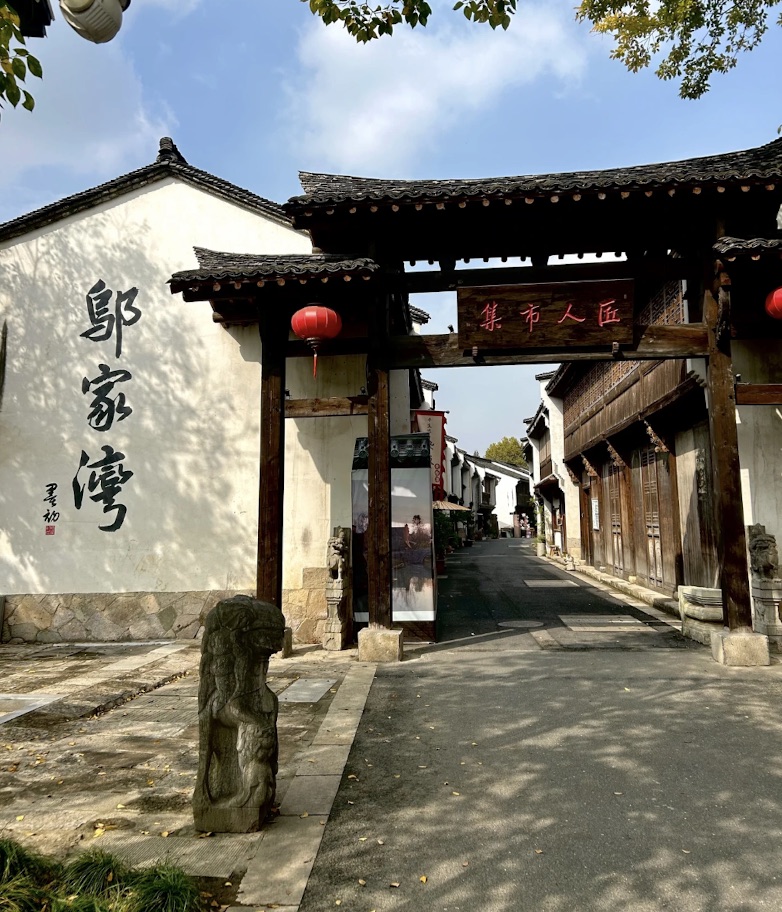
Wu Jiawan sits in the western reaches of Xixi Wetland and is one of the best-preserved ancient wetland village sites in the park. An intricate network of waterways, old bridges, aged trees, and scattered traditional dwellings preserves the authentic character of an agricultural Jiangnan settlement. Visitors can take part in seasonal harvesting activities and enjoy the unhurried pace of life in a Jiangnan water village.
10 stops, in walking order — read top to bottom, no clicking needed.

 2
 3
 4
 5
 6
 7
 8
 9
 10