Travel Guide› Chongqing› Hongya Cave Folk Customs Area
Chongqing

Hongya Cave Folk Customs Area 洪崖洞民俗风貌区

Hongya Cave Folk Customs Area
Address
No. 88 Jialingjiang Riverside Road, Yuzhong District, Chongqing (next to Jiefangbei Cangbai Road, by the Jialing River)

Hongyadong Folk Culture District — Overview

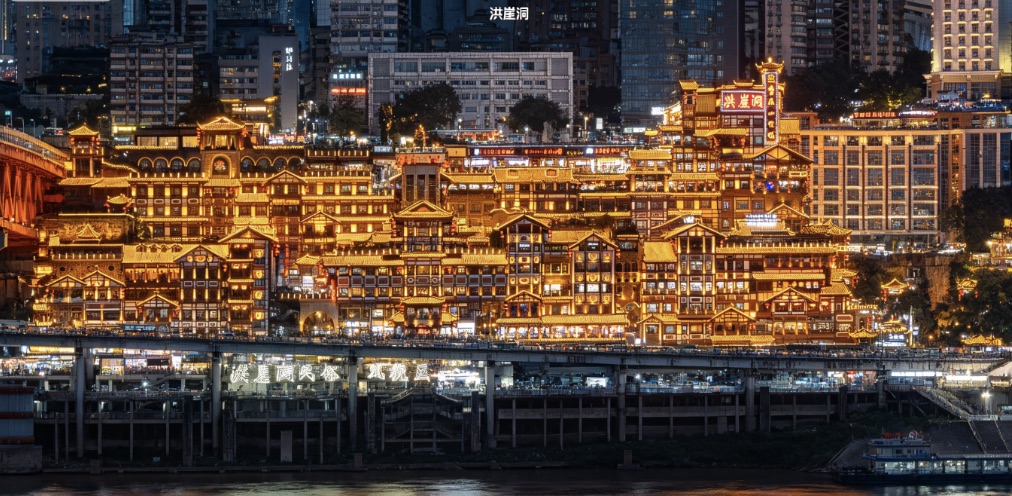
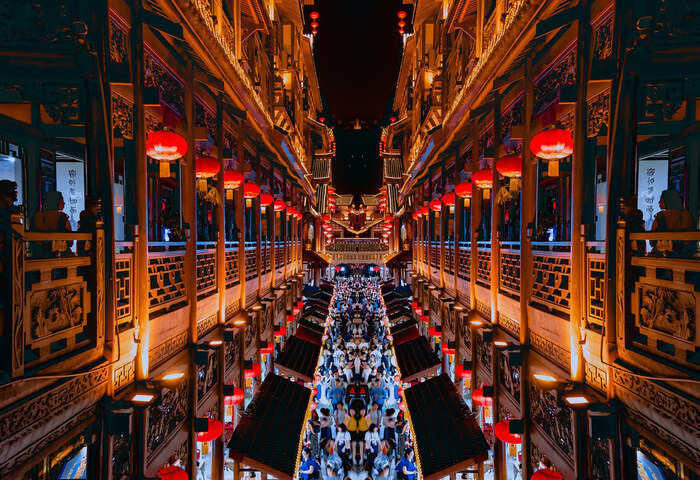
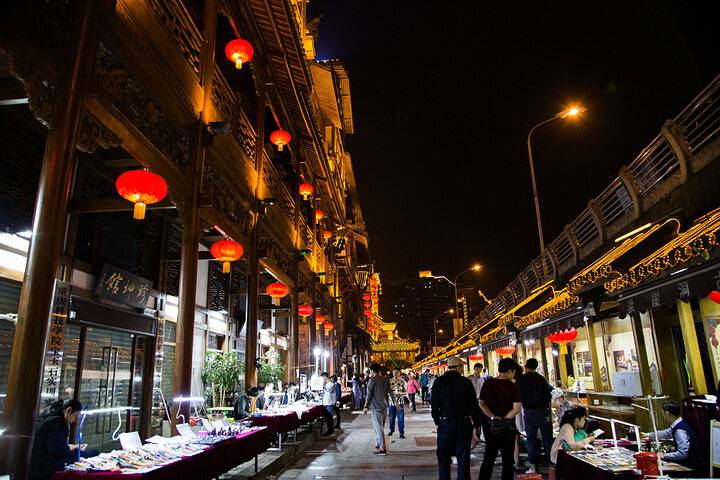
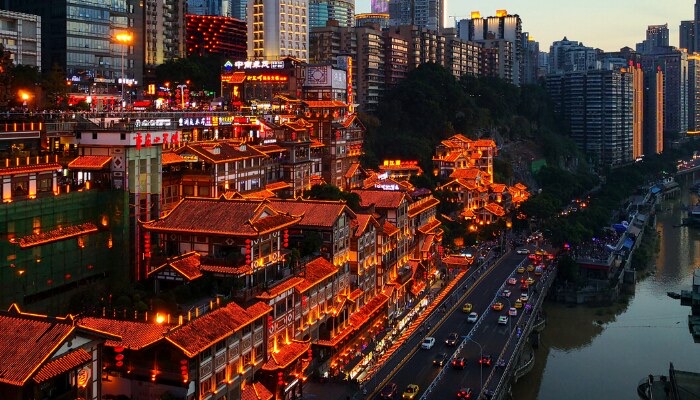
Hongyadong Folk Culture District sits at 88 Jialing River Riverside Road, Yuzhong District, Chongqing, occupying the riverfront where the Yangtze and Jialing rivers meet. It borders Jiefangbei Cangbai Road to the north and Binjiang Road to the south. The site is a National AAAA-rated scenic area. Its signature form is the traditional Ba-Yu stilted dwelling — the diaojiaolou — built to follow the hillside and extend along the river, creating a one-of-a-kind "vertical open-air walking street." Hongyadong has a history stretching back over 2,300 years: a military stronghold in the Warring States period, a cliff-cave temple complex in the Song dynasty, a commercial district in the Ming dynasty, and a thriving wharf settlement in the Qing dynasty. It is the only surviving old-town cultural landmark of its kind in Chongqing today. In 2006 the Chongqing municipal government invested 385 million yuan to reconstruct the site, restoring the ancient Ba-Yu cityscape and bringing together the most distinctive elements of old Chongqing's hillside vernacular architecture: stilted dwellings, classical archways, hanging floral woodwork, cantilevered beams, carved gallery corridors, mid-slope street markets, and flagstone lanes. When dusk falls, tens of thousands of lights flood the entire building complex, and their golden reflections ripple across the river — an effect often compared to the fantastical bathhouse world of the animated film Spirited Away.

Attractions Within the District

The main attractions of Hongyadong Folk Culture District include: City Terrace, Xinhai Monument, Memory of Mountain City sculpture, Ba Culture Pillar, Hongya Dripping Green, Han Dynasty Que Gates, Reunion 1980 — Eighties Life Street, Light and Shadow Interactive Art Space, Zone 78 Trendy Play World, Zhiyan River Bar Street, Tiancheng Lane Ba-Yu Culture Street, Grand Feast Food Street, Confluence of Two Rivers, and Jialing Sunset Glow.

Individual Attraction Descriptions

City Terrace

The City Terrace on the eleventh floor of Hongyadong is the highest viewing platform in the complex, home to the Xinhai Monument and the district's centerpiece sculpture, "Memory of Mountain City." From here visitors overlook the sweeping confluence of the Jialing and Yangtze rivers and gaze across at the glittering skyline of Jiangbei Zuì Central Business District — an ideal spot to take in Chongqing's mountain-and-river identity. The terrace is shaped after the Chinese pictograph for "mountain," which stretches the traditional diaojiaolou into three soaring branches, evoking the idea that "the mountain stands inside the city and the city stands inside the mountain" — a testament to the harmony between Ba-Yu culture and local folk tradition.

Xinhai Monument

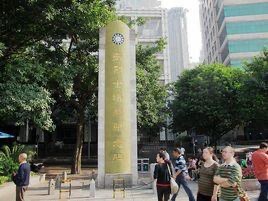
The Xinhai Monument stands on the eleventh floor of Hongyadong, on the Cangbai Road side, and was built by the Nationalist Government to honor Zhang Peijue, governor-general of the Shu Military Government during the 1911 Xinhai Revolution. It ranks alongside the Zou Rong Memorial as one of Chongqing's foremost revolutionary commemorations. The stele carries a dignified, classical form and depicts the historical significance of the Xinhai Revolution in Chongqing through relief carvings, making it an important historical landmark within the complex.

Memory of Mountain City Sculpture

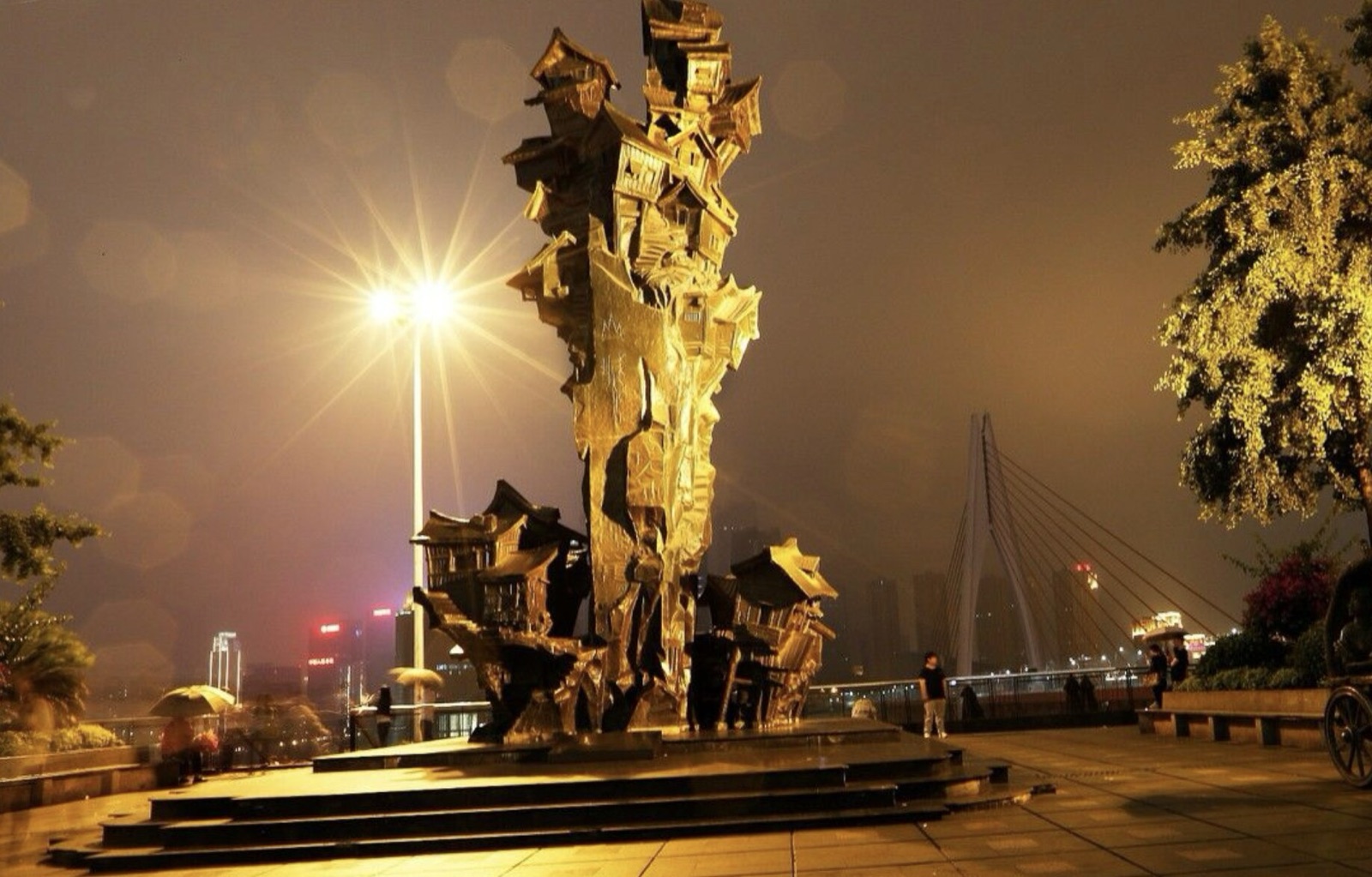
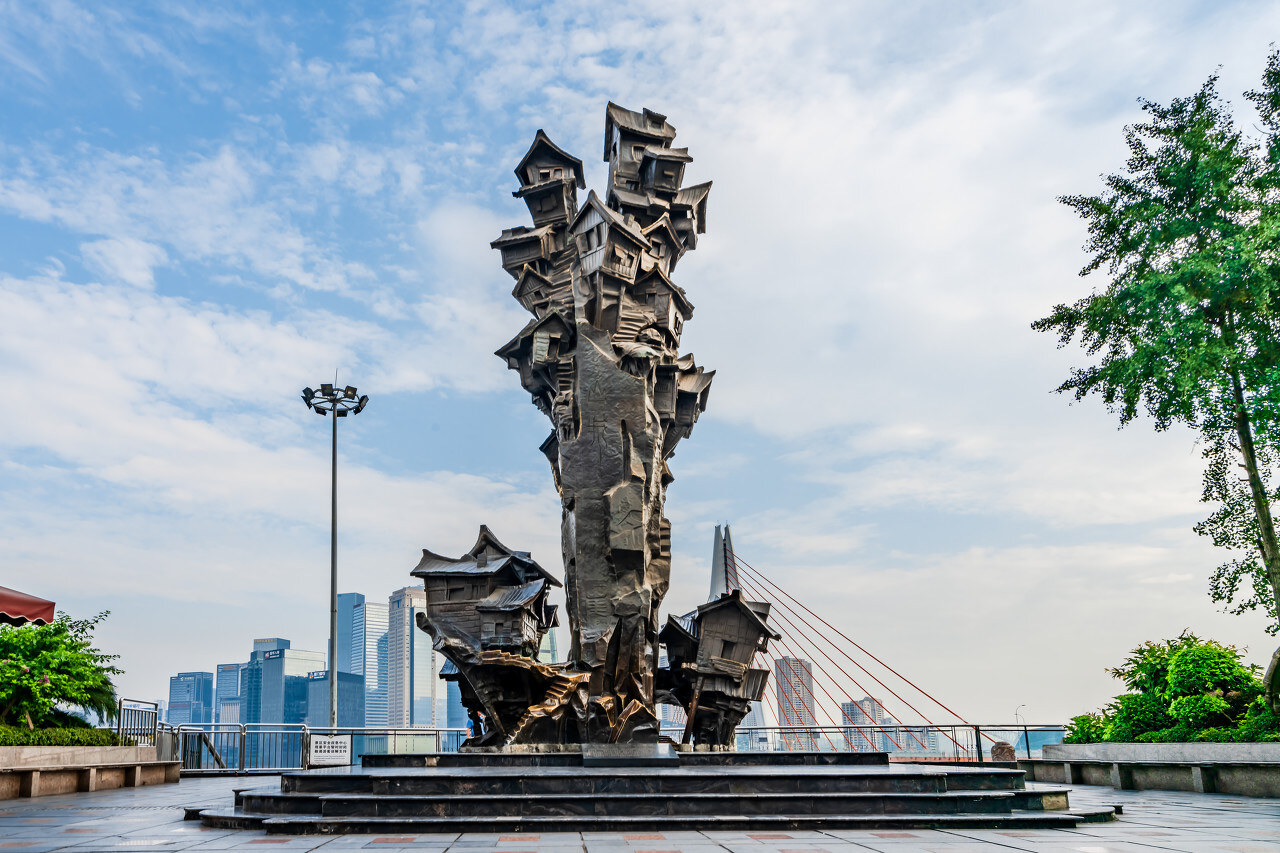
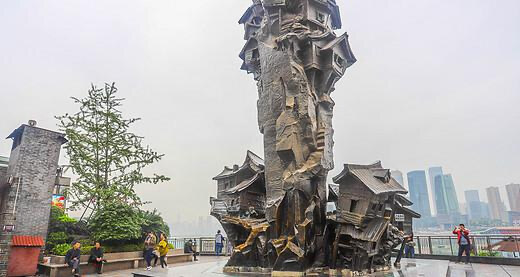
"Memory of Mountain City" is the centerpiece sculpture on the City Terrace of the eleventh floor, cast in brass, standing approximately 12.5 meters tall and 7.5 meters wide, shaped after the Chinese pictograph for "mountain." The sculpture magnifies and reimagines the traditional Chongqing diaojiaolou into three branches rising like the arms of a great tree, expressing the layered urban vision of "the mountain inside the city, the city inside the mountain." It was awarded the National Gold Prize for Urban Sculpture.

Ba Culture Pillar

The Ba Culture Pillar stands on the tenth-floor platform, a bronze work by sculptor Guo Xuanchang, 14 meters tall with a diameter of approximately 0.9 meters. It symbolizes the spiritual beliefs and cultural legacy of the ancient Ba-Yu people, depicting figures drumming and dancing — crowned, mallet raised, dressed in short robes, feet bare on the earth — capturing the resolute and upright spirit at the heart of Ba-Yu culture. Together with the "New Twelve Scenes of Ba-Yu" bronze reliefs, the pillar forms one of the most important cultural display areas in the Hongyadong complex.

Hongya Dripping Green

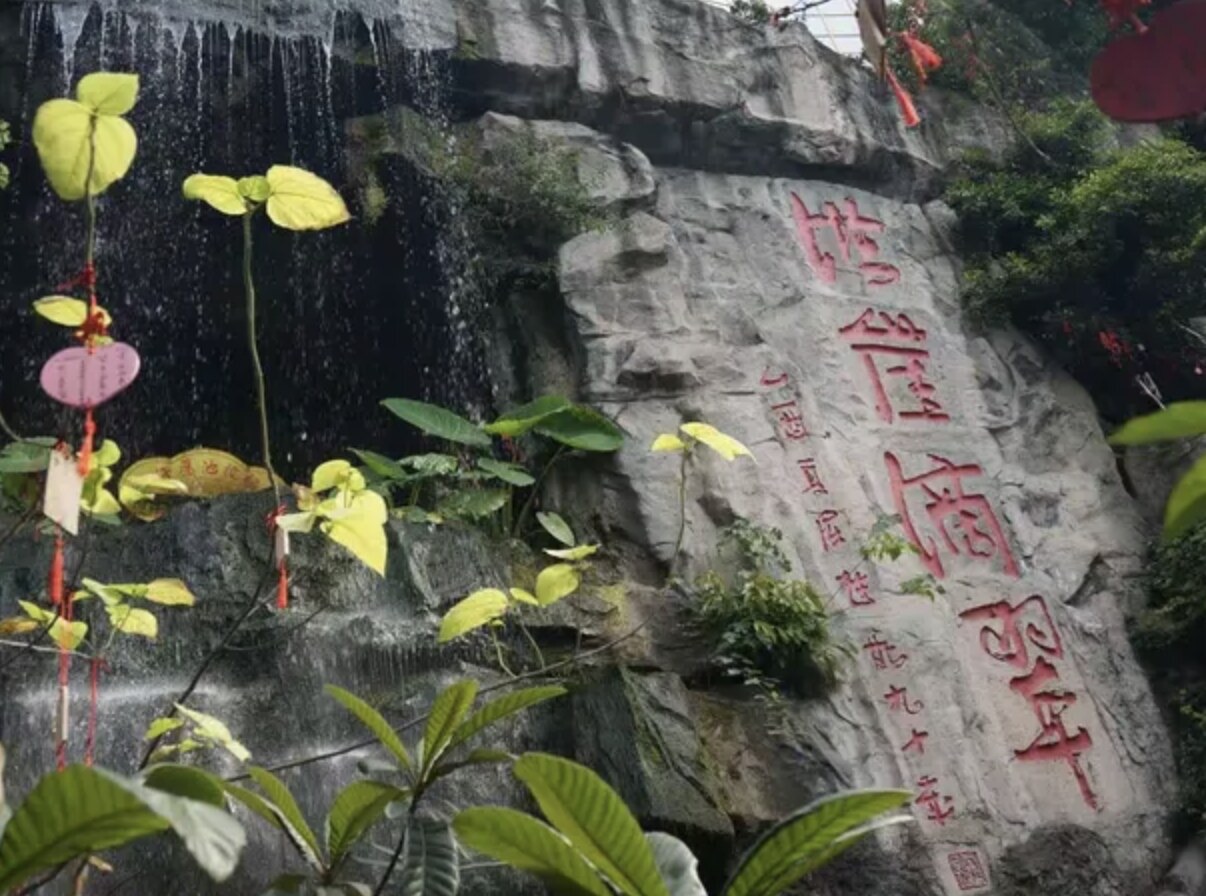
Hongya Dripping Green is one of the ancient Twelve Scenes of Ba-Yu, located at the first-floor Dripping Green Plaza. Song dynasty poet Huang Tingjian praised it with the lines "pearls fall from the high cliff's edge, green surges through the great river's flow." Qing dynasty Ba County magistrate Wang Erjian also immortalized it in verse: "At Hongya's shoulder you could almost reach up and touch it; the ancient cave is rare beyond measure. Bring along a jar of wine and come watch the five colors float. Pearls fall from the high cliff's edge, green surges through the great river's flow. Cast in the slanting light of dusk, waves of light flicker across the stones." This attraction recreates the natural waterfall scenery of the ancient Hongyadong cliff face, rendering a cave-of-water curtain effect through modern technology — the most representative natural feature of the entire district.

Han Dynasty Que Gates

The Han Dynasty Que Gates stand at the first-floor entrance to Hongyadong, reproduced in stone from Han dynasty artifacts excavated at Wushan in the Three Gorges reservoir area. The original two que gate structures are now held at the Chongqing Three Gorges Museum and are over 2,000 years old. Hongyadong's three-que rendering inherits and refines the form of the Han "mother-and-child que," recreating the ancient Ba-Yu ritual of invoking heaven's blessings, subduing river spirits, and praying for national peace — a significant cultural emblem of the district.

Reunion 1980 — Eighties Life Street

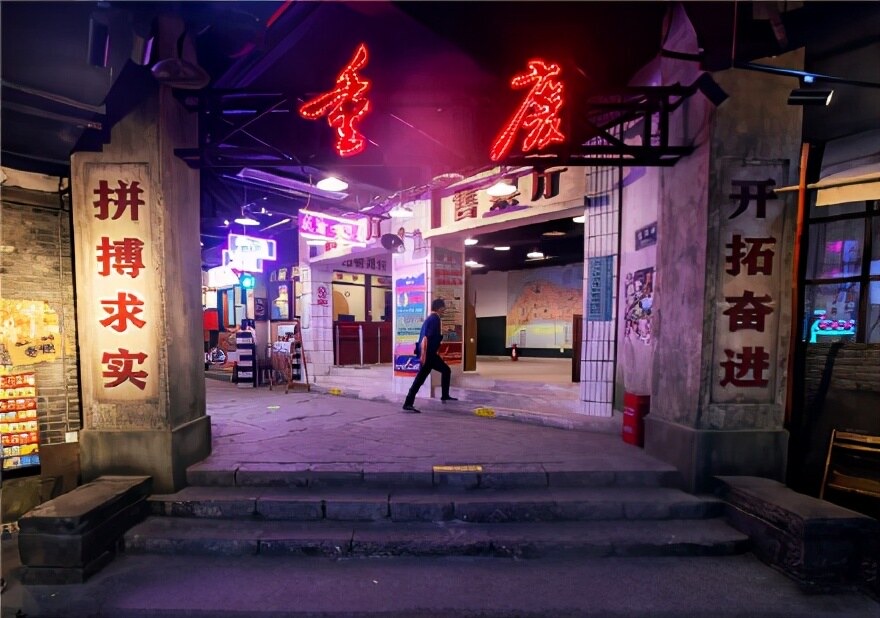
Reunion 1980 occupies the fifth floor of Hongyadong, created in 2020 as an immersive experience zone themed around everyday life in 1980s Chongqing. The district recreates the street layouts, daily scenes, and interactive moments of that era to a cinematic standard. Inside, the Mountain City Wide-Screen Cinema hosts "In Search of Teresa Teng," a holographic MR interactive music show that allows audiences to watch Teresa Teng "perform" her classic songs in bare-eye 5D — a remarkable fusion of historical memory and cutting-edge technology.

Light and Shadow Interactive Art Space

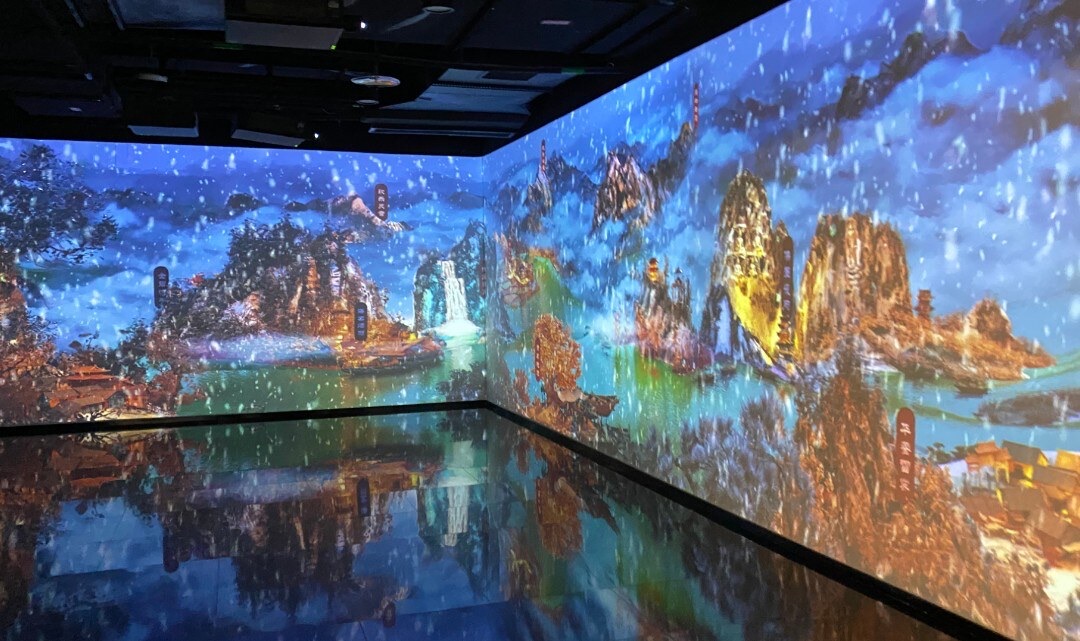
The Light and Shadow Interactive Art Space occupies the sixth floor, weaving together the twenty-four solar terms and the transformation of this space across time as its guiding threads, and pairing them with immersive multimedia art installations so visitors can see, hear, feel, and interact within a play of light and sound. The space incorporates AR augmented-reality technology: scan with your phone and three-dimensional scenes and animated sequences unfold in each room, letting you experience the classic beauty of the Twelve Scenes of Ba-Yu and trace how the mountain city has shifted from past to present. The space contains twelve distinct immersive themed scenes, including "Golden Wall Fragrance," "Begonia in Rain and Mist," "Spirit Sounds of Gele," and "Hongya Dripping Green."

Zone 78 Trendy Play World

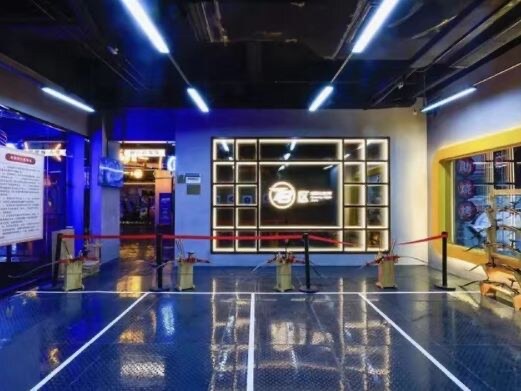
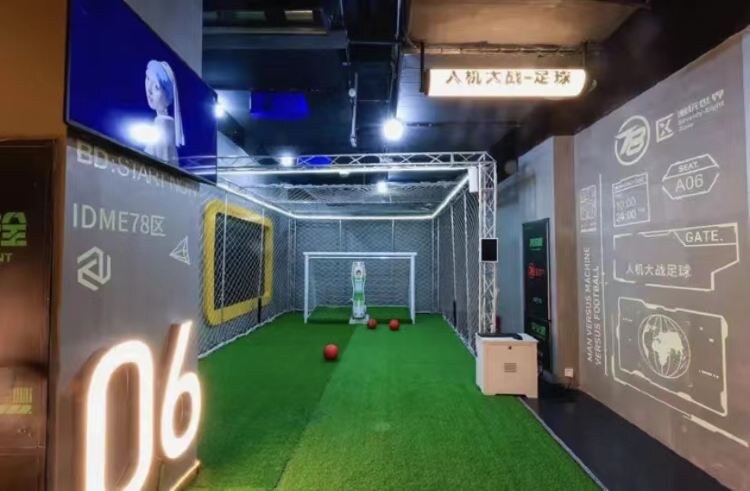
Zone 78 Trendy Play World spans the seventh and eighth floors of Hongyadong, a pop-culture experience space that blends cyberpunk aesthetics with Chongqing's local identity. The zone brings together fashion boutiques, creative experience studios, and entertainment venues popular with younger visitors, fusing contemporary design with traditional Ba-Yu culture to produce a visual and cultural experience unlike anything else — one of the most forward-looking and innovative areas in the complex.

Zhiyan River Bar Street

Zhiyan River Bar Street occupies the second floor and is one of Chongqing's defining nightlife destinations. The street hosts chain bars from more than 30 countries and regions worldwide, built around a mix of stylish bars, urban entertainment, and late-night dining, blending international cuisine with live artistic performance. The name "Zhiyan River Street" traces back to the Ming and Qing dynasties, when Hongyadong served as a major logistics hub for eastern Sichuan, giving rise to a "paper wharf" and a "salt wharf" on this very stretch of riverfront. Today it is Chongqing's window onto the city's nightlife, alive every evening with light, music, and the clinking of glasses — a portrait of the city that never sleeps.

Tiancheng Lane Ba-Yu Culture Street

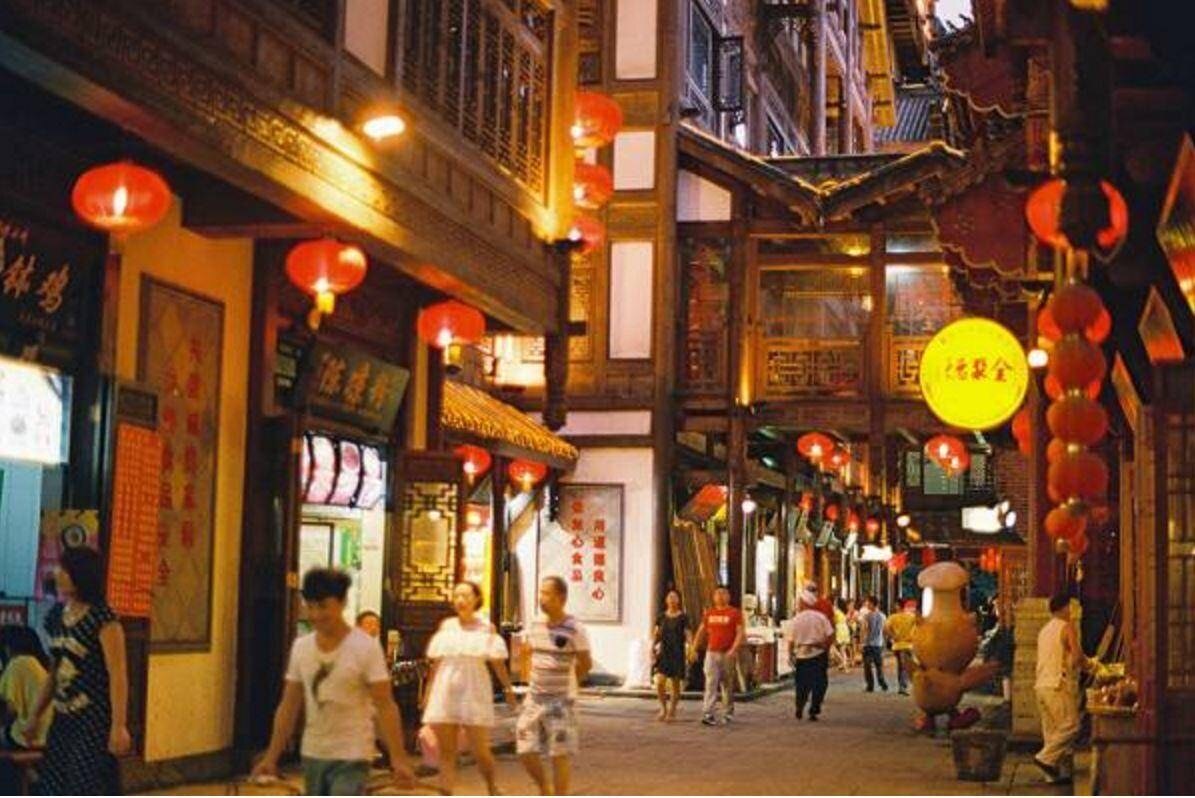
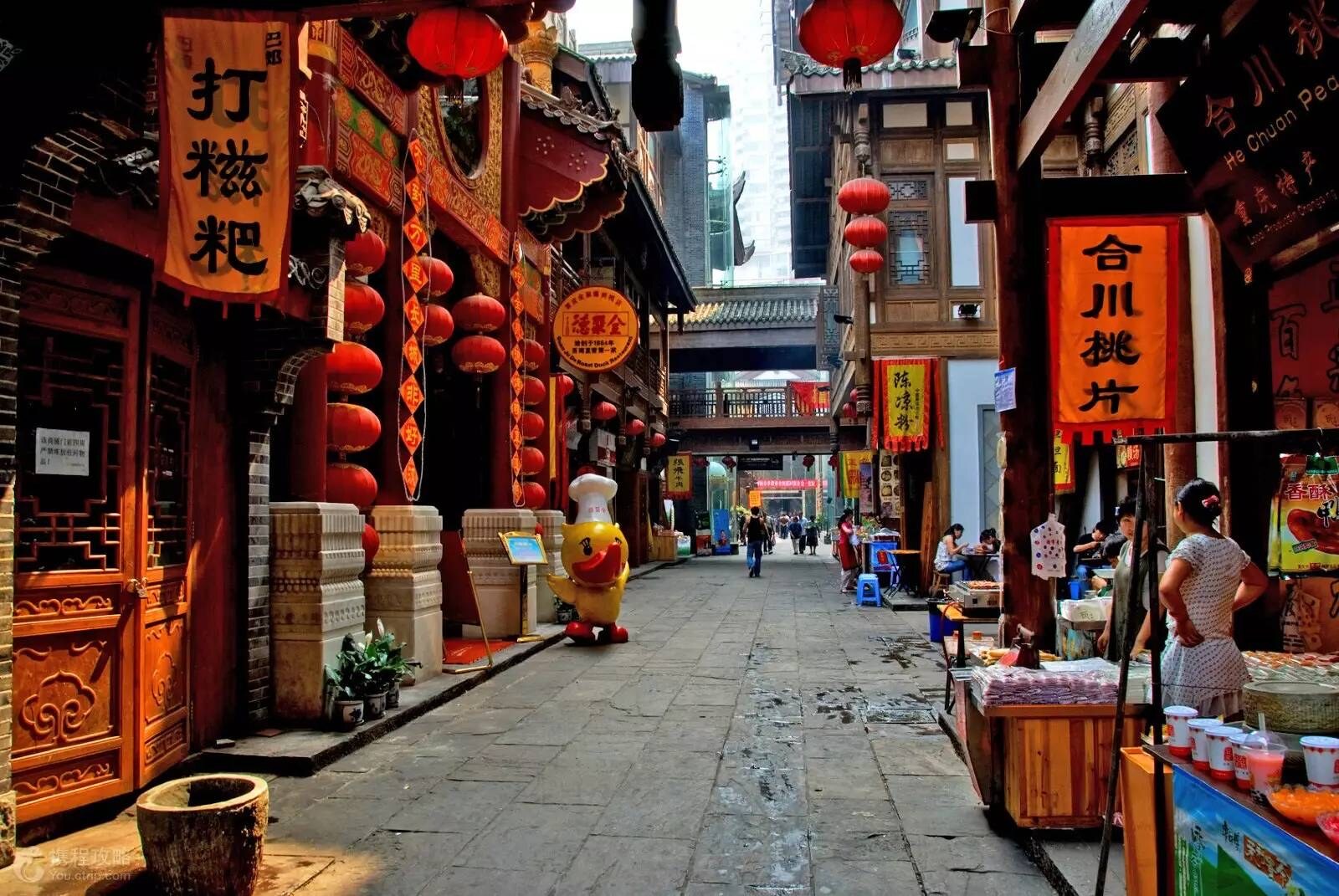
Tiancheng Lane Ba-Yu Culture Street occupies the third floor and is made up of flagstone paths, stone staircases, grey roof tiles, antique-style doors and windows, street performers, a folk arts theater, the First Hotpot Cauldron of China, a traditional medicine workshop, a divination hall, a crafts studio, and the Laoshunxing Teahouse. The street recreates the vibrancy of Ba-Yu life as it existed 2,300 years ago, displaying the grey brick, stone tile, red-eaved and green-roofed elements of classical vernacular architecture alongside "front-shop-back-workshop" folk craft production scenes. Tiancheng Lane is the core of Hongyadong's portrayal of everyday life in old Chongqing and a key window into traditional Ba-Yu ways of living.

Grand Feast Food Street

Grand Feast Food Street occupies the fourth floor and brings together celebrated eateries from near and far. The street runs roughly a hundred meters long and seven or eight paces wide, paved with flagstones. On the river-facing side, artisans demonstrate traditional food-making techniques on the street — glutinous rice cakes, peach slices, and peanut candy. On the cliff-facing side, Chongqing hotpot, thin noodles, and jianghu-style home cooking fill the storefronts. The area gives visitors the chance to taste Chongqing food while raw clifftop scenery and a narrow sliver of sky between the walls create an atmosphere all its own — one where you can eat and still watch the two rivers merge far below.

Confluence of Two Rivers

The Confluence of Two Rivers is one of the landmark natural features of Hongyadong, viewed from the City Terrace on the eleventh floor. Here the Yangtze and Jialing rivers meet, forming the geographic heart of Chongqing's mountain-and-water identity. Standing on the terrace, you can watch the two streams blend in shifting colors and rippling light, with the blazing skyline of Jiangbei Zui Central Business District glowing on the far bank. Together with the "Memory of Mountain City" sculpture, this view defines what Hongyadong means as a place.

Jialing Sunset Glow

Jialing Sunset Glow is one of the ancient Eight Scenes of Chongqing, best seen from Binjiang Road in front of the first-floor entrance. As the sun goes down, golden light spreads across the Jialing River in a sparkling, wide-open spectacle. The glow plays beautifully against Hongyadong's stilted building clusters, showing mountain city and nature in easy coexistence. Once Hongyadong's lights come on, Jialing Sunset Glow joins Hongya Dripping Green and the other featured views to form a living, present-day interpretation of the Twelve Scenes of Ba-Yu.

Practical info Opening hours · Ticket · Getting there
Opening hours
  • Customs Area Public Areas: Open 24/7
  • Shops/Restaurants: About 11:00-23:00 (may extend to 24:00 in summer)
  • Lighting Time: Usually 19:30-23:00 (may start earlier at 19:00 in winter, may extend to 23:30 in summer)
  • Note: The best viewing time is within 30 minutes after sunset, capturing the beautiful scene of architectural lights and twilight sky intersecting; the best photo spots are on Qiansimen Bridge or Jiangbeizui on the opposite side of the Jialing River
Ticket
  • Free admission (no ticket required for the folk customs area; some restaurants, bars, and hotels are charged separately)
Getting there
  • Rail Transit: Take Chongqing Rail Transit Line 1 or 6, get off at Xiaoshizi Station, walk about 10 minutes; or take Line 2, get off at Linjiangmen Station, walk about 8 minutes
  • Bus: Take buses 111, 112, 151, 181, 262, 322, 862, etc., get off at Hongya Cave Station
  • Yangtze River Cableway: Take the cableway from Nanan District to Yuzhong District, walk about 5 minutes after exiting the station
  • Taxi/Ride-hailing: Directly tell the driver "Hongya Cave"; you will arrive right at the destination
  • Note: Hongya Cave has extremely high visitor traffic; roads around the area may be congested during holidays; it is recommended to prioritize rail transit

Inside Hongya Cave Folk Customs Area

15 stops, in walking order — read top to bottom, no clicking needed.

1 Chongqing Hongyadong Folk Custom Scenic Area of 15

Chongqing Hongyadong Folk Custom Scenic Area

重庆洪崖洞民俗风貌区

Built on a 79-metre cliff above the confluence of the Yangtze and Jialing rivers, Hongyadong is an 11-storey stilted-house complex of 65,000 m² designed by He Yongzhi in 2006. Inspired by Bayu traditional architecture, its tiered wooden pavilions, flying eaves and grey brick walls have become a viral symbol of Chongqing's "Mountain City" nightscape. The complex is a national night-time cultural-tourism zone linking Chaotianmen Square, Jiefangbei and the Qiansimen Bridge.

On-site narration · read it where you stand

Built on a 79-metre cliff above the confluence of the Yangtze and Jialing rivers, Hongyadong is an 11-storey stilted-house complex of 65,000 m² designed by He Yongzhi in 2006. Inspired by Bayu traditional architecture, its tiered wooden pavilions, flying eaves and grey brick walls have become a viral symbol of Chongqing's "Mountain City" nightscape. The complex is a national night-time cultural-tourism zone linking Chaotianmen Square, Jiefangbei and the Qiansimen Bridge.

City Balcony

城市阳台

The City Balcony crowns Hongyadong at level 11 (~79 m above the river). Facing north, it overlooks Jiangbeizui's skyline; south, the Yangtze–Jialing confluence ("yin-yang hotpot") and the Chaotianmen Rafles complex; east, the iconic photo spot combining the stilted houses with the Qiansimen Bridge. With cafés, souvenir shops and small exhibitions, it is the prime night-photography point.

On-site narration · read it where you stand

We are now standing at the highest point in Hongyadong — the City Terrace on the eleventh floor. This is not only the complex's premier viewing platform but also the starting point of the entire tour. Look around and you will notice something remarkable: even though we are on the eleventh floor, the ground beneath us is an ordinary street, connected directly to the Jiefangbei shopping district. This is the magic of Hongyadong's design — both the eleventh floor and the first floor open onto street level.

At the center of the City Terrace stands the monumental brass sculpture "Memory of Mountain City," 12.5 meters tall and roughly 7.5 meters wide. Its form is drawn from the Chinese pictograph for "mountain," stretching the traditional diaojiaolou into three soaring branches like the arms of a great tree — a representation of "the mountain inside the city and the city inside the mountain." It was awarded the National Gold Prize for Urban Sculpture.

From here, the Jialing and Yangtze rivers come into view as they converge below, forming the geographic heart of Chongqing's mountain-and-water identity. The towers of Jiangbei Zui Central Business District rise across the water in counterpoint to the stilted buildings clustering around us — the ancient and the modern in quiet conversation. If you want to photograph the full panorama of Hongyadong, head left: a walkway connects to Qiansi Men Bridge, where the view opens up even wider. For now, take a moment to breathe in the city from above and feel what it means for Chongqing to be called an "8D magical city" — then let us head down and discover what lies beneath.

Xinhai Revolutionary Monument

辛亥丰碑

Located on the western side of Hongyadong's City Balcony plaza, the Xinhai Monument is a black-granite relief wall honoring the 1911 Revolution in Chongqing. The relief depicts Zhang Peijue, Yang Cangbai and Xiang Chu — leaders of the November 22, 1911 uprising that established the Shu Army Government — alongside soldiers, banners and the old Chaotianmen docks. It anchors Hongyadong's role as a civic-historical landmark.

On-site narration · read it where you stand

On the right side of the City Terrace, you will find one of the district's most important historical landmarks — the Xinhai Monument. This stele was erected in 1945 by the Nationalist Government to honor Zhang Peijue, governor-general of the Shu Military Government during the 1911 Xinhai Revolution. It stands as a companion in prestige to the Zou Rong Memorial. The stele carries a dignified, classical form and depicts the historical significance of the Xinhai Revolution in Chongqing through relief carvings. Zhang Peijue was a pivotal figure in the revolution and served as governor-general of the Shu Military Government, making major contributions to Chongqing's democratic movement. This monument keeps that chapter of history present and reminds us of Chongqing's deep heritage as a city of heroes.

From here we will follow the walkway downward and continue exploring Hongyadong's cultural layers. As you descend, notice that the building's framework follows a traditional mortise-and-tenon timber construction — a system prized not only for its earthquake resilience (able to withstand minor quakes undamaged, moderate quakes with repairable damage, and major quakes without collapse) but also for the craftsmanship it displays. Pay attention to the details along the way: hanging floral woodwork, cantilevered beams, carved gallery corridors — all hallmarks of Ba-Yu mountain vernacular architecture. As we continue down, more expressions of Ba-Yu culture await. Let us keep going and savour this city built on the cliff face.

Memory of the Mountain City Sculpture

记忆山城雕塑

Distributed across the corridors of Hongyadong's 11F-to-1F levels, this bronze-relief cluster re-imagines late 19th- to mid 20th-century Chongqing life: the Chaotianmen cable car, sedan-chair porters, stilted-house kitchens, riverside laundry and the famous "bangbang" porters. Produced over two years by a Sichuan Fine Arts Institute team, it functions as a "Chongqing Along-the-River-During-the-Qingming-Festival" of the old Mountain City.

On-site narration · read it where you stand

At the center of the City Terrace on the eleventh floor stands the piece that defines Hongyadong visually — "Memory of Mountain City." This monumental brass sculpture was created by Professor Guo Xuanchang and takes the Chinese pictograph for "mountain" as its form, magnifying and reimagining the traditional Chongqing diaojiaolou into three branches that rise like the arms of a great tree, embodying the idea of "the mountain inside the city and the city inside the mountain." The sculpture is cast entirely in brass, with gold leaf inlaid along its outlines — a piece of exceptional craft and commanding presence. In July 2006 it was awarded the National Gold Prize for Urban Sculpture, and it has since become the spiritual heart of the Hongyadong complex.

The sculpture's base recreates the scene of old Chongqing's riverside cliffs, with a diaojiaolou rising dramatically above the rock face, vividly evoking the waterfront character of the old city. "Memory of Mountain City" brings together realism and romanticism, using bold, expressive form to interpret Ba-Yu culture and folk tradition with memorable power. While you stand here taking it in, look past it to the horizon — the Jialing and Yangtze rivers converge in the distance, the very image at the core of Chongqing's mountain-and-water identity. When you are ready, let us head further down to discover more of what this cliff city has to show.

River-Blockade Fort Bronze Sculpture

江隘炮台铜雕

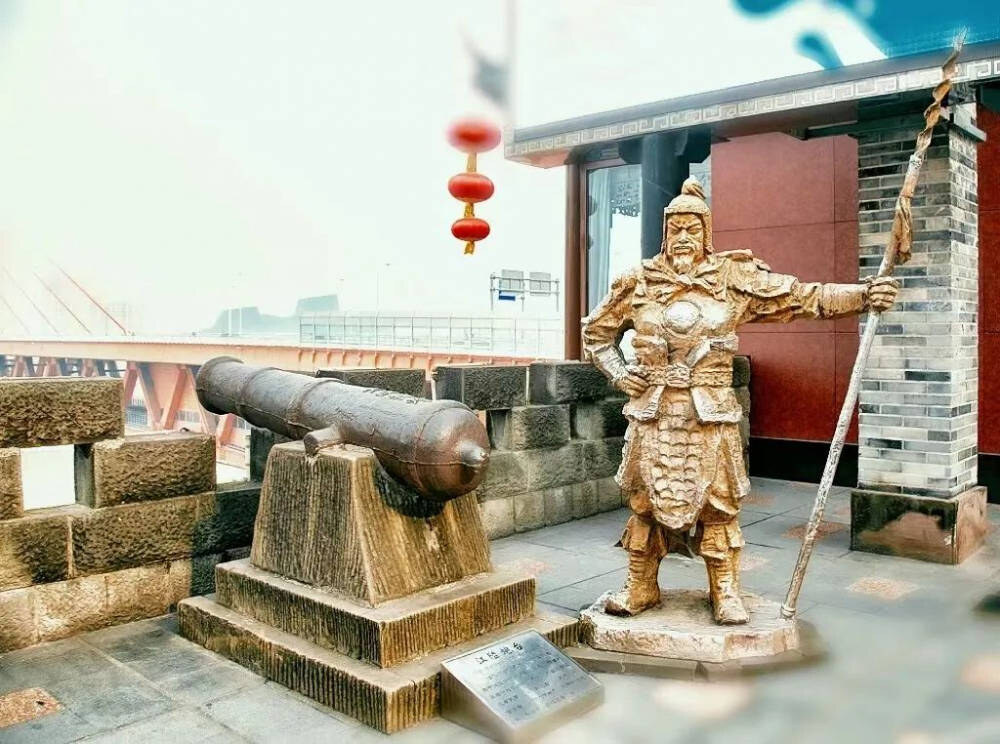
Placed on the riverside terrace beside the 1F Dichiui Plaza, this bronze fort sculpture commemorates the river-defence system of the upper Yangtze from 1891 through the 1937–1945 war years. The main piece is a Krupp-style coastal gun aimed downstream; the relief base depicts the Battle of Yichang, the Shiplap Defense and the Great Yichang Retreat, flanked by three Sichuan Army soldiers and a bugler. A rubbing of Feng Yuxiang's "Return Our Land" calligraphy is inscribed at the rear.

On-site narration · read it where you stand

Along the city wall to the left of Hongyadong Hotel on the eleventh floor, you will spot a bronze sculpture marking a site that was once among the most strategically formidable positions on the river. Hongyadong was originally called Hongyamen — it was one of the "nine open, eight closed" seventeen city gates rebuilt by Dai Ding when he fortified Chongqing in the fourth year of the Hongwu reign of the Ming dynasty (1371 AD), and it historically housed cannon emplacements at this exact location. The bronze you see now is Professor Guo Xuanchang's reproduction of the river-gate cannon emplacement; the original cast-iron cannons were moved to a museum for preservation. In the Eastern Zhou period, Ba generals stationed here and established what was known as the "Jiangzhou Cannon Emplacement." During the Southern Song dynasty it served as an anti-Jin fortification; in the Qing dynasty it became the most important artillery post for guarding the river approach. Hongyadong's military history reaches back to 316 BC, when Qin forces defeated the Ba state and this cliff already functioned as a defensive stronghold — a witness to Chongqing's long tradition of strategic defense.

This cannon emplacement bronze is not only a record of Hongyadong's military past but also an invitation to picture the full defensive system that once protected the ancient city. As you take it in, notice the architectural details around you — hanging floral woodwork, cantilevered beams — all characteristic of traditional Ba-Yu construction. Our next stop is the tenth floor, where more expressions of Ba-Yu culture are waiting. Let us keep moving.

10F: Ba Culture Pillars

十楼:巴文化柱

The 10th-floor central atrium is anchored by six 8-metre carved bluestone pillars designed by the Sichuan Fine Arts Institute, tracing Ba civilization from its mythic origins to the Qin–Han era. Topics span Ba migrations, fishing/hunting/agriculture, salt and cinnabar trade, the "Xialiba" war-dance, the white-tiger totem and the eventual disappearance of the Ba script. Bronze bird-zun replicas top each pillar, and bilingual Ba/Han inscriptions line the walls.

On-site narration · read it where you stand

We have now reached the tenth-floor platform, home to one of the most significant cultural symbols in the complex — the Ba Culture Pillar. This bronze sculpture by Professor Guo Xuanchang stands 14 meters tall with a diameter of approximately 0.9 meters. It symbolizes the spiritual beliefs and cultural legacy of the ancient Ba-Yu people, depicting figures drumming and dancing — crowned, mallet raised, dressed in short robes, feet bare on the earth — capturing the resolute and upright character that defines Ba-Yu culture. Together with the "New Twelve Scenes of Ba-Yu" bronze reliefs, the pillar forms one of the most important cultural display areas in the Hongyadong complex and a key entry point for understanding Ba-Yu civilization.

Ba-Yu culture is the distinctive cultural tradition of the Chongqing region, with roots stretching back to the Eastern Zhou period, shaped over thousands of years into a unique artistic style and spiritual sensibility. The totems and carvings on the Ba Culture Pillar reflect the ancient Ba people's reverence for nature and their love of life — they are among the most powerful carriers of this culture that survive today. While you are here, look out past the pillar toward the horizon: the Jialing and Yangtze rivers meet in the distance, the defining natural image of Chongqing as a mountain-and-water city. When you are ready, we will continue down to the ninth floor, where even more awaits. Let us keep going.

9F: Exotic Flavors Street

九楼:异域风情街

The 120-metre Exotic Flavors Street on Level 9 is divided into four themed zones — Southeast Asia, the Middle East, Europe and the Americas — housing about 30 themed restaurants, cafés and craft stores. Facades mix Ottoman arches, rattan lanterns, Islamic geometric tiles and Mayan motifs. Weekend afternoons (16:00–17:00) feature a rotating program of street music and dance; the level forms a "Chongqing meets the world" counterpart to the Ba culture pillars above.

On-site narration · read it where you stand

We are now on the ninth floor, part of the International Bazaar terrace area, which specializes in goods from around the world — exotic crafts and leisure items that carry a distinctly foreign feel. You will find crystals and handmade crafts from South America, Native American-style masks, Danish windmill decorations, Australian textiles, Japanese and Korean figurines, and much more — each item with its own character, giving visitors a genuinely different shopping experience. Hongyadong's international bazaar is an important showcase of Chongqing's identity as an open, cosmopolitan city, reflecting the multicultural energy that the city has embraced.

On the ninth floor you can also encounter displays of Ba-Yu culture, such as the bronze relief series "New Twelve Scenes of Ba-Yu" by Professor Guo Xuanchang — works that capture the details of everyday street and alley life, carrying forward the resolute, forthright spirit embedded in Ba-Yu tradition. While you explore the international offerings on this floor, do not let the Ba-Yu cultural dimension slip past you — the two coexist here in a way that is particular to Hongyadong. Next, we head down to the eighth and seventh floors, home to Zone 78 Trendy Play World — a creative space beloved by younger visitors. Let us keep going.

8F: Zone 78 Trendy-Play World

八楼:78 区潮玩世界

Zone 78 on the 8th floor (~4,000 m²) is Chongqing's Gen-Z hangout: a streetwear district (INXX, Randomevent, ROARINGWILD), a blind-box and figure district (Pop Mart, TOPTOY, 52TOYS), six headquarter murder-mystery and escape-room stores, plus a skate/dance/b-box shared space. Weekend "Zone 78 Street Culture Festival" mini-markets have made it the city's primary Gen-Z check-in spot.

On-site narration · read it where you stand

We have arrived on the eighth floor — the upper level of Zone 78 Trendy Play World. Zone 78 is one of the most contemporary parts of Hongyadong, bringing together fashion boutiques, creative experience studios, and entertainment venues that draw a young, energetic crowd. The architecture here weaves cyberpunk elements together with the traditional Ba-Yu diaojiaolou, producing a visual and cultural atmosphere unlike anything else in the complex. All around you are unexpected products, art installations, and hands-on experiences — expressions of the creative energy and drive that define Chongqing today.

The name "Zone 78" comes from the floors it occupies — the seventh and eighth — making this the meeting point of Chongqing's local culture and international trends. As you move through the space, keep an eye on the architectural details around you: hanging floral woodwork, cantilevered beams — traditional Ba-Yu building features that sit in deliberate conversation with everything modern here. That interplay is at the core of Hongyadong's design language. Just below is the seventh floor, the lower level of Zone 78, with more surprises waiting. Let us head down.

7F: Zone 78 Trendy-Play World (Lower Level)

七楼:78 区潮玩世界

The 7F is the lower half of Zone 78, linked to 8F by the central atrium. It adds a "Guochao / ACG / e-sports" identity: Zone E hosts 20+ national-style brands (Hanfu, intangible-heritage crafts and Cha Yan Yue Se tea); Zone F is a 1,500 m² ACG hub hosting BJD doll shows, Lolita tea parties and ComiC Chongqing sub-venues; Zone G is the 78 E-sports Arena, with 12 five-seat rooms, 8 streamer booths and a 60-seat LPL-themed viewing hall — the main campus-league venue in central Chongqing.

On-site narration · read it where you stand

Now we are on the seventh floor — the lower level of Zone 78 Trendy Play World. Compared with the eighth floor above, this level puts more emphasis on interactive experience and artistic display. You will find creative art installations, interactive games, and pop-culture exhibitions that showcase the same innovative spirit and vitality driving contemporary Chongqing. The seventh floor is also home to a handful of cafes and quiet bars where you can pause, order something interesting, and soak in the relaxed mountain-city atmosphere while surrounded by the art.

The name "Zone 78" refers to the two floors it spans — seven and eight — positioning this whole area as the intersection of Chongqing's homegrown culture and the pulse of international trends. As you explore, take a moment to notice the building's traditional features: hanging floral woodwork and cantilevered beams — the defining marks of Ba-Yu mountain vernacular architecture, holding their own alongside every modern addition here. That combination is what gives Hongyadong its particular aesthetic character. Our next stop is the sixth floor, home to the Light and Shadow Interactive Art Space — one of the most technologically ambitious sections of the entire complex. Let us keep going.

6F: Light & Shadow Interactive Art Space

六楼:光影互动艺术空间

Located on the 6th floor, this 1,800 m² immersive art space was co-curated by the Sichuan Fine Arts Institute's new-media team and invited teamLab artists. Ten permanent themed rooms include the radar-sensor "Rain Room," interactive "Flower Field," 180° dome "Star Room," koi-filled "Deep Sea," 36-mirror "Mirror Palace" and a 360° Chongqing-night panorama. Exhibits rotate every 6–12 months and the venue hosts the annual Chongqing International Light & Shadow Art Festival.

On-site narration · read it where you stand

We are now on the sixth floor, inside Hongyadong's Light and Shadow Interactive Art Space — the complex's dedicated cultural tourism experience zone for exploring Hongyadong through a new lens. This space uses the cycle of the twenty-four solar terms and the evolution of this site across time as its structuring threads, weaving them together with immersive multimedia art installations to deliver a total sensory experience — something you can see, hear, feel on your skin, and interact with directly. Most striking of all is the AR augmented-reality layer built into the space: scan with your phone and three-dimensional scenes and animated sequences unfold around you, letting you journey through the classic beauty of the Twelve Scenes of Ba-Yu and trace the mountain city's transformation from ancient times to the present.

The space contains twelve distinct immersive themed scenes, including "Golden Wall Fragrance," "Begonia in Rain and Mist," "Spirit Sounds of Gele," and "Hongya Dripping Green." Each scene has its own mode of artistic expression — in "Begonia in Rain and Mist," light silk billows and ink branches bloom before you; in "Hongya Dripping Green," waterfalls pour on four sides and the flow responds to your touch. These scenes carry the essence of Ba-Yu culture while using contemporary technology to make it visceral and immediate. As you move through the space, notice the building fabric around you as well — hanging floral woodwork, cantilevered beams — the hallmarks of Ba-Yu traditional construction, in quiet dialogue with everything modern here. Next we descend to the fifth floor and Reunion 1980 — Eighties Life Street, the most nostalgic corner of Hongyadong. Let us head down.

5F: Reunion 1980 — 80s Life Streetscape

五楼:重逢 1980·八十年代生活情境街区

Reunion 1980 on the 5th floor (~5,000 m²) is a 1:1 recreation of 1980–1989 Chongqing life by the Qi Chou Hou creative team. Six themed sets — an old hotpot shop, a Shiba-ti barbershop, the Jiefangbei Xinhua Bookstore, a "Mountain City" wide-screen cinema, the Chaotianmen cable station and a teahouse — host 30+ interactive rooms (80s living room with a black-and-white TV, sewing machine and enamel basin; classroom with abacus and Little Red Book; photo studio with Haiou camera). Period-costume rentals and roving "ice-cream vendor / knife-sharpener / popcorn man" performers (15:00–16:00) make it a nostalgia, family and influencer destination.

On-site narration · read it where you stand

We have arrived on the fifth floor — Hongyadong's Reunion 1980 Eighties Life Street. This immersive experience zone was created in 2020 and is themed around everyday life in 1980s Chongqing, recreating the street layouts, daily scenes, and interactive moments of that era to a cinematic level of detail. The zone includes the Mountain City Wide-Screen Cinema, home to "In Search of Teresa Teng" — a holographic MR interactive music show that lets audiences watch Teresa Teng "perform" her classic songs in bare-eye 5D, an extraordinary effect that blurs the line between memory and the present.

Beyond the cinema, you will encounter a Route 5 tram, open-air tea stalls, a Disco plaza, and other period-accurate settings that faithfully reconstruct what daily life in 1980s Chongqing looked, felt, and sounded like. You can also join in interactive experiences — arcade games, performances by a vintage dance troupe — and let the atmosphere of that era wash over you. The zone is not simply a display of historical memory: through modern technology it allows visitors to step into that energetic decade and feel it firsthand. Next we head down to the fourth floor and Grand Feast Food Street — the part of Hongyadong with the most smoke and fire. Let us keep going.

4F: Grand Feast Food Street

四楼:盛宴美食街

The 350-metre Grand Feast Food Street on Level 4 is Hongyadong's culinary core. Section A serves classic Chongqing dishes (hotpot, Miaojiang chicken offal, Bishan rabbit, Laifeng fish); Section B offers Sichuan street snacks (sour-spicy noodles, cold noodles, bo-bo chicken, guokui, chuanchuan); Section C imports 30+ national brands (Shunde congee, Nanjing Da Pai Dang, Guizhou Siwa Wa, Hunan cured meat, Shaanxi biangbiang noodles). A covered arcade echoes the stilted-house façade; the daily 18:00–21:00 "Jianghu Cuisine" long-table banquet seats up to 200 guests.

On-site narration · read it where you stand

We are now on the fourth floor — Hongyadong's Grand Feast Food Street, one of the most important dining areas in the entire complex. The street runs roughly a hundred meters long and seven or eight paces wide, paved entirely with flagstones, giving it the feel of an old Chongqing lane. On the river-facing side, artisans demonstrate traditional food-making techniques right on the street — glutinous rice cakes, peach slices, peanut candy — so you can watch the craft up close. On the cliff-facing side, premium hotpot restaurants, international dining, business hotels, and Chongqing-style private kitchen cooking fill the storefronts with a broad range of flavors.

Grand Feast Food Street has earned the nickname "an unconventional food city" because it goes beyond traditional Chongqing fare and brings in a range of contemporary dining concepts, creating a food culture with its own distinctive character. The buildings lining the street preserve the traditional Ba-Yu architectural vocabulary — hanging floral woodwork, cantilevered beams, carved gallery corridors — weaving those elements together with the dining experience to produce a strongly Ba-Yu atmosphere throughout. While you eat, you can also take in the raw clifftop scenery, the narrow sliver of sky between the walls, and views over the two rivers meeting far below — a combination of the culinary and the spectacular that is pure Hongyadong. Our next stop is Tiancheng Lane Ba-Yu Culture Street on the third floor, one of the most culturally rich areas in the complex. Let us keep going.

3F: Tiancheng Lane Bayu Folk Street

三楼:天成巷巴渝风情街

Named after the old Tiancheng Lane of the historical Chongqing city, this 280-metre street is the intangible-heritage core. The east section hosts 12 workshops (Shu embroidery, Rongchang fans, Rongchang pottery, Liangping bamboo curtains, Chengkou lacquer, Youyang Miao embroidery) with master demonstrations; the central section gathers Chongqing geographical-indication brands (Qiaotou hotpot base, Ciqikou Chen mahua, Hechuan taoshan, Jiangjin mihuatang, Fuling zhacai); the western section carries 30 local designer brands. The level is Hongyadong's main souvenir economy.

On-site narration · read it where you stand

We have arrived on the third floor — Tiancheng Lane Ba-Yu Culture Street, the core of Hongyadong's portrait of everyday life in old Chongqing. Tiancheng Lane is made up of flagstone paths, stone staircases, grey roof tiles, antique-style doors and windows, street performers, a folk arts theater, the First Hotpot Cauldron of China, a traditional medicine workshop, a divination hall, a crafts studio, and the Laoshunxing Teahouse, all arranged in a "one street, three levels" structure that recreates the vibrancy of Ba-Yu life as it existed 2,300 years ago.

The street displays the grey brick, stone tile, red-eaved and green-roofed elements of classical Ba-Yu vernacular architecture, alongside "front-shop-back-workshop" scenes where folk artisans produce their crafts in view. You can watch craftspeople making paper-cuts, sugar paintings, and shadow puppets by hand, catch a performance at the folk arts theater, and hear the story behind the First Hotpot Cauldron. Laoshunxing Teahouse is the ideal place to experience traditional Chongqing tea culture — settle in with a bowl-style covered cup of tea and enjoy the unhurried, street-corner conversation culture the locals call "bai long men zhen."

Tiancheng Lane's architecture blends traditional Ba-Yu elements with contemporary commercial use, creating a spatial identity that feels genuinely layered. As you explore, look at the details in the building fabric around you — hanging floral woodwork, cantilevered beams, carved gallery corridors — all hallmarks of Ba-Yu mountain vernacular construction. Tiancheng Lane is both a cultural showcase and a living window into traditional Ba-Yu ways of life. Just below is the second floor and Zhiyan River Bar Street — the heartbeat of Hongyadong's nightlife scene. Let us keep moving.

2F: Zhi-Yan River Dynamic Bar Street

二楼:纸盐河动感酒吧街

The 220-metre Zhi-Yan River Bar Street on Level 2 — named after the historic paper-and-salt-trade dock lane — is one of Chongqing's three great nightlife strips. Section A hosts cocktail, single-malt and sake bars with floor-to-ceiling glass over the Jialing River and Qiansimen Bridge; Section B gathers 8 live-music brands (SPACE, MAO LiveHouse, Nut Club, etc.) with 20:30–23:00 shows nightly; Section C houses clubs (SOHO, SPACE MIX, MUSE) open until 04:00.

On-site narration · read it where you stand

We are now on the second floor — Zhiyan River Bar Street, the section of Hongyadong with the most electric nightlife energy. The name "Zhiyan River Street" traces back to the Ming and Qing dynasties, when Hongyadong served as a major logistics hub for eastern Sichuan, giving rise to a "paper wharf" and a "salt wharf" on this very stretch of riverfront. Today the street has reinvented itself as one of Chongqing's most prominent windows onto the city after dark.

Zhiyan River Bar Street hosts chain bars from more than 30 countries and regions, built around a core mix of stylish bars, urban entertainment venues, and late-night dining, all woven together with current trends and energy. This is not just a Chongqing nightlife landmark — it is also an important platform for international cultural exchange. You will find bars and clubs in every style imaginable, where different musical traditions, dance cultures, and drink styles meet in one place. On the river-facing side of the bar street there are also street-food stalls and night-market vendors serving late-night Chongqing classics.

The street's geography adds another layer to the experience: Zhiyan River Street sits at the closest point where Hongyadong's vertical elevation meets the river, with the street level sitting only about 5 meters above the typical waterline. That position gives the street both the atmosphere of a historic wharf and the intimacy of waterfront access — a combination that has made it a favorite for locals and visitors alike. As you wander through, notice the traditional architectural details woven into the walls: hanging floral woodwork and cantilevered beams — Ba-Yu construction signatures that hold their ground even here, where the music is loud and the night is long. Showing the range and openness of Chongqing's culture. From here we head down to the last stop — Dripping Green Plaza on the first floor. Let us continue.

1F: Dichiui (Dripping-Greenery) Plaza

一楼:滴翠广场

The 3,500 m² Dichiui Plaza on Level 1 is Hongyadong's ground floor and main access hub, linking Cangbai Road (north) to the Jiabin Road riverside (south). A sunken "Mountain-City Green Island" with stacked rocks, banyan and maple trees anchors the center. Tiered steps lead down to the riverfront walkway; to the south stands the "River Fort" bronze sculpture; to the north lies the Qiansimen Bridge east-abutment — the spot for the classic Hongyadong-at-night shot from the Grand Theater side.

On-site narration · read it where you stand

We have reached the first floor — Dripping Green Plaza, the final stop on our Hongyadong journey. Dripping Green Plaza is one of the complex's main entrances, sitting right on Jialing River Riverside Road, and it gives you the best ground-level view of the full Hongyadong facade. The plaza holds the Zhiyan River Legend bronze statue, drawing on the history of Hongyadong as a major logistics hub for eastern Sichuan during the Ming and Qing dynasties, and celebrating the distinctive water-transport culture that shaped this stretch of riverfront.

Dripping Green Plaza is also the ideal spot to experience "Hongya Dripping Green" — one of the ancient Twelve Scenes of Ba-Yu. Song dynasty poet Huang Tingjian captured it memorably: "pearls fall from the high cliff's edge, green surges through the great river's flow." Qing dynasty Ba County magistrate Wang Erjian added his own poem: "At Hongya's shoulder you could almost reach up and touch it; the ancient cave is rare beyond measure. Bring along a jar of wine and come watch the five colors float. Pearls fall from the high cliff's edge, green surges through the great river's flow. Cast in the slanting light of dusk, waves of light flicker across the stones." Here you can see a small stream emerging from the forested hillside, flowing down through the old Da Yang Gou and Hui Xian Qiao channels all the way to Hongyadong, where it drops as a waterfall suspended in the air, then splits and traces the face of the rock in thin, winding threads. In dry seasons the water comes not as a curtain but as individual droplets, each one caught and lit by sunlight until it glows like a green pearl — hence the name "Hongya Dripping Green."

Dripping Green Plaza also holds the Han Que Gates of Hongyadong — stone reproductions of Han dynasty artifacts excavated at Wushan in the Three Gorges reservoir area. The original two que structures are now kept at the Chongqing Three Gorges Museum and are more than 2,000 years old. Hongyadong's three-que rendering inherits and refines the form of the Han "mother-and-child que", recreating the ancient Ba-Yu ritual of invoking heaven's blessings, subduing river spirits, and praying for national peace.

Throughout the plaza you will also find specialty snack vendors and craft shops — freshly made spring onion pastries, trendy bamboo-tube herbal teas, tender fish cakes, and summer ice jelly. These flavors carry the taste and memory of Chongqing's history. Jialing Sunset Glow — one of the ancient Eight Scenes of Chongqing — is best seen from Binjiang Road directly in front of the plaza. As the sun goes down, golden light spreads across the Jialing River in a dazzling display; once Hongyadong's lights come on in the evening, that glow merges with Hongya Dripping Green and the other featured views to form a living, present-day interpretation of the Twelve Scenes of Ba-Yu.

And with that, our tour of Hongyadong comes to a close. Thank you for making this journey with me through a place that is at once a feat of architecture and a living record of Ba-Yu culture — a witness to every chapter of Chongqing's transformation. When night falls and tens of thousands of lights flood the building complex, the golden reflections shimmering across the river evoke the fantastical world of Spirited Away and remind you that this mountain city still knows how to dazzle. We hope today's visit has given you a genuine feel for Chongqing's character and depth. Safe travels, and enjoy the rest of your time here.

Prefer to be shown around?

A local guide walks these 15 stops with you and answers what the page cannot.

Browse tours ↗