Travel Guide› Hangzhou› Faxi Temple (Shangtianzhu Fajing Temple)
Hangzhou · Temple & shrine

Faxi Temple (Shangtianzhu Fajing Temple) 法喜寺

Faxi Temple (Shangtianzhu Fajing Temple)
Opening hours
Daily 6:30–18:00 (last entry at 18:00)
Address
No.338 Tianzhu Road, Xihu District, Hangzhou, Zhejiang Province

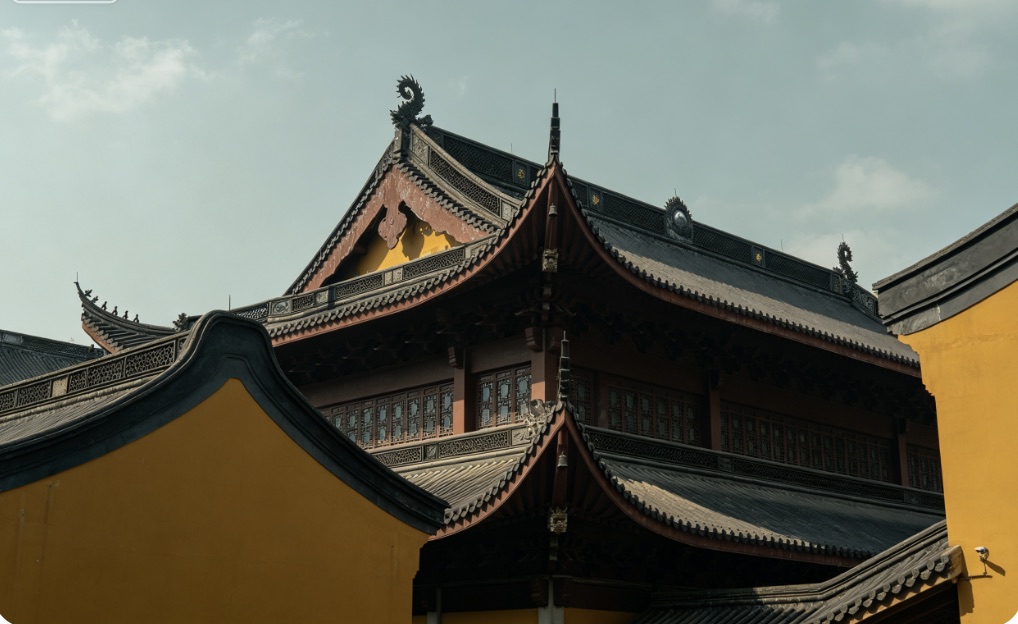
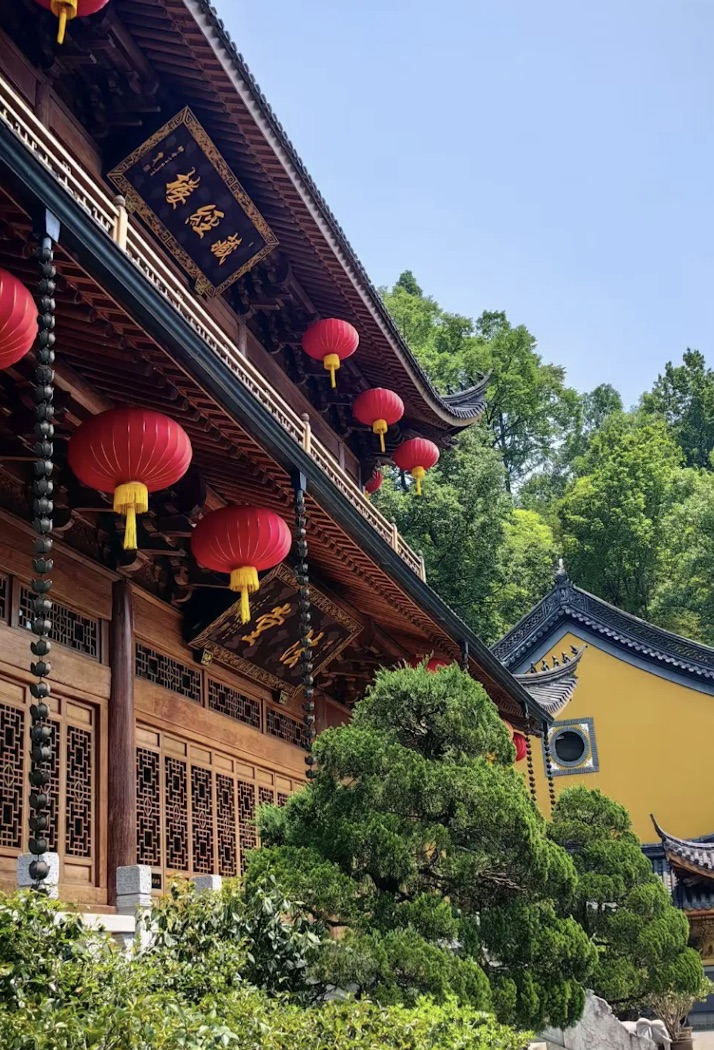
Faxi Temple, also known as Shangtianzhu Temple, stands at the foot of Baiyun Peak on Mount Tianzhu in Hangzhou's West Lake district. Founded during the Tianfu reign period of the Later Jin dynasty — one of the Five Dynasties — it has a history of over a thousand years and holds the foremost position among Hangzhou's celebrated "Three Tianzhu Temples." Built against the hillside and rising in successive terraces, the compound's red walls and grey-tiled rooftops emerge from a screen of ancient pines and bamboo groves, blending the refined elegance of Jiangnan garden design with the solemn dignity of a Chan Buddhist monastery. Throughout history Faxi Temple has been one of the most celebrated Buddhist sites in Jiangnan, renowned above all for its enshrining of Guanyin Bodhisattva, and it remains a cherished destination for pilgrims and visitors from around the world who come to pray, find stillness, and take a moment of quiet reflection over tea.

Faxi Temple Mountain Gate

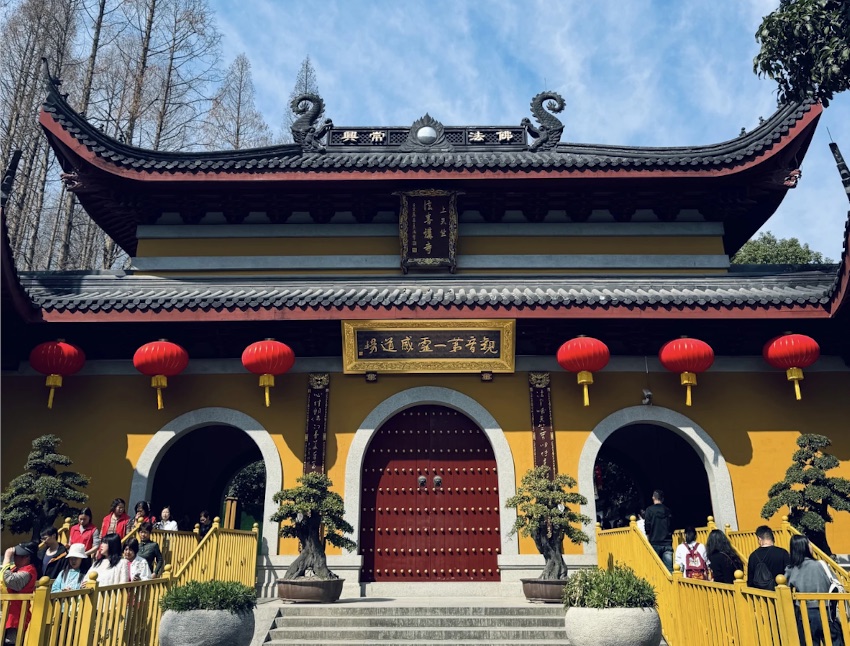
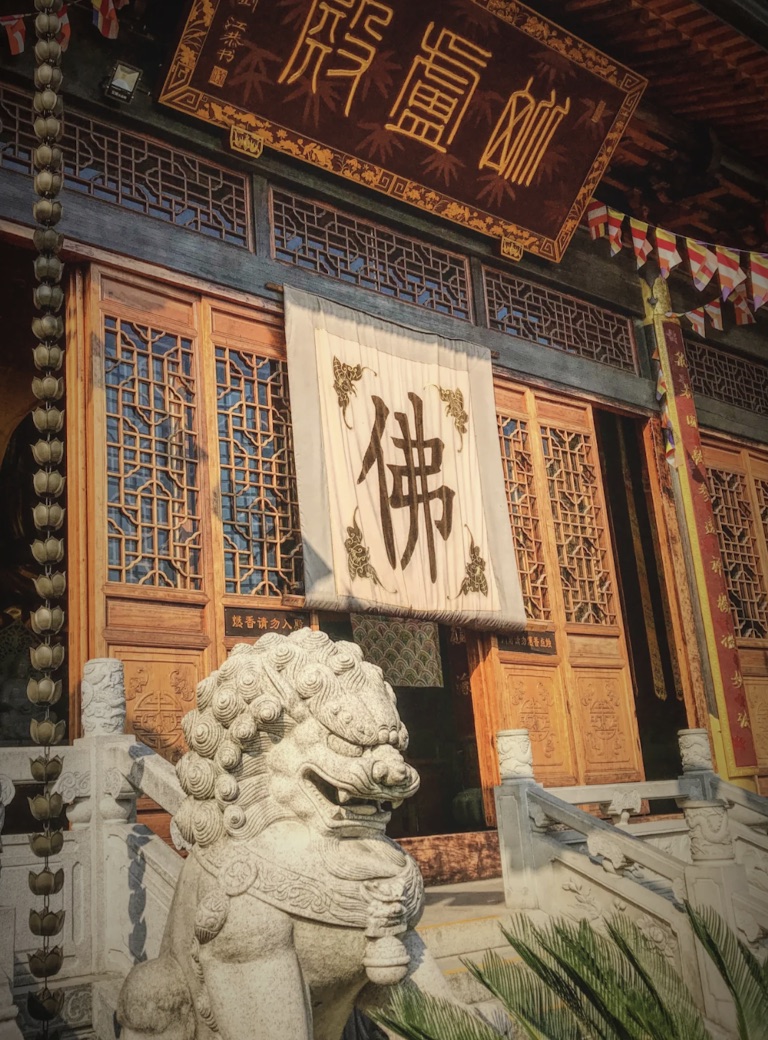
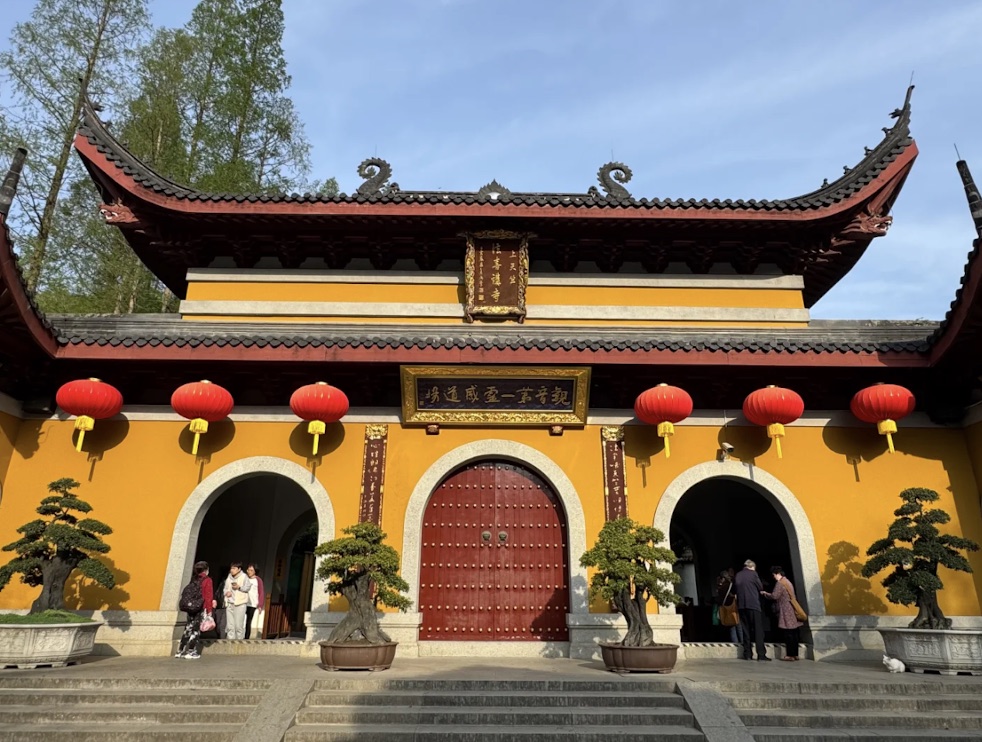
The Mountain Gate is the first hall you encounter at Faxi Temple. Spanning three bays with upturned eaves and sculpted ridgelines, it bears a large plaque inscribed with the temple's full name: Shangtianzhu Faxi Chan Temple. Two fierce guardian deities — the Heng and Ha generals — flank the entrance, their imposing presence marking the solemn threshold into this ancient monastic world. A flight of steps leads upward from here, carrying you into the tranquil heart of a monastery that has stood for over a millennium.

Heavenly King Hall

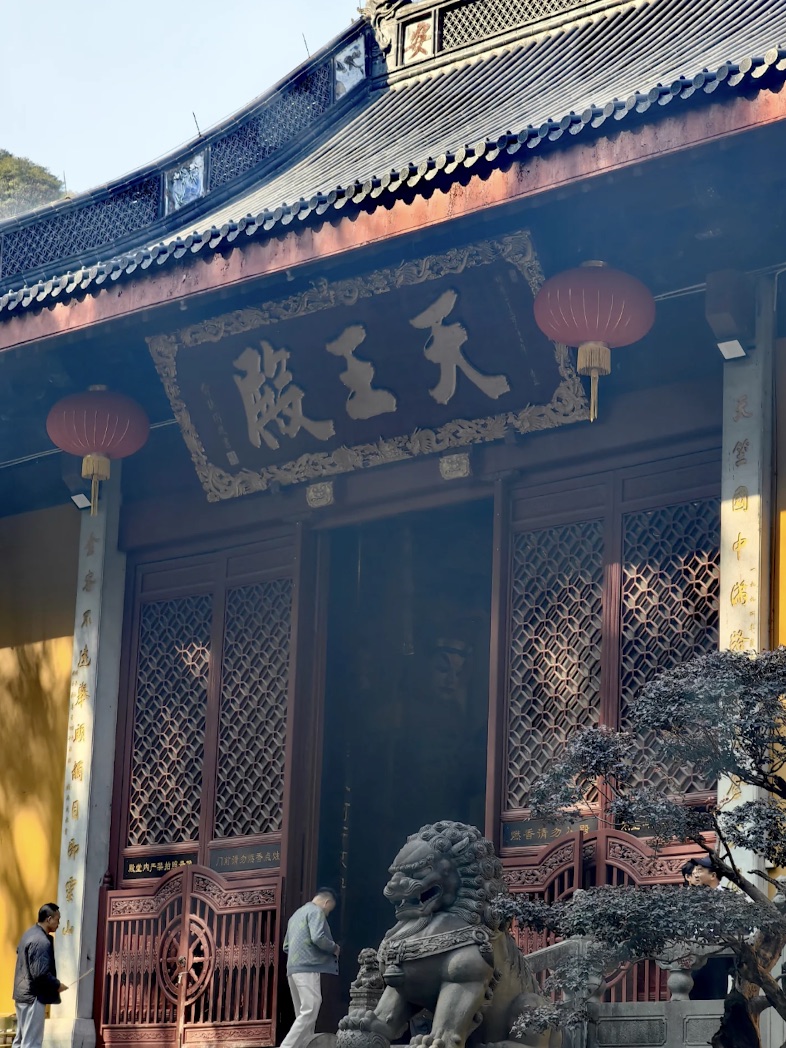
The Heavenly King Hall is the first hall inside the gate, housing statues of Maitreya, Skanda Bodhisattva, and the Four Heavenly Kings. In the center sits Maitreya, laughing and bare-chested — a figure of joy and open-heartedness. Behind him stands Skanda, club in hand, guardian of the temple. Along both sides, the Four Heavenly Kings each hold a different ritual implement, their flowing robes and vivid expressions showcasing the subtle and lively tradition of Buddhist sculpture in Jiangnan.

Yuantong Hall

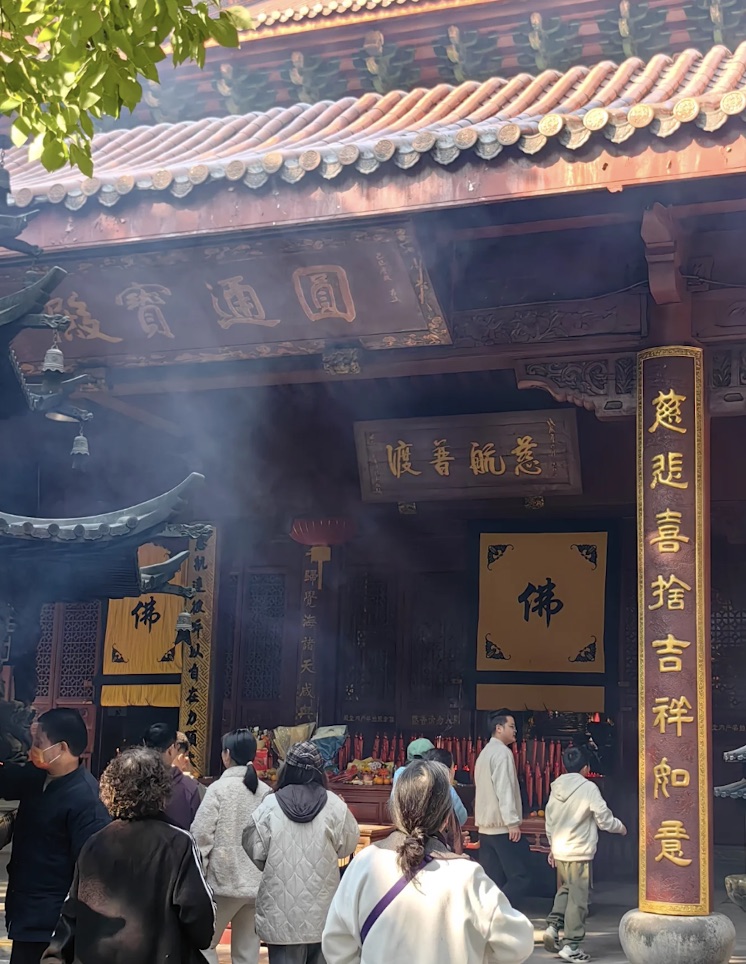
Yuantong Hall is one of the main halls of Faxi Temple, enshrining a revered statue of Guanyin Bodhisattva and drawing the most active worship in the compound. The central statue is serene and compassionate, flanked by attendant bodhisattvas in a solemn, dignified arrangement. The name "Yuantong" is taken from one of Guanyin's titles, meaning perfect and unimpeded in wisdom and compassion. This is the hall where many Hangzhou residents come to offer prayers for peace and well-being.

Mahavira Hall

Mahavira Hall is the main hall of Faxi Temple and the ceremonial heart of the entire monastery. It enshrines the Buddhas of the Three Periods: Sakyamuni representing the present, Bhaisajyaguru representing the past, and Amitabha representing the future. The hall is high and spacious, its atmosphere one of solemn gravity. Along both sides stand the Eighteen Arhats, each caught in a different posture — some deep in meditation, others seeming mid-conversation — remarkably lifelike. The painted beams overhead have retained their colors despite the passage of centuries.

Sutra Library

The Sutra Library occupies a higher elevation within the compound and houses the temple's collection of Buddhist scriptures accumulated across many generations. The building has an understated elegance, surrounded by pines and cypresses in a setting of genuine quietude. Although visitors cannot enter to browse the texts, the library is an important repository for the study of Chinese Buddhist history and monastic culture, and its very presence speaks to the depth of Faxi Temple's scholarly heritage.

Ksitigarbha Hall

Ksitigarbha Hall is dedicated to Ksitigarbha Bodhisattva, who vowed to deliver all beings from the suffering of hell before attaining his own buddhahood. In Chinese Buddhism he is revered as the embodiment of great vows and compassion. The central statue is dignified and serene; the murals on the walls depict scenes of karma and the cycle of rebirth through the six realms, offering moral teaching through vivid imagery. Many visitors come here to offer prayers for deceased family members, giving this hall a particular quietude.

Five Hundred Arhats Hall

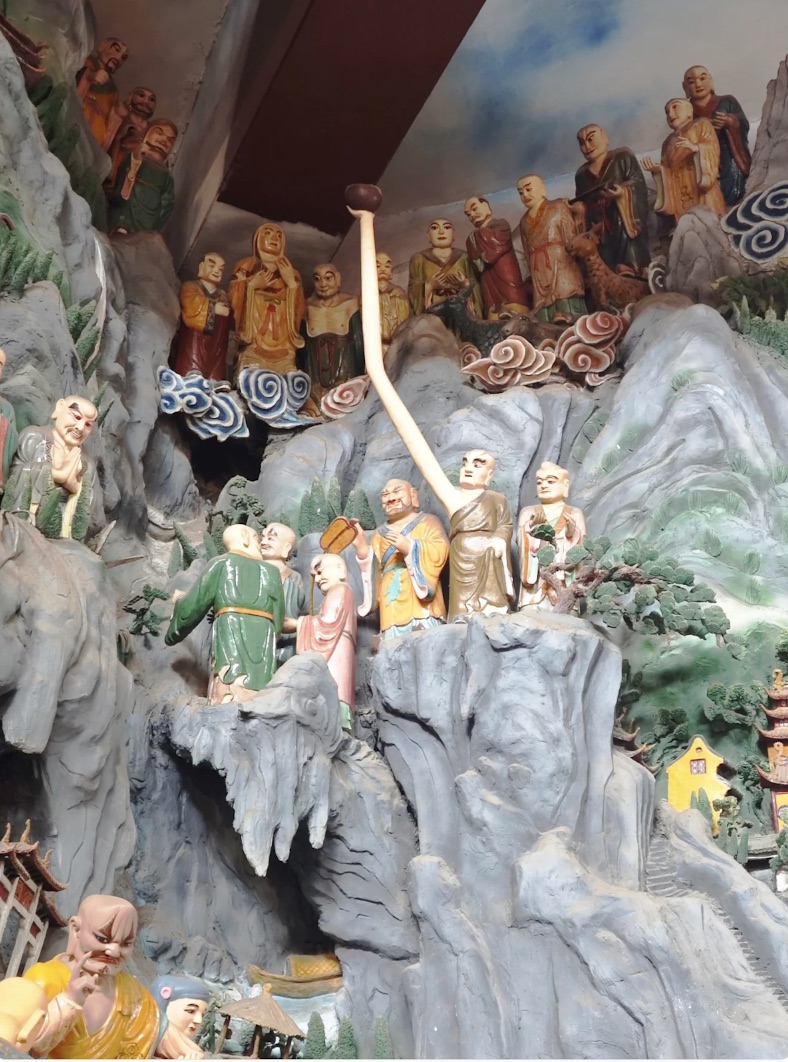
The Five Hundred Arhats Hall houses five hundred arhat statues, no two alike in posture, expression, or the ritual objects they hold. Some sit, some stand; some appear lost in contemplation, others seem to smile at a private thought. Each figure represents a different stage of spiritual attainment and a different facet of human wisdom. The hall is as much a gallery of Buddhist sculptural art as it is a place of worship, and it richly rewards a slow, attentive visit.

Baiyun Peak Viewing Platform

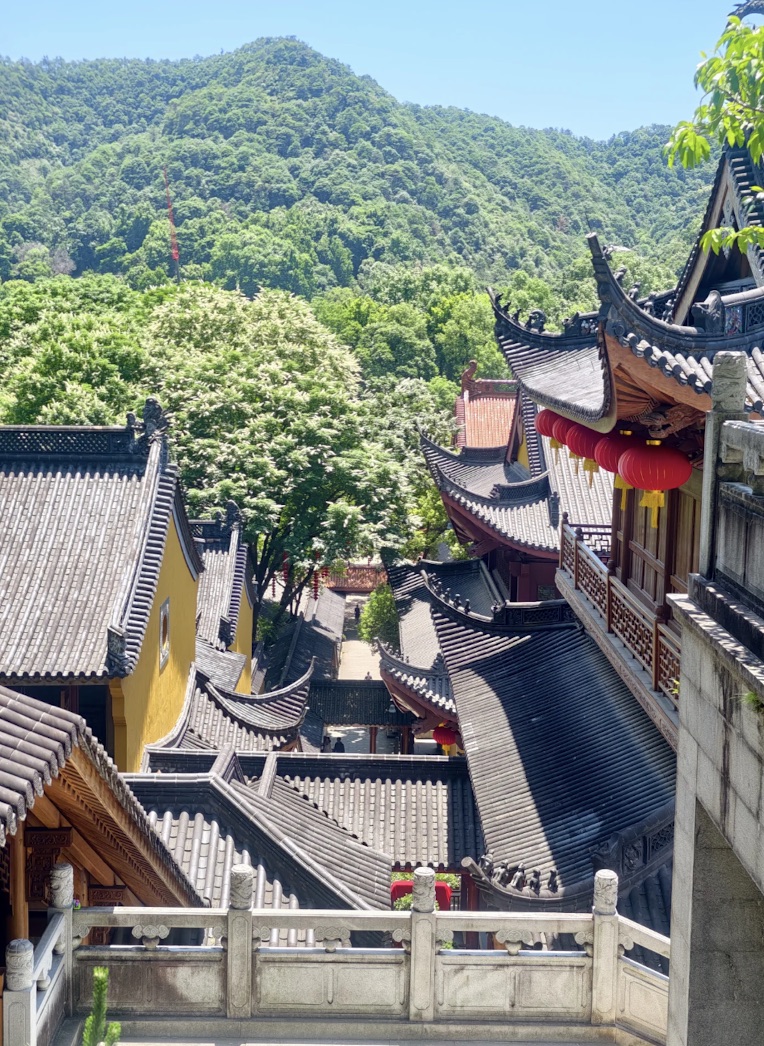
The Baiyun Peak Viewing Platform sits on a small hilltop behind the temple, offering sweeping views over the entire layout of Faxi Temple and the broader landscape of Mount Tianzhu and the hills encircling West Lake. On early mornings or after rain, mist curls through the trees and the temple's white walls and grey rooftops drift in and out of the clouds, creating a scene of genuine otherworldly beauty. It is an excellent spot for wide-angle landscape photography and a natural place to pause, breathe, and take everything in.

Imperial Stele Pavilion

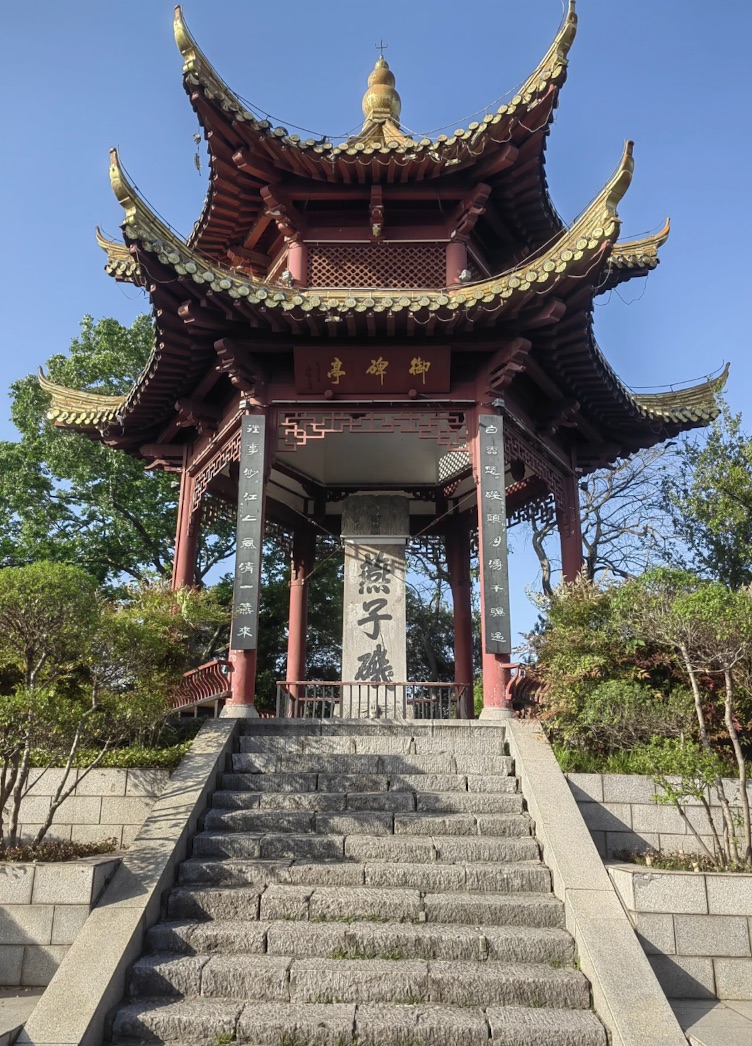
The Imperial Stele Pavilion shelters stone steles inscribed by Qing-dynasty emperors, recording the history of Faxi Temple, the story of its restorations, and the high regard in which the imperial court held this monastery. The calligraphy is formal and accomplished, the carving precise and refined — objects of both historical importance and considerable aesthetic merit. The pavilion itself is quietly handsome, with bracketed eaves framed by ancient trees, and is a rewarding stop for anyone with an interest in history or classical calligraphy.

Faxi Temple Vegetarian Dining Hall

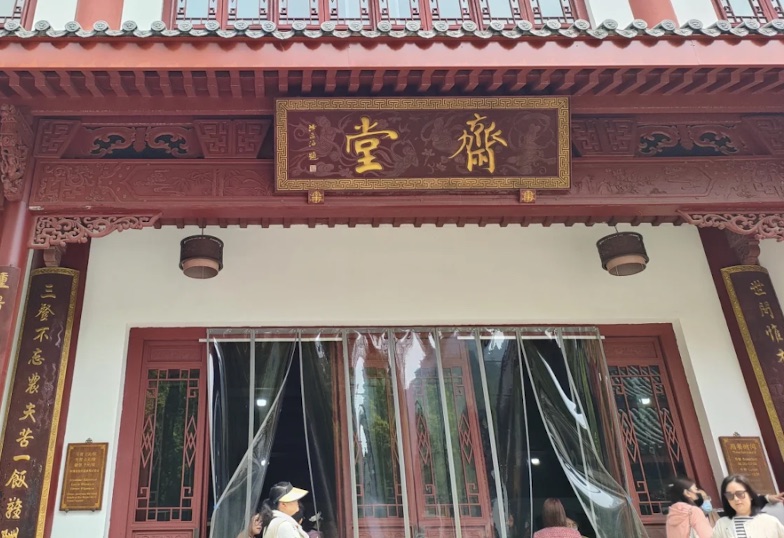
The Faxi Temple Vegetarian Dining Hall serves traditional Buddhist vegetarian cuisine for which the temple is well known. The food is plain and wholesome — typically a bowl of rice alongside dishes of seasonal vegetables and tofu — simple fare that manages to be deeply satisfying. Dining here is a distinctive experience and a genuine way to connect with the living food culture of Chinese Buddhism, offering visitors a taste of the mindful, unhurried rhythm of monastic life.

Practical info Ticket · Getting there
Ticket
  • 10 RMB per person. Free with Hangzhou Temple Annual Pass. Free admission for seniors over 70, retired officials, active military personnel, and persons with disabilities (ID required).
Getting there
  • **Bus:** Routes 103, 121, 324M to "Shangtianzhu Station." Or take the scenic shuttle from Lingyin Temple directly to Faxi Temple (10 RMB one way).
  • **Metro + Bus:** Metro Line 3 to "Dongyue Station," transfer to Bus 103 to "Shangtianzhu Station."
  • **By Car:** Navigate to "Faxi Temple Parking Lot." Parking: 10 RMB/hour. Limited spaces on weekends/holidays; public transport recommended.
  • **Walking:** A pleasant 2 km walk from Lingyin Temple along Tianzhu Road, passing Zhongtianzhu and Xiatianzhu temples, takes about 30 minutes through bamboo groves and streams.

Inside Faxi Temple (Shangtianzhu Fajing Temple)

10 stops, in walking order — read top to bottom, no clicking needed.

1 Faxisi Mountain Gate of 10

Faxisi Mountain Gate

法喜寺山门

The Shanmen (Mountain Gate) of Faxisi is located at 338 Tianzhu Road, Xihu District, Hangzhou. It is the main entrance of the largest and oldest temple among Hangzhou's Three Tianzhu Temples. The gate is a typical Jiangnan Buddhist building in Ming-Qing style, with three bays and a single-eave xieshan roof with upturned eaves. Horizontal plaques inscribed "Faxisi" and "Shangtianzhu Preaching Temple" hang under the eaves, presenting a dignified aura.

Inside the gate are enshrined statues of the Four Heavenly Kings, each holding a precious treasure with majestic expressions — the best-preserved set among Hangzhou temple mountain gates. Visitors entering through this gate are first greeted by ancient ginkgo trees and curling incense smoke, with the sound of bells and Buddhist chants drifting in the wind. Faxisi is popularly renowned as "the most effective temple for seeking marriage," making the area in front of the Shanmen perennially crowded with pilgrims.

On-site narration · read it where you stand

Welcome to the mountain gate of Faxi Temple. Look up and you will see the plaque bearing the temple's full formal name: Shangtianzhu Faxi Chan Temple. The mountain gate is also known as the "Three Gates," symbolizing the three gates of liberation in Buddhism — the gate of emptiness, the gate of formlessness, and the gate of non-action. Flanking the entrance stand two guardian deities, the Heng and Ha generals, whose fierce presence keeps watch over the monastery's peace. Step through here and you are entering the tranquil world of Faxi Temple.

Photo tip: The mountain gate's red walls, grey tiles, and upturned eaves set against the surrounding bamboo grove make for a classic Jiangnan temple shot. The best angle is from the base of the steps directly in front of the gate, where you can capture both the full height of the gate and the layered sweep of the rooflines in a single frame.

Hall of Heavenly Kings

天王殿

The Hall of Heavenly Kings is the first main hall after the Shanmen of Faxisi and the first hall on the central axis of the temple. The hall spans five bays in width and four bays in depth, with a single-eave xieshan roof covered with blue-gray tubular tiles, and layered brackets under the eaves — rigorous in structure and magnificent in bearing.

Enshrined in the center is the big-bellied, ever-smiling Maitreya Buddha statue, flanked by the majestic Four Heavenly Kings, with a standing statue of Skanda Bodhisattva at the back guarding the temple's Dharma lineage. The hall retains the architectural style of official Ming Dynasty buildings, with wooden structures left unpainted to show their natural color, reflecting the aesthetic pursuit of "simple elegance and solemnity" in Jiangnan Buddhist architecture.

On-site narration · read it where you stand

Passing through the mountain gate, the first hall you enter is the Heavenly King Hall. In the center sits Maitreya, the Future Buddha — laughing, open-chested, radiating warmth and acceptance. Behind him stands Skanda Bodhisattva, holding his demon-subduing club, protector of the monastery's peace. Along both sides of the hall stand the Four Heavenly Kings, each holding a distinctive ritual implement: a lute, a sword, an umbrella, and a serpent. Together they symbolize the blessing of timely rains and good harvests.

Notice the quality of the statues — flowing robes, animated expressions — a fine example of the expressive and refined tradition of Buddhist sculpture in Jiangnan. Please keep your voice low inside the hall; photography is not permitted. If Buddhist iconography interests you, take a moment to look closely at what each of the Four Heavenly Kings is holding — every implement carries its own meaning.

Yuantong Treasure Hall

圆通宝殿

The Yuantong Treasure Hall is the main hall of Faxisi, located at the core of the temple's central axis, with a floor area of about 500 square meters — the largest and highest-specification hall in the temple. The hall spans seven bays in width and five bays in depth, with a double-eave xieshan roof covered with yellow glazed tiles, presenting a majestic and spectacular sight.

Enshrined in the center is the gilded seated statue of the Thousand-Armed and Thousand-Eyed Guanyin Bodhisattva, about 5 meters in height, carved from camphor wood and fully gilded. On both sides are the two great Bodhisattvas Manjusri and Samantabhadra, while the back features a group sculpture of Guanyin on the Island. Two ancient ginkgo trees over 400 years old stand in front of the hall; when their golden leaves cover the courtyard in autumn, the scenery is absolutely stunning.

On-site narration · read it where you stand

Continuing uphill, we arrive at Yuantong Hall — the main hall dedicated to Guanyin Bodhisattva and the most active place of worship in the entire temple. The central statue of Guanyin is serene and compassionate, with attendant bodhisattvas and offering figures arranged symmetrically on either side, filling the hall with a solemn devotional atmosphere. The name "Yuantong" comes from one of Guanyin's titles — meaning perfect and unimpeded in wisdom and compassion.

Many Hangzhou residents make the journey to Faxi Temple specifically to pray at this hall. You are welcome to light a stick of incense and offer your wishes in silence. One safety reminder: please place your incense in the censer outside the hall rather than carrying open flame indoors.

Mahavira Hall

大雄宝殿

The Mahavira Hall is located behind the Yuantong Treasure Hall and is the highest-grade hall in Faxisi, serving as the core venue for large-scale Dharma assemblies, morning and evening chanting, and important Buddhist ritual activities. The hall spans seven bays in width and six bays in depth, with a double-eave hipped roof — the highest grade of ancient Chinese building roof form — covered with yellow glazed tiles.

Enshrined in the center are the Three Buddhas of the Horizontal Configuration: Sakyamuni Buddha in the center, Bhaisajyaguru (Medicine Buddha) in the east, and Amitabha Buddha in the west, each about 6 meters in height, fully gilded with solemn and majestic appearances. Behind the Buddha statues is a large group sculpture of Guanyin on the Island, while the side walls are painted with frescoes of the Twenty Devas, gorgeous in color and exquisite in brushwork.

On-site narration · read it where you stand

Moving further up, we reach the main hall of Faxi Temple: Mahavira Hall. This is the ceremonial center of the entire monastery, enshrining three Buddha statues representing the past, present, and future — Bhaisajyaguru, Sakyamuni, and Amitabha — known together as the Buddhas of the Three Periods.

Along both sides stand the Eighteen Arhats, each with a distinct expression and posture: some absorbed in quiet contemplation, others seemingly caught mid-conversation — remarkably lifelike. Look up at the beams overhead and you will find painted decorations that remain vivid despite the passage of centuries. Mahavira Hall is where the temple's major ceremonies and communal chanting take place. The atmosphere here calls for a slower pace. Slow down, and let the stillness work on you.

Scripture Library

藏经楼

The Scripture Library is located at the northernmost end of Faxisi's central axis, behind the Mahavira Hall. It is the hall specifically used for collecting and enshrining the Buddhist Tripitaka and precious Buddhist scriptures, as well as an important venue for the abbot to preach and for monastics to study scriptures. The library is a two-story building with five bays in width and four bays in depth, featuring a double-eave yingshan roof with green tiles and white walls.

Enshrined in the center of the first floor is a large reclining jade Buddha from Myanmar, over 6 meters in length — the largest jade Buddha statue in the temple. The second floor houses precious Tripitaka versions including the Qianlong Tripitaka, Yongle Northern Tripitaka, and Fangshan Stone Scriptures. The courtyard in front is planted with osmanthus, camellia, and slender bamboos — fragrant in all seasons and ideal for quiet meditation.

On-site narration · read it where you stand

Climbing the steps a little further, we come to the Sutra Library, which occupies a higher position within the temple grounds. This building houses the temple's collection of Buddhist scriptures — texts carved, printed, and hand-copied across many generations — and serves as an important repository for the study of Chinese Buddhist history and monastic culture. The architecture is understated and refined, surrounded by pines and cypresses in a setting of genuine quietude. Although visitors cannot enter to browse the scriptures, the building and the atmosphere around it speak clearly to the depth of Faxi Temple's cultural heritage.

Turn around from where you are standing and the halls below unfold in layers down the hillside — red walls threaded through with greenery. This is one of the best vantage points in the entire compound for photographing the temple. Photo tip: If you have a medium telephoto lens, try compressing those layered rooflines together for a shot with real depth and drama.

Hall of Ksitigarbha

地藏殿

The Hall of Ksitigarbha is located in the eastern side hall of Faxisi, dedicated to Ksitigarbha Bodhisattva — one of the Four Great Bodhisattvas in Buddhism, deeply revered for his magnificent vow: "Until the hells are emptied, I will not become a Buddha." Enshrined in the center is the seated statue of Ksitigarbha, about 3 meters in height, wearing a kasaya, holding a mani pearl and a khakkhara, with a compassionate and serene countenance.

On both sides are frescoes of the Ten Kings of Hell and illustrations of the Underworld, presenting Buddhist concepts of karma and rebirth in graphic form, warning all to abstain from evil and practice virtue. The hall sees continuous incense offerings year-round, especially from devotees performing rites for deceased relatives. The building features a single-eave yingshan roof with green tiles and white walls, and the courtyard is planted with bamboo and banana trees — serene and ideal for quiet meditation.

On-site narration · read it where you stand

We are now at Ksitigarbha Hall. This hall is dedicated to Ksitigarbha Bodhisattva, who made the vow to deliver all beings from the suffering of hell before attaining his own buddhahood — which is why he is revered in Chinese Buddhism as a symbol of great vows and boundless compassion. The central statue is dignified and serene; the murals covering the surrounding walls depict karma and the cycle of rebirth through the six realms, offering moral teaching through vivid narrative imagery. Many visitors come here to offer prayers for their departed loved ones, which gives this hall a deeper hush than the others.

Please speak softly and be mindful of anyone at prayer. Outside the hall, incense smoke rises from the censers, and the faint scent of sandalwood drifts through the dimly lit interior — a combination that tends to quiet the mind on its own.

Hall of Five Hundred Arhats

五百罗汉堂

The Hall of Five Hundred Arhats is located in the western side hall of Faxisi, one of the larger and better-preserved Arhat Halls among Hangzhou temples. The hall spans seven bays in width and three bays in depth, with a single-eave hipped roof, green tiles, and vermilion pillars — dignified yet elegant in style.

Inside, shrines for the Five Hundred Arhats are arranged along three walls, each statue about 0.8 meters in height, round-carved from camphor wood and fully gilded. The Arhats have diverse, vividly lifelike expressions — some with kind brows, some with glaring eyes, some holding sutra scrolls, some grasping Dharma instruments — no two alike, demonstrating the superb level of ancient sculpture art. In the center are enshrined Vairocana Buddha with Manjusri and Samantabhadra, forming the "Three Saints of the Huayan" configuration.

On-site narration · read it where you stand

Next we have the Five Hundred Arhats Hall. Inside are five hundred arhat statues, no two alike in posture, expression, or the ritual objects they hold. Some sit, some stand; some are lost in deep thought, others seem to smile at a private joke. In Chinese Buddhism, an arhat is someone who has completely eliminated afflictions and achieved liberation. The Five Hundred Arhats Hall is not only a place of worship but a treasury of Buddhist sculptural art.

The best way to experience it is to start at one side and work your way through one figure at a time — you will find each one has its own distinct character. Photo tip: A wide-angle shot from the entrance captures the full sweep of the hall beautifully. Photography inside is not permitted, so please respect the temple's rules.

White Cloud Peak Viewing Platform

白云峰观景台

The White Cloud Peak Viewing Platform is located on White Cloud Peak behind Faxisi, at an altitude of about 280 meters — the most open viewing spot in the Faxisi scenic area. From behind the Scripture Library, a stone-step mountain path winds upward for about 20-30 minutes to reach the peak platform.

Standing on the open stone platform, visitors can take in the entire view of Hangzhou — nearby are the layered mountains of the West Lake scenic area, with Middle and Lower Tianzhu Temples faintly visible among the green trees; in the distance, the Qiantang River winds like a ribbon through the forest of high-rise buildings. The peak also preserves the Ming Dynasty cliff engraving "White Cloud Peak." Every morning, swirling clouds and radiant sunrise glow create a spectacular scene.

On-site narration · read it where you stand

If you have the energy, follow the path behind the temple up to the Baiyun Peak Viewing Platform. Baiyun Peak is a small hilltop behind the monastery, and from its summit you can look out over the full layout of Faxi Temple and the broader panorama of Mount Tianzhu and the hills surrounding West Lake.

On early mornings or after rain, mist fills the valleys and the temple's white walls and grey rooftops appear and vanish in the clouds — genuinely otherworldly. This is a prime spot for wide-angle photography: try fitting the temple rooftops, forested slopes, and sky all into a single frame. If sunlight breaks through the clouds while you are there, the light and shadow can be breathtaking. Safety note: The path up is steep — watch your footing, and be especially careful after wet weather.

Imperial Stele Pavilion

御碑亭

The Imperial Stele Pavilion is located on the east side of the skywell between the Hall of Heavenly Kings and the Yuantong Treasure Hall within Faxisi. It is a Jiangnan classical pavilion with a double-eave four-cornered pyramidal roof. Inside stands an imperial stele personally inscribed by Emperor Qianlong of the Qing Dynasty during his southern inspections to the temple.

The stele is about 2.5 meters high and 1 meter wide, with the top carved with coiling dragon motifs. The front is engraved with two poems titled "Shangtianzhu" in Qianlong's own calligraphy, while the back bears harmonized poems by accompanying ministers — all in regular script, with vigorous brushwork and exquisite engraving. Emperor Qianlong visited the south six times and came to Shangtianzhu on five occasions to pay respects to the Buddha. Two century-old osmanthus trees stand before the pavilion, filling the air with fragrance in golden autumn.

On-site narration · read it where you stand

After visiting the main halls, make your way around to the other side of the compound to find the Imperial Stele Pavilion. Inside are stone steles inscribed by Qing-dynasty emperors, recording the history of Faxi Temple, the story of its restorations, and the high esteem in which the imperial court held this monastery. The calligraphy is formal and accomplished, the carving precise and refined — these are objects of both historical importance and genuine artistic merit.

The pavilion itself is quietly handsome, with bracketed eaves framing ancient trees around it. Descriptive panels beside the steles give you the context to understand why Faxi Temple holds such a prominent place in Hangzhou's Buddhist world. For anyone with an interest in history or classical calligraphy, this is a stop not to be missed.

Faxisi Vegetarian Dining Hall

法喜寺素斋堂

The Faxisi Vegetarian Dining Hall is located on the west side of the temple, next to the Hall of Five Hundred Arhats. It is one of the most famous temple vegetarian dining halls in Hangzhou, attracting large numbers of visitors daily. The open hall can accommodate about 200 diners, with dignified and simple decor — no meat, fish, or alcohol served, fully embodying the pure spirit of Buddhist dietary culture.

The menu ranges from casual vegetarian noodles (15-20 RMB) and buns (3 RMB) to elaborate set meals (50-80 RMB). The most famous dish is Faxisi's vegetarian "roast goose" — crispy skin with fragrant filling — with daily sales exceeding a thousand portions. The dining hall also offers "Blessing Vegetarian Meals," where diners can offer incense and pray before dining, experiencing the pure dietary culture of Buddhist tradition.

On-site narration · read it where you stand

Our tour of Faxi Temple is nearly over. If it happens to be around lunchtime, the Vegetarian Dining Hall is strongly worth a stop. The temple's vegetarian meal is celebrated for its plain, wholesome flavors — typically a bowl of rice with a few dishes of seasonal vegetables and tofu. Simple food, but satisfying in a way that is hard to explain.

The price is very low at around 5 yuan per serving, but portions are limited and sell out fast — so if you want to try it, get in line by around 11:30 in the morning. While eating, please keep your voice down, take only what you need, and return your dishes to the designated area when you finish. Sharing a vegetarian meal inside a Chan monastery is a one-of-a-kind experience and a genuine way to connect with the living food culture of Chinese Buddhism. That brings our tour of Faxi Temple to a close — we hope you leave feeling lighter, clearer, and full of good things.

Prefer to be shown around?

A local guide walks these 10 stops with you and answers what the page cannot.

Browse tours ↗