Liangzhu Ancient City
The Liangzhu Ancient City Archaeological Site is located in Yuhang District, Hangzhou, Zhejiang Province. It was the center of power and belief of an early regional state in the lower Yangtze River region, dating back roughly 5,300 to 4,300 years. The site consists of a palace district, an inner city, an outer city, and an outer water-management system, covering a total area of about 14.3 square kilometers — making it one of the largest and highest-ranking urban sites from China's late Neolithic period. In 2019, the Liangzhu Ancient City Archaeological Site was inscribed on the UNESCO World Heritage List, serving as tangible proof of China's more than five thousand years of continuous civilization.
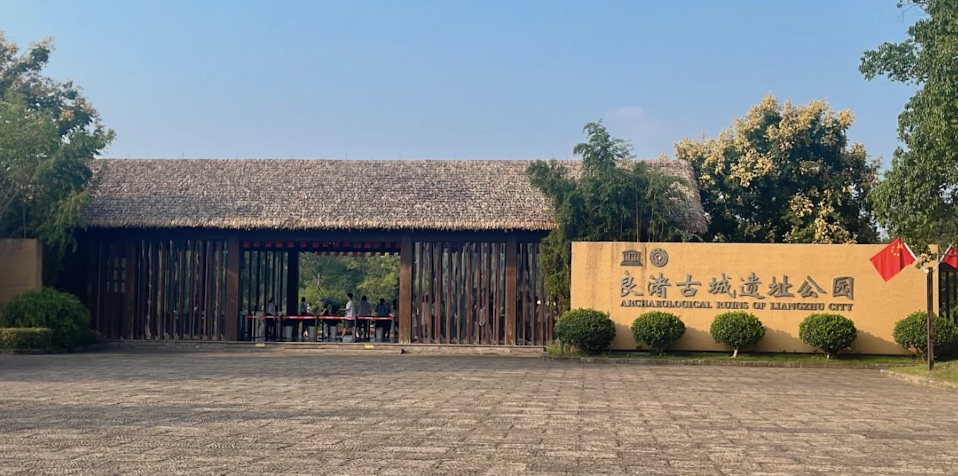
South Entrance of Liangzhu Ancient City Archaeological Park
The south entrance is the main gateway into the park, with a visitor center, ticketing services, and guided tour facilities. The architecture blends a clean, contemporary style with design elements drawn from Liangzhu culture. The entrance plaza typically features an overview of the site, giving visitors a first look at the historical context and recommended routes through this five-thousand-year-old city.
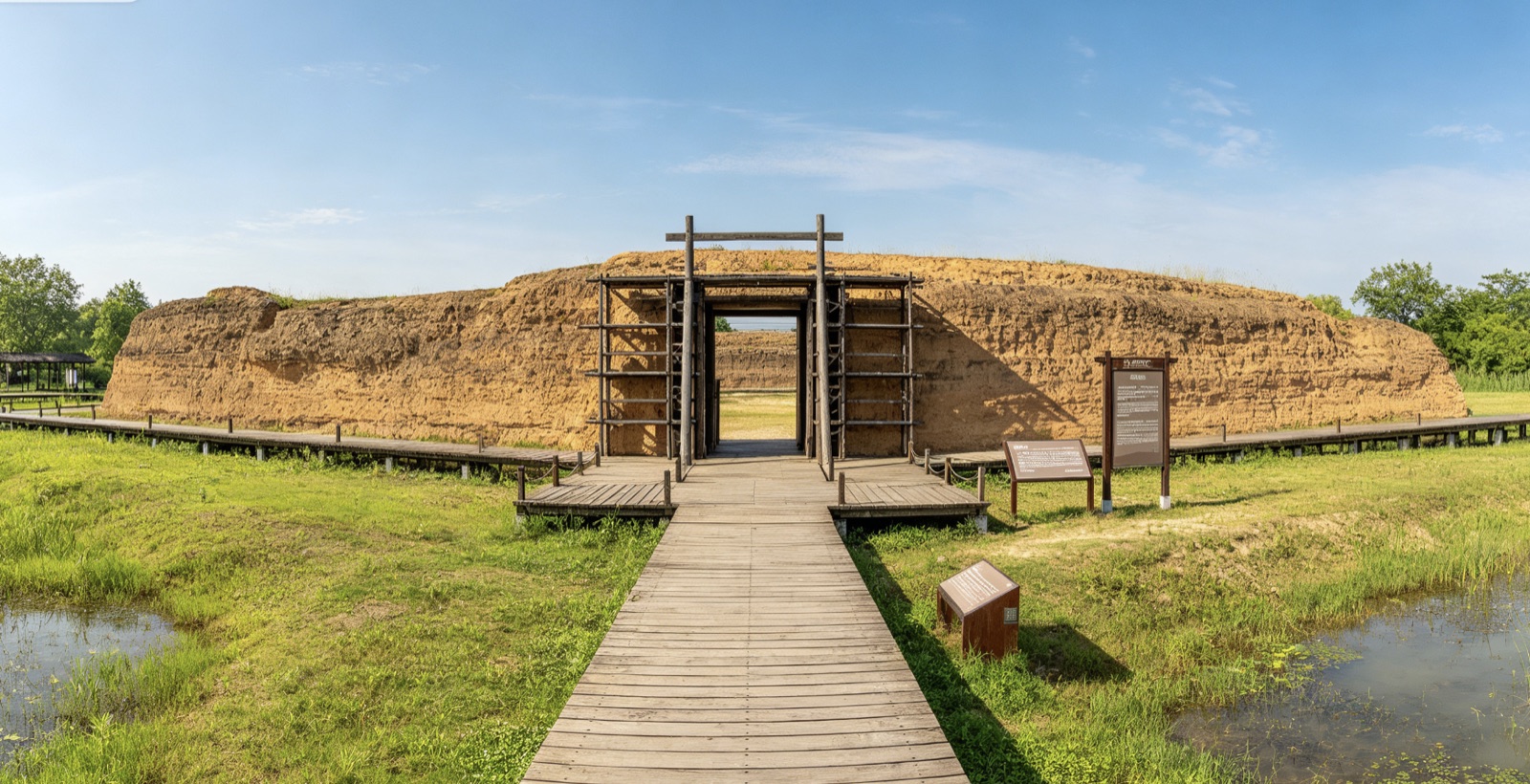
Land City Gate Site
The Land City Gate Site sits on the southern edge of Liangzhu's inner city and was the main overland passage into the ancient city. Archaeological excavations have revealed traces of a corridor formed by three small earthen platforms flanking either side of a roadway, reflecting the early Liangzhu people's approach to urban defense and traffic organization. It is an important physical reference for understanding the city's overall layout.
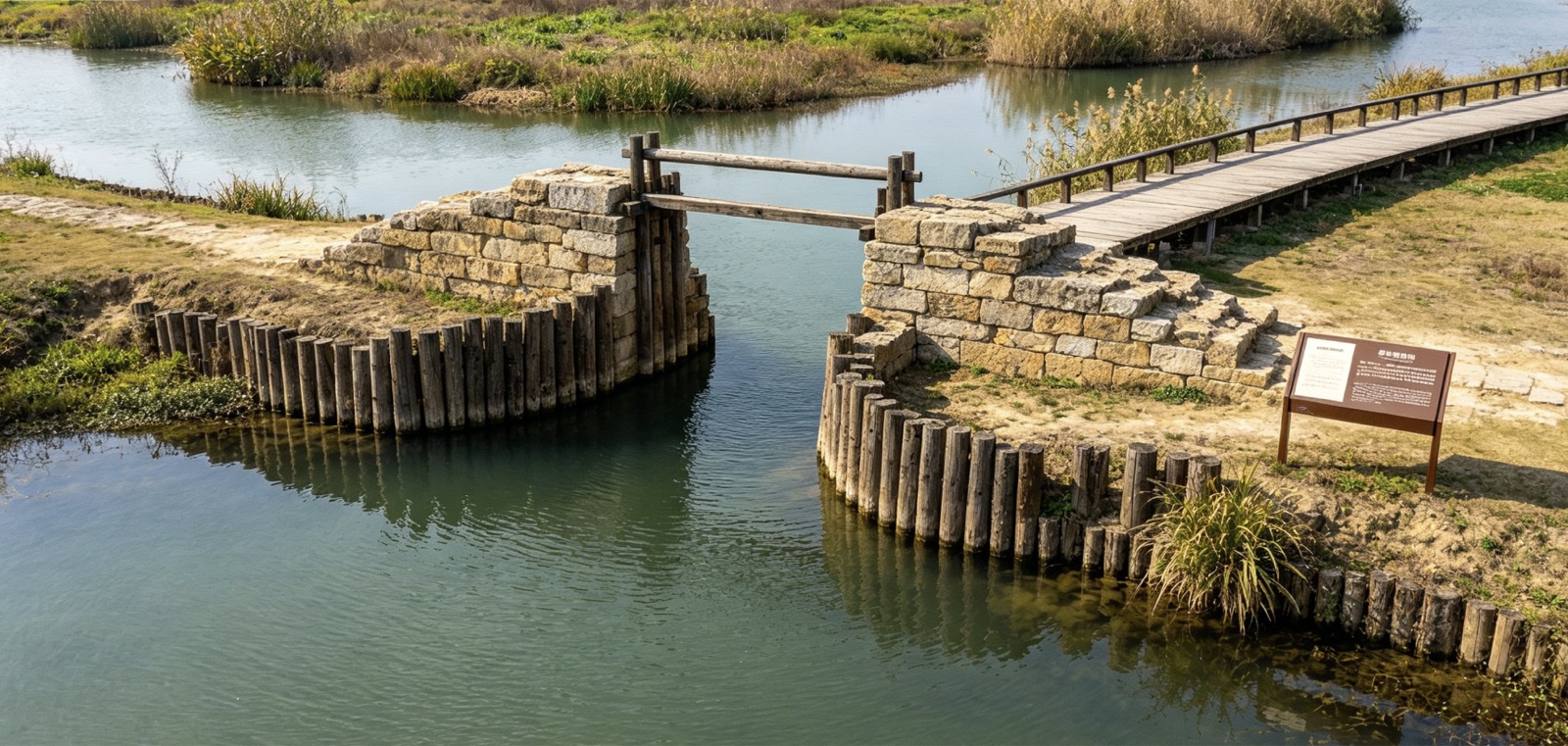
Water City Gate Site
The Water City Gate Site was a key node in Liangzhu's waterway network, linking the city's internal water system to the waters beyond its walls. The site preserves evidence of ancient channels passing through the city, showcasing the unique hydraulic urban system that the Liangzhu people developed in their water-rich Jiangnan environment and reflecting their advanced water transport and city management capabilities.
South City Wall Ruins
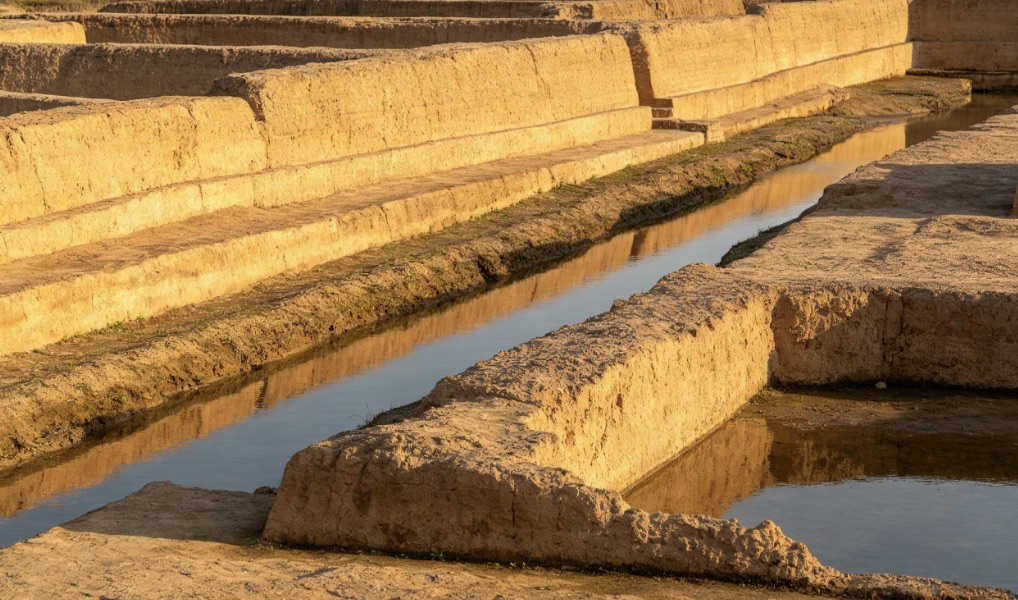
The South City Wall Ruins are what remains of the inner city's southern wall. The wall base was roughly 40 to 60 meters wide and was built up in layers of yellow earth and grass-wrapped clay. A moat ran along the outer edge, and together with the Land City Gate and Water City Gate, the wall formed the city's defense system — a defining engineering feat of what was a regional-state capital.
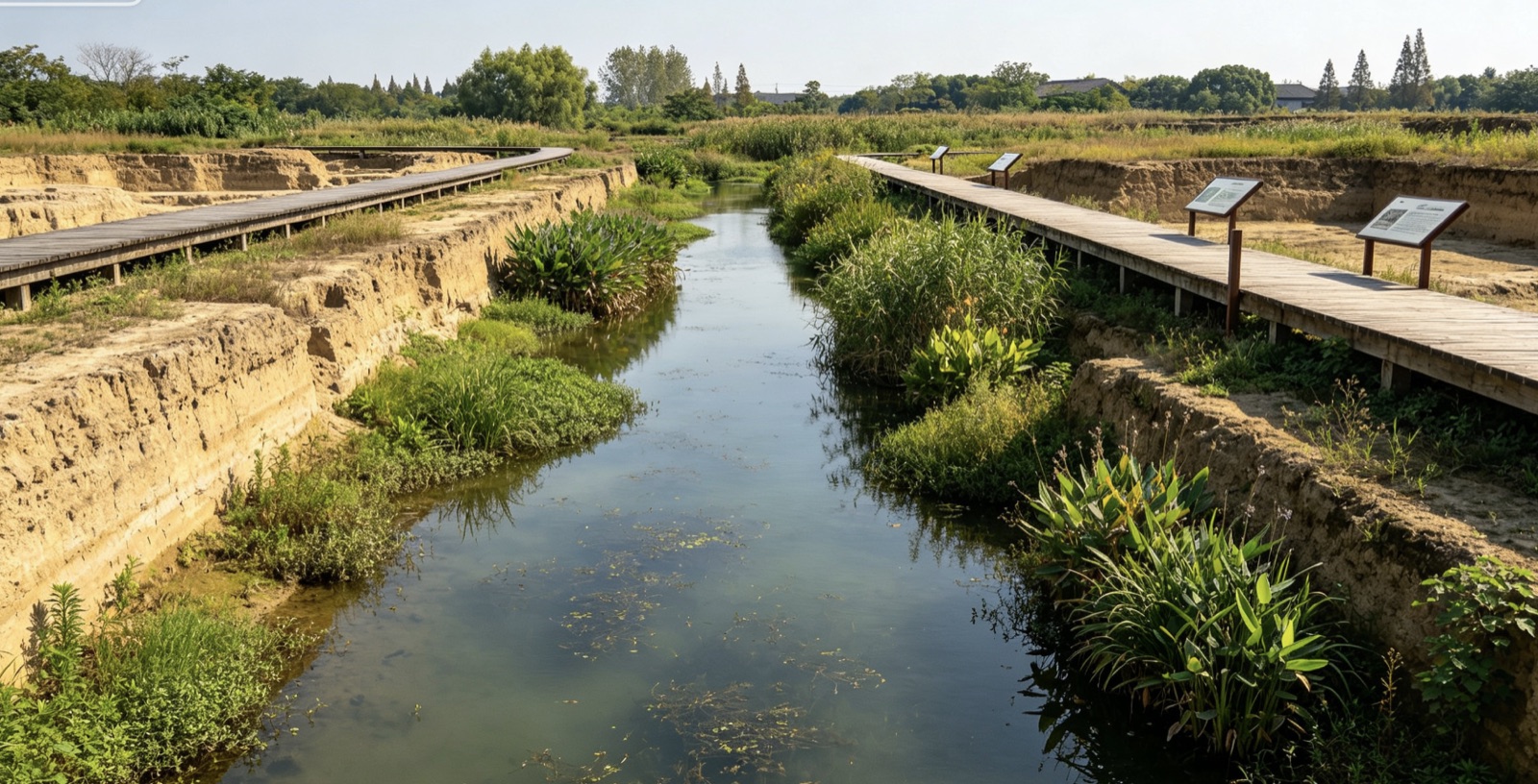
Zhongjiagang Ancient River Channel
The Zhongjiagang Ancient River Channel was a major man-made waterway running through Liangzhu's inner city, serving as the central artery for transport, water supply, and daily life within the city. Archaeologists have unearthed large quantities of wooden components, stone tools, and pottery shards here, providing rich evidence for understanding the division of labor, craft production, and social organization during the Liangzhu period.
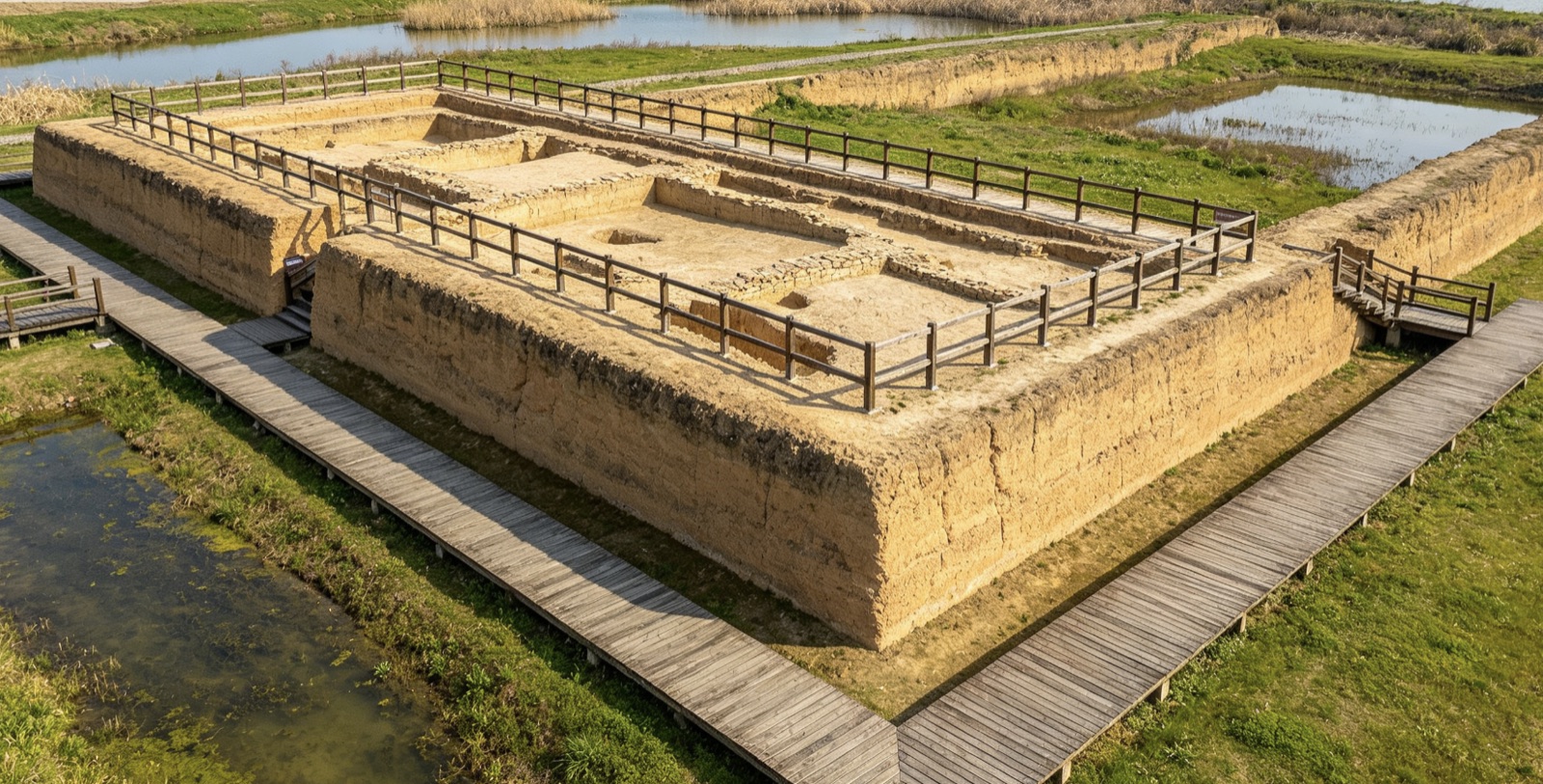
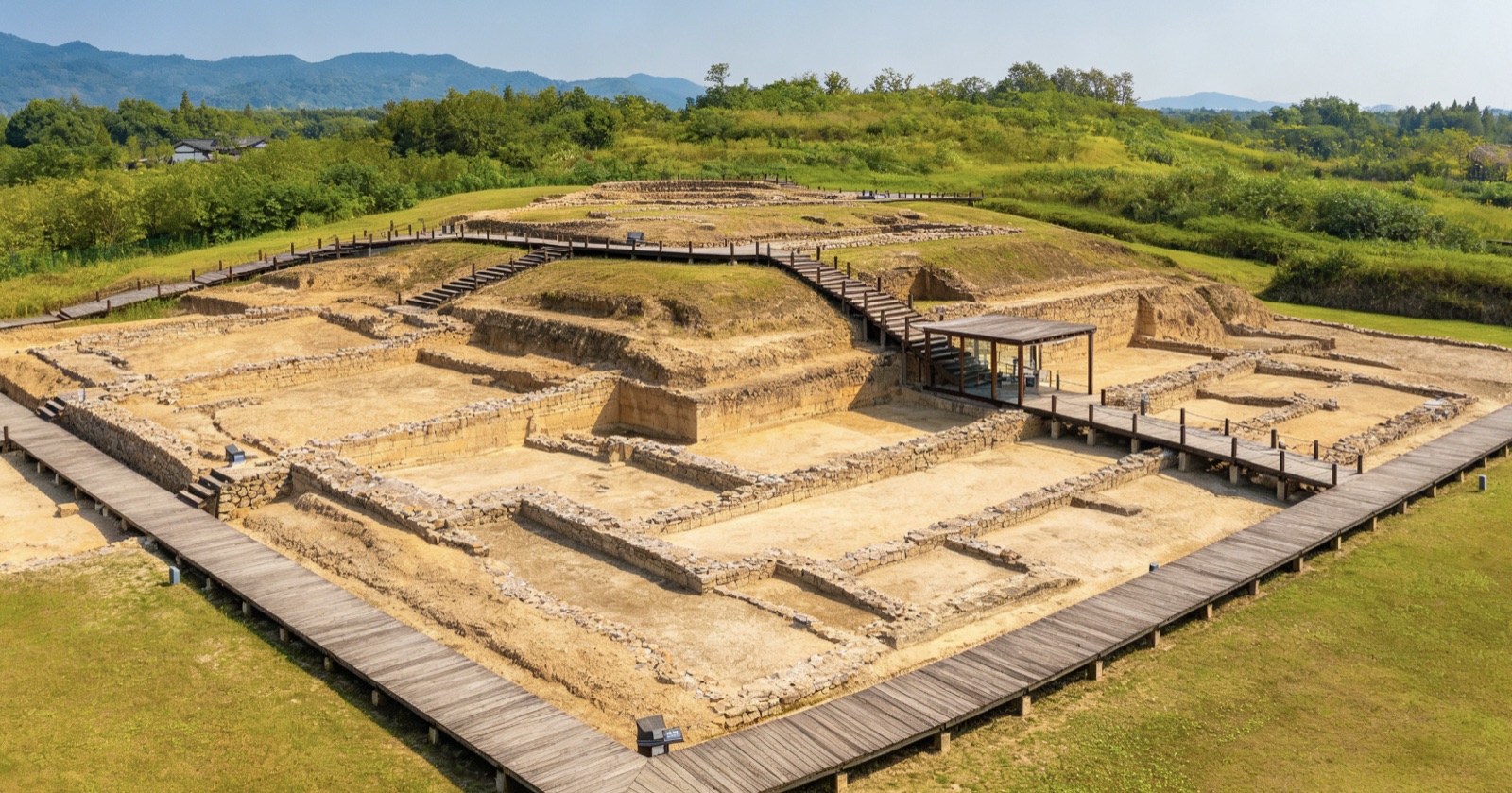
Mojiaoshan Palace Site
The Mojiaoshan Palace Site occupies the center of Liangzhu Ancient City and was the seat of royal power and ritual life. The site consists of three artificially raised platforms — Damo Jiaoshan (the Great Mojiaoshan), Xiaomo Jiaoshan (the Small Mojiaoshan), and Wugui Shan (Tortoise Hill) — covering a total area of about 30 hectares. Large building foundations and extensive rammed-earth remains have been discovered here, revealing what is considered the earliest known palace-city layout in China.
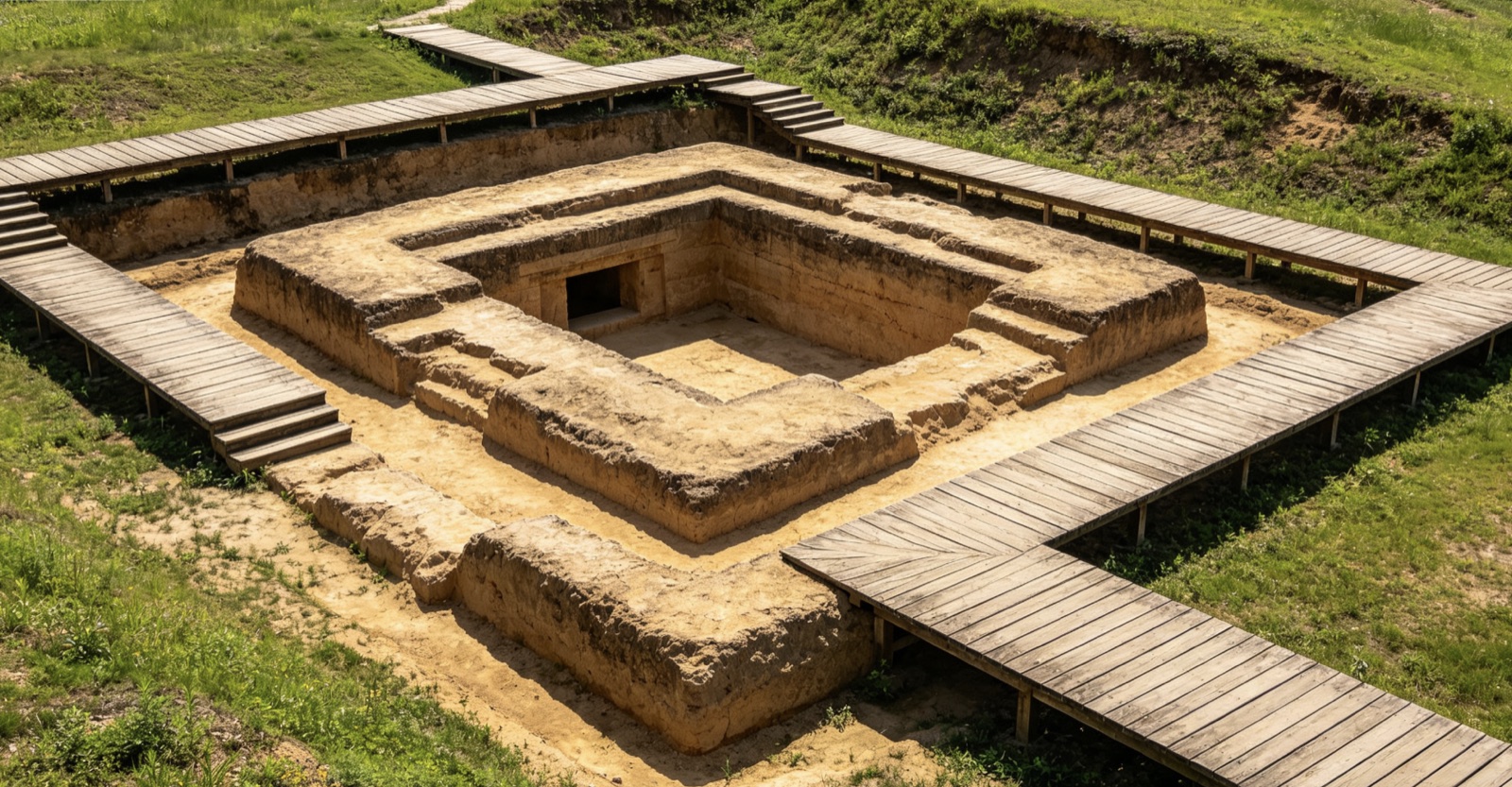
Fanshan Royal Cemetery
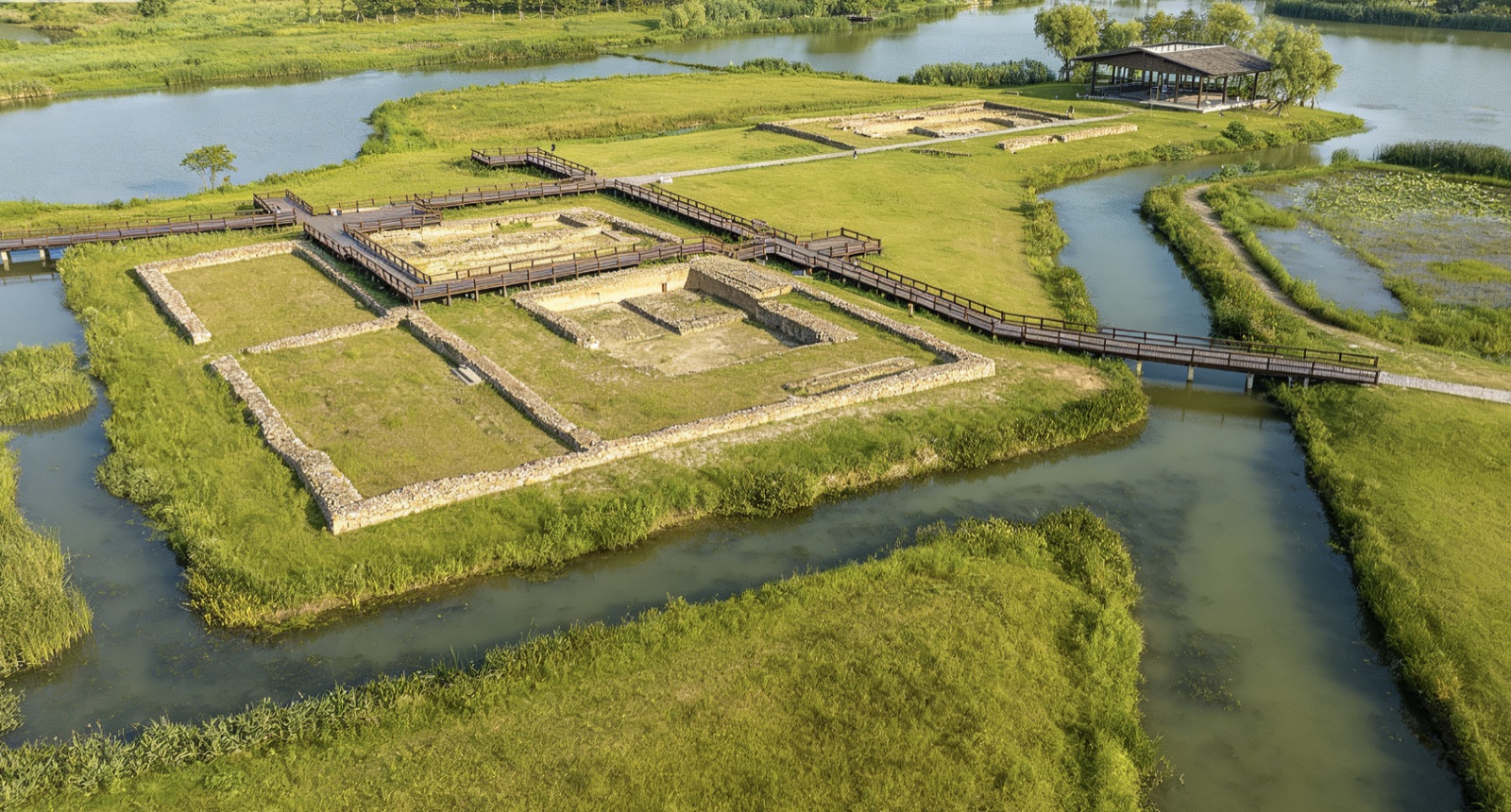
The Fanshan Royal Cemetery sits west of the Mojiaoshan Palace Site and is the highest-ranking burial ground at Liangzhu Ancient City, described by scholars as an "earthen pyramid." The cemetery has yielded more than 1,200 exquisite jade artifacts, including jade cong tubes, jade bi discs, and jade yue axes. The "King Cong" and "King Yue" — both from Tomb 12 — are engraved with the complete deity-and-animal-face motif, the central religious symbol of Liangzhu culture and the pinnacle of the era's craftsmanship.
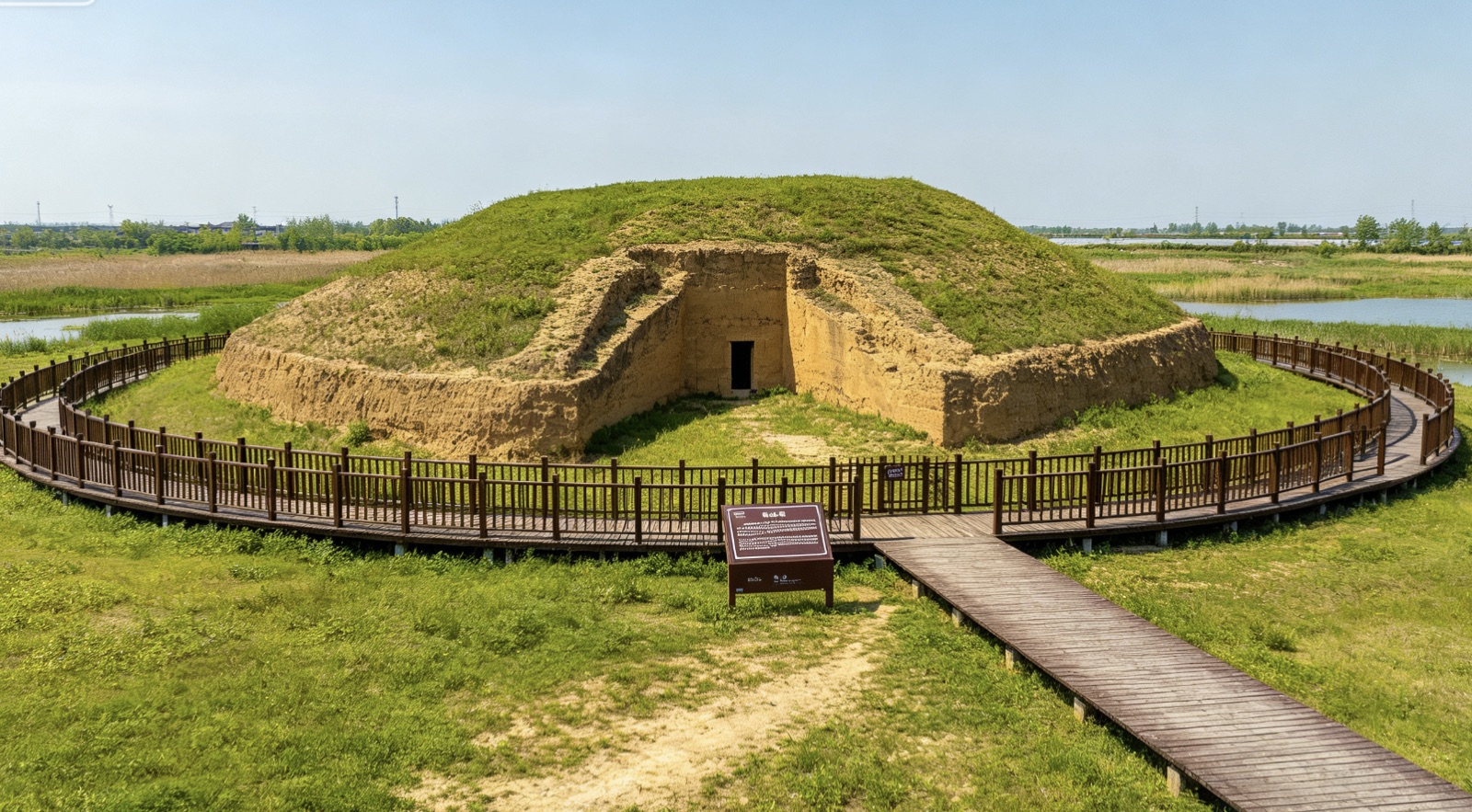
Jiangjiashan Aristocratic Cemetery
The Jiangjiashan Aristocratic Cemetery is another high-ranking burial ground within Liangzhu Ancient City, second in prestige only to the Fanshan Royal Cemetery. The graves contain a rich variety of jade objects, lacquerware, and stone tools arranged in orderly rows, reflecting the strict social hierarchy and ritual system of Liangzhu society.
Meirendi Site
The Meirendi Site lies in the outer city area and is a concentration of residential and craft-production remains. Archaeological finds include house foundations, rubbish pits, and kiln sites, along with large quantities of pottery and stone tools, providing valuable material for reconstructing the everyday lives and productive activities of ordinary Liangzhu residents.
Zhishan Observation Platform
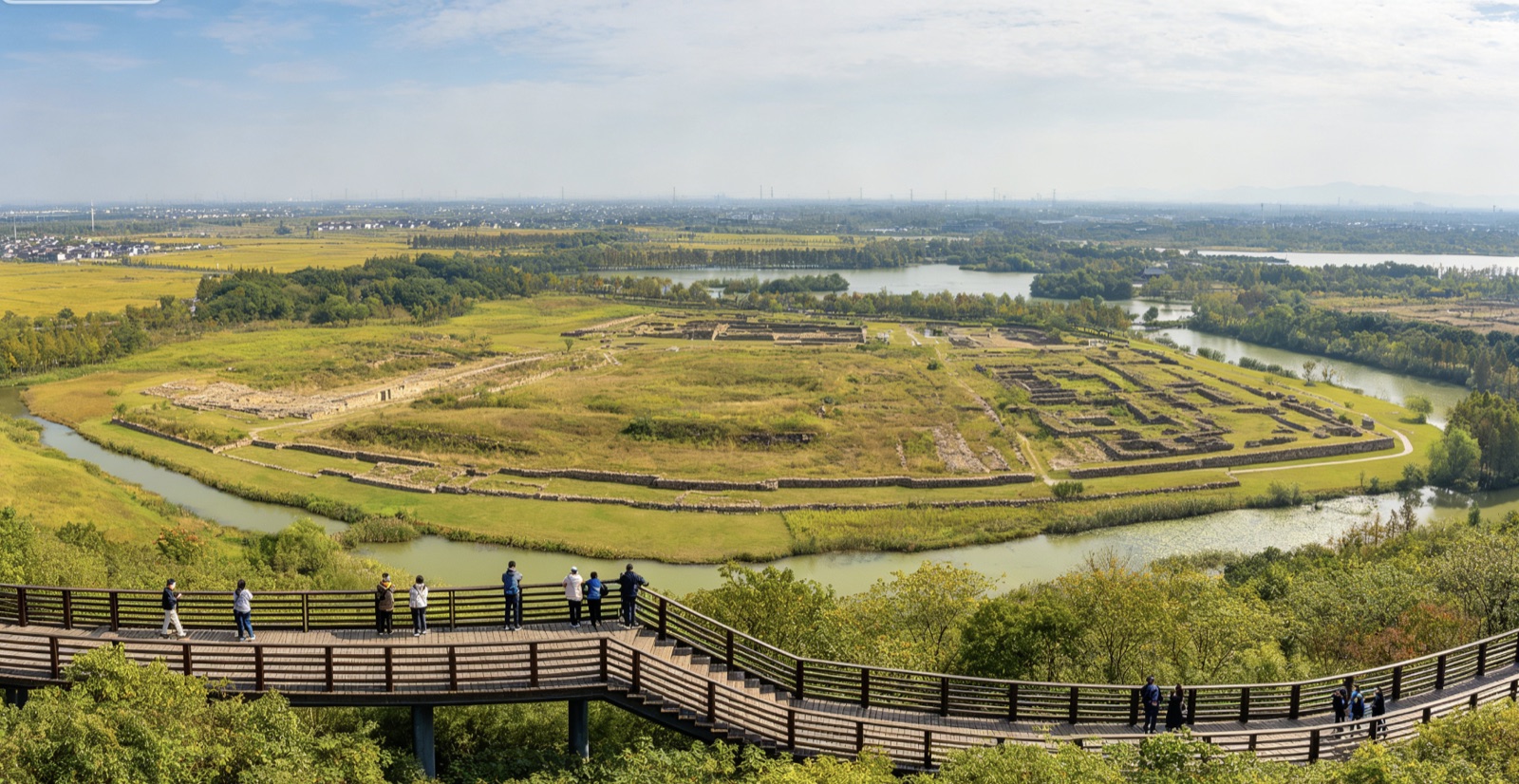
The Zhishan Observation Platform stands on a slightly elevated mound within the park and offers the best vantage point for taking in the full sweep of the ancient city. From the platform, visitors can look out over the Mojiaoshan palace district, the Fanshan Royal Cemetery, and the contours of the inner and outer city walls, gaining an intuitive sense of the scale and planning intelligence of a metropolis five thousand years in the making.
10 stops, in walking order — read top to bottom, no clicking needed.

 2
 3
 4
 5
 6
 7
 8
 9
 10