Travel Guide› Chongqing› Eling Second Factory Cultural and Creative Park
Chongqing

Eling Second Factory Cultural and Creative Park 鹅岭二厂文创公园

Eling Second Factory Cultural and Creative Park
Address
No. 1 Eling Main Street, Yuzhong District, Chongqing (next to Eling Park)
Overview

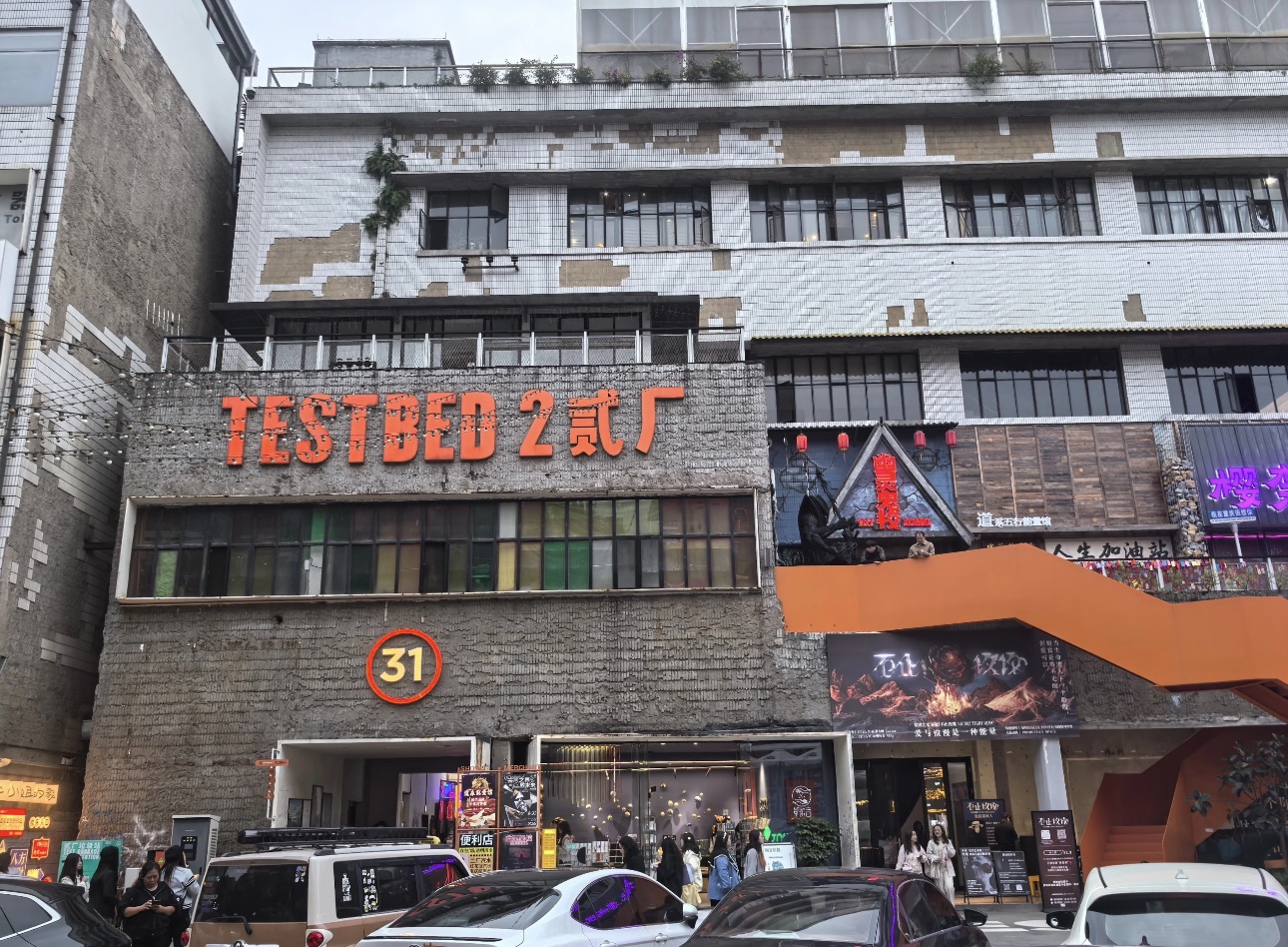
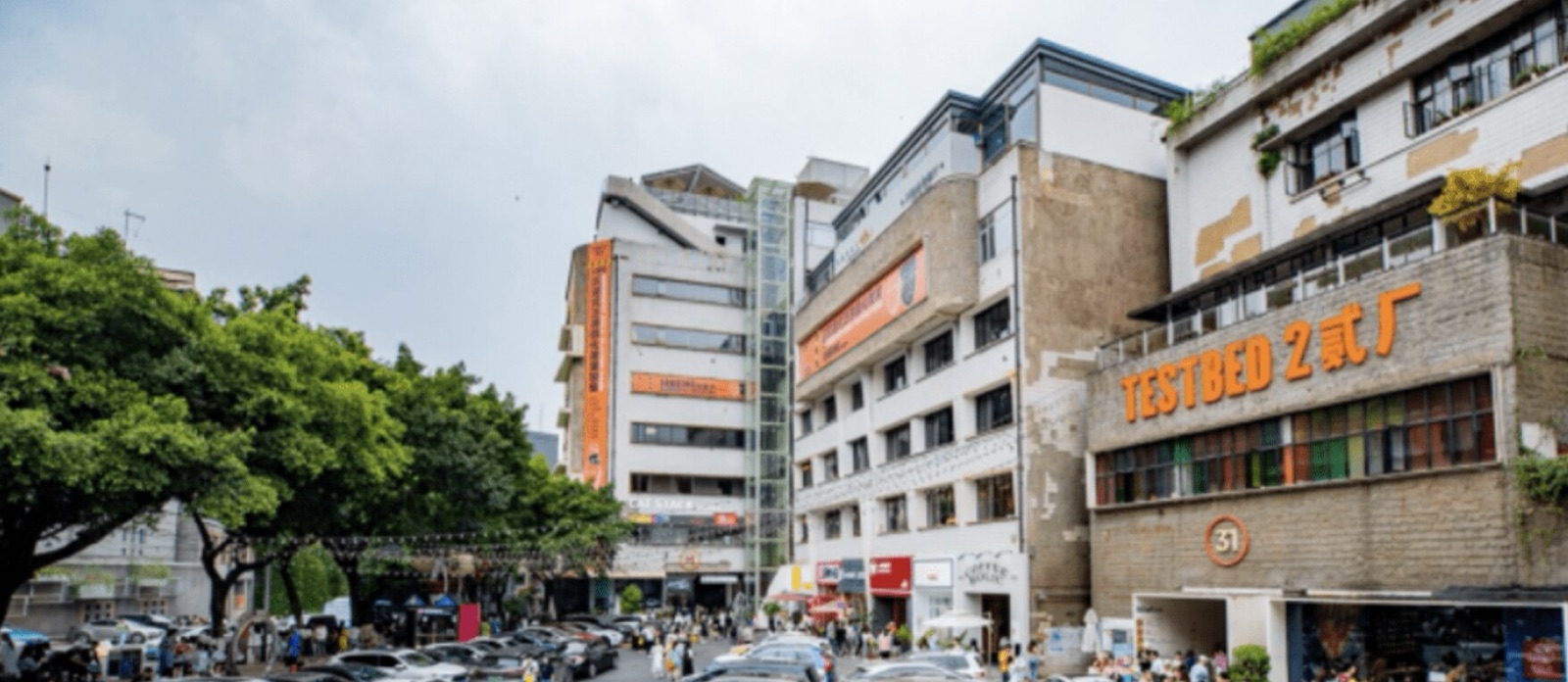
TESTBED2 Creative Park — officially known as TESTBED2 Ercchang Cultural and Creative Park — sits at No. 1 Eling Zheng Street in Yuzhong District, Chongqing. Its predecessor was the Central Bank of the Republic of China Banknote Printing Factory, founded in 1937. During the War of Resistance Against Japan, the factory operated as a tightly classified facility. In 1953 it was renamed Chongqing Printing Factory No. 2 (Ercchang) and grew into the dominant color-printing hub of Southwest China; the majority of color-printed materials on the Chongqing market from the 1950s through the 1970s came off its presses. After the factory relocated in 2011, Chongqing Tubi Cultural Consulting Co. launched a redevelopment project in 2014, and the park formally opened on June 2, 2017. The design was guided by British Chartered Architect Will Alsop and his team, operating under the principle "Do Not Over Design." The approach preserved the original industrial architecture while weaving in contemporary art, producing a signature aesthetic the team calls "Rough Luxury." The park served as a filming location for the film "Us and Them" and now draws around six million visitors a year. It is a nationally designated Night Culture and Tourism Consumption Cluster and a recognized trendsetting landmark of the Chengdu-Chongqing region.

Attractions Within the Park
  1. Ercchang Memory Museum
  2. Former Republic of China Central Bank Banknote Printing Factory (Building 9)
  3. T² International Contemporary Art Center
  4. Love Rooftop (CITY-RADIO Station Wall)
  5. Sky Rooftop
  6. Test Design Lane
  7. Test Joy Lane
  8. Test Spirit Lane
  9. Sunken Plaza
  10. Spiral Staircase / Graffiti Alley
  11. Giant Zipper Sculpture
Sub-Attraction Descriptions

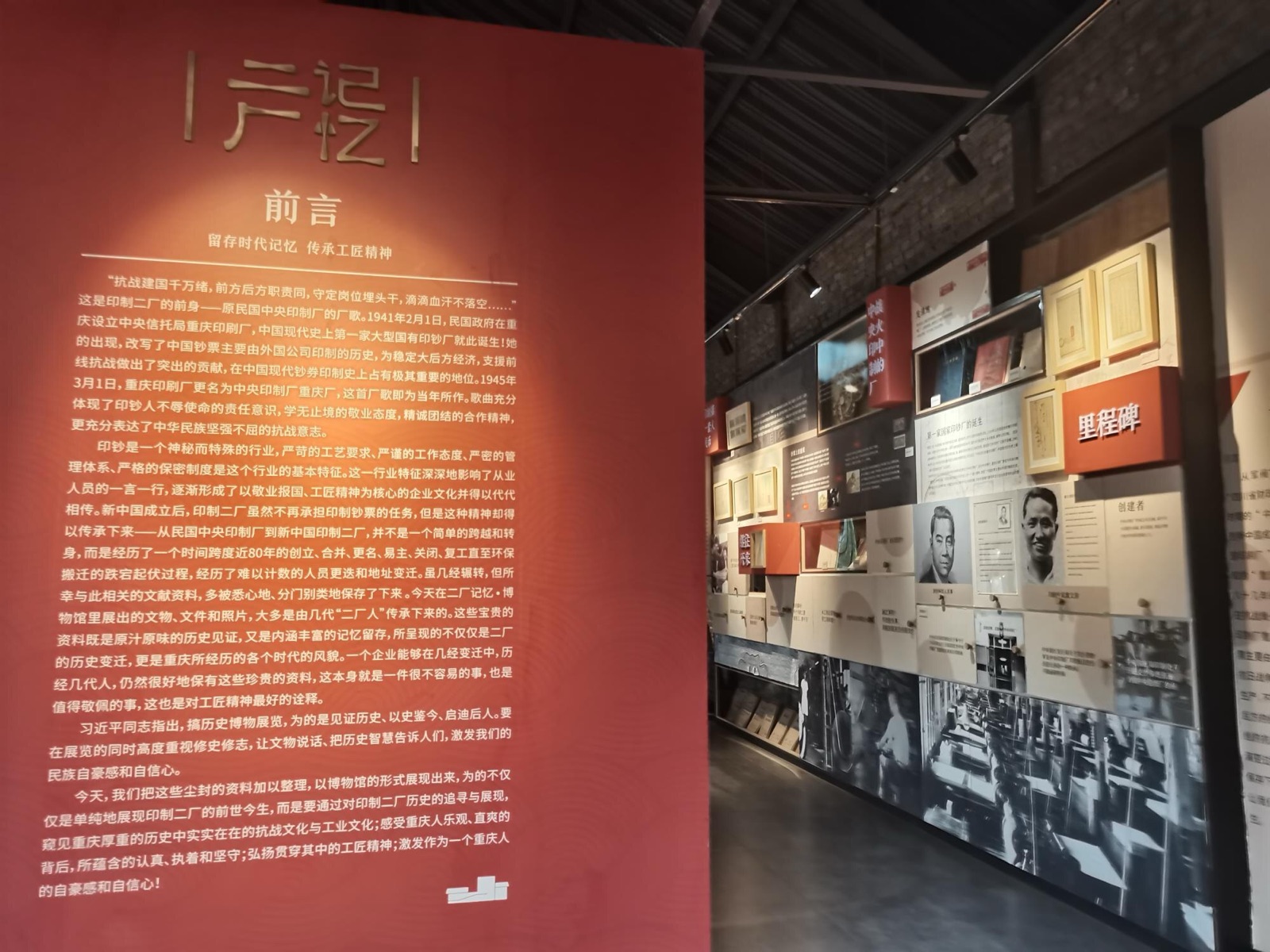
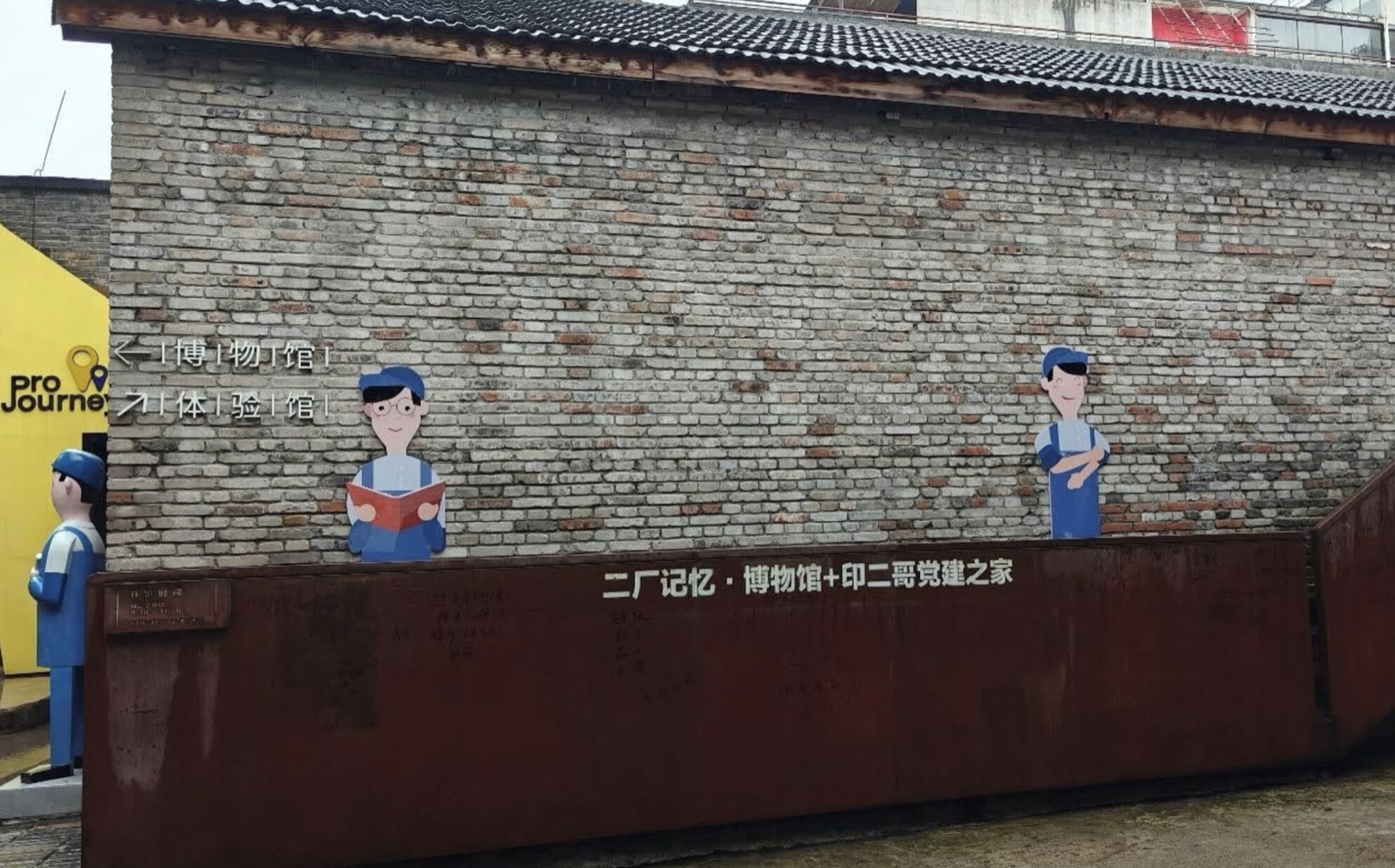
Ercchang Memory Museum Built on the site of the original Printing Factory No. 2, the Ercchang Memory Museum is an officially registered museum of Yuzhong District. It documents more than 80 years of the factory's history across five permanent galleries: Factory History, Factory Production, Factory Life, Banknote Printing Culture, and Factory Reborn. On display are banknote presses, currency and stamp plates, historical photographs, archival documents, and commendations dating from the Republican era. Combining physical artifacts with audiovisual presentations, the museum reconstructs the factory's role as an economic stabilizer during wartime and its later achievements as the color-printing center of Southwest China after the founding of the People's Republic. Through modern display techniques such as underground glass showcases, the museum pays tribute to the factory's legacy and serves as a key window into Chongqing's industrial history and the cultural memory of the city's original core.

Former Republic of China Central Bank Banknote Printing Factory (Building 9) Building 9 houses one of the best-preserved examples of wartime industrial architecture in the park. It served as the proofreading workshop of the banknote printing factory and witnessed the production of Republican-era banknotes, tax stamps, postage stamps, and other government securities from 1940 to 1946. During the park's renovation, the building's original structure and historic character were deliberately kept intact — including weathered exterior walls, rusted iron doors, paint-worn handrails, and a trimmed-down water tower — fully embodying the "Rough Luxury" design philosophy. These industrial remnants carry Chongqing's memory as a regional economic center while also serving as a living backdrop for contemporary art, making Building 9 an invaluable physical record of the city's modern industrial and architectural history.

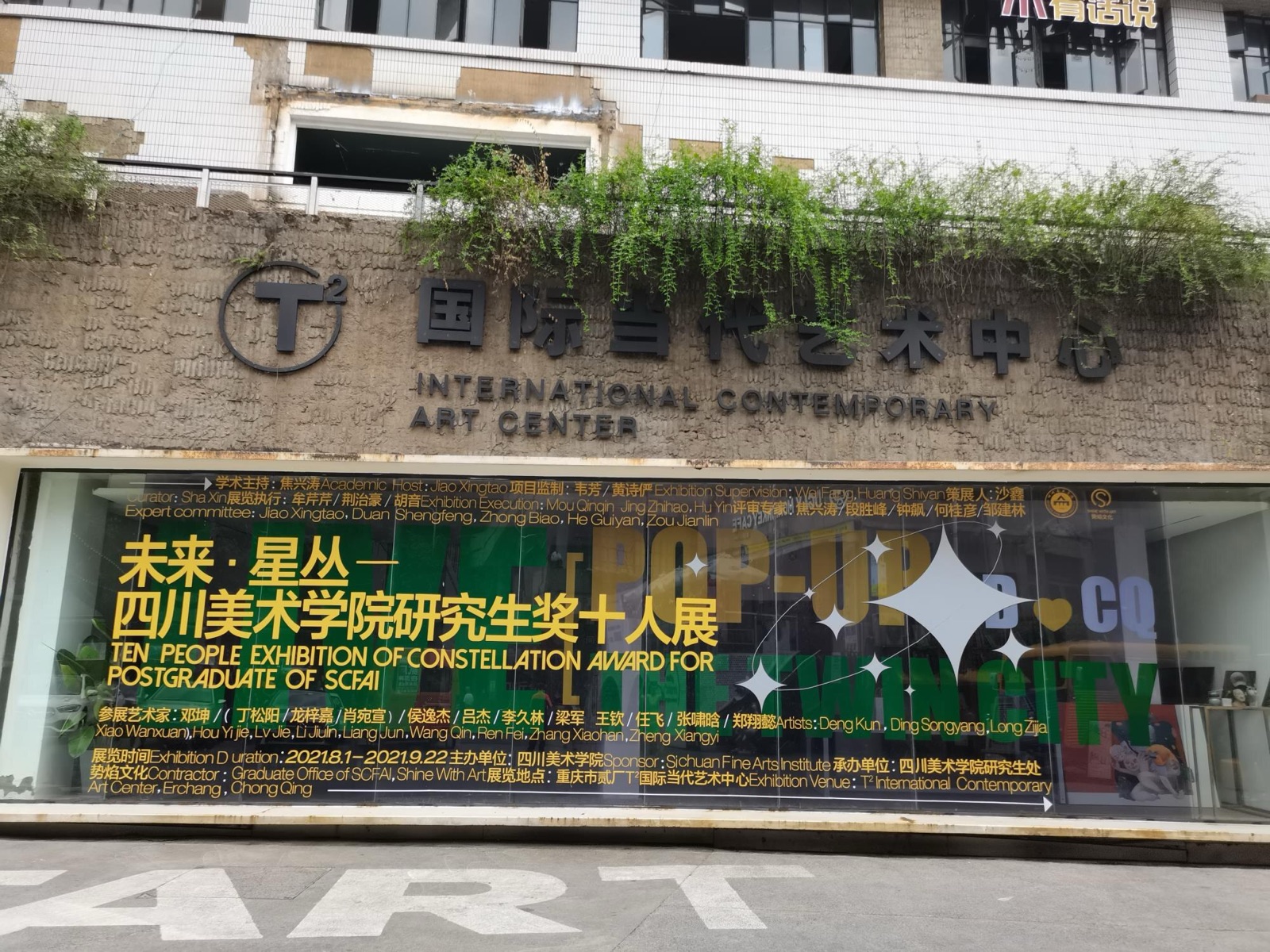
T² International Contemporary Art Center Located in Building 31, T² International Contemporary Art Center is a principal exhibition venue for the Sichuan Fine Arts Institute's School of Experimental Art. It is dedicated to presenting experimental and avant-garde contemporary work. The center hosts regular exhibitions by Chinese and international artists, including installation art, new media art, and mixed-media shows — among them the experimental special exhibition "Temporary Distance" and the contemporary art exhibition "Boundless Horizons: Towards the Future." Exhibitions emphasize the fusion of technology and art, using immersive experiences and interactive installations to probe the deep relationships between art, society, history, and the future. The center has become an important platform for contemporary art creation and exchange in Chongqing and a valuable vantage point for understanding the trajectory of contemporary Chinese art.

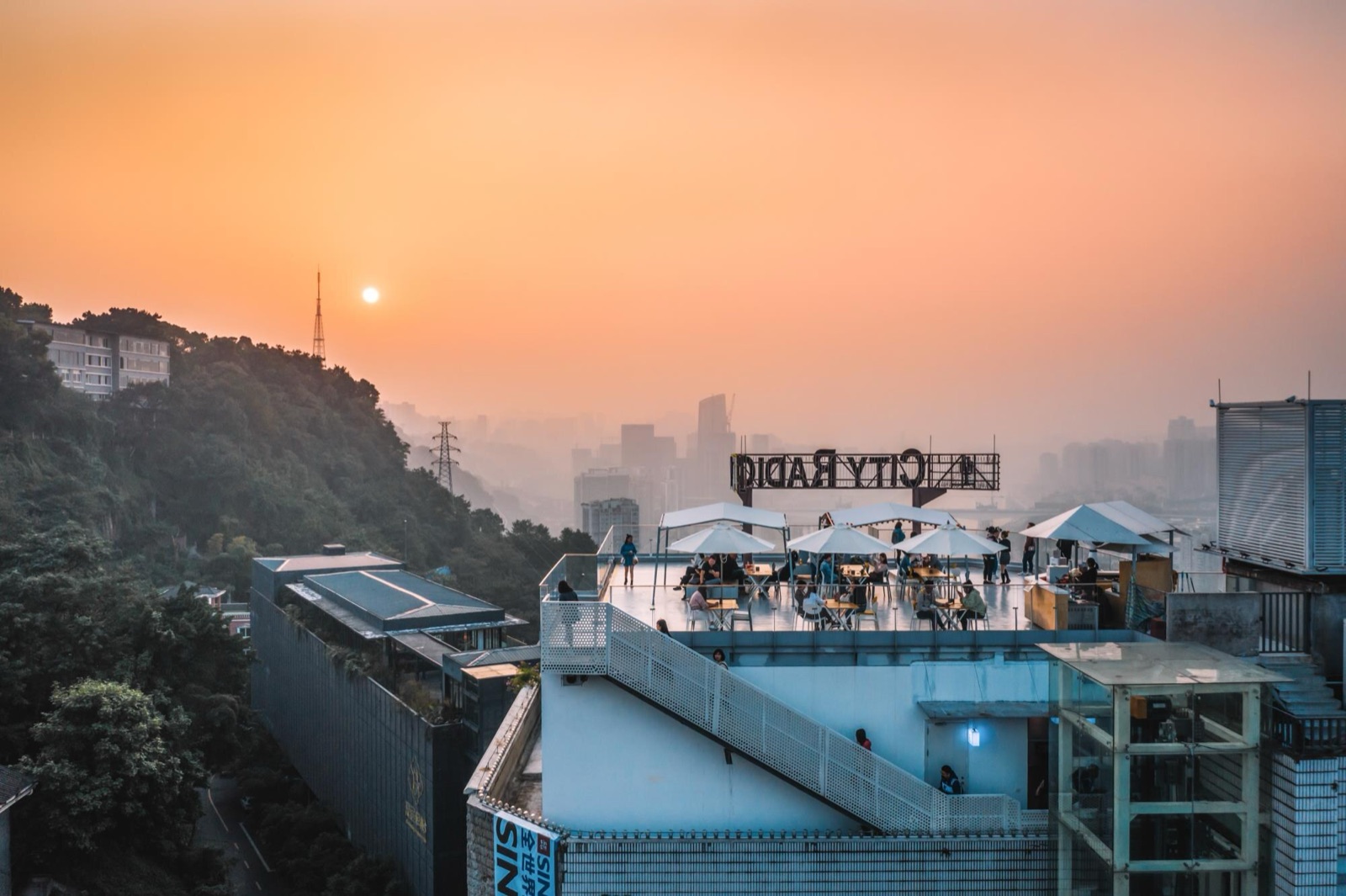
Love Rooftop (CITY-RADIO Station Wall) Perched on top of Building 31, the Love Rooftop was a filming location for "Us and Them" and is defined by its landmark CITY-RADIO station wall installation. The rooftop commands wide-open views of the spectacular confluence of the Yangtze and Jialing rivers, as well as the Yuzhong Peninsula cityscape. Through contemporary art design, the space brings industrial architecture and romantic cultural elements into an artful dialogue, generating a distinctly intimate atmosphere. The rooftop functions not only as a viewing platform but also as a venue for cultural events, social gatherings, and small-scale performances. Its design draws on Chongqing's vertical, mountainous urban character, and through its spiral structures and open spaces creates a layered city-viewing experience — an ideal spot for feeling the three-dimensional energy that gives Chongqing its reputation as a "8D Magic City."

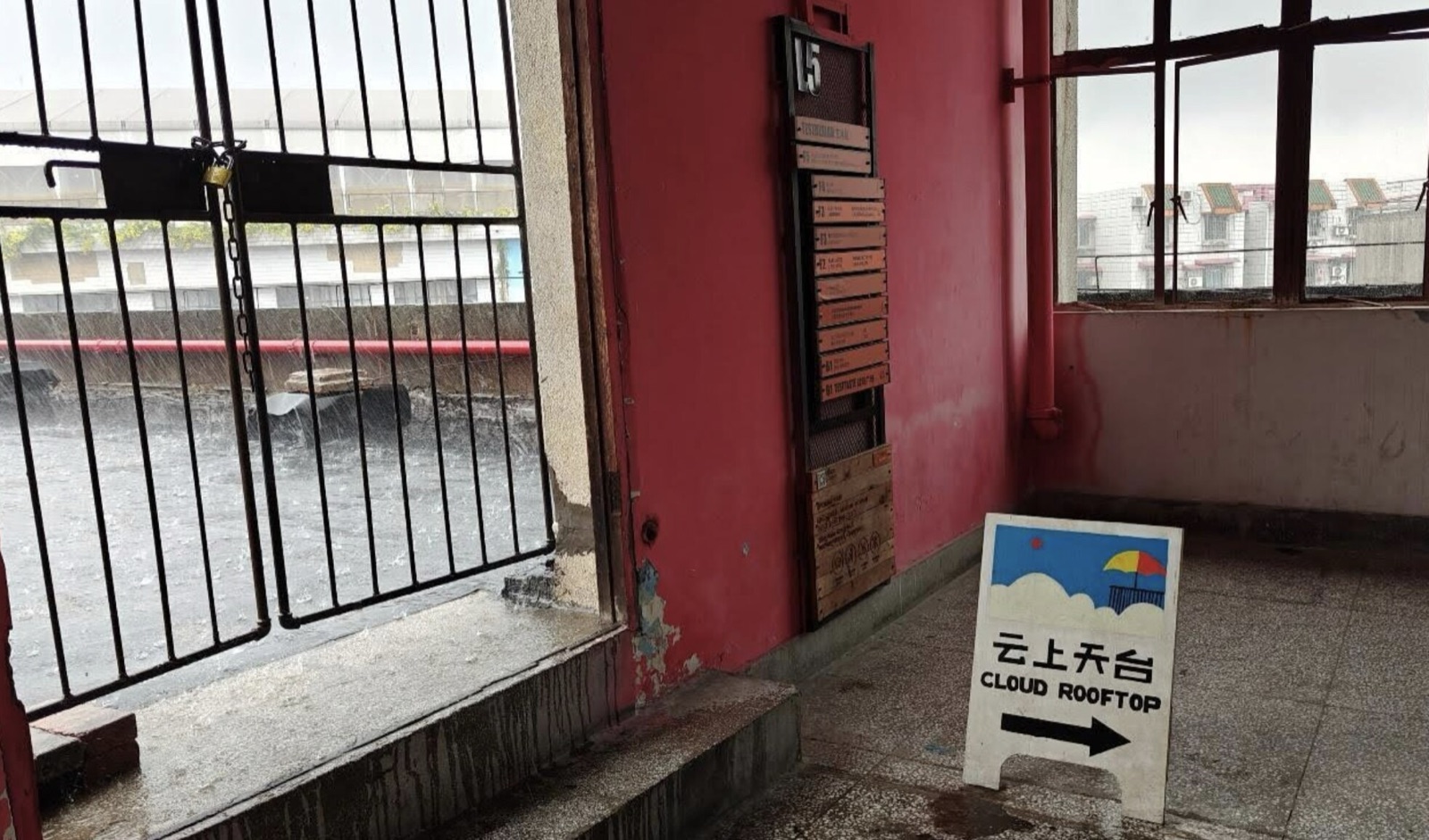
Sky Rooftop Located on the fifth floor of Building 1, the Sky Rooftop served as a filming location for "Waiting for Rain to Stop" and features a signature sign reading "I Miss You So Much from Chongqing." The space is open and airy, with a clean contemporary design that stands in sharp visual contrast to the weathered industrial buildings around it. This rooftop is one of the best spots in the park to take in a panoramic view of Chongqing, especially at dusk when the fading light spreads across the city. Cafes and tea shops on the rooftop let visitors relax while they take in the scenery. The design fully reflects the concept of "parasitic architecture" — building new uses and aesthetic value onto an existing structure without erasing its bones.

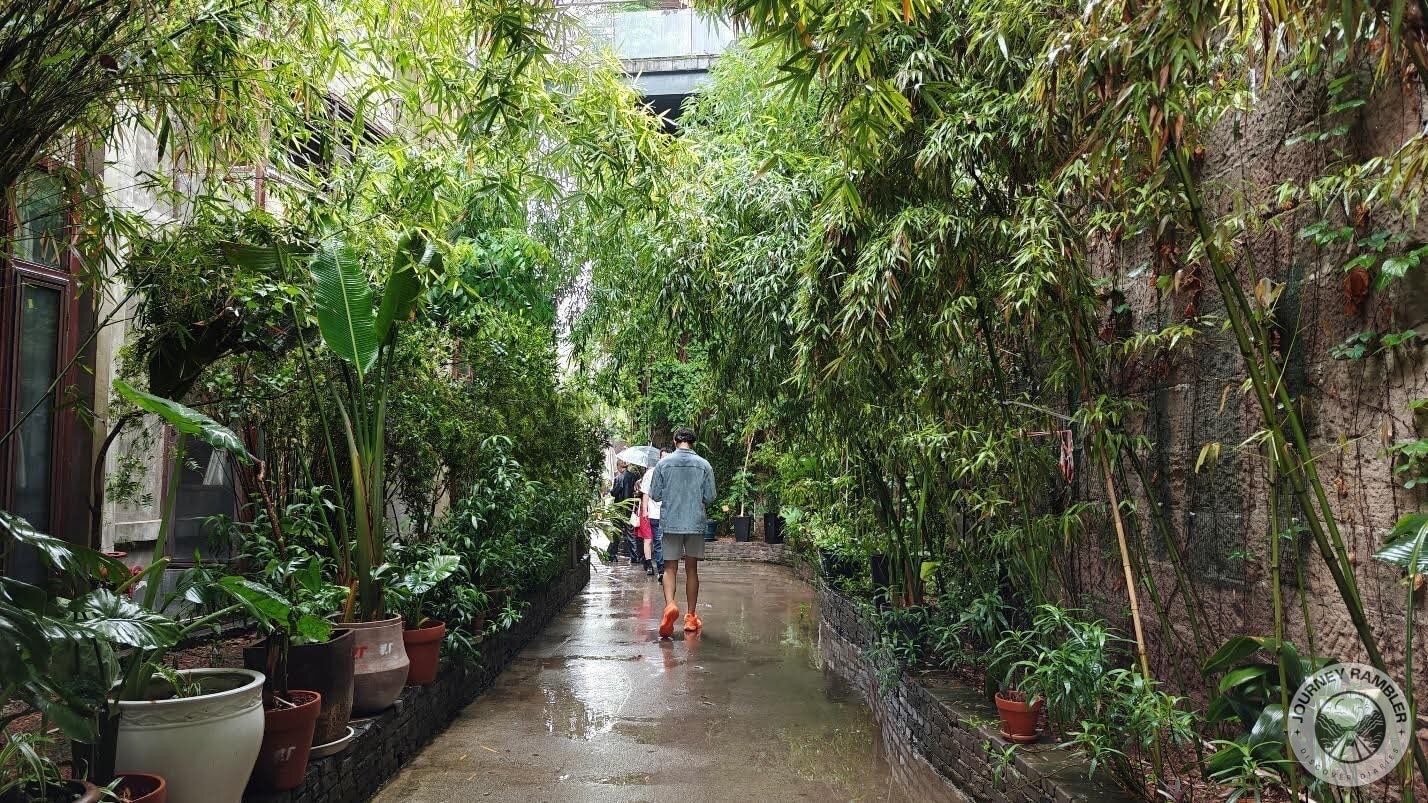
Test Design Lane Test Design Lane is one of the park's three themed alleyways. Its theme is "nature," showcasing the harmony between printing craft and natural elements. The factory buildings lining both sides of the lane retain their original character — weathered walls, rusted iron doors, and exposed brickwork are all clearly visible. The design team wove natural motifs such as leaves and mountain silhouettes into the wall treatments, creating a vivid contrast with the industrial surroundings. Shops along the lane lean into the nature theme in their names, interiors, and merchandise, incorporating greenery, timber, and stone while stocking handmade paper crafts, botanical specimens, and ecologically minded design goods. The lane's patterned paving ties together with the surrounding buildings to create a richly layered spatial experience.

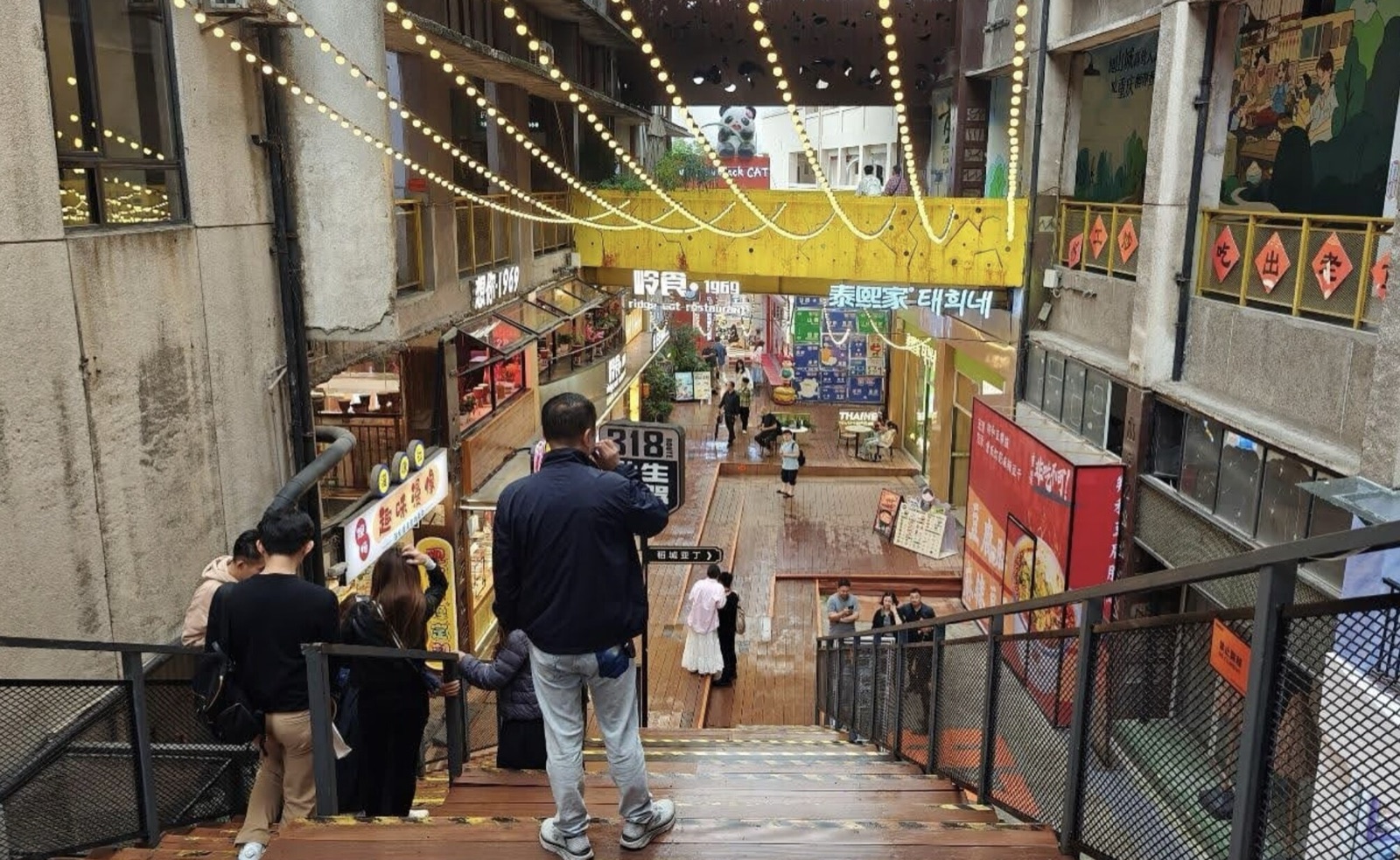
Test Joy Lane Test Joy Lane is one of the park's three themed alleyways. Its theme is "human activity," gathering dining, leisure, and everyday street-life energy in one place. Factory buildings on both sides of the lane preserve their original texture — weathered walls, rusted iron doors, and exposed brickwork stand as deliberate keepsakes of industrial memory. The design places particular emphasis on openness and interaction, with generous pedestrian space, comfortable seating, and abundant public art installations throughout. Among the notable spots: Dawang Youchha, a Chongqing breakfast shop serving the classic combination of rice porridge, fried dough sticks, and chili; Yibei Suannaiu, offering chilled purple rice yogurt drinks that are perfect on a hot day; and Mousheng, a characterful cafe serving hand-drip single-origin coffee in a photogenic setting. The design philosophy here is "life as a vessel for art," and the lane brings together both Chongqing homegrown brands and creative businesses from across China.

Test Spirit Lane Test Spirit Lane is one of the park's three themed alleyways. Its theme is "future possibilities," centering on craft-making and experimental artistic exploration. The factory buildings lining both sides preserve their original texture — weathered walls, rusted iron doors, and exposed brickwork mark the deliberate traces of industrial history. The design leans into innovation and experimentation, with irregular geometric structures, transparent glass curtain walls, and forward-looking lighting that speak to an openness toward what is still possible. Highlights along the lane include Yimei Bowu, a collection store for Chinese artisan goods carrying more than 3,000 handcrafted products spanning traditional techniques to modern design; and Soarin Mahjong Institute, a creative space exploring the cultural history and contemporary reinvention of mahjong. The design philosophy — "art as a bridge connecting past and future" — runs through the lane's carefully curated mix of traditional craftsmanship reimagined and entirely new art forms.

Sunken Plaza The Sunken Plaza sits at the park entrance, functioning as the key transition point between the main gate and the park's interior. At its center stands the signature "Neon TV" installation, a recreation of a vintage television set that has become one of the park's most photographed spots. Along the sides of the plaza, nostalgic installations including the "Phone Wall" (a row of old-style telephone booths) and the "Directional Sign" (a road marker pointing from Chongqing to Tibet) reinforce the industrial-era atmosphere. Geometric patterns on the plaza floor create a bold visual contrast with the weathered buildings around it. As the first stop visitors reach, the plaza is also a major gathering point for events. Its sunken design cleverly exploits the natural grade change in the terrain, producing a richly layered spatial experience from the moment you arrive.

Spiral Staircase / Graffiti Alley Located in the rear alley of Building B, the Spiral Staircase and Graffiti Alley form a vertical connector between floors that also serves as a major site for contemporary art. The staircase is built on an iron-frame structure that preserves the original factory's industrial character, while its spiral form echoes the layered topography of Chongqing's mountainous terrain. The alley itself is covered in bold, colorful murals by multiple artists, touching on urban memory, industrial culture, and visions of the future. Particularly worth noting is the "Running Alley" mural, which was used as a filming location for "Back to Summer." The graffiti is refreshed periodically, meaning the alley's look and energy are never quite the same twice. If you enjoy photography, this is an excellent spot to experiment with angles and compositions for more artistic shots.

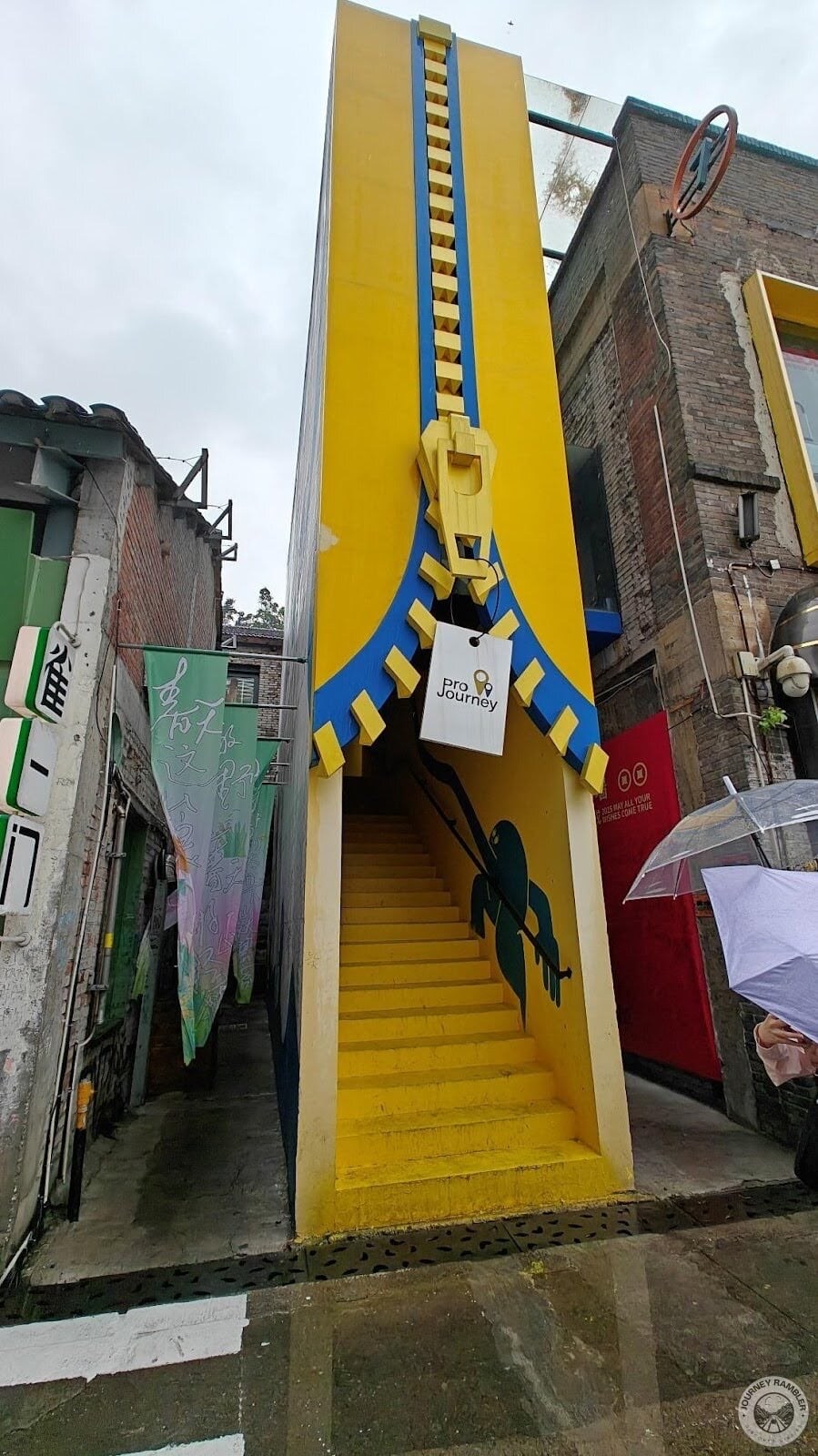
Giant Zipper Sculpture At the heart of the park stands the Giant Zipper Sculpture, one of the park's signature public art pieces. Rendered in metal at an enormous scale, it delivers an immediate visual jolt. Each tooth of the zipper has been individually crafted, displaying a distinct texture and sheen that make it one of the park's most recognizable landmarks. The work resonates with the factory's history as a printing facility — the zipper symbolizes "connection" — while also expressing, in a contemporary artistic language, an openness to future possibility. The design, which takes an ordinary object and scales and transforms it into public art, reflects the "old and new in coexistence" philosophy at the park's core. Seating and an interactive space around the sculpture invite visitors to linger. At dusk, the dedicated lighting transforms the sculpture's appearance entirely, making it well worth revisiting after dark.

Main Entrance Area The main entrance at No. 1 Eling Zheng Street is visitors' first impression of the park. A large-scale "TESTBED2" art lettering installation and a stone stele recording the history of the Republic of China Central Bank Banknote Printing Factory mark the entry point. The entrance buildings retain the original factory's character — weathered walls, rusted iron doors, and raw architectural structure are all visible, embodying the park's commitment to respecting history and preserving its original appearance. A visitor services center near the entrance provides wayfinding, information, and event details. The entrance area also serves as an important node connecting Eling Park and the Liziba neighborhood. Its design merges industrial history with contemporary art, using a restrained visual language and rich historical detail to create a spatial experience that rewards close attention.

Chongqing Bookstore The Chongqing Bookstore is a literary bookshop dedicated to Chongqing culture. Its interior design blends industrial elements with contemporary aesthetics — exposed brick walls and industrial piping sit comfortably alongside wooden shelves and warm lighting. The curated collection centers on Chongqing's history, culture, and art, along with local chronicles, literary works, and art books from the broader Southwest region. A cafe corner, reading area, and small exhibition space give visitors multiple ways to spend time here. The store's guiding idea is "letting books serve as bridges between past and future," and the carefully chosen titles and distinctive atmosphere make it easy to settle in and absorb Chongqing's cultural depth.

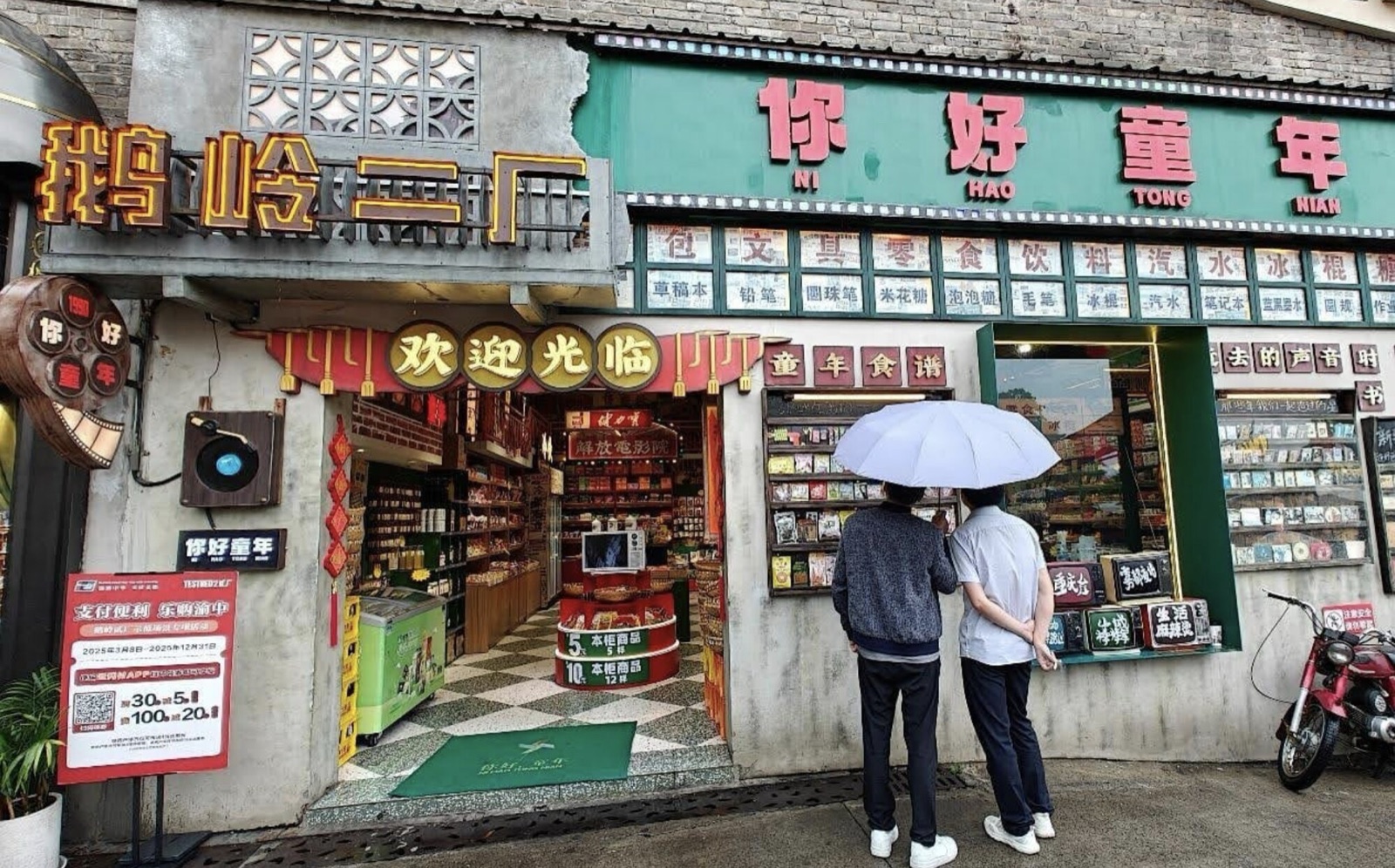
Hello Childhood Nostalgia Hall Hello Childhood Nostalgia Hall is a themed experience space recreating daily life in Chongqing during the planned-economy era. The interior reconstructs living scenes from the 1950s through 1970s — vintage shops, school classrooms, and residential living rooms are all faithfully reproduced. The exhibits include everyday objects, toys, stationery, clothing, and home furnishings from that period, pairing physical artifacts with staged settings to bring the childhood memories of Chongqing residents back to life. An interactive zone lets visitors try old-style games and traditional handicrafts. The designers preserved the original factory floorplan and structure, layering nostalgic decor and warm modern lighting to create an atmosphere in which different eras seem to coexist. For photography, the hall offers richly period-specific backdrops: vintage radios, black-and-white televisions, and retro furniture throughout.

Practical info Opening hours · Ticket · Getting there
Opening hours
  • Park public areas: Open 24/7
  • Shops/Cafes/Restaurants: About 10:00-22:00 (some shops open until late at night)
  • Rooftop viewing: Daytime to evening visits recommended; the rooftop may be closed at night
  • Note: The best time for photography is afternoon to dusk, capturing both industrial-style architecture and the sunset view of the two rivers' confluence
Ticket
  • Free admission (no ticket required for the cultural and creative park; some exhibitions or workshops may charge separately)
Getting there
  • Rail Transit: Take Chongqing Rail Transit Line 1 or 3, get off at Lianglukou Station, walk about 15 minutes from Exit A (uphill section, comfortable shoes recommended)
  • Bus: Take buses 109, 118, 138, 403, 413, etc., get off at Eling Station, walk about 5 minutes
  • Taxi/Ride-hailing: Navigate to "Eling Second Factory" or "Eling Printing Factory No. 2"; you will arrive right at the destination
  • Note: The park is located halfway up the mountain; walking from the rail transit station requires climbing an uphill section; those with less physical strength are advised to take a taxi directly

Inside Eling Second Factory Cultural and Creative Park

14 stops, in walking order — read top to bottom, no clicking needed.

1 Eling Factory II Main Gate of 14

Eling Factory II Main Gate

鹅岭二厂文创公园大门

The main gate preserves the original 1930s sawtooth-roofed brick and steel-window structure of the Central Bank Printing Works, updated in 2014 with a "TESTBED 2" typographic wall and retro street lamps. It is the signature photo stop for first-time visitors.

: 1 TESTBED 2 / TESTBED 2 Main Entrance, No.1 Eling Main Street, Yuzhong District, Chongqing

: / Free admission to the park and entrance area

: 10:00—22:00; 24 ()/ Park 10:00–22:00; gate accessible 24 h

:① 1 2 , 5 ;② 403/411/465/829 ;③ 8 ()/ (1) Metro Line 1 Eling Station Exit 2, ~5-min walk; (2) Bus 403/411/465/829 to Eling stop; (3) 8-min walk from Yangtze Cableway North Station

On-site narration · read it where you stand

Welcome, everyone! You've arrived at TESTBED2 Creative Park in Chongqing — a place that started life as the Central Bank of the Republic of China Banknote Printing Factory before becoming Chongqing Printing Factory No. 2 (Ercchang), the most important printing center in Southwest China. Today I'll take you through the park in the official visitor sequence: Main Entrance — Ercchang Memory Museum — Former Banknote Printing Factory Site — Test Lanes — T² International Contemporary Art Center — Love Rooftop — Sky Rooftop — Spiral Staircase / Graffiti Alley — Chongqing Bookstore / Hello Childhood Nostalgia Hall — Giant Zipper Sculpture. Let's go.

First, a quick word on the park's background. This place has real history — founded in 1937, it's now 89 years old. During the War of Resistance Against Japan, the National Government's Central Bank operated its banknote printing factory here, producing currency, tax stamps, postage stamps, and other government-issued securities and documents. After the founding of the People's Republic, it was renamed Chongqing Printing Factory No. 2 in 1953 and grew into the color-printing powerhouse of Southwest China. From the 1950s through the 1970s, nearly all the color-printed goods on the Chongqing market came from these presses — grain coupons, meat coupons, vouchers, all of it. In 2011 the factory fully relocated, leaving behind empty buildings and workshops. In 2014, a group of artists, designers, planners, brand specialists, and media creators discovered the site. They were drawn in by more than seventy years of layered human traces and decided to bring Ercchang back to life through cultural and creative industry. In June 2017, TESTBED2 Creative Park opened its doors and has been one of Chongqing's most beloved destinations ever since.

You're now standing in the Main Entrance Area — the starting point of the entire park. The entrance preserves the original factory's character: weathered walls, rusted iron doors, and raw architectural bones are all clearly visible, testifying to Ercchang's importance as a major industrial heritage site of Southwest China. Look for the large-scale "TESTBED2" art lettering at the entrance, along with the stone stele marking the site of the Republic of China Central Bank Banknote Printing Factory, recording the factory's full historical arc. As you walk in, take a moment to notice the building details up close — cracks in the plaster, paint-worn handrails, exposed pipes. What might look like decay is actually deliberate. The designers made a conscious choice to keep all of it in the name of "Rough Luxury" — letting the new and the old carry on a direct visual conversation.

Factory II Memory Museum

二厂记忆博物馆

Housed in the original 8-metre-high brick hall of Building 5, the museum exhibits intaglio printing presses, numbering machines and engraved plates from the 1930s Central Bank Printing Works, plus a section on Chongqing's wartime industrial history. Free admission.

: 1 TESTBED 2 5 / Building 5, TESTBED 2, No.1 Eling Main Street, Yuzhong District, Chongqing

: / Free admission

:10:00—20:00(,)/ 10:00–20:00 (closed Mondays for maintenance)

: 1 2 , 6 ;"TESTBED 2 " / Metro Line 1 Eling Station Exit 2, ~6-min walk; navigate to "TESTBED 2 Building 5"

On-site narration · read it where you stand

Moving on from the Main Entrance, we arrive at the Ercchang Memory Museum — an officially registered museum of Yuzhong District, built on the original site of Printing Factory No. 2. The museum takes visitors through more than 80 years of the factory's history across five galleries: Factory History, Factory Production, Factory Life, Banknote Printing Culture, and Factory Reborn. On display are banknote presses, currency and stamp plates, historical photographs, archival documents, and commendations from the Republican era. Combining physical artifacts with audiovisual presentations, it recreates both the factory's role as an economic stabilizer during wartime and its later achievements as the color-printing center of Southwest China.

Pay attention to the museum's layout as you move through it — from the basement level up to ground floor, with glass showcases along the way that create the feeling of moving through different chapters of the factory's life. In the Factory History gallery you'll find precious photographs and documents from the founding year of 1937. In Factory Production, the printing equipment and process diagrams from those years are laid out. Factory Life displays workers' ID cards, everyday objects, and group activity photos. An interactive touchscreen area lets you explore the timeline of Ercchang's changes at your own pace. The designers deliberately preserved the building's industrial character throughout — concrete floors, steel-reinforced structures, original windows and doors — so the weight of that history stays in the air around you.

Former Central Bank Printing Works (Building 9)

民国中央银行印钞厂旧址(9 号楼)

Built in 1937 to print wartime currency, Building 9 is a three-storey 5,200 sqm brick building in shape, designated a Chongqing Municipal Cultural Relic in 2013. Today the ground floor houses a café and design store; upper floors host artists-in-residence and photography studios.

: 1 TESTBED 2 9 / Building 9, TESTBED 2, No.1 Eling Main Street, Yuzhong District, Chongqing

:; / Free public areas; upper studios by appointment

: 10:00—22:00()/ Interior 10:00–22:00 (café and shop hours)

: 1 2 , 6 ;,"TESTBED 2 " / Metro Line 1 Eling Station Exit 2, ~6-min walk; navigate to "TESTBED 2 Building 9"

On-site narration · read it where you stand

Coming through the museum, we reach the Former Republic of China Central Bank Banknote Printing Factory Site — Building 9, the best-preserved example of wartime industrial architecture in the park. This building served as the proofreading workshop of the printing factory and witnessed the production of Republican-era banknotes, tax stamps, postage stamps, and other government-issued securities and documents from 1940 to 1946. Notice the building's exterior as you approach — the weathered walls, rusted iron doors, and exposed brickwork are all here by design. This is "Rough Luxury" in practice: the old building's own character is the beauty; there's no point in covering it up.

Step inside and you'll find the original production-line layout, workbenches, and proofreading equipment still in place; in some areas the factory floor scenes have been recreated to show how workers once operated. The building's tall interior volume and generous windows met the lighting needs of industrial production back then and now offer excellent conditions for contemporary art exhibitions. The water tower, ventilation ducting, and electrical infrastructure have all been kept as distinctive landscape elements. Through what the designers call "parasitic architecture" — adding sky bridges, staircases, and glass curtain walls onto the existing structure rather than replacing it — the building achieves a layered experience in which old and new coexist on every level.

Test Design 街巷

Test Design 街巷

Lined with red-brick warehouses converted into designer boutiques for fashion, homeware and jewelry, Test Design Alley is the park's busiest retail street. A "Chongqing Forest" graffiti wall sits mid-alley.

: 1 TESTBED 2 / Mid-east side, TESTBED 2, No.1 Eling Main Street, Yuzhong District, Chongqing

:; / Free entry; purchases optional

:11:00—22:00()/ 11:00–22:00 (varies by shop)

: 2 / ~2-min walk from main gate along central street

On-site narration · read it where you stand

Coming out of the former factory site, we enter Test Design Lane — one of the park's three themed alleyways, built around the theme of "nature" and the interplay between printing craft and natural elements. The factory buildings on both sides of the lane retain all their original texture: you can see the weathered walls, rusted iron doors, and exposed brickwork on either side — all deliberately kept as markers of the site's industrial memory. Look for the art installation made of giant gears, called the "Time Engine," which references Ercchang's historical significance as a key industrial base of Southwest China.

The design inspiration for Test Design Lane comes from the pairing of print culture with the natural world. Wall treatments incorporate leaf and mountain-range motifs, setting them in sharp contrast against the heavy industrial architecture around them. Shops along the lane tend to take nature-related names — places like "Green Forest" and "Mountain Breeze" — and their interiors carry through the theme with greenery, timber, and stonework. The merchandise leans toward handmade paper crafts, botanical specimens, and ecologically minded design pieces. The lane's patterned paving picks up visual threads from the surrounding buildings, pulling the whole space into a layered, cohesive experience.

Test Joy 街巷

Test Joy 街巷

A 5–7 metre-high converted warehouse alley for immersive escape rooms, live houses and themed restaurants, Test Joy is the park's "east design, west entertainment" companion to Test Design.

: 1 TESTBED 2 / North-central area, TESTBED 2, No.1 Eling Main Street, Yuzhong District, Chongqing

:;/ 80—198 /; / Free entry; escape rooms CNY 80–198 per person; dining at shop rates

:11:00— 02:00()/ 11:00–02:00 next day

: 4 , 9 1 / ~4-min walk from main gate, or 1 min west of Building 9

On-site narration · read it where you stand

Following Test Design Lane along, we come to Test Joy Lane — the second of the park's three themed alleyways, this one centered on "human activity" and bringing together food, leisure, and the energy of everyday street life. Take note of the original factory buildings lining both sides: the weathered walls, rusted iron doors, and exposed brickwork are all deliberate keepsakes of the site's industrial memory. The design here puts particular emphasis on openness and interaction — you'll notice the generous pedestrian space, comfortable seating areas, and public art installations spread throughout.

Right in front of you is Dawang Youchha, a beloved Chongqing breakfast spot serving the classic combination of rice porridge, fried dough sticks, and chili — a staple of local daily life that's well worth trying if you're curious about Chongqing food culture. A little further along is Yibei Suannaiu, which serves chilled purple rice yogurt drinks — ideal for a hot day. And Mousheng cafe offers hand-drip single-origin coffee in a space that's well worth a look in its own right. The design philosophy running through this lane is "life as a vessel for art," and the shops here bring together Chongqing homegrown brands and creative businesses from across the country — a reflection of the city's identity as a mountain city, a river city, and a city that never sleeps.

Test Spirit 街巷

Test Spirit 街巷

Converted from original warehouses 4 and 6, Test Spirit is the park's quietest alley—lined with tea houses, incense studios, yoga spaces and the "Shiguang" second-hand bookshop. Its plant wall and reading steps form a favourite photo spot.

: 1 TESTBED 2 / Northwest area, TESTBED 2, No.1 Eling Main Street, Yuzhong District, Chongqing

:;//( 60—150 )/ Free entry; tea/incense/yoga experiences CNY 60–150 per person

:11:00—22:00( 21:30)/ 11:00–22:00 (bookstore to 21:30)

: 6 , 9 3 / ~6-min walk from main gate, or 3 min NW of Building 9

On-site narration · read it where you stand

Through Test Joy Lane, we arrive at Test Spirit Lane — the third of the park's three themed alleyways, themed around "future possibilities" and dedicated to craft-making and experimental art. Take note of the original factory buildings on both sides: the weathered walls, rusted iron doors, and exposed brickwork are all here as deliberate traces of industrial memory preserved by the designers. The design of this lane leans further into innovation and experimentation — you'll see irregular geometric structures, transparent glass curtain walls, and forward-looking lighting that together express an openness to what might still be possible.

Right here is Yimei Bowu, a collection store for Chinese artisan goods carrying more than 3,000 handcrafted products spanning traditional techniques to contemporary design — if Chinese craftsmanship interests you, it's well worth stepping in to browse and buy. Further along the lane you'll find Soarin Mahjong Institute, a creative space devoted to mahjong culture that traces the game's historical evolution and its modern reinventions. The design philosophy of Test Spirit Lane is "art as a bridge connecting past and future," and the shops here bring together traditional craftsmanship reimagined in new forms alongside entirely original artistic expressions — reflecting Chongqing's spirit of openness as a mountain city, a river city, and a city that never sleeps.

T² International Contemporary Art Center

T²国际当代艺术中心

Occupying the top floors of the converted office Building 1, T² runs 1,800 sqm of exhibition space and residencies. It has staged over 100 contemporary shows since 2016 and partners with Sichuan Fine Arts Institute.

: 1 TESTBED 2 1 / Building 1, TESTBED 2, No.1 Eling Main Street, Yuzhong District, Chongqing

:; 30—80 /()/ Free general entry; special exhibitions CNY 30–80

: 11:00—19:00()/ Tue–Sun 11:00–19:00 (closed Mondays)

: 1 2 , 5 ;, / Metro Line 1 Eling Station Exit 2, ~5-min walk; located on the upper level above the sunken plaza

On-site narration · read it where you stand

Following Test Spirit Lane, we arrive at T² International Contemporary Art Center. Located in Building 31, this is one of the park's most important art exhibition spaces and a principal venue for the Sichuan Fine Arts Institute's School of Experimental Art. The center hosts regular exhibitions by Chinese and international artists — installation art, new media art, mixed-media shows — among them the experimental special exhibition "Temporary Distance" and the contemporary exhibition "Boundless Horizons: Towards the Future." Before you head inside, take a moment to look at the building's exterior. The designers preserved the original factory structure — the tall interior volume, large-paned windows, and raw steel frame — while layering in contemporary elements like metal mesh screens, glass curtain walls, and light installations to produce a distinctive artistic atmosphere.

Before entering, check the signage at the entrance and the current exhibition information boards. The exhibition currently on view is the experimental special exhibition "Temporary Distance," running through January 2, 2026. Taking "temporary distance" as its core idea — at once pointing to connections that may be fleeting or fragile yet all the more precious for that, and to the deeper questions of understanding, misunderstanding, and reconstruction that art can open up — the show presents a major annual showcase of the school's Experimental Art program. It invites visitors to feel art's sharp engagement with social conditions and to experience the singular appeal of technology and imagination working together. The works span photography, video, installation, and conceptual proposals, and the exhibition weaves together artwork display, hands-on technology interaction, and scholarly commentary to let visitors encounter the beauty that emerges when art and technology meet.

Love Rooftop (CITY-RADIO Wall)

爱情天台(CITY-RADIO 电台墙)

Filmed in the 2016 movie "I Belonged to You," the rooftop's "CITY-RADIO" mural has become a must-photograph spot. The wall features a virtual radio dial, microphone and a working mailbox.

: 1 TESTBED 2 2 / Top floor, Building 2, TESTBED 2, No.1 Eling Main Street, Yuzhong District, Chongqing

: / Free admission

:11:00—22:00( 18:30—21:30)/ 11:00–22:00 (best night view 18:30–21:30)

: 1 2 , 5 ; 2 / Metro Line 1 Eling Station Exit 2, ~5-min walk; elevator from sunken plaza to Building 2 rooftop

On-site narration · read it where you stand

Leaving the art center, we head up the stairs to the Love Rooftop — the filming location for "Us and Them," defined by its landmark CITY-RADIO station wall installation. The rooftop opens up to sweeping views of the confluence of the Yangtze and Jialing rivers, as well as the full sweep of the Yuzhong Peninsula cityscape. Take a moment at the CITY-RADIO station installation — this is the iconic scene from the film, where the designers brought industrial architecture and romantic cultural sensibility into a beautifully unlikely conversation, and the atmosphere it creates is genuinely distinctive.

The Love Rooftop is more than a viewing deck — it's a venue for cultural events, social gatherings, and small-scale performances. The designers worked with all seven rooftops across the Ercchang complex to create spaces including an infinity pool, a starlit dining terrace, and a stage for live cultural programming. This reflects what the team calls the "sandwich" development model: the ground floor and the rooftops are the two slices of bread, and the floors in between are the filling. From up here you can see Chongqing's towers and river scenery stretched out in every direction and feel the particular energy of this mountain city. The designers also installed seating and designated photo spots so you can take your time — and if you come back in the evening, the lighting transforms the whole rooftop into something worth seeing all over again.

Cloud-top Rooftop

云上天台

At ~380 m elevation, the wooden-decked platform offers unobstructed 360° views of the Yangtze and Jialing rivers, Yuzhong peninsula, Jiefangbei CBD, and on clear days, the Jinyun Mountain horizon.

: 1 TESTBED 2 1 / Top of Building 1, TESTBED 2, No.1 Eling Main Street, Yuzhong District, Chongqing

: / Free admission

:11:00—22:00( 18:30—19:30、 19:30—21:30 )/ 11:00–22:00 (golden hour 18:30–19:30; night 19:30–21:30)

: 1 2 , 5 ;T² / Metro Line 1 Eling Station Exit 2, ~5-min walk; same building as T² Art Center

On-site narration · read it where you stand

From the Love Rooftop we continue to the Sky Rooftop — the filming location for "Waiting for Rain to Stop," featuring its signature sign that reads "I Miss You So Much from Chongqing." The space is open and airy, with a clean contemporary design that stands in sharp visual contrast to the weathered industrial buildings surrounding it. Look for the signature sign — it was created specifically for this space and ties directly to the film's storyline, setting a quietly romantic mood throughout the rooftop.

The Sky Rooftop occupies the fifth floor of Building 1 and is considered one of designer Zhou Yaxin's favorite achievements. He has said: "Rooftops are a collective memory for Chongqing people. In the 1970s and 80s, every summer evening the rooftop became the neighborhood's living room — neighbors talking, children playing, everyone cooling off under the sky." That memory is exactly what he built this space around, making it a place to look out, slow down, and connect with others. A cafe and tea shop give you a reason to linger. The lighting is worth noting too: come back at dusk and the whole rooftop shifts into a different register, making it one of the better places in the park for nighttime photography. The view from up here takes in both the Yangtze and the Jialing simultaneously, along with the full panorama of the Yuzhong Peninsula — the best single spot in the park to feel Chongqing's layered, vertical urban character.

Spiral Staircase & Graffiti Alley

螺旋楼梯和涂鸦巷

The 4-storey black-steel spiral staircase wraps a former silo, while the 80-metre alley beyond is painted by 12 Chinese graffiti artists with themes from Chongqing's mountains, rivers and cyberpunk cityscape.

: 1 TESTBED 2 7 / Outside Building 7, TESTBED 2, No.1 Eling Main Street, Yuzhong District, Chongqing

: / Free admission

:(10:00—22:00, 23:00)/ Daily 10:00–22:00 (light show to 23:00)

: 1 2 , 5 ; T² 1 / Metro Line 1 Eling Station Exit 2, ~5-min walk; 1 min down from T² Art Center

On-site narration · read it where you stand

Heading down from the Sky Rooftop, we reach the Spiral Staircase and Graffiti Alley — a vertical connector between floors that doubles as a major site for contemporary art. Notice the staircase structure as you come down: the designers kept the iron-frame character of the original factory while using the staircase's spiral form to echo the layered topography of Chongqing's mountainous terrain, showing a genuine attentiveness to local culture in the design.

The alley walls are covered in bold, colorful murals by multiple artists, touching on urban memory, industrial culture, and visions of the future. Pay particular attention to the "Running Alley" mural — this stretch of wall was used as a filming location for "Back to Summer." The murals do more than decorate: they carry artistic ideas and urban stories that change with each new rotation of work. The graffiti is refreshed periodically, so the alley's look is never exactly the same. If you enjoy photography, this is an excellent spot to experiment with angles and compositions — the interaction of light, color, and the spiral form creates all kinds of interesting frames. The staircase and alley together are a clear expression of the park's "parasitic architecture" concept: new artistic value and function grafted onto an existing structure, without erasing what was there before.

Giant Zipper Sculpture

巨型拉链雕塑

A 7-metre-high brick wall pierced by a 6-metre stainless-steel zipper, installed in 2017 by a CAFA sculpture team. It symbolizes "unzipping industrial heritage for creative rebirth."

: 1 TESTBED 2 / West side of Central Sunken Plaza, TESTBED 2, No.1 Eling Main Street, Yuzhong District, Chongqing

: / Free admission

:(10:00—22:00, 18:00 )/ Daily 10:00–22:00 (light-up from 18:00)

: 1 2 , 5 ; Test Design Test Joy / Metro Line 1 Eling Station Exit 2, ~5-min walk; at Test Design / Test Joy intersection

On-site narration · read it where you stand

Following Graffiti Alley, we arrive at the Giant Zipper Sculpture at the heart of the park — one of the park's defining public artworks. Take a look at the individual teeth of the zipper up close — each one has been individually crafted, displaying a distinct texture and sheen, and together they make this one of the most recognizable landmarks in the park. The scale and the metal material deliver an immediate visual jolt the moment you see it.

The work resonates on two levels: it speaks to Ercchang's history as a printing facility — the zipper symbolizes "connection" — while also expressing, in a contemporary artistic language, an openness to what the future might hold. The design follows the principle of taking an everyday object, scaling it up dramatically, and making it into public art: the result is something that stays with you. The designers also installed a dedicated lighting rig around the sculpture: come back after dark and the piece looks entirely different, well worth a second visit. Notice how the sculpture is positioned in relation to the buildings around it — the designers placed it carefully so that the zipper becomes a visual element that connects the old and new spaces of the park, not just a standalone object.

Sunken Plaza

下沉广场

Sunken 6 m into the original raw-material yard, the 1,800 sqm plaza links Test Design (north), Test Joy (south), Test Spirit (west) and the rooftop elevators (east). A preserved steam locomotive anchors the courtyard.

: 1 TESTBED 2 / Central area, TESTBED 2, No.1 Eling Main Street, Yuzhong District, Chongqing

: / Free admission

:08:00—22:00()/ 08:00–22:00 (market and event hours vary)

: 1 2 , 5 ; T² / Metro Line 1 Eling Station Exit 2, ~5-min walk; hub of all three alleys and the T² elevator

On-site narration · read it where you stand

Leaving the Giant Zipper Sculpture, we come to the Sunken Plaza — the key transition point at the park's entrance, connecting the main gate to the park's interior. The plaza's design makes clever use of the natural grade change in the terrain, producing a richly layered spatial experience. Look at the central installation, the "Neon TV" — it's a recreation of a vintage television set, built from neon tubes and an old-style television casing. This is one of the park's most photographed spots, and it carries a double meaning: neon lighting was once part of the factory complex's illumination, and the form pays tribute to the past while looking forward in a contemporary artistic language.

Along the edges of the plaza you'll find two more nostalgic installations: the "Phone Wall" — a row of old-style telephone booths — and the "Directional Sign" — a road marker pointing from Chongqing all the way to Tibet, a nod to Chongqing's transportation culture as much as an invitation to imagine the distance. Both have become popular photography spots. Notice the geometric pattern underfoot on the plaza floor — the designers used color contrast and geometric forms to create a bold visual experience that plays off the weathered industrial buildings around it. The Sunken Plaza is both the first impression visitors have of the park and one of its main gathering points for events and foot traffic, and its sunken form announces, from your very first step in, that this is a space that thinks carefully about how it occupies the land beneath it.

Chongqing Bookstore

重庆书局

A 1,200 sqm two-storey bookstore with 20,000+ titles, a Chongqing local-literature section, a design goods floor and a café—linked to Test Spirit Alley.

: 1 TESTBED 2 3 / Building 3, TESTBED 2, No.1 Eling Main Street, Yuzhong District, Chongqing

:; / Free browsing; purchases at store rates

: 1 2 , 5 ; Test Spirit / Metro Line 1 Eling Station Exit 2, ~5-min walk; at Test Spirit Alley entrance

On-site narration · read it where you stand

Continuing from the Sunken Plaza, we arrive at the Chongqing Bookstore — a literary bookshop dedicated to Chongqing culture, with an atmosphere that is unhurried and genuinely pleasant. Notice the building's structure as you walk in: the designers kept the exposed brick walls and industrial piping of the original factory and set them alongside warm wooden shelves and soft lighting, creating a reading environment that feels both grounded and comfortable. The curated collection centers on Chongqing history, culture, and art, along with local chronicles, literary works, and art books from the broader Southwest region.

If Chongqing's history interests you, you'll find important texts here on the city's opening to foreign trade, the wartime years, and the early period after 1949. If it's Chongqing's living culture you're after — dialect, food, folk customs — there are excellent reads covering all of that too. A cafe corner, reading area, and small exhibition space give you multiple ways to spend time here; cultural events are held regularly as well. The bookstore's guiding idea is "letting books serve as bridges between past and future," and through carefully chosen titles and a distinctive atmosphere, it makes it easy to settle in and absorb the depth of Chongqing's cultural life. Look at the decorative elements on and between the shelves — the designers wove in references to Chongqing's identity as a mountain city, river city, and city that never sleeps, giving the space a strong sense of where it belongs.

Hello Childhood Nostalgia Museum

你好童年怀旧馆

An 800 sqm immersive nostalgia museum with thousands of 1970s–90s Chinese objects—enamel mugs, tin frogs, glass marbles, cassette games, and a recreated 1980s classroom with chalkboard desks.

: 1 TESTBED 2 6 / Building 6, TESTBED 2, No.1 Eling Main Street, Yuzhong District, Chongqing

: 38 /; 28 /;1.2 () / CNY 38 adults; CNY 28 students; free for children under 1.2 m

:10:00—21:00()/ 10:00–21:00 (closed Mondays)

: 1 2 , 6 ; Test Spirit / Metro Line 1 Eling Station Exit 2, ~6-min walk; at far end of Test Spirit Alley

On-site narration · read it where you stand

Our final stop is the Hello Childhood Nostalgia Hall — a themed experience space recreating daily life in Chongqing during the planned-economy era. Take in the layout as you enter: the designers have reconstructed living scenes from the 1950s through the 1970s — a vintage shop, a school classroom, a residential living room — all of it carefully put back together. The exhibits include everyday objects, toys, stationery, clothing, and home furnishings from that period, pairing physical artifacts with staged settings to bring those decades vividly back to life.

The designers kept the original factory floorplan and structure intact and built the nostalgia around it, using warm-toned lighting alongside period-appropriate decor to create an atmosphere where different eras seem to overlap. Feel free to step inside and move through the recreated scenes. The interactive zone offers old-style games and traditional handicraft activities to try. The underlying idea is "letting memory serve as a thread connecting past and future," and through these carefully reconstructed scenes, the hall invites anyone who walks through — Chongqing native or first-time visitor — to feel the pull of a shared generational experience. For photography, the hall is rich in period-specific backdrops: vintage radios, black-and-white televisions, retro furniture scattered throughout.

This brings our tour to a close. Thank you for exploring TESTBED2 Creative Park with me. With its signature "Rough Luxury" aesthetic, the park has woven a wartime banknote printing factory together with contemporary art into something genuinely memorable. We hope today's journey has given you a real sense of Chongqing's original urban core, its industrial memory, and its spirit of creative reinvention — and that it stays with you long after you leave.

Prefer to be shown around?

A local guide walks these 14 stops with you and answers what the page cannot.

Browse tours ↗