General Overview
Ciqikou Ancient Town traces its origins to the Xianping reign period of Emperor Zhenzong of the Song dynasty (998 AD), when it was first known as Baiyan Market, named after the Baiyan Temple that once stood here. In 1402, Emperor Jianwen — Zhu Yunwen — fled the Jingnan Rebellion by shaving his head and taking monastic vows at Baolun Temple within the town, which led to the settlement being called Longyin Town, meaning "Town Where the Dragon Hides." During the Kangxi reign of the Qing dynasty, the Jiang brothers, Fujianese immigrants, built kilns on Qingcao Slope to fire porcelain; their wares were shipped out via the Jialing River docks to markets across the province and beyond, and the name Ciqikou — "Porcelain Port," with ci and ci being interchangeable characters — was born.
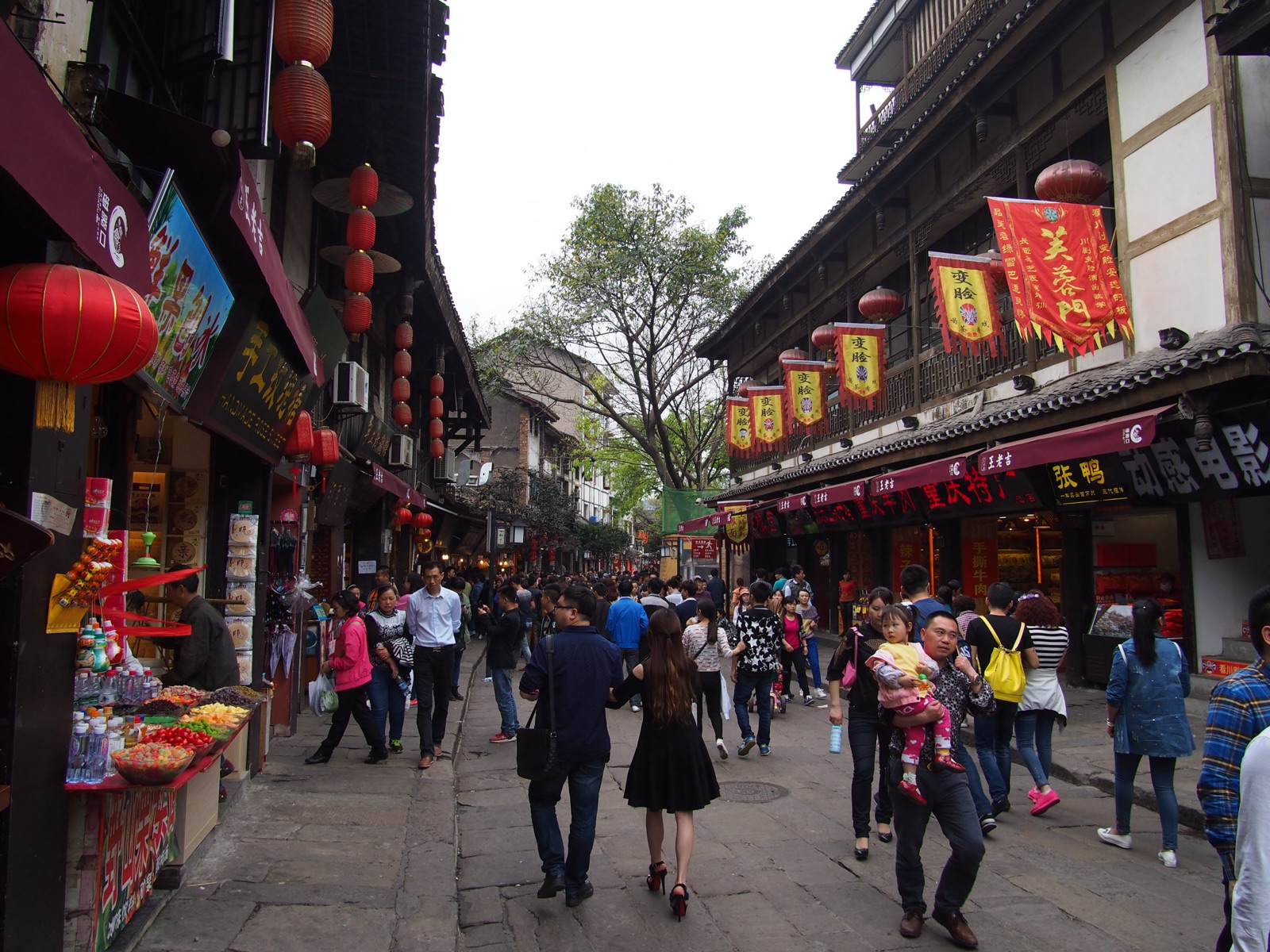
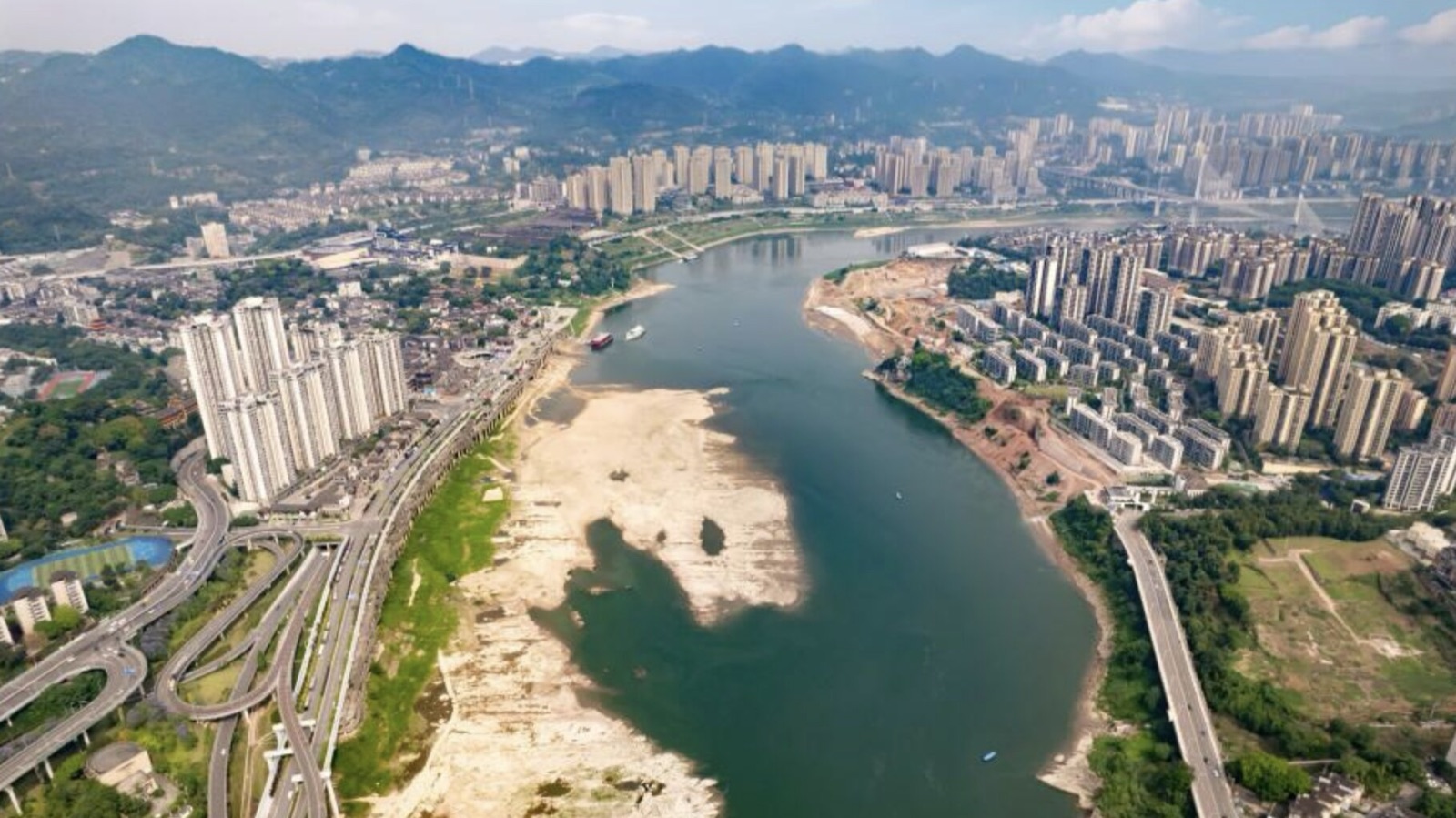
The town climbs its hillside with Gele Mountain at its back and the Jialing River at its feet. Three peaks — Jinbi Mountain, Ma'an Mountain, and Fenghuang Mountain — embrace it from three sides, while Qingshui Creek and Fenghuang Creek weave through it. This geography creates what locals describe as "one river, two creeks, three mountains, four streets." Ciqikou was once the primary distribution hub for agricultural and sideline products along the upper and middle Jialing River. During the War of Resistance Against Japan it became a key cultural center for Chongqing, earning the nickname "Little Chongqing." The town contains 12 protected heritage sites, 8 historic buildings, and roughly 670 traditional-style structures. It holds the distinction of being among the first batch of National Historic and Cultural Districts, and is also recognized as a national leisure tourism street and an intangible-heritage tourism site.
II. Attractions Within the Site
The main attractions at Ciqikou Ancient Town include:
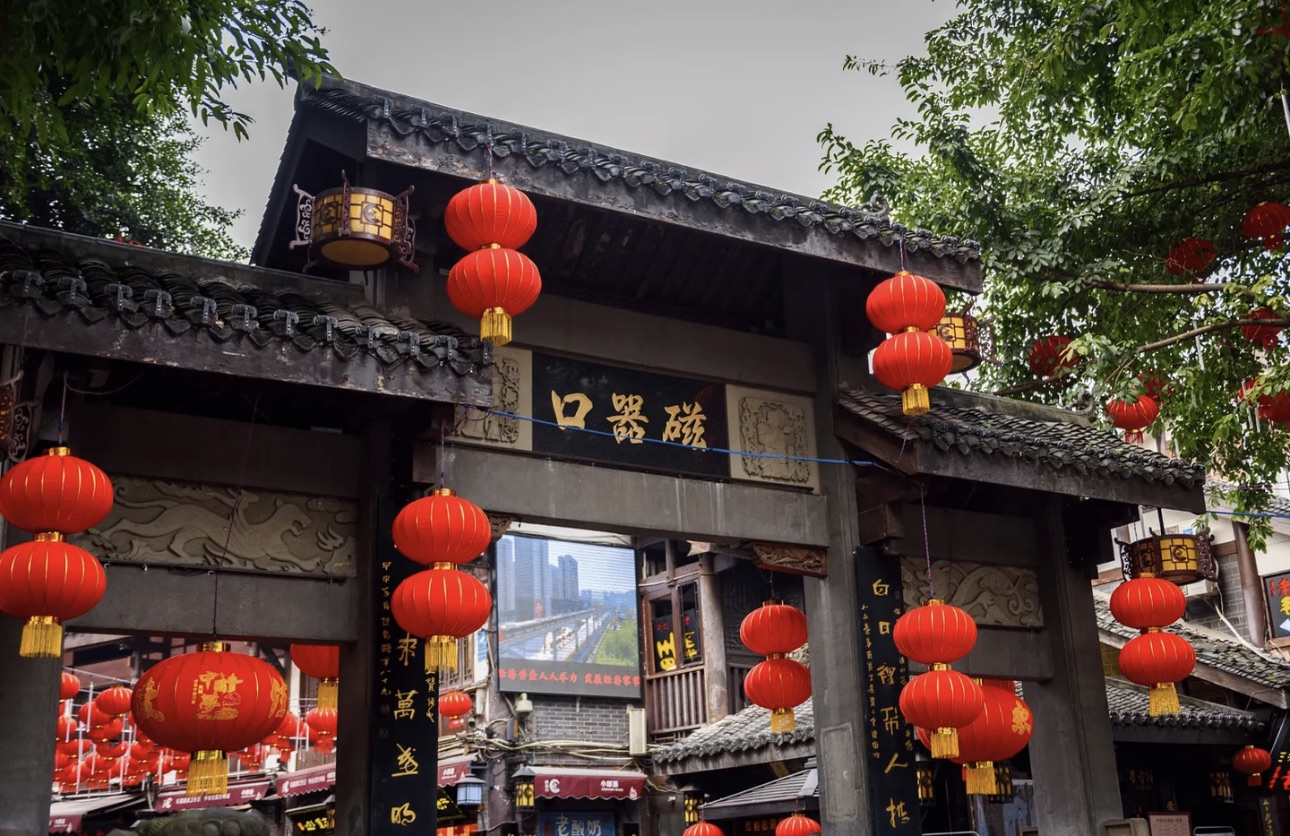
- Huangjueping Archway
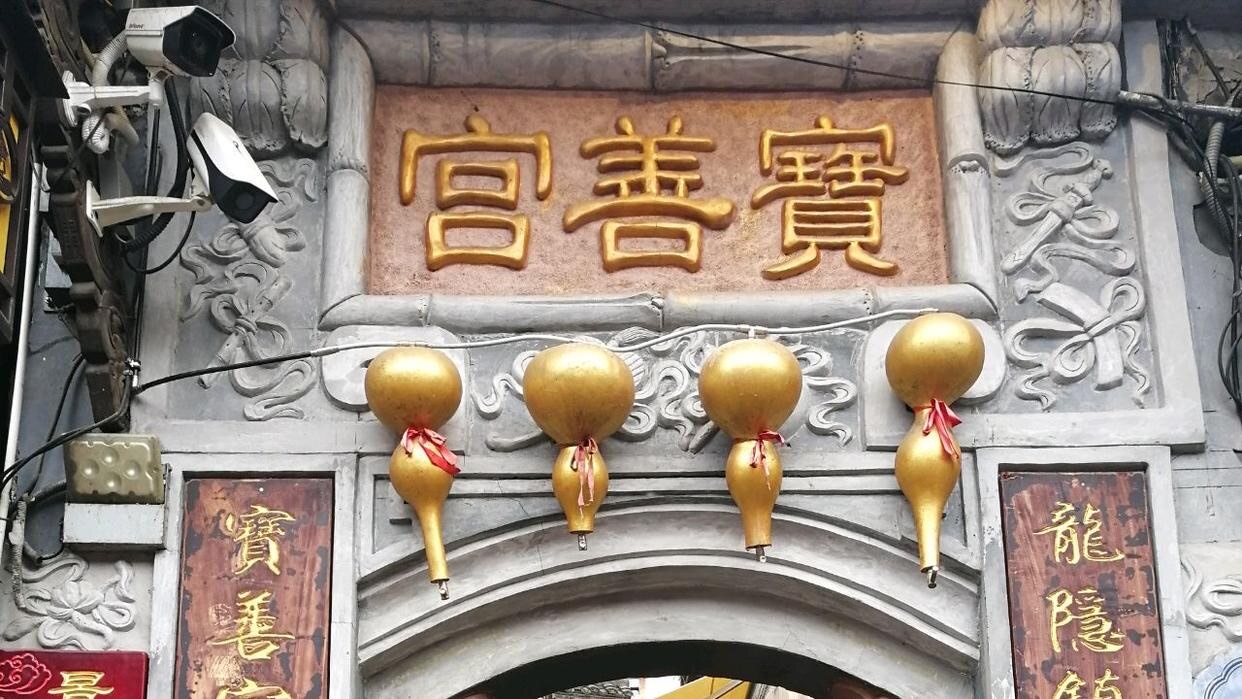
- Baoshan Palace (including the Ding Zhaozhong Exhibition Hall)
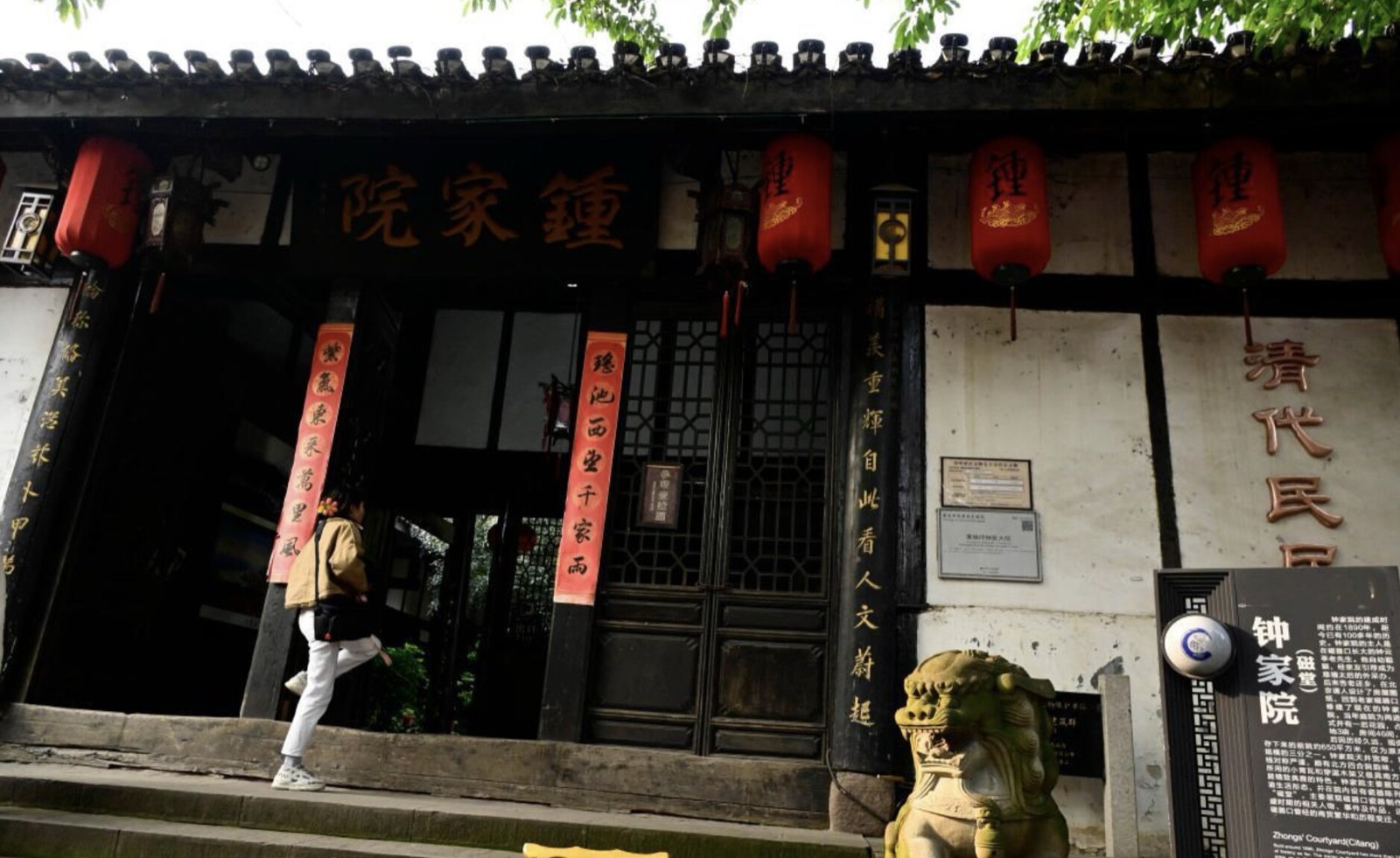
- Zhong Family Courtyard
- Baolun Temple
- Yinglong Gate Archway
- Ancient Dock
- Jiushigang Riverbank
- "Little Chongqing" Stele
- Chongqing Memory Museum
- Bayu Folk Residence Museum
- Hanlin Academy
III. Attraction Descriptions (under 200 words each)
Huangjueping Archway
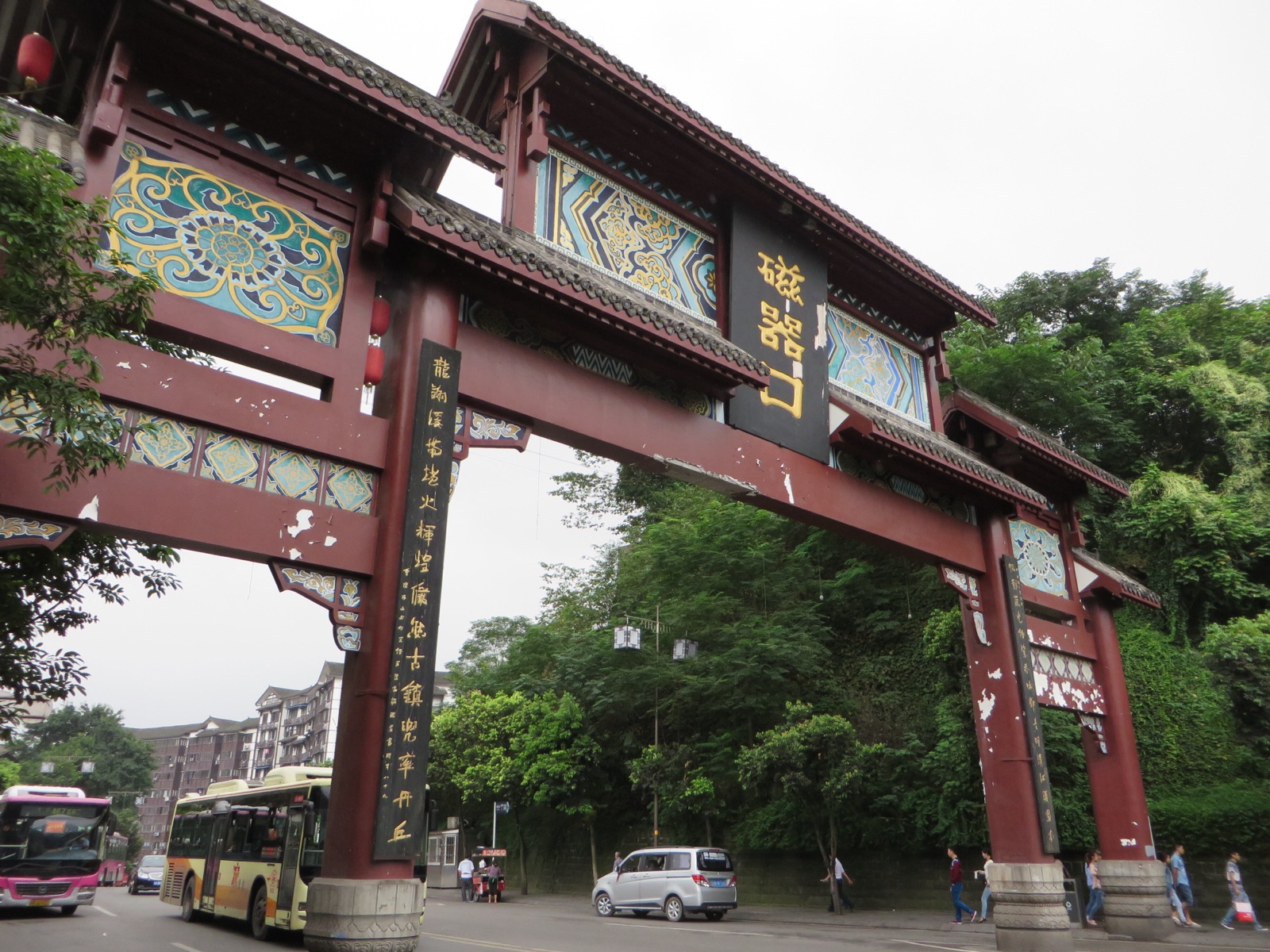
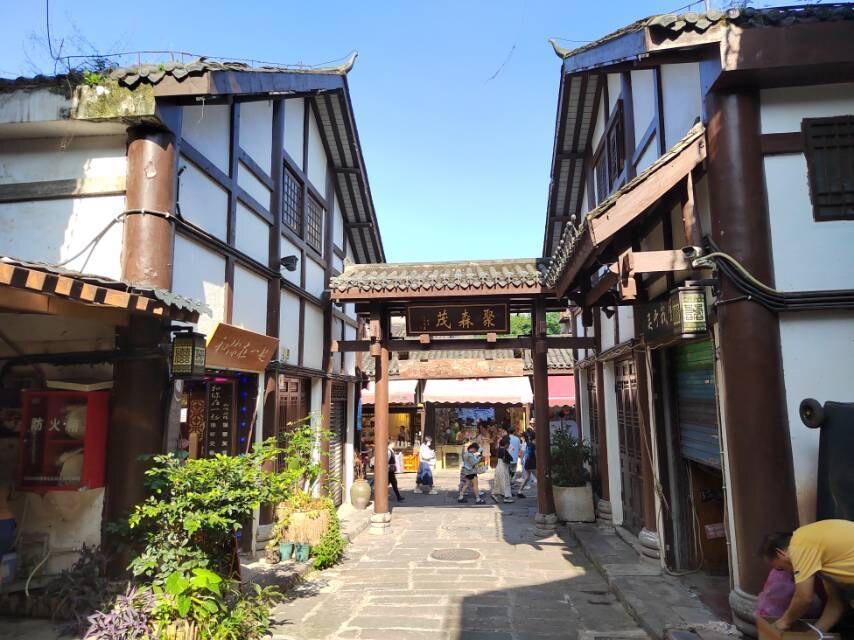
Huangjueping Archway stands at No. 6 South Street, Ciqikou, serving as the town's grand front entrance and iconic gateway. The columns on either side bear a couplet brushed by local calligrapher Zhu Mo: "A thousand hands clasp in greeting through the day; ten thousand lanterns blaze as evening falls." The lines capture the town's storied prosperity. "A thousand clasping hands" alludes to the merchants and traders who once crowded the docks — hundreds of vessels arriving and departing daily. "Ten thousand lanterns" evokes the density of life within: every household lit its oil lamp at nightfall until the whole town glowed. Beyond the archway, a bluestone-slab path winds inward between ancient trees whose canopies close overhead, opening the journey into a thousand years of history.
Baoshan Palace
Baoshan Palace, at No. 128 Main Street, Ciqikou, is among the most celebrated of the town's "nine palaces and eighteen temples." Founded in the Ming dynasty, it is a mortise-and-tenon timber-frame structure built in harmony with the Taoist principles of the five elements — metal, wood, water, fire, and earth. Its main gate faces southeast toward the Jialing River, an orientation said to embody the Taoist interplay of water and fire. The broad, terraced courtyard holds a roughly 100-square-meter worship platform where worshippers once knelt to burn incense. During the Republican era, teacher Fan Zhonglin converted Baoshan Palace into Jialing Primary School. Nobel Prize laureate in Physics Ding Zhaozhong (Samuel C. C. Ting) studied here for three years during the war. Today the complex houses an education museum presenting a comprehensive picture of the Sha-Ci cultural and educational heritage.
Zhong Family Courtyard
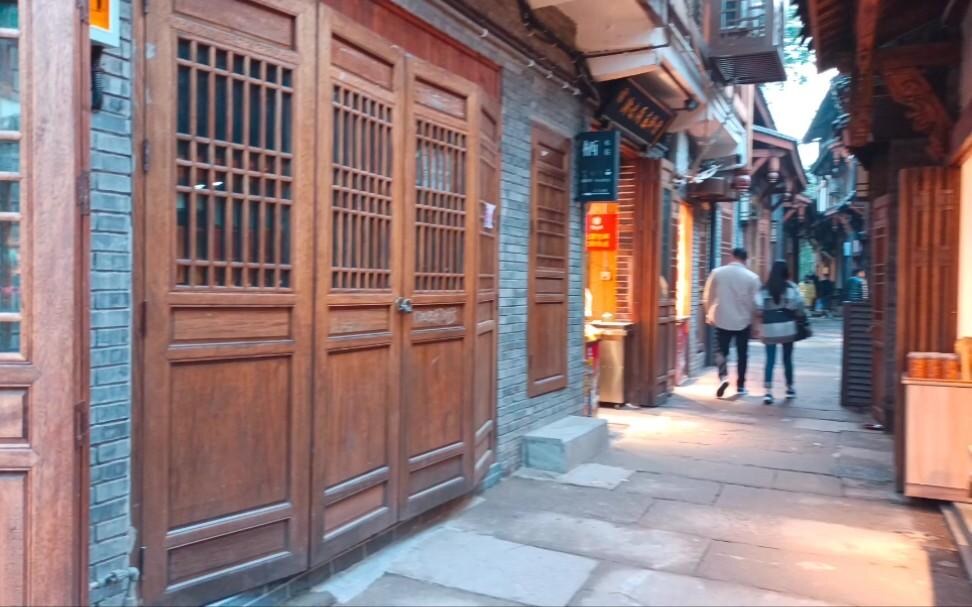
Zhong Family Courtyard was built around 1890 for Zhong Yunting, an imperial purchasing agent for Empress Dowager Cixi. The compound blends the measured symmetry of a northern-style courtyard house with the refined elegance of southern residential architecture, reflecting the rich architectural fusion of the Bayu region. It is oriented north-south, with a broad central courtyard, rows of wooden columns, and a grey-tile roof resting on a timber frame — each element complementing the next. On display inside are antique beds and decorative furniture from the Ming and Qing periods, offering a vivid picture of domestic life and craftsmanship in a Qing-dynasty household. The original estate covered roughly 2,000 square meters; wartime damage reduced it to the surviving front courtyard of about 500 square meters, yet it remains one of the best-preserved Qing residences in Ciqikou.
Baolun Temple
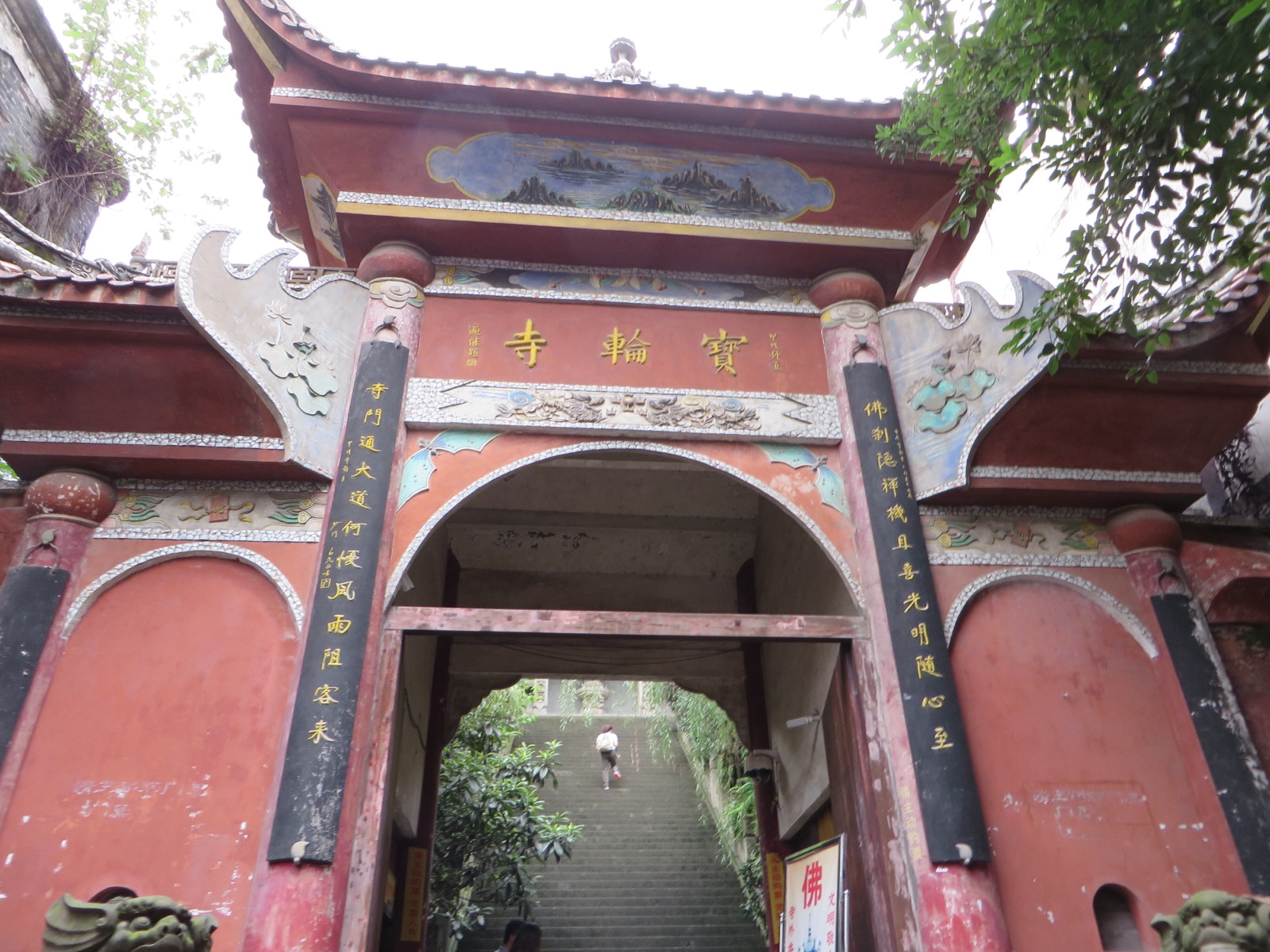
Baolun Temple was founded during the Western Wei dynasty (535–556 AD) by the Grand Commander Yuchi Jiong, and originally called Yuchi Temple. During the Song dynasty, a massive white rock formation on the hillside gave rise to the name White Cliff Temple. The complex was substantially rebuilt during the Chenghua reign of the Ming dynasty, surpassing its earlier scale. Legend holds that Emperor Jianwen, Zhu Yunwen, sought refuge here after his uncle Zhu Di seized the throne, living as a monk in hiding for four to five years — earning the temple the name Longyin Temple and the surrounding town the name Longyin Town. By the Kangxi reign of the Qing dynasty the temple was thriving, with 16 halls and 372 Buddhist images at its peak. Despite repeated disasters over the centuries, the main hall — the Mahavira Hall, built in the seventh year of the Xuande reign (1432) — survives intact. A plaque bearing the characters "Mahavira Hall" in the hand of Zhao Puchu hangs beneath the front eaves; inside, a statue of Shakyamuni Buddha presides in solemn splendor, incense burning without cease.
Yinglong Gate Archway
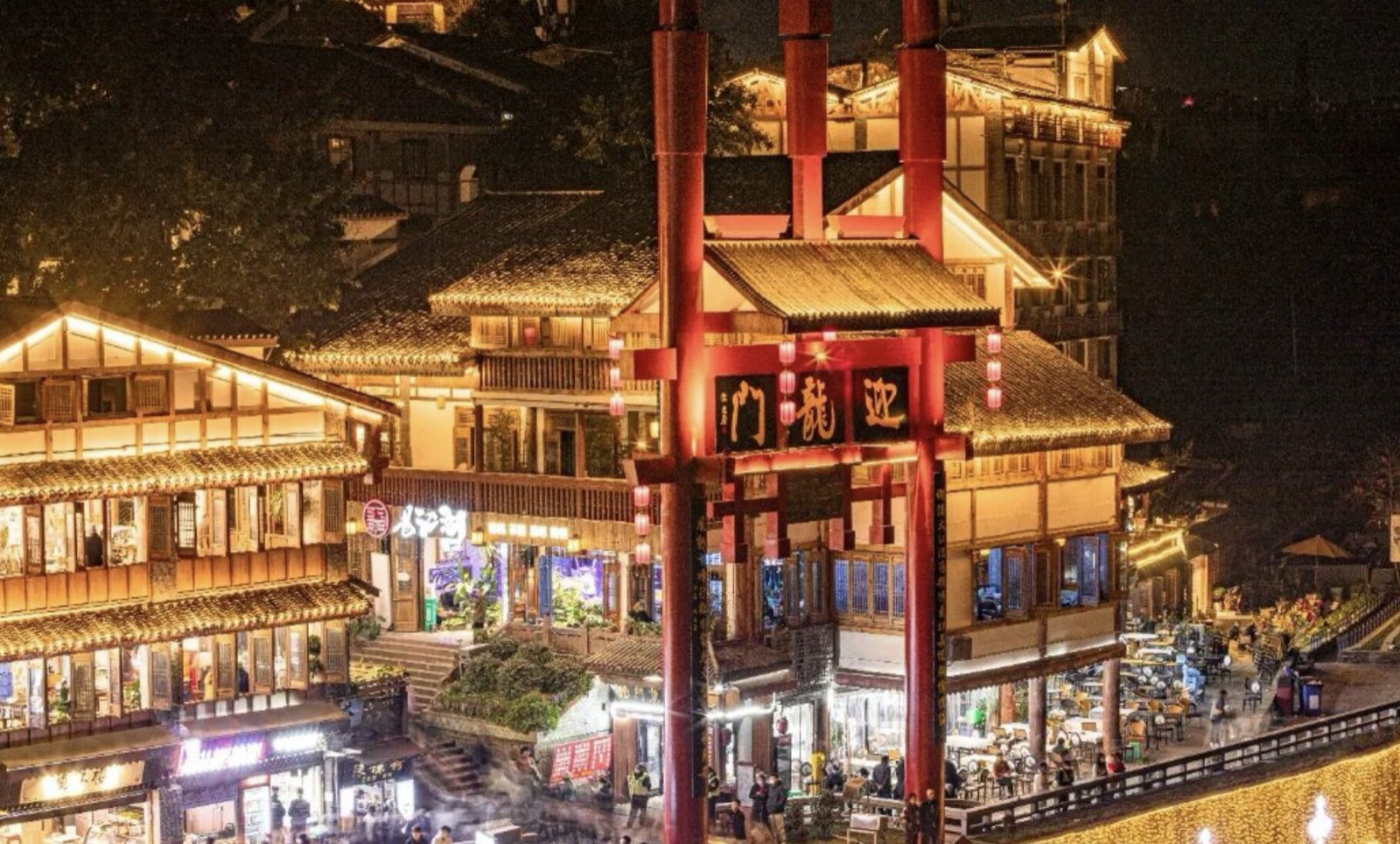
Yinglong Gate Archway stands on the eastern edge of Ciqikou beside the Jialing River, marking the entrance to the town's riverside main dock. It is a "soaring-heavenward" style pailou. The characters "Yinglong Gate" — "Gate to Welcome the Dragon" — are carved into it, echoing the "Longyin Gate" inscription on Huangjueping Archway at the town's main entrance, together expressing the deep bond between Ciqikou and dragon lore. Below the archway lay the old land-and-water dock, through which porcelain was once shipped in every direction. The surrounding lanes are dense and winding, a prime place to feel the town's market-street culture and dock-side atmosphere. During the War of Resistance, Yinglong Gate became a gathering point for Chongqing's cultural elite; writers and thinkers including Guo Moruo, Mao Dun, and Ba Jin all left their mark here.
Ancient Dock
The Ancient Dock on the bank of the Jialing River took shape sometime between the Tang and Song dynasties, flourished through the Ming and Qing periods, and reached its peak during the Republican era. At the height of the War of Resistance, more than 300 cargo vessels — each carrying roughly 10 tonnes — entered and left the dock every day. More than 1,670 merchants, warehouses, and workshops lined the waterfront. Temporary streets were built on the riverbank — Upper River Street, Middle River Street, and Lower River Street — alongside specialized lanes for timber and bamboo, ironware, ceramics, and markets for grain and pigs. Today the dock no longer carries freight, but its character endures: bluestone paths, remnants of old haulage equipment, and stilted houses built out over the water all bear witness to a millennium of river-trade glory.
Jiushigang Riverbank
Jiushigang Riverbank on the Jialing River is said to be the place where the late-Ming peasant rebel leader Zhang Xianzhong buried his treasure. A local folk rhyme goes: "Stone jars face stone drums; golden wealth beyond count — whoever knows the secret can buy all of Chongqing." Stone tools from the Neolithic period have been found along the bank. In 1939, researchers from Central University excavated a group of Han-dynasty cliff tombs nearby; inscriptions on the tomb walls record the dates "the fourth year of Yongshou" (158 AD) and "the fifth year of Yanxi" (162 AD), and the excavation yielded numerous pottery figurines and vessels. The terrain here is dramatic: rock shelves extend into the river's flow, creating a half-backwater, half-rapid formation that gave the spot its old alternate name, "Sliding Snout." Jiushigang is an essential stop for understanding the town's water-transport history and geological evolution.
"Little Chongqing" Stele
The "Little Chongqing" Stele near the entrance to Ciqikou Ancient Town bears an inscription by Lin Sen, Chairman of the National Government. The three characters — "Little Chongqing" — are bold and unadorned, capturing the town's status as a mirror of Chongqing in miniature. Beside the stele stands a natural boulder engraved with the phrase "One bluestone path, a thousand years of Ciqikou," echoing the couplet on the archway and summing up the town's depth of history and culture. The stele is the symbolic starting point for visitors entering the old town and a key marker of its historical significance. Ciqikou earned the name "Little Chongqing" through its commercial vitality, cultural blending, and rich street life — making it one of the most vivid windows into old Chongqing.
Chongqing Memory Museum
Chongqing Memory Museum, set within Longshan Park off the back street of Ciqikou, uses artifacts, photographs, and video to preserve Chongqing's urban memory and present Ciqikou's traditional folk culture. Stepping through the entrance, visitors first encounter a stretch of bluestone path that carries them from the late Ming and early Qing dynasties to the present, narrating the town's long arc of change. A gallery called "Memories in Coarse Porcelain" reconstructs the historical scene of the Jiang family from Fujian firing their wares on Qingcao Slope and displays signature pieces including the Jiang family's blue-and-white "Four Happinesses" candle holders and a tiger-shaped vessel. The museum also presents miniature models of stilted houses and an artists' teahouse, alongside the founding story of the Jiang family — the pioneers of Shaping Kiln porcelain — offering a complete picture of the ties between Ciqikou and Chongqing's past.
Bayu Folk Residence Museum
Bayu Folk Residence Museum on the back street of Ciqikou distills the essence of the town's architecture through spaces built of wood, stone, and brick, arranged around enclosed courtyards and tranquil gardens. The Qing-dynasty residential buildings on display embody the distinctive style of Bayu mountain vernacular architecture: timber-frame construction, bamboo and wood materials, grey-tile roofs, and structures that step up and down the hillside in organic response to the terrain. The museum also showcases traditional crafts — bamboo weaving, wood carving, and stone engraving — giving visitors a direct encounter with the skill and cultural depth of Bayu folk craftsmanship. Tucked away from the bustle of the main street, it is a quiet retreat for anyone who wants to understand Bayu building culture from the inside.
Hanlin Academy
The Hanlin Academy — originally known as Lishi Cottage, also called Lishi Study — stands in Lane 1, Huangjueping, Ciqikou, and is one of the few surviving private academies in central Chongqing. During the Qianlong reign of the Qing dynasty, the Sun family of Ciqikou established a school here. The family subsequently produced three juren (provincial examination graduates), and former students Huang Zhongyin and Duan Dazhang both passed the jinshi examination and were appointed as editors in the Hanlin Academy — giving rise to the saying "three juren from one family, two Hanlin scholars within five li." The local people began calling the study the "Hanlin Academy." The central courtyard survives, with a small moon-worship platform where the original occupants once held family ceremonies. Today the space has been converted into a teahouse while retaining its Qing architectural character: bamboo-woven chairs, wooden tables, and lidded bowl tea cups invite visitors to slow down and absorb the unhurried cultural atmosphere of old Chongqing.
10 stops, in walking order — read top to bottom, no clicking needed.

 2
 3
 4
 5
 6
 7
 8
 9
 10