Travel Guide› Chongqing› Wulong Karst Tourist Area
Chongqing · Park

Wulong Karst Tourist Area 武隆喀斯特旅游区

Wulong Karst Tourist Area
Address
Xiannushan Street, Wulong District, Chongqing (Tiankeng Three Bridges/Longshuixia Ground Fissure); Jiangkou Town, Wulong District, Chongqing (Furong Cave)

I. Overview of the Scenic Area

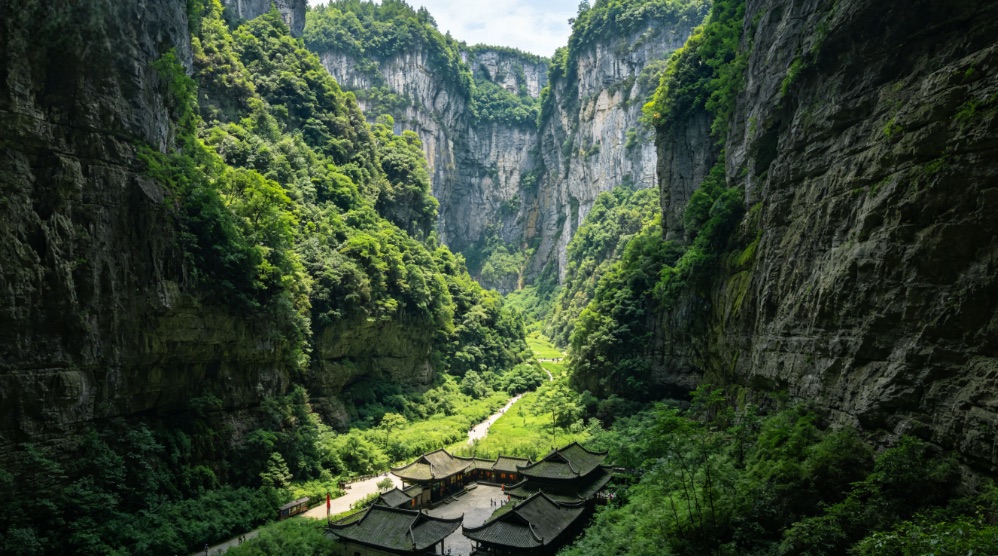
Wulong Karst Tourist Area sits in the southeastern corner of Chongqing, along the lower reaches of the Wu River, 129 kilometers from the city center. It forms a key component of the "South China Karst" World Natural Heritage Site. On June 27, 2007, Wulong Karst was officially inscribed on the World Heritage List in recognition of its outstanding geological and aesthetic value — China's 6th World Natural Heritage Site and Chongqing's first. On July 6, 2011, the Xiannu Mountain scenic area was designated a National 5A Tourist Attraction. The total area covers 380 square kilometers and is organized around three core karst systems: the Furong Cave system, the Tiansheng Three Bridges system, and the Houping Tiankeng system. Together they illustrate how karst landforms evolve under the combined forces of crustal uplift and deep river incision.

Wulong lies at the junction of the Wuling and Dalou mountain ranges. Its terrain — roughly 70% mountains, 10% water, and 20% farmland — has produced a textbook karst landscape of caves, sinkholes, slot canyons, gorges, peak forests, and high-altitude grasslands. Over hundreds of millions of years of geological change, the Wu River cut through the limestone like a blade, splitting Wulong into northern and southern halves and carving out geological wonders rarely seen anywhere on earth. The area contains 654 individual tourism resources and has earned the title "Karst Ecological Museum," celebrated worldwide for its geological and scenic value.

II. Attractions Within the Scenic Area

  1. Tiansheng Three Bridges Scenic Area

    • Tianlong Bridge
    • Qinglong Bridge
    • Heilong Bridge
    • Tianfu Post Station
    • Longshuixia Slot Canyon
    • Milky Way Falls
    • Jiaolong Cold Cave
  2. Xiannu Mountain National Forest Park

    • Grand Grassland
    • Horse Racing Ground
    • Most Beautiful Road
    • Treetop Walk
    • Forest Eye
    • Sky Tower
  3. Furong Cave Scenic Area

    • Air Cave Entrance
    • Auspicious Welcome
    • Stone Flower Palace
    • Golden Honey
    • Silver Silk Jade
    • Grand Hall of Splendor
    • Giant Curtain Waterfall
    • Coral Jade Pool
  4. Houping Tiankeng Scenic Area

    • Jingkou Tiankeng
    • Tianchi Miao Village
    • Erwang Cave
    • Mawan Cave
    • Daijiagou Fishing Base
  5. Furong River Scenic Area

    • Gorge Lake
    • Furong Cave to Furong River Cable Car
    • Furong River Cruise
    • Pangu River
    • Zhuzui Creek

III. Individual Attraction Descriptions (up to 200 words each)

Tianlong Bridge

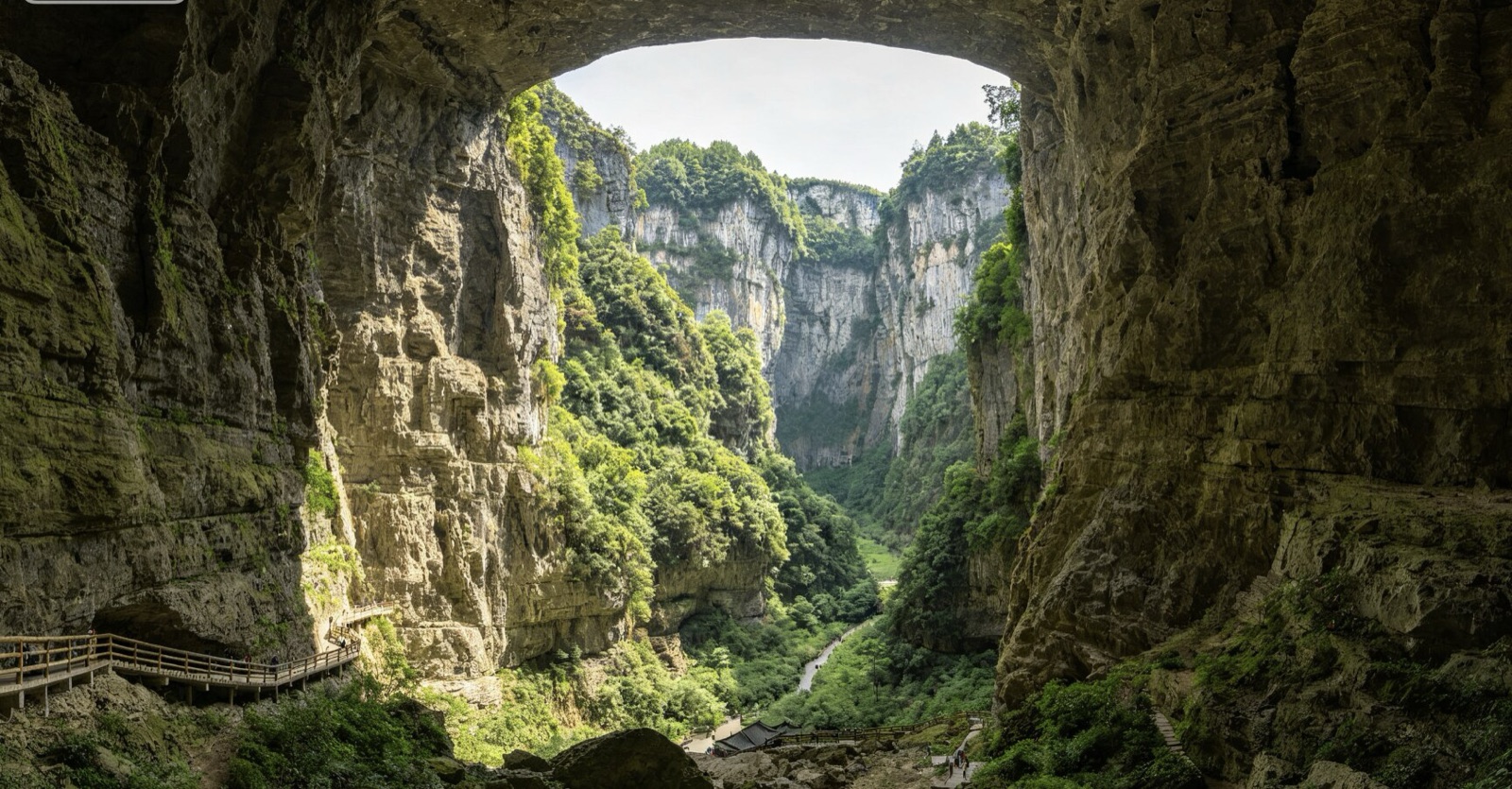
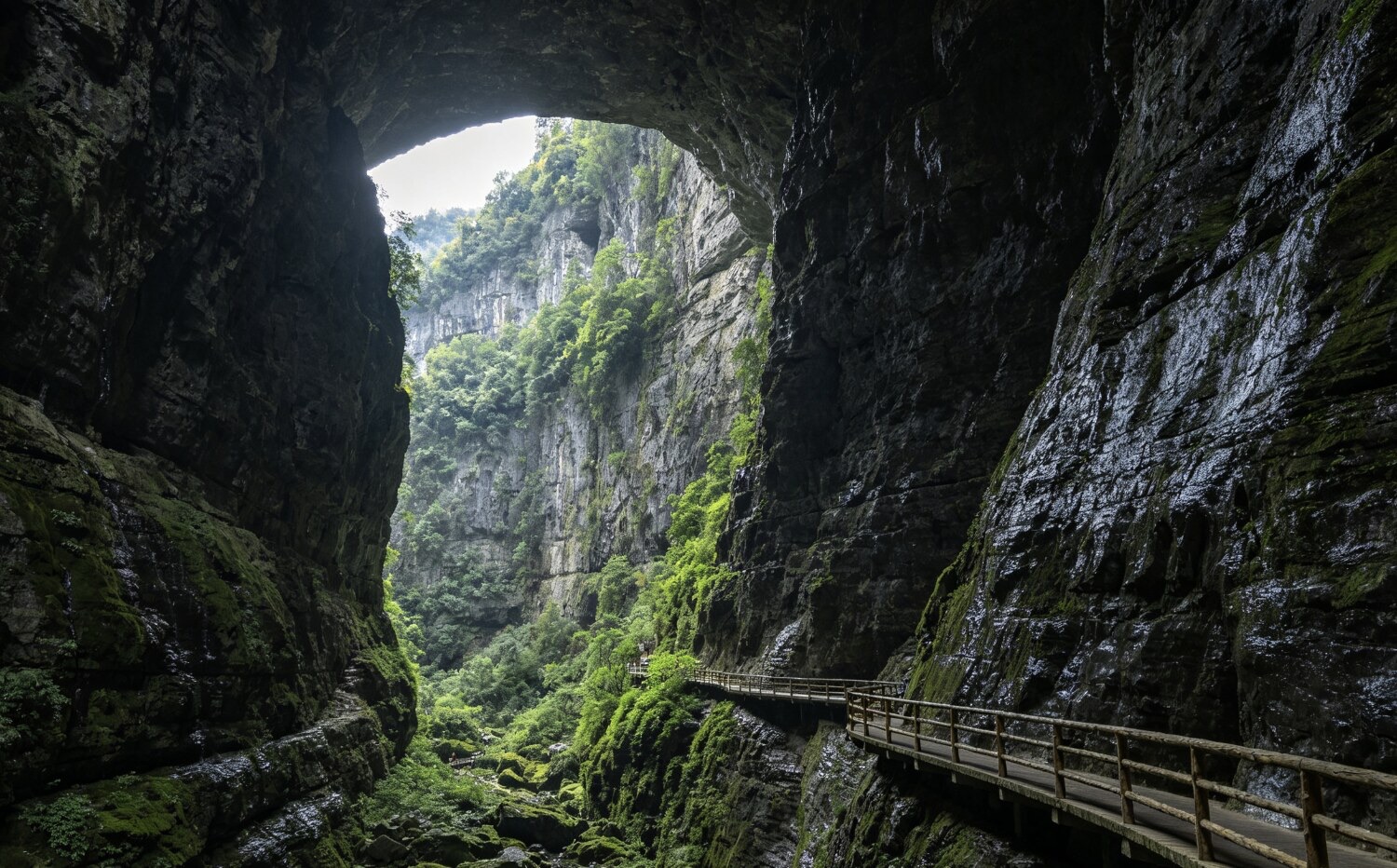
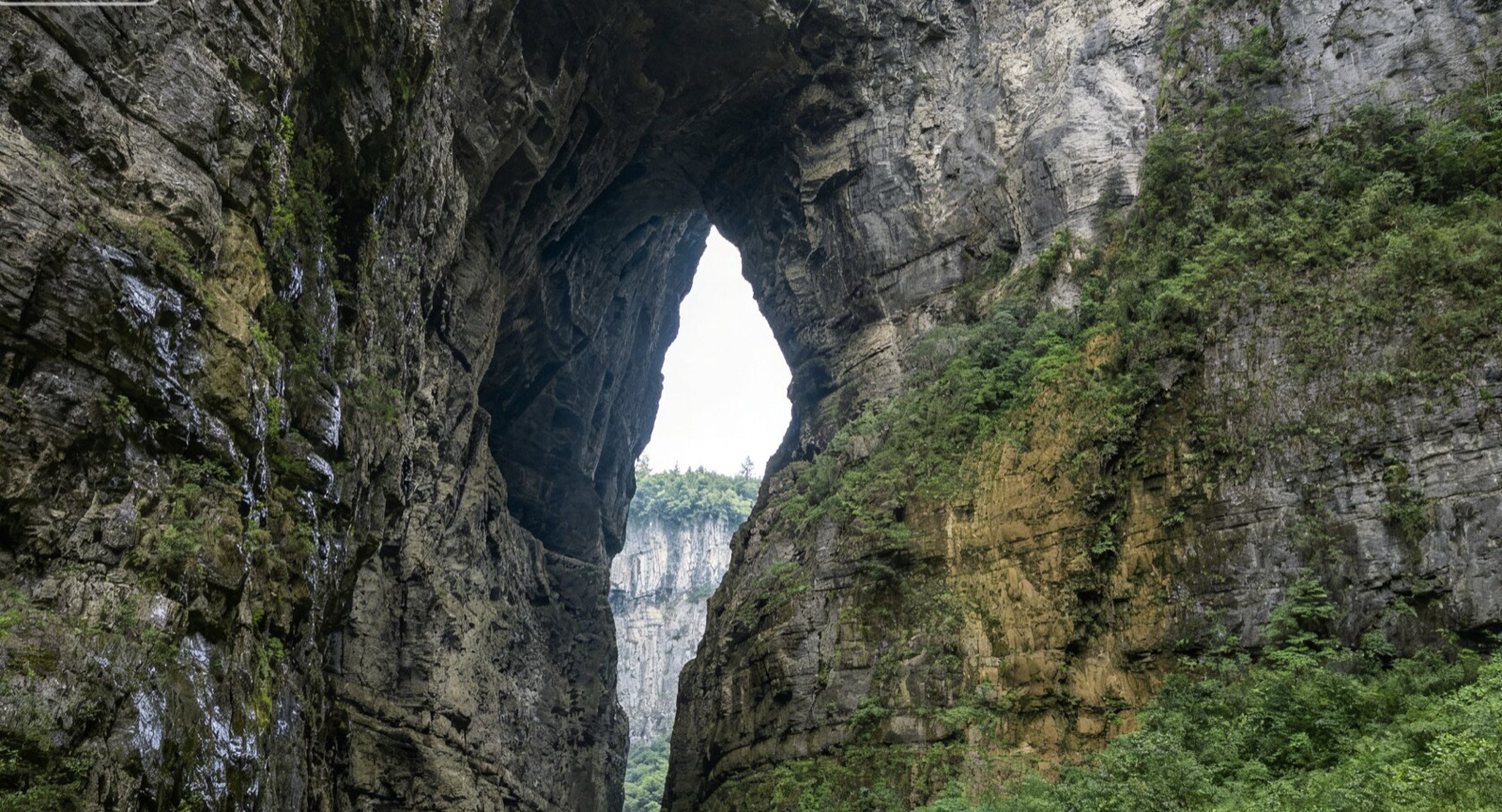
Tianlong Bridge is the first of the three natural stone arch bridges in the Tiansheng Three Bridges Scenic Area. It stands 235 meters tall, spans roughly 120 meters across, measures 147 meters wide, and has an average arch height of 96 meters. The broadest of the three bridges, Tianlong Bridge is known for its commanding, massive presence. The bridge body is composed of limestone, and the walls of its arch are remarkably square and smooth — almost as though shaped by human hands — a testament to nature's precision. Two through-caves have developed beneath the bridge: the one on the south side, known as Mihun Cave, sits 120 meters higher than the northern passage, creating a labyrinthine cave structure. Looking up from below, Tianlong Bridge stretches across the gorge like a great dragon, an awe-inspiring sight. The limestone that forms this bridge was deposited in a shallow sea approximately 250 million years ago, preserving a record of the earth's long geological history.

Qinglong Bridge

Qinglong Bridge is the second natural stone arch bridge in the Tiansheng Three Bridges Scenic Area. At 280 meters tall, it has the greatest vertical drop of the three; it spans roughly 300 meters across and measures about 80 meters wide. Vines have covered the bridge for centuries, giving it a deep green hue — hence the name "Qinglong" (Green Dragon). A stream runs along the valley floor beneath it, and after rain, sunlight pouring through the arch creates dazzling light effects and rainbows, as if a green dragon were ascending into the sky. The limestone dates to approximately 250 million years ago, laid down in a shallow sea. The arch itself is structurally sound and elegantly curved, a masterwork of natural sculpture. The battle scene featuring Optimus Prime in the film Transformers: Age of Extinction was filmed here, adding a touch of pop-culture mystique to this world-class karst wonder.

Heilong Bridge

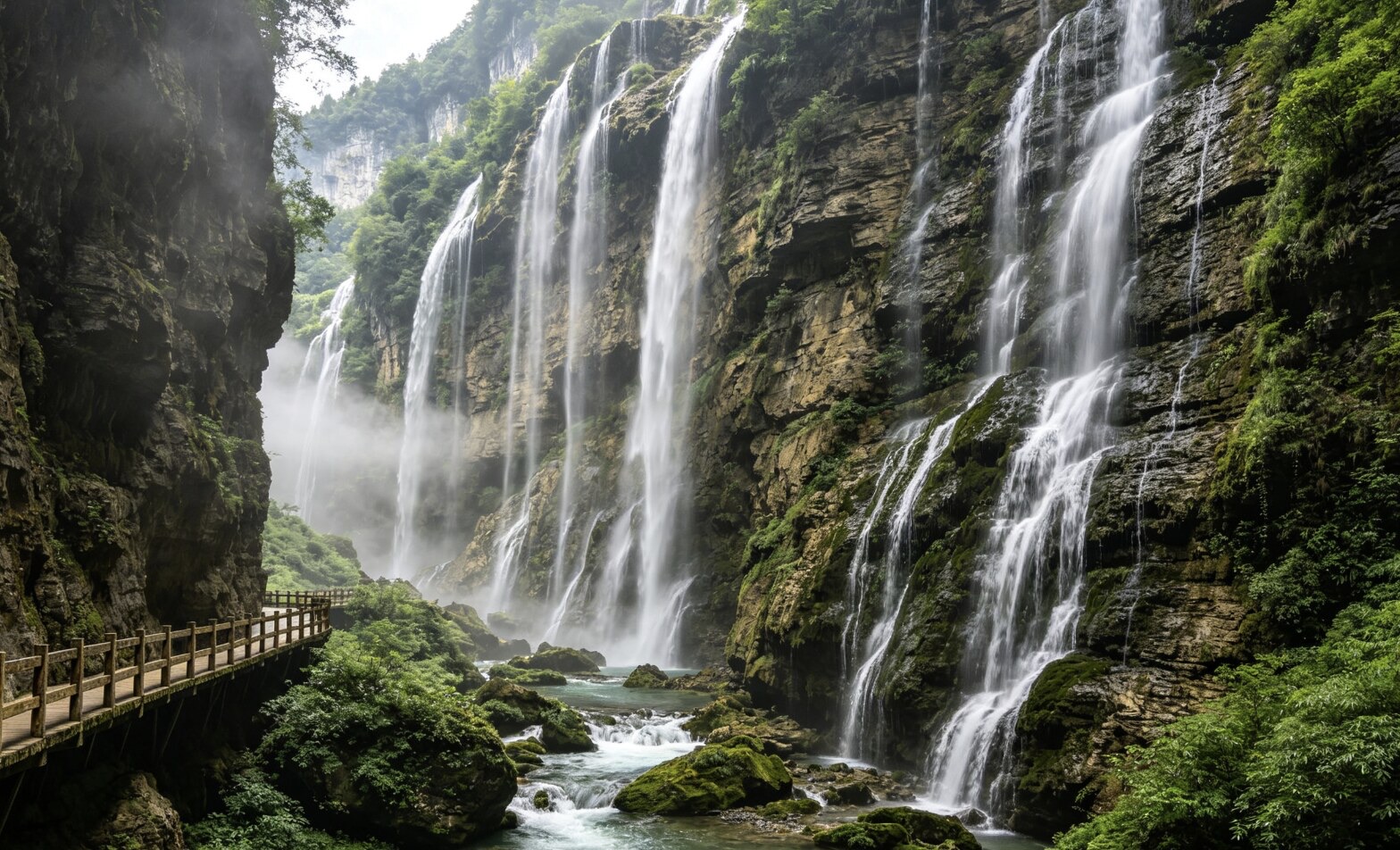
Heilong Bridge is the last of the three natural stone arch bridges. It stands 223 meters tall, spans roughly 350 meters, and at 193 meters wide is the broadest of the three. The arch opening is deep and dark, with dim light filtering in — legend has it that a black dragon coils along the ceiling, giving the bridge its name. The stream below runs crystal clear, and on the north wall of the arch four hanging springs have formed: Mist Spring, Pearl Spring, Thread Spring, and Three-Tier Spring. Water seeps year-round from the rock wall in droplets as clear as pearls. The limestone formed approximately 250 million years ago in a shallow sea. Standing beneath the bridge and looking up, Heilong Bridge lies across the gorge like a black dragon at rest — mysterious and endlessly evocative.

Tianfu Post Station

Tianfu Post Station sits between Tianlong Bridge and Qinglong Bridge. It is a traditional courtyard compound built in the Tang Dynasty style, originally dating to the Tang era and later reconstructed for director Zhang Yimou's film Curse of the Golden Flower. Red paper lanterns inscribed with the characters "Tianfu Post Station" hang above the gate; inside, vermilion walls and moss-covered stone bridges complement each other in a scene of quiet, timeworn elegance. This ancient relay post has witnessed the changes of Wulong's history and has served as a filming location for international productions including Transformers 4. Visitors can absorb the atmosphere of a Tang-era way station, explore the reconstructed film sets, and appreciate the way natural landscape and human history intertwine here. The surroundings are tranquil — a murmuring stream, shaded trees — making it a pleasant place to rest during the tour.

Longshuixia Slot Canyon

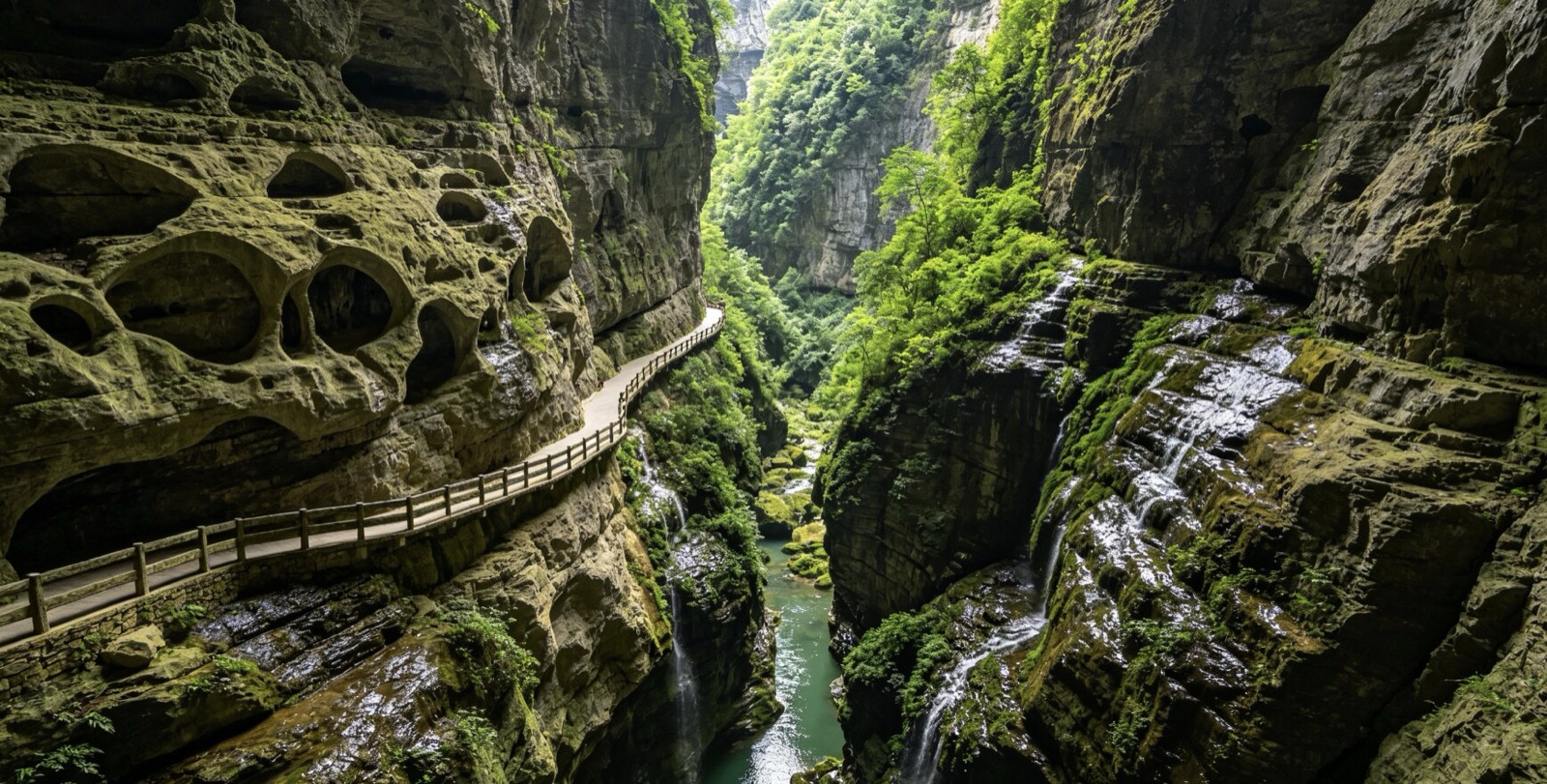
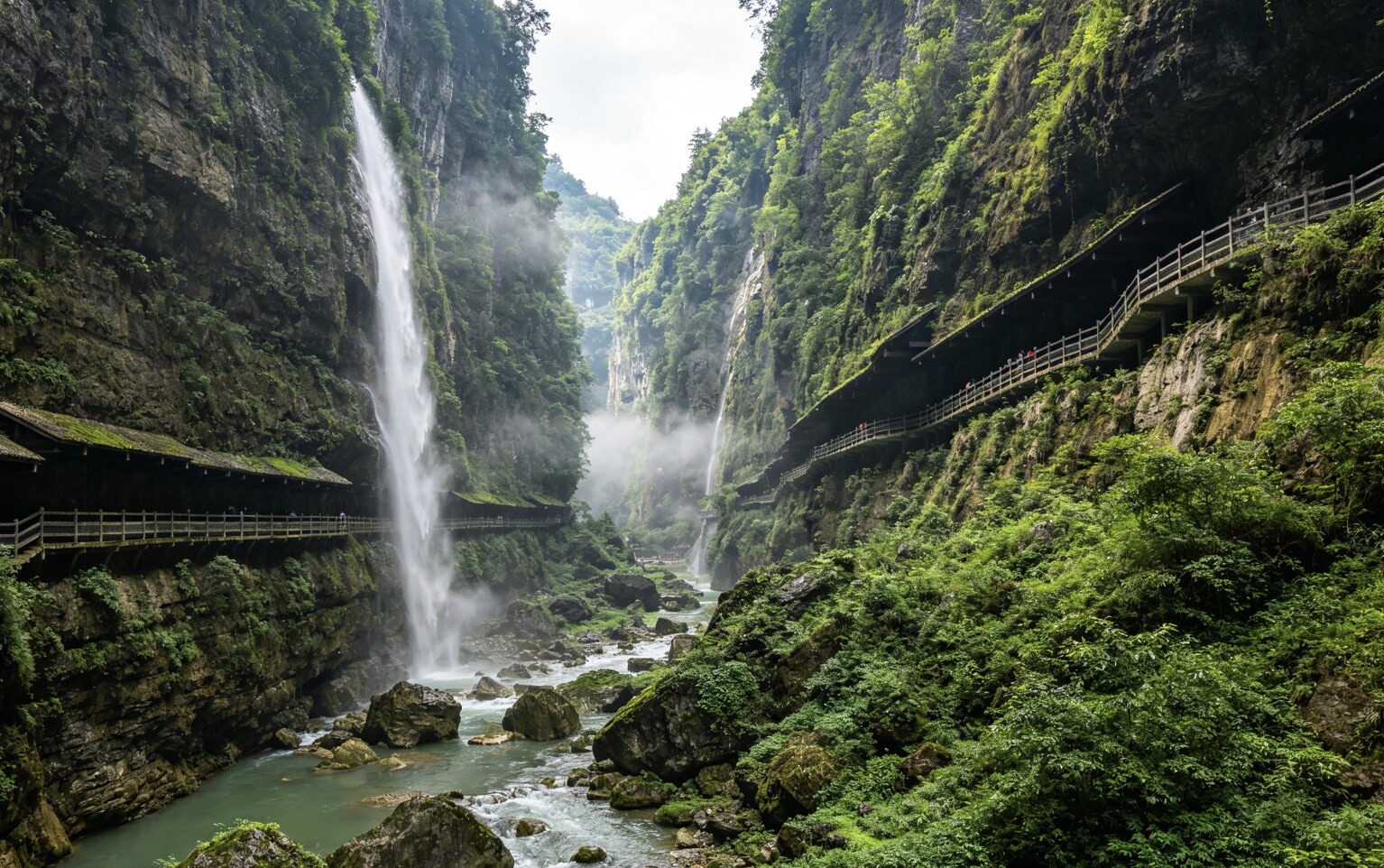
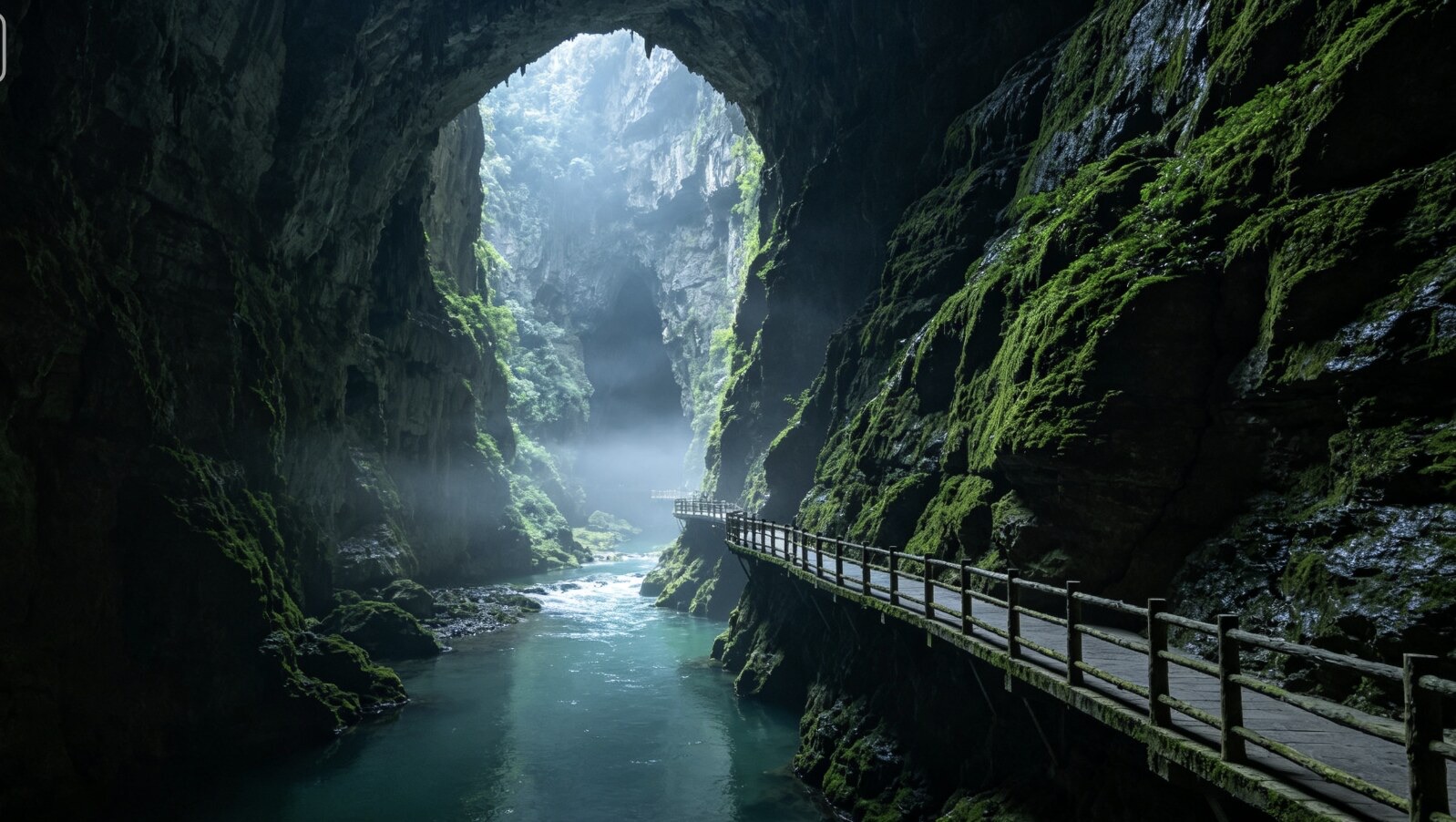
Longshuixia Slot Canyon lies within the jurisdiction of Xiannu Mountain Town and is a key component of the Wulong Karst World Natural Heritage Site, sharing the same Yangshuihe gorge system as the Tiansheng Three Bridges. The canyon runs 5 kilometers long, reaches depths of 200 to 500 meters, and narrows to just 1 meter at its tightest point, with sheer cliffs rising on both sides as if sliced by a blade. The defining features here are primeval vegetation, cascading waterfalls, springs, rapids, and deep pools — a rugged, shadowed "slot canyon." Visitors descend to the valley floor by an 80-meter observation elevator, then follow a boardwalk past karst highlights including Milky Way Falls, a sliver of sky overhead, and Jiaolong Cold Cave. The canyon formed during the second phase of the Yanshan orogeny (roughly 140 to 70 million years ago), the product of crustal faulting combined with dissolution. Water runs along the gorge floor year-round, springs and waterfalls splash in every direction, and the scene shifts constantly — a vivid encounter with the raw power of nature.

Milky Way Falls

Milky Way Falls is the signature landmark of the Longshuixia Slot Canyon. Located in the middle section of the canyon, the waterfall drops roughly 80 meters and spreads about 20 meters wide as it pours from the gorge wall in a torrent of stunning force. When sunlight hits the curtain of water it refracts into a full spectrum of color — like the Milky Way streaming down to earth, which is how the falls got their name. After rain, the volume surges, the current quickens, and the roar fills the entire canyon. Dense vegetation and tangled vines frame the falls, completing an extraordinary natural tableau. Stand on the viewing platform to the right for the best angle to take in the spectacle. Do not approach the edge of the falls, as surfaces near the water are slippery.

Jiaolong Cold Cave

Jiaolong Cold Cave is a deep underground cave within the Longshuixia Slot Canyon, tucked into the recesses of the gorge. Local legend holds that a jiaolong — a powerful serpentine dragon — once made its home here, giving the cave its name. Stalactites crowd the interior in varied shapes, and a persistent chill pervades the air, lending the space an aura of mystery. A stream trickles through, its sound adding life to the cold darkness. The walls are smooth and relatively bare of large stalactites and stalagmites: the cave formed in the early Quaternary period as part of a surface-water erosion tiankeng cluster, where water flow rather than dissolution was the dominant process. This is the final highlight of the slot canyon route. The canyon exit ahead is equipped with shuttle vehicles that run directly back to the Xiannu Mountain visitor center. Thank you for joining us today — enjoy the rest of your journey.

Grand Grassland

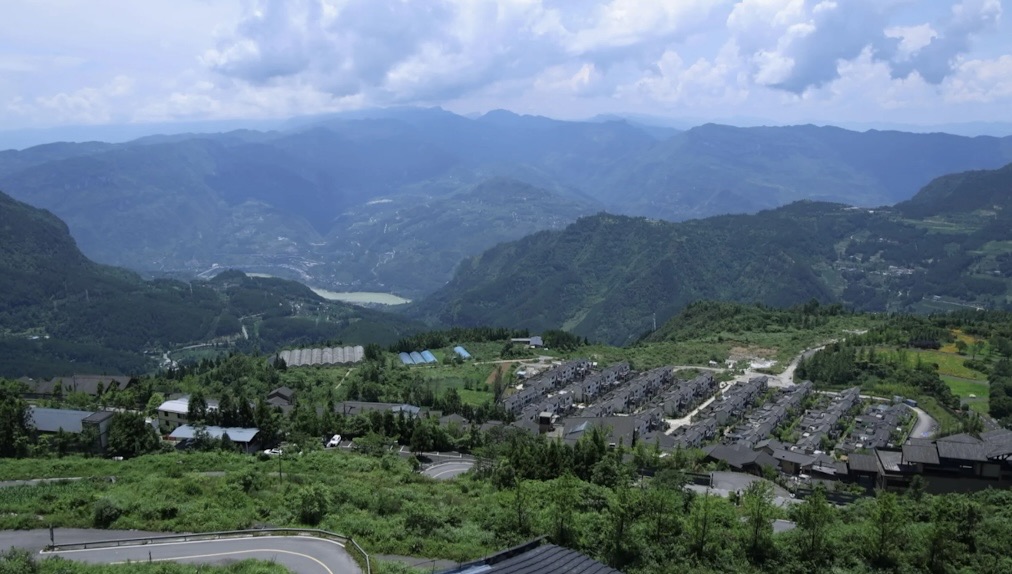
The Grand Grassland is the centerpiece of Xiannu Mountain National Forest Park, celebrated as "the premier highland pasture of southern China." It encompasses 100,000 mu (about 67 square kilometers) of alpine meadow at an elevation of roughly 1,900 meters, with the highest point reaching 2,033 meters. Summer average temperatures hover around 22°C, making it Chongqing's cool-weather retreat. The meadow is a carpet of lush grass dotted with wildflowers; rolling mountains and dense forest rise in the distance, a scene that looks lifted from a landscape painting. Visitors can ride the sightseeing train to the Grand Grassland station, then picnic, fly kites, and mingle with free-roaming cattle and sheep. The grassland is beautiful in every season: emerald green with wildflowers in spring, lush and refreshingly cool in summer, golden in autumn, and blanketed in snow in winter. Horseback riding and grass sliding are among the outdoor activities available here.

Horse Racing Ground

The Horse Racing Ground at Xiannu Mountain sits inside the national forest park, offering visitors a wide, flat, green-grassed arena set against a backdrop of mountains and forest. Visitors can rent horses and ride along meadow trails, enjoying the freedom of galloping through open highland country. The air is clean and rich in negative ions, making the surroundings ideal for a relaxed getaway. Archery and picnicking are also available nearby. The Horse Racing Ground is also one of the best places to view the "Most Beautiful Road": a five-minute walk from the station brings you to the S-shaped mountain highway for sweeping landscape shots.

Most Beautiful Road

Xiannu Mountain's "Most Beautiful Road" — also called the "Wave Road" — is an S-shaped mountain highway winding for about 15 kilometers through the park's sea of forest and open grassland. The scenery along its entire length is stunning: lush mountains, dense vegetation, green meadows, and scattered wildflowers. In the soft mist of early morning or the warm light of sunset, the road resembles a silver ribbon threading through the trees. Visitors can stop to photograph it, or simply enjoy passing through on the sightseeing train. Viewing platforms on either side of the road offer a place to rest and take in panoramic views of the entire Xiannu Mountain area.

Treetop Walk

The Treetop Walk is a signature experience at Xiannu Mountain National Forest Park, located about 3 kilometers from the Grand Grassland at an elevation of roughly 1,880 meters. It consists of 1.8 kilometers of elevated wooden boardwalk threading through a Japanese cedar forest, culminating at the "Forest Eye" observation tower with its commanding view over 300,000 mu (about 200 square kilometers) of old-growth forest. The boardwalk is gently graded with no steps, making it accessible to visitors of all ages including the elderly and young children. The forest is beautiful year-round: vivid green in spring, full-leafed and shady in summer, brilliantly colored in autumn, and snow-covered in winter. The experience also includes interactive installations such as a sky-descent spiral, giving visitors an extra dimension of engagement. At the end of the walk, visitors look out from the treetops over the entire expanse of forest and grassland — a perspective unlike anything at ground level.

Forest Eye

Forest Eye is the central viewing platform of the Treetop Walk experience, perched at 1,880 meters elevation. It provides a full 360-degree panorama over 300,000 mu (about 200 square kilometers) of Xiannu Mountain's old-growth forest. The platform's design is distinctive — shaped to suggest a giant eye — and through it visitors can survey the mountains, rivers, forests, and meadows of Xiannu Mountain in every direction. The air is clean and rich in negative ions, a natural tonic for the senses. It is also an exceptional vantage point for sunrise and sunset: at dawn the forest floats in mist, dreamlike; at dusk the light is liquid gold. Rest areas and interpretive panels on the platform let visitors learn about the geological structure and ecosystem of Xiannu Mountain.

Air Cave Entrance

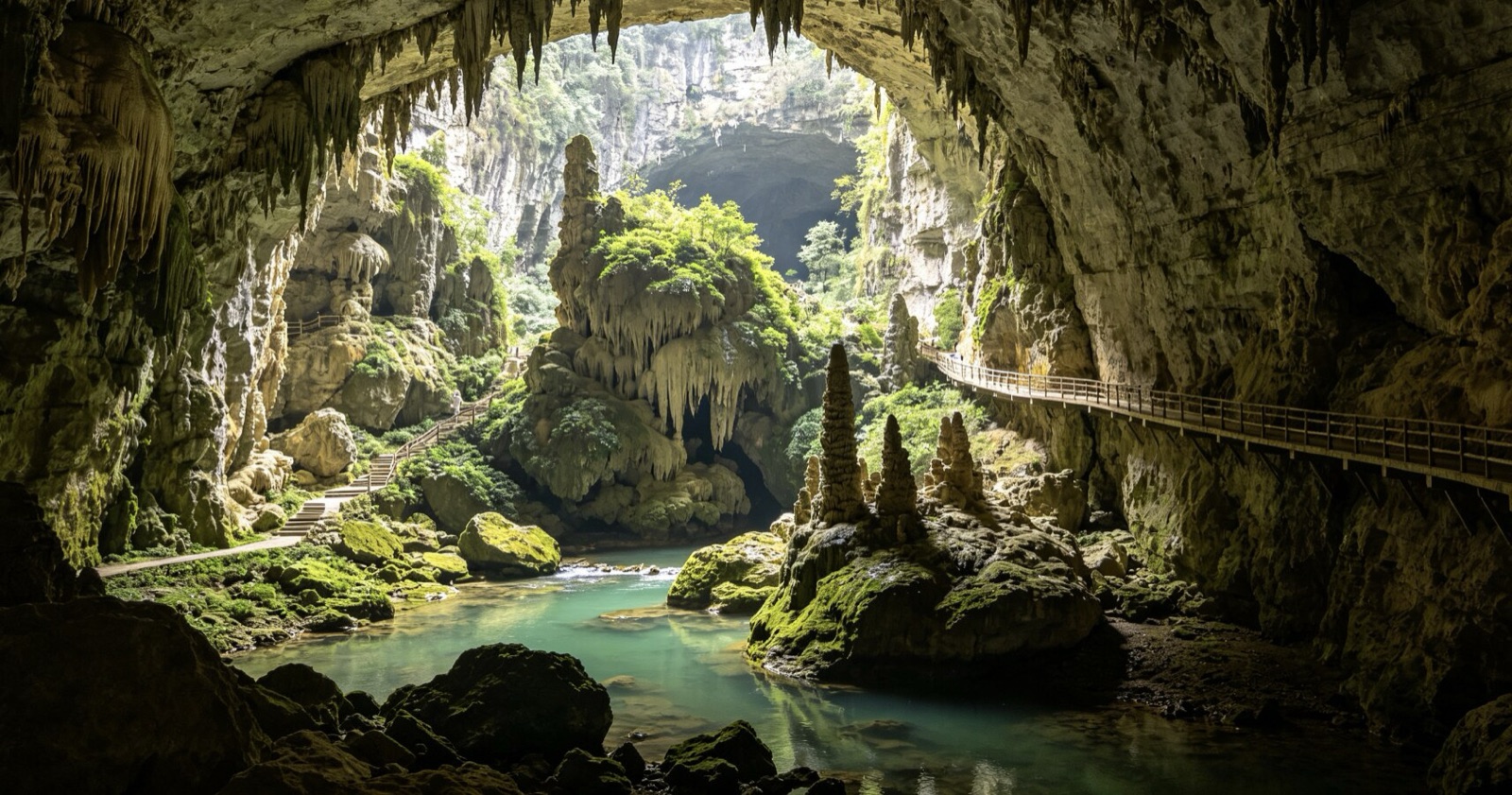
The Air Cave Entrance is the gateway to the Furong Cave scenic area, located beside the Furong River in Jiangkou Town, Wulong District, roughly 20 kilometers from the Wulong county seat. The entrance opening is roughly circular, about 10 meters in diameter, where an underground river meets the surface. The cave maintains a stable internal temperature of 16.1°C year-round, making it a comfortable destination in any season. The surroundings are quiet and green, with a stream murmuring past. From this entrance visitors step into a fantasy underground world of stalactites in every conceivable form — a space described as both "an underground palace of art" and "a museum of cave science." The temperature difference between inside and outside is itself a memorable sensation worth pausing to experience before heading in.

Auspicious Welcome

Auspicious Welcome is a formation near the Air Cave Entrance at the start of the Furong Cave tour: a group of stalactites and stalagmites in distinctive shapes that together suggest a party of welcoming attendants, radiating an aura of good fortune. These formations developed during the Pleistocene epoch of the Quaternary period, more than 1.2 million years ago, as calcium carbonate dissolved in groundwater gradually precipitated over vast stretches of time. The limestone host rock itself is approximately 500 million years old, laid down in a shallow sea. Entering the cave, this is the first group of formations visitors encounter — some resembling figures in motion, others evoking auspicious arrivals — and they set the tone perfectly for everything that follows deeper inside.

Stone Flower Palace

Stone Flower Palace is a major section of the Furong Cave, encountered shortly after the Auspicious Welcome. It is an underground hall renowned for its cave flowers. The King of Cave Flowers and Stone-Field Pearls are among the featured formations here — some spreading open like blossoms, others scattered like pearls — each an expression of nature's artistry. Cave flowers form when calcium carbonate dissolved in groundwater slowly deposits on cave walls over immense spans of time; they are exceptional in their delicate beauty and purity, described as "rare on a world scale." The limestone dates to approximately 500 million years ago. Under the cave's lighting, guided by your tour guide, visitors can appreciate every intricate detail of these formations, which represent the finest small-scale artistry that karst landscapes have to offer.

Grand Hall of Splendor

The Grand Hall of Splendor is one of the crown jewels of Furong Cave, located in the middle section of the cave system. Covering 11,000 square meters, it is the largest open space inside. Stalactites, stalagmites, and columns fill the hall in a forest of varied forms — some tower like pagodas, others rise like jade pillars — all illuminated to brilliant effect. Light entering through a skylight in the cave ceiling falls on these crystalline formations, transforming the hall into a glittering underground palace. The limestone is approximately 500 million years old. Here visitors can linger, take in the grandeur of the space, and learn from the guide how these formations develop and what they tell us scientifically about the earth's history. The Grand Hall is the emotional high point of the Furong Cave experience.

Giant Curtain Waterfall

The Giant Curtain Waterfall is another core highlight of Furong Cave, situated in the cave's middle section. At 30 meters high and roughly 21 meters wide, this calcite cascade has been called "the world's largest cave waterfall." It is composed of layered stalactites and stalagmites arranged in wave upon wave of stone, resembling an enormous hanging curtain. Water flowing down its face breaks into droplets that catch the cave lighting, scattering like pearls. This formation took hundreds of thousands of years to build, the result of prolonged underground river erosion and deposition. Stand here, listen to the sound of the water, and watch the colors play across the falls in the artificial light. The Giant Curtain Waterfall is a visual feast — one of the most impressive sights in the entire cave.

Coral Jade Pool

The Coral Jade Pool is another centerpiece of Furong Cave, also located in the middle section of the cave. The pool covers roughly 32 square meters and reaches a depth of about 0.8 meters. Inside it, coral-shaped calcite crystal flowers and tower-like stalagmites grow from the floor, creating what looks like an underwater coral garden. Forming over millions of years as calcium carbonate in groundwater precipitated into crystalline pools, the water is completely clear, and the formations below the surface create a beautiful reflected underwater tableau. The limestone host rock is approximately 500 million years old. This is one of the most otherworldly scenes in the cave — a still, gem-like pool that seems to belong in a fairy tale rather than underground.

Jingkou Tiankeng

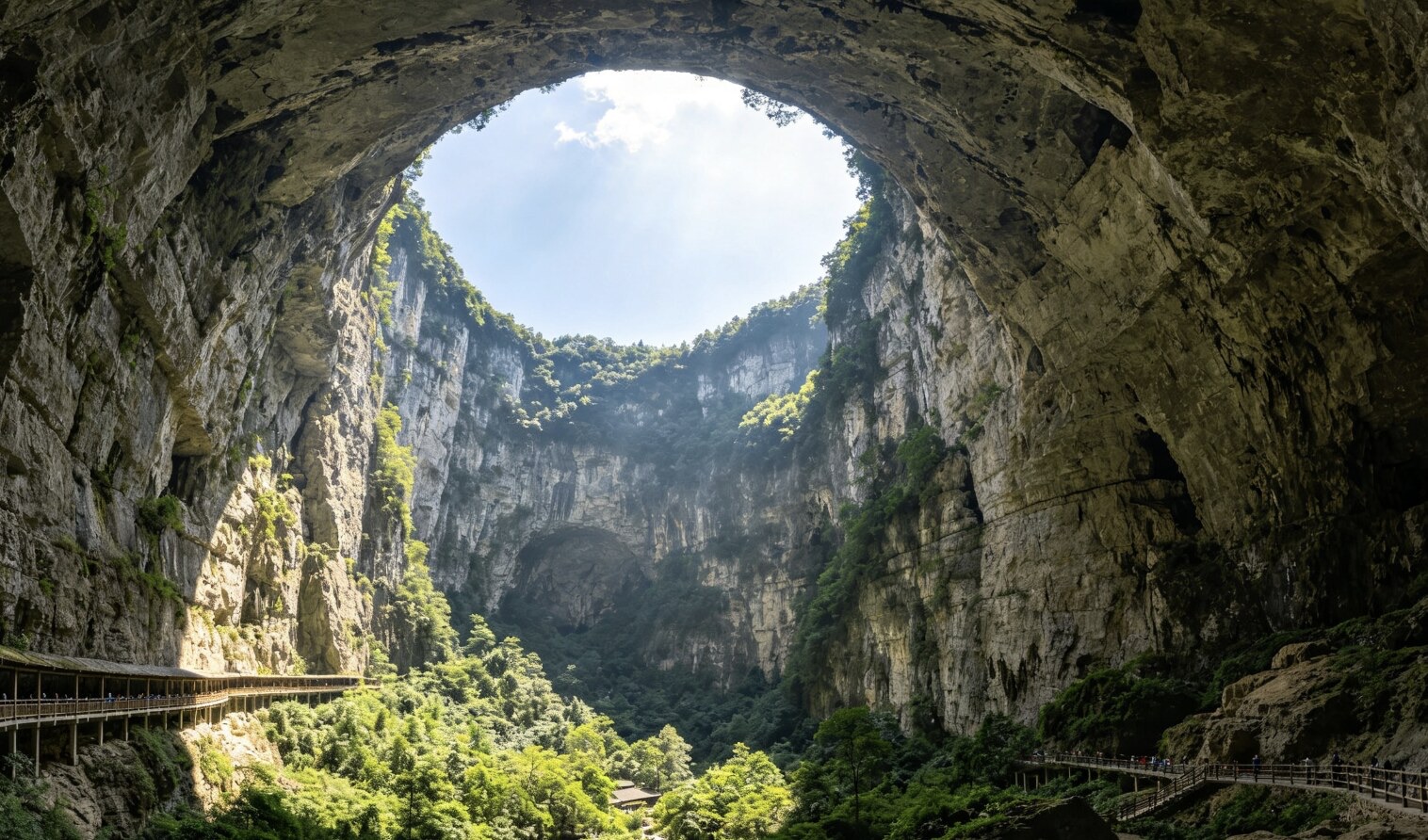
Jingkou Tiankeng is one of the principal attractions of the Houping Tiankeng Scenic Area, located in Houping Township, Wulong District. It is the only tiankeng in the world known to have been formed by surface water erosion, and it developed approximately 2 to 2.3 million years ago. The opening is cylindrical in shape, 250 meters long and 220 meters wide, with a maximum depth of 295 meters; the walls are sheer and vertical, as though cut straight down. The floor of the sinkhole supports a complete ecosystem of old-growth forest, streams, waterfalls, and underground rivers. Visitors can reach the bottom through the 3,000-meter Erwang Cave passage, or take in the full view from the rim overlook. The limestone encasing the tiankeng dates to the Ordovician period, approximately 485 to 470 million years ago. Mist often hovers inside the pit — locals call it a "spirit pit" — and the appearance of mist is taken as a sign that rain is on the way, caused by temperature and pressure differences between the interior and the outside air. This is a geological phenomenon of rare scale and rarity.

Tianchi Miao Village

Tianchi Miao Village stands in Wenfeng Village, Houping Township, Wulong District. It is a well-preserved cluster of traditional minority-culture dwellings — primarily log-constructed stilted houses built with post-and-beam timber framing, upturned eaves, pitched roofs, and small grey clay tiles — a picture of craftsmanship and timeworn grace. Inside the village are stone forest formations, an ancient well, and moss-covered stone steps. The community embodies the architectural traditions and cultural wisdom of the Tujia and Miao peoples. Visitors can explore local craft workshops — woodworking, rice wine brewing, oil pressing — and witness living traditional skills. Tianchi Miao Village is also a keeper of intangible heritage including Chuanjiang boatmen's work songs. Bonfire evenings and hands-on craft sessions allow visitors to experience minority culture directly. It is the cultural heart of the Wulong Karst Tourist Area, where the natural landscape and human heritage exist in genuine harmony.

Erwang Cave

Erwang Cave is an underground cave system within the Houping Tiankeng Scenic Area, running roughly 3,000 meters in total length. It serves as the primary passage connecting the floor of Jingkou Tiankeng to the surface above. Stalactites, stalagmites, and columns populate the interior in diverse forms, showcasing the full range of karst underground sculpture. The limestone formed approximately 485 to 470 million years ago during the Ordovician period in a shallow-sea environment. The cave interior is dark and damp but entirely natural and undisturbed — an ideal setting for studying karst morphology. Following the cave passage downward, visitors emerge at the floor of Jingkou Tiankeng and encounter its old-growth forest and underground river. Waymarkers and lighting are installed throughout the cave for safe navigation. The air inside is fresh and rich in negative ions. Erwang Cave opens a window into the underground world of karst terrain.

Mawan Cave

Mawan Cave is a second underground cave in the Houping Tiankeng Scenic Area, connected to Erwang Cave and equally important as a site for studying karst geology. Stalactites, stalagmites, and columns fill the space in varied forms. The limestone dates to approximately 485 to 470 million years ago, deposited in a shallow Ordovician sea. The interior is dark and moist but entirely undisturbed. Waterfalls collect into streams that flow into Erwang Cave, forming groundwater that resurfaces through Mawan Cave — a complete, observable hydrological cycle. Visitors can observe the full process of how a karst water system works. Together with Erwang Cave, Mawan Cave forms a complementary pair for understanding how these extraordinary landscapes develop underground.

Daijiagou Fishing Base

Daijiagou Fishing Base sits near Tiankeng Village in Houping Township, offering an integrated leisure, recreation, and nature-immersion fishing experience. Set against hills beside clear water where fish swim freely, it is a genuine getaway for unwinding and connecting with the natural world. Professional fishing equipment and guidance are provided. A dining area on site serves local specialties including river fish and bracken-fern bacon. Dense surrounding vegetation keeps the air clean and full of negative ions — a naturally restorative environment. The base showcases the ecological character and leisure culture of Houping Township, and gives visitors a ground-level look at the rural karst landscape.

Gorge Lake

Gorge Lake is the centerpiece of the Furong River Scenic Area, located in Jiangkou Town, Wulong District. It came into existence in 2003 when the Jiangkou hydroelectric station was completed. The water is a deep, clear jade green, and the shores are lined with the undulating ridgelines of karst peak forest. Islands and peninsulas of varied shapes dot the lake. Visitors can cruise the lake by boat and take in the peak-forest and canyon scenery along the shores. Water quality consistently meets Class II standards — exceptionally clear — making it a fine habitat for watching fish, birds, and other wildlife. The mirror-flat surface reflects blue sky, white clouds, and mountain ridgelines, composing a living ink-wash painting. Gorge Lake presents Furong River at its most serene and expansive.

Furong Cave to Furong River Cable Car

The cable car connecting Furong Cave and Furong River Gorge Lake is the main link between the two scenic areas, operating across a vertical drop of approximately 121.5 meters for a seamless combined visit. The cars are finished in bright yellow and red, traveling on two parallel tracks in a continuous back-and-forth cycle — meeting, separating, meeting again — giving riders an unusual visual experience along the way. Visitors can ride from the Furong Cave exit down to the Furong River cruise pier, or travel in the opposite direction. The ride is smooth and the views are wide: the jade-green river and the karst peaks on both banks fill the windows from every angle. Single-journey tickets are 20 yuan per person; a combined cable car and cruise package is 100 yuan per person.

Furong River Cruise

The Furong River cruise is the primary way to experience Gorge Lake. The pier sits beside the Furong Cave scenic area, accessible by cable car or on foot. The boat travels the full length of the Furong River — roughly 35 kilometers — with karst peak forest rising on both banks throughout the journey. The water is a clear, deep green, ideal for spotting fish, birds, and other wildlife. Along the way the cruise passes several points of interest including Pangu River, the suspension dam, and Zhuzui Creek. Tickets are 100 yuan per person (including the cable car). The route also passes through a black-leaf monkey reserve, giving passengers a chance to observe these Class I protected animals in their natural habitat.

Pangu River

Pangu River is a tributary of the Furong River, named after the mythological creator figure associated with the separation of sky from earth. It winds through the karst peak forest with clean, ecologically healthy water, and is an important subject of study for karst hydrology researchers. Dense vegetation covers both banks; the valley floor harbors caves, underground rivers, and waterfalls. Visitors can walk along the riverbank path or glide downstream by boat, drifting through scenery that feels like a living landscape painting. The ecosystem here is intact, making Pangu River a significant area for studying the biodiversity of karst regions.

Zhuzui Creek

Zhuzui Creek is another stream in the Furong River Scenic Area, named for the ball-shaped stones that litter the creek bed like scattered beads. The water is perfectly clear, and the stones below range in size and shape, resembling a floor of scattered pearls. Vegetation is lush on both banks. Mid-creek, waterfalls and shallow rapids send up arcs of white spray, as if pearls were flying through the air. The creek is an important site for studying karst hydrology and the interplay of underground and surface water. Visitors can walk the creekside path, listen to the current, and breathe in the clean air — a gentle, restorative interlude in the Furong River experience.

Sky Tower

Sky Tower is the landmark structure of Xiannu Mountain National Forest Park, set at an elevation of roughly 1,900 meters. The tower stands about 60 meters tall and is designed to evoke a staircase ascending toward the sky — a natural destination for anyone wanting to look out over the whole area. The structure is built in wood, its traditional aesthetic sitting comfortably within the natural surroundings. From the top, visitors command a view over the full sweep of Xiannu Mountain: 300,000 mu (about 200 square kilometers) of old-growth forest and 100,000 mu of alpine meadow. In the morning, a sea of cloud fills the valleys below and the sunrise lights the ridgelines from behind; at dusk, the light softens into layers of color. Sky Tower is the highest accessible point in the park, giving visitors a vantage point unlike any other for photographing and understanding the full scale of the mountain.

Muti Station (Trailhead)

Muti Station is the starting point of the Xiannu Mountain National Forest Park sightseeing train, situated within the forest park at an elevation of roughly 1,900 meters. The station is spacious and well-kept, with a ticketing area, rest zone, and viewing platform — the proper beginning of a visit to Xiannu Mountain. In the distance, the main peak of Xiannu Mountain rises to about 2,033 meters, one of the highest summits in eastern Chongqing. The surroundings are beautiful — shaded trees, clean air — with negative ion concentrations exceeding 5,000 per cubic centimeter, a genuinely restorative environment. The train ride from here covers about 10 kilometers, costs 25 yuan per person, and takes roughly 40 minutes, carrying visitors through old-growth forest and alpine meadow. This station is also one of the park's entry points, where visitors can get oriented and plan their route before boarding.

Horse Racing Ground Station

Horse Racing Ground Station is an intermediate stop on the Xiannu Mountain sightseeing train, located within the forest park at an elevation of roughly 1,900 meters. The platform looks out over green meadows, wildflowers, and rolling mountain ridgelines in the distance. From here, a five-minute walk leads to the "Most Beautiful Road," where the S-shaped mountain highway comes into full view. Horseback riding and archery are available nearby. The station also functions as a return transfer point for visitors heading back to Muti Station. Basic amenities on the platform include a rest area, toilets, and a small shop. This is a natural starting point for exploring the wilder, more active side of Xiannu Mountain.

Terminal Station

Terminal Station is the final stop on the Xiannu Mountain sightseeing train, located within the forest park at an elevation of roughly 1,900 meters. The platform is clean and spacious, with a ticketing area, rest zone, and viewing platform. From here, visitors can take the train back, walk to Muti Station, or depart the park by another means. The surroundings are peaceful — green trees overhead, clean air, a high concentration of negative ions. A good place to slow down, pick up a local souvenir, and absorb the quiet before leaving. Directional signs and rest facilities are in place throughout. Terminal Station is the gentle close to a Xiannu Mountain visit, sending visitors off with the memory of the highland meadow still vivid in mind.

Practical info Opening hours · Ticket · Getting there
Opening hours
  • Tiankeng Three Bridges: 08:00-17:30 (last entry at 16:30)
  • Longshuixia Ground Fissure: 08:00-17:00 (last entry at 15:30)
  • Furong Cave: 08:30-17:00 (last entry at 16:00)
  • Note: Wulong Karst Tourist Area covers a vast area; it is recommended to allow 2 days for visiting; if time is limited, Tiankeng Three Bridges is the top recommendation
Ticket
  • Tiankeng Three Bridges: Peak season (March-October) 125 RMB/person (including environmentally friendly shuttle bus); Off season (November-February next year) 95 RMB/person
  • Longshuixia Ground Fissure: Peak season (March-October) 105 RMB/person (including environmentally friendly shuttle bus); Off season (November-February next year) 80 RMB/person
  • Furong Cave: Peak season (March-October) 120 RMB/person (including cable car); Off season (November-February next year) 80 RMB/person
  • Combo Ticket: Tiankeng Three Bridges + Longshuixia Ground Fissure combo ticket, peak season 200 RMB/person; off season 150 RMB/person
  • Discounted Tickets: Students, seniors, military personnel, etc. can enjoy half-price or free admission with valid ID
  • Note: It is recommended to purchase tickets in advance through the official WeChat account or travel platforms for discounts and to avoid on-site queuing; Tiankeng Three Bridges and Longshuixia Ground Fissure are about 10 kilometers apart; it is recommended to arrange visiting them on the same day
Getting there
  • From Chongqing urban area:
    • Driving: Drive along the Chongqing-Xiangtan Expressway (G65) to the Wulong exit, follow signs to each scenic spot, about 2.5 hours' drive
    • Bus: Take a shuttle from Chongqing Sigongli Transport Hub to Wulong District, about 2.5 hours, fare about 60 RMB; after arriving in Wulong, transfer to the scenic area direct bus to each attraction (about 30-50 minutes)
    • High-speed Rail: Take the Chongqing-Xiamen High-speed Railway to Wulong Station, about 1 hour; after arrival, transfer to the scenic area direct bus to each attraction (about 30-50 minutes)
    • Travel Agency One-day Tour: There are tourist direct buses/one-day tour groups from Chongqing Jiefangbei, Hongya Cave, etc. to Wulong Karst, round-trip about 200-300 RMB/person (including transportation, tickets, tour guide)
  • Within the scenic area: There is a scenic area direct bus shuttle between Tiankeng Three Bridges and Longshuixia Ground Fissure (about 20 RMB/person); Furong Cave is about 40 kilometers from Tiankeng Three Bridges, requiring separate transportation arrangements

Inside Wulong Karst Tourist Area

11 stops, in walking order — read top to bottom, no clicking needed.

1 Tianlong Bridge (Heavenly Dragon Bridge) of 11

Tianlong Bridge (Heavenly Dragon Bridge)

天龙桥

Tianlong Bridge is the first natural stone arch bridge in Wulong's Three Natural Bridges scenic area and the most imposing of the three. The bridge was formed from limestone deposited on an ancient seabed hundreds of millions of years ago, subsequently uplifted by tectonic movement and sculpted by water erosion and collapse. The arch stands approximately 235 meters high, with a bridge deck about 150 meters thick, 147 meters wide, and a span of about 34 meters—like a colossal stone rainbow spanning two cliff faces. The irregularly shaped arch opening allows sunlight to pour through from above, casting dappled light and shadow across the valley floor in a magnificent, dreamlike display. A winding stone-paved trail passes beneath the bridge, with ferns and vines clinging to the rock walls and moss-covered rubble scattered about, as if entering an ancient secret realm. The most famous feature is an eagle-shaped natural rock formation at the top of the arch and the "Thread Spring" trickling from beneath the vault. The hidden courier station from Zhang Yimou's film "Curse of the Golden Flower" was filmed beneath Tianlong Bridge, and the replica structure remains as a must-visit photo spot. Walking beneath the bridge and looking up at the enormous vault overhead, one feels the overwhelming majesty of nature and the smallness of humanity.

On-site narration · read it where you stand

Welcome, everyone! You have arrived at the Tiansheng Three Bridges Scenic Area, the core zone of the Wulong Karst World Natural Heritage Site. Today we will follow the route from the old observation elevator entrance through Tianlong Bridge, Tianfu Post Station, Qinglong Bridge, Shenying Tiankeng, Heilong Bridge, and Longquan Cave, finishing at the exit. Let's head down together and discover what nature has built here.

We are descending by elevator to Tianlong Bridge. This is the first of the three natural stone arch bridges in the scenic area, standing 235 meters tall with a span of roughly 120 meters, a width of 147 meters, and an average arch height of 96 meters. The broadest of the three bridges, Tianlong Bridge is celebrated for its commanding, massive presence. Look up — you will notice that the limestone walls of the arch are remarkably square and smooth, almost as though shaped by human hands, a testament to nature's precision. The bridge is composed of limestone deposited roughly 250 million years ago in a shallow sea, preserving a record of the earth's long geological history. Standing here beneath the arch, the bridge stretches overhead like a great dragon spanning the gorge. Please note that the light inside is low — follow the signs on the right-hand side and stay on the boardwalk to keep your bearings.

Tianguan Cifu (Heavenly Official's Blessing)

天官赐福

Tianguan Cifu is a unique natural cliff-face feature beneath Tianlong Bridge in the Three Natural Bridges scenic area. On the inner wall of the northern arch of Tianlong Bridge, a pattern of stone veins—formed over hundreds of millions of years through water erosion and mineral staining—strikingly resembles the four Chinese characters (Heavenly Official's Blessing). The strokes appear vigorous and well-structured, as if an immortal had used a finger as a brush to write on the cliff face. This coincidence has circulated in folklore for generations; local people regard it as an auspicious mark bestowed by a heavenly official descending to earth. During New Year and major celebrations, nearby villagers come to burn incense and pray for favorable weather and household peace. The surrounding cliff also bears natural patterns resembling auspicious clouds, bats, and ruyi motifs, further reinforcing the auspicious symbolism of fortune, prosperity, longevity, and happiness. The scenic area has installed a viewing platform, information plaque, and soft lighting so visitors can appreciate this natural wonder under various conditions. Geologically, the pattern results from differential weathering of varying mineral compositions in the limestone and iron oxide staining—a natural formation that, due to its striking resemblance to Chinese characters, has become one of the most culturally significant geological wonders of the Wulong Karst.

On-site narration · read it where you stand

We have now arrived at Tianfu Post Station. This traditional courtyard compound was originally built during the Tang Dynasty and later reconstructed for director Zhang Yimou's film Curse of the Golden Flower. Notice the red paper lanterns inscribed with the station's name hanging above the gate; inside, vermilion walls and moss-covered stone bridges complement each other in a scene of quiet, timeworn elegance. This ancient relay post has witnessed centuries of change in Wulong, and has since served as a filming location for international productions including Transformers 4. Visitors can soak in the atmosphere of a Tang-era way station, explore the recreated film sets, and appreciate the way natural landscape and human history come together in one place. The surroundings are peaceful — a murmuring stream, shaded trees — making this a pleasant spot to rest before continuing.

In the film Curse of the Golden Flower, this courtyard was the site of a pivotal scene in which the king's black-clad guards ambush the imperial physician's family. Look carefully and you will spot dozens of high-wire ropes still hanging beneath the bridge — these were rigged for the film and have since been left in place as a permanent feature of the site. When you are ready, follow the signs on the left to continue toward Qinglong Bridge.

Qinglong Bridge (Azure Dragon Bridge)

青龙桥

Qinglong Bridge is the second natural stone arch bridge in the Three Natural Bridges scenic area and the tallest of the three, with an arch height of approximately 281 meters, a deck thickness of about 168 meters, a width of about 124 meters, and a span of about 31 meters—ranking among the tallest natural stone arch bridges in the world. The bridge spans a near-vertical karst canyon, resembling a colossal stone archway standing between heaven and earth. The name comes from a beautiful natural phenomenon: at sunrise, sunlight slants through the arch opening, and the light refracts through mist and water vapor to form a blue-green beam crossing the canyon—like an azure dragon soaring through the bridge. A stream flows along the valley floor, with stalactites hanging from the rock walls in various forms—some like swords piercing the ground, others like lotus buds about to bloom. The arch ceiling has developed alcoves and natural stone eaves through weathering. During the rainy season, water cascades from these eaves like a bead curtain, with rainbows appearing in the sunlight—a dreamlike scene. A viewing platform beneath Qinglong Bridge offers one of the best vantage points for photographing the "soaring azure dragon" sunrise spectacle and classic panoramic views of the Three Natural Bridges.

On-site narration · read it where you stand

We have now reached Qinglong Bridge — the second of the three natural stone arch bridges. At 280 meters tall it has the greatest vertical drop of the three, with a span of roughly 300 meters and a width of about 80 meters. Vines have covered the bridge for centuries, giving it a deep green hue — hence the name "Qinglong," or Green Dragon. Look up: sunlight pouring through the arch creates a shaft of golden light that is spectacular at any time of day. After rain, the light refracts into full-color arcs across the opening, as though a green dragon were ascending into the sky. The limestone that forms the bridge was deposited approximately 250 million years ago in a shallow sea, recording the earth's long geological history.

The battle scene featuring Optimus Prime in Transformers: Age of Extinction was filmed directly beneath this arch, adding a layer of cinematic fame to this world-class karst wonder. Notice the stream running through the valley below and the elegant curve of the arch above — a bridge built by water and time alone. The surroundings here are quiet and shaded, a good place for photographs. When you are ready, follow the path ahead and we will continue to Shenying Tiankeng.

Shenying Tiankeng (Divine Eagle Doline)

神鹰天坑

Shenying Tiankeng is a large karst collapse doline situated between Tianlong Bridge and Qinglong Bridge in the Three Natural Bridges scenic area. The doline has an elliptical plan with a rim diameter of about 200–300 meters and a depth of approximately 195 meters, with a total volume of several million cubic meters—a world-class karst collapse feature. The doline is enclosed by nearly vertical limestone cliffs whose surfaces, through differential weathering, have formed numerous lifelike rock formations. The most striking is a protruding boulder on the eastern rim that, from certain angles, resembles a soaring eagle with head held high, wings spread, and piercing gaze overlooking the doline floor—giving the feature its name "Divine Eagle." The doline floor is relatively flat, covered with thick collapse deposits and subsequently grown dense vegetation, forming a relatively isolated "hanging garden" ecosystem. Wildflowers carpet sunlit areas while ferns thrive in shady corners, and birds occasionally circle above. Visitors descend along a cliff-hugging boardwalk, appreciating the doline's grandeur and the Eagle Rock from different heights and angles. Standing at the bottom looking up, the surrounding walls form a natural shaft with the sky cut into an irregular ellipse where clouds drift overhead—an extraordinary sense of isolation from the world.

On-site narration · read it where you stand

We have now reached Shenying Tiankeng — Eagle Sinkhole. A tiankeng is a distinctive karst feature formed when an underground river dissolves and erodes the rock above it until the ceiling collapses all the way to the surface. Shenying Tiankeng has an opening roughly 300 meters across and drops approximately 300 meters straight down, its walls sheer and vertical on all sides, cut as cleanly as if by a blade. Look over the edge and you will see a stream threading through the valley floor far below, surrounded by green trees — a hidden world unto itself. Follow the boardwalk on the right when you are ready, and we will make our way to Heilong Bridge.

Heilong Bridge (Black Dragon Bridge)

黑龙桥

Heilong Bridge is the third and final natural stone arch bridge in the Three Natural Bridges scenic area, with an arch height of approximately 223 meters, a deck thickness of about 137 meters, a width of about 193 meters, and a span of about 28 meters. Unlike Tianlong Bridge's grandeur and Qinglong Bridge's height, Heilong Bridge is renowned for its depth, darkness, and unpredictability. The long, curving arch opening admits little sunlight, leaving the interior perpetually dim with cool breezes and the sound of flowing water—walking through feels like traversing a black dragon's belly, hence the name "Black Dragon." The most famous feature is the natural perforation in the arch ceiling through which sunlight enters, creating a bright spot on the dark wall that slowly moves over time like a searchlight scanning the cave—dubbed the "Shadow Clock." Multiple remarkable micro-karst formations exist beneath: a stalactite platform resembling Guanyin seated on a lotus, rock strata sections as clean-cut as by knife, and miniature stalagmite clusters formed by perennial dripping. Near the exit, a narrow passage called "Dragon Gate" has walls nearly touching, admitting only one person sideways—after squeezing through, the space suddenly opens into a hidden paradise. Summer temperatures beneath Heilong Bridge are only about 18°C, making it a natural cooling refuge and the most adventure-filled of the three bridges.

On-site narration · read it where you stand

We have now reached Heilong Bridge — the last of the three natural stone arch bridges. It stands 223 meters tall, spans roughly 350 meters, and at 193 meters wide is the broadest of the three. The arch opening is deep and dark, with very little light filtering in — legend has it that a black dragon coils along the ceiling, which is how the bridge got its name. Look up at the north wall of the arch: you will see four hanging springs — Mist Spring, Pearl Spring, Thread Spring, and Three-Tier Spring. Water seeps year-round from the rock wall, falling in droplets as clear as pearls. The limestone formed approximately 250 million years ago in a shallow sea.

Each of these four springs has its own character. Mist Spring is most spectacular after rain, when water vapor fills the air beneath the arch in drifting white plumes. Pearl Spring gets its name from the way individual droplets catch the light as they leave the rock. Thread Spring and Three-Tier Spring form where water descends from height in layers, one cascade spilling into the next. Follow the boardwalk on the left when you are ready, and we will continue to Longquan Cave.

Longquan Cave (Dragon Spring Cave)

龙泉洞

Longquan Cave is hidden within a limestone cliff face near Heilong Bridge in the Three Natural Bridges scenic area—one of the most mysterious cave features in the park. The entrance is concealed beneath a moss-covered cliff, where a clear mountain spring gushes from within, cascading along the rock face into a thin stream that drops to the valley floor. The perpetual flow and the low, dragon-like rumble of the water give it the name "Dragon Spring." The explored length extends several hundred meters, divided into front and rear chambers. The front chamber is spacious with a vault about 15 meters high, walls covered in diverse stalactites and stone curtains—some like inverted lotus flowers, others like terraced fields or hanging silk drapes—gleaming under lighting. The rear chamber is deeper and narrower, requiring visitors to stoop; the ceiling is dense with soda straw stalactites like a volley of arrows, while several stalagmites and columns rise from the floor. The tallest stalagmite, about 3 meters high, resembles a miniature pagoda, formed over tens of thousands of years of drip deposition. The cave maintains a constant temperature of about 16°C year-round—refreshingly cool in summer and misty in winter. Ancient marine fossils are visible on the cave walls, silently recounting the epic geological journey from ocean floor to mountain peak over hundreds of millions of years. Though smaller than Wulong's Furong Cave, Longquan Cave's exquisite delicacy and seamless integration with the Three Natural Bridges make it an unmissable hidden gem.

On-site narration · read it where you stand

We have now entered Longquan Cave. The interior is dark and damp, but entirely natural and undisturbed — an ideal environment for studying karst geology up close. Stalactites, stalagmites, and columns fill the space in varied forms. The limestone here was deposited roughly 250 million years ago in a shallow sea. Pathway lighting and directional signs have been installed throughout for safe navigation. The air is clean and fresh, rich in negative ions.

Take a look here — this formation is called the Husband and Wife Stones: two stalagmites rising side by side in what looks like an embrace, a shape full of quiet meaning. Please do not touch the cave walls or any formations, as these natural heritage features are irreplaceable. We are now approaching the exit. From here you have two options: an electric shuttle back to the visitor center costs 15 yuan per person, or you can walk back in about 15 minutes. At the exit, a transfer vehicle runs directly to the Longshuixia Slot Canyon — no need to return to the main visitor center. If you prefer to walk, follow the boardwalk on the right; the scenery along the way is well worth the extra time.

Longshuixia Difeng (Dragon Water Gorge Fissure)

龙水峡地缝

Longshuixia Difeng is an important component of the Wulong Karst World Natural Heritage. It belongs to the same geological system as the Three Natural Bridges but presents a dramatically different landscape. The fissure extends about 5 km total with a developed tourist section of about 2 km—a deep gorge-type karst landform formed by the collapse of an underground river's ceiling. At its narrowest, the gorge is only 1–2 meters wide, with near-vertical cliff walls 200–300 meters high. From the valley floor, the sky appears as a single thread—hence the names "Earth Fissure" and "Thread of Sky." A crystal-clear stream runs the length of the valley floor, jade-green in color, with water-polished boulders scattered throughout. Cliff-hugging boardwalks and suspended bridges wind through the gorge—visitors stroll along the streambank one moment and climb to mid-cliff aerial walkways the next, with only a sliver of sky overhead and rushing water below. Stalactites hang from the walls, thick with moss and ferns, as if entering a green tunnel toward the earth's core. The microclimate is cool and humid, with air fragrant with plants and water mist; summer temperatures are about 10°C lower than outside. Multiple small waterfalls cascade from cliff crevices along the way, with mist and occasional rainbows. The most spectacular, Yinhe Waterfall, drops dozens of meters—the iconic feature of the fissure.

On-site narration · read it where you stand

Welcome to the Longshuixia Slot Canyon. This canyon is an extension of the Tiansheng Three Bridges area, and together they make up the Yangshuihe gorge system. The canyon runs 5 kilometers long, with depths ranging from 200 to 500 meters, and narrows to just 1 meter at its tightest point — sheer cliffs rising on both sides like walls sliced clean by a blade. Follow the signs on the left; we are about to take the elevator to the valley floor.

We are now descending in the 80-meter observation elevator. The ride is smooth and the gorge views through the glass are wide open. Once we reach the bottom, follow the boardwalk on the right: it will lead us past Milky Way Falls, a thread of sky visible overhead, and Jiaolong Cold Cave — a full sequence of karst highlights in a single corridor. Please note: the boardwalk surface is wet and slippery — wear shoes with grip and watch your step. Up ahead is Milky Way Falls.

Yinhe Waterfall (Milky Way Cascade)

银河飞瀑

Yinhe Waterfall is the largest and most awe-inspiring waterfall in the Longshuixia Difeng scenic area. Located at the mid-section of the gorge fissure, an abundant underground river source gushes from a natural crevice high on the cliff face, cascading down a near-vertical rock wall with a drop of several dozen meters. At full flow, the curtain spans 3–5 meters wide, roaring like thunder with mist filling the narrow gorge—an overwhelming spectacle. The great height and force shatter the water into countless fine droplets that refract sunlight into brilliant sparkles, like the Milky Way descending from heaven—hence the name "Milky Way Cascade." At its base, the waterfall collects into a deep emerald pool, clear to the bottom yet unfathomably deep, surrounded by mirror-smooth boulders polished by the current. From the viewing platform at the pool's edge, mist washes over visitors—refreshingly cool in summer, while in winter it freezes into icicles and frost flowers adorning the cliffs, offering distinct beauty in every season. A natural alcove in the cliff behind the waterfall allows adventurous visitors to circle via a side boardwalk into the cave and look outward through the cascading curtain—a magical "Water Curtain Cave" experience. Yinhe Waterfall is the climactic section of the Longshuixia Difeng tour and one of the most memorable water features in the entire Wulong Karst tourist area.

On-site narration · read it where you stand

Milky Way Falls is the signature landmark of the Longshuixia Slot Canyon, located in the canyon's middle section. The waterfall drops roughly 80 meters and spreads about 20 meters wide as it pours from the gorge wall in a powerful torrent. When sunlight hits the curtain of water it refracts into a full spectrum of color — like the Milky Way streaming down to earth, which is how the falls got their name. After rain the volume surges, the current quickens, and the roar fills the entire canyon in waves of sound. Step onto the viewing platform on the right for the best angle to photograph the falls.

Dense vegetation and tangled vines frame the water on both sides, making the scene feel like a world apart. Please do not approach the edge of the falls — surfaces near the water are slippery. When you are ready, we will continue ahead to Jiaolong Cold Cave.

Jiaolong Hangu (Flood Dragon Cold Cave)

蛟龙寒窟

Jiaolong Hangu is located beneath a cliff deep within the Longshuixia Difeng scenic area—a natural large stone cavern formed by the combined action of karst dissolution and rock layer collapse. The entrance is low and concealed, half-hidden by dense ferns and moss, requiring visitors to duck to enter. The interior space covers several dozen square meters with a vault about 3–5 meters high. The walls are covered with grooves and dissolution pits formed by perennial water erosion, their surfaces wet and smooth, gleaming with a cold sheen under lighting. The cavern's most notable feature is its exceptionally low temperature—about 12–14°C year-round. Even in midsummer, the chill upon entering is biting and bone-penetrating, with a temperature difference of more than 15°C from outside. A shallow cold pool occupies the cavern floor, crystal-clear and icy, inhabited by tiny blind fish and transparent shrimp—cave-dwelling species evolved for perpetual darkness, their bodies pale or colorless. Behind the pool, a narrow underground river channel extends deeper into the earth, its water echoing faintly, with even searchlights unable to reach the end—shrouding the cavern in mystery. Local folklore holds that a flood dragon once lurked here, its dragon breath becoming the perpetual cold mist, hence the name "Flood Dragon Cold Cave." Though modest in size, the extreme chill and mysterious underground ecosystem make this one of the most memorable exploration stops in the Longshuixia Difeng tour.

On-site narration · read it where you stand

Jiaolong Cold Cave is a deep underground cave tucked into the far end of the Longshuixia Slot Canyon. Local legend holds that a jiaolong — a powerful serpentine dragon — once made its home here, giving the cave its name. Stalactites crowd the interior in varied shapes, and a persistent chill pervades the air, lending the space a mysterious quality. A stream trickles through, its sound adding life to the cold darkness. The walls are smooth and relatively bare of large stalactites and stalagmites: the cave formed in the early Quaternary period as part of a surface-water erosion tiankeng cluster, where water flow rather than slow dissolution was the dominant process.

Please do not touch the cave walls or any formations — these natural heritage features are irreplaceable. We are now approaching the canyon exit. Rest points and toilets are located at several intervals along the remaining route — feel free to stop at any of them. At the exit, shuttle vehicles run directly back to the Xiannu Mountain visitor center. Thank you all for joining us today. Enjoy the rest of your time in Wulong.

Fairy Mountain National Park – Mutizi Station

仙女山国家公园-木梯子站

Mutizi Station is the starting station of the sightseeing train within Fairy Mountain National Park, located near the main park road entrance at an elevation of about 1,900 meters—the first stop for visitors entering the core scenic area. The name "Mutizi" (Wooden Ladder) originates from local history: a steep mountain path once paved with wooden stairs here was the main route for early mountain dwellers to gather herbs and graze livestock. After the road was built, the stairs fell into disuse, but the name endured. The station building features wooden construction with grey tiles in Ba-Yu mountain vernacular style, harmonizing with the surrounding pine forest and alpine meadows. The plaza in front includes a large visitor distribution area, ticket windows, a resting corridor, and park maps. After purchasing tickets, visitors board a vintage sightseeing train that runs along a circular railway through the park. The 12-kilometer route passes through dense Cryptomeria and cypress forests and alpine meadows with seasonal variation: lush green grass and wildflowers in spring and summer, layered autumn colors, and a silvery snowscape in winter resembling northern landscapes. Mutizi Station also houses a transfer center and ecological parking lot where self-driving visitors park before taking the train into the core scenic area. An open lawn beside the station is equipped with telescopes for viewing Fairy Mountain's main peak and the rolling Wuling range—an ideal spot for warm-up photos before departure.

On-site narration · read it where you stand

Welcome, everyone, to Xiannu Mountain National Forest Park — known as the "Switzerland of the East" and one of Chongqing's top ten tourist destinations. Today we will travel the route from Muti Station, the starting point, through to Grand Grassland Station, Horse Racing Ground Station and the Wave Road, and on to the terminal. Let's set off together and take in this magnificent highland landscape.

Muti Station is the starting point of the Xiannu Mountain sightseeing train, sitting at an elevation of roughly 1,900 meters. The platform is spacious and well-kept, with a ticketing area, rest zone, and viewing platform — the proper beginning of a Xiannu Mountain visit. In the distance you can see the main peak of Xiannu Mountain, rising to about 2,033 meters — one of the highest summits in eastern Chongqing. The surroundings are beautiful: shaded trees, clean air, and a concentration of more than 5,000 negative ions per cubic centimeter, which makes it a genuinely restorative place to stand and breathe.

From here, the sightseeing train will carry us through old-growth forest and alpine meadow, with sweeping views opening up along the way. The full route is about 10 kilometers, tickets are 25 yuan per person, and the ride takes roughly 40 minutes — the best way to see the mountain. Follow the signs on the platform to board. We are about to depart for Grand Grassland Station.

Fairy Mountain National Park – Mutizi Station

仙女山国家公园-木梯子站
On-site narration · read it where you stand

We have arrived at Grand Grassland Station. Xiannu Mountain's Grand Grassland is the centerpiece of the national forest park, celebrated as "the premier highland pasture of southern China." It encompasses 100,000 mu of alpine meadow at an elevation of roughly 1,900 meters. Summer average temperatures hover around 22 degrees Celsius — this is Chongqing's cool-weather retreat in the mountain heat. Please step off the train and follow the signs on the right; the path will take you deep into the meadow where the full scale of the grassland opens up around you.

The meadow is a carpet of lush grass dotted with wildflowers, with rolling mountain ridgelines and dense forest rising in the distance. You will see cattle and sheep grazing freely across the grass — one of the characteristic sights of Xiannu Mountain. Visitors can picnic here, fly kites, and spend time with the animals. The grassland is beautiful in every season: vivid green with wildflowers in spring; lush and refreshingly cool in summer; golden and painterly in autumn; blanketed in snow in winter.

Please stay on the marked paths and do not walk across the meadow surface, as foot traffic damages the fragile grass cover. Viewing platforms are set up along the meadow's edge — excellent spots to photograph the mountains and forest in the distance. When you are ready to continue, board the next train to Horse Racing Ground Station. Trains run approximately every 15 to 20 minutes.

Prefer to be shown around?

A local guide walks these 11 stops with you and answers what the page cannot.

Browse tours ↗