Yipu Garden
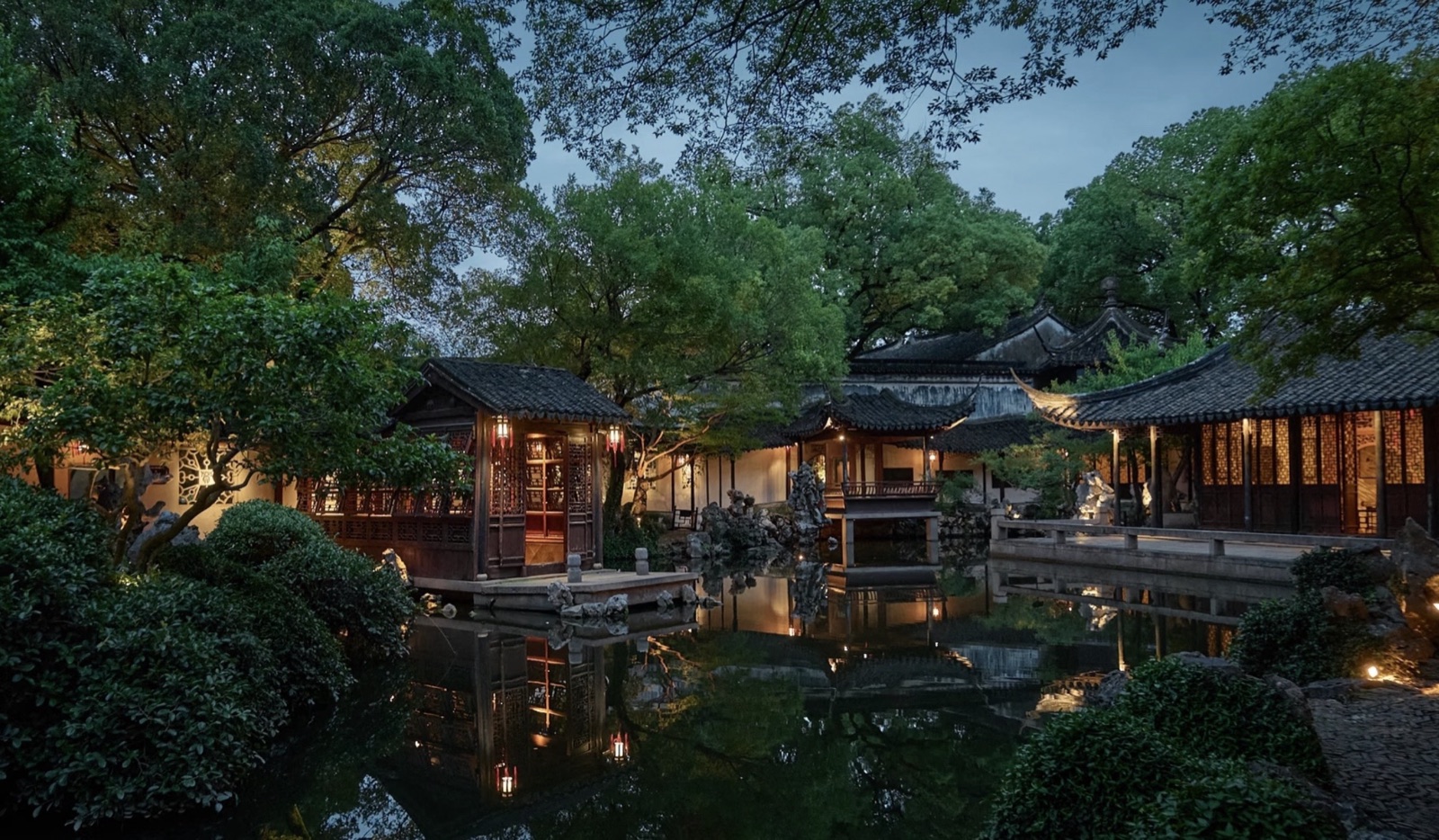
Yipu Garden is located in Wenya Lane, Gusu District, Suzhou. Built during the Ming dynasty, it was originally constructed by Yuan Zugeng and later acquired by Wen Zhenmeng, who renamed it "Yipu." The garden is celebrated for its intimate scale, simplicity, and natural character. Covering barely a third of a hectare, it integrates a residential compound with a classical garden — the residence to the east, the garden to the west — in a compact and considered layout. At its heart lies Ruyu Pond, with the Yanguang Waterside Pavilion on the northern bank — the largest water pavilion among Suzhou's classical gardens — and a delicately composed rockery on the southern bank, topped by Chaoshuang Pavilion and Bilang Pavilion. Covered walkways connect the east and west sides, creating a setting where water takes center stage and rock commands admiration. Yipu embodies the Ming literati ideal of "hiding in the city" — cultivating a tranquil retreat within the heart of a bustling town. It stands as an outstanding example of Suzhou's smaller classical gardens and was inscribed on the UNESCO World Cultural Heritage List in 2000.
Entrance Gate
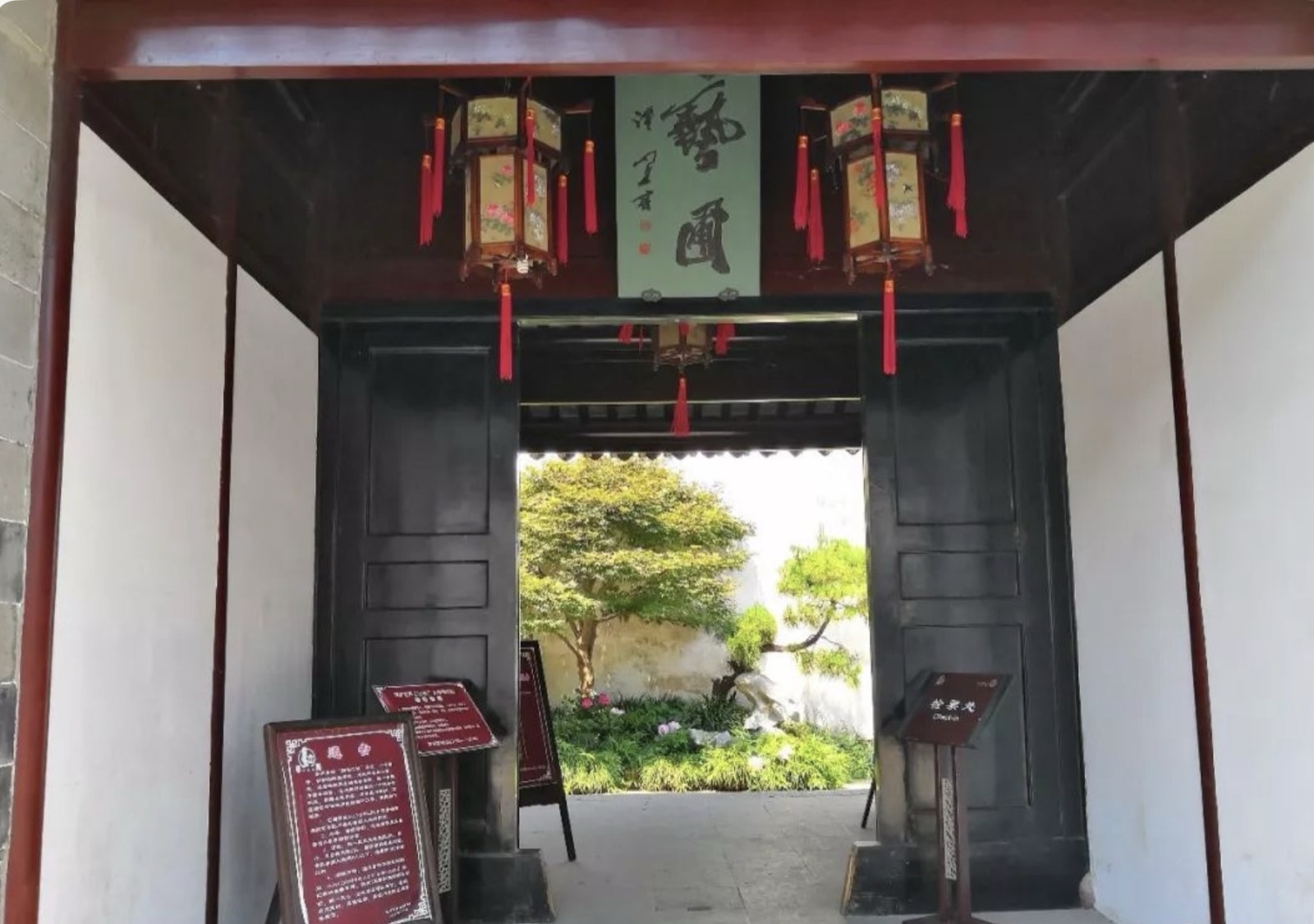
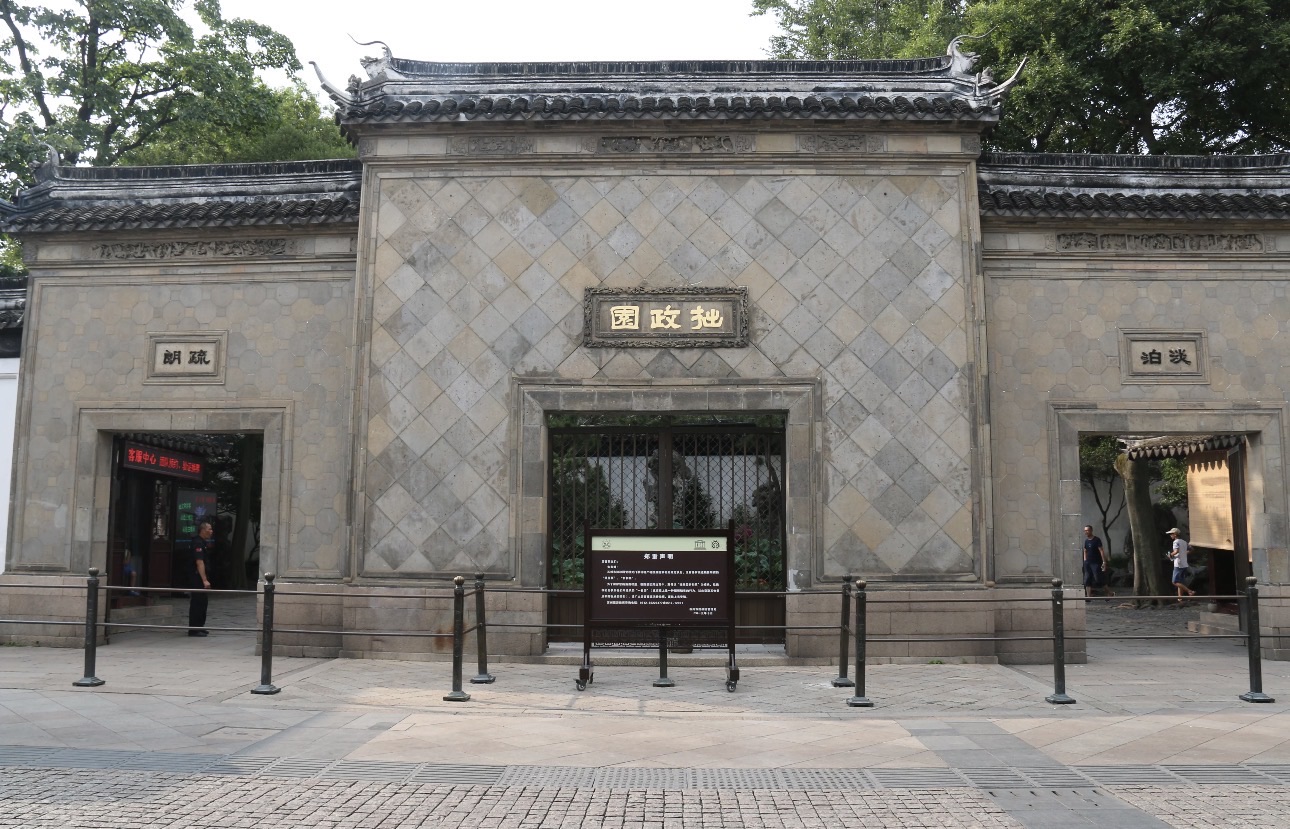
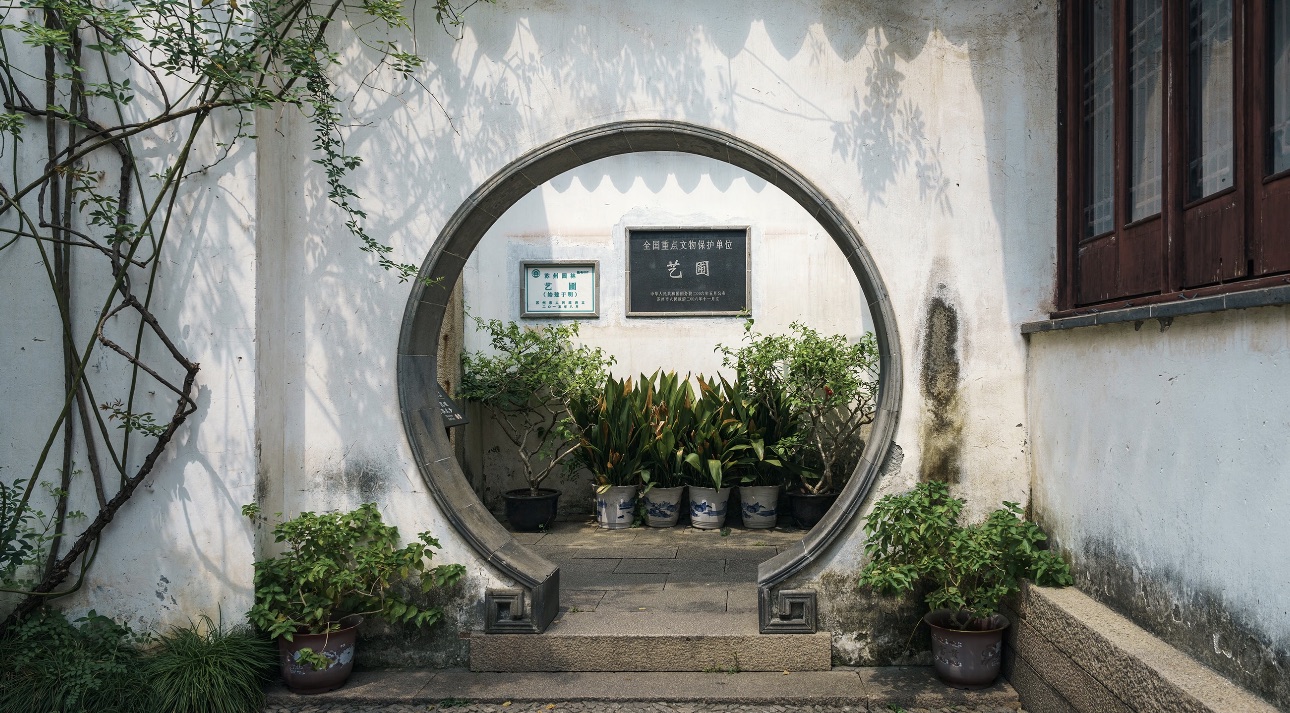
The entrance gate sits deep within Wenya Lane — unpretentious and unassuming, tucked between the walls of an ordinary residential alley. Just inside is a small courtyard with white walls, grey-tiled eaves, and a few slender bamboo stalks, creating a sense of quiet seclusion amid the surrounding noise. This understated entrance embodies the Ming literati ideal of "hiding in plain sight": no announcement, no grandeur, yet a world entirely apart lies just beyond the threshold. From the very first step inside, the character of Yipu is already apparent — a place deliberately set apart from the everyday.
Shilun Hall
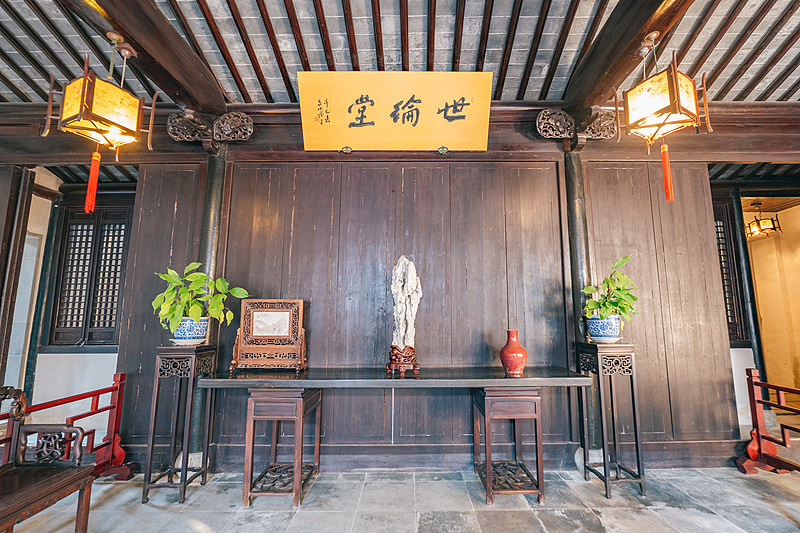
Shilun Hall is the principal reception hall of Yipu Garden — three bays wide with a hard gable roof — where the garden's owner received guests and held family ceremonies. The name "Shilun" draws on a passage in the Classic of Poetry, invoking the idea of upholding moral conduct across generations, reflecting the deep importance Wen Zhenmeng placed on family tradition and scholarly values. The interior beams are spare and unadorned, left in the natural color of the wood, embodying the Ming aesthetic of honesty over ornament. A small courtyard in front, dotted with Taihu rocks, serves as a gentle spatial transition between the residential quarters and the garden beyond.
Donglai Thatched Hall
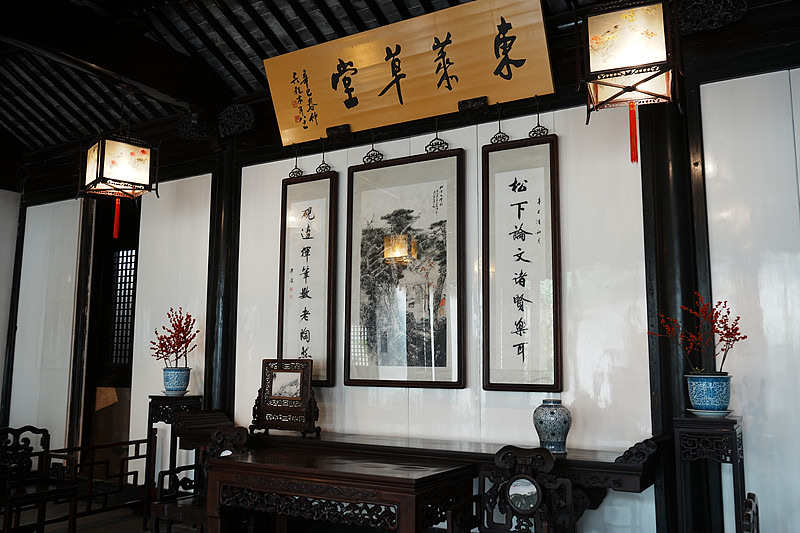
Donglai Thatched Hall lies behind Shilun Hall as the second main reception hall of the complex. Its name alludes to Lu Zuqian — the distinguished Song-dynasty Neo-Confucian scholar known by the sobriquet "Master Donglai" — expressing Wen Zhenmeng's reverence for the great thinkers of the past and his commitment to Neo-Confucian learning. The building is more modest than Shilun Hall, with original late-Ming timber framing still intact, and an interior kept deliberately plain — a true expression of the late-Ming literati ideal of principled simplicity.
Sishi Study
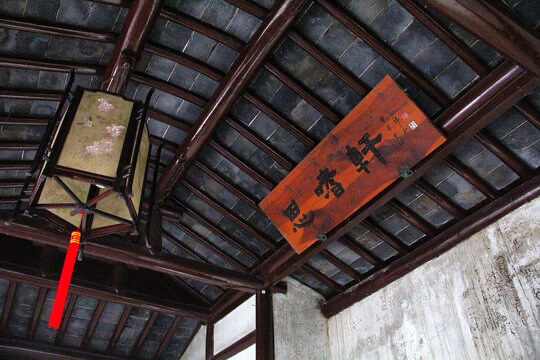
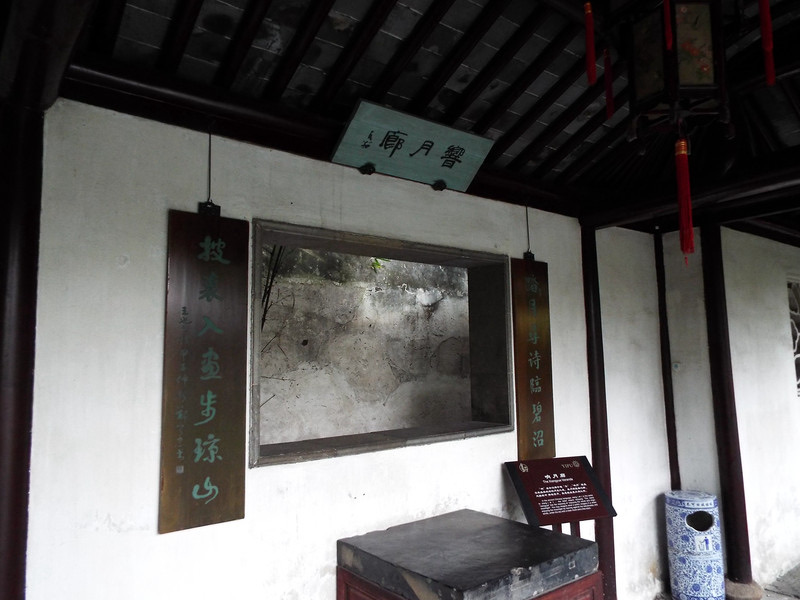
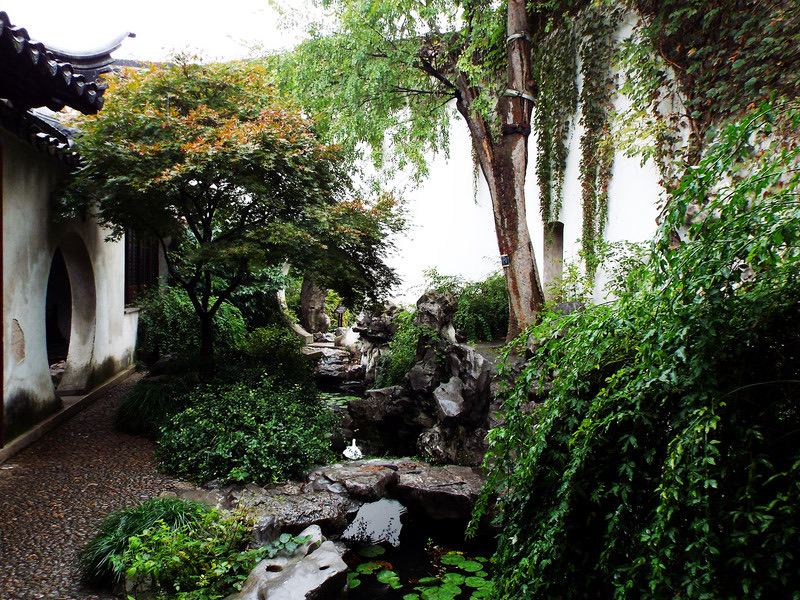
Sishi Study is the garden's library, positioned at the boundary between the residential quarters and the garden — a place for reading, writing, drinking tea, and meeting friends. The name "Sishi" playfully inverts a phrase from the Analects: where Confucius described the gentleman as not seeking ease or comfort, Wen Zhenmeng turned the idea around to express his own cultivated fondness for the refined pleasures of scholarly life. The study's windows face into the garden; through a moon gate, one can glimpse the pond and rockery beyond. Study and garden merge seamlessly, embodying the literati ideal: "ten thousand volumes at your desk, a mountain peak outside your window."
Ruyu Pond
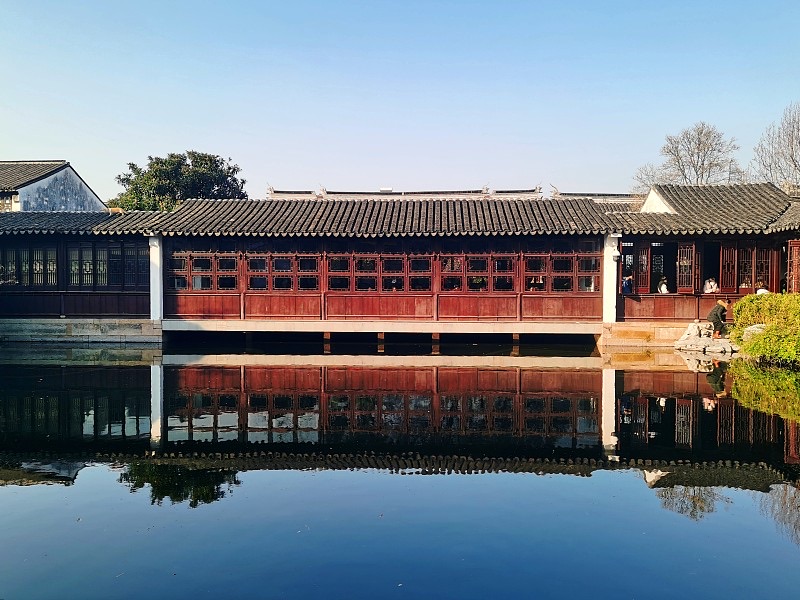
Ruyu Pond is the heart of Yipu Garden — about 670 square meters, with a gently winding shoreline edged in Taihu rocks. The name "Ruyu" means nurturing fish as though feeding them on mother's milk, expressing the owner's tenderness toward nature and living things. The water is clear enough to count the fish below, and in summer the surface is thick with lotus leaves. The pond mirrors Yanguang Pavilion to the north and the rockery pavilions to the south, drawing the garden's visual energy into one focal point. When a breeze stirs the surface, rings of light spread across the water — the pond is where the garden's spirit lives.
Yanguang Waterside Pavilion
Yanguang Waterside Pavilion stands on the northern bank of Ruyu Pond — the largest water pavilion in all of Suzhou's classical gardens, five bays wide with a barrel-vaulted roof and lattice windows on every side. The name "Yanguang" means "extending the daylight," suggesting one could linger here from dawn to dusk, reluctant to leave. The original window panels could all be opened wide, letting summer breezes carry the coolness of the water through the pavilion — the perfect place to watch fish, admire the lotus, or listen to rain. Looking south from inside, the rockery and its pavilions play against their own reflections in the water below, composing a living three-dimensional landscape scroll.
Chaoshuang Pavilion
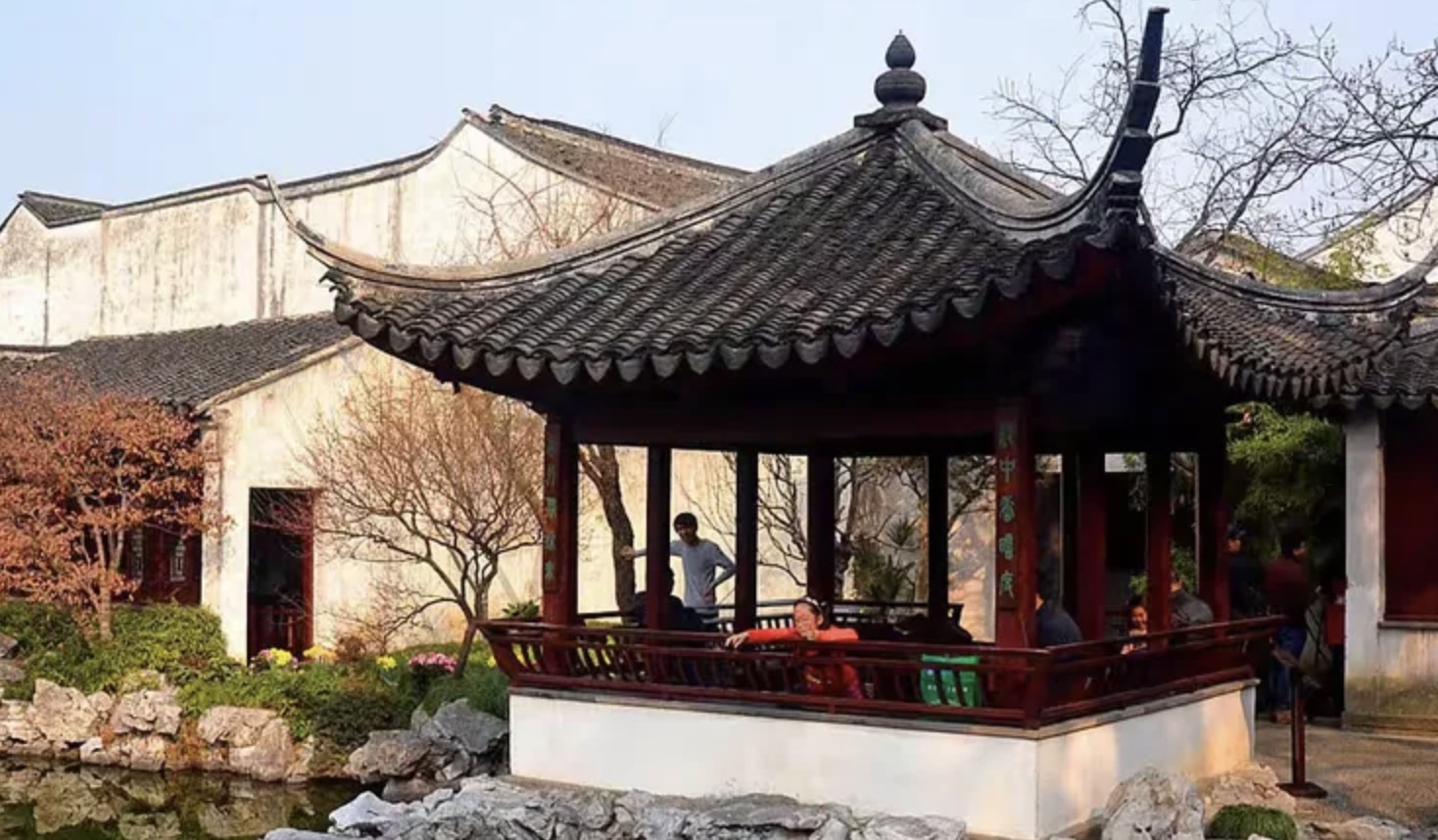
Chaoshuang Pavilion crowns the rockery on the southern bank of Ruyu Pond — a hexagonal, pointed-roof pavilion at the summit. The name "Chaoshuang" evokes the crisp freshness of an early morning, and on summer mornings a breeze off the water flows directly into the pavilion, cool and invigorating. The rockery beneath is built from Taihu rocks, about six meters high, with winding passages, tunnels, and stepped paths spiraling through it. From the pavilion, the whole garden unfolds below: Yanguang Pavilion poised above the pond to the north, covered walkways curving to east and west, fish and lotus leaves in the water — a scene full of quiet life.
Bilang Pavilion
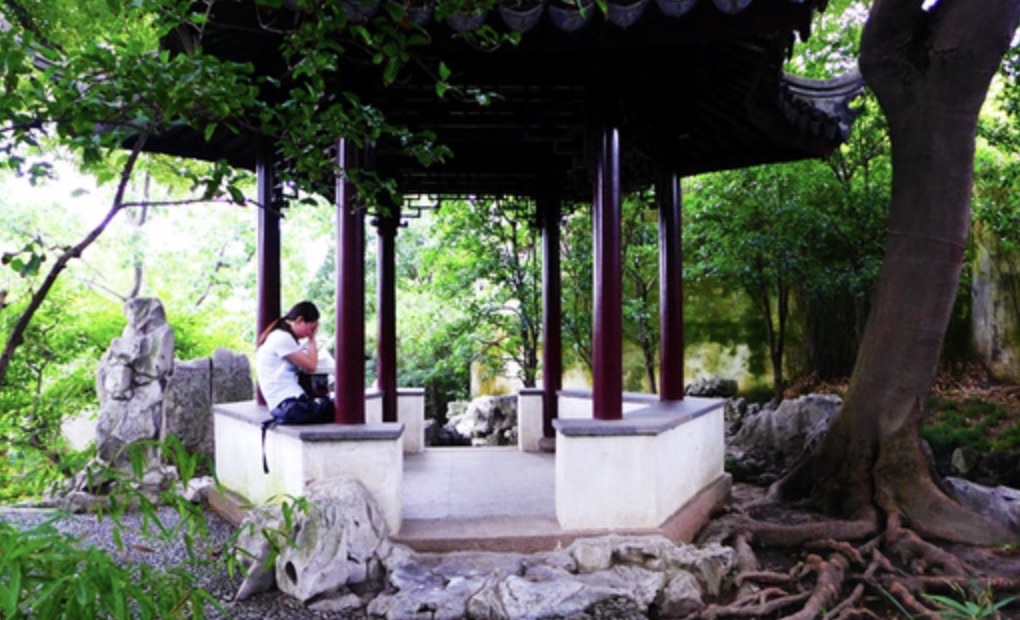
Bilang Pavilion sits on the western flank of the rockery, a counterpart to Chaoshuang Pavilion, the two together commanding the heights of the southern bank. The name "Bilang" evokes wind-rippled water — green waves rolling across the pond's surface. Smaller and more understated than its neighbor, Bilang Pavilion plays a deliberate secondary role. Looking west from here, Qinlu Cottage and Boya Hall appear half-hidden among trees and rocks; looking east through a moon gate, the rooflines of the residential wing come into view — a visual bridge between house and garden.
Qinlu Cottage
Qinlu Cottage occupies the southwest corner of Yipu Garden — a quiet, secluded retreat set apart from the main circuit. The name "Qin" comes from a line in the Classic of Poetry evoking a scholar gathering water celery by the pool of an ancient academy, an image long associated with learning and scholarly life. Inside, a small study looks out onto bamboo and rocks, its surroundings hushed and still. This was the garden owner's private refuge — a place to withdraw entirely, embodying the Ming literati ideal of a garden as both dwelling and retreat.
Boya Hall
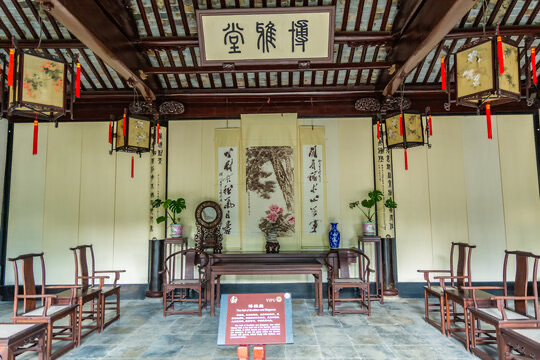
Boya Hall stands on the western side of Yipu Garden as one of its principal buildings. The name "Boya" — meaning broad learning and refined taste — comes from the Book of Later Han, declaring the cultivated aspirations of the garden's owner. A small forecourt planted with Taihu rocks, banana palms, and bamboo creates a scene of understated elegance. Originally used to display antiques, books, and paintings, the hall preserves the late-Ming architectural style: clean lines and balanced proportions, with no superfluous ornament — an important node at the point where garden and residence come together.
10 stops, in walking order — read top to bottom, no clicking needed.

 2
 3
 4
 5
 6
 7
 8
 9
 10